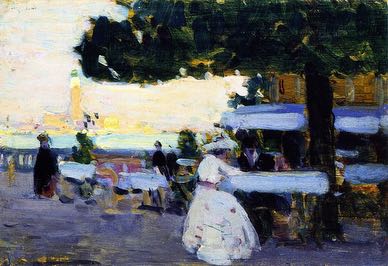
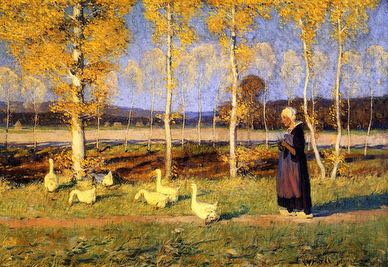
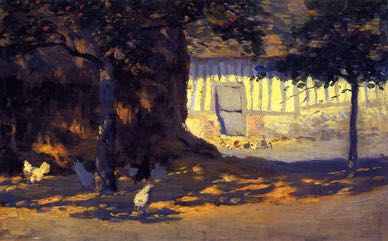
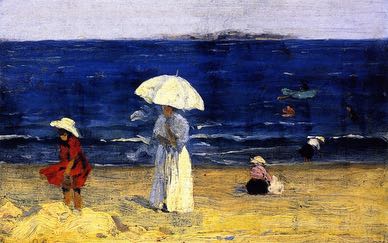
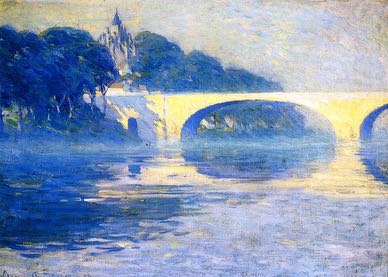
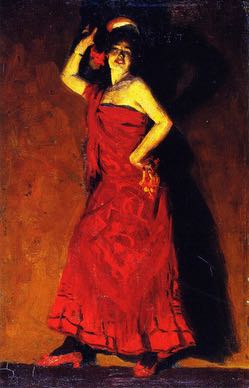
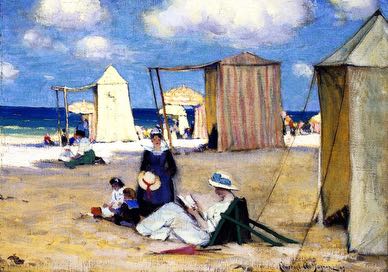
Born in Montreal, Gagnon displayed artistic talent from a young age. He began his formal training at the Art Association of Montreal under William Brymner, a prominent Canadian artist and teacher who encouraged his students to explore their unique vision. With Brymner’s guidance, Gagnon developed a deep interest in landscape painting and honed his skills in drawing and composition. His early works, influenced by the Impressionist techniques of capturing light and atmosphere, hinted at the distinct style he would later develop.
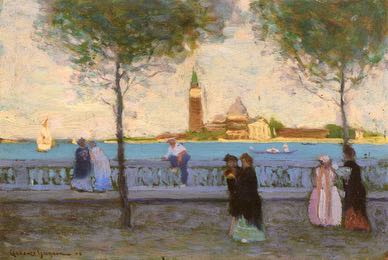
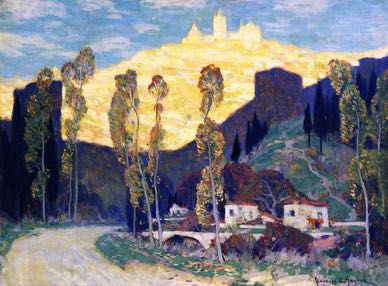
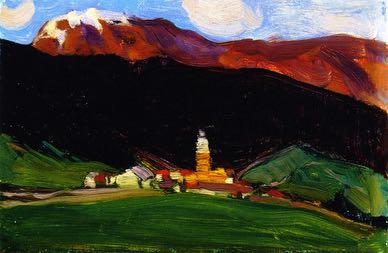
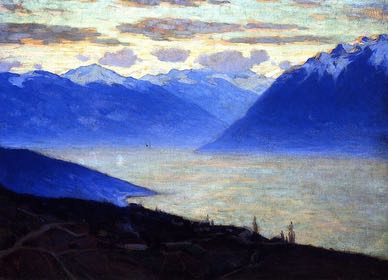
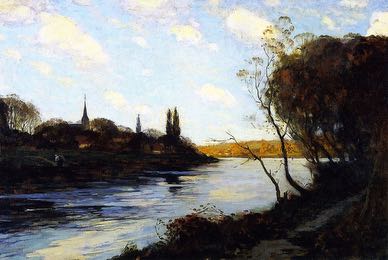
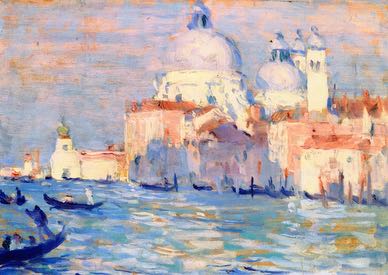
In 1904, Gagnon received a scholarship that allowed him to study in Paris, where he continued his artistic education at the Académie Julian. His time in France exposed him to the techniques and philosophies of European modernism, while he also became acquainted with the works of the French Impressionists and Post-Impressionists. Although he admired these movements, Gagnon remained focused on landscapes and maintained a more representational style, favoring a detailed approach that emphasized color and light. His European studies broadened his artistic perspective and helped refine the skills that would later define his distinctive interpretations of Quebec.
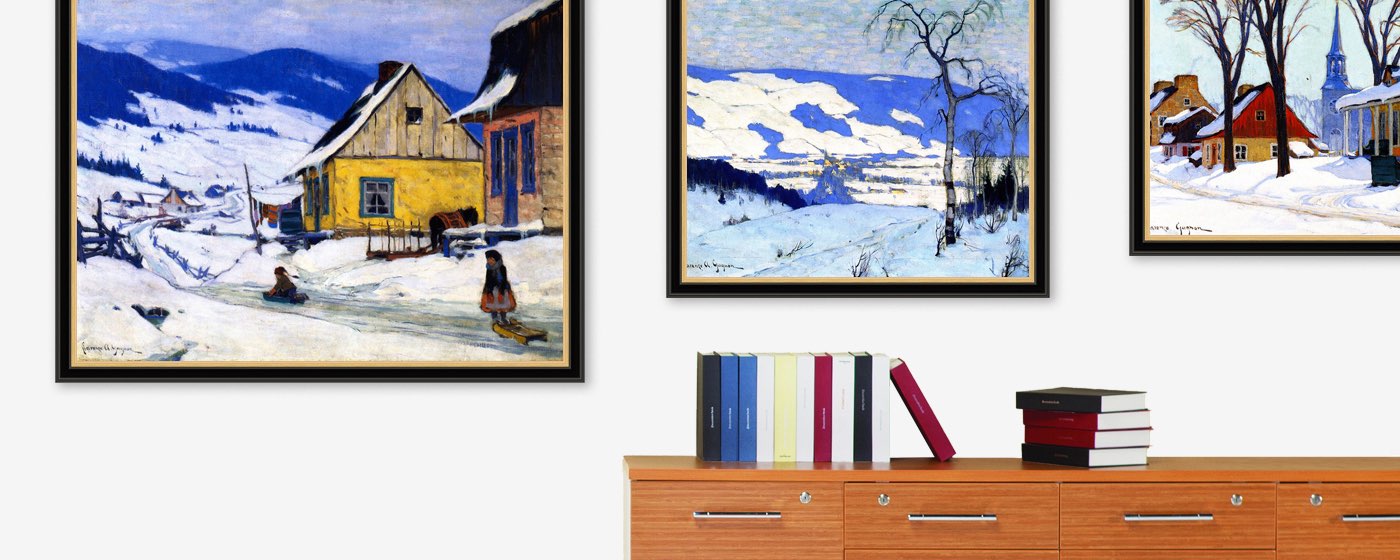
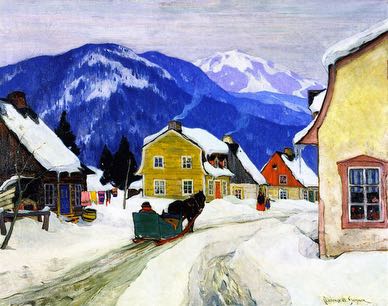
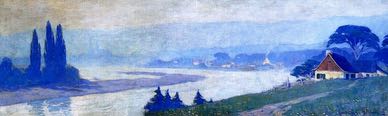
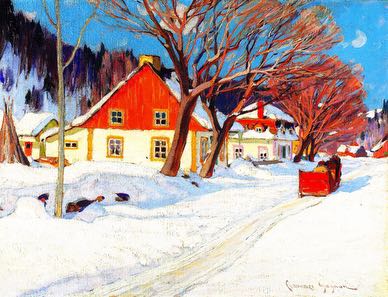
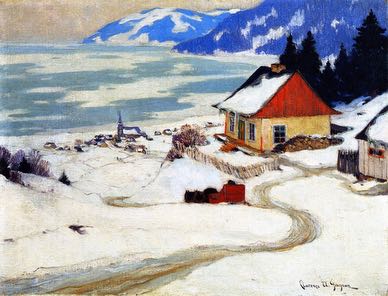
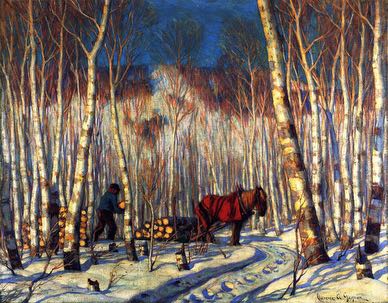
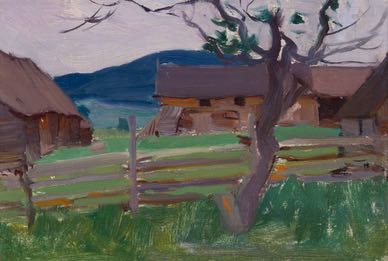
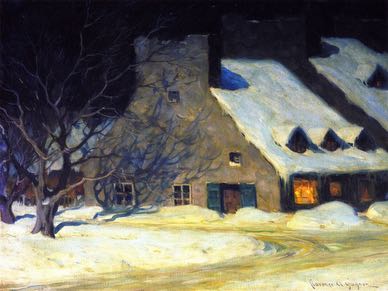
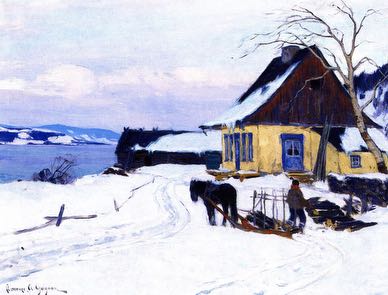
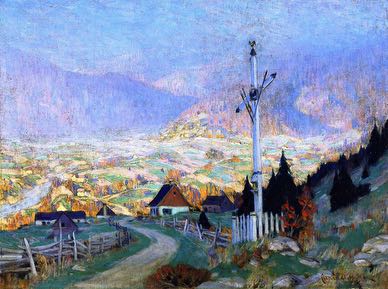
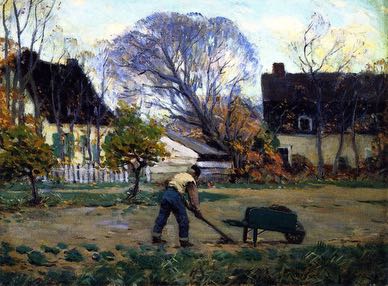
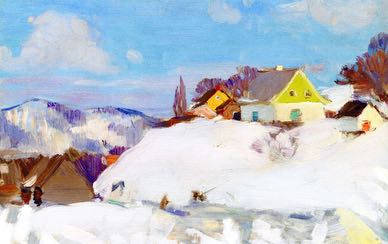
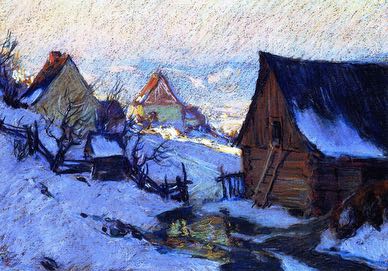
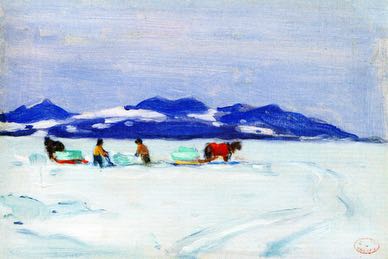
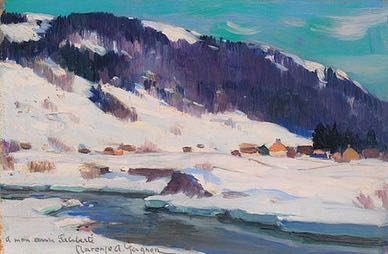
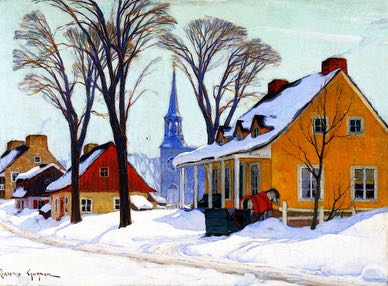
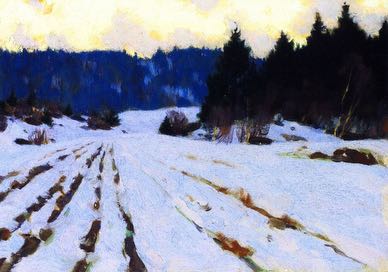
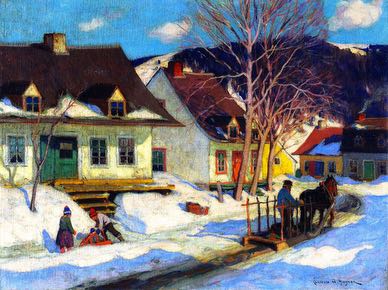
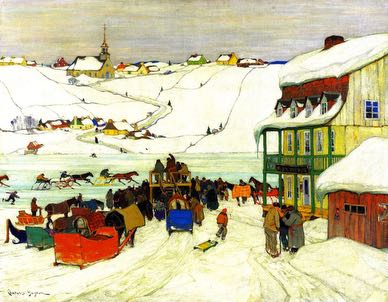
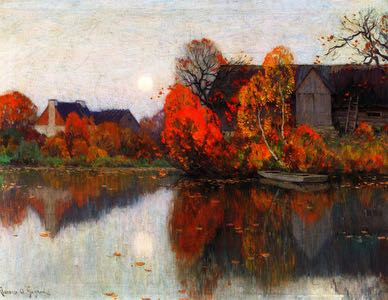
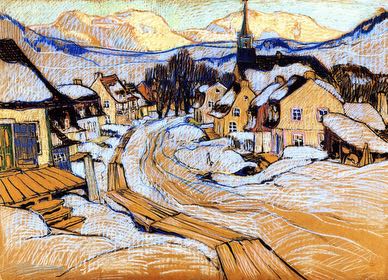
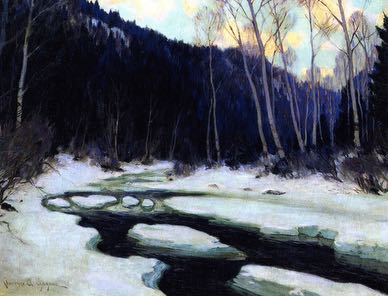
After returning to Canada, Gagnon settled in Baie-Saint-Paul, a small village in the Charlevoix region of Quebec. The village and its surrounding landscapes inspired much of his best-known work. Gagnon found beauty in the simplicity of rural life and often depicted village scenes with snow-covered rooftops, rustic churches, and winding roads, using vibrant colors and fine detail to convey both the atmosphere and character of the region. His use of color was particularly notable, as he captured the bright, reflective light of snowy landscapes and the rich, varied hues of the countryside in different seasons. Gagnon’s landscapes evoke a sense of warmth and harmony, portraying Quebec’s rural communities as enduring and connected to the land.
In addition to his painting, Gagnon was an accomplished printmaker and illustrator. His illustrations for Maria Chapdelaine, a novel by Louis Hémon set in rural Quebec, are some of his most famous works and further solidified his reputation as an interpreter of Canadian rural life. His illustrations, marked by the same precision and vibrancy as his paintings, brought the story’s characters and settings to life, becoming as iconic as the novel itself. These works underscored Gagnon’s ability to convey both the physical beauty of the Quebec landscape and the spirit of its people.
Though Gagnon continued to travel between Canada and Europe, he remained deeply connected to Quebec throughout his life, painting its landscapes and promoting Canadian art on the international stage. His work was widely exhibited, earning him recognition in both Canada and Europe. He was a member of the Royal Canadian Academy of Arts and played an important role in the promotion of Canadian landscape painting during the early 20th century.
Clarence Gagnon passed away in 1942, but his legacy endures as one of Canada’s most beloved landscape painters. His works are housed in major collections, including the National Gallery of Canada, where they continue to be celebrated for their vibrant colors, refined technique, and heartfelt connection to the Quebec countryside. Gagnon’s art remains a testament to the beauty and resilience of rural life in Canada, capturing the spirit of a place that continues to inspire generations.
Copyright © 2026 BrushWiz. All Rights Reserved.