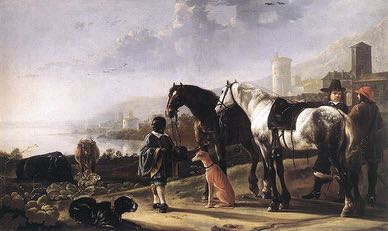
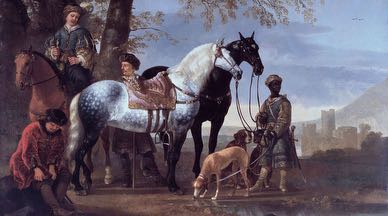
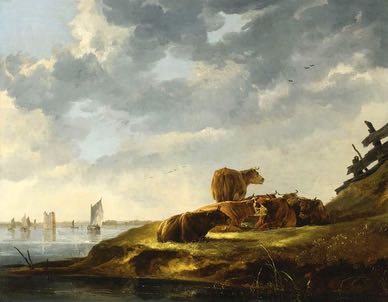
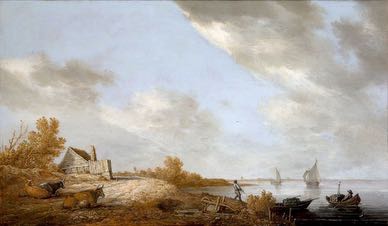
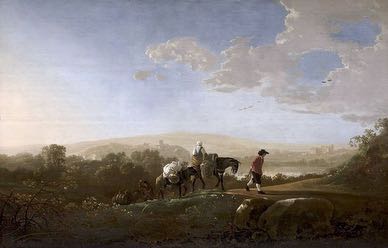
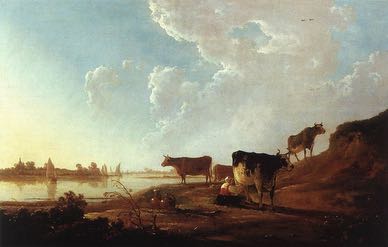
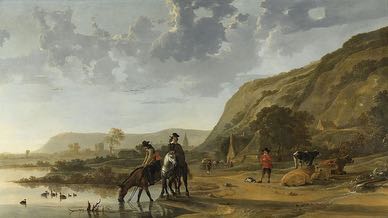
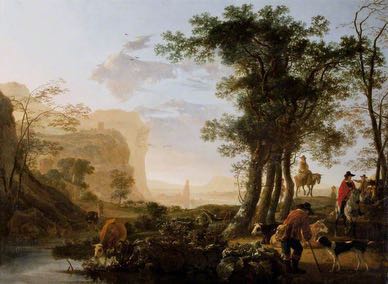
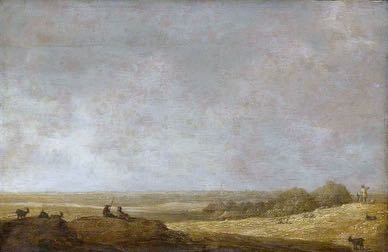
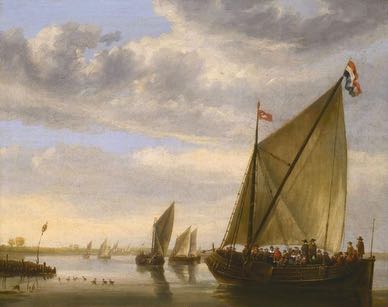
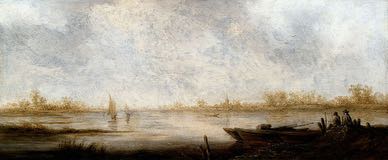
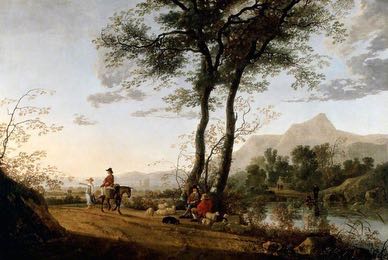
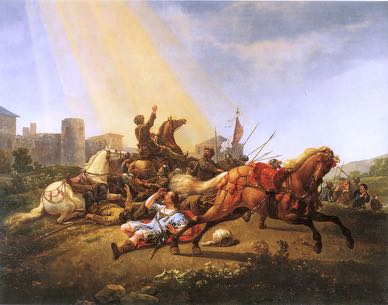
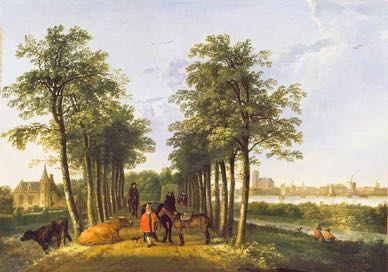
In his youth, Cuyp’s life was marked by financial difficulties due to his tendency to squander his inheritance. However, he later married a wealthy widow from a prominent family, which helped him gain stability and respect within Dordrecht’s civic and religious circles. His artistic development followed a unique trajectory, with two distinct phases evident in his work.
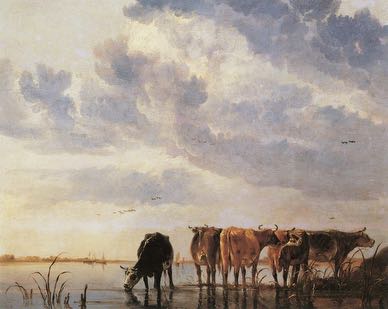
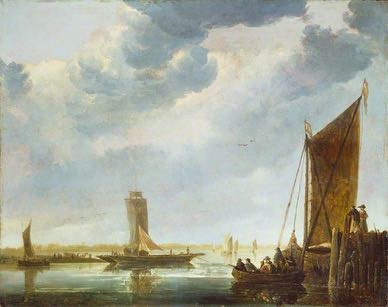
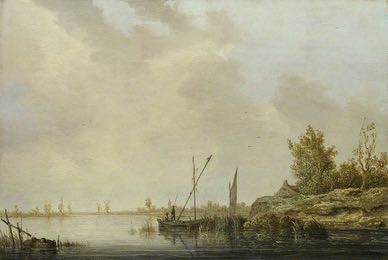
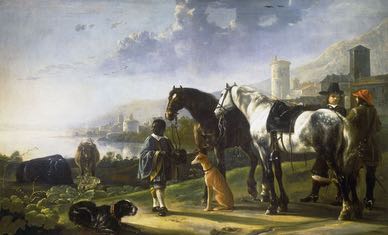
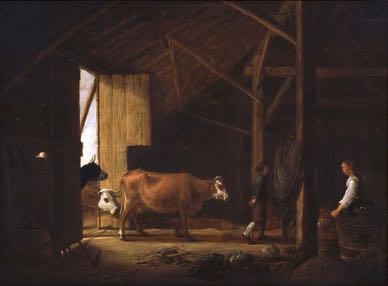
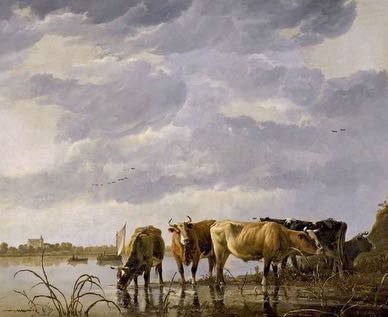
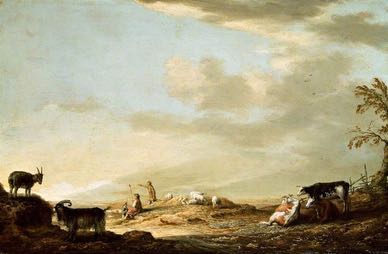
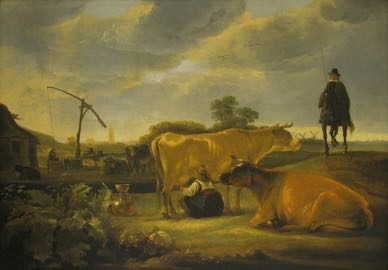
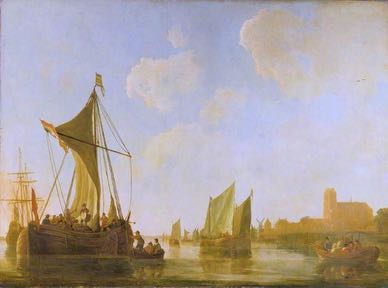
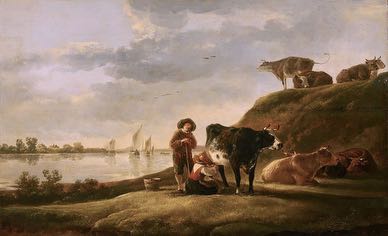
Cuyp’s early paintings show the influence of other artists he admired, with naturalistic compositions that were typically diagonal and executed in monochromatic tones of yellow and grey. These works are characterized by their limited palettes, soft illumination, and realistic portrayal of landscape elements. Over time, Cuyp’s style matured, adopting a more individualized approach. His later works, such as “The Maas at Dordrecht”, are characterized by strong compositional balance, intricate detail, and a broader color palette. In these pieces, he emphasized warm, golden-yellow and rich brown hues, with accents of pinkish-red and olive green, creating a gentle yet dramatic contrast to the traditional blue and silver-grey palette favored by many of his contemporaries.
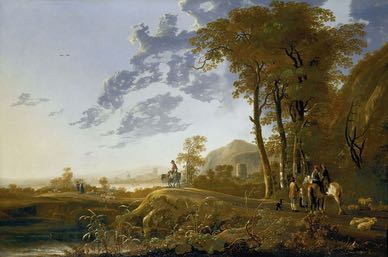
A hallmark of Cuyp’s style is his mastery in handling light, often using sunlight to lend an ethereal quality to his subjects, from grazing cattle to river views. His landscapes are reminiscent of the later techniques of Johannes Vermeer, who similarly captured the effect of light on form and color, yet Cuyp’s works remain distinctly his own in their portrayal of the Dutch countryside.
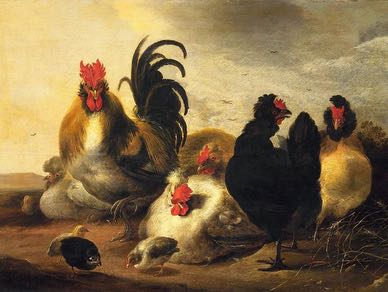
Cuyp's work found immense popularity in Britain, where collectors and aristocrats admired the sense of peace and grandeur in his landscapes. However, his works are notoriously difficult to chronologically organize; while Cuyp signed many of his paintings, he seldom dated them. As a result, a precise timeline of his career remains elusive. Additionally, the high demand for Cuyp's paintings has led to numerous works being attributed to him, though some may actually be by other contemporaries such as Abraham Calraet, whose initials “A.C.” are often mistaken for those of Cuyp.
Aelbert Cuyp remains an influential figure in Dutch art, revered for his ability to merge realistic representation with an idealized, luminous vision of the natural world, inspiring artists and collectors across generations.
Copyright © 2026 BrushWiz. All Rights Reserved.