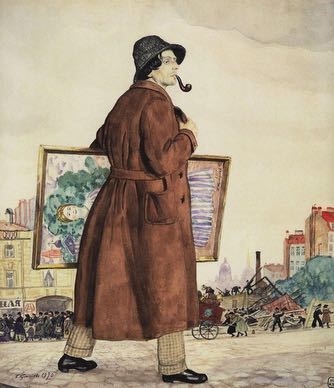
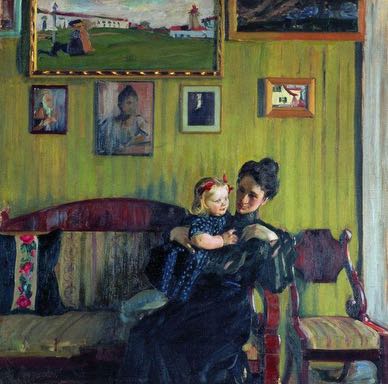
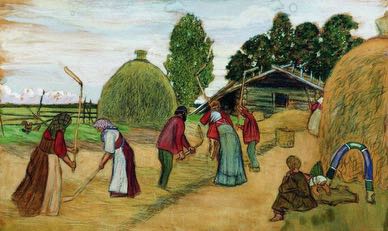
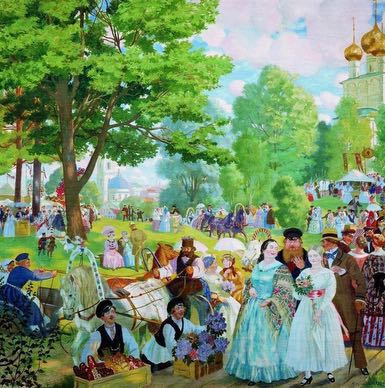
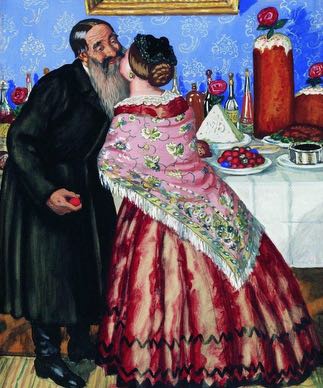
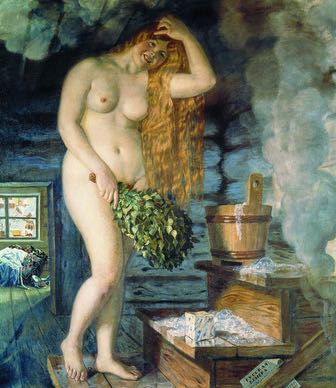
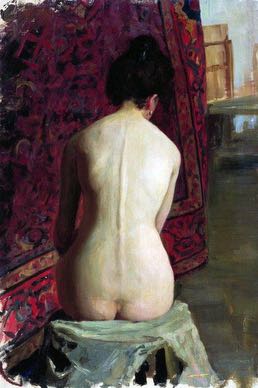
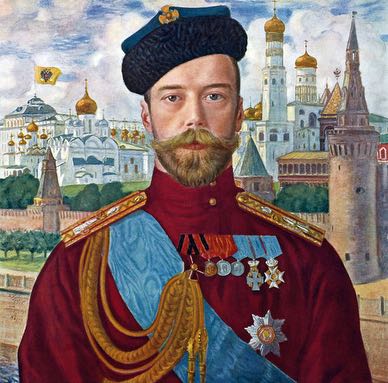
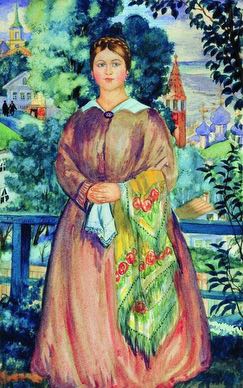
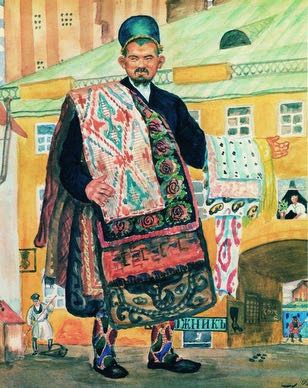
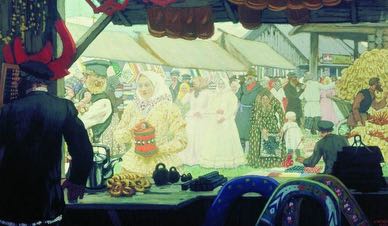
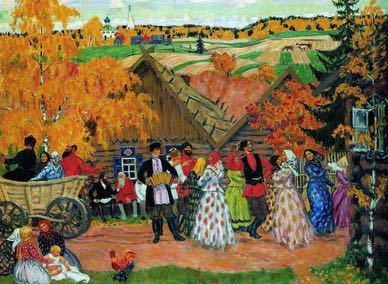
Coming from a scholarly family with a rich background in philosophy, literature, and history, Kustodiev developed an early appreciation for the refined and the intellectual. This upbringing, coupled with time spent in the home of a prosperous merchant, profoundly shaped his understanding of provincial life, particularly that of Russia’s merchant class, which would become a recurring subject in his art. His early education in art was guided by Pavel Vlasov and later by the esteemed Ilya Repin at the Imperial Academy of Fine Arts in St. Petersburg. Under Repin's mentorship, Kustodiev honed his craft, assisting Repin on significant projects and developing a keen insight into the subtleties of human psychology, which enriched his approach to portraiture and genre painting.
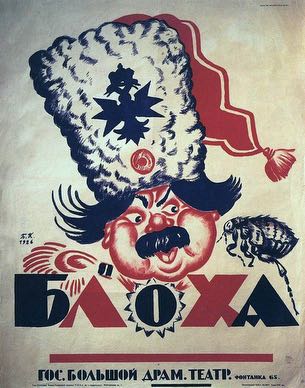
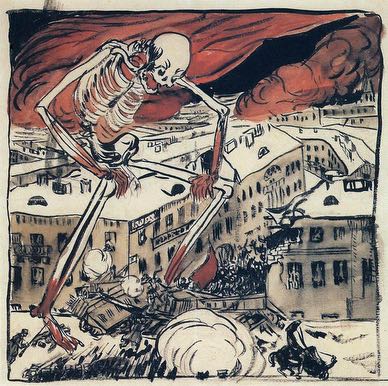
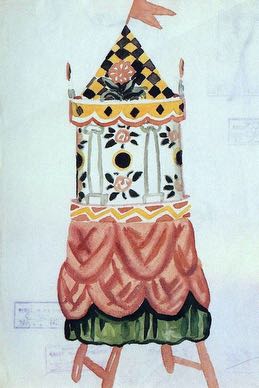
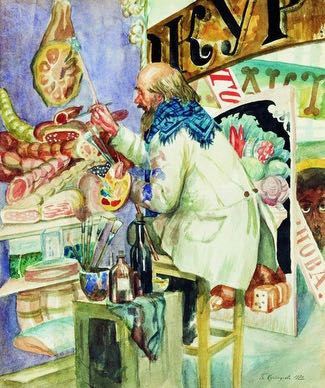
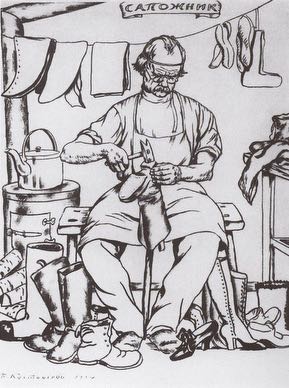
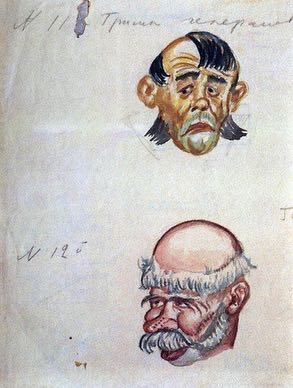
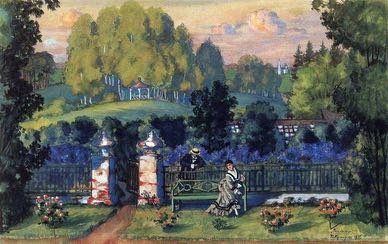
Kustodiev’s career was marked by success from the outset, with his first exhibition in 1896, followed by participation in the creation of “The State Council Session” at the Russian Museum in St. Petersburg between 1901 and 1903. His studies continued abroad in France, Germany, and Austria, where he painted portraits and genre scenes that captured the daily rhythms and cultural richness of his travels. Yet, it was his unique Russian works that resonated most deeply with audiences, particularly during the politically tumultuous years of the Russian Revolution. At this time, Kustodiev expanded his artistic pursuits, illustrating books and journals, sculpting, and designing theatrical sets, notably inspired by the works of playwright Alexander Ostrovsky. His illustrative work, especially his book illustrations, is regarded among his best, displaying his talent for detail and expression.
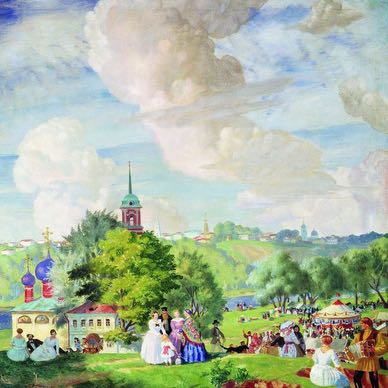
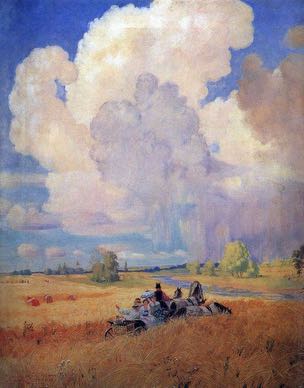
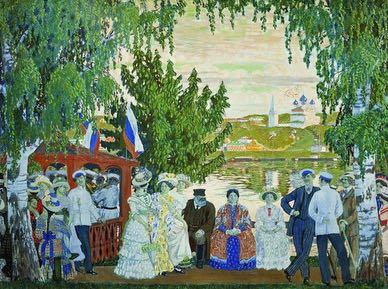
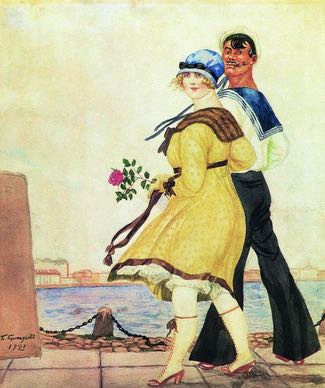
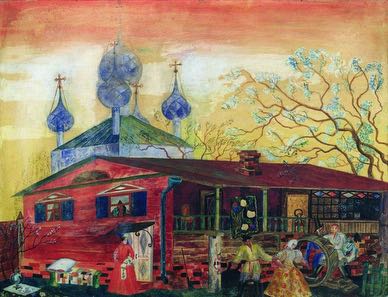
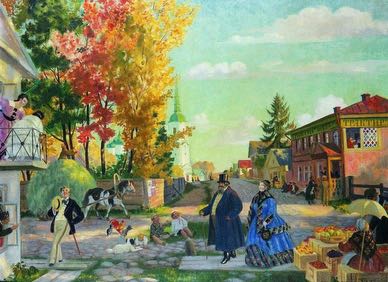
Kustodiev’s most beloved works remain those steeped in Russian tradition, like his vivid Shrovetide festival scenes, painted entirely from memory. These pieces capture the boisterous celebration of Russian folk festivals with exuberant color and detail, embodying his dream of creating a quintessentially Russian canvas that would transcend mere narrative. Shrovetide, like many of his works, harmoniously blends landscape and genre painting, offering a festive portrayal of Russian customs without relying on overt storytelling.
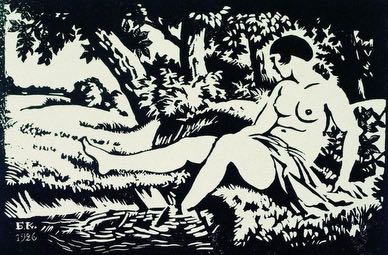
Despite being struck with paraplegia in his later years, Kustodiev’s artistic spirit never waned. Confined to a room, he continued to paint, create engravings, illustrate books, and design theatrical scenes until his passing on May 28, 1927, in Leningrad. His legacy endures in his joyful yet nuanced portrayal of Russian life, bridging fine art with the folk spirit of his homeland, and ensuring his place among the most cherished figures in Russian cultural history.
Copyright © 2026 BrushWiz. All Rights Reserved.