Knight’s formal art training began at the Pennsylvania Academy of Fine Arts, where he studied alongside notable artists like Thomas Eakins and Mary Cassatt from 1858 to 1861. Seeking further instruction, he moved to Paris and enrolled at the École des Beaux-Arts, where his teachers included the respected painters Alexandre Cabanel and Charles Gleyre. During his time in Paris, Knight developed close friendships with future Impressionists, including Auguste Renoir and Alfred Sisley, which greatly influenced his approach to capturing light and color.
In 1863, Knight returned to Philadelphia to serve in the army during the American Civil War. The war experience offered him the chance to observe and sketch soldiers, honing his ability to capture human emotion and the subtleties of expression. His observations of wartime scenes and human interactions laid a foundation for the empathetic portrayals of peasant life that later became his hallmark. He also established the Philadelphia Sketch Club, where he displayed works on diverse themes such as mythology, historical scenes, and the opera.
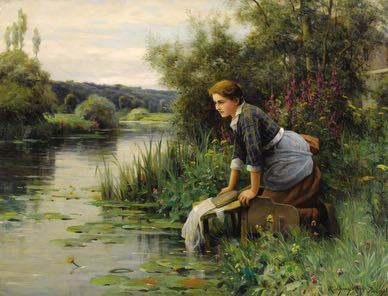
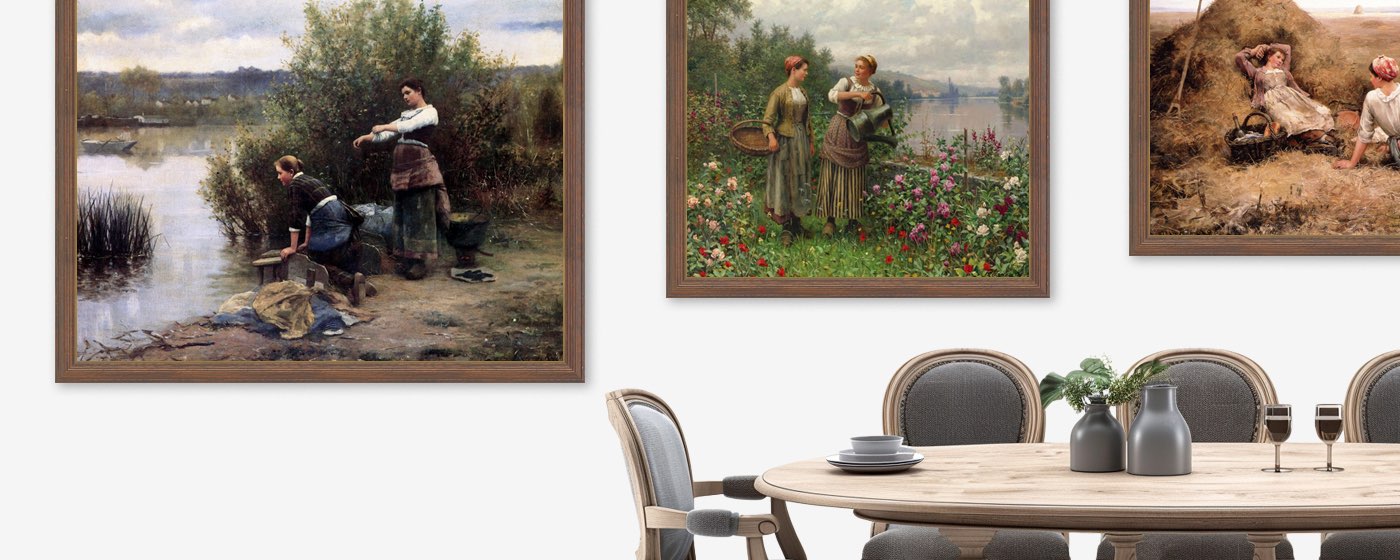
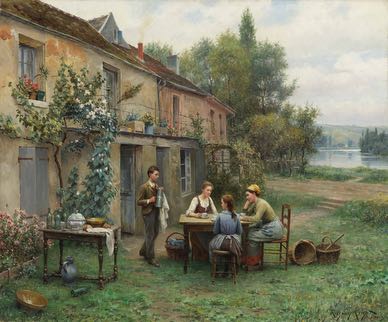
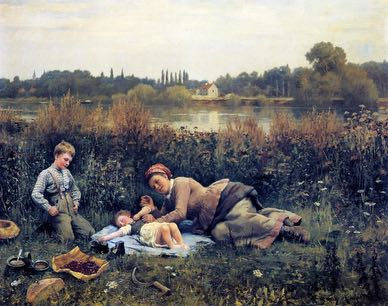
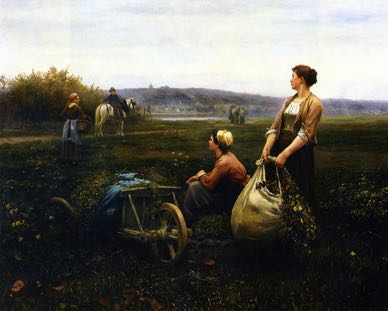
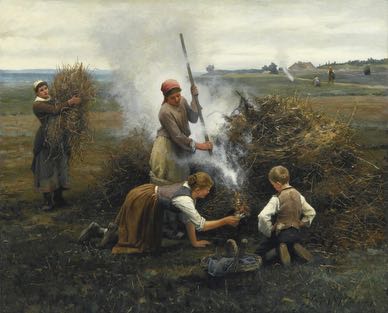
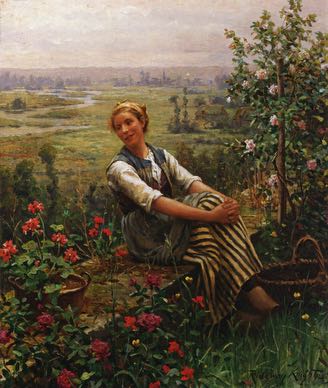
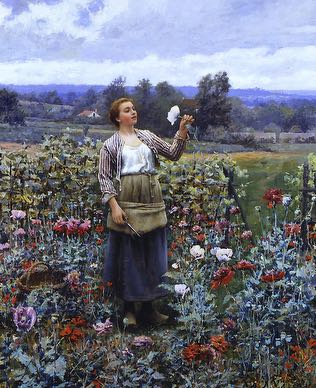
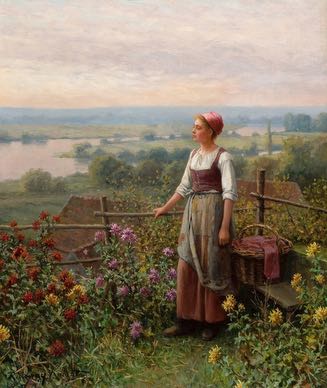
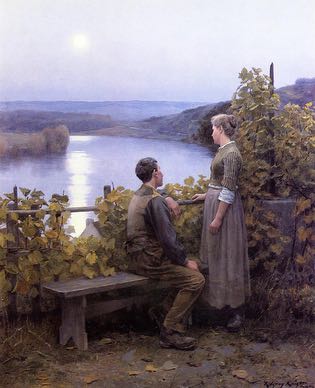
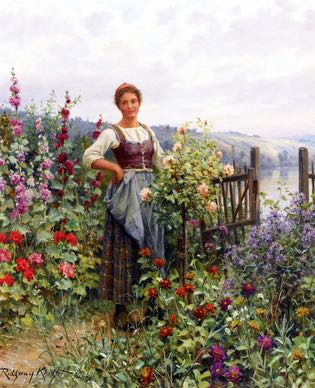
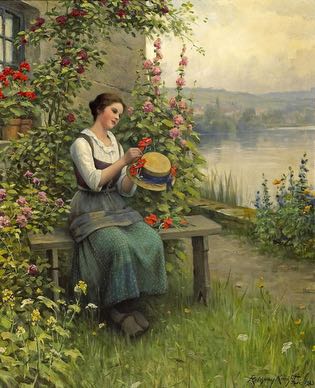
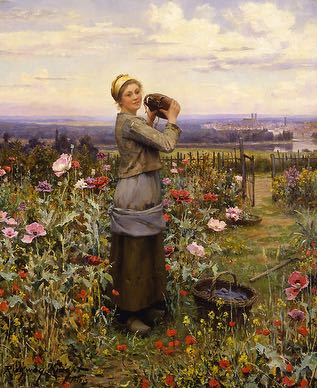
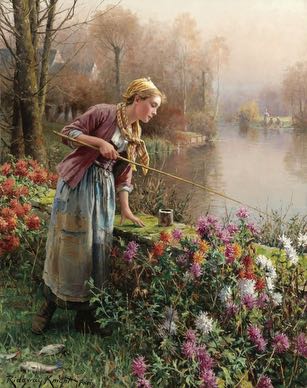
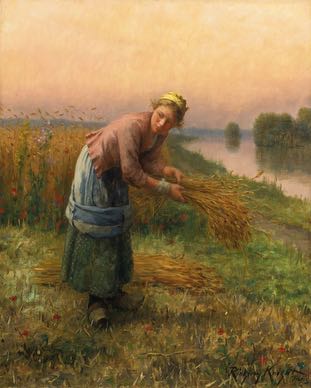
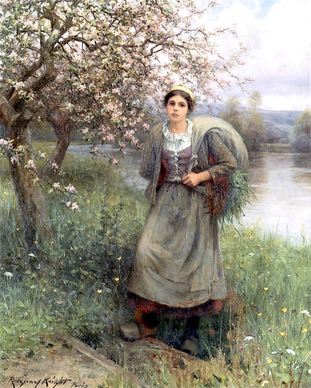
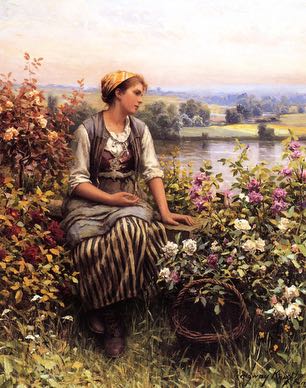
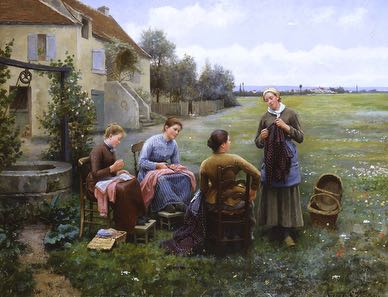
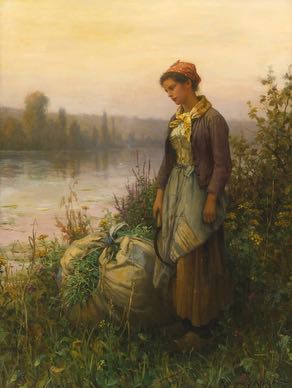
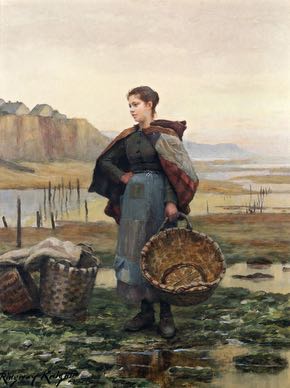
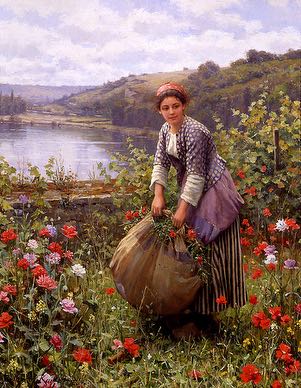
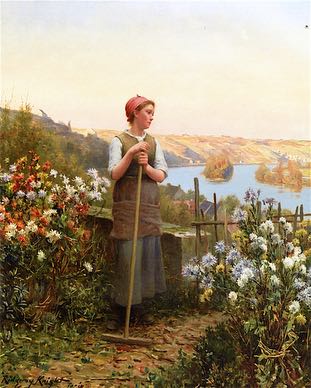
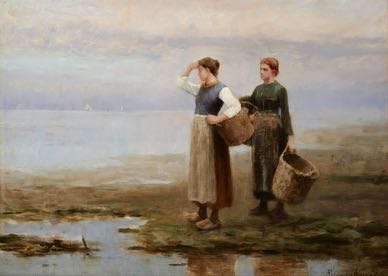
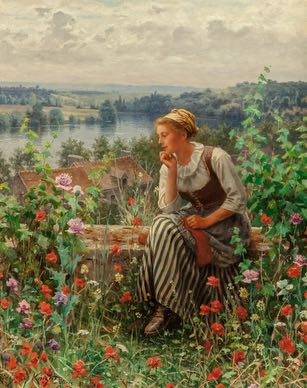
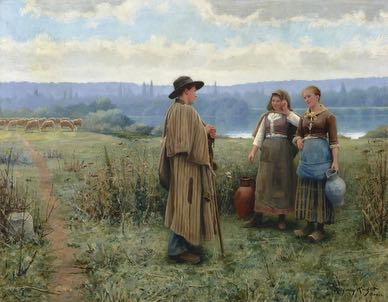
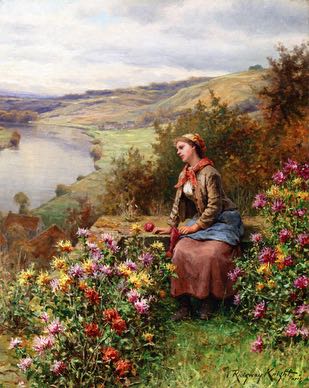
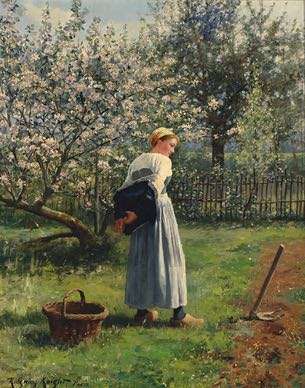
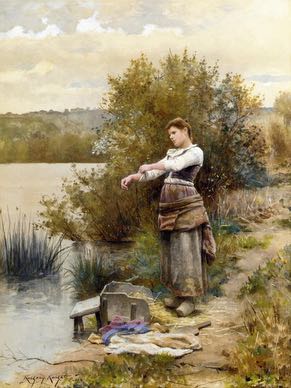
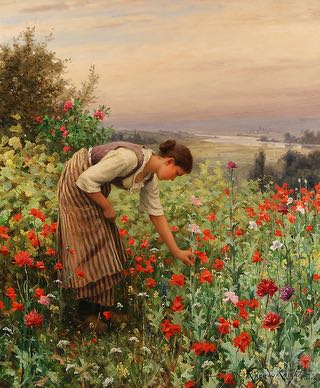
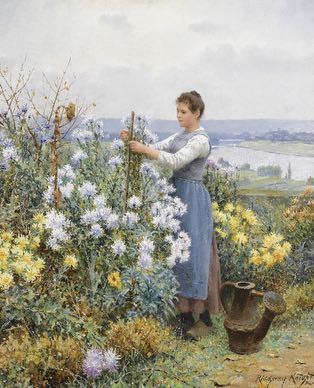
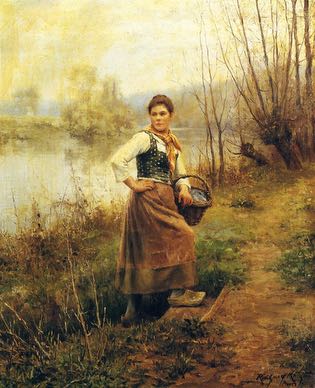
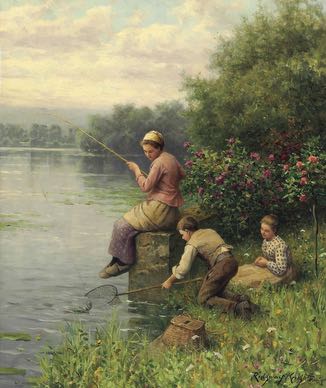
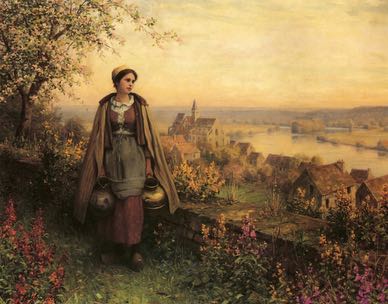
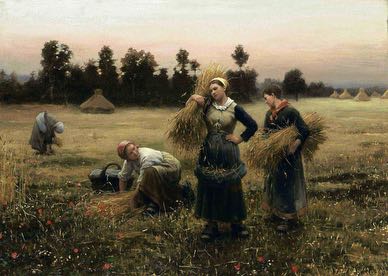
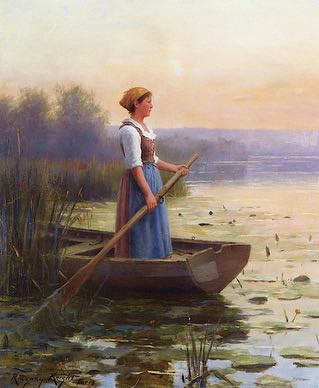
In 1871, Knight returned to France, establishing himself in Poissy, a small town outside Paris. Under the guidance of Jean-Louis-Ernest Meissonier, a master of realism, Knight began painting serene pastoral scenes. Inspired by Barbizon artist Jean-François Millet, he depicted peasant women in everyday, contemplative moments rather than emphasizing their hardships, thus avoiding the 'epic' tones often present in Millet's work. Knight's compositions were often set in gardens or along riversides, showcasing peasants and local women engaged in gentle activities, surrounded by lush foliage and abundant floral arrangements. His studies of daylight effects and atmospheric changes on landscapes became integral to his technique, bringing a harmonious balance to his paintings.
In 1896, Knight relocated to Rolleboise, a picturesque village near Paris. Here, he focused on painting the scenery of his own garden, frequently including charming local girls as subjects. His artworks, marked by their verdant gardens and distant river views, catered to a public appetite for scenes of beauty and calm, set apart from the tumult of the time.
Knight’s works were celebrated and highly sought after, earning him numerous awards and honors. His painting “Hailing the Ferry” won a third-class medal at the 1888 Paris Salon and a Gold Medal at the Munich Exhibition. It remains one of his most acclaimed pieces, exemplifying his skill in portraying both natural and human subjects with a refined sensitivity. The following year, at the Paris Exposition, he was awarded a Silver Medal as well as the prestigious Grand Medal of Honor from the Pennsylvania Academy of the Fine Arts.
Throughout his life, Knight was often compared to contemporaries such as Jules Bastien-Lepage and Jules Breton, whose works shared his stylistic dedication to rural scenes and peasant life. His art resonates for its heartfelt portrayal of the beauty in simplicity, and his legacy endures as a master of pastoral painting in 19th-century art.
Copyright © 2026 BrushWiz. All Rights Reserved.