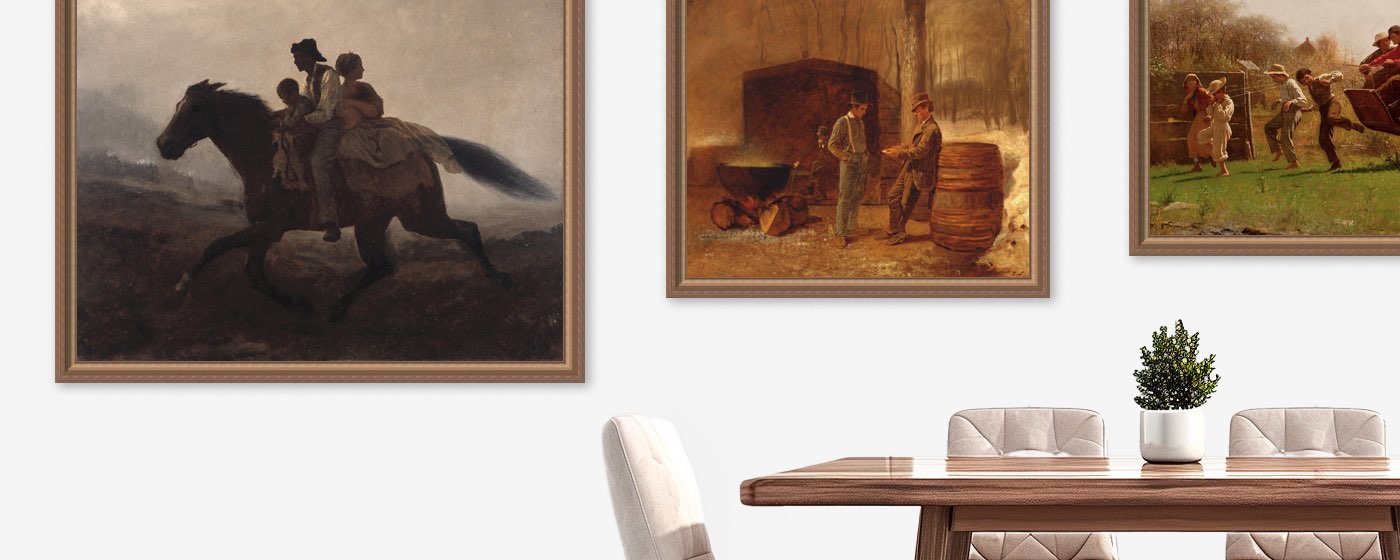
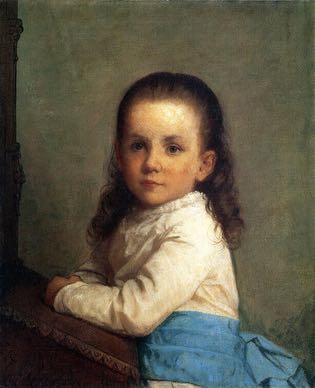
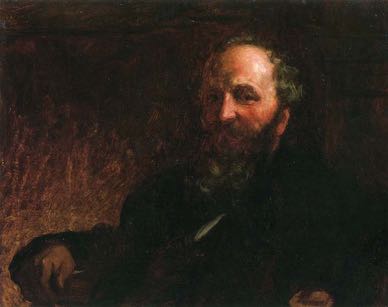
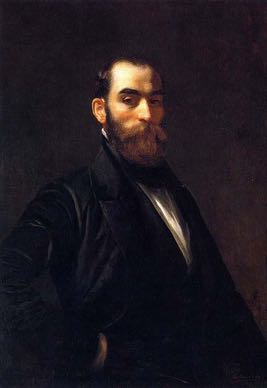
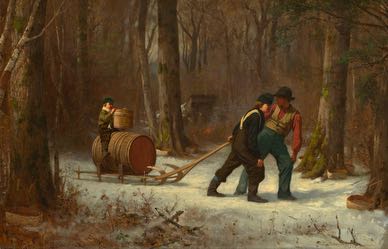
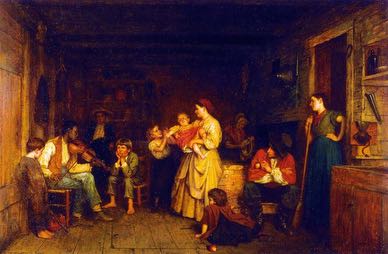
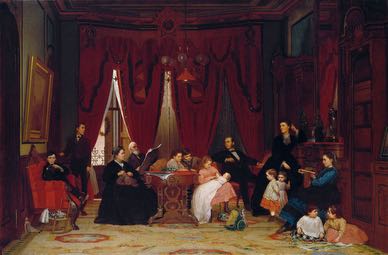
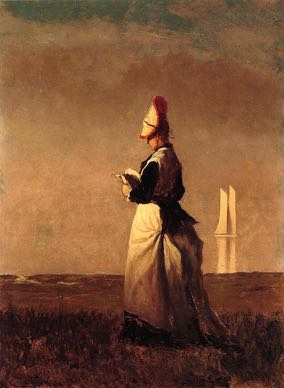
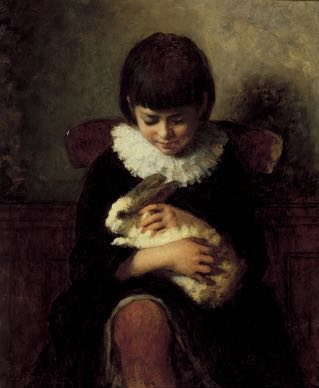
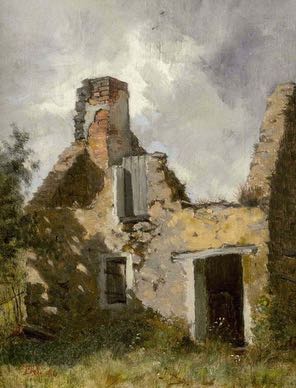
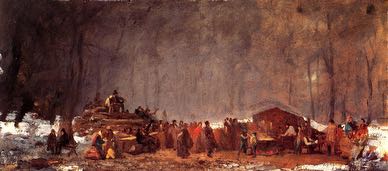
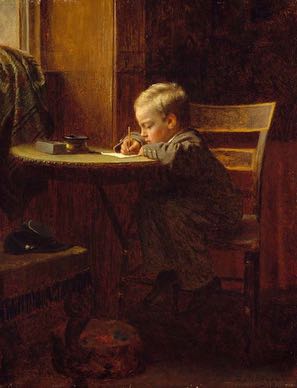
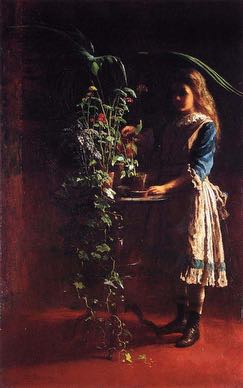
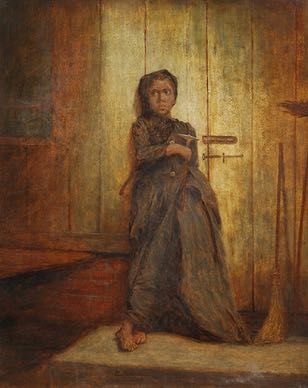
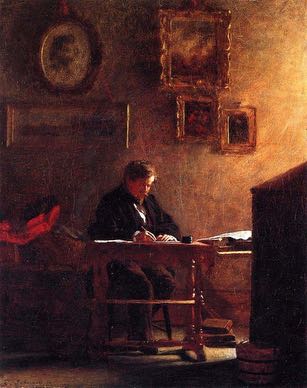
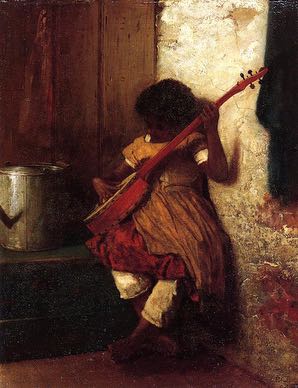
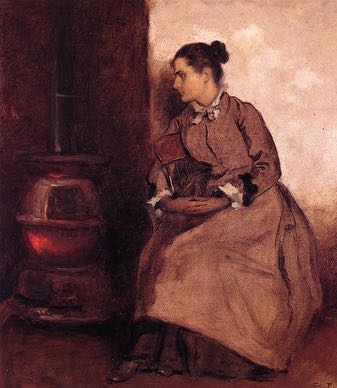
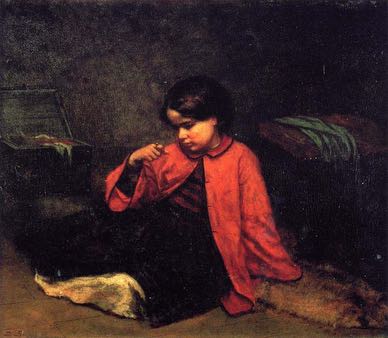
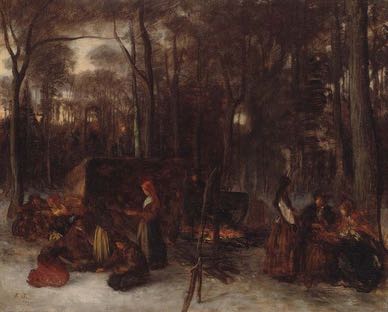
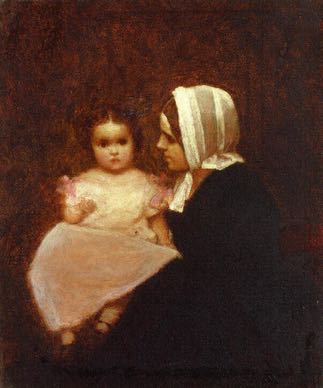
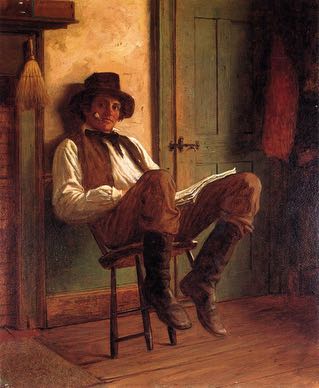
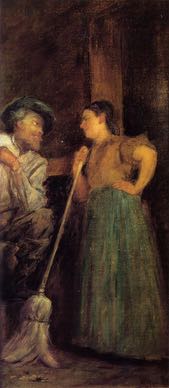
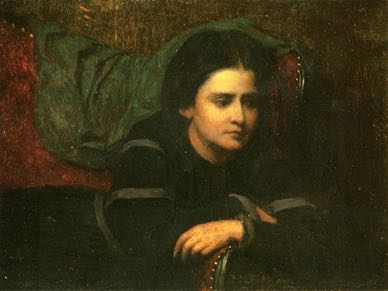
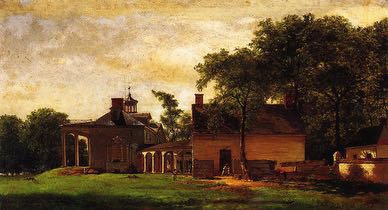
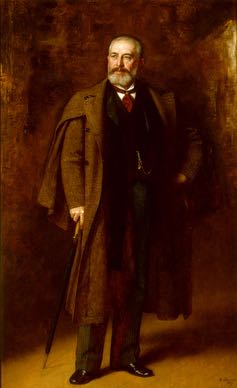
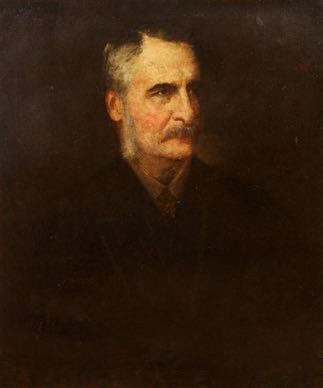
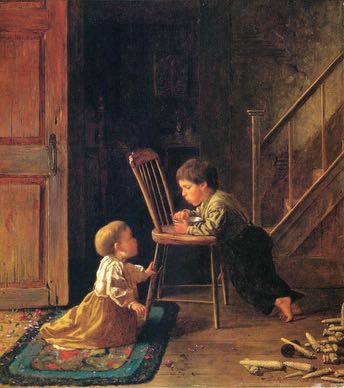
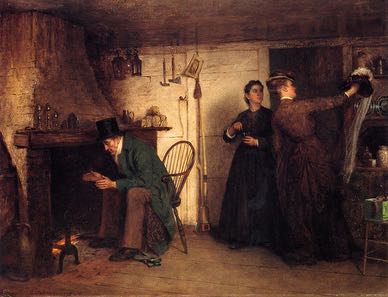
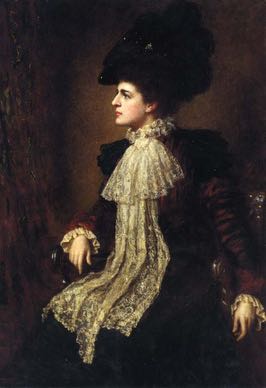
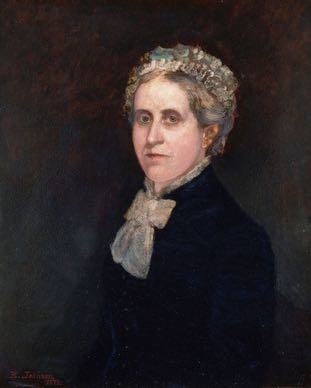
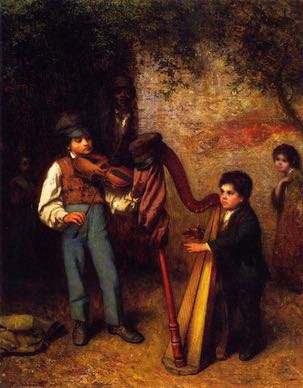
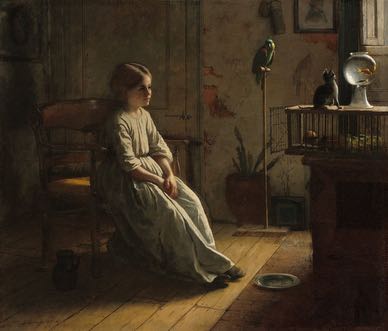
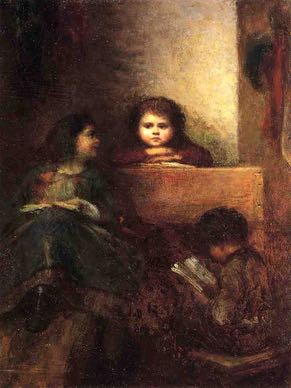
Eastman Johnson, an esteemed American portrait and genre painter, gained widespread acclaim during the period of the American Civil War. He is celebrated for his vivid and realistic depictions of everyday life and for his portraits of both common citizens and distinguished Americans. Often called "The American Rembrandt" due to the influence of 17th-century Dutch masters on his later works, Johnson’s art reflects a deep commitment to realism and careful study of his subjects.
Born in 1824 in Lovell, Maine, Johnson’s early artistic career began in Boston, where he apprenticed with a lithographer in the 1840s. His father’s appointment as Chief Clerk of the Navy Department under President James Polk allowed Johnson to gain access to key opportunities. In 1849, he moved to Düsseldorf, Germany, a popular destination for American artists seeking formal training. There, Johnson studied with the well-known history painter Emanuel Gottlieb Leutze and became associated with the Düsseldorf School, which emphasized precise, detailed painting.
Johnson then traveled to The Hague, where he studied the works of Dutch and Flemish masters, such as Rembrandt and Vermeer, whose influence is clearly seen in his use of light and shadow, as well as his interest in domestic and everyday life scenes. He also spent time in Paris, training under academic painter Thomas Couture before returning to the United States in 1855.
Upon his return, Johnson established himself as a prominent artist in New York City. His painting “Negro Life at the South” (often called Old Kentucky Home) became a defining work, showcasing his skill in capturing complex social scenes. This genre scene, depicting a group of African Americans in an intimate, domestic setting, was praised for its authenticity and nuanced representation, reflecting the social climate of pre-Civil War America.
Johnson’s works are notable for their meticulous realism, often portraying actual individuals rather than generic or idealized figures. His famous series of portraits of the Ojibwe people in 1857 showcases this ability; the descendants of the people he depicted can still recognize their ancestors in these portraits today. His skill in capturing the unique character and identity of his subjects made his work stand out in a period when photorealism was largely unknown.
Throughout his career, Johnson's work was marked by a careful study of light and shadow, reminiscent of the Dutch Baroque painters he admired. His mastery of light and his ability to evoke emotional depth and realism earned him a lasting reputation in American art.
Today, Eastman Johnson’s legacy endures as one of the foremost American artists of the 19th century. His works are held in major collections across the United States, where they continue to be appreciated for their insight into American life and their technical brilliance.
Copyright © 2026 BrushWiz. All Rights Reserved.