
❄️ Winter Sale. Offer Ends 12/01/2026. View Details
❄️ Winter Sale. Ends 12/01/2026. View Details
❄️ Winter Sale. View Details
Artists
Subjects
Movements
Collections
Decor
Portraits
Commissions
Framing
Reviews
Gift Cards
On Sale
Edouard Vuillard Oil Painting Reproductions
Shop museum-quality reproductions of Edouard Vuillard’s most famous paintings, each hand-painted in oil on canvas by a professional artist.
Shop Art
Showing 1-40 of 571 results
Sort By
Most Popular
- Most Popular
- New Arrivals
- Best Sellers
- Alphabetical A-Z
- Alphabetical Z-A



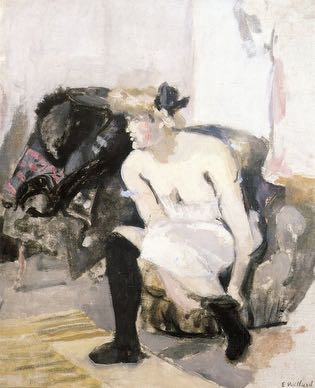

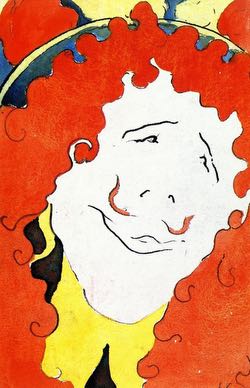
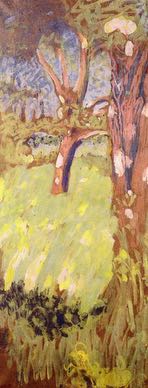

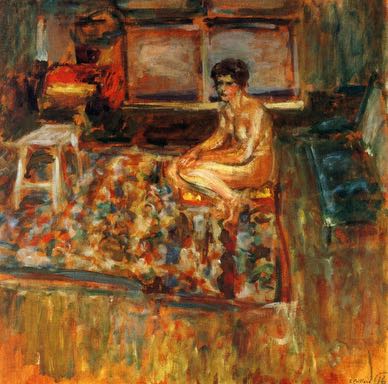
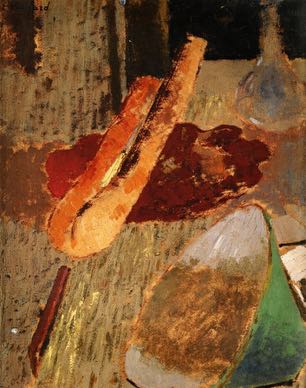


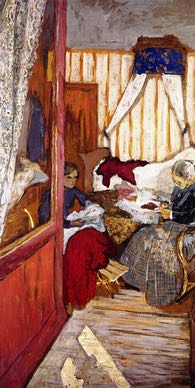

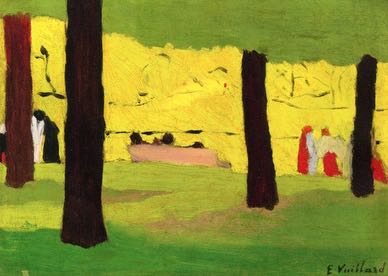
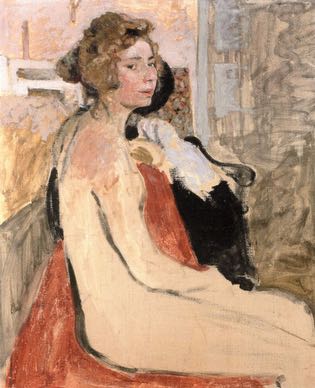

Can’t Find the Painting You Want?
Send us a reference image. We can recreate almost any artwork in the size and style you’re looking for.
Get a Free QuoteHand-Painted Edouard Vuillard Reproductions
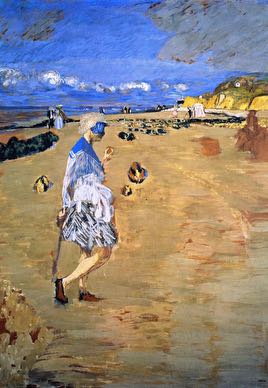
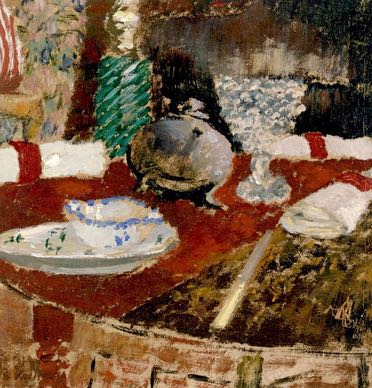
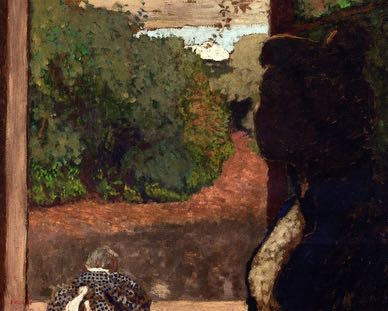
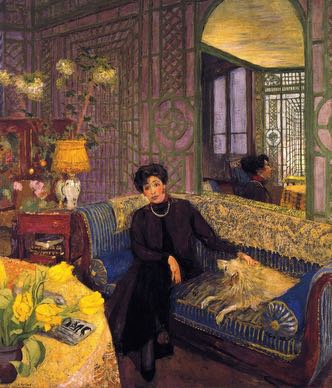
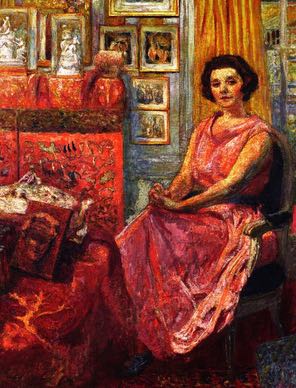
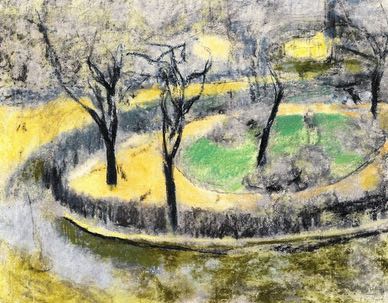
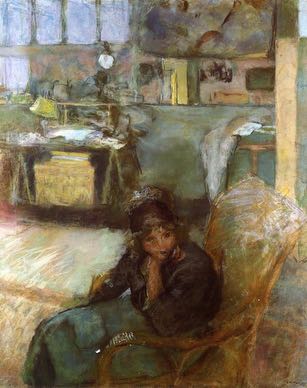
Bring Vuillard’s art into your home with an oil-on-canvas reproduction hand-painted by a professional artist. Our collection features hundreds of paintings from across his career, including The Flowered Dress, The Public Gardens, Under the Trees, and Madame Vuillard Sewing. Discover patterned interiors, intimate portraits, women reading and sewing, gardens, Parisian squares, and other subjects closely associated with Vuillard. Every reproduction is a real oil painting, offering depth and texture that a print or digital transfer cannot provide. From iconic masterpieces to lesser-known works, find a Vuillard painting that suits your space.
The Making of an Edouard Vuillard Oil Painting Replica
Creating a Vuillard oil painting replica requires patience, precision, and an understanding of the original artwork. Our studio includes artists who specialize in Post-Impressionist painting and understand the distinctive qualities of Vuillard’s work. The artist begins by studying the source image, then recreates its flattened space, interlocking patterns, muted color relationships, intimate figures, and softly worked surfaces by hand in oil on canvas. Special attention is given to Vuillard’s balance of observation and decoration. After completion, the painting is inspected by our quality-control team and photographed for your approval. The result is a carefully executed reproduction that reflects the visual character of the original.
Custom Sizes and Frames for Your Vuillard Painting
Your Vuillard painting can be ordered in practically any size, from popular standard dimensions to a custom canvas size selected directly on the product page. This flexibility lets you choose a painting that fits your wall and complements your room perfectly. After selecting the size, you can choose from high-quality frames in classic or modern designs, with professional canvas stretching also available. Our framing options complement the layered patterns and intimate atmosphere of Vuillard’s paintings. With sizing, stretching, and framing arranged in one order, your artwork can arrive ready for display without a separate visit to a frame shop.
Order an Edouard Vuillard Reproduction with Confidence
Buying hand-painted art online should feel clear and comfortable. After your Edouard Vuillard reproduction is completed, we send high-resolution photographs for your review before shipping. You can inspect the composition, colors, and overall finish, then request adjustments if needed. The painting is dispatched only after you approve it, so you know what to expect when it arrives. Your order also includes free express worldwide shipping and is covered by our 90-day return policy. Together, these assurances help you purchase a Vuillard oil painting with greater confidence and peace of mind.
The Life and Art of Edouard Vuillard
Édouard Vuillard was a French painter, printmaker, and decorator and a central figure among the Nabis. Raised in a Parisian dressmaking household, he became known for intimate rooms where people nearly disappear into wallpaper, patterned fabric, furniture, and muted light. Gauguin, Japanese prints, Symbolism, and the decorative arts encouraged Vuillard to flatten perspective and use pattern and color as expressive structures. His practice reached beyond easel painting to lithography, theater design, folding screens, and large commissioned panels. Later portraits, gardens, and city views became more naturalistic, yet never lost their sensitivity to atmosphere and domestic space. Vuillard made the ordinary textures of modern life a formally inventive subject of Post-Impressionist art.
Read More
Who Was Édouard Vuillard?
Jean-Édouard Vuillard was born on 11 November 1868 in Cuiseaux in eastern France. His family moved to Paris when he was a child, and the city remained the center of both his life and art. After his father died in 1884, his mother, Marie, supported the family through dressmaking. Vuillard lived with her for most of her life, and her workrooms, fabrics, employees, and daily routines became lasting subjects.
His pictures often begin with something unremarkable: a visitor at a table, a figure reading, a woman sewing, or a view through a window. Vuillard made these moments visually complex by compressing space and weaving together subtle colors and repeated patterns. Bodies can dissolve into dresses or wallpaper, while textiles and furniture become as active as the people. This balance of familiarity and formal invention made him one of his generation’s most distinctive artists.
The dressmaking workshop was a visual education in itself. Vuillard watched workers bent over repetitive tasks, patterned cloth spread across tables, and garments fitted to bodies. A fabric might hide part of a figure, join distant corners of a room, or turn a modest interior into a dense arrangement of shape and color. It is no accident that textiles in his paintings often carry as much weight as faces.
Where Did Vuillard Learn to Paint?
Vuillard attended the Lycée Condorcet in Paris, where fellow students included the future painter Ker-Xavier Roussel and theater director Aurélien Lugné-Poe. His family initially imagined a conventional profession for him, but Vuillard chose art. He studied at the Académie Julian and then entered the École des Beaux-Arts, learning figure drawing and the traditions represented in the Louvre.
Academic study gave him a firm foundation, though he soon tired of art concerned mainly with naturalistic imitation. Through his friends, he met young painters looking beyond the official Salon. They discussed Paul Gauguin, the expressive force of color, and the possibility of organizing a picture as a decorative surface rather than a window onto reality.
What Drew Vuillard to the Nabis?
Vuillard joined the Nabis in 1889. Their name came from the Hebrew word for prophet, and the group included Pierre Bonnard, Maurice Denis, Paul Ranson, Paul Sérusier, and Roussel. They rejected the idea that painting should merely reproduce what the eye sees, treating the canvas instead as a deliberate arrangement of rhythms, shapes, lines, and colors.
Gauguin, Symbolist writing, Japanese woodblock prints, and medieval art encouraged Vuillard to simplify forms and flatten space. Alongside oil, pastel, and printmaking, he used distemper, whose matte surface suited decorative work. Yet his Nabi art remained deeply personal. Where others might turn to remote myth, Vuillard found mystery in family relationships, enclosed rooms, and the patterned surfaces of daily life.
The group also dismissed any strict division between fine art and decoration. Its members made furniture, posters, folding screens, book illustrations, stained glass, murals, and theater programs, believing art should shape an entire environment. This suited Vuillard’s feeling for surfaces and rooms. Even a tiny interior can seem architectural because doors, walls, fabric, and furniture organize it as strongly as the figures do.
Why Do Vuillard’s Interiors Feel So Distinctive?
Vuillard repeatedly painted his mother, sister, friends, and visitors in rooms where carpets, tablecloths, wallpaper, curtains, and dresses compete with the figure. In Woman in a Striped Dress, pattern is not simply decoration. It collapses depth, blurs edges, and draws person and room into one visual rhythm.
Such pictures led critics to associate Vuillard and Bonnard with Intimism, a term for painting rooted in private domestic experience. The label describes the subject but not its full complexity. His interiors can be crowded or comforting, psychologically tense or deeply quiet. Faces may be indistinct, while the spaces between people, their postures, and the arrangement of objects reveal the relationships in the room.
How Did Theater and La Revue Blanche Broaden His Art?
Vuillard’s circle reached well beyond painting. Through Lugné-Poe, he became involved in experimental theater, designing scenery, settings, and programs for Théâtre de l’Œuvre productions. Working for the stage made him think at a larger scale and arrange bodies within shallow enclosed spaces. The relation among performer, setting, and audience also sharpened his feeling for gesture and indirect storytelling.
He was close to Thadée and Misia Natanson, whose journal La Revue Blanche gathered artists, critics, writers, and musicians. Their homes and social gatherings gave Vuillard patrons as well as subjects. Through them, he stood at the center of an advanced Parisian culture where painting interacted freely with publishing, literature, music, theater, and decorative art.
Vuillard contributed lithographs and illustrations to this experimental publishing world. Printmaking forced him to simplify form and make a limited range of tones carry gesture, character, and setting. These lessons reinforced qualities already present in his painting. Taken together, his images of friends, performers, and editors form a visual history of the cultural network supporting the French avant-garde in the 1890s.
What Could Vuillard Achieve with Decorative Panels?
The Nabis wanted art to live within everyday surroundings, not remain isolated inside frames. Vuillard embraced the principle through folding screens and panels designed for particular rooms. His 1894 Public Gardens ensemble spreads children, trees, paths, and nurses across a sequence of decorative scenes. Continuous rhythms of foliage and figures take the place of a conventional story.
These commissions brought painting into direct conversation with architecture and interior design. Vuillard adjusted palette, scale, and subject to suit the intended room. Garden and leisure scenes still obey strong surface patterns, linking the large decorations to his smallest domestic interiors. In both, the central question is how a painted image alters the space around it.
What Did Photography Add to Vuillard’s Way of Seeing?
Vuillard began using a handheld Kodak camera in the 1890s and eventually left nearly two thousand snapshots. Family, friends, city views, holidays, and interiors fill the archive. Few photographs correspond directly to a finished painting, and they did not replace drawing. Instead, the camera offered another way to notice unposed activity, informal gestures, and unexpected cropping.
Photography strengthened compositional habits already present in his work: off-center bodies, partial views, abrupt edges, and the feeling that life continues beyond the frame. It also preserved fleeting moments within his circle. Vuillard transformed rather than mechanically copied these photographs, changing details, colors, and spatial relationships through memory and paint.
How Did Vuillard’s Art Change after the Nabis?
As the Nabis drifted apart around the end of the 1890s, Vuillard retained his interest in intimate spaces but moved toward clearer modeling and more legible perspective. He painted gardens, landscapes, portraits, and window views without giving up the close relationship between figures and their surroundings. His friendship with the dealer Jos Hessel and Hessel’s wife, Lucie, brought patrons and new access to theaters, country houses, and fashionable interiors.
Looking down from his Paris apartment, Vuillard painted a series of views around the Place Vintimille. Trees, streets, windows, pedestrians, and shifting weather become overlapping patterns seen from above. In commissioned portraits, artworks, furniture, and possessions surround the sitter and help establish identity. These later pictures are more naturalistic than the Nabi interiors, but setting and atmosphere remain essential.
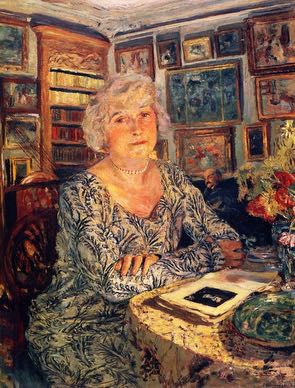
Vuillard studied the sitter’s room as closely as the sitter. Books, desks, fabrics, paintings, and architectural details could all reveal habits and social position. The mature portraits consequently expand outward: the interior does not merely contain a person but helps tell us who that person is. His technique grew broader as well, joining carefully observed faces to freer passages of color.
Which Paintings Reveal the Range of Vuillard’s Career?
Across interiors, portraits, city views, gardens, and decorative panels, these works show how Vuillard’s art evolved without losing its sensitivity to pattern and private experience:
- The Flowered Dress: A figure and a heavily patterned room merge into one tightly constructed painted surface.
- Interior With Woman Sewing: Close spatial relationships and subdued colors shape an image of domestic work.
- The Public Gardens, The Nursemaids: Paths, trees, and figures unfold as a broad decorative rhythm.
- The Dining Room: Enclosure, pattern, and atmosphere transform an ordinary room.
- Portrait of Thadée Natanson: Vuillard records an important patron and friend from the circle around La Revue Blanche.
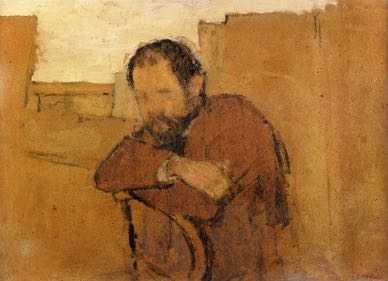
- At La Revue Blanche, Portrait of Félix Fénéon: The editor appears inside the cultural world connecting Vuillard to avant-garde Paris.
- The Kiosk, Place Vintimille: From an elevated viewpoint, streets and trees become an interlocking urban design.
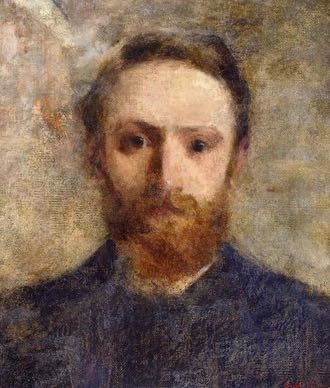
- Self Portrait: Vuillard turns the restrained observation of his portraiture toward his own appearance.
Why Does Vuillard Matter to Modern Art?
Vuillard expanded modern painting by treating formal experiment, private life, and decoration as inseparable. His finest interiors do more than illustrate bourgeois domestic routines. Pattern, compressed space, and color reshape the viewer’s sense of people within their surroundings. In this way, his work connects Post-Impressionism and Symbolism to later explorations of design, abstraction, and psychological space.
His practice also crossed the traditional boundary between applied and fine art. Prints, paintings, theater designs, screens, and large decorative commissions belonged to the same creative world. Vuillard’s early Nabi pictures once overshadowed the rest of his career, but renewed study has revealed the quality of his later portraits and urban views. He is now recognized as a major interpreter of modern French life and one of the intimate interior’s most inventive painters.
Copyright © 2026 BrushWiz. All Rights Reserved.
About Our Edouard Vuillard Paintings
Are your Edouard Vuillard reproductions painted by hand?
Yes. Every reproduction is individually painted by hand in oil on canvas by a professional artist. We do not use prints, digital transfers, or mechanical reproduction methods.
How closely do your Vuillard copies resemble the original?
Our artists work to capture the composition, colors, texture, and visual character of the original Vuillard painting as closely as possible. Because every reproduction is painted by hand, small variations are natural and make each canvas unique.
How long does it take to complete a painting?
Most Vuillard reproductions require approximately two to three weeks to paint, dry, and inspect. Production time may vary depending on the artwork and canvas size, so check the estimate displayed on the product page.
Can I request a Vuillard painting that is not listed?
Yes. If you cannot find the Edouard Vuillard artwork you want in our catalog, send us the painting’s title or an image. Our team will review your request and confirm the available sizes, estimated production time, and price.
Will I receive photos of my painting before it is shipped?
Yes. We send high-resolution photographs of the completed painting for your approval. You can request adjustments if needed, and the painting will not be dispatched until the review process is complete.
Can I order a custom canvas size?
Yes. We offer custom dimensions in addition to the standard sizes shown on the product page. Select the dimensions you need directly from the available size options.
Can I order my Vuillard painting with a frame?
Yes. High-quality frames in classic and modern designs are available for many paintings. You can view compatible framing options and add your preferred design from the product page. Professional canvas stretching is also available.
How much does an Edouard Vuillard reproduction cost?
The price depends on the selected artwork, canvas dimensions, and framing option. Choose your preferred configuration on the product page to see the current price before ordering.
Do you offer free worldwide shipping?
Yes. Vuillard reproductions qualify for free express worldwide shipping. After dispatch, delivery usually takes five to eight business days, although timing may vary by country and destination.
What is the return policy for Vuillard reproductions?
Orders are covered by our 90-day return policy. Review the current return-policy page before ordering for complete information about eligibility, time limits, and the return process.
Why BrushWiz?
100% Hand Painted
Every piece is entirely handmade
Museum Quality
Faithfully recreated by expert artists
Custom Framing
Choose from a wide range of frames
Free Shipping
Enjoy free shipping on all orders
Cash Back Rewards
Earn cash back with every purchase