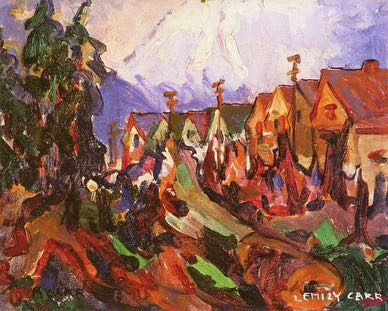
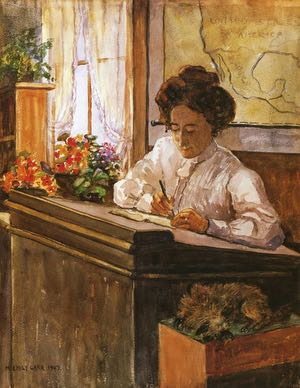
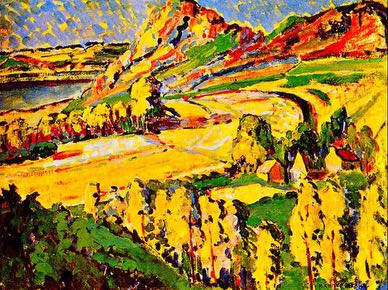
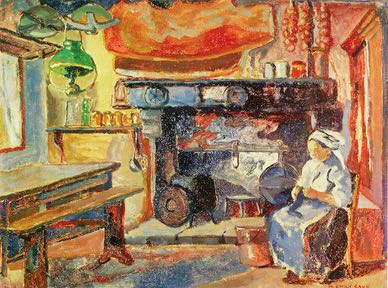
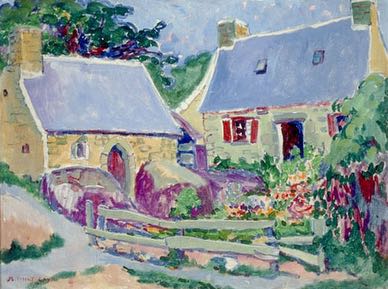
Born in Victoria, British Columbia, Carr was raised in a strict, religious household as the fifth of six children. From an early age, she showed a strong inclination toward art, though her family initially discouraged her artistic ambitions. In the 1890s, Carr studied art in San Francisco before continuing her studies in England and France, where she was exposed to various modernist movements, including Fauvism and Post-Impressionism. This exposure had a profound impact on her style, pushing her toward bold colors, expressive brushstrokes, and a departure from realism that would characterize her later works.
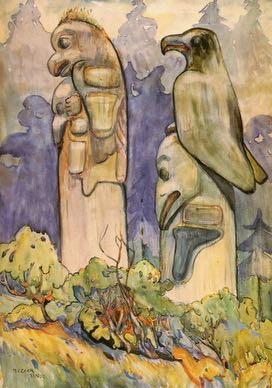
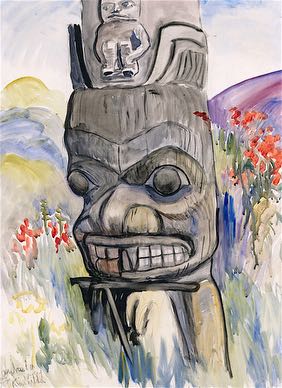
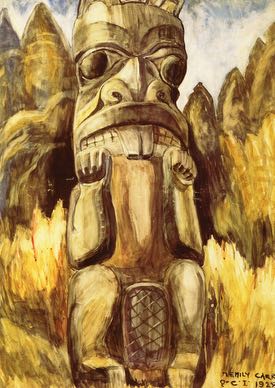
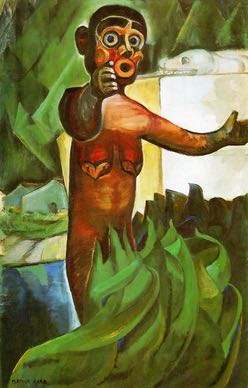
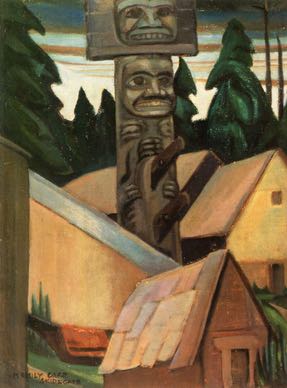
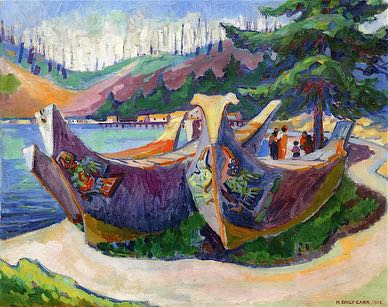
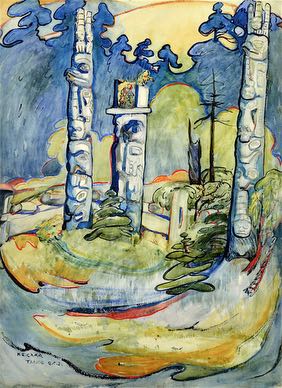
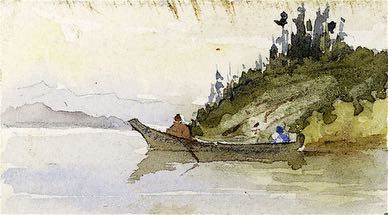
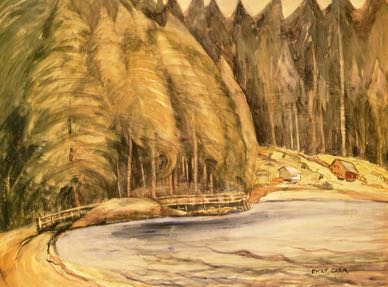
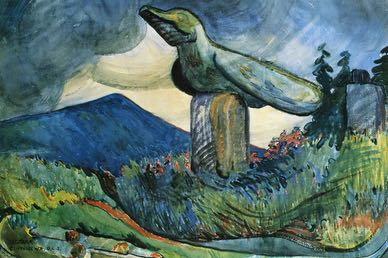
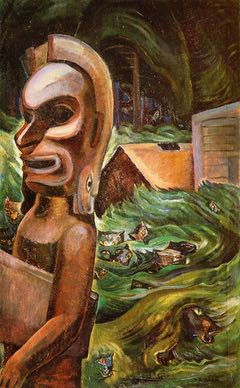
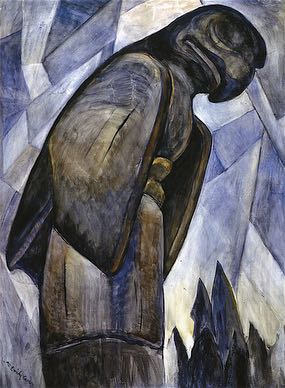
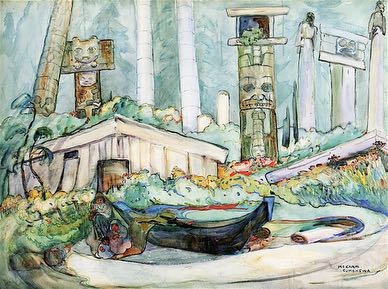
Carr’s fascination with Indigenous culture and the landscapes of British Columbia began early in her career. In the early 1900s, she traveled extensively throughout the province, visiting Indigenous villages and learning about the customs and artistry of the First Nations people. Her travels to these remote communities, often by canoe, allowed her to observe and sketch their traditional totem poles, longhouses, and other cultural artifacts. These experiences inspired a series of paintings that captured Indigenous art and architecture in a sensitive, respectful manner, preserving cultural symbols that were disappearing under the pressures of colonialism. Through her work, Carr became an advocate for the preservation of Indigenous culture, depicting its beauty with a profound sense of reverence and empathy.
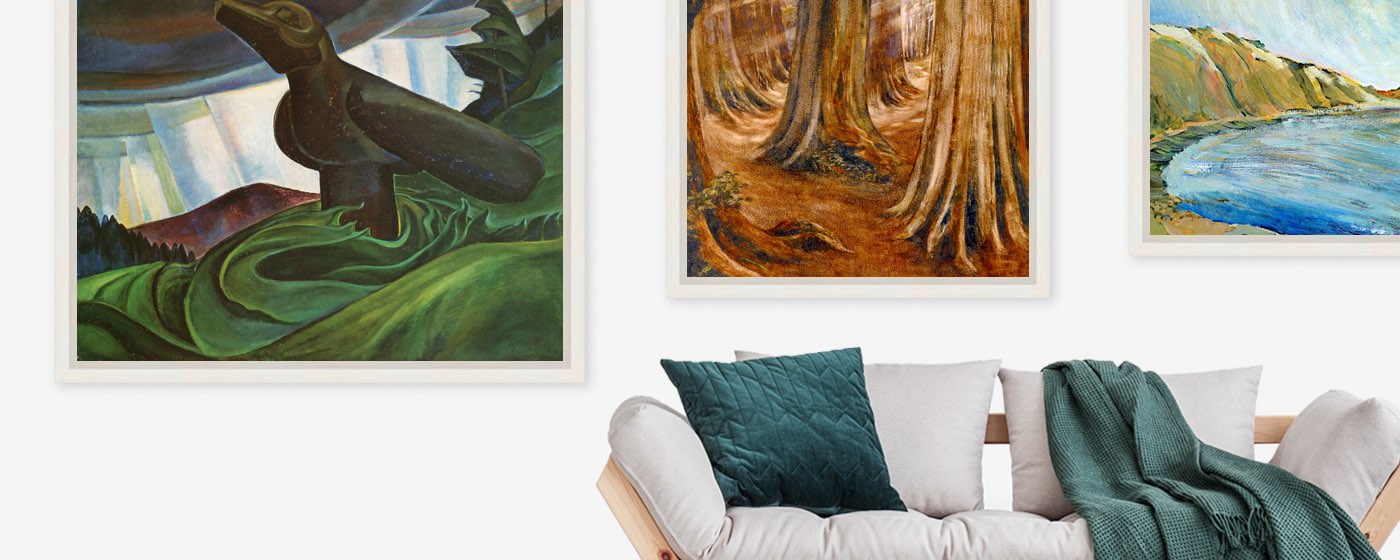
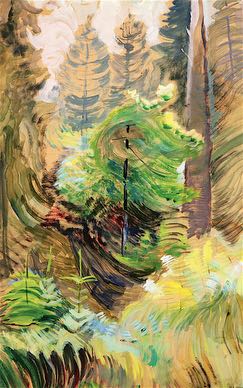
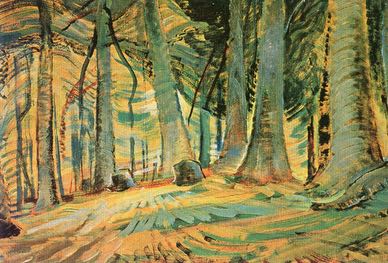
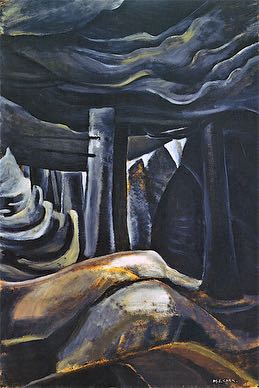
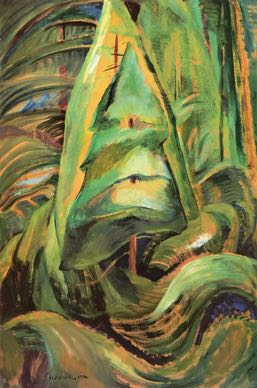
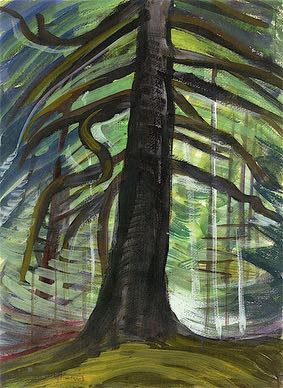
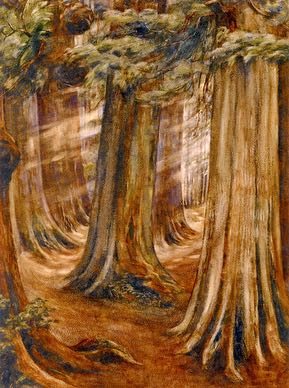
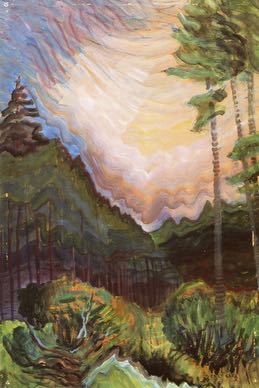
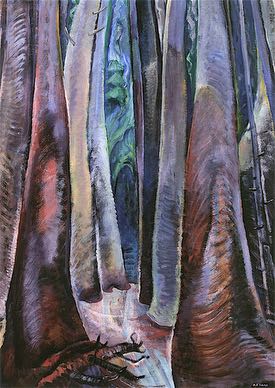
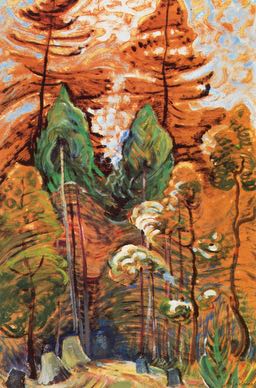
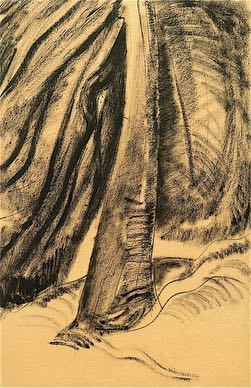
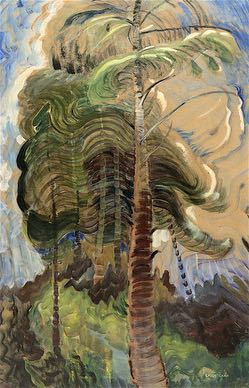
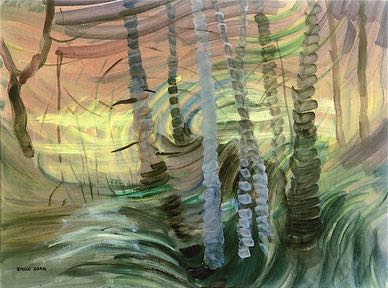
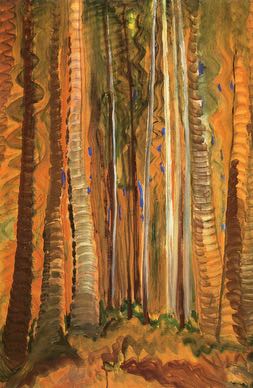
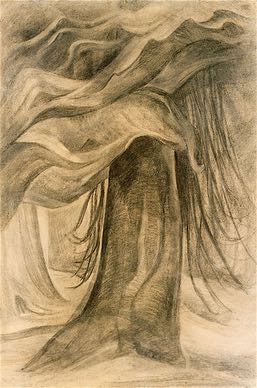
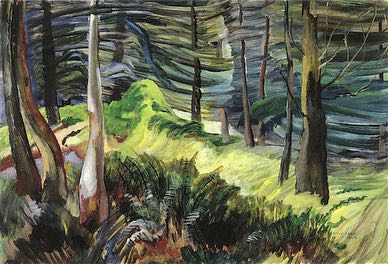
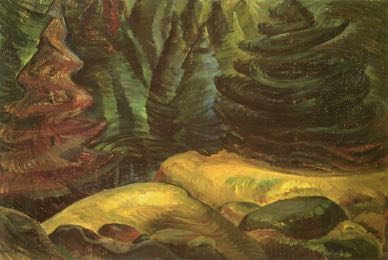
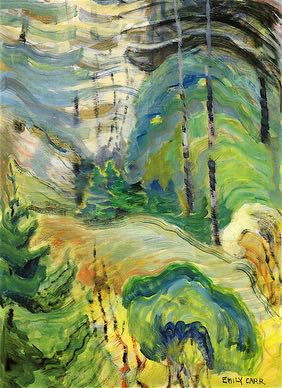
In 1912, Carr traveled to France, where she encountered Fauvist and Post-Impressionist techniques that transformed her approach to painting. Upon her return to Canada, she applied these influences to her depictions of the Canadian wilderness, infusing them with vibrant colors, strong lines, and an almost spiritual energy. Her later landscapes, which include swirling forests, towering trees, and expansive skies, conveyed her deep spiritual connection to nature. She approached her subjects as living entities, giving her forest scenes a sense of movement and vitality that set her apart from other Canadian artists. Her works often emphasized the power and majesty of the natural world, portraying trees and mountains as sacred, almost sentient beings.
Carr’s art was not immediately recognized within Canada’s conservative art scene, and she struggled financially for much of her life. However, in 1927, she gained national recognition when her work was included in an exhibition at the National Gallery of Canada, alongside members of the Group of Seven, a prominent Canadian landscape painting collective. This recognition invigorated Carr’s career, and she developed lasting friendships with several Group of Seven members, particularly Lawren Harris, who encouraged her to explore more abstract forms and spiritual themes in her work. Harris and Carr shared a belief in art as a means of spiritual expression, and their friendship had a profound influence on her later works.
In her final years, Carr turned to writing as a way to express her deep love for the natural world and her thoughts on life and spirituality. Her autobiographical writings, including “Klee Wyck (1941)”, “The Book of Small”, and “Growing Pains”, offered insights into her life, travels, and perspectives on art and nature. “Klee Wyck” won a Governor General's Award for Literature, and her writings have since become regarded as a crucial part of Canadian literature, revealing the mind of a fiercely independent and introspective artist.
Emily Carr passed away in 1945, but her legacy as a Canadian cultural icon endures. Her paintings and writings continue to be celebrated for their emotional depth, technical innovation, and reverence for nature and Indigenous cultures. Carr’s contributions to Canadian art have established her as one of the country’s most beloved figures, inspiring artists and writers to see the land and its peoples with fresh eyes and deep respect. Her works remain in major collections, including the Vancouver Art Gallery and the National Gallery of Canada, where they serve as lasting tributes to her artistic vision and her pioneering spirit.
Copyright © 2026 BrushWiz. All Rights Reserved.