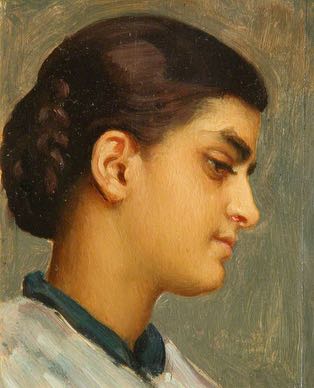
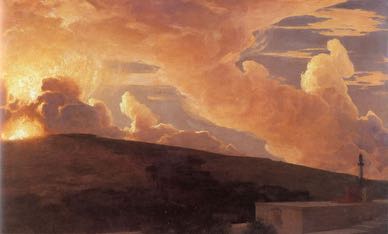
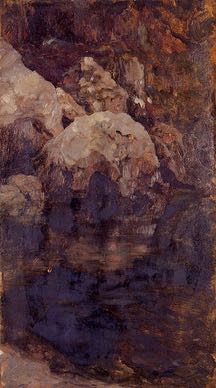
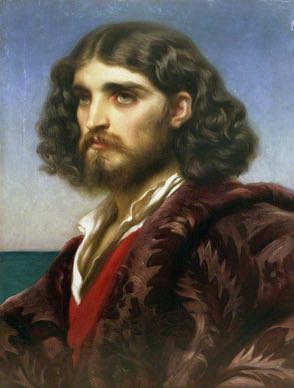
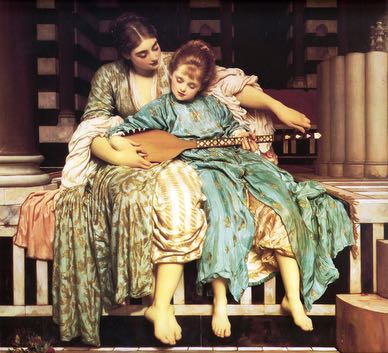
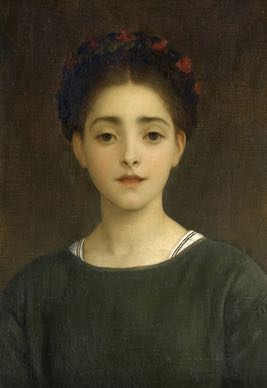
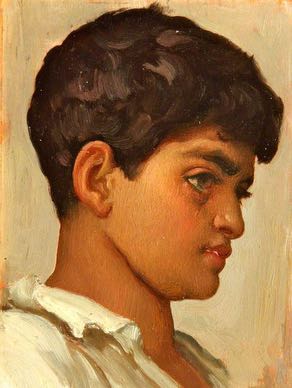
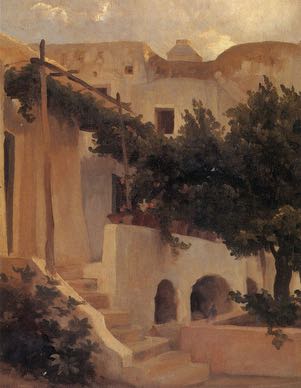
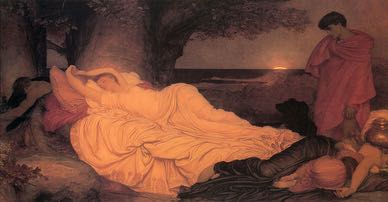
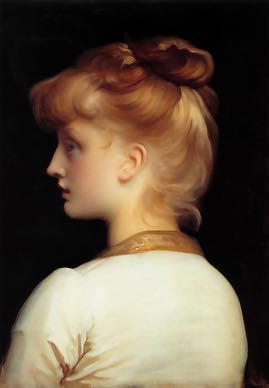
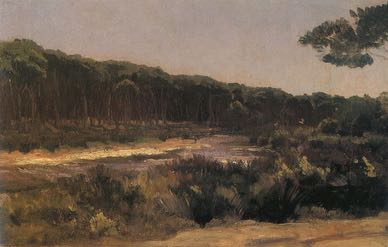
Leighton was born in 1830 in Scarborough to a family of respected physicians. His early years were marked by extensive travels throughout Europe after his family relocated from Russia, where his grandfather had served as court physician to Czar Alexander I. This exposure to European art and culture profoundly shaped his artistic vision. Breaking with the convention of British art education, he studied at academies in Brussels, Frankfurt, and Paris rather than the Royal Academy Schools. He trained under renowned artists Eduard von Steinle and Giovanni Costa, and at 24, he moved to Florence to study at the Accademia di Belle Arti.
Settling in Rome, Leighton became part of a vibrant intellectual circle that included both literary and artistic figures. By 1853, he had developed a distinctive style, first evident in works like “Isabel Laing”, and his move to Paris soon after introduced him to luminaries such as Ingres, Delacroix, Millet, and Corot, whose influence further enriched his artistic vision.
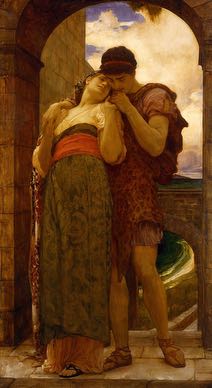
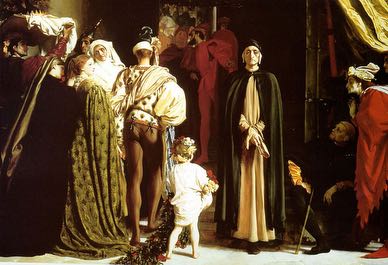
In 1855, Leighton returned to England, where his large historical painting “Cimabue’s Madonna Carried in Procession through the Streets of Florence” earned critical acclaim at the Royal Academy and was promptly acquired by Queen Victoria. This success marked the start of his illustrious career. He was soon elected as a Royal Academician, and his focus shifted from historical themes to mythological subjects, mirroring the Victorian fascination with Hellenism. Leighton’s pieces, with their strikingly luminous colors and finely structured figures, became widely popular in London, leading to his eventual appointment as President of the Royal Academy.
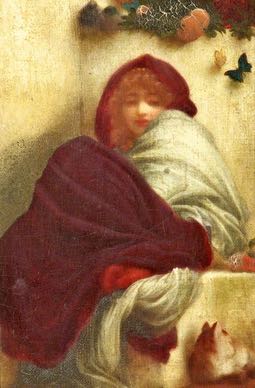
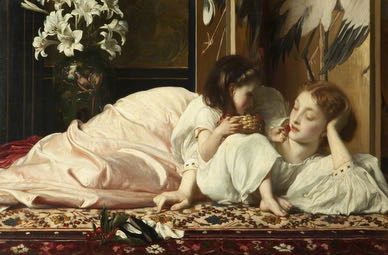
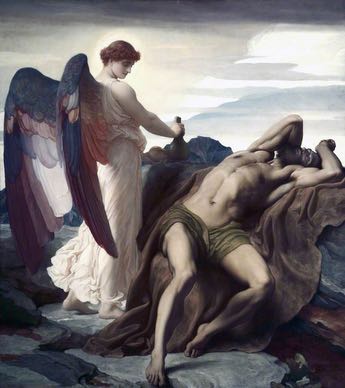
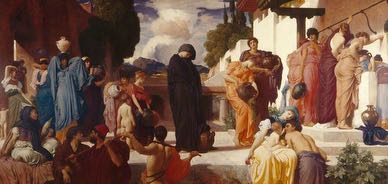
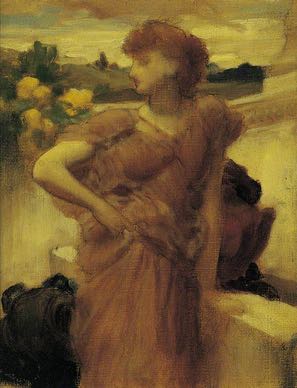
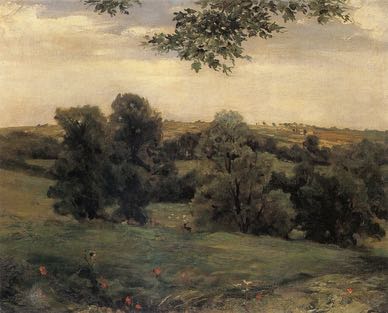
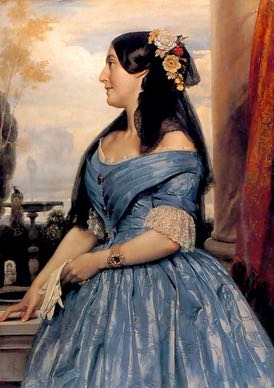
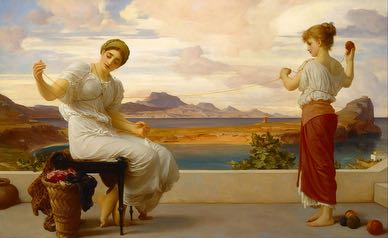
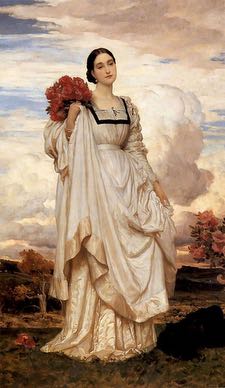
Leighton’s work was characterized by a dedication to classical themes, often drawing on the mythology of ancient Greece and Rome. His compositions are noted for their attention to color and form, revealing an admiration for French Impressionism, inspired in part by the works of Monet and Renoir. He brought a refined elegance to the figures he painted, capturing an ethereal beauty that was admired by contemporaries and art enthusiasts alike.
In 1896, Leighton was granted the title of Baron Leighton of Stretton, making him the first British painter to receive such an honor. Sadly, he passed away the very next day, marking his barony as the shortest in British history. His death was met with profound respect, and his body lay in state at the Royal Academy before his burial at St. Paul’s Cathedral. Though his fame faded in the years following his death, his work experienced a revival in the mid-20th century, restoring his reputation as one of Britain’s foremost painters and a towering figure in Victorian art.
Copyright © 2026 BrushWiz. All Rights Reserved.