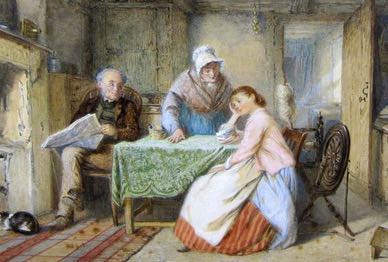
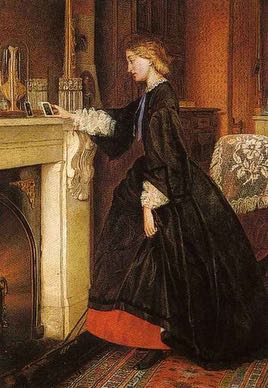
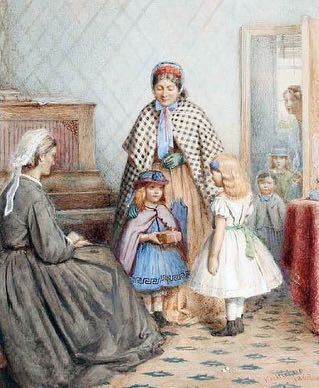
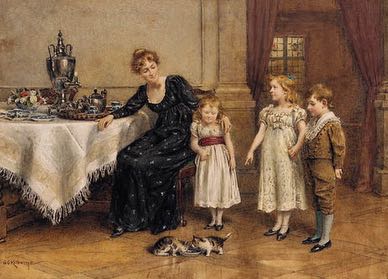
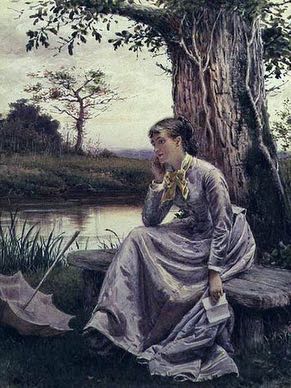
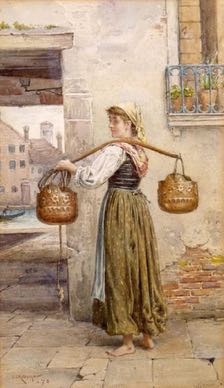
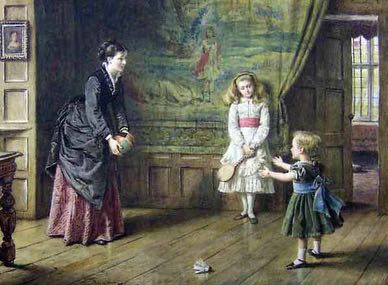
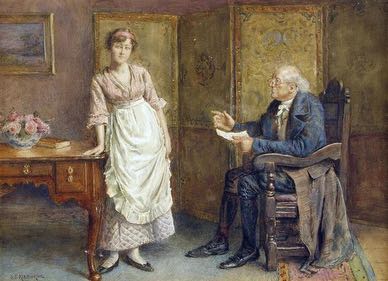
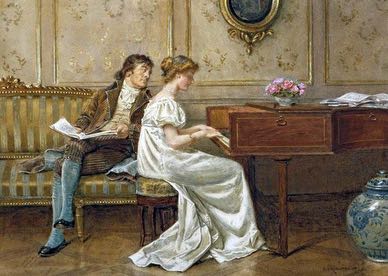
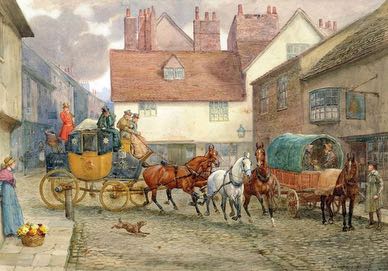
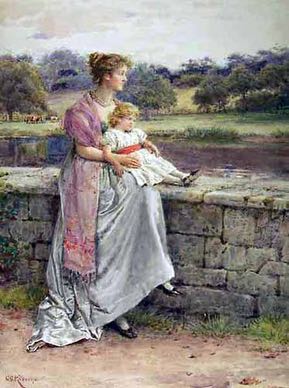
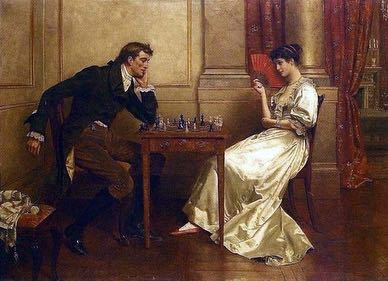
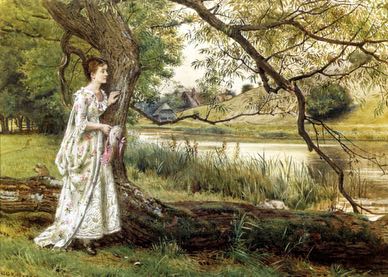
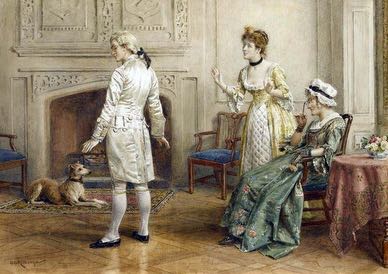
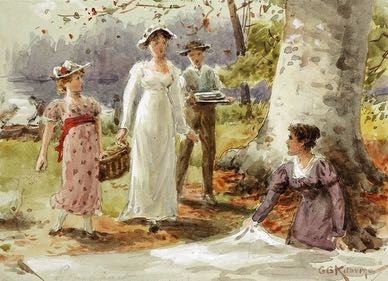
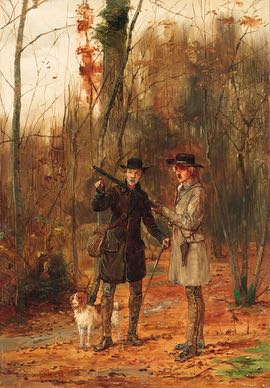
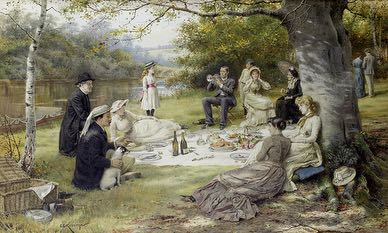
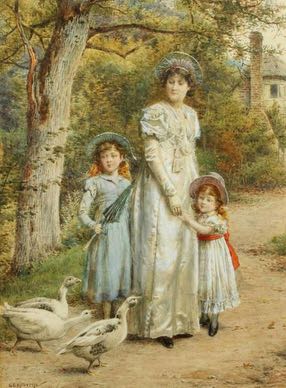
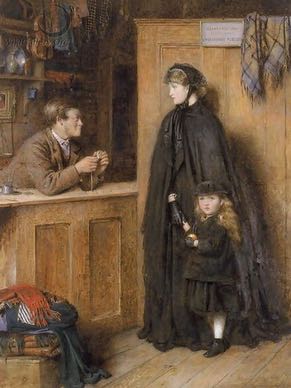
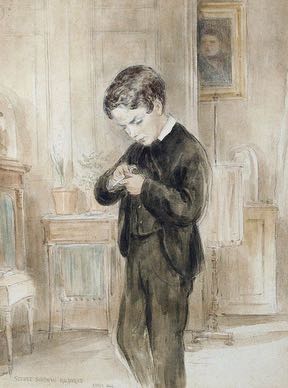
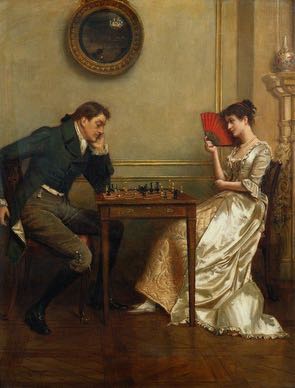
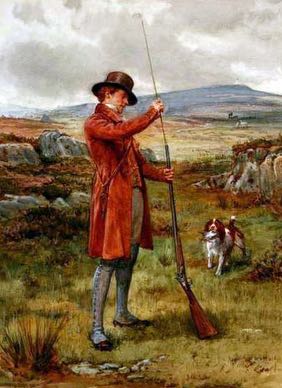
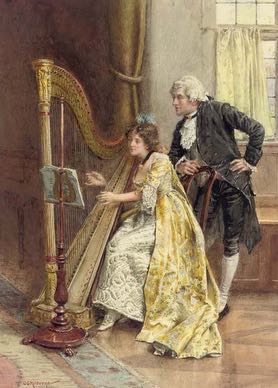
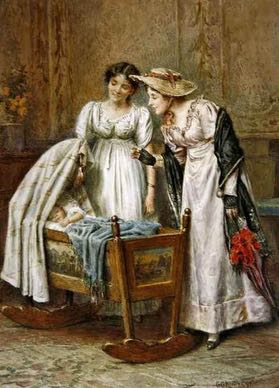
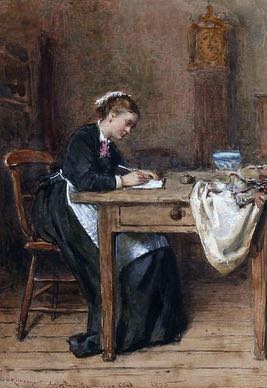
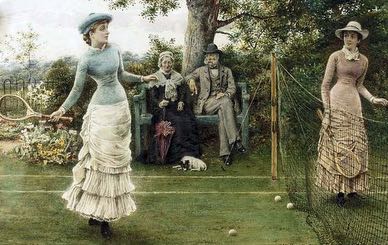
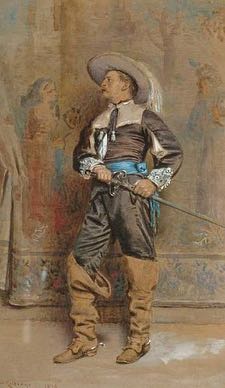
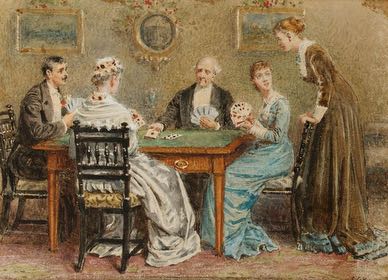
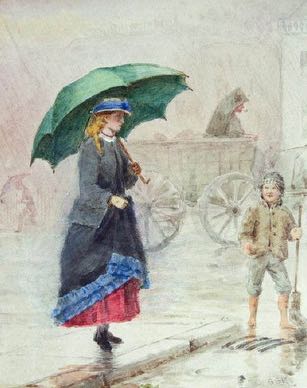
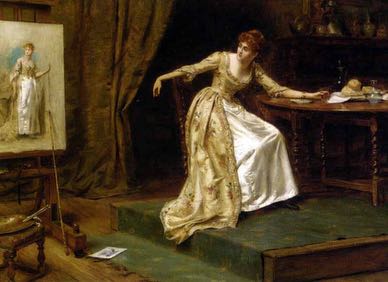
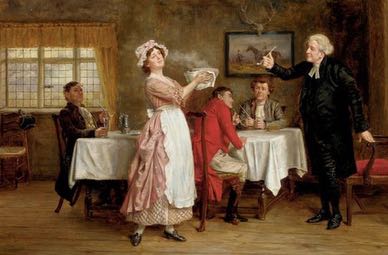
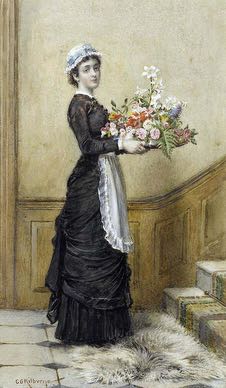
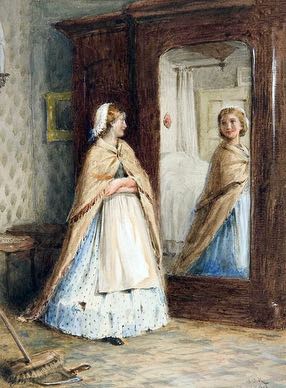
Kilburne's early training as a wood engraver with the Dalziel brothers, prominent Victorian engravers, significantly shaped his approach to art. The precision he developed in engraving translated seamlessly into his painting, particularly his ability to render finely finished figures and elaborate backgrounds. This attention to detail became a hallmark of his work, helping him capture the refined elegance of the elite. His paintings, such as “The Music Room, The New Spinet, and Maiden Meditation (1866)”, showcase his skill in portraying intricate dresses, adorned interiors, and luxurious furnishings.
Though Kilburne’s works were seen as conventional compared to the radical styles of contemporaries like James McNeill Whistler and the Pre-Raphaelite Brotherhood, his compositions resonated with audiences for their nostalgic charm and meticulous craftsmanship. In 1866, Kilburne’s talents were formally recognized when he was elected as a member of the New Watercolour Society. He further cemented his status in 1883 with his membership in the Royal Institute of Oil Painters, and in 1898, he joined the Royal Miniature Society.
In addition to his painting, Kilburne’s career included work for prominent magazines and firms, providing black-and-white illustrations that enjoyed considerable popularity. He also became known for his printed Christmas greeting cards, which depicted his characteristic scenes of grace and refinement. His artworks were in high demand, leading him to undertake commissions from distinguished patrons, including the Empress Eugenie, who engaged him to paint rooms and objects associated with the late Emperor Napoleon III.
Kilburne’s career spanned many travels across Europe, including visits to Rome, Venice, Normandy, and Switzerland, as well as various parts of England, each experience enriching his artistic perspective. His legacy endures in his refined portraits of the British upper class, captured with an accuracy and charm that continues to captivate viewers.
Copyright © 2026 BrushWiz. All Rights Reserved.