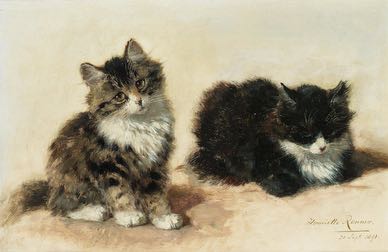
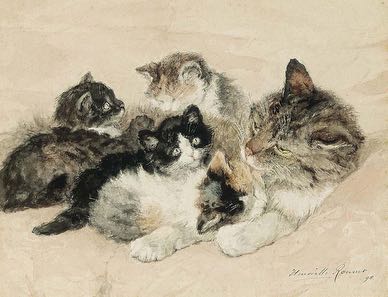
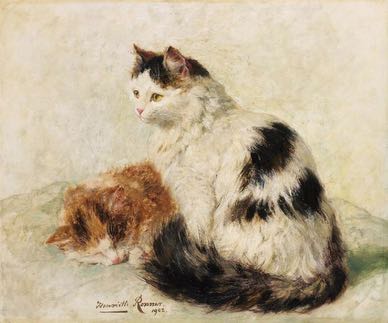
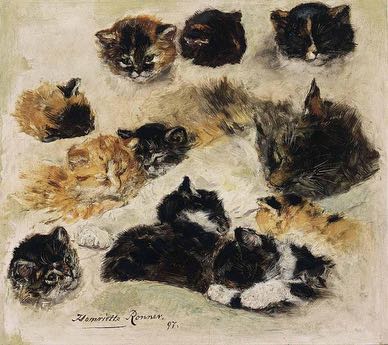
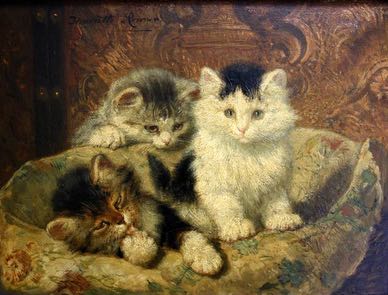
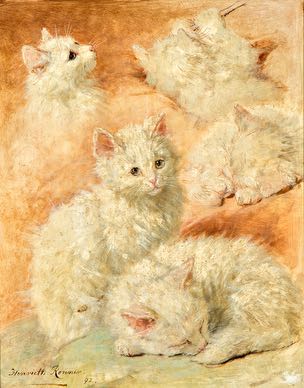
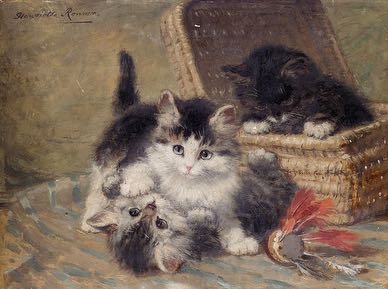
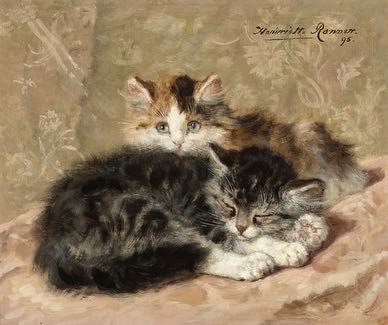
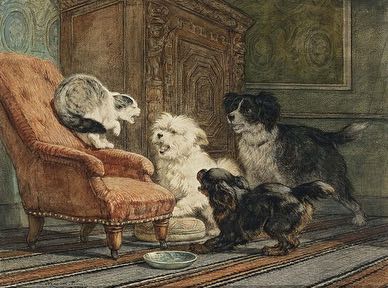
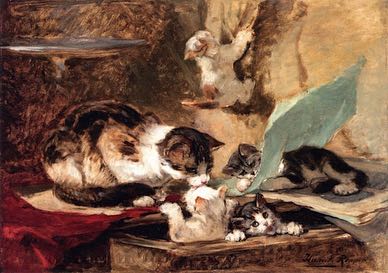
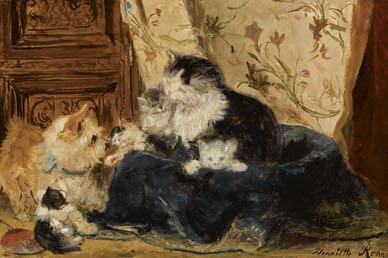
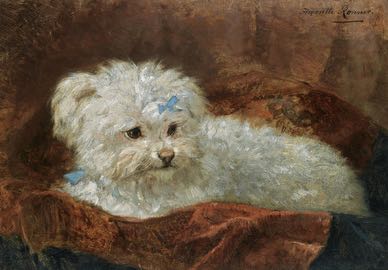
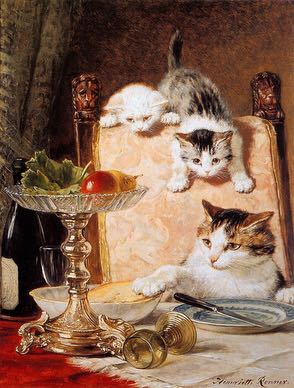
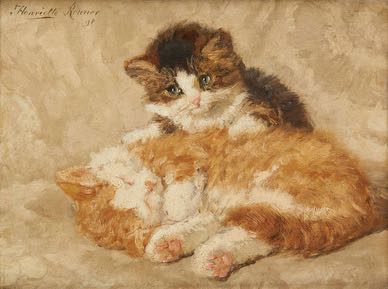
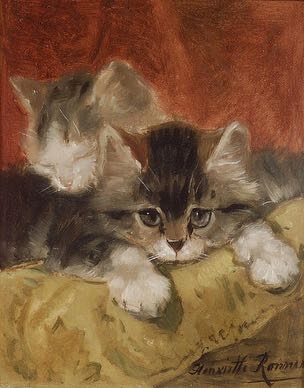
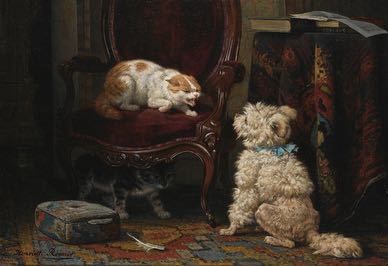
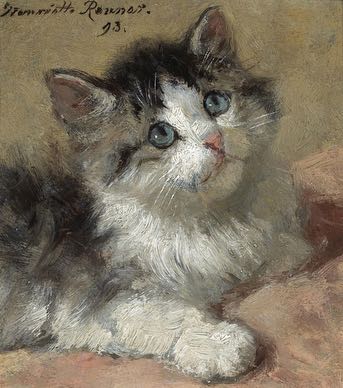
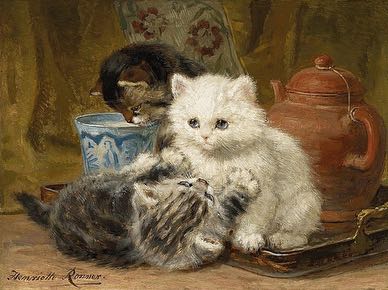
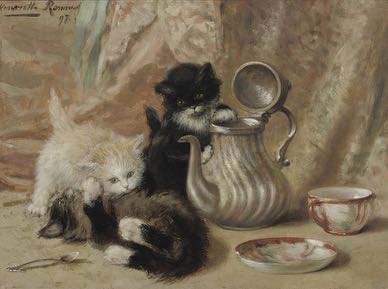
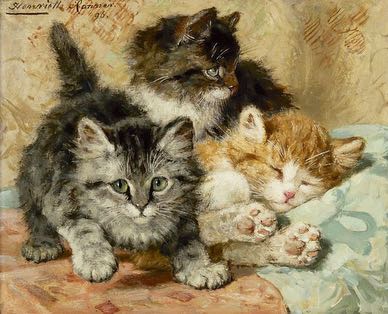
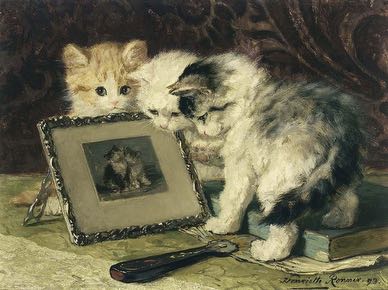
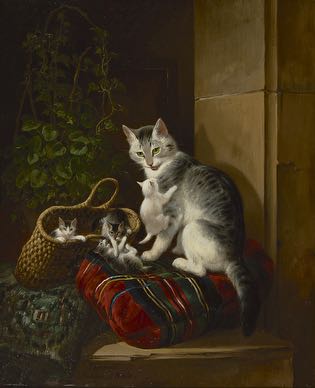
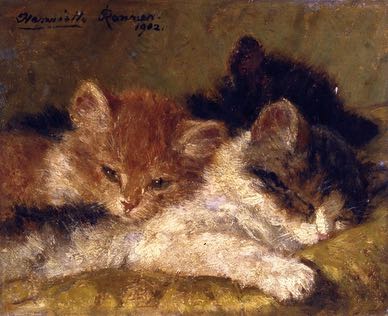
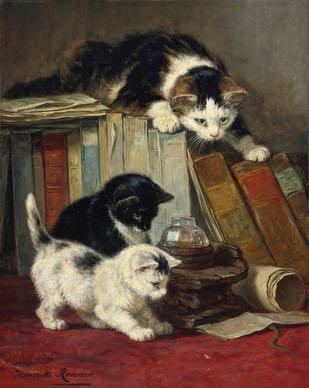
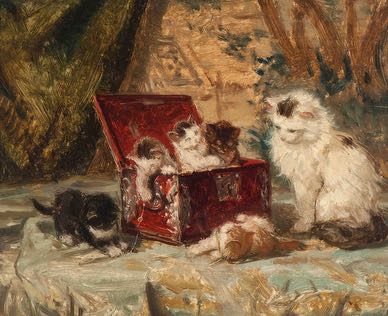
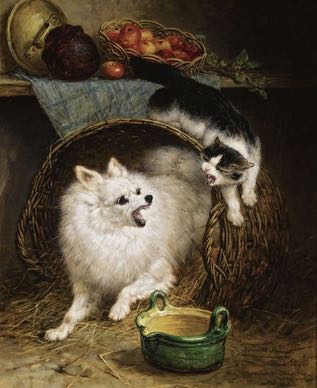
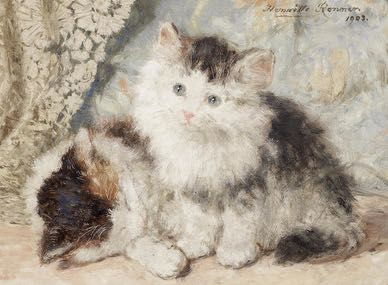
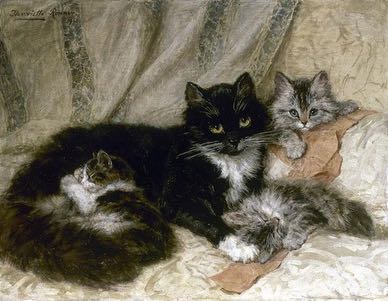
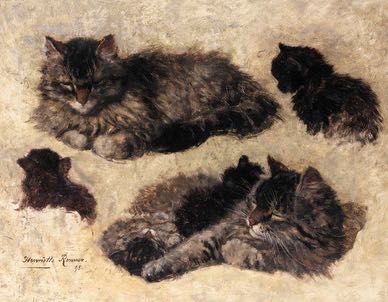
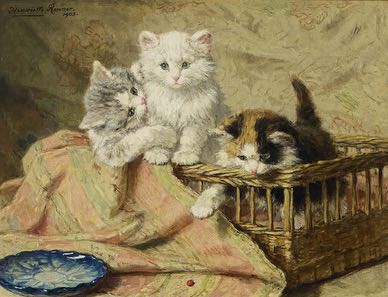
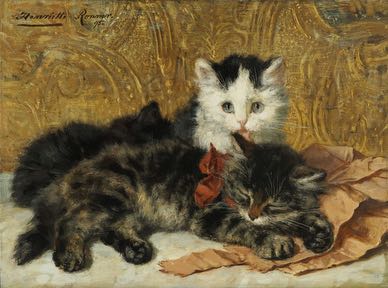
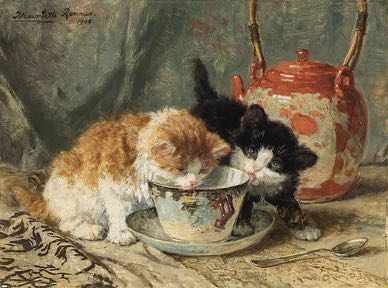
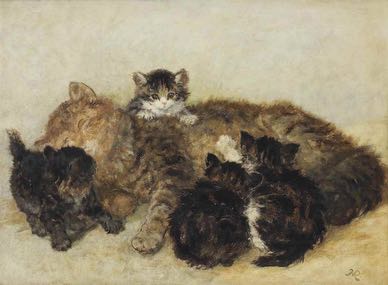
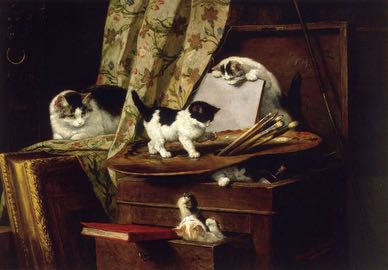
Born in Amsterdam into an artistic family, Ronner-Knip received her early training from her father, Joseph Augustus Knip, a prominent Dutch landscape painter. By the age of 18, her talent was already evident, as she produced and sold various works featuring pastoral landscapes, portraits, farm scenes, and still lifes. Although she excelled in all these areas, Ronner-Knip eventually focused her talents on animals, particularly domestic creatures like cats, dogs, cows, and horses. Her paintings were marked by precise detail and rich colors, often using a darker palette reminiscent of her father’s classical landscapes.
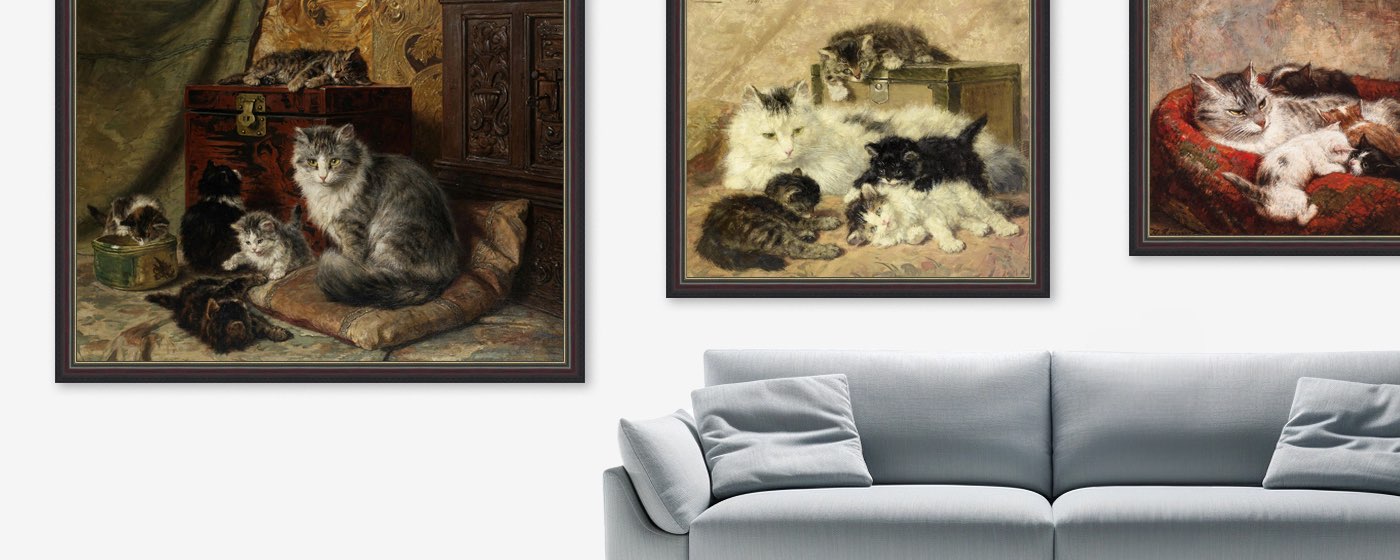
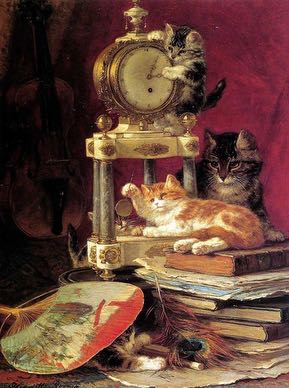
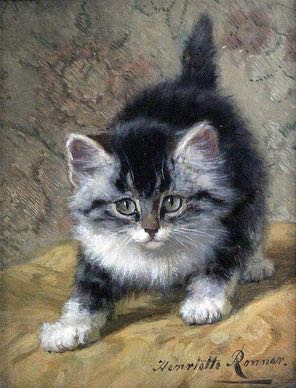
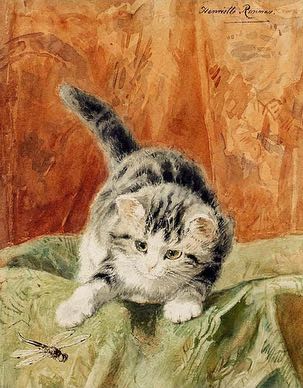
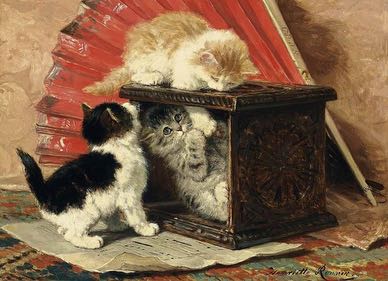
Ronner-Knip’s career gained momentum as she exhibited her first work in Düsseldorf, followed by shows in The Hague and Amsterdam from 1838. She further refined her technique under the tutelage of J. Stevens in Belgium, where an exhibition of her work led to numerous commissions, especially for dog paintings. However, she soon turned her attention to cats, a subject that would define her career. Her portraits of cats often feature luxurious surroundings, capturing them in elegant interiors suggestive of stylish homes, a touch that attracted an affluent clientele. These pieces frequently include elaborate still lifes with musical instruments, trinkets, or fashionable items, adding depth and charm to her settings.
Ronner-Knip’s fame spread throughout Europe, earning her high-profile patrons such as King Don Fernando of Portugal and the Prince of Wales. Over her career, she garnered multiple awards and honors, including gold medals in Amsterdam and Antwerp, a silver medal in Edinburgh, and, in 1887, the prestigious Order of Leopold in Belgium, a significant honor for a female artist of her time. In 1909, she was also awarded the Order of Orange-Nassau in the Netherlands, cementing her status as a respected figure in the art world.
After her father’s passing in 1857, Ronner-Knip married Feico Ronner and soon relocated to Brussels, where she lived for the remainder of her life. Her unique contribution to animal portraiture, especially her portrayals of cats in enchanting and sophisticated settings, continues to captivate audiences and hold a distinctive place in the history of European art.
Copyright © 2026 BrushWiz. All Rights Reserved.