
❄️ Winter Sale. Offer Ends 11/18/2026. View Details
❄️ Winter Sale. Ends 11/18/2026. View Details
❄️ Winter Sale. View Details
Artists
Subjects
Movements
Collections
Decor
Portraits
Commissions
Framing
Reviews
Gift Cards
On Sale
Ilya Repin Oil Painting Reproductions
Shop museum-quality reproductions of Ilya Repin’s most famous paintings, each hand-painted in oil on canvas by a professional artist.
Shop Art

Showing 1-40 of 455 results
Sort By
Most Popular
- Most Popular
- New Arrivals
- Best Sellers
- Alphabetical A-Z
- Alphabetical Z-A

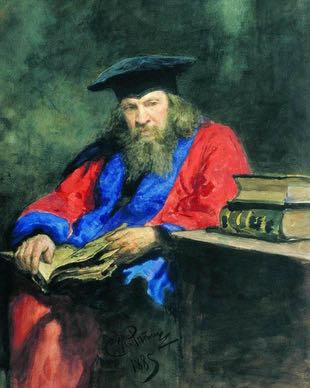
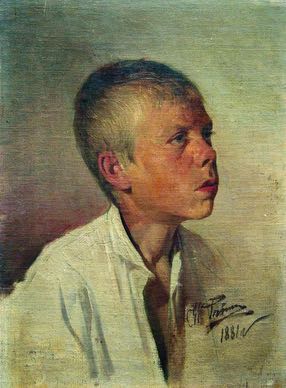


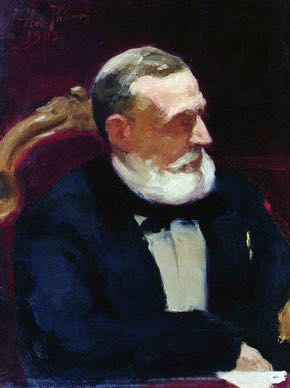
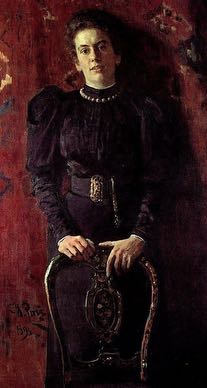
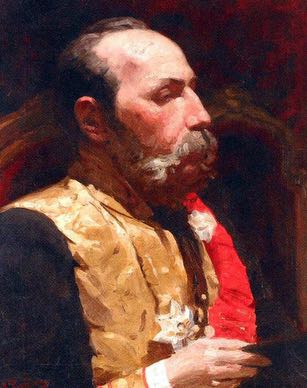
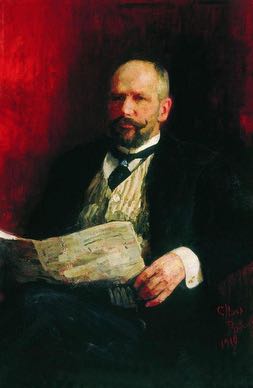

From: $2,380.00$1,190.00

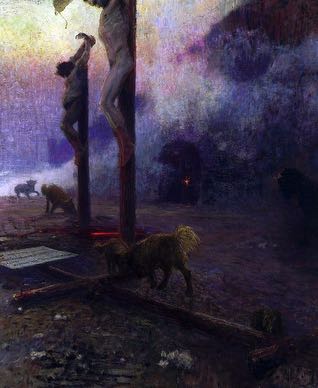

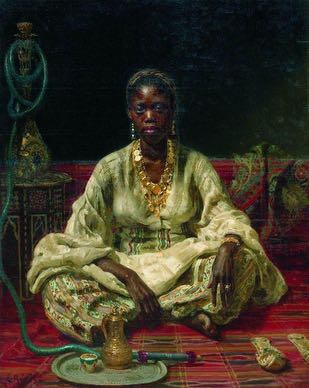



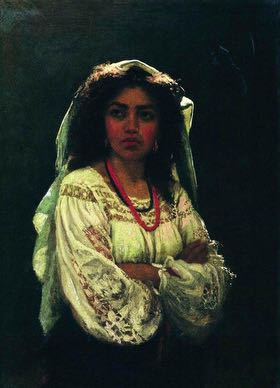

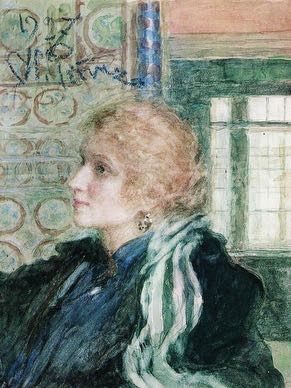
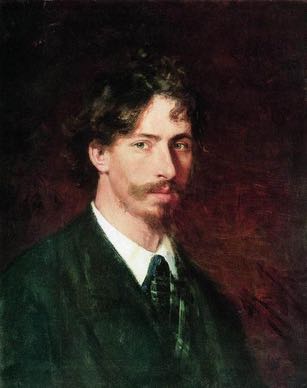
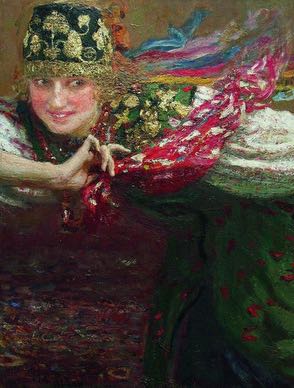
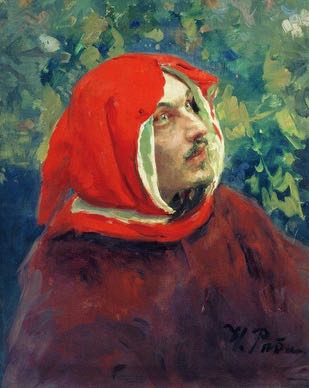
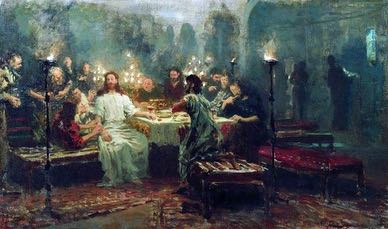
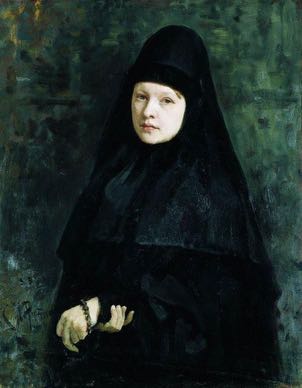

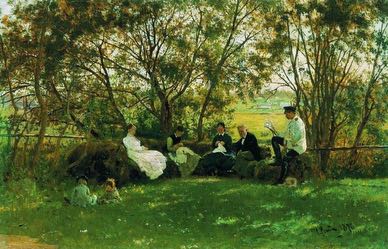



Can’t Find the Painting You Want?
Send us a reference image. We can recreate almost any artwork in the size and style you’re looking for.
Get a Free QuoteHand-Painted Ilya Repin Reproductions
Bring Repin’s art into your home with an oil-on-canvas reproduction hand-painted by a professional artist. Our collection features hundreds of paintings from across his career, including Barge Haulers on the Volga, Ivan the Terrible and His Son Ivan, and Reply of the Zaporozhian Cossacks. Discover penetrating portraits, crowded public scenes, revolutionary narratives, historical tragedies, family studies, and other subjects closely associated with Repin. Every reproduction is a real oil painting, offering depth and texture that a print or digital transfer cannot provide. From iconic masterpieces to lesser-known works, find a Repin painting that suits your space.
The Making of an Ilya Repin Oil Painting Replica
Creating an Ilya Repin oil painting replica requires patience, precision, and an understanding of the original artwork. Our studio includes artists who specialize in Realist painting and understand the distinctive qualities of Repin’s work. The artist begins by studying the source image, then recreates its expressive faces, varied brushwork, natural colors, and Repin’s ability to make every figure contribute to the unfolding drama on canvas using traditional oil-painting methods. After completion, the painting is inspected by our quality-control team and photographed for your approval. The result is a carefully executed oil painting that reflects the visual character of the original.
Custom Sizes and Frames for Your Repin Painting
Your Repin painting can be ordered in practically any size, from popular standard dimensions to custom canvas sizes selected directly on the product page. This flexibility lets you choose a painting that fits your wall and complements your room perfectly. After selecting the size, you can choose from high-quality frames in classic or modern designs, with professional canvas stretching also available. Our framing options complement the natural colors and dramatic character of Repin’s paintings. With sizing, stretching, and framing arranged in one order, your artwork can arrive ready for display without a separate visit to a frame shop.
Order an Ilya Repin Reproduction with Confidence
Buying hand-painted art online should feel clear and comfortable. After your Ilya Repin reproduction is completed, we send high-resolution photographs for your review before shipping. You can inspect the composition, colors, expressions, and overall finish, then request adjustments if needed. The painting is dispatched only after you approve it, so you know what to expect when it arrives. Your order also includes free express worldwide shipping and is covered by our 90-day return policy. Together, these assurances help you purchase a Repin oil painting with greater confidence and peace of mind.
The Life and Art of Ilya Repin
Ilya Repin was a painter of the Russian Empire whose portraits and narrative scenes became central to nineteenth-century Realism. Born in Chuhuiv, in present-day Ukraine, in 1844, he began as an icon painter before studying at the Imperial Academy of Arts in Saint Petersburg. Repin painted laborers, peasants, revolutionaries, rulers, writers, musicians, family members, and figures from history with unusual psychological force. His large compositions never reduce a crowd to background decoration; each face and gesture carries a separate response. Works such as Barge Haulers on the Volga, Religious Procession in Kursk Province, and Unexpected Visitors joined social observation with complex storytelling, while his portraits recorded many leading cultural figures of his age.
Read More
Who Was Ilya Repin?
Ilya Yefimovich Repin was born on 5 August 1844 in Chuhuiv, then part of the Russian Empire and now in Ukraine. The town belonged to a border region shaped by Ukrainian culture, military settlement, trade, and the traditions of Orthodox icon painting. Repin’s origins remained important to his art, especially his interest in Cossack history and local people.
He became one of the most prominent painters associated with Russian Realism and the Peredvizhniki, or Wanderers. Yet no single subject defines him. Repin painted workers, religious processions, political prisoners, imperial officials, historical rulers, writers, musicians, children, landscapes, and scenes of private life.
What connects those works is an alertness to human behavior. In a Repin painting, people rarely pose as fixed types. They lean, laugh, endure, argue, hesitate, or withdraw into thought. Even his largest crowds are made from distinct personalities whose reactions complicate the apparent story.
How Did an Icon Painter Reach the Imperial Academy?
Repin grew up with limited access to formal art education. As a teenager, he trained with the local icon painter Ivan Bunakov and worked on church decorations in the surrounding region. Icon painting taught him disciplined craft, figure arrangement, and the demands of completing commissioned images for a community.
In 1863, he traveled to Saint Petersburg determined to enter the Imperial Academy of Arts. His preparation was initially insufficient, so he attended the drawing school run by the Society for the Encouragement of Artists, where Ivan Kramskoi recognized his ability. Repin entered the Academy in 1864 and remained there until 1871.
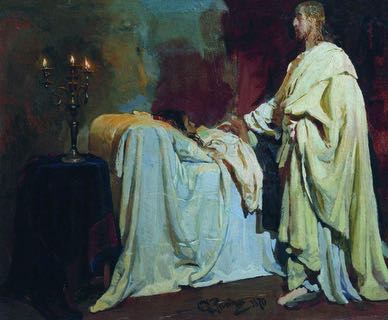
Academic study gave him intensive training in drawing, anatomy, composition, and history painting. His Raising of Jairus’s Daughter won the Academy’s major gold medal and funded travel abroad. Even within a biblical subject, the painting’s strength lies in grief, exhausted attention, and the charged pause before the miracle.
Why Did Barge Haulers on the Volga Establish His Reputation?
Repin first saw barge haulers working while visiting the Neva in 1868. The sight of men pulling heavy vessels by harness contrasted sharply with the comfortably dressed public nearby. Rather than paint from that first impression alone, he traveled to the Volga, met individual workers, drew them repeatedly, and learned how the labor was organized.
Barge Haulers on the Volga, completed between 1870 and 1873, shows eleven men moving across a sunlit riverbank. Their shared task binds the group, but differences of age, clothing, posture, and response keep them from becoming a single symbol of suffering.
The painting condemns brutal labor without stripping its subjects of agency. Some men bend under the load, one looks outward, and a younger figure straightens against his straps. Exhibited internationally, the canvas established Repin as an artist capable of joining social criticism, individual characterization, and ambitious composition.
What Did Repin Learn from France and Western Europe?
The Academy scholarship took Repin through Italy and then to Paris, where he lived from 1873 to 1876. He studied older European painting but also encountered the unfamiliar subjects, brighter color, and looser surfaces of contemporary French art. He did not become an Impressionist, yet the experience widened his handling of light and paint.
Repin explored Parisian life in works such as A Parisian Cafe. Its fashionable setting and socially mixed figures differ from the Volga, but the artist again builds meaning through glances and small exchanges. Modern life appears as a network of people observing one another.
Sadko in the Underwater Kingdom, his principal Academy submission from abroad, used a Russian legend in a spectacular European format. Repin later judged aspects of it critically, but its color, movement, and strange procession of figures show him testing how national subject matter might enter international exhibition culture.
Why Did the Wanderers Bring Art into Public Debate?
After returning to the Russian Empire, Repin became closely involved with the Peredvizhniki and formally joined the group in 1878. Its traveling exhibitions carried recent art beyond the Imperial Academy and the capitals, reaching audiences in other cities. Members treated contemporary society, landscape, history, and national life as serious artistic subjects.
Repin’s paintings rarely deliver a simple political message. Unexpected Visitors, often translated as They Did Not Expect Him, shows a political exile returning to his family. Recognition, doubt, hope, and shock pass through the room, but the future of the reunion remains uncertain.
Other works follow revolutionaries through arrest, imprisonment, and moral resistance. Repin was sympathetic to demands for reform, yet he also distrusted fixed programs and sweeping answers. His strongest social paintings leave viewers among conflicting reactions rather than telling them exactly what to conclude.
What Does Religious Procession Reveal About a Crowd?
Repin worked on Religious Procession in Kursk Province from 1880 to 1883. The enormous scene follows a revered icon through a dry, dusty landscape. Clergy, landowners, merchants, peasants, police, beggars, and children move together, but social rank determines who may occupy the road’s center.
No figure functions merely as anonymous crowd filling. A privileged woman carries the icon beneath a canopy; mounted authorities control the edges; a disabled boy pushes forward with intense purpose. Sun, dust, banners, robes, and countless faces make the procession physically convincing while exposing the inequalities carried within it.
The painting is neither a straightforward attack on faith nor an uncomplicated celebration of communal devotion. Belief, performance, fatigue, pride, curiosity, and coercion coexist. Repin’s achievement lies in allowing those motives to remain visible at once, creating a public event that changes depending on where the viewer looks.
Can History Feel Present in a Repin Painting?
Repin researched historical clothing, objects, settings, and written accounts, but accuracy was a starting point rather than his final goal. He chose moments when an event turns through emotion: laughter spreads, violence gives way to horror, or a ruler discovers that power cannot undo what has happened.
Ivan the Terrible and His Son Ivan, painted from 1883 to 1885, concentrates on the aftermath of a fatal blow. The historical circumstances remain disputed, but Repin’s painting is not a neutral document. It is a terrifying study of rage transformed instantly into remorse.
The mood changes completely in Reply of the Zaporozhian Cossacks. Warriors crowd around a letter, inventing insults for the Ottoman sultan and reacting with many kinds of laughter. Repin spent years arranging the faces and gestures so that collective defiance would feel spontaneous rather than staged.
Why Are Repin’s Portraits More Than Records of Appearance?
Repin painted more than three hundred portraits, including cultural figures, scientists, officials, patrons, friends, and members of his family. He adjusted his method to the sitter rather than imposing one polished formula. A pose might be formal or casual, the paint dense or swift, but expression always carries the likeness.
He painted Modest Mussorgsky in a military hospital in 1881, completing the portrait over four sittings shortly before the composer died. The robe, uncombed hair, and signs of illness are plainly visible, yet the alert eyes prevent the image from becoming only a record of decline.
Repin’s friendship with Leo Tolstoy produced portraits of the writer reading, resting outdoors, working at a desk, and walking barefoot. Leo Tolstoy Resting in a Forest places intellectual fame within an ordinary moment of physical ease. Familiarity allowed Repin to portray public stature without losing the habits of a particular person.
Which Paintings Show the Full Range of Repin’s Art?
Repin’s career moved from religious training to social observation, historical drama, portraiture, and official commissions. These works provide a broad introduction to the many kinds of painting he pursued:
- Raising of Jairus’s Daughter, 1871: A biblical miracle is approached through silence, mourning, and restrained anticipation.
- Barge Haulers on the Volga, 1870–1873: Eleven laborers become distinct individuals within a powerful image of shared physical hardship.
- Sadko, 1876: A Russian legendary hero encounters a colorful procession in an elaborate underwater court.
- Religious Procession in Kursk Province, 1880–1883: Faith and social hierarchy move together through heat, dust, ceremony, and force.
- Portrait of Modest Mussorgsky, 1881: Illness is recorded honestly without diminishing the composer’s intelligence or dignity.
- Unexpected Visitors, 1884–1888: A returning political exile meets a room divided among recognition, uncertainty, and hope.
- Ivan the Terrible and His Son Ivan, 1885: A ruler’s horror after an act of violence overwhelms the trappings of historical power.
- Reply of the Zaporozhian Cossacks, 1880–1891: A crowd’s laughter becomes a many-voiced performance of fellowship and defiance.
- Portrait of Pavel Tretyakov: The celebrated collector appears quietly absorbed among the paintings he brought together.
- What a Freedom!, 1903: Two figures meet rough surf and open air in a late burst of movement and exhilaration.
Where Did Repin Spend His Later Years?
From the early 1900s, Repin lived increasingly at Penates, a house and studio in Kuokkala near Saint Petersburg, with the writer Natalia Nordman. The property became known for unconventional household arrangements, vegetarian meals, public visiting days, and lively gatherings of artists, writers, musicians, and political figures.
Repin taught at the Imperial Academy from 1894 to 1907 and influenced younger painters, including Valentin Serov. Problems with his right hand led him to work increasingly with his left and to experiment with supports and working methods. His late art could be uneven, but his curiosity did not disappear.
After Finland became independent, the border left Kuokkala outside Soviet Russia. Repin remained at Penates despite invitations to return. He died there on 29 September 1930 and was buried on the property. His art remains central to nineteenth-century painting because he made public history inseparable from private reaction, giving every major event a crowd of individual human faces.
Copyright © 2026 BrushWiz. All Rights Reserved.
About Our Ilya Repin Paintings
Are your Ilya Repin reproductions painted by hand?
Yes. Every reproduction is individually painted by hand in oil on canvas by a professional artist. We do not use prints, digital transfers, or mechanical reproduction methods.
How closely will my Repin copy resemble the original?
Our artists work to capture the composition, colors, brushwork, expressions, and visual character of the original Repin painting as closely as possible. Because each reproduction is painted by hand, small variations are natural and make every canvas unique.
How long does an Ilya Repin painting take to complete?
Most Repin reproductions require approximately two to three weeks to paint, dry, and inspect. Production time may vary with the artwork and canvas size, so check the estimate displayed on the product page.
Can I request a Repin artwork that is not listed?
Yes. If you cannot find the Ilya Repin painting you want in our catalog, send us its title or an image. Our team will review the request and confirm the available sizes, estimated production time, and price.
Will I receive photographs before my painting is shipped?
Yes. We send high-resolution photographs of the completed painting for your approval. You may request adjustments if needed, and the artwork will not be dispatched until the review process is complete.
Are custom canvas dimensions available?
Yes. We offer custom dimensions in addition to the standard sizes displayed on the product page. Select the dimensions that best suit your space from the available size options.
May I order my Repin reproduction with a frame?
Yes. High-quality frames in traditional and contemporary designs are available for many paintings. You can view compatible options and add your preferred frame on the product page. Professional canvas stretching is also available.
What determines the price of an Ilya Repin reproduction?
The price depends on the selected artwork, canvas dimensions, and framing option. Choose your preferred configuration on the product page to see the current price before placing your order.
Do Repin paintings qualify for free worldwide shipping?
Yes. Repin reproductions qualify for free express worldwide shipping. After dispatch, delivery usually takes five to eight business days, although timing may vary by country and destination.
Which return policy covers Ilya Repin reproductions?
Orders are covered by our 90-day return policy. Review the current return-policy page before ordering for complete information about eligibility, time limits, and the return process.
Why BrushWiz?
100% Hand Painted
Every piece is entirely handmade
Museum Quality
Faithfully recreated by expert artists
Custom Framing
Choose from a wide range of frames
Free Shipping
Enjoy free shipping on all orders
Cash Back Rewards
Earn cash back with every purchase