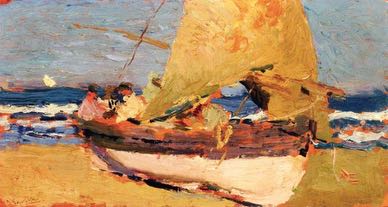
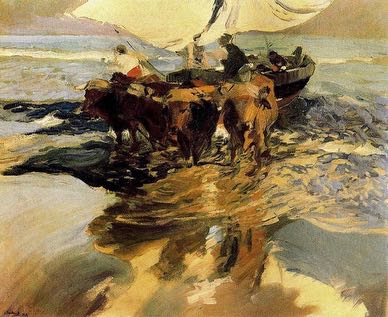
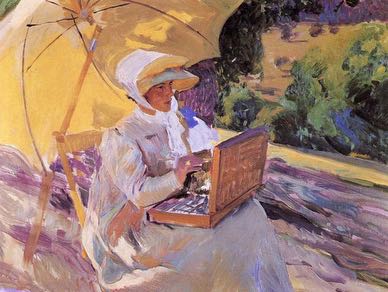
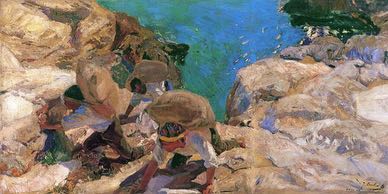
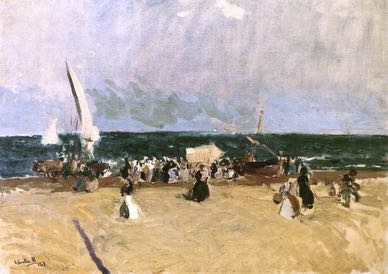
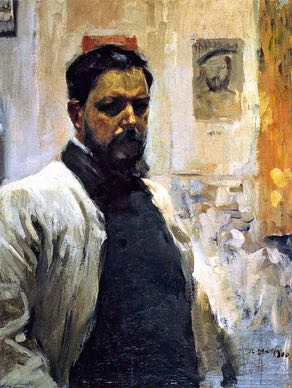
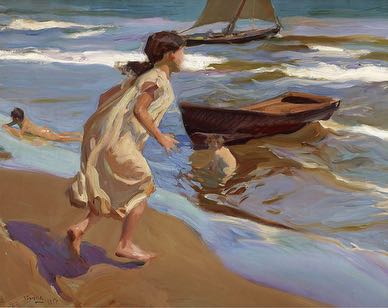
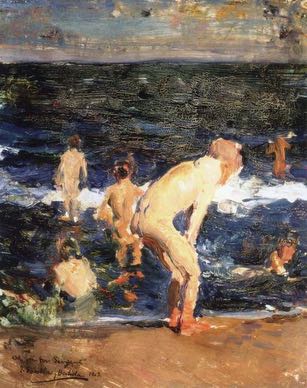
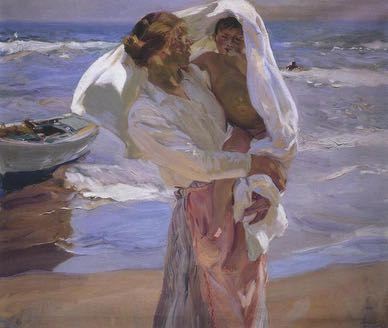
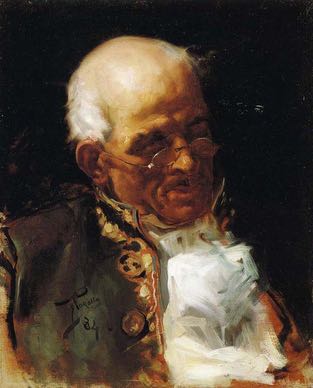
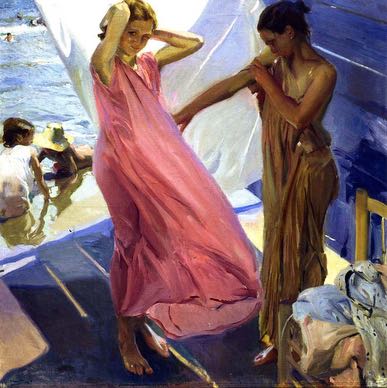
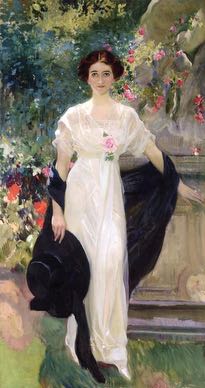
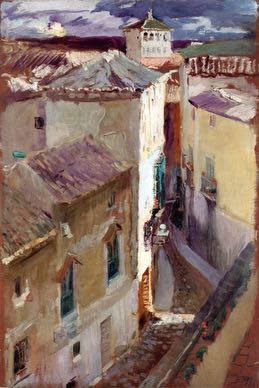
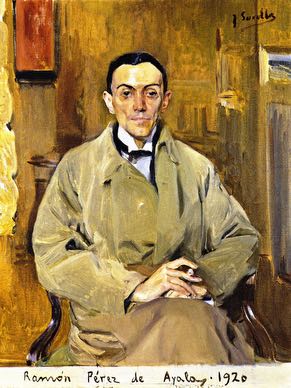
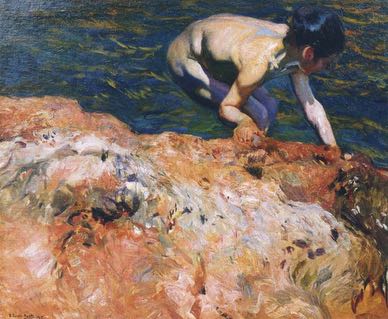
Sorolla began his artistic journey in Valencia, studying painting under local teachers Cayetano Capuz and Salustiano Asenjo. Seeking to deepen his knowledge, he traveled to Madrid to study the works of Spanish masters Velázquez and Ribera at the Museo del Prado, where he gained profound insights into classical techniques. In his early twenties, Sorolla received a scholarship to continue his studies in Rome, where he immersed himself in the artistic traditions of Italy under the guidance of F. Pradilla, the Principal of the Spanish Academy. His artistic worldview expanded further in 1885 during a trip to Paris, where he encountered modern movements and was particularly drawn to the work of Adolf von Menzel and Jules Bastien-Lepage, whose realist tendencies deeply influenced his approach.
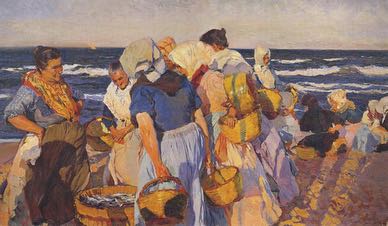
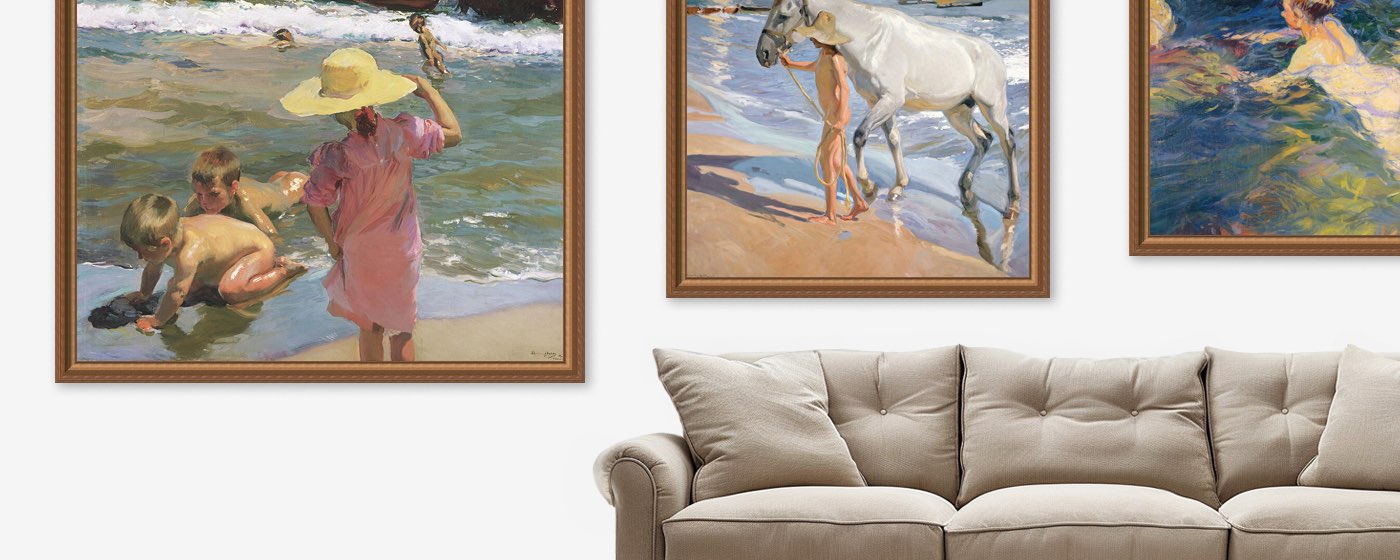
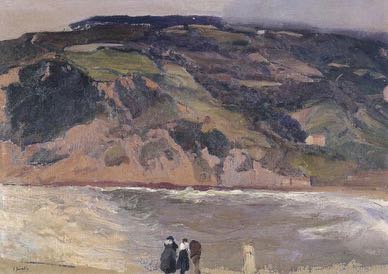
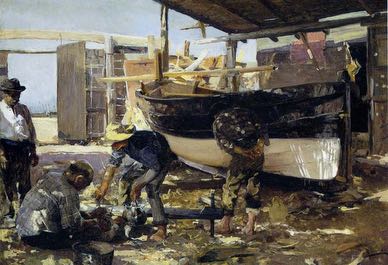
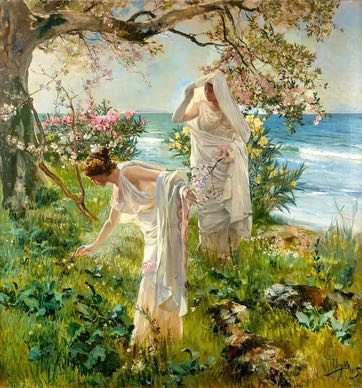
Back in Rome, Sorolla continued to refine his skills under the mentorship of renowned painters Emilio Sala, José Villegas, and José Benlliure. He developed a distinct ability to capture the effects of light with precision, creating radiant, immersive scenes that contrasted with the meticulous realism predominant in academic circles. His early successes in Rome brought him recognition, but his heart lay with subjects that expressed his empathy for human experience and beauty.
One of Sorolla’s most poignant works, “Sad Inheritance”, exemplifies his sensitivity to human suffering. This painting, inspired by the polio epidemic in Valencia, portrays a group of children bathing in the sea under the watchful gaze of a monk, with two children visibly affected by polio. The work earned Sorolla significant acclaim, including the Grand Prix at the Universal Exhibition in Paris (1900) and the medal of honor at the National Exhibition in Madrid (1901). With this painting, Sorolla gained a reputation for his compassionate portrayal of social issues, though he would later shift focus to more celebratory themes.
Upon returning to Madrid, Sorolla quickly established himself as a sought-after artist. His work was met with great enthusiasm at the 1901 Exposition Universelle in Paris. In 1911, he received a prestigious commission from the Hispanic Society of America to create large-scale scenes for its library in New York City. These monumental works, intended to honor Spanish culture and history, significantly bolstered his international reputation. Sorolla was subsequently honored with membership in Fine Art Academies across Europe, including those in Paris, Lisbon, and Valencia.
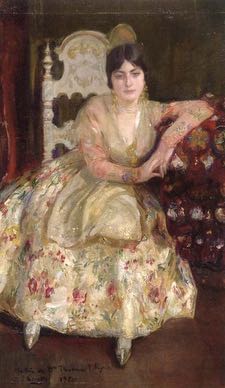
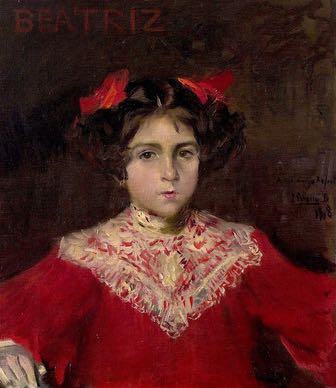
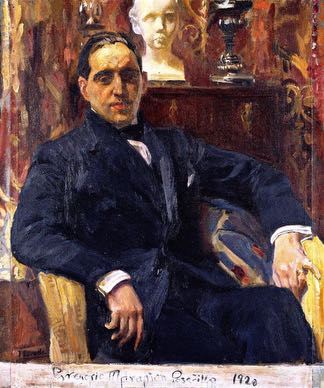
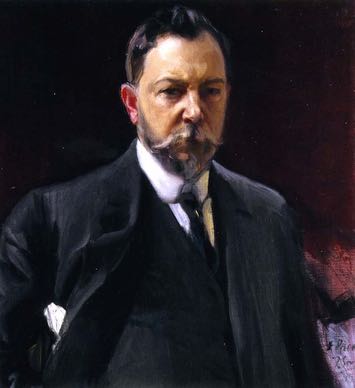
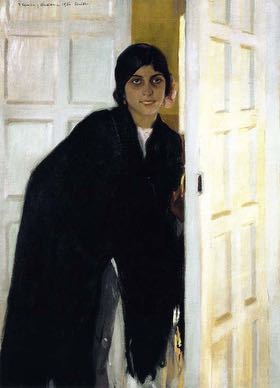
While portraiture did not fully satisfy Sorolla’s creative vision, he took on numerous portrait commissions, both for financial reasons and for the joy of painting his family members. His portrait style bore traces of influence from Velázquez, and his friendship with John Singer Sargent led to artistic exchanges that left a lasting impression on both painters. Although some art critics noted Sargent’s influence on Sorolla, Sargent himself held Sorolla’s work in high esteem, admiring his adept use of light and color.
After his death, Sorolla's widow donated a significant collection of his paintings to the Spanish public, leading to the establishment of the Museo Sorolla in his former residence in Madrid, which opened in 1932. Today, Sorolla’s work is preserved in major European and American museums, and his paintings remain a vital part of Spain’s artistic heritage, celebrated for their radiant portrayal of light and life.
Copyright © 2026 BrushWiz. All Rights Reserved.