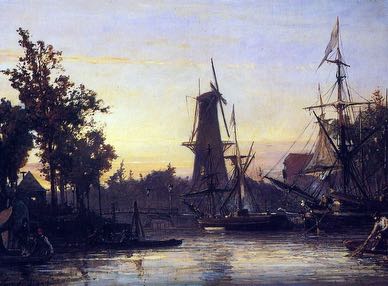
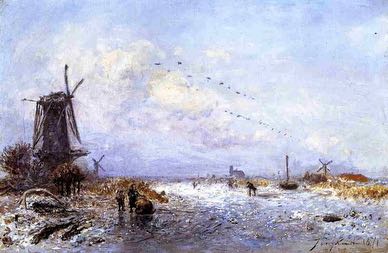
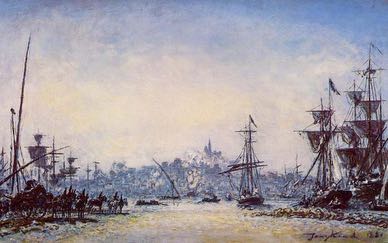
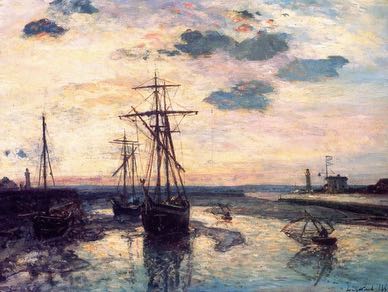
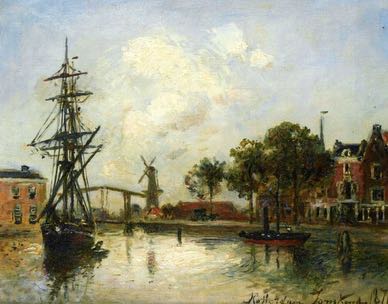
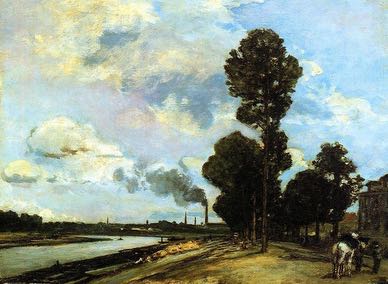
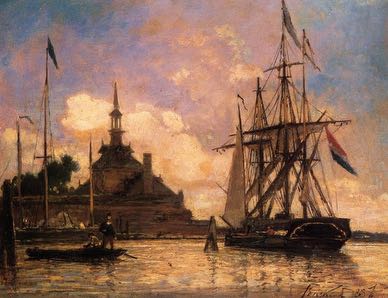
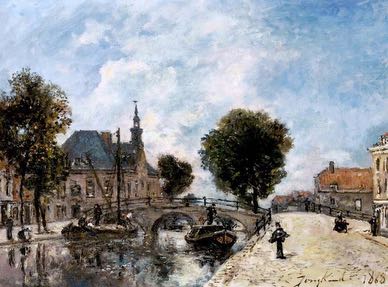
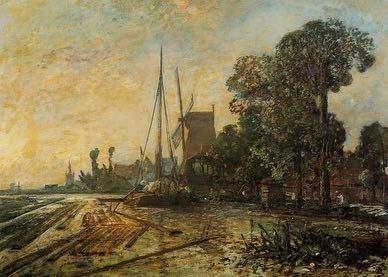
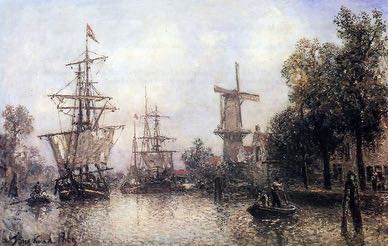
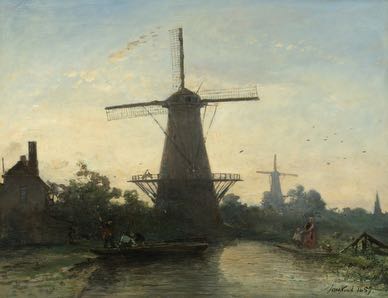
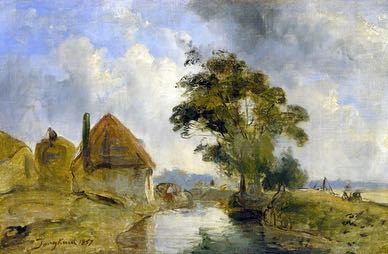
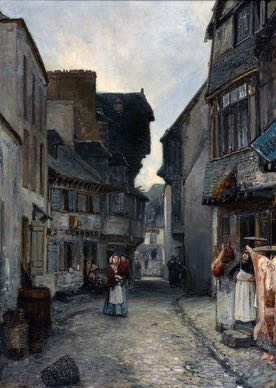
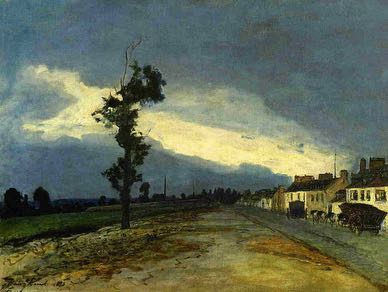
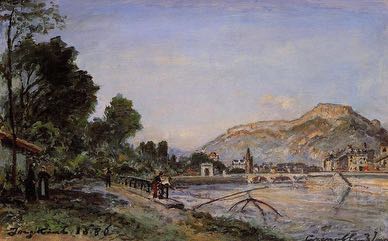
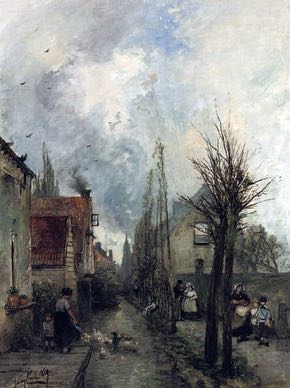
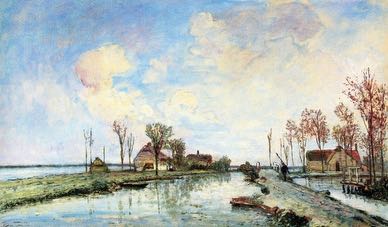
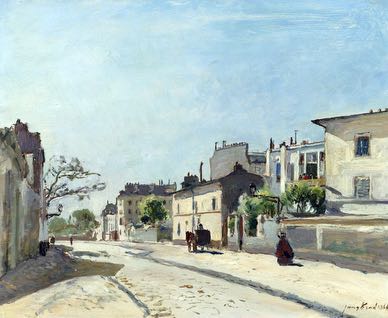
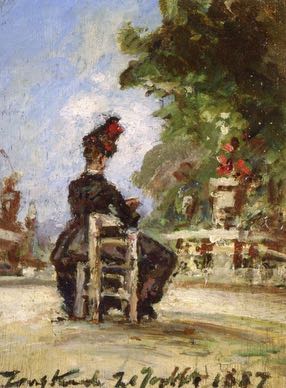
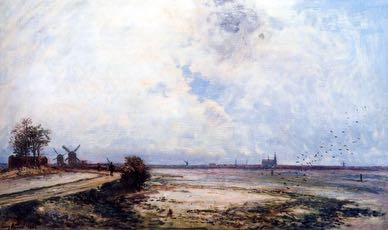
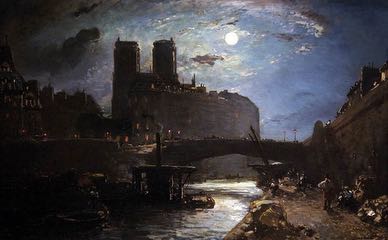
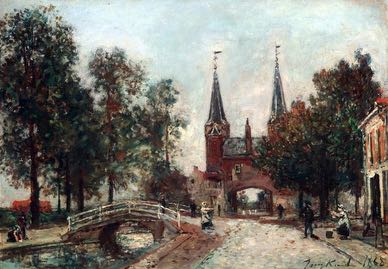
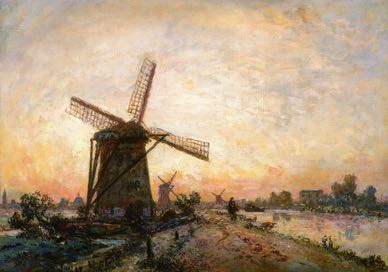
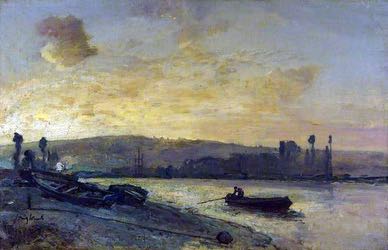
Jongkind was born in Lattrop, Netherlands, in 1819 and initially trained in The Hague under Andreas Schelfhout, a prominent landscapist whose classical Dutch landscapes with open skies and distinct horizons shaped Jongkind’s early work. Schelfhout’s influence is visible in Jongkind’s dedication to the distinctive Dutch style, marked by a balance between sky and land, but Jongkind’s approach to depicting natural light and movement set him apart. By 1846, seeking to expand his artistic repertoire, he moved to Paris to study under Eugène Isabey. This period in France allowed him to experiment and incorporate elements from French art into his style. The environment in Paris, alive with innovative ideas, exposed Jongkind to many luminaries, including Corot, Daubigny, Rousseau, Baudelaire, and Nadar. Parisian life, combined with his friendships, particularly with Charles Baudelaire and Corot, cultivated in Jongkind a unique style that mingled Realism with early glimpses of Impressionism. This led him to produce numerous studies and views of Paris, distinguished by his dramatic and spontaneous brushwork, subtle color contrasts, and remarkable command of light, qualities that came to define his mature style.
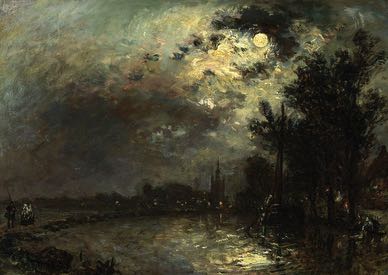
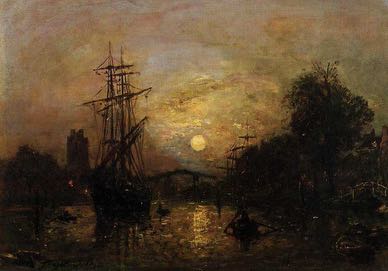
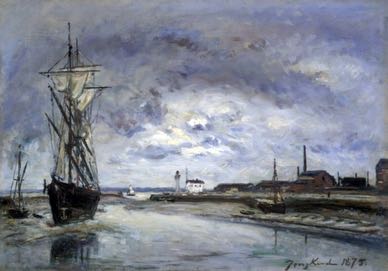
Jongkind’s initial years in Paris brought him success, and his works, especially his depictions of the Seine and scenes of moonlit landscapes, received considerable attention at the Paris Salon, where he also won a third-class medal. His artistic style, using short, confident brushstrokes and integrating light with soft contrasts, drew admiration. Nevertheless, his life in Paris was fraught with hardship; financial instability and struggles with alcoholism led him to return to the Netherlands, where he hoped to find stability.
Though he often traveled between the Netherlands and France, Jongkind’s bond with France remained strong, and he returned repeatedly to Paris, where his works became more refined. In Normandy, where he eventually settled, Jongkind found inspiration in the coastal and countryside vistas, which became frequent subjects of his art. His talent for depicting the effects of light and atmosphere reached its peak in these scenes, which he would often complete in his studio after capturing initial impressions outdoors. These plein air sketches demonstrated his remarkable memory for detail and atmosphere, capturing fleeting effects of light with a naturalist’s accuracy but an Impressionist’s spirit.
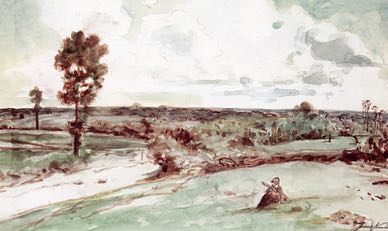
In the 1860s, as his financial troubles worsened, Jongkind’s friends organized a fundraiser by auctioning artworks to help him overcome his debts and re-establish his career in Paris. This support allowed Jongkind to continue creating, and his work increasingly influenced the rising Impressionist movement. Young Impressionists, including Monet, regarded Jongkind as an essential precursor and mentor, valuing his innovative approach to plein air painting and his commitment to natural representation. His dynamic and vigorous handling of the medium, particularly in his watercolors, demonstrated an understanding of the emotional resonance of color and movement that would shape the Impressionists’ approach to landscape painting.
Jongkind’s health and career fluctuated in his later years, and he became more withdrawn, yet his reputation as a master watercolorist remained unchallenged. Despite his personal struggles, his art left a lasting legacy, bridging the Dutch Golden Age landscape tradition with the modernity that would become a hallmark of Impressionism. His explorations of atmosphere and light in natural scenes remain celebrated, embodying the evolving spirit of 19th-century art and cementing his place as a vital contributor to European art history.
Copyright © 2026 BrushWiz. All Rights Reserved.