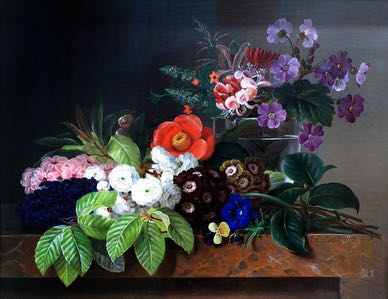
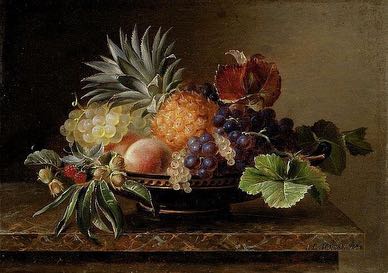
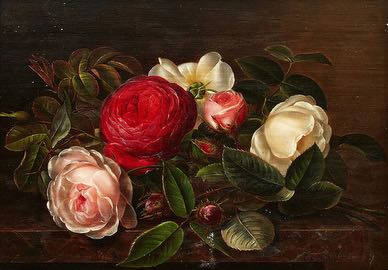
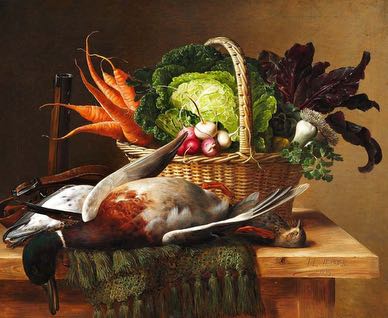
Jensen’s abilities were recognized by Crown Prince Christian Frederick (later King Christian VIII), who awarded him a travel scholarship. This support enabled Jensen to explore and study in several European art centers, including Hamburg, Amsterdam, and Paris, where he refined his approach to still life and flower painting. During his time in Paris, Jensen became an apprentice at the renowned Sèvres porcelain factory under Alexandre Brongniart, the factory’s director. Under Brongniart’s mentorship, Jensen’s painting evolved to showcase an extraordinary level of finesse and precision, which became the hallmark of his work. His eye for detail, combined with his fluid brushstrokes, resulted in still-life compositions that resonated with both elegance and grace.
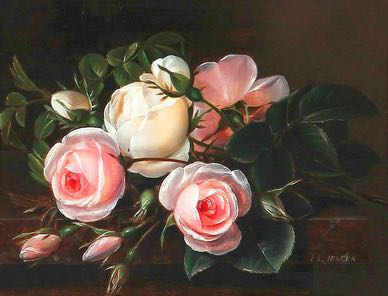
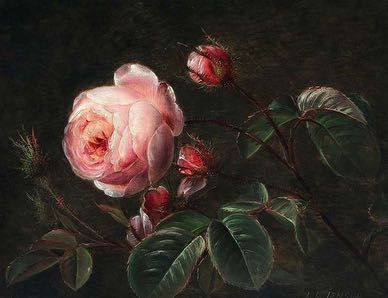
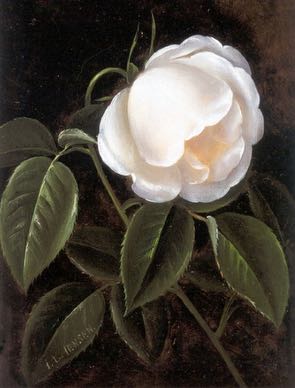
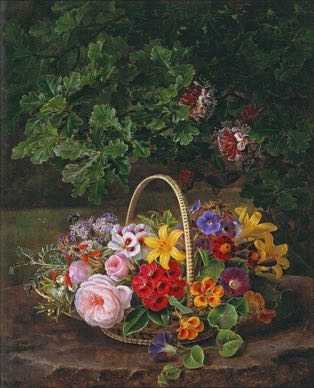
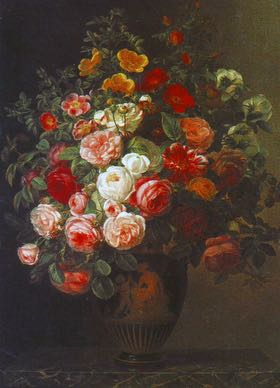
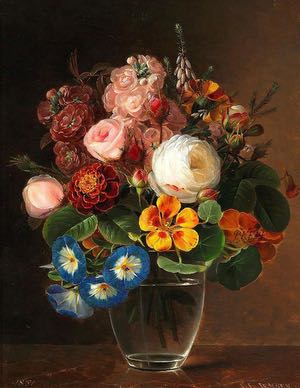
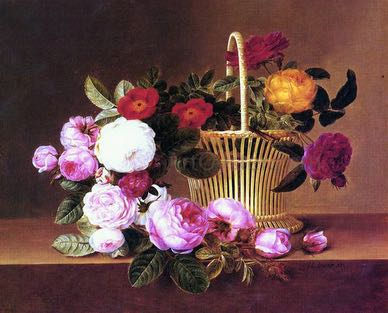
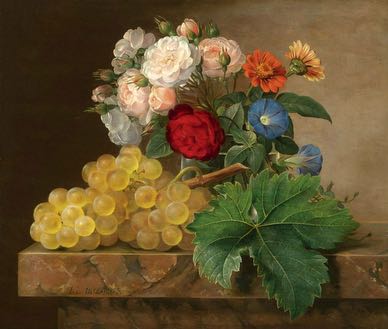
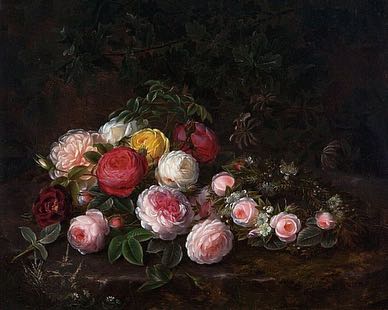
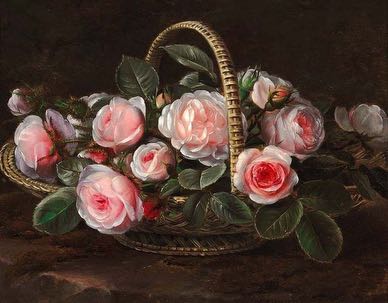
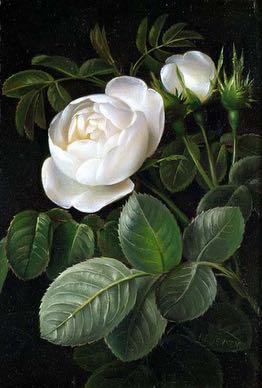
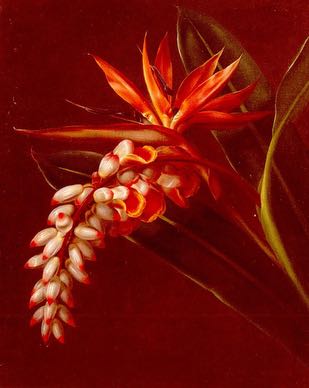
Jensen further advanced his technique by studying with the Flemish brothers Gérard and Cornelis van Spaendonck, who were highly skilled in flower painting. This experience allowed him to incorporate elements of Flemish still-life traditions into his work, blending meticulous detail with vibrant color schemes. Jensen’s flower arrangements often featured a mix of Danish plants alongside exotic fruits and flowers, portraying them in intricately crafted vases and elegant compositions that became emblematic of his style. His love for roses is particularly notable, as they frequently appeared in his compositions, sometimes accented by lilies or other delicate blooms.
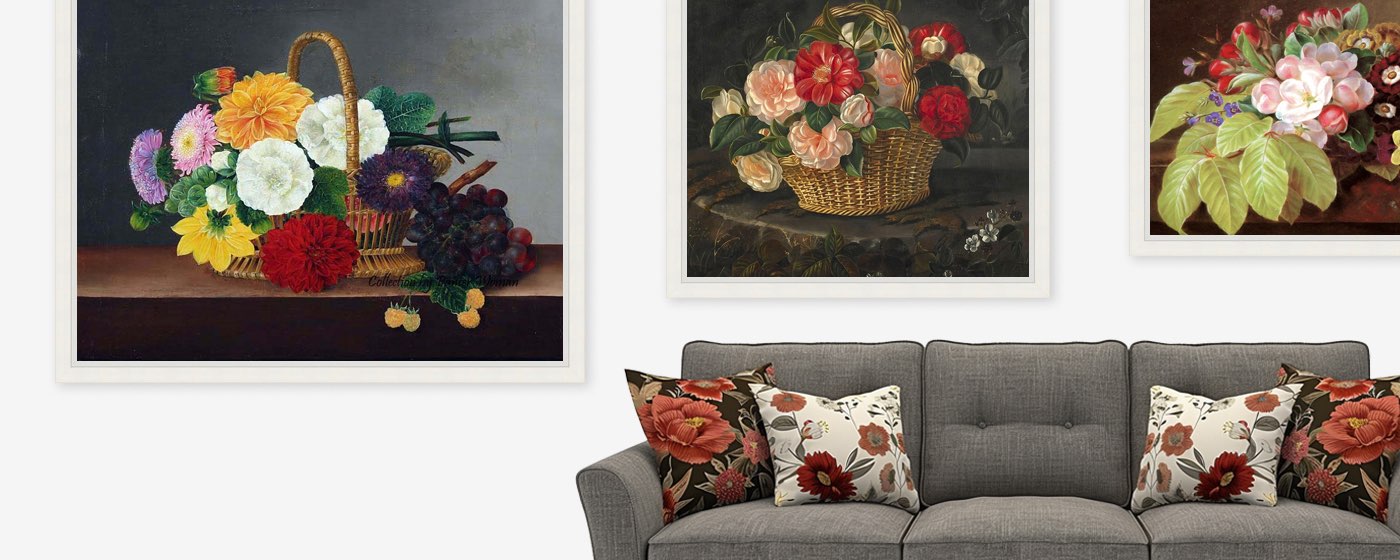
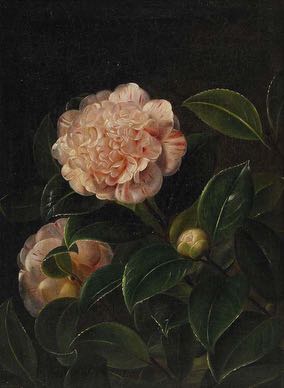
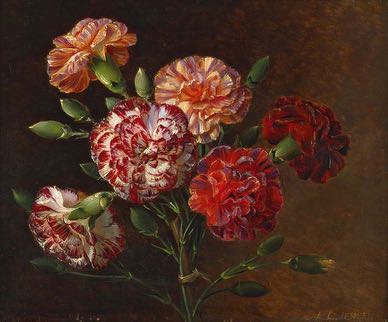
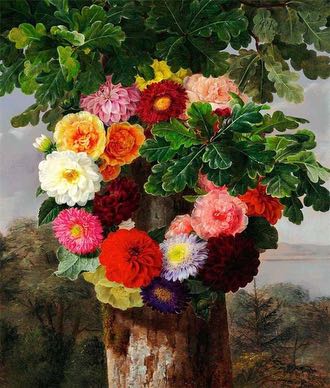
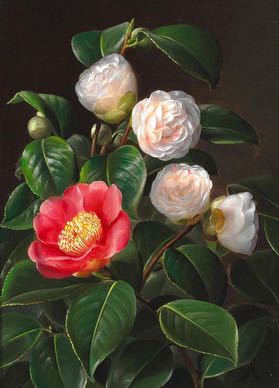
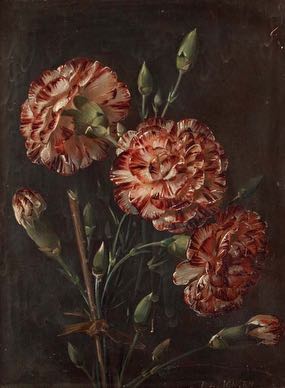
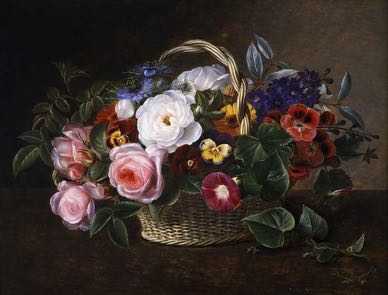
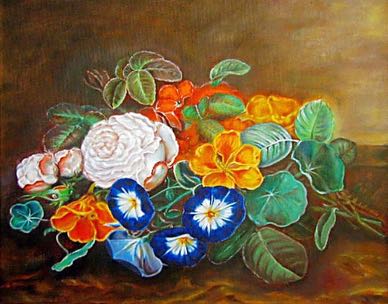
Jensen’s paintings typically presented flowers in vivid color palettes against darker, neutral backgrounds, a contrast that highlighted their natural beauty. In many pieces, he arranged his subjects in decorative vases or baskets set on trays, sometimes including fruits or small birds to enhance the composition’s aesthetic appeal. Although he enjoyed painting rare and exotic flowers, Jensen also cherished the beauty of his homeland. He would often venture into the countryside around Gentofte to paint wildflowers and native strawberries, infusing his works with a distinct Danish charm.
Beyond canvas, Jensen extended his talents to porcelain, becoming the head artist at the Danish Porcelain Factory. His prominent role at the factory helped him attract patrons from Danish high society, including notable figures like Louise of Hesse-Kassel, wife of King Christian IX, and other aristocratic clients who admired his refined and sophisticated style. Jensen’s popularity also drew many students eager to learn his techniques, contributing to a legacy that influenced Danish floral art long after his time.
Jensen’s work not only elevated the status of flower painting in Denmark but also left a lasting impact on European still-life traditions, marking him as one of the most significant artists of his generation. His legacy endures through his elegant compositions, which continue to captivate audiences with their beauty and meticulous attention to detail.
Copyright © 2026 BrushWiz. All Rights Reserved.