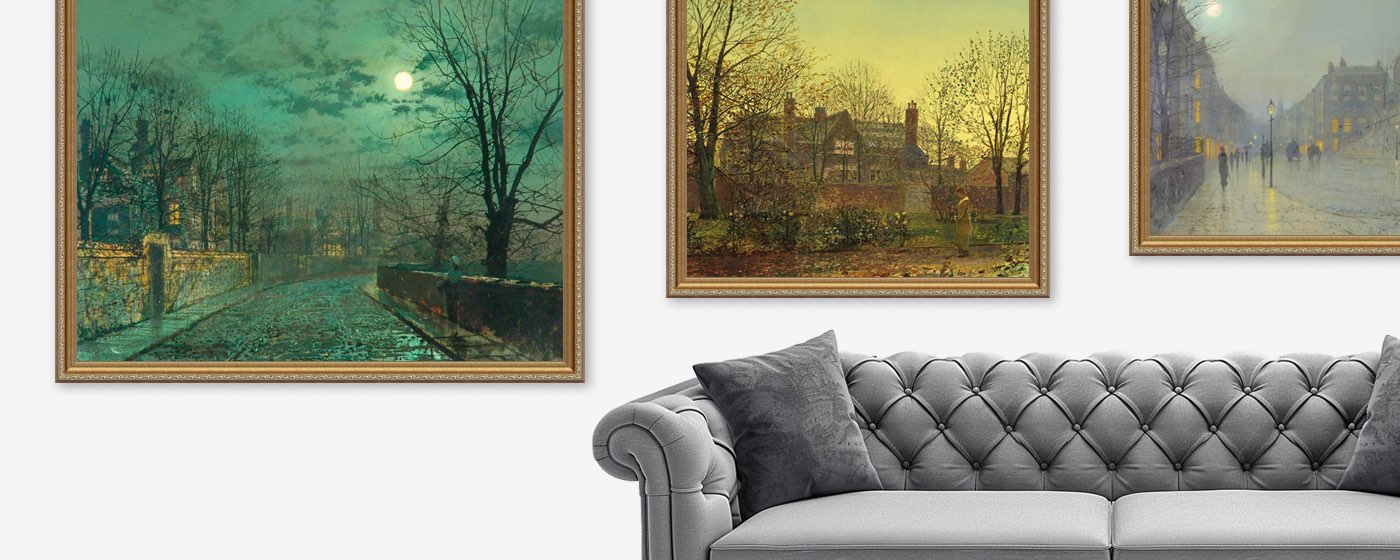
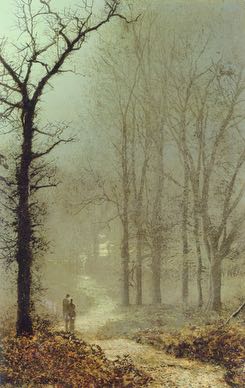
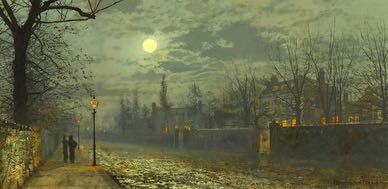
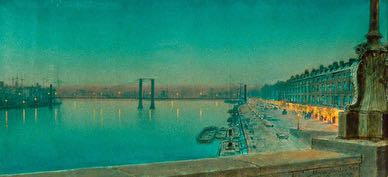
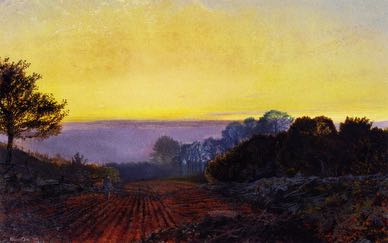
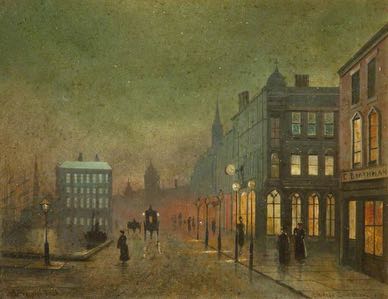
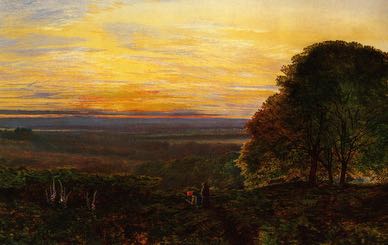
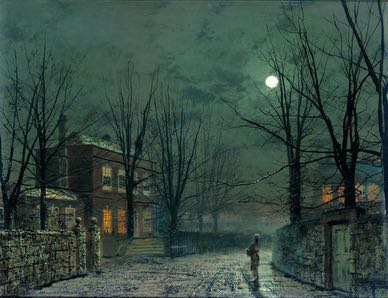
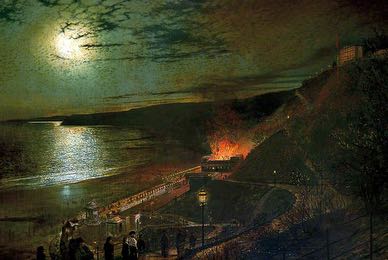
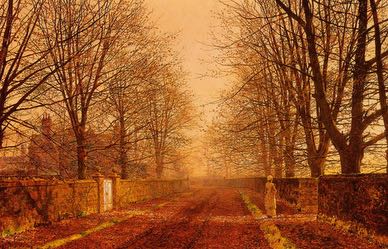
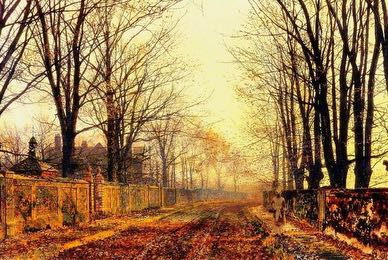
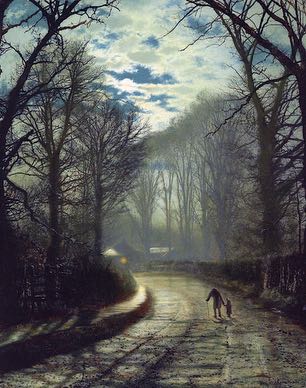
Self-taught, Grimshaw’s early works attracted the interest of the Leeds Philosophical and Literary Society, where he exhibited to critical acclaim. His somber townscapes gained popularity, and he soon received regular commissions from a London art dealer, which allowed him to purchase Knostrop Old Hall, a 17th-century manor near Leeds, where he found abundant inspiration in the serene and haunting beauty of his surroundings.
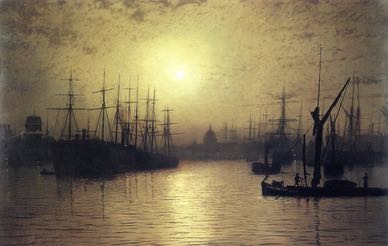
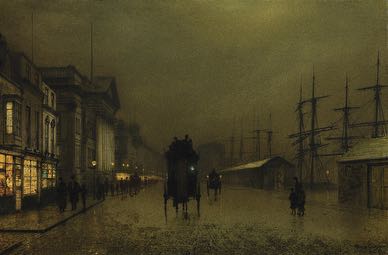
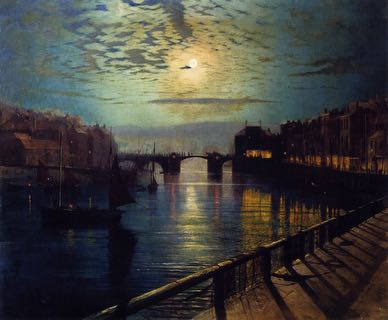
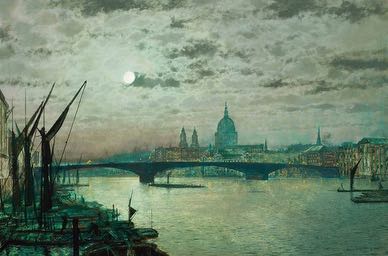
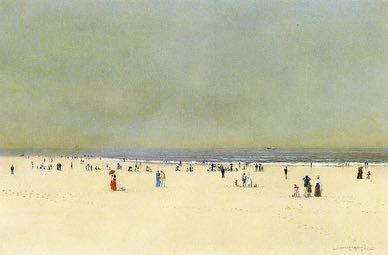
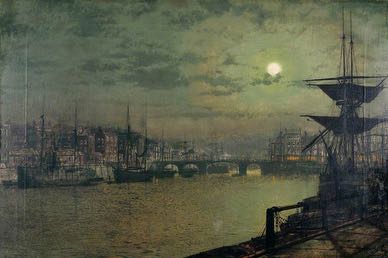
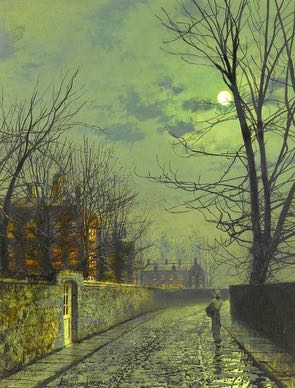
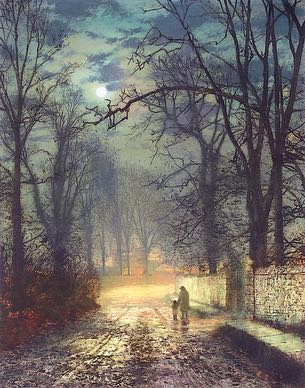
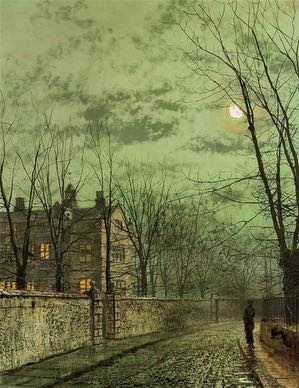
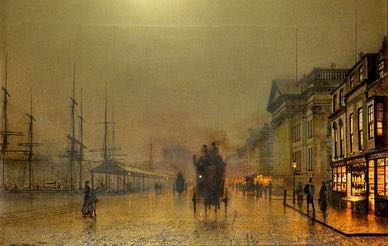
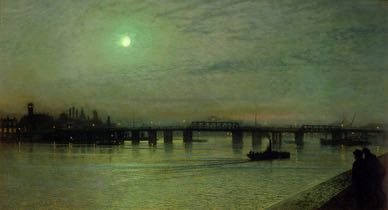
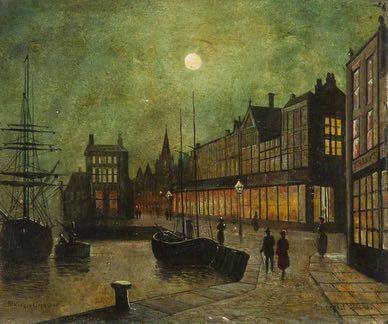
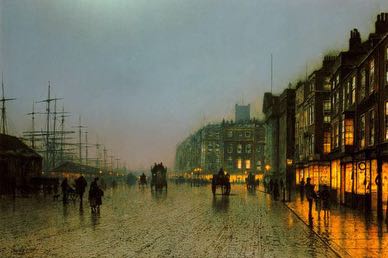
Grimshaw’s fascination with the sea and coastal areas led him to paint some of his most evocative seascapes and marine scenes. He traveled to Glasgow, Liverpool, Scarborough, Whitby, and London in search of new material, becoming especially celebrated for his masterful depictions of urban landscapes under moonlight. His attention to detail approached photographic precision, and he often used unconventional materials, like sand, to create rich visual effects in his work.
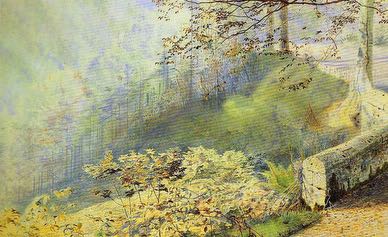
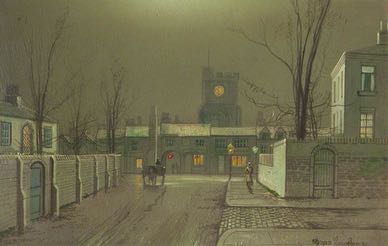
His style drew heavily from the Pre-Raphaelite movement, and he meticulously captured light, shadow, and seasonal changes with a stunning level of detail. His moonlit cityscapes, featuring gas-lit streets, misty waterfronts, and nocturnal scenes of London, Glasgow, and Liverpool docks, have an eerie yet warm quality, providing a surreal view of urban life. His frequent use of the camera obscura allowed him to replicate and refine his compositions, a technique that contributed to his distinctive, near-photorealistic approach.
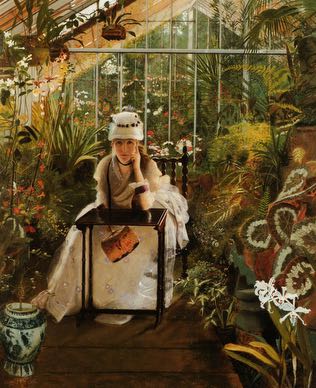
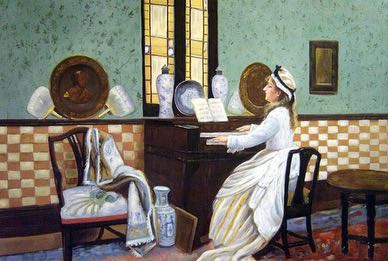
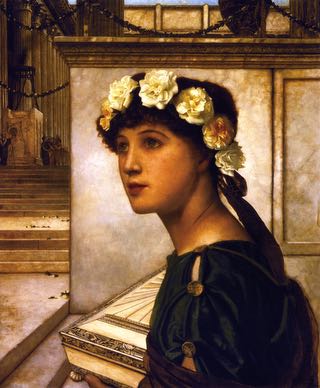
In the 1870s, inspired by Sir Lawrence Alma-Tadema, Grimshaw experimented with classical subjects and historical scenes, producing works in a looser style that recalled the works of artists like Tissot. He even depicted modern women with a touch of romantic classicism, enjoying moderate success in this genre. During this period, he took up residence in Scarborough and continued to travel to cities like London and Liverpool for inspiration.
Financial difficulties in the 1880s forced Grimshaw to return to Leeds, where he increased his output, producing as many as 50 works per year. His later works, while still faithful to his signature moonlit cityscapes, also reflected elements of social realism, perhaps influenced by the financial pressures he faced. He continued to experiment with painting techniques, sometimes using photographs as bases for his work and even collaborating with friend James Whistler, another master of nocturnal scenes. His frequent subject, Iris, was rendered in numerous versions, some of which remain popular in reproductions today.
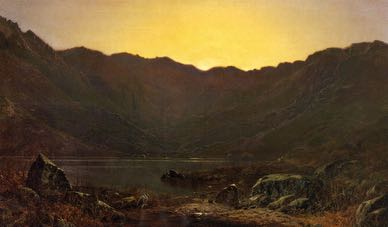
Though Grimshaw rarely exhibited at the Royal Academy, he developed a strong following among private patrons and left a lasting legacy in Leeds, where he successfully advocated for the establishment of a City Art Gallery. His prolific output included not only night scenes but also portraits, interior scenes, fairy paintings, neo-classical works, and landscapes, all characterized by his deep sensitivity to mood, light, and atmosphere. Despite his unique style, Grimshaw never founded an art school, yet his influence is evident in the forgeries and reproductions that emerged even during his lifetime, underscoring his enduring impact on Victorian art.
Copyright © 2026 BrushWiz. All Rights Reserved.