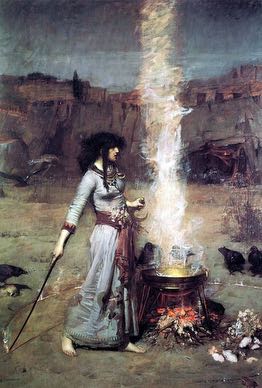
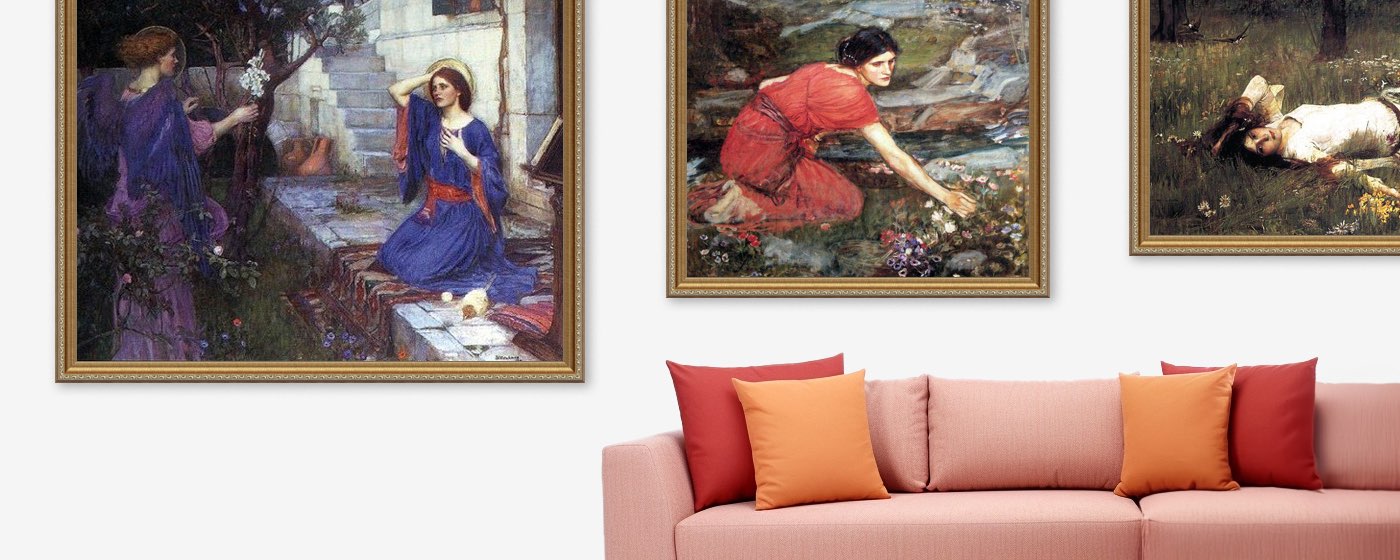
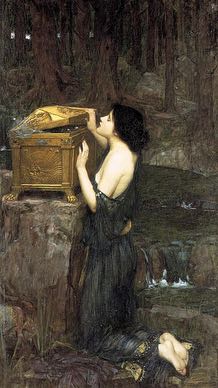
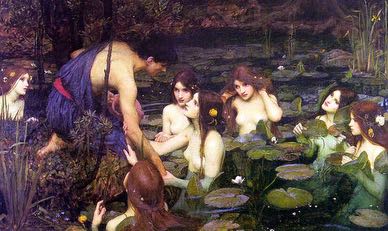
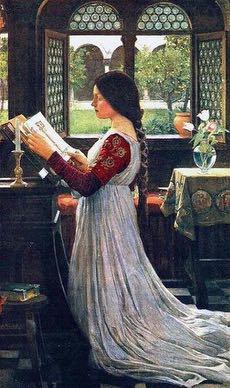
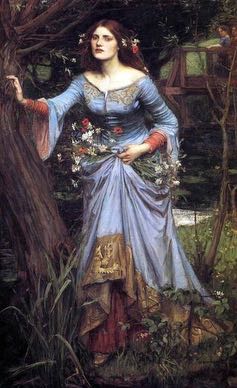
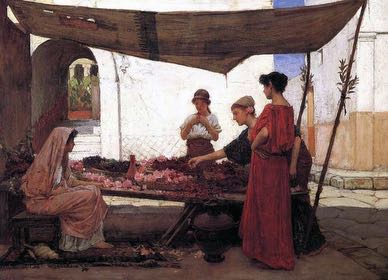
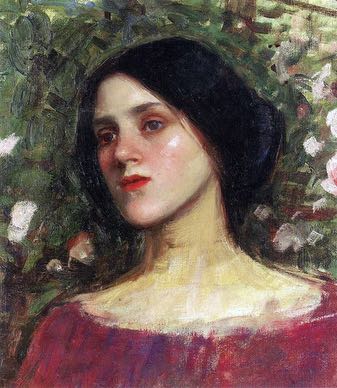
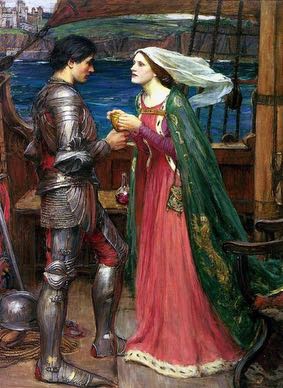
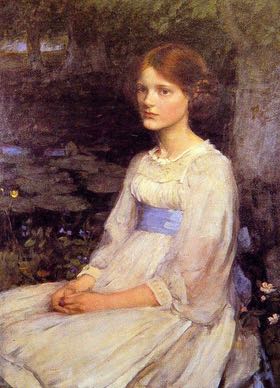
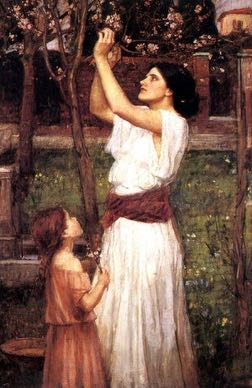
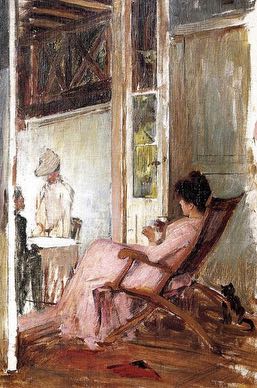
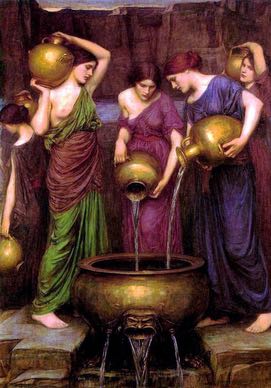
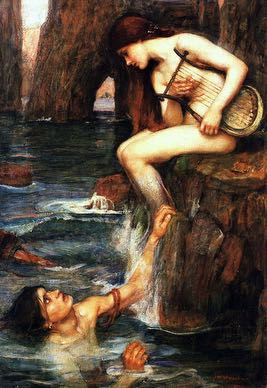
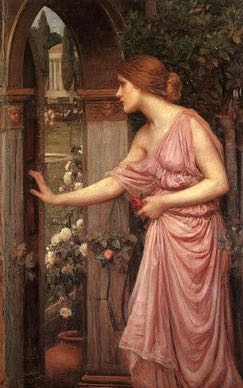
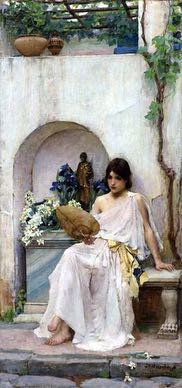
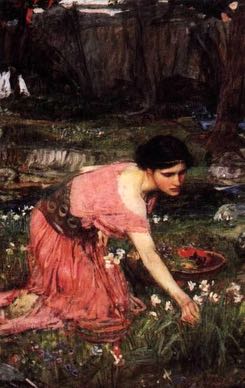
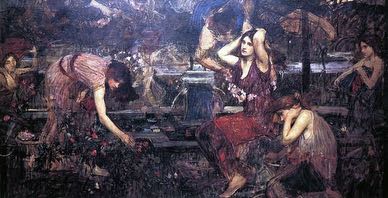
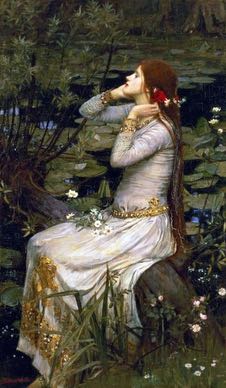
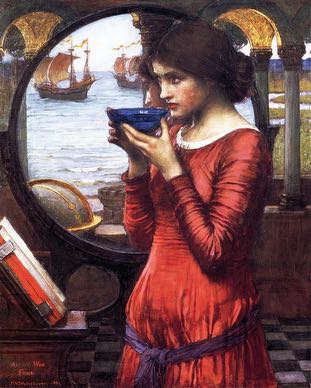
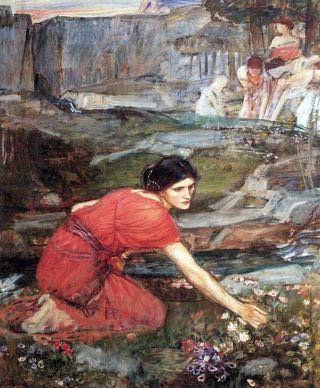
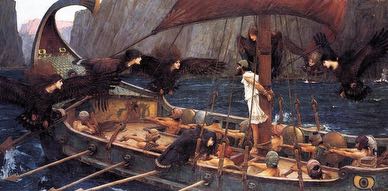
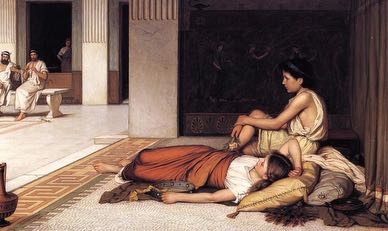
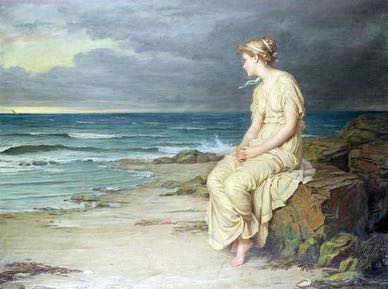
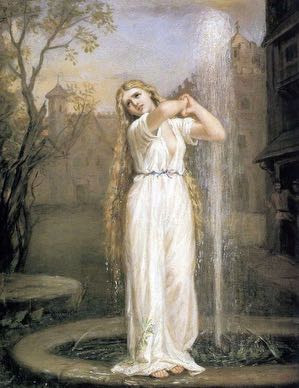
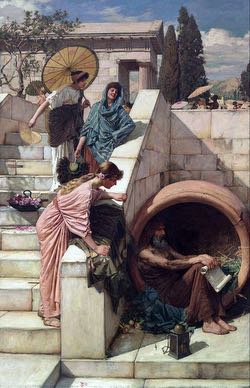
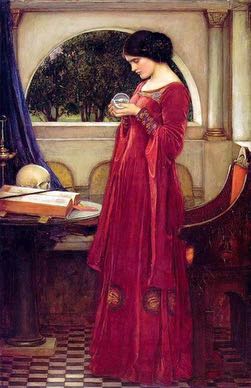
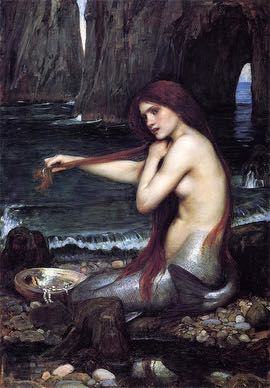
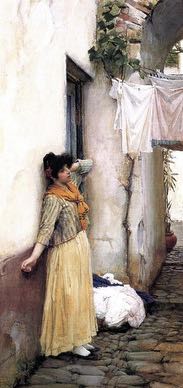
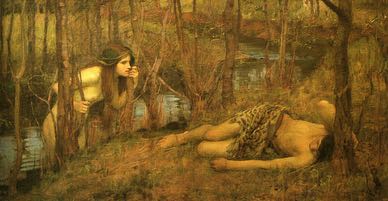
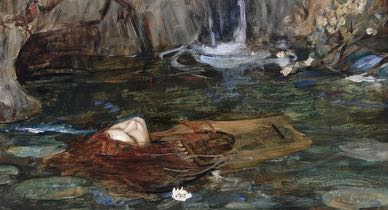
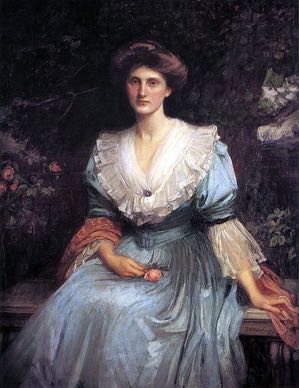
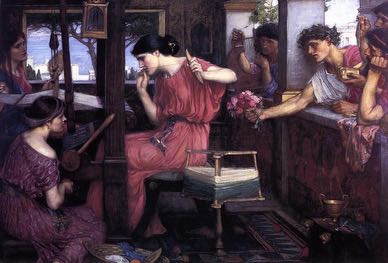
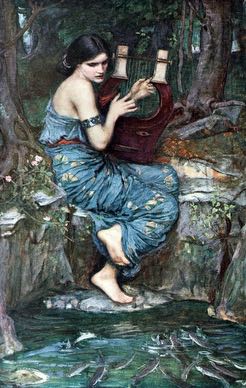
Waterhouse gained his initial reputation at the Royal Academy, where he studied and exhibited his early classical compositions, inspired by artists like Sir Lawrence Alma-Tadema and Frederic Leighton. Frequent trips to Italy during this period further enriched his work with Mediterranean landscapes and ancient Roman aesthetics. His themes, often drawn from Greek mythology, Arthurian legend, and Shakespearean lore, centered around tragic heroines and complex female characters. His works were widely acclaimed, leading to his election as an Associate of the Royal Academy in 1885 and as a full member in 1895.
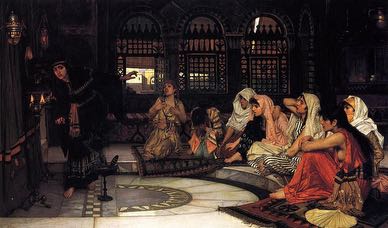
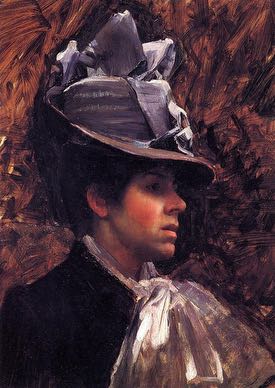
In the 1880s, Waterhouse increasingly embraced Pre-Raphaelite techniques and themes. His skill in blending vibrant colors and textured brushwork led to commercial success with compositions like “Consulting the Oracle”, which was later acquired by art collector Henry Tate. This phase marked the height of his creativity and influence, as he exhibited extensively in prominent galleries and internationally. By the 1890s, he expanded his repertoire to include portraits and contributed his work to fundraising efforts, such as the Artists' War Fund. His impact also extended to teaching, where he guided students in Pre-Raphaelite techniques at the St John's Wood Art Club.
Waterhouse continued to work prolifically even as his health declined in his later years. His late works, many centered on the figure of Persephone, show a fascination with mythological themes and literary narratives, exploring beauty, sorrow, and the supernatural. Despite his fame, Waterhouse remained a private individual; his wife, Esther, outlived him by nearly three decades, but they had no children. Waterhouse’s legacy endures in his timeless portrayals of feminine mystique and his masterful adaptation of Pre-Raphaelite ideals well into the modern era.
Copyright © 2026 BrushWiz. All Rights Reserved.