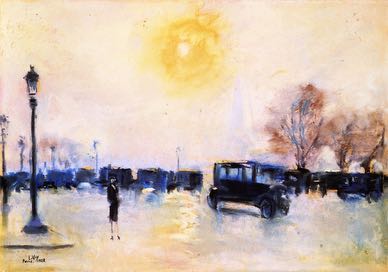
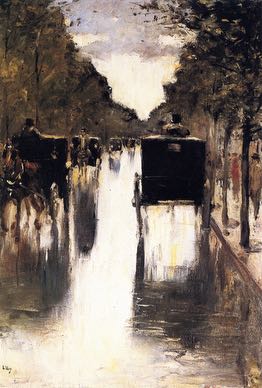
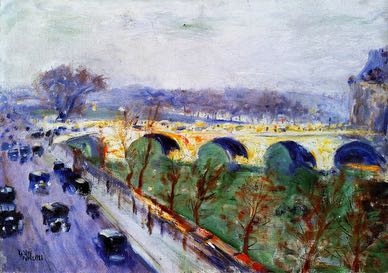
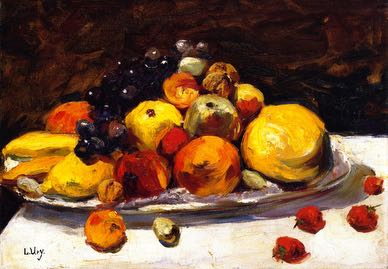
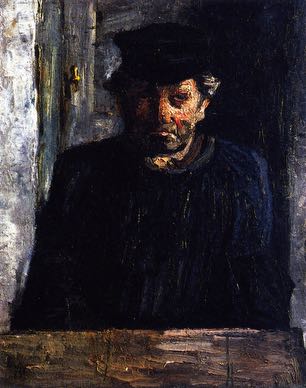
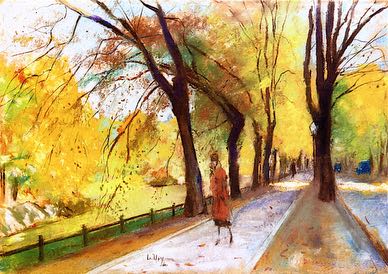
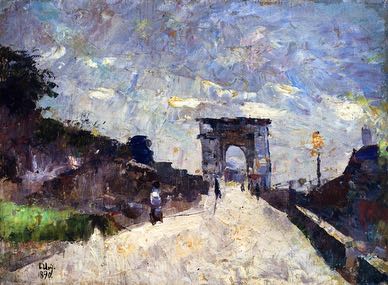
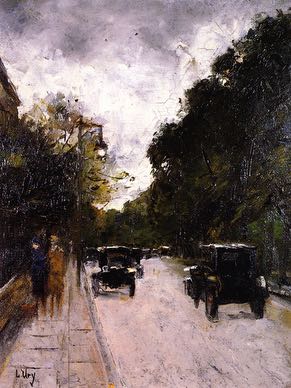
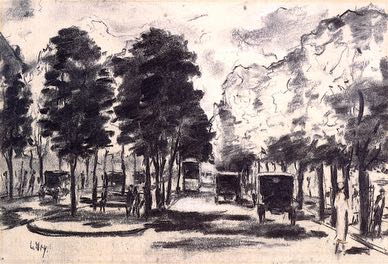
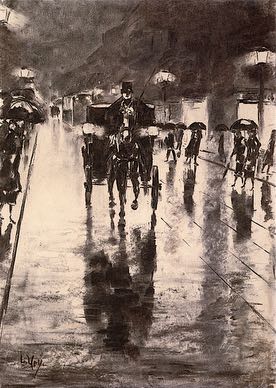
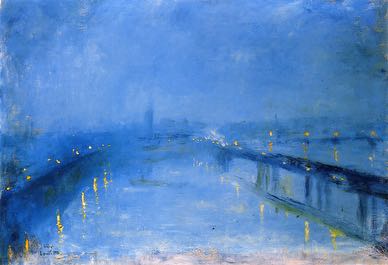
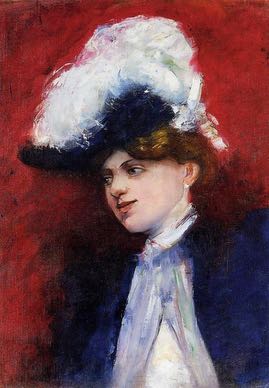
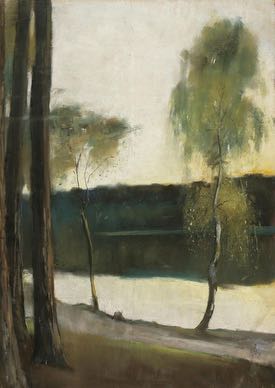
Born in Birnbaum, Prussia (now Poland), Ury’s early life was marked by hardship after his father’s death, leading the family to relocate to Berlin in 1872. Showing artistic promise, he trained at various European academies, studying in Düsseldorf, Brussels, and Paris, where he encountered the works of the French Impressionists. The impact of these influences would later emerge in his cityscapes, in which he used light and color to create atmospheric effects and portray the rhythm of modern life.
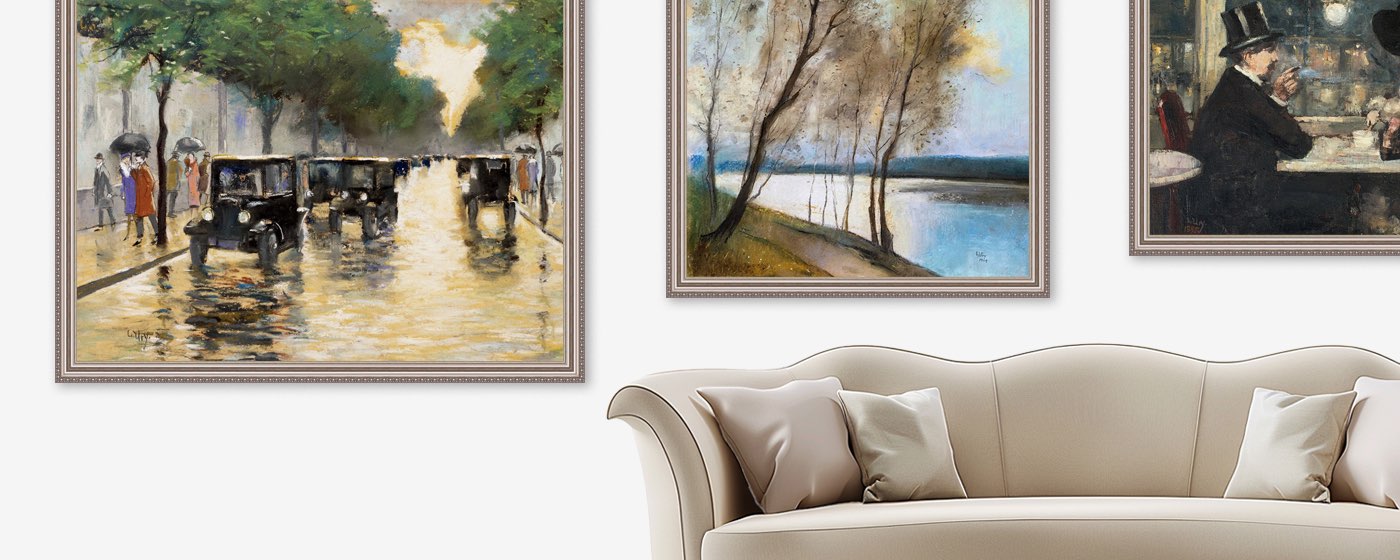
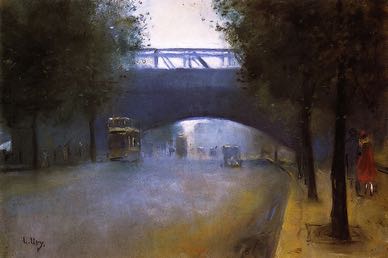
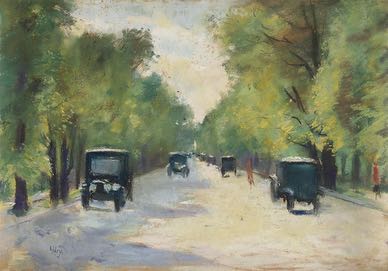
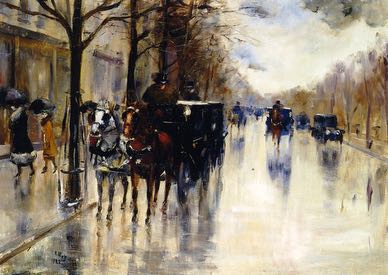
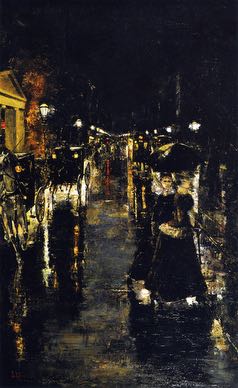
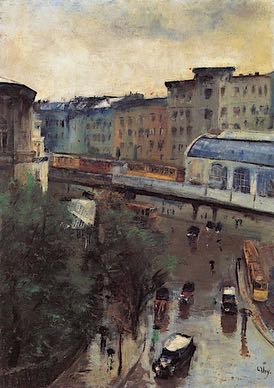
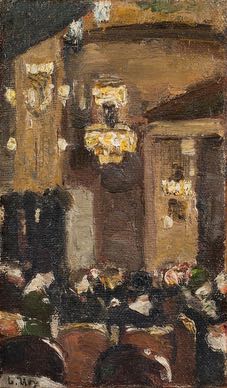
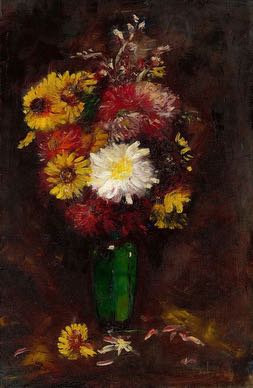
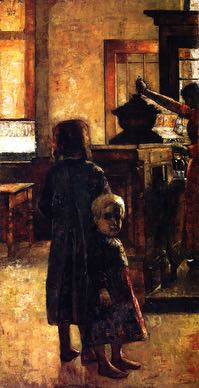
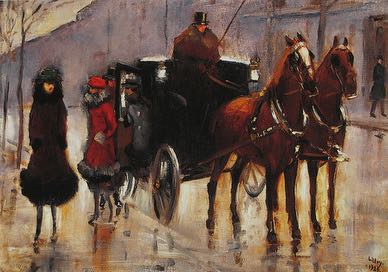
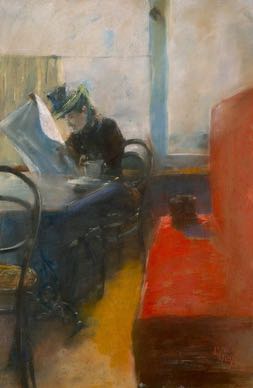
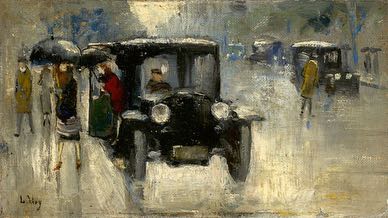
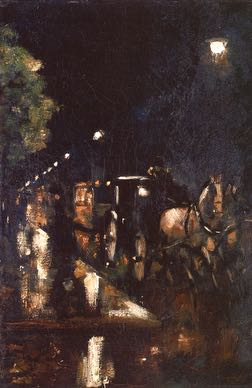
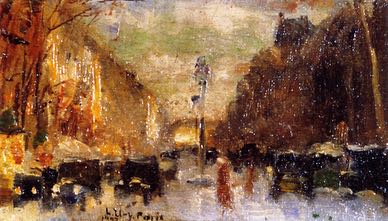
Ury returned to Berlin in the 1880s, where he would live and work for most of his life. Berlin became his muse, and his work is closely associated with the city’s streets, cafes, and boulevards. His paintings often depict scenes of everyday life—people huddled under umbrellas, carriages passing through rain-slicked streets, and interiors of cafes bathed in the soft glow of lamps. Ury’s characteristic style combined realism with Impressionist techniques, using pastels and oils to achieve soft edges, reflections, and luminous effects that captured Berlin’s vibrant yet introspective mood.
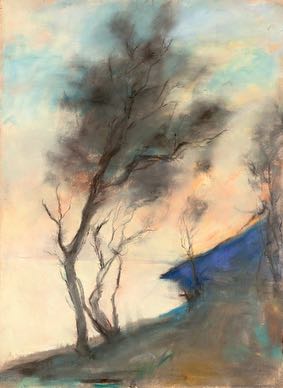
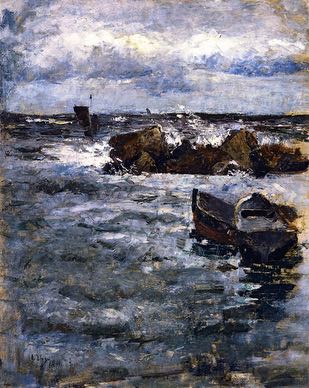
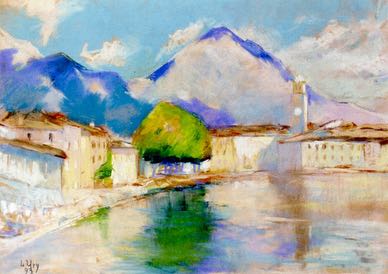
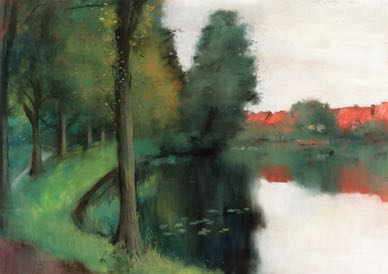
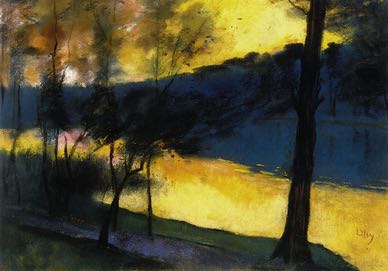
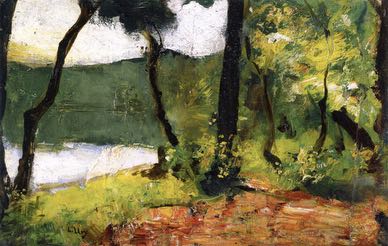
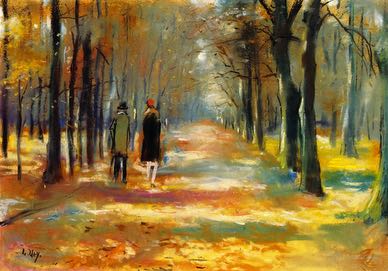
In addition to his cityscapes, Ury was known for his landscapes, particularly those of the countryside and forests around Berlin. These works reflect a more tranquil side of his art, often portraying nature with a sense of reverence and calm. His landscapes reveal an affinity for solitude and reflect his romantic, almost mystical connection to nature. His approach to these scenes was often painterly, emphasizing mood over detail and focusing on the interplay of light and shadow.
Despite his talent, Ury faced significant challenges throughout his career. His relationship with the art establishment in Berlin was strained, particularly with artist Max Liebermann, a fellow Jewish painter and influential figure in the Berlin Secession. Although Ury exhibited with the Secession, tensions and rivalries limited his visibility and acceptance within mainstream circles. His reclusive nature and sensitivity to criticism also contributed to his relative isolation from the art community.
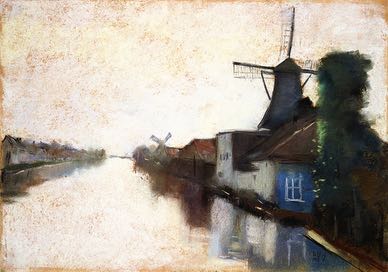
Nevertheless, Ury maintained a dedicated following, and his exhibitions often attracted public attention. His work gained particular acclaim for his pastels, which he mastered later in his career, achieving a delicacy and depth that enhanced his exploration of light and shadow. These works, which depict intimate scenes with an almost cinematic quality, became some of his most beloved pieces and are still admired for their technical finesse and atmospheric impact.
Lesser Ury died in 1931 in Berlin, leaving behind a body of work that offers a compelling view of urban life and the quiet beauty of nature. Today, his paintings are housed in prominent collections, including the Jewish Museum Berlin and the Berlinische Galerie, and his reputation has steadily grown. Ury is remembered for his unique perspective on Berlin’s streets and landscapes, his sensitive portrayal of modern life, and his pioneering use of pastels, securing his place as an important figure in German Impressionism and modern art.
Copyright © 2026 BrushWiz. All Rights Reserved.