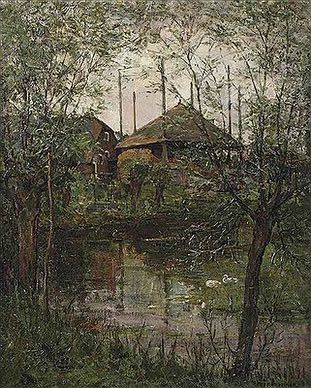
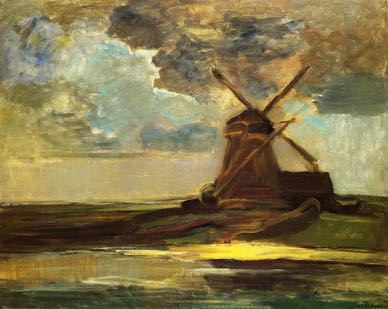
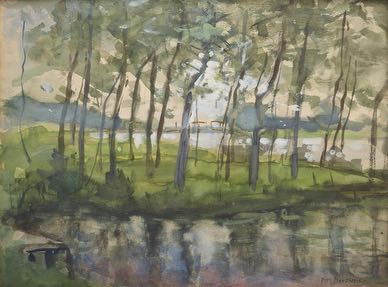
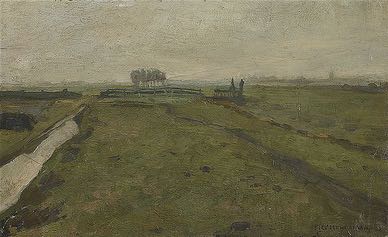
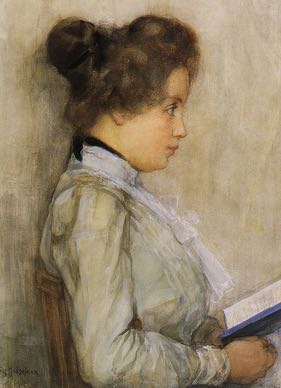
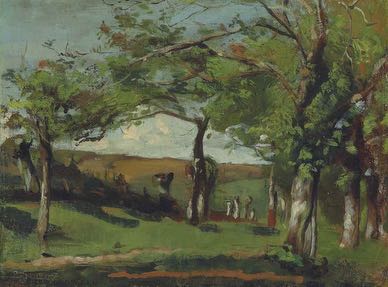
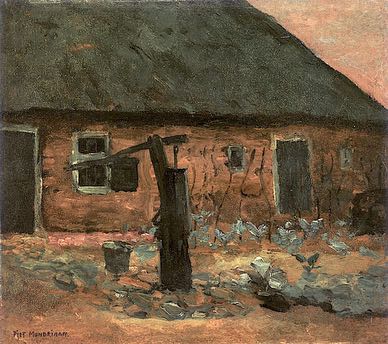
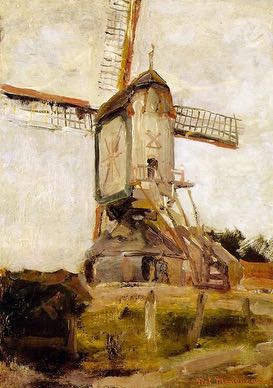
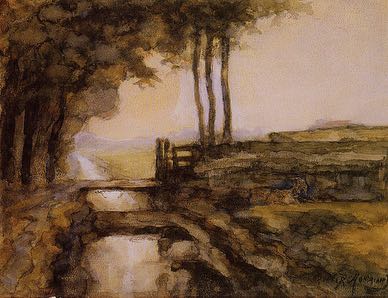
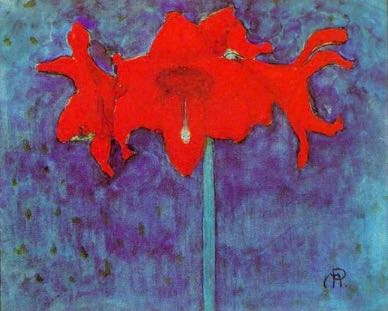
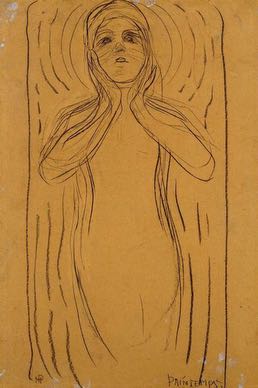
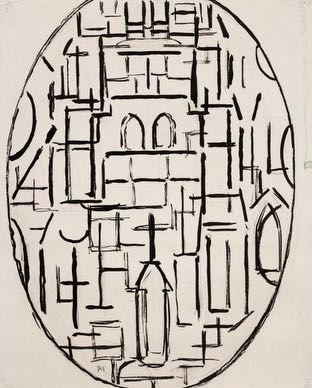
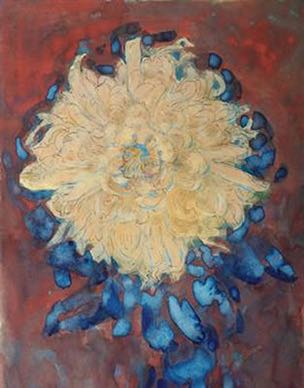
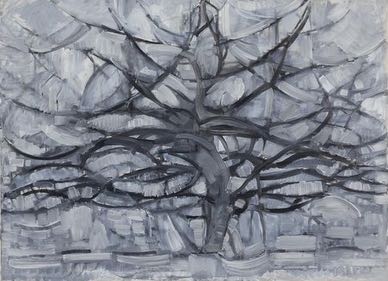
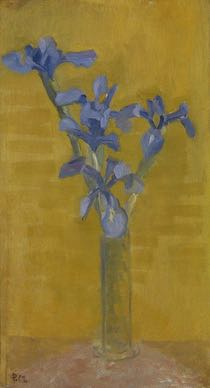
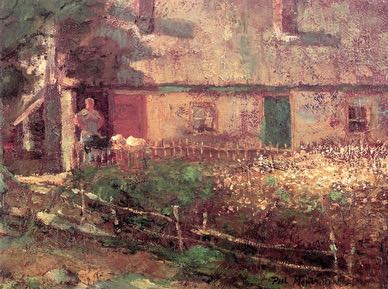
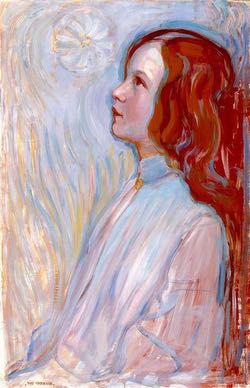
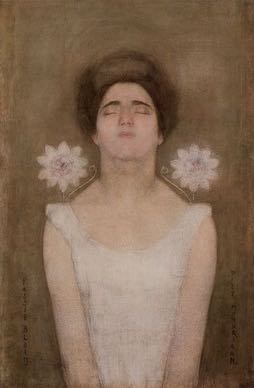
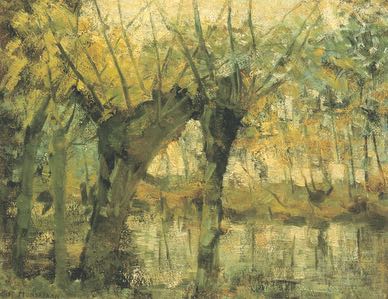
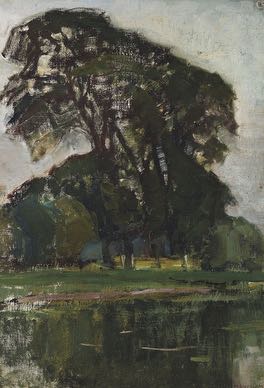
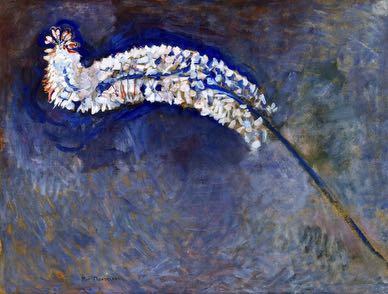
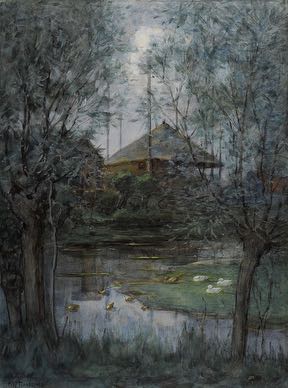
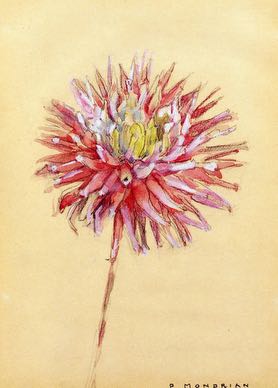
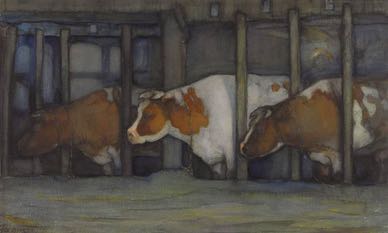
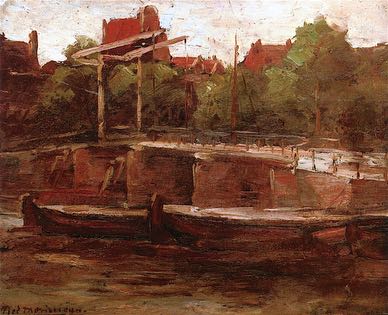
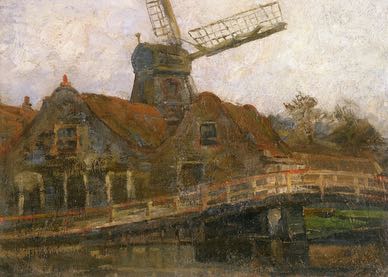
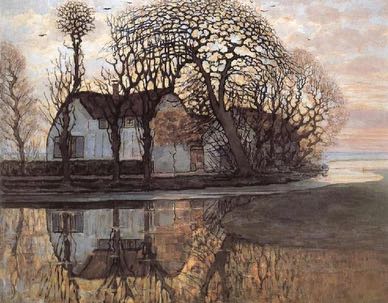
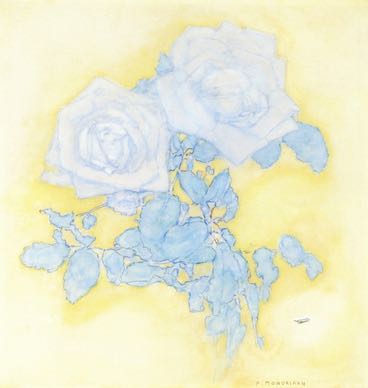
Mondrian was born in Amersfoort, Netherlands, and began his artistic training at the Rijksakademie van Beeldende Kunsten in Amsterdam. His early works, heavily influenced by Dutch landscape tradition, depicted serene scenes of windmills, rivers, and rural landscapes in a realist style. However, under the influence of Impressionism and Symbolism, his palette lightened, and he began to experiment with color and form. This experimentation intensified following his exposure to the work of Vincent van Gogh and the vibrant colors of Fauvism.
In 1911, Mondrian moved to Paris, where he encountered Cubism and was profoundly affected by the works of Pablo Picasso and Georges Braque. The Cubist approach to form and spatial fragmentation inspired Mondrian to reconsider his own artistic direction. He began to strip away representational elements, moving toward a more abstract style that would eventually define his work. His studies in Theosophy, a spiritual movement advocating a universal order, deeply influenced his philosophy of art, leading him to pursue a "pure reality" beyond natural appearances.
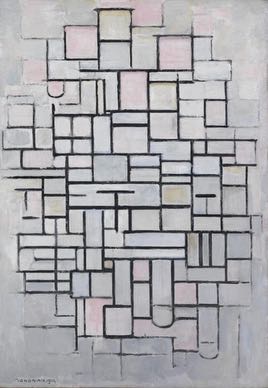
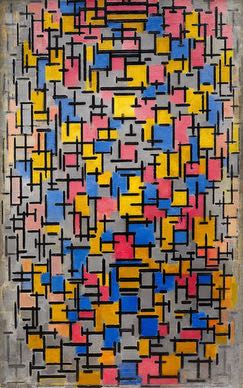
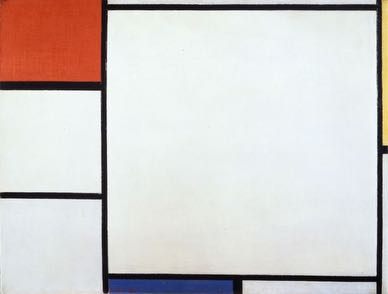
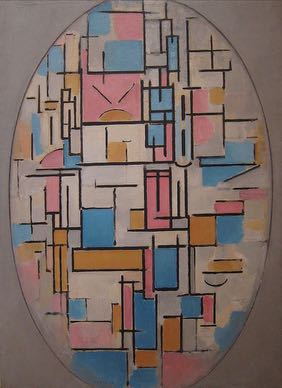
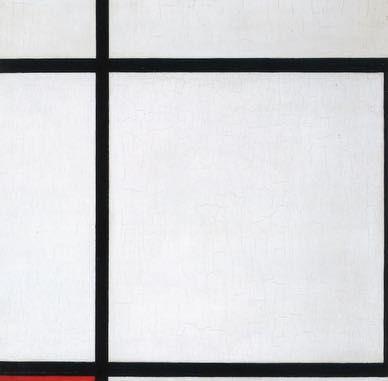
By 1917, Mondrian’s style evolved into the hallmark of Neoplasticism, characterized by a grid of black lines intersecting at right angles, with rectangles of primary colors, white, and gray. Alongside fellow Dutch artist Theo van Doesburg, Mondrian co-founded the De Stijl movement, which promoted an aesthetic of simplicity and abstraction across visual art, architecture, and design. For Mondrian, this style reflected a balance of opposites, an ideal harmony, and a spiritual purity that he believed could transcend individual expression and reflect universal truths.
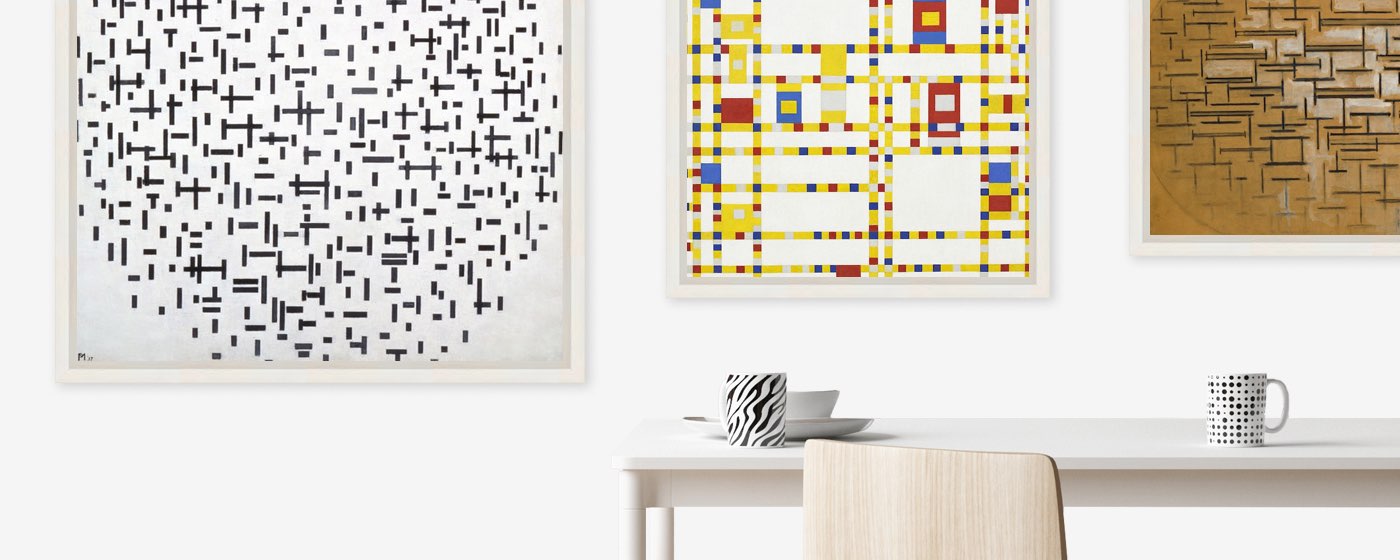
In the 1920s, Mondrian’s work reached a peak of abstraction, refining his compositions to focus solely on primary colors (red, blue, yellow), non-colors (white, black, gray), and strict vertical and horizontal lines. These compositions, such as “Composition with Red, Blue, and Yellow (1930)”, became iconic symbols of modern art, embodying his vision of universal harmony through structure and simplicity. His methodical approach created a rhythm and balance that echoed his quest for order and purity in art.
In 1938, with the rise of World War II, Mondrian moved to London, and then to New York in 1940, where he found new inspiration in the dynamic energy of the city and its jazz culture. His final works, like “Broadway Boogie Woogie (1942–43)”, introduced a more vibrant rhythm and a sense of movement. Using a grid of small, colorful squares, he infused his compositions with an upbeat, almost musical quality, a tribute to the bustling spirit of New York. This shift marked a subtle evolution in his work, from strict structure to an exploration of pulsating, lively compositions.
Mondrian’s influence extended beyond painting into design, architecture, and fashion, inspiring generations of artists and designers with his principles of abstraction. His radical reduction of forms and colors became a universal language in modern art, one that aimed to reflect a utopian vision of society. His work embodies a disciplined yet expressive approach that continues to inspire and resonate within contemporary art and design.
Piet Mondrian passed away in New York in 1944. His legacy endures as a pioneer of abstraction and a visionary of modernism, whose principles of simplicity, balance, and order reshaped the language of art. His profound exploration of pure form and color not only defined his own artistic journey but also paved the way for future movements in minimalist and abstract art.
Copyright © 2026 BrushWiz. All Rights Reserved.