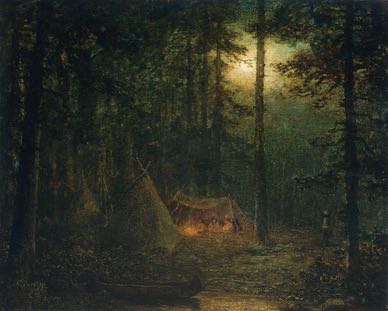
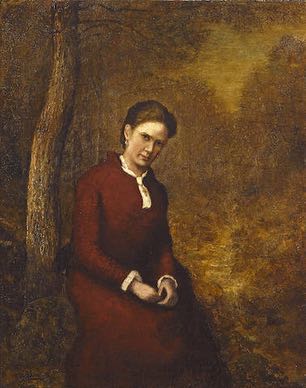
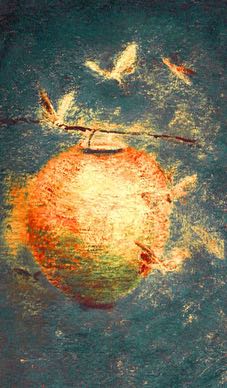
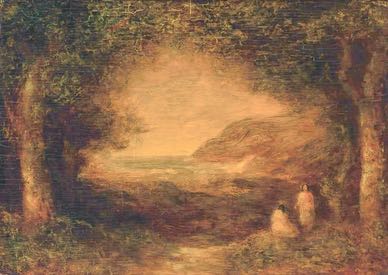
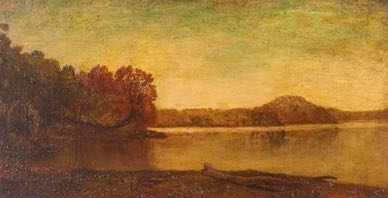
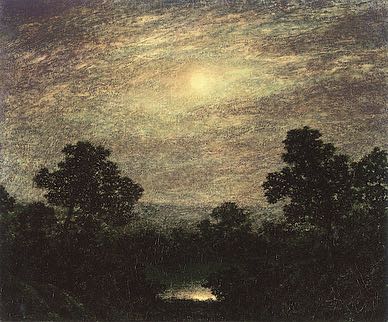
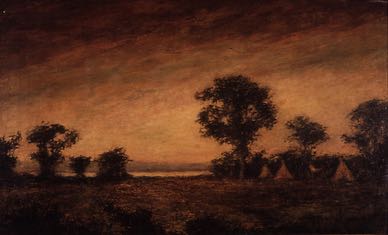
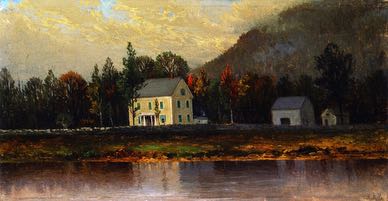
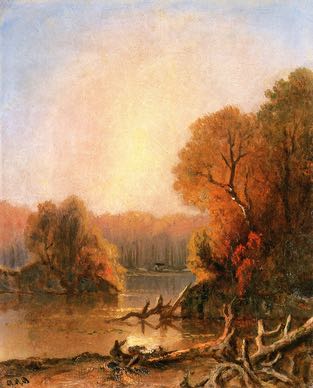
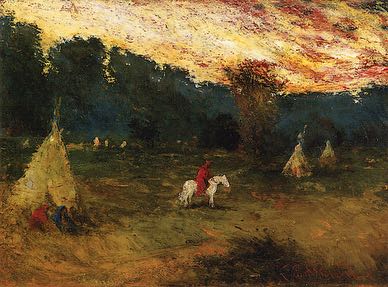
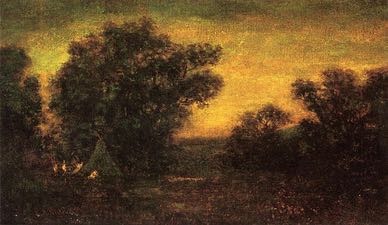
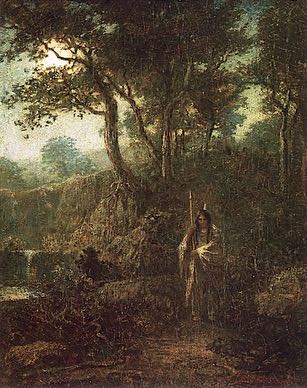
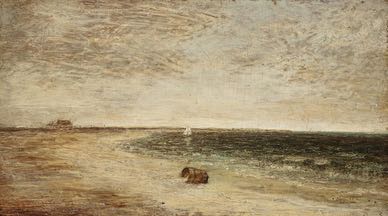
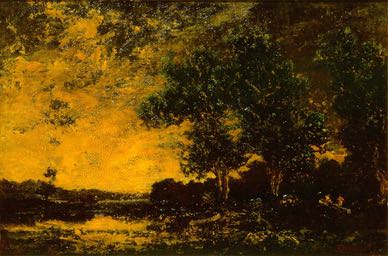
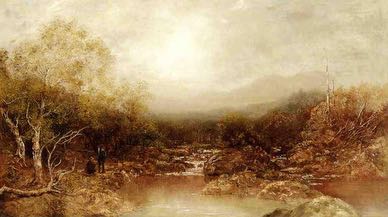
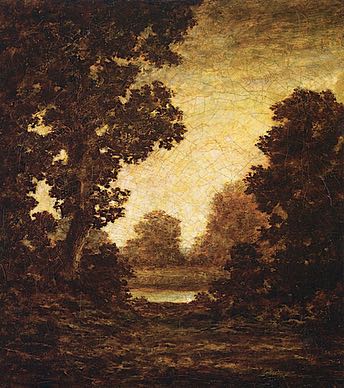
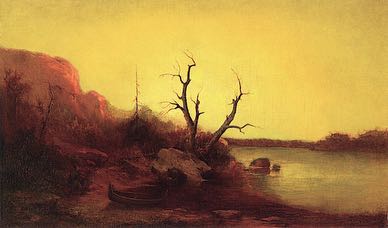
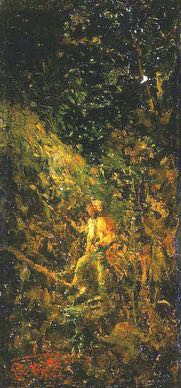
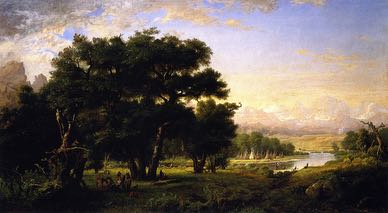
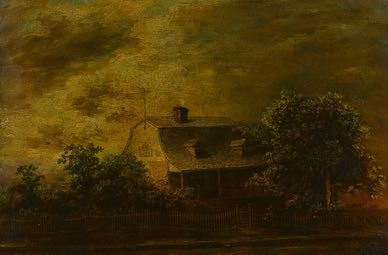
Blakelock was born in New York City and initially pursued medical studies, but he soon abandoned this path to devote himself to painting. Drawn to the American frontier, he embarked on a journey through the American West in the early 1870s, traveling extensively among Native American communities and immersing himself in the landscapes of the Rocky Mountains, the Great Plains, and California. This experience profoundly influenced his work, inspiring a series of landscapes that captured the grandeur, solitude, and mystique of the untamed American wilderness.
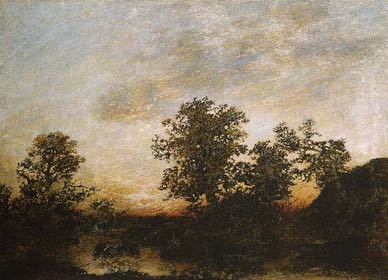
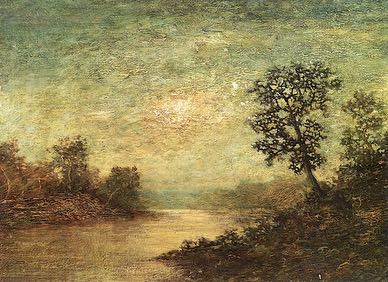
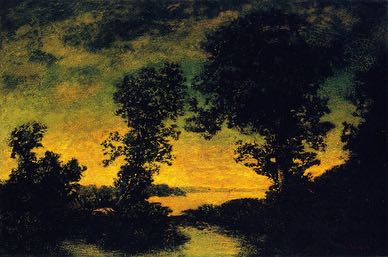
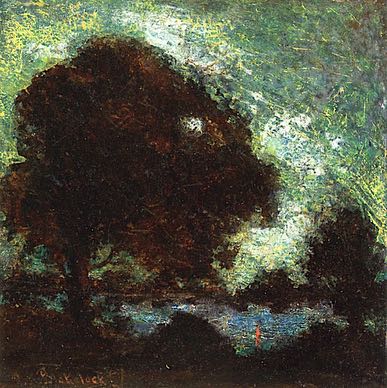
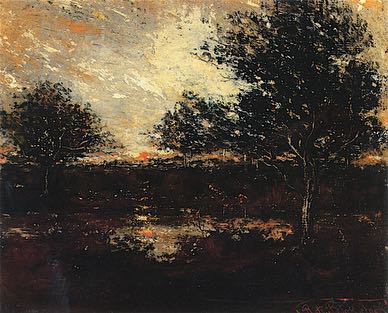
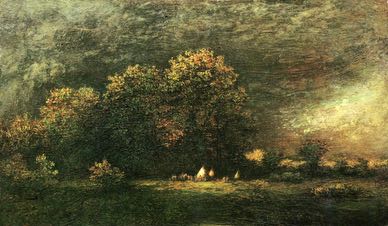
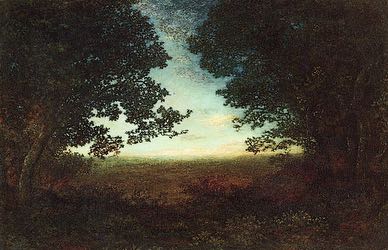
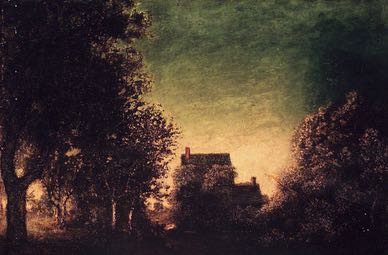
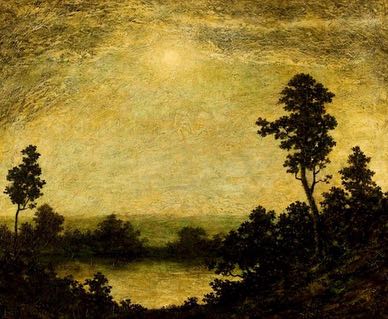
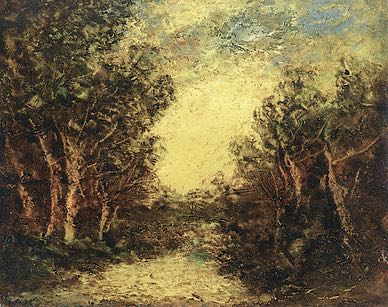
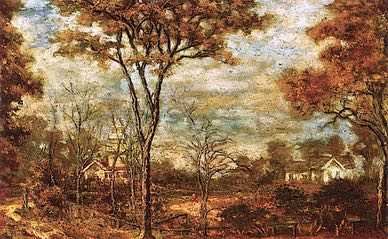
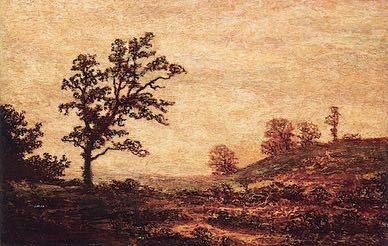
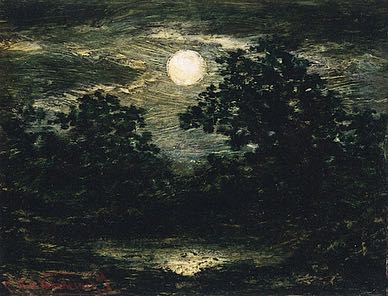
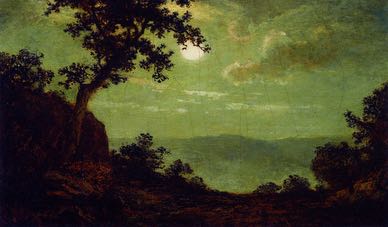
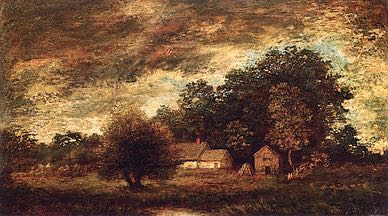
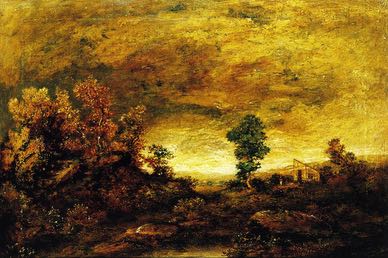
In his early years, Blakelock’s paintings reflected the influence of the Hudson River School, especially in their appreciation of nature. However, he soon developed a more individual style, focusing less on precise detail and more on capturing the emotional atmosphere of his subjects. His use of dark, muted colors and luminous highlights became a signature, often creating a mysterious, almost dreamlike quality. His fascination with the interplay of light and shadow led him to create some of his most iconic nocturnes, such as “Moonlight” and “The Brook by Moonlight”. These works conveyed a sense of introspective solitude, with silvery moonlight illuminating shadowy forests, calm rivers, and distant mountains.
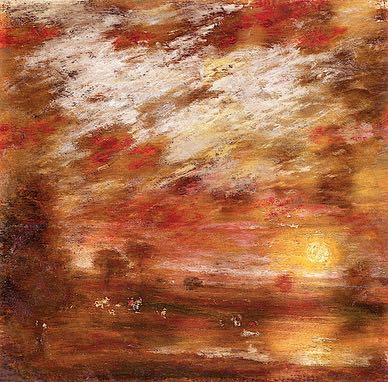
Blakelock’s palette was both innovative and unorthodox. He employed rich, layered colors, using browns, greens, and blacks contrasted with subtle hints of gold and silver. His technique of building up layers of paint with bold brushstrokes and glazes gave his canvases a depth and texture that enhanced their otherworldly quality. Unlike the bright, realistic landscapes favored by many of his peers, Blakelock’s works conveyed an emotional depth, revealing his own inner world and complex personality.
Though his work was well-regarded, Blakelock struggled financially throughout his life. He received little recognition during his early career and faced significant hardship as he tried to support his growing family. His personal difficulties were compounded by mental health challenges; in 1891, Blakelock suffered a breakdown and was later institutionalized for schizophrenia. Despite this, he continued to paint, creating some of his most compelling works during this period, often reimagining his landscapes from memory rather than from life.
Ironically, while Blakelock was confined to a mental institution, his work began to gain wider recognition and value. His paintings became highly sought after by collectors, with pieces like Moonlight fetching high prices. However, Blakelock himself saw little benefit from this newfound popularity, and he remained largely impoverished and isolated. His tragic life story became widely known, further enhancing the mystique surrounding his work and contributing to his legacy as a misunderstood artist whose genius was only appreciated posthumously.
Blakelock’s artistic influence extended beyond his lifetime. His atmospheric, expressive landscapes contributed to the development of American Symbolism, and his nocturnes influenced later American modernists and abstractionists. Today, his paintings are celebrated for their originality, emotional resonance, and technical mastery, reflecting both the beauty of the natural world and the turbulence of the artist’s inner life.
Ralph Albert Blakelock passed away in 1919, largely unrecognized in his time but now regarded as a major figure in American art. His work, marked by a haunting beauty and a deeply personal vision, continues to captivate audiences with its intense emotional power and evocative portrayal of the American landscape.
Copyright © 2026 BrushWiz. All Rights Reserved.