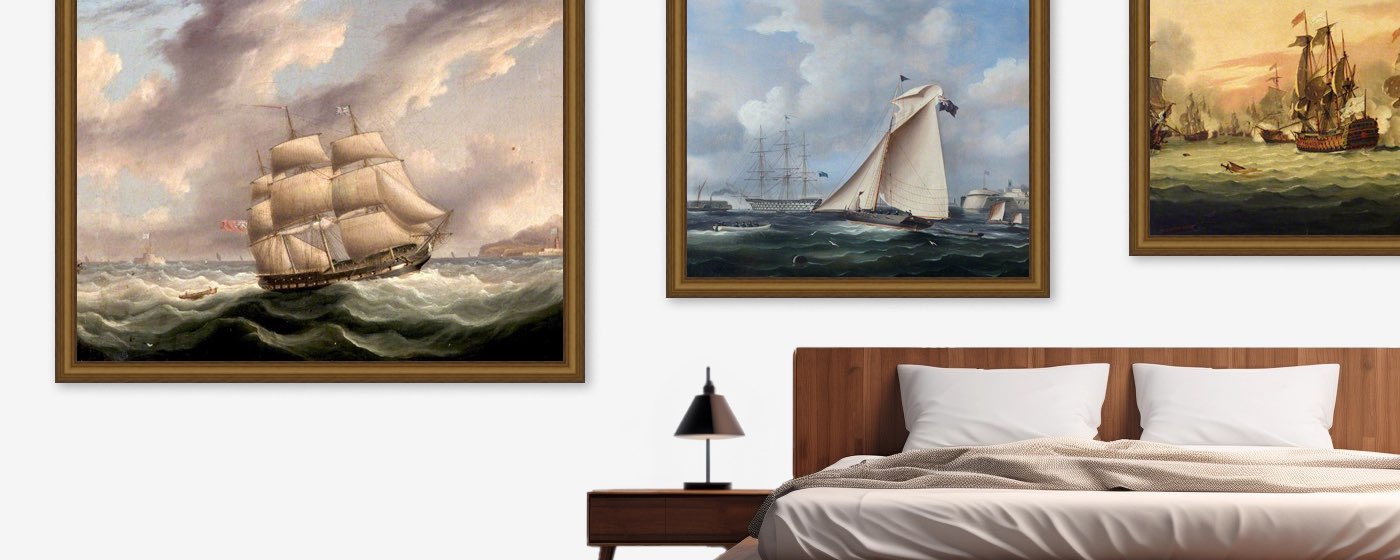
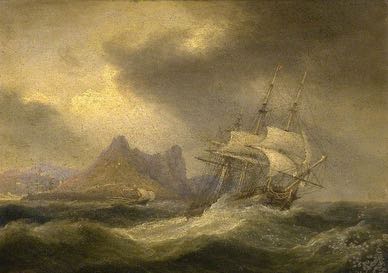
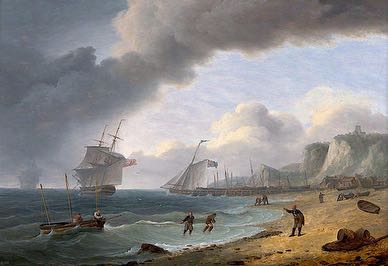
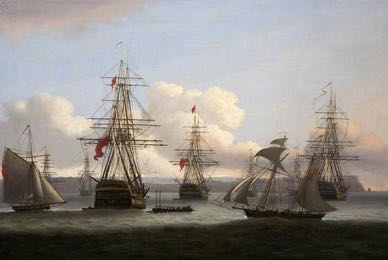
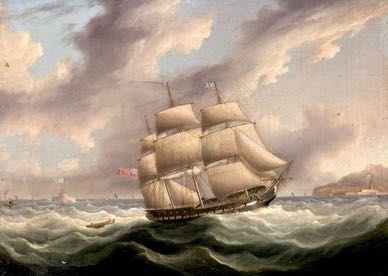
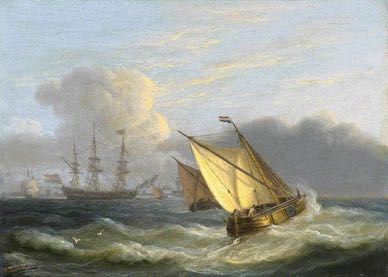
Luny was born in London and apprenticed at a young age to the prominent marine artist Francis Holman. Under Holman’s guidance, Luny developed a strong foundation in marine painting, gaining expertise in capturing the movement of water, the structure of ships, and the effects of light on the sea. Luny’s early works show a close attention to detail and composition, particularly in his portrayal of ships and naval engagements, aligning him with the traditions of British marine art that celebrated naval strength and maritime life.
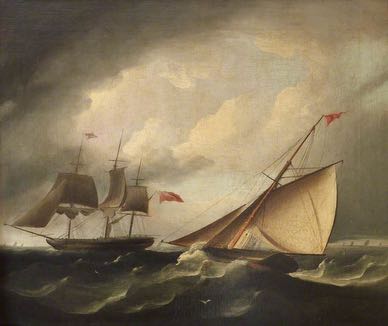
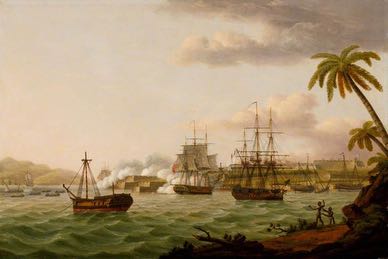
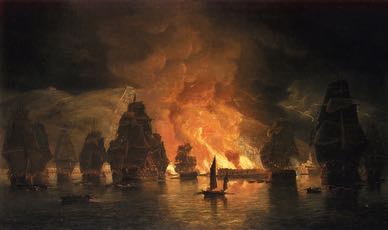
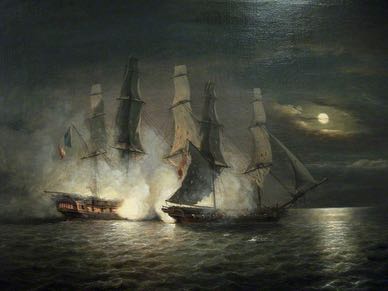
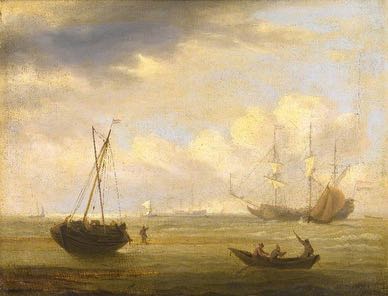
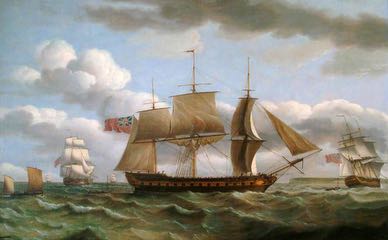
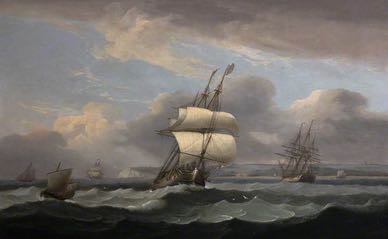
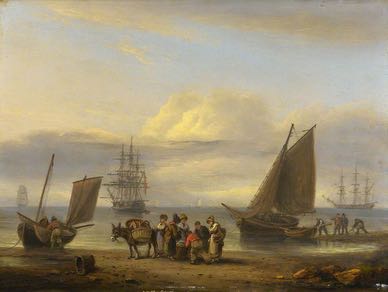
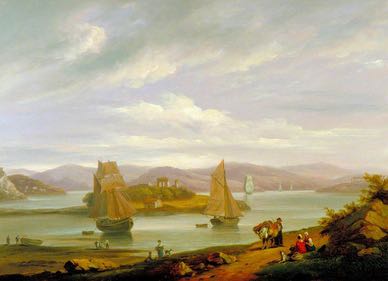
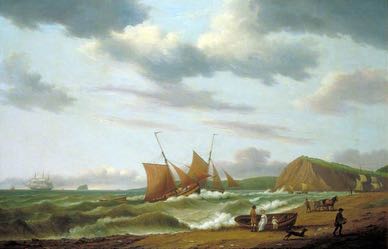
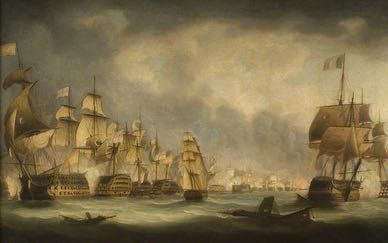
By the late 18th century, Luny had established himself as a skilled and reputable artist, with his work in demand from both collectors and the Royal Navy. His paintings often depicted key battles and events from the Napoleonic Wars, as well as more tranquil coastal scenes and harbor views. His compositions were marked by a strong sense of realism, with careful rendering of ship rigging, sails, and the subtle interplay of light on water. Luny’s seascapes are known for their ability to convey the mood of the sea—whether stormy and foreboding or calm and reflective—capturing the various emotions associated with maritime life.
One of the hallmarks of Luny’s style was his treatment of light and atmosphere. He often painted with a muted, yet rich, palette that allowed for subtle shifts in tone, lending his works a sense of depth and realism. His use of light was particularly effective in creating drama, especially in scenes of naval battles or ships navigating turbulent seas. In calmer scenes, he employed soft colors and gentle brushstrokes to evoke a sense of serenity and nostalgia, capturing the beauty of coastal England with a touch of romanticism.
Despite achieving considerable success, Luny’s career was interrupted in the early 19th century due to a debilitating condition, believed to be arthritis, which limited his ability to paint. Remarkably, however, Luny continued to produce works despite his physical challenges. He relocated to Teignmouth in Devon, where he adapted his techniques to accommodate his condition and maintained a steady output of paintings. His later works often depict the serene coastal life and harbor scenes of Devon, reflecting his enduring love for maritime themes.
Throughout his career, Luny’s paintings were widely exhibited, and he gained a strong following among collectors, particularly those with a passion for naval history. His works not only captured the grandeur and heroism associated with Britain’s naval power but also offered a glimpse into the daily lives and labor of sailors and coastal communities. His dedication to maritime subjects has made his paintings important historical documents as well as artistic achievements, preserving the legacy of Britain’s naval heritage and the spirit of the sea.
Thomas Luny passed away in Teignmouth in 1837, leaving behind a rich legacy of marine art that continues to be celebrated for its technical precision, atmospheric depth, and historical significance. His work remains highly regarded for its contributions to British marine painting, offering a vivid portrayal of the 18th and early 19th-century maritime world with a skill and sensitivity that few marine artists have matched.
Copyright © 2026 BrushWiz. All Rights Reserved.