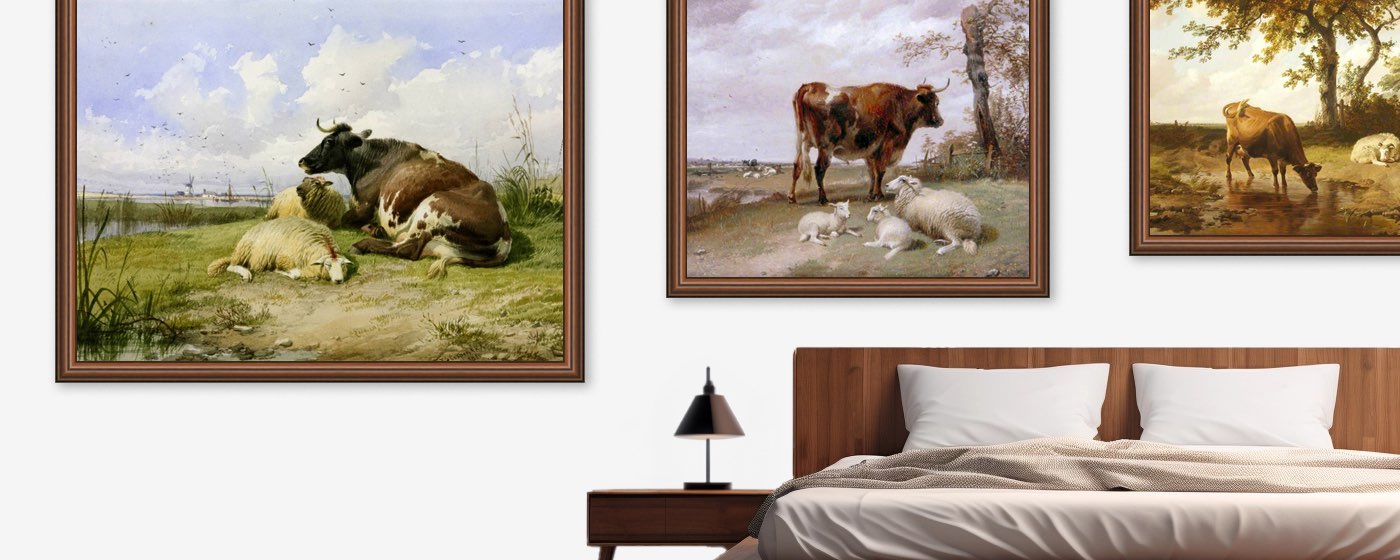
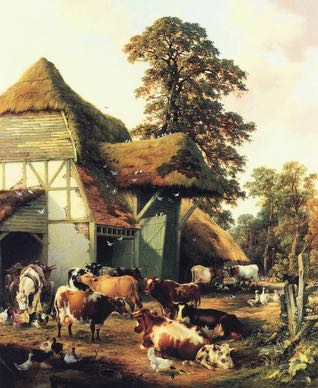
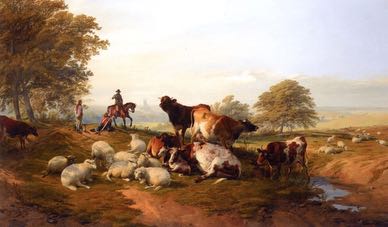
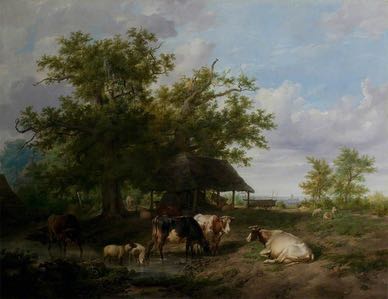
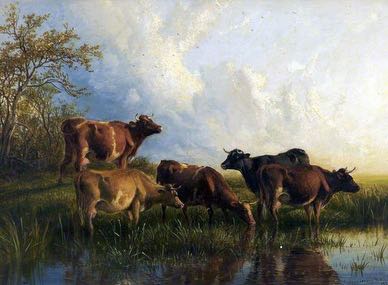
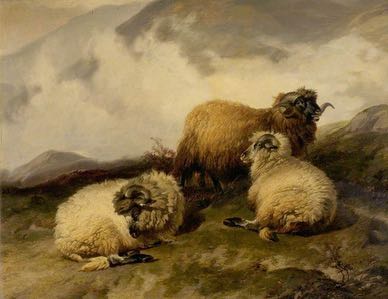
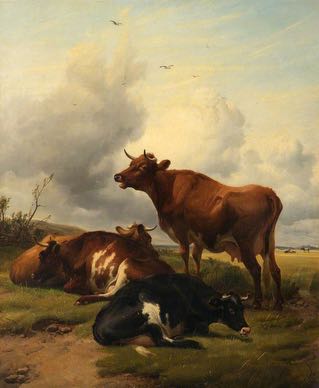
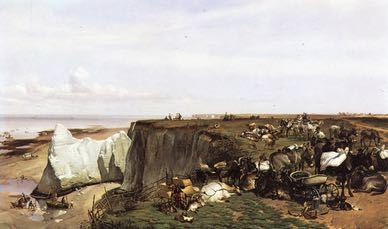
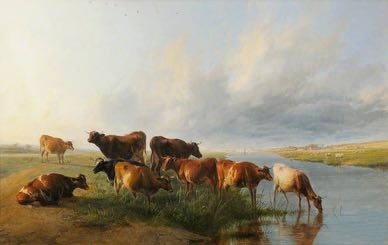
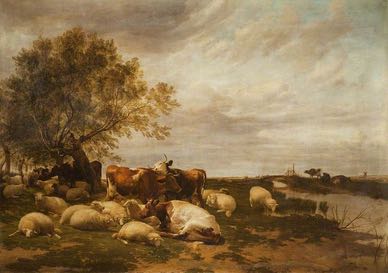
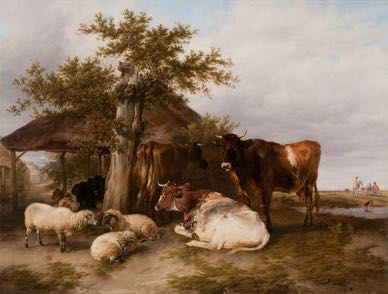
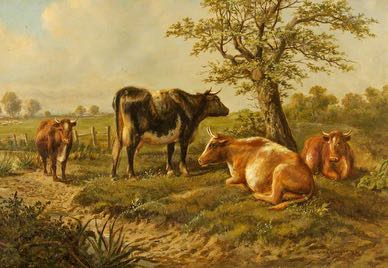
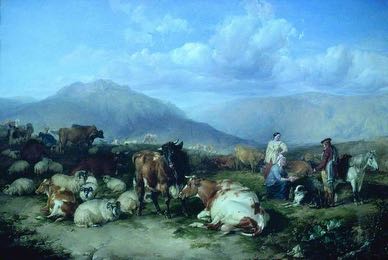
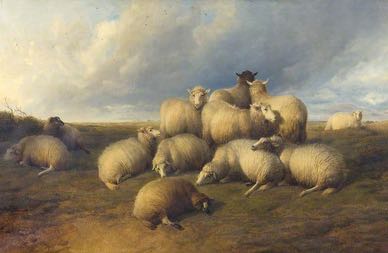
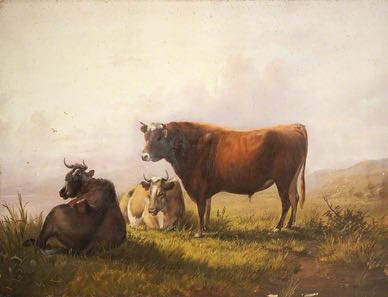
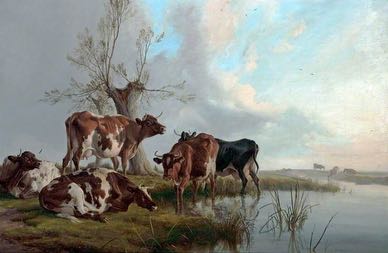
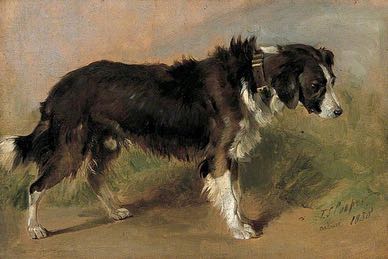
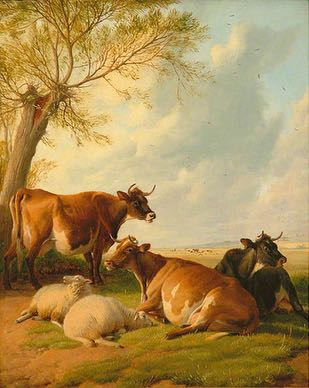
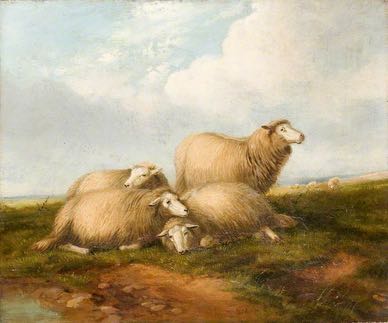
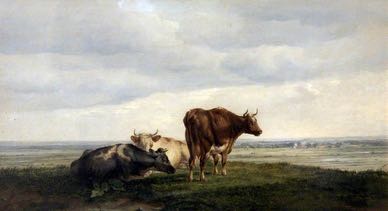
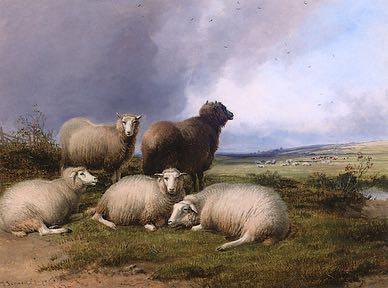
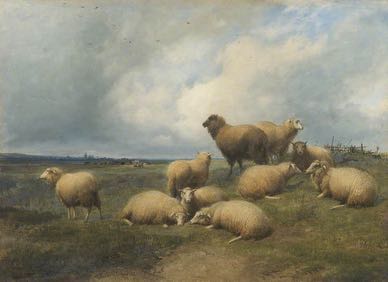
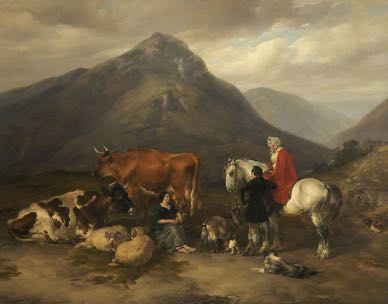
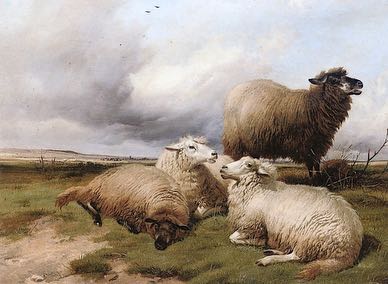
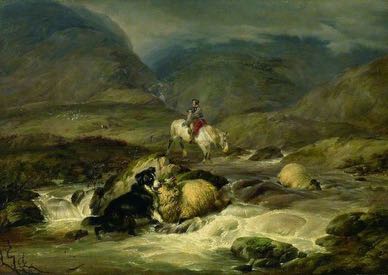
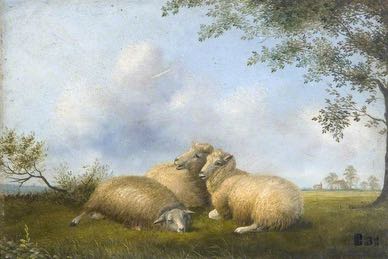
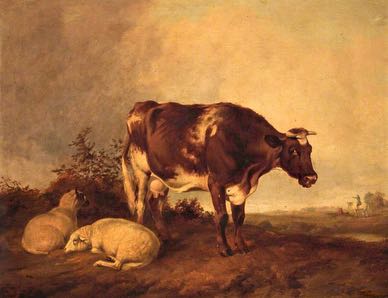
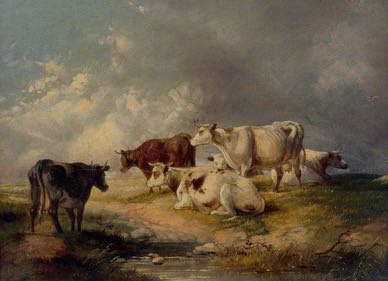
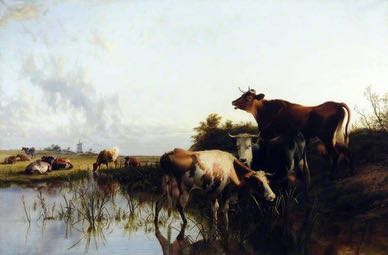
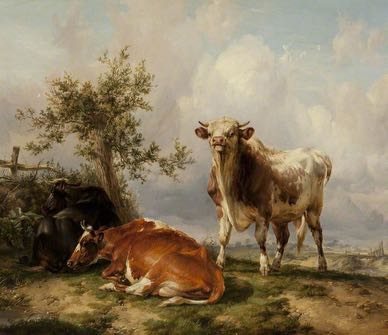
Cooper was born in Canterbury, Kent, and showed an early talent for art. Despite limited formal education, he demonstrated remarkable skill as a young artist and initially worked as a coach and house painter to support himself. Determined to pursue a career in art, he studied briefly at the Royal Academy Schools in London, where he honed his drawing and painting techniques. Cooper’s move to Belgium in 1827 proved transformative; there, he studied under Belgian painter Eugène Joseph Verboeckhoven, who specialized in animal painting. Under Verboeckhoven’s guidance, Cooper developed a lifelong passion for animal subjects, particularly cattle, which became the hallmark of his work.
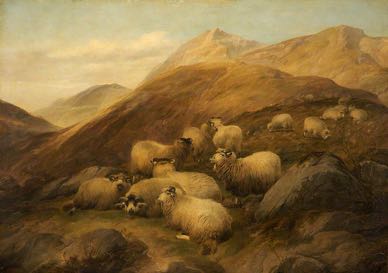
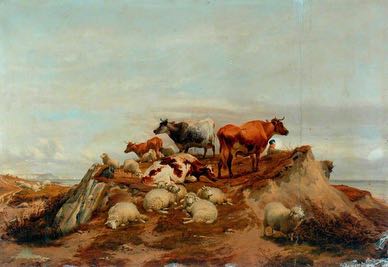
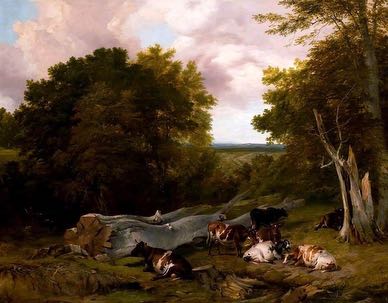
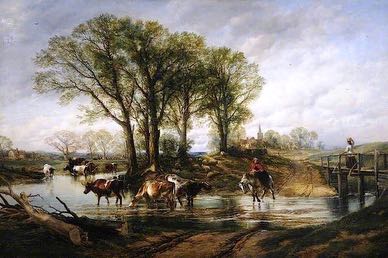
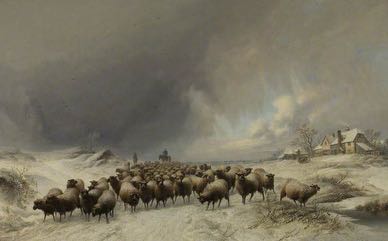
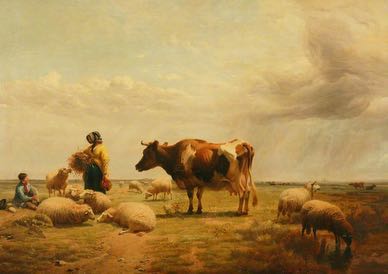
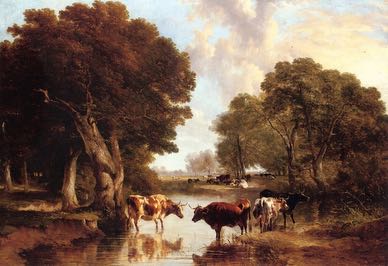
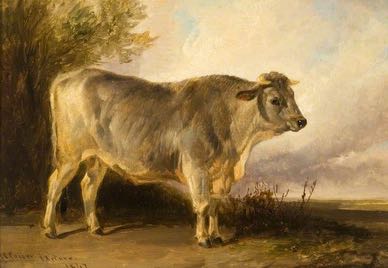
Returning to England in the early 1830s, Cooper established himself as a leading animal and landscape painter. His compositions, often set in the idyllic English countryside, featured grazing cattle, sheep, and shepherds, painted with a remarkable sense of realism and attention to anatomical detail. His works reflect a romanticized view of rural life, with animals depicted as noble and serene figures, often bathed in soft, natural light that enhances the pastoral atmosphere. Cooper’s refined brushwork and keen eye for detail allowed him to capture the textures of fur, grass, and foliage, bringing a lifelike quality to his scenes.
One of Cooper’s defining characteristics as an artist was his commitment to painting en plein air, or outdoors, which allowed him to observe and capture the natural behavior and interactions of animals. This approach, combined with his careful study of animal anatomy, lent his paintings an authenticity that appealed to both art critics and the public. His works were regularly exhibited at the Royal Academy, where he gained a strong following and was elected an Associate of the Royal Academy (ARA) in 1845. His popularity continued to grow, and he eventually became a full Royal Academician in 1867.
Cooper’s mastery of animal painting made him a favorite of Victorian collectors, and his works were frequently commissioned by wealthy patrons. His paintings often showcased a romanticized rural life, aligning with the Victorian nostalgia for the countryside amid rapid industrialization. In addition to pastoral landscapes, Cooper occasionally collaborated with other artists, including Frederick Richard Lee, a well-known landscape painter, who would create the backgrounds for Cooper’s animal scenes. These collaborations further highlighted his animals by setting them within expansive, idealized landscapes.
Over the course of his career, Cooper produced a vast number of works, becoming one of the most prolific British painters of his time. His dedication to animal painting earned him the affectionate nickname "Cow Cooper." Despite changing tastes in the art world, he remained steadfast in his focus on pastoral subjects, which continued to attract admiration throughout his long life. His work was widely exhibited, both in Britain and internationally, solidifying his reputation as a master of the animal genre.
Thomas Sidney Cooper lived a remarkable 99 years, passing away in 1902. His legacy endures as one of England’s foremost animal painters, whose works provide a romantic and meticulously detailed view of the British countryside. Today, his paintings are celebrated for their technical brilliance and enduring appeal, offering a timeless vision of rural life that continues to captivate audiences.
Copyright © 2026 BrushWiz. All Rights Reserved.