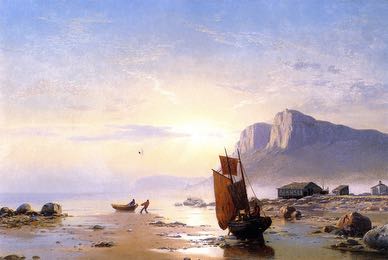
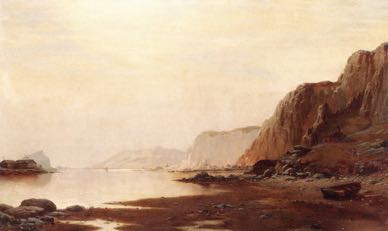
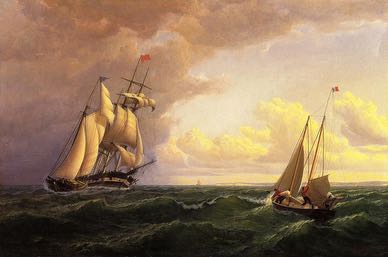
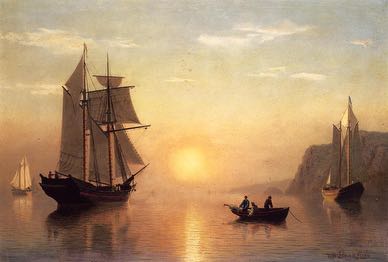
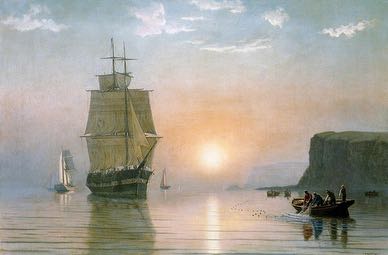
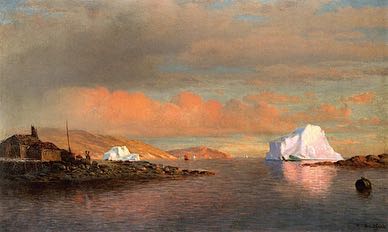
Born in Fairhaven, Massachusetts, Bradford grew up in a seafaring community, where he developed a fascination with the ocean and ships. Initially, he worked in a family-owned textile business, but his love for art soon drew him toward painting. His early works focused on coastal and marine scenes of New England, particularly in and around his hometown, where he painted fishing vessels and the bustling life of port towns. Bradford’s natural talent and dedication to capturing nautical themes attracted attention, and he eventually gained enough recognition to pursue painting professionally.
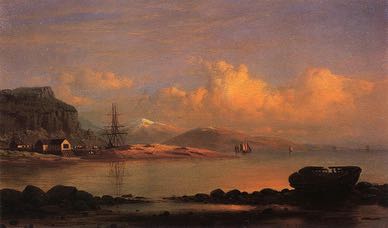
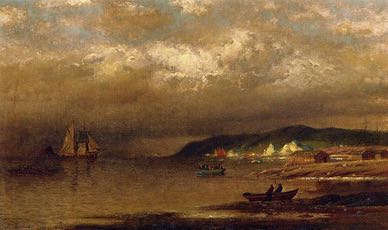
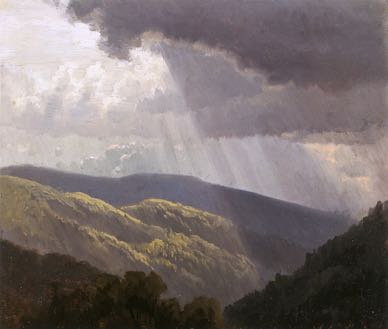
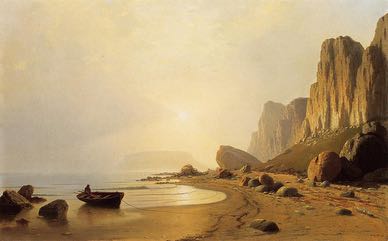
Bradford’s artistic style was influenced by the Hudson River School, particularly its emphasis on romantic landscapes and natural grandeur. He was also inspired by the luminism movement, known for its meticulous detail and soft, glowing light. However, Bradford’s work was unique in its focus on the Arctic and North Atlantic regions, which had rarely been depicted in American art. In the 1860s, he began to explore the Arctic, embarking on several voyages to Newfoundland, Labrador, and Greenland. These expeditions allowed him to observe and document the ice-filled landscapes firsthand, and he often painted directly from life, enduring challenging and harsh conditions to capture the raw beauty of the Arctic.
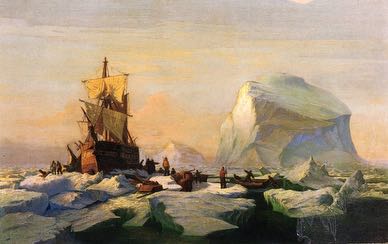
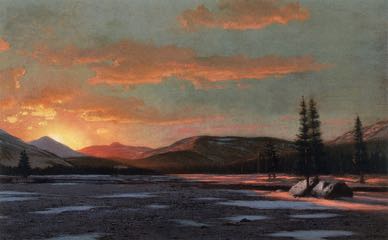
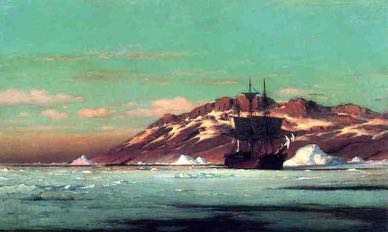
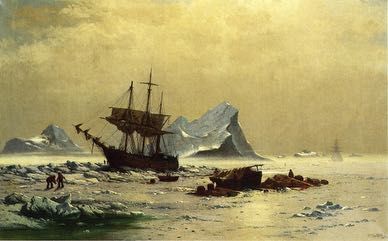
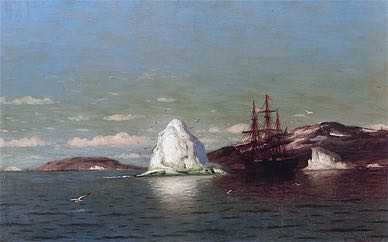
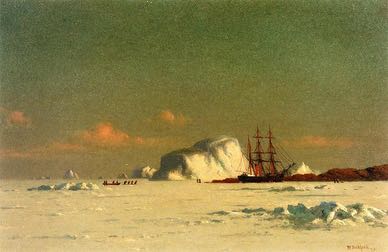
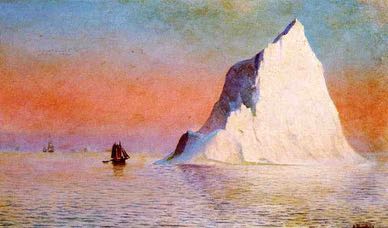
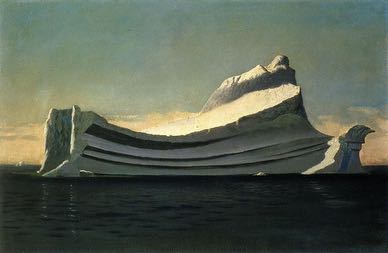
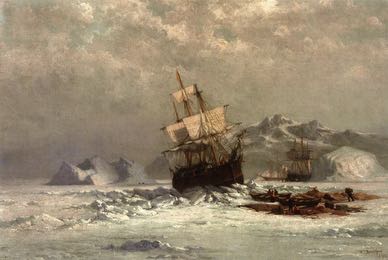
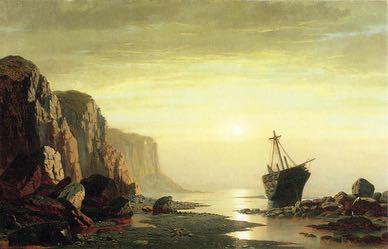
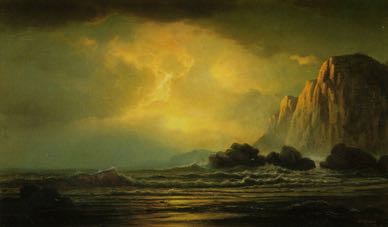
Bradford’s paintings from the Arctic are marked by their extraordinary detail, dramatic lighting, and a sense of vastness and solitude. His compositions often feature towering icebergs, cold, mist-laden seas, and ships dwarfed by the immense, frozen landscapes, creating a sense of both awe and vulnerability. His ability to depict the translucent quality of ice and the subtle shifts in light and shadow gives his Arctic scenes a haunting realism. These works captured the imagination of American audiences, who were fascinated by the mystery and danger of the Arctic frontier.
In 1869, Bradford undertook his most ambitious Arctic expedition, traveling aboard the steamship Panther to Greenland with photographer John L. Dunmore. This journey, funded by patrons including financier LeGrand Lockwood, led to a wealth of visual documentation and photographic studies, which Bradford later used as references for his paintings. The expedition was groundbreaking for its time, and Bradford’s work from this journey contributed to public interest in Arctic exploration. His paintings, sketches, and photographs from the Panther voyage became widely admired and were later displayed at exhibitions in the United States and Europe, establishing Bradford’s reputation as a leading artist of Arctic scenes.
Throughout his career, Bradford exhibited widely, and his works were well-received for their combination of scientific observation and romantic grandeur. He gained membership in various art societies and received commissions from prominent collectors, including Albert Edward, the Prince of Wales. Bradford’s works held special appeal as they captured a region largely unknown to the public, and his contributions extended beyond the art world into the fields of exploration and natural history.
William Bradford passed away in New York City in 1892, leaving behind a legacy as a pioneer in American marine and Arctic art. His paintings remain celebrated for their atmospheric beauty and technical skill, offering a rare glimpse into the frozen landscapes of the North and the adventurous spirit of the 19th-century exploration. Today, his works are valued not only for their artistic quality but also for their historical significance, preserving the mystery and majesty of the Arctic in a way that continues to captivate viewers.
Copyright © 2026 BrushWiz. All Rights Reserved.