

❄️ Winter Sale. Offer Ends 11/30/2026. View Details
❄️ Winter Sale. Ends 11/30/2026. View Details
❄️ Winter Sale. View Details
Artists
Subjects
Movements
Collections
Decor
Portraits
Commissions
Framing
Reviews
Gift Cards
On Sale
Adriaen van de Velde Oil Painting Reproductions
Shop museum-quality reproductions of Adriaen van de Velde’s most famous paintings, each hand-painted in oil on canvas by a professional artist.
Shop Art

Showing 1-40 of 119 results
Sort By
Most Popular
- Most Popular
- New Arrivals
- Best Sellers
- Alphabetical A-Z
- Alphabetical Z-A





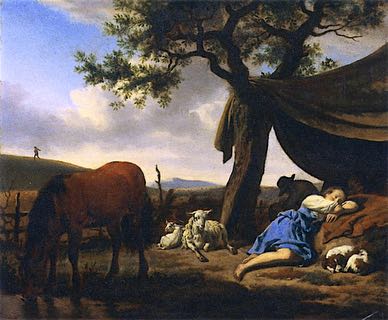


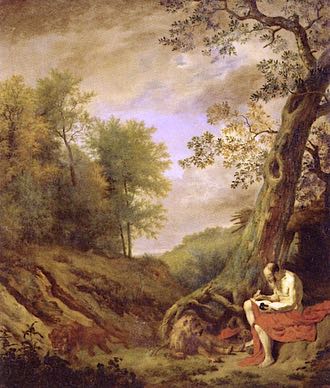
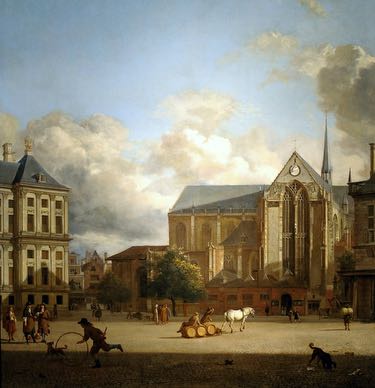

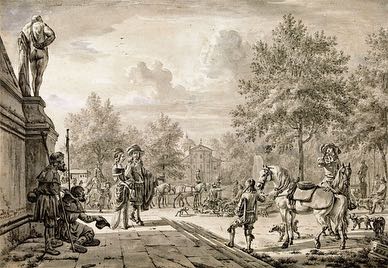
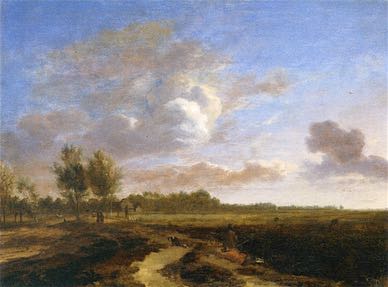

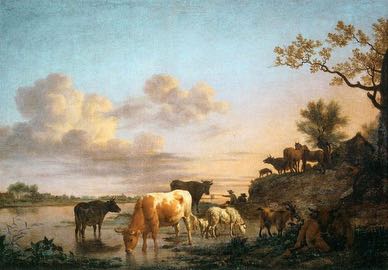


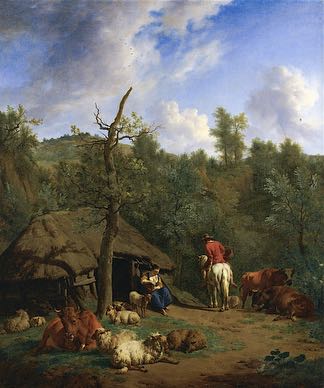
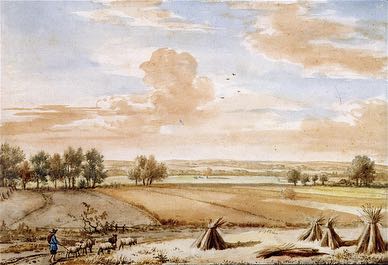
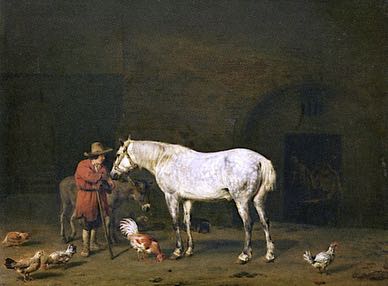


From: $636.00$318.00
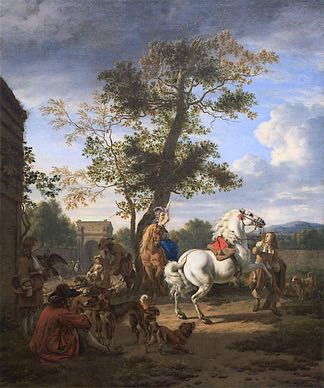




Can’t Find the Painting You Want?
Send us a reference image. We can recreate almost any artwork in the size and style you’re looking for.
Get a Free QuoteHand-Painted Adriaen van de Velde Reproductions
Bring Van de Velde’s art into your home with an oil-on-canvas reproduction hand-painted by a professional artist. Our extensive collection features more than one hundred paintings, including The Beach at Scheveningen, Pastoral Scene, and Vertumnus and Pomona. Discover pastoral landscapes, beach views, winter scenes, animals, family portraits, and biblical or mythological subjects. Every reproduction is a real oil painting, offering depth and texture that a print cannot provide. From quiet Dutch countryside to warm Italianate scenery, find a Van de Velde painting that perfectly suits your space.
The Making of an Adriaen van de Velde Oil Painting Replica
Creating an Adriaen van de Velde oil painting replica requires patience, precision, and an understanding of the artwork. Our studio includes artists who specialize in seventeenth-century Dutch landscapes and understand the distinctive qualities of Van de Velde’s work. The artist studies the source image, then recreates its soft atmosphere, observed animals, balanced figures, and Van de Velde’s gentle transitions of light across land and water using traditional oil-painting methods. After completion, the painting is inspected by our quality-control team and photographed for your approval. The result is a carefully executed oil painting that reflects the visual character of the original.
Custom Sizes and Frames for Your Van de Velde Painting
Your Van de Velde painting can be ordered in practically any size, from standard dimensions to custom canvas sizes selected on the product page. This flexibility lets you choose a painting that fits your wall and complements your room. After selecting the size, you can choose from high-quality frames in classic or modern designs, with canvas stretching available. Our framing options complement the open skies, natural colors, and finely observed figures of Van de Velde’s landscapes. With sizing, stretching, and framing arranged in one order, your artwork can arrive ready for display without a separate visit to a frame shop.
Order an Adriaen van de Velde Reproduction with Confidence
Buying hand-painted art online should feel clear and comfortable. After your Adriaen van de Velde reproduction is completed, we send high-resolution photographs for your review before shipping. You can inspect the landscape, animals, figures, colors, and overall finish, then request adjustments if needed. The painting is dispatched only after you approve it, so you know what to expect when it arrives. Your order also includes free express worldwide shipping and is covered by our 90-day return policy. Together, these assurances help you purchase a Van de Velde oil painting with greater confidence and peace of mind.
The Life and Art of Adriaen van de Velde
Adriaen van de Velde was a Dutch Baroque painter, draftsman, and printmaker admired for landscapes in which animals, people, weather, and light feel unusually unified. Born into Amsterdam’s celebrated family of marine artists in 1636, he chose countryside rather than open sea as his principal field. Haarlem training introduced him to dunes and rural roads, while Paulus Potter and Italianate painters helped sharpen his attention to animals and warm southern light. Van de Velde also supplied figures for landscapes by other masters, yet his own range extended from beaches and frozen waterways to portraits, biblical narratives, and mythology. His death at thirty-five ended a brief but remarkably productive career.
Read More
How Did Adriaen Find His Own Path in a Family of Marine Painters?
Adriaen van de Velde was born in Amsterdam in November 1636 and baptized in the Oude Kerk on 30 November. Painting was already the family profession. His father, Willem van de Velde the Elder, recorded ships and naval engagements in precise pen paintings, while his older brother, Willem van de Velde the Younger, became one of Europe’s leading marine painters.
Adriaen probably received his first instruction in the family workshop. He learned to observe moving figures, boats, weather, and distant space, but he did not simply continue the same specialty. His attention turned inland toward cattle, sheep, herders, dunes, roads, farms, woods, and riverbanks.
This choice gave him an identity of his own without severing the family connection. Beach scenes allowed sea and land to meet, and Adriaen occasionally added figures to marine paintings produced by his relatives. Even so, the quiet life of the countryside, organized through light and human activity, remained at the center of his art.
What Did He Learn in Haarlem?
Van de Velde trained with Jan Wijnants in Haarlem, probably while still in his teens. Wijnants specialized in landscapes with sandy tracks, broken ground, prominent trees, and broad views opening beneath large skies. These features gave the young painter a practical framework for constructing believable outdoor space.
Haarlem also exposed him to Philips Wouwermans, whose landscapes animate roads and dunes with riders, horses, hunts, military camps, and travelers. Paulus Potter offered another important example through his close study of cattle and other animals. Van de Velde absorbed these lessons without becoming an imitator.
His earliest dated paintings appeared in the mid-1650s, when he was not yet twenty. Their confidence helps explain why later biographers described him as a prodigy. By 1657 he was working independently in Amsterdam, already able to combine landscape, animal painting, and human gesture with unusual ease.
Why Do His Dutch Landscapes Feel So Calm?
Van de Velde often chose modest events: cattle crossing shallow water, a milkmaid at work, a shepherd resting beside a flock, or travelers following a country road. Nothing dramatic needs to happen. The painting holds attention through the relation between open ground, clustered trees, moving clouds, reflected water, and small areas of warm color.
His compositions are carefully balanced without feeling rigid. A dark tree or bank may anchor one side while a road, stream, or band of sunlight carries the eye toward the distance. Figures are placed where they clarify that movement. They seem to inhabit the landscape rather than decorate it after the fact.
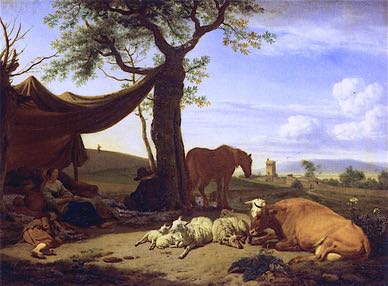
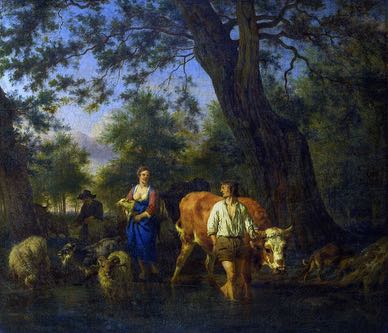
Pastoral Scene, dated 1663, shows how much atmosphere he could create from gentle transitions. Light settles across animals, water, and vegetation instead of isolating a single theatrical effect. The result is orderly yet alive, a landscape experienced as changing air rather than a collection of separate objects.
How Closely Did He Study Animals and People?
Van de Velde prepared many paintings through drawings made from life. He studied standing, seated, walking, and reclining figures, then returned to poses from different angles. His sheets of cows, sheep, goats, horses, dogs, and herders record weight, balance, movement, and the turn of a head with equal care.
These studies explain why the animals in his finished paintings rarely feel like interchangeable pastoral symbols. A cow shifts on its legs, a goat remains alert beside its kid, and a horse lowers its head with a convincing sense of anatomy. Fur, hide, and muscle are described precisely, but never so insistently that they detach from the surrounding light.
People receive the same attention. Van de Velde could give a tiny figure a readable action or mood with a bent back, lifted arm, or bright piece of clothing. In larger compositions, such as his family portrait of 1667, individual figures become substantial presences while the landscape continues to shape their relationships.
Did Van de Velde Ever Travel to Italy?
Older accounts sometimes proposed that Van de Velde visited Italy, largely because many of his later landscapes glow with Mediterranean light and include hills, ruins, fountains, and idealized pastoral settings. No firm documentary evidence confirms such a journey, however, and current scholarship generally treats it as unlikely.
He did not need to cross the Alps to encounter Italianate art. Dutch painters such as Nicolaes Berchem and Karel du Jardin had brought southern scenery and warm golden light into Amsterdam collections and workshops. Van de Velde adapted their example to his own measured compositions and exact observation of animals.
The shift became especially visible after the mid-1660s. His Italianate scenes are not travel records but imaginative constructions. Familiar cattle and shepherds move through an invented south where light seems warmer, distances softer, and classical references more available. This blend of close study and imagined climate became one of his most recognizable achievements.
What Made His Beach and Winter Scenes Different?
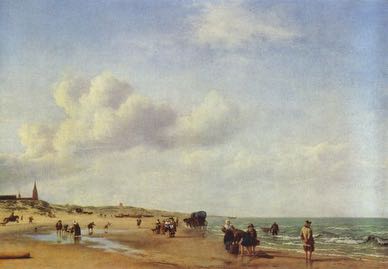
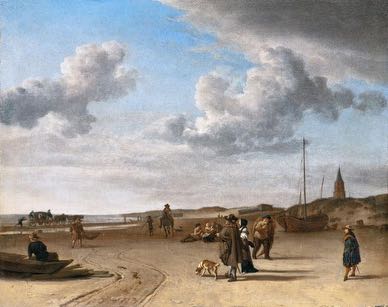
Van de Velde’s beaches are broad social spaces. Fishermen work beside boats while riders, families, dogs, and well-dressed visitors cross wet sand under quickly changing skies. In The Beach at Scheveningen of 1658, the low horizon gives sea and sky enormous reach, yet small human incidents keep the view intimate.
He treated frozen waterways with similar attention to everyday behavior. Golfers on the Ice near Haarlem, painted in 1668, centers on men playing kolf as children, workers, vehicles, and other spectators gather nearby. The distant church fixes the location, but the foreground gestures create the scene’s character.
Neither type is simply a record of weather. Wind, dampness, frost, sun, and cloud affect how people move and how light travels across the ground. Van de Velde made atmosphere inseparable from activity, turning a specific day outdoors into a carefully ordered account of shared experience.
Why Did Other Painters Ask Him to Add Their Figures?
Seventeenth-century Dutch artists often divided work according to specialty. A painter admired for architecture or woodland scenery might invite another artist to add people and animals, known collectively as staffage. Van de Velde became especially sought after because his figures were elegant, convincing, and sensitive to the scale and light of a borrowed setting.
He contributed staffage to paintings by Jan van der Heyden, Jacob van Ruisdael, Meindert Hobbema, Frederik de Moucheron, Philips Koninck, and his former teacher Jan Wijnants. The landscape was generally established first. Van de Velde then introduced walkers, riders, workers, animals, or carriages that supplied movement and helped explain the surrounding space.
The collaboration succeeded because he did more than fill an empty foreground. His additions guide the eye, establish proportion, and create a human reason to enter the scene. In the best examples it is difficult to imagine the architecture, road, or canal without the activity he placed there.
When Did Biblical and Mythological Subjects Enter His Work?
Although landscape secured his reputation, Van de Velde became increasingly ambitious as a figure painter during the 1660s. He produced portraits, allegories, and religious or mythological scenes in which bodies occupy far more of the canvas. Landscape remains important, but it now supports a story rather than serving as the primary subject.
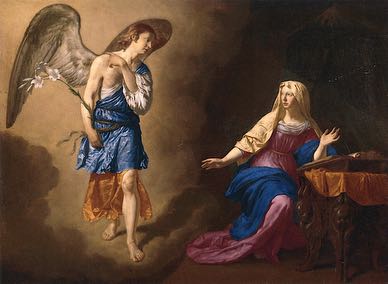
The Annunciation, dated 1667, presents Mary’s startled response to the angel with unusual psychological clarity. It was probably intended for a clandestine Catholic church in Amsterdam. The work demonstrates that his understanding of gesture could carry a complex sacred encounter on a large scale.
In Vertumnus and Pomona of 1670, figures drawn from Ovid dominate a richly ordered garden landscape. The scene brings his pastoral vocabulary into classical mythology while showing how much more prominent and individualized his human actors had become near the end of his career.
Which Paintings Reveal the Breadth of His Brief Career?
Van de Velde moved with remarkable confidence between observed Dutch life and imagined pastoral worlds. These paintings show how landscape, weather, animals, portraiture, and narrative developed across less than two decades:
- The Beach at Scheveningen, 1658: A vast sky, wet shore, working fishermen, and strolling visitors turn a coastal view into a finely observed social landscape.
- Pastoral Scene, 1663: Soft light unites herders, animals, water, and trees in one of his most harmonious rural settings.
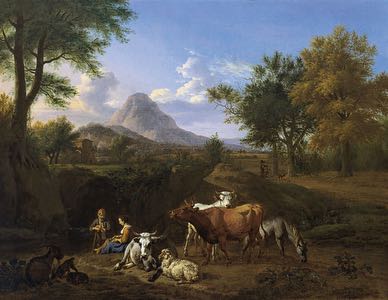
- Arcadian Landscape with Resting Herdsmen and Cattle, 1664: Dutch observation meets an idealized southern mood as people and animals rest within luminous scenery.
- Portrait of a Couple with Two Children and a Nursemaid, 1667: A family group becomes part of an expansive landscape rather than posing against a conventional interior.
- The Annunciation, 1667: Monumental figures, expressive gestures, and controlled light reveal his achievement beyond pastoral painting.
- Golfers on the Ice near Haarlem, 1668: The winter setting becomes a lively study of play, labor, spectatorship, and social variety.
- Vertumnus and Pomona, 1670: Large mythological figures and abundant garden detail show the narrative ambition of his late work.
- A Farm with a Dead Tree, circa 1670: An unassuming rural exchange gains quiet rhythm from the tree, stream, animals, and carefully spaced figures.
How Did Van de Velde Achieve So Much by Thirty-Five?
Van de Velde worked steadily from his late teens until his death. Signed and dated pictures survive from almost every year between 1654 and 1671, alongside numerous drawings and a small group of etchings. His print series of animals shows that close study could become an independent artistic statement as well as preparation for paintings.
He died in Amsterdam in January 1672, only thirty-five years old. That same year, his father and older brother left the Dutch Republic for England, where their marine workshop entered a new phase. Adriaen’s own career had already established a separate legacy centered on the landscape, figure, and animal traditions of Dutch painting.
Its distinction lies in integration. Earlier specialists could excel at countryside, cattle, or staffage, but Van de Velde made each element answer the others. A grazing animal alters the rhythm of a bank, a figure measures distance, and a passing cloud changes the emotional temperature of the entire scene. His paintings are quiet because nothing strains for attention, yet their calm depends on exceptionally alert observation and control.
Copyright © 2026 BrushWiz. All Rights Reserved.
About Our Adriaen van de Velde Paintings
Are your Adriaen van de Velde reproductions painted by hand?
Yes. Every reproduction is individually painted by hand in oil on canvas by a professional artist. We do not use prints, digital transfers, or mechanical reproduction methods.
How closely do your Van de Velde copies resemble the original?
Our artists work to capture the composition, colors, texture, and visual character of the original Van de Velde painting as closely as possible. Because every reproduction is painted by hand, small variations are natural and make each canvas unique.
How long does a Van de Velde reproduction take to complete?
Most Van de Velde reproductions require approximately two to three weeks to paint, dry, and inspect. Production time may vary depending on the artwork and canvas size, so check the estimate displayed on the product page.
Can I request an Adriaen van de Velde painting that is not listed?
Yes. If you cannot find the Adriaen van de Velde artwork you want in our catalog, send us the painting’s title or an image. Our team will review your request and confirm the available sizes, estimated production time, and price.
Will I receive approval photos before shipping?
Yes. We send high-resolution photographs of the completed painting for your approval. You can request adjustments if needed, and the painting will not be dispatched until the review process is complete.
Are custom canvas sizes available for Van de Velde paintings?
Yes. We offer custom dimensions in addition to the standard sizes shown on the product page. Select the dimensions you need directly from the available size options.
May I order my Van de Velde painting with a frame?
Yes. High-quality frames in classic and modern designs are available for many paintings. You can view compatible framing options and add your preferred design from the product page. Professional canvas stretching is also available.
What determines the price of an Adriaen van de Velde reproduction?
The price depends on the selected artwork, canvas dimensions, and framing option. Choose your preferred configuration on the product page to see the current price before ordering.
Is free express worldwide shipping included?
Yes. Van de Velde reproductions qualify for free express worldwide shipping. After dispatch, delivery usually takes five to eight business days, although timing may vary by country and destination.
Which return policy covers Van de Velde reproductions?
Orders are covered by our 90-day return policy. Review the current return-policy page before ordering for complete information about eligibility, time limits, and the return process.
Why BrushWiz?
100% Hand Painted
Every piece is entirely handmade
Museum Quality
Faithfully recreated by expert artists
Custom Framing
Choose from a wide range of frames
Free Shipping
Enjoy free shipping on all orders
Cash Back Rewards
Earn cash back with every purchase