
🔥 Limited-Time Sale. Offer Ends 11/10/2026. View Details
🔥 Limited-Time Sale. Ends 11/10/2026. View Details
🔥 Limited-Time Sale. View Details
Artists
Subjects
Movements
Collections
Decor
Portraits
Commissions
Framing
Reviews
Gift Cards
On Sale
Baroque Oil Paintings
Shop famous Baroque painting reproductions, each hand-painted in oil on canvas by a professional artist.
Shop Art
Showing 1-40 of 5934 results
Sort By
Most Popular
- Most Popular
- New Arrivals
- Best Sellers
- Alphabetical A-Z
- Alphabetical Z-A


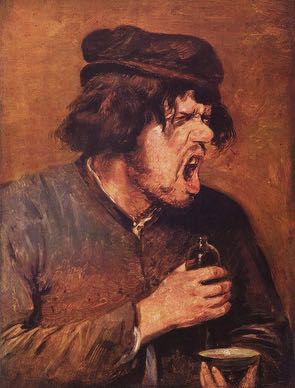
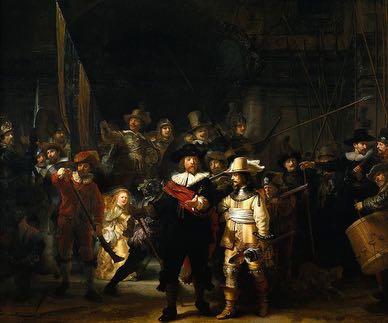
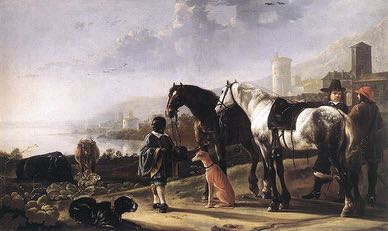


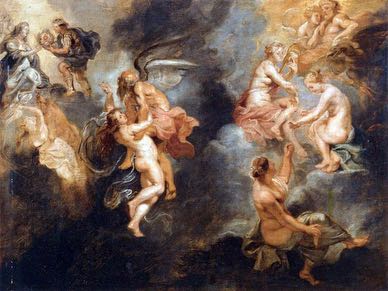










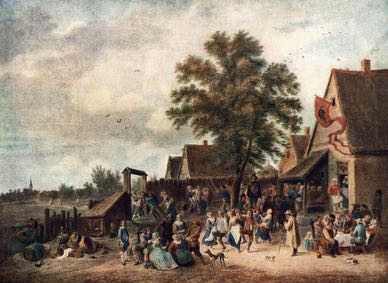
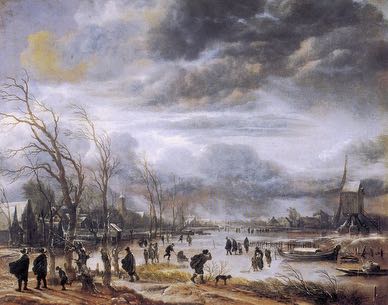


From: $874.00$437.00
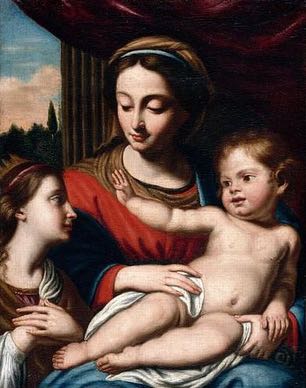
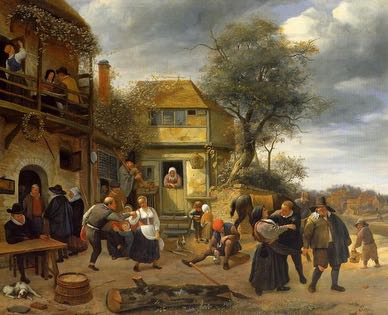
Can’t Find the Painting You Want?
Looking for a specific painting that isn’t in our catalog? Just let us know. We can recreate almost any artwork in the size and style you’re looking for.
Request a PaintingHand-Painted Baroque Oil Paintings
Bring the drama, movement, and rich color of Baroque art into your space with an oil painting created entirely by hand. Our collection features thousands of works, including The Calling of Saint Matthew by Caravaggio, The Night Watch by Rembrandt, and Las Meninas by Diego Velázquez. Browse religious narratives, royal portraits, mythological scenes, landscapes, still lifes, and moments of everyday life from across the movement’s history. Each reproduction is painted in oil on canvas, preserving the depth, contrast, texture, and visual presence that a print cannot provide.
Recreating Baroque Light, Movement, and Drama by Hand
Famous Baroque painters developed distinct ways of working with light, space, and movement. Caravaggio used concentrated illumination, Peter Paul Rubens built energetic figure groups, and Johannes Vermeer balanced soft daylight with quiet interiors. To recreate these works, the assigned artist studies the original composition, light and shadow, spatial depth, and expressive brushwork. The painting is then recreated by hand in oil on canvas using techniques suited to the original artwork. Once complete, the reproduction is inspected by our quality-control team and photographed for your approval.
Custom Sizes and Frames for Baroque Art
Your Baroque painting can be ordered in practically any size, from standard dimensions to a custom canvas size selected directly on the product page. This flexibility helps you choose artwork suited to an intimate wall, a formal room, or a larger statement display. After selecting the size, you can add a high-quality frame in a classic or modern design. Our framing collection includes options that complement the deep colors, strong contrasts, and decorative character of Baroque art. Professional canvas stretching is also available, allowing the finished painting to arrive prepared for display without a separate visit to a frame shop.
Order a Baroque Painting with Confidence
Buying a hand-painted Baroque reproduction online should feel clear and comfortable. Once your painting is complete, we send high-resolution photographs so you can inspect its composition, colors, details, and overall finish before shipping. You may request adjustments if needed, and the artwork is dispatched only after you approve the finished result. Your order also includes free express worldwide shipping and is covered by our 90-day return policy. Together, these assurances help you purchase a Baroque oil painting with greater confidence and peace of mind.
The History and Development of Baroque Art
A shaft of light can turn an ordinary room into the setting for a revelation. A group portrait can seem to break into motion, while a quiet face holds the viewer with a glance. Baroque painting explored these different ways of making an image feel present. Developing around 1600 and flourishing through the seventeenth century, it connected Italian church commissions, Flemish workshops, Spanish court culture, Dutch collecting, and French classical traditions. Its history belongs to patrons and institutions as well as painters, and its reach extended beyond Europe through travel, trade, empire, and local adaptation.
Read More
What Is Baroque Art?
Baroque is a style of art that developed around 1600 and flourished during the seventeenth century, continuing into the eighteenth century in many regions. It is often associated with theatrical compositions, strong contrasts of light and shadow, active poses, emotional immediacy, rich color, and an effort to involve the viewer directly in the scene. These qualities appeared in painting, sculpture, architecture, decorative arts, and large public commissions.
The label does not describe one uniform style. Caravaggio’s concentrated realism differs greatly from Rubens’s expansive movement, Poussin’s measured classicism, Velázquez’s subtle observation, and Vermeer’s quiet interiors. Regional traditions, religious conditions, patrons, and local markets shaped the forms Baroque painting took. The period overlaps substantially with the seventeenth century, although its beginnings and endings vary by country and medium.
The name was applied retrospectively and originally carried a dismissive meaning. It may derive from the Portuguese barroco, an irregular pearl, although that derivation is not certain. The painters now grouped under it did not announce a common Baroque program. Workshops, courts, churches, travel, and circulating images connected artists whose purposes and methods could remain very different.
Where Did Baroque Painting Begin?
Baroque painting emerged from efforts to reconsider the refined complexity of late Mannerism and renew the visual authority of earlier Italian art. In Bologna, Annibale Carracci, his brother Agostino, and their cousin Ludovico studied nature while drawing on the balance, anatomy, and narrative clarity associated with the Renaissance. Their approach helped establish a classical direction within seventeenth-century painting.
In Rome, Caravaggio pursued another influential path. He placed sacred and secular figures in physically immediate settings, used models drawn from contemporary life, and directed intense light across dark spaces. These methods gave familiar stories unusual psychological and dramatic force. Carracci and Caravaggio differed sharply, yet both offered alternatives that shaped the next generations of European artists.
Rome provided an important setting for these changes because commissions joined painting with architecture, sculpture, ceremony, and urban design. Popes, cardinals, religious orders, and private families employed artists to transform chapels, churches, and palaces. Large altarpieces and fresco cycles required clear storytelling at a distance, while private collectors supported smaller religious, mythological, and secular paintings.
The city also attracted artists from across Europe. Studying ancient sculpture, Renaissance art, and contemporary Roman painting allowed visitors to absorb competing approaches before carrying them elsewhere. Baroque art therefore spread through adaptation rather than through a single center issuing one fixed style.
How Did Baroque Painters Use Light and Movement?
Light in Baroque painting often organizes the action rather than simply illuminating it. A strong beam may identify the central figure, reveal a decisive gesture, or lead the eye through a crowded composition. Caravaggio became especially influential for his sharp transitions between brightness and darkness. The more extreme use of darkness surrounding brightly illuminated forms is commonly described as tenebrism.
Movement could be created through turning bodies, diagonal lines, sweeping drapery, compressed space, and gestures that extend beyond the center of the canvas. Rubens used these devices to make battles, hunts, religious narratives, and mythological stories appear physically active. Other painters preferred a quieter intensity. Rembrandt used light, texture, and expression to deepen the psychological meaning of portraits and biblical scenes, while Velázquez often created tension through spatial relationships and the viewer’s uncertain position.
Color and paint handling also varied widely. Rubens layered translucent and opaque passages to animate flesh, fabric, and sky, while Frans Hals could suggest movement through brisk, visible strokes. Poussin favored deliberate contours and ordered figure groups, and Vermeer created measured interiors through soft daylight and carefully balanced forms. Dramatic darkness is therefore an important Baroque method, but it is not a requirement for every Baroque painting.
Who Commissioned Baroque Paintings?
The Catholic Church was a major patron of Baroque art, particularly in Rome and other parts of southern Europe. The Counter-Reformation, or Catholic Reformation, provided an important context. The Council of Trent (1545–1563) reaffirmed the devotional and instructional value of sacred images in its final session in 1563. Its decree defended their religious use without prescribing a single Baroque style. Churches commissioned altarpieces, ceiling paintings, chapels, and large narrative cycles intended to communicate sacred stories with clarity and emotional power. Artists represented moments of revelation, martyrdom, conversion, suffering, and divine intervention in ways designed to feel immediate to worshippers.
Baroque art was not limited to religious paintings. Popes, monarchs, aristocratic families, civic institutions, merchant organizations, and private collectors commissioned portraits, mythological cycles, landscapes, still lifes, and scenes of contemporary life. Patronage shaped both scale and subject. A public altarpiece, a royal equestrian portrait, a merchant’s group portrait, and a domestic interior served very different social purposes despite belonging to the same broad period.
European courts used art to communicate lineage, authority, wealth, and political ambition. Rubens and Velázquez worked for royal patrons, while Anthony van Dyck developed an influential form of aristocratic portraiture in England. Decorative cycles could combine portraits, allegory, history, and mythology to present rulers and their families within carefully constructed public identities.
In the Dutch Republic, a broad private market encouraged artists to produce works for homes, civic buildings, guilds, and collectors. The relative importance of Protestant patrons and the absence of a royal court on the scale of Madrid or Versailles supported different subjects and formats. Portraits, landscapes, interiors, maritime scenes, and still lifes became major fields of artistic specialization.
Did French Painting Follow the Same Baroque Model?
France does not fit neatly into a story of increasingly exuberant effects. Nicolas Poussin spent most of his career in Rome, where he developed carefully organized narratives for collectors who valued learned subjects and deliberate expression. His figures communicate through measured gestures, and the arrangement often asks the viewer to think through a story rather than surrender to an immediate spectacle.
Poussin belongs to the history of seventeenth-century painting, but his classicism can also be understood as an alternative to the dominant Baroque taste around him. The terms describe intersecting histories, not mutually exclusive national compartments. Claude Lorrain likewise made ideal landscape a serious field of invention, using light and distance to organize imagined worlds associated with ancient history and poetry.
At the French court, Charles Le Brun pursued a different scale of public meaning. His decoration at Versailles, including the Hall of Mirrors ceiling, linked painting to architecture and the representation of Louis XIV’s reign. France could support contemplative pictures for private collectors and imposing royal programs at the same time.
Why Did Caravaggio’s Example Travel So Widely?
Caravaggio’s paintings offered other artists a persuasive way to bring sacred stories close to everyday experience. In The Calling of Saint Matthew, painted in 1599–1600 for the Contarelli Chapel in Rome, Christ’s gesture and the incoming light interrupt men gathered around a table. Recognition becomes something the viewer must follow through hands, faces, and the direction of illumination.
Painters encountered his work in Rome and carried aspects of his approach to the Netherlands, France, Spain, and other Italian centers. These followers, often called Caravaggisti, adapted his strong illumination, close viewpoints, contemporary models, and scenes of musicians, card players, religious figures, and people gathered around tables.
Artemisia Gentileschi absorbed Caravaggesque lighting while developing forceful compositions and a distinct treatment of biblical and historical women. In her Judith Beheading Holofernes, the version now in Naples and dated circa 1613 by Capodimonte, Judith and her maid act together with unmistakable physical effort. Their close involvement changes the treatment of the biblical episode. Artemisia’s interpretation demonstrates invention within Caravaggism, not simply obedience to a master’s formula.
Caravaggism became especially important among painters who traveled through Rome. Hendrick ter Brugghen and Gerrit van Honthorst carried its lighting and half-length figures back to Utrecht, while Jusepe de Ribera developed a severe naturalism in Naples. Georges de La Tour transformed candlelit scenes into quiet, simplified arrangements. Their differences show how widely Caravaggio’s ideas could be reinterpreted.
What Made Rubens’s Workshop So Influential?
Peter Paul Rubens brought together Italian painting, classical antiquity, and northern attention to color and surface. In The Elevation of the Cross, the center of an Antwerp altarpiece painted around 1610, the lifting action travels diagonally through the bodies around Christ. The men’s effort gives the religious event a physical force suited to its public setting.
His Antwerp workshop made large commissions for churches and courts possible, while his work as a diplomat helped sustain relationships with powerful patrons. Religious narratives, portraits, hunts, and mythology required different kinds of expertise. For Philip IV’s Torre de la Parada hunting lodge, Rubens designed a large cycle but delegated much of its execution to other painters. Surviving works reveal different degrees of his participation. A painting associated with his studio was not necessarily painted entirely by his own hand.
Anthony van Dyck emerged from this Antwerp environment but developed his own elegant portrait style. In England, he transformed court portraiture through relaxed poses, rich fabrics, and carefully managed informality. The connection shows how a workshop could spread a master’s approach while also supporting a distinct artistic career.
Where Did Spanish Painters Find Their Subjects?
Spanish Baroque painting often combined careful realism with religious devotion, courtly representation, and an interest in ordinary materials and people. Zurbarán used controlled arrangements and sharply defined forms in paintings of saints, monks, and devotional subjects. Ribera developed an intense naturalism informed by his career in Italy, portraying age, suffering, and physical texture with unusual directness.
Diego Velázquez began with scenes of everyday life and religious subjects before becoming court painter to Philip IV. His Las Meninas brings together royal portraiture, studio practice, reflections, sight lines, and uncertain viewing positions. Rather than relying only on theatrical gestures, Velázquez created complexity through space, observation, and subtle variations of paint.
Regional centers helped give Spanish painting its range. Seville supported artists, religious institutions, and trade connections during the early part of the century, while Madrid’s court gathered major European collections that painters could study. Spanish artists moved between humble kitchens, saints, court portraits, mythology, and royal history, joining everyday observation with subjects carrying religious or political authority.
The production of this art also involved unequal power. Juan de Pareja worked while enslaved in Velázquez’s studio before gaining freedom and pursuing an independent career as a painter. Velázquez’s portrait of him, painted in Rome in 1650, is therefore more than an exercise in commanding presence. Its history connects the celebrated image with the status and labor of the person represented.
Could an Ordinary Interior Become a Major Painting?
The Dutch Republic supported a large commercial art market during the seventeenth century. Artists produced works for civic organizations, professional groups, prosperous households, and collectors. This encouraged specialization in portraits, landscapes, marine pictures, domestic interiors, tavern scenes, flower paintings, architectural views, and still lifes.
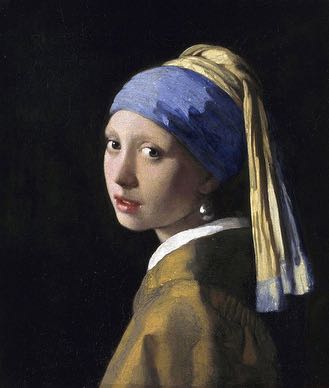
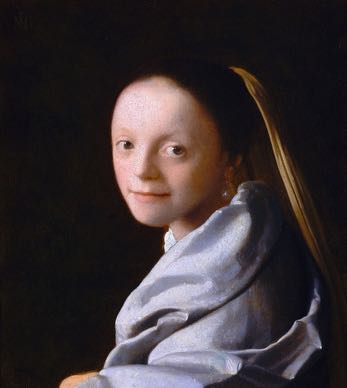
Rembrandt explored portraiture, biblical narratives, history, and self-examination through changing approaches to light and paint. Frans Hals became known for animated portraits and visible brushwork, while Johannes Vermeer created quiet interiors structured by light, geometry, and carefully placed objects. Girl with a Pearl Earring, painted around 1665, is a tronie, a study of a character or type, rather than a commissioned likeness of a securely identified sitter. Its turned head and few bright accents show how concentrated attention can matter as much as overt action. The Dutch tradition forms part of the broader Baroque period without requiring every painting to resemble a Roman altarpiece.
Specialization did not make these paintings simple records of objects or places. Flower arrangements could display rarity, trade, and the passage of time; maritime scenes reflected a society closely tied to shipping; and domestic interiors could suggest courtship, music, work, learning, or social conduct. Landscapes ranged from recognizable local views to imagined combinations of weather, water, roads, and distant towns.
In Pieter Claesz’s Vanitas Still Life of 1630, a skull, a watch, an empty glass, and an extinguished candle turn a tabletop into a reminder of mortality. The restrained palette supports close differences between bone, paper, glass, and metal. Such paintings combine convincing objects with ideas; their quietness is an active artistic choice.
How Far Beyond Europe Did Baroque Ideas Travel?
Trade, missionary activity, colonial rule, and the movement of artists carried Baroque designs beyond Europe. Paintings and prints could travel without their makers, offering models that were adapted to different audiences and religious settings. New Spain became an important center of painting within these networks, rather than merely a destination for finished European pictures.
In 1683, Cristóbal de Villalpando painted Moses and the Brazen Serpent and the Transfiguration of Jesus for a chapel in Puebla Cathedral, in present-day Mexico. The monumental canvas, more than eight meters high, brings an Old Testament episode and Christ’s Transfiguration into one composition. Its juxtaposition requires the viewer to connect different scriptural moments across an immense painted field. Villalpando’s invention makes the language of revelation and spectacle answer to a particular commission and theological argument.
This was not a neutral exchange between equal participants. Colonial institutions helped determine what was commissioned, while painters working in the Americas developed their own solutions within those conditions. Villalpando’s achievement complicates a simple story of European originals and colonial copies: the Puebla painting presents a major act of pictorial invention within the unequal structures of New Spain.
Which Paintings Help Define Baroque Art?
No short list can represent every regional tradition, but these works demonstrate the range of Baroque lighting, movement, narrative, portraiture, and observation:
- The Calling of Saint Matthew by Caravaggio, 1599–1600: Directs a sharp beam of light across an ordinary interior to mark a spiritual turning point.
- Judith Beheading Holofernes by Artemisia Gentileschi, circa 1613, Naples version: Uses concentrated action, physical effort, and dramatic illumination.
- The Elevation of the Cross by Peter Paul Rubens, circa 1610, central panel: Organizes muscular figures along powerful diagonals.
- The Night Watch by Rembrandt, 1642: Transforms a civic guard portrait into a scene of movement and shifting light.
- Las Meninas by Diego Velázquez, 1656: Creates a complex relationship between the royal family, the artist, the reflected image, and the viewer.
- Girl with a Pearl Earring by Johannes Vermeer, circa 1665: Concentrates attention on light, expression, and the reflective surface of a single jewel.
- Vanitas Still Life by Pieter Claesz, 1630: A skull, watch, and emptied vessels turn a restrained tabletop arrangement into a meditation on mortality.
- Seaport with the Embarkation of the Queen of Sheba by Claude Lorrain, 1648: Classical architecture and morning light give a biblical departure the scale and order of an ideal landscape.
- The Laughing Cavalier by Frans Hals, 1624: A confident pose and richly embroidered costume give an individual portrait vivid social and physical presence.
- Juan de Pareja by Diego Velázquez, 1650: The sitter’s commanding presence belongs to the history of a painter who was enslaved in Velázquez’s studio before gaining freedom.
What Changed as Rococo Developed?
During the late seventeenth and early eighteenth centuries, Baroque grandeur continued in churches, palaces, public spaces, and courtly decorative programs. In France and parts of Central Europe, some artists and patrons gradually favored lighter colors, more intimate settings, playful subjects, and increasingly delicate ornament.
The principal difference between Baroque and Rococo is one of emphasis, not a universal opposition. Baroque often mobilized scale, action, and illusion for religious, courtly, or civic authority. French Rococo frequently redirected decorative movement toward smaller interiors, sociability, and courtship. Neither label has one compulsory palette or subject, and monumental decoration continued alongside intimate painting. The transition varied across regions and media.
Why Do Baroque Paintings Remain Popular?
Baroque paintings can command attention through deep contrasts, expressive faces, active figures, rich fabrics, and carefully staged narratives. The period also offers considerable variety. A dramatic religious composition creates a different atmosphere from a restrained portrait, quiet Dutch interior, ideal landscape, flower still life, or courtly mythological scene.
This range allows Baroque art to work in formal rooms, offices, libraries, dining areas, and personal collections. A hand-painted reproduction preserves the variations of light, color, texture, and brushwork that give the original composition much of its visual power, offering a more substantial presence than a mechanically printed image.
Copyright © 2026 BrushWiz. All Rights Reserved.
About Our Baroque Paintings
Are your Baroque reproductions painted by hand?
Yes. Every reproduction is individually painted by hand in oil on canvas by a professional artist. We do not use prints, digital transfers, or mechanical reproduction methods.
How do your artists recreate Baroque lighting and brushwork?
Our artists study the original painting’s composition, light, shadows, color, figures, texture, and brushwork. Because Baroque painters followed different regional and individual approaches, the technique is adapted to the specific artwork rather than applying one standard dramatic effect to every reproduction.
What makes a Baroque painting distinctive?
Baroque paintings are often associated with dramatic light, active compositions, emotional expression, rich color, convincing space, and carefully staged narratives. These qualities vary considerably, however, from Caravaggio’s concentrated realism to Rubens’s movement, Rembrandt’s psychological depth, and Vermeer’s quiet interiors.
Which Baroque artists are represented in the collection?
The collection includes works by Caravaggio, Peter Paul Rubens, Rembrandt, Diego Velázquez, Artemisia Gentileschi, Nicolas Poussin, Johannes Vermeer, Frans Hals, and many other painters associated with seventeenth-century European art.
What subjects appear in Baroque art?
Baroque artists painted religious and biblical narratives, portraits, mythology, history, court life, battles, landscapes, domestic interiors, still lifes, and scenes of everyday activity. The collection ranges from large dramatic compositions to quiet portraits and carefully observed interiors.
Can I request a Baroque painting that is not listed?
Yes. If you cannot find the artwork you want, send us its title or an image. Our team will review the request and confirm whether it can be reproduced, along with the available sizes, estimated production time, and price.
How closely will my painting resemble the original?
Our artists work to capture the original Baroque painting’s composition, colors, lighting, texture, figures, and visual character as closely as possible. Because every reproduction is painted by hand, small variations are natural and make each canvas unique.
Are custom sizes and frames available?
Yes. Most Baroque paintings can be ordered in standard or custom canvas dimensions. High-quality frames in classic and modern designs are also available, together with professional canvas stretching. Compatible options are displayed on the product page.
Will I receive photographs before the painting is shipped?
Yes. We send high-resolution photographs of the completed painting for your approval. You may request adjustments if needed, and the artwork will not be dispatched until the review process is complete.
Do Baroque reproductions include worldwide shipping and returns?
Yes. Baroque reproductions qualify for free express worldwide shipping. After dispatch, delivery generally takes five to eight business days, depending on the destination. Orders are also covered by our 90-day return policy, subject to the current terms and eligibility requirements.
Why BrushWiz?
100% Hand Painted
Every piece is entirely handmade
Museum Quality
Faithfully recreated by expert artists
Custom Framing
Choose from a wide range of frames
Free Shipping
Enjoy free shipping on all orders
Cash Back Rewards
Earn cash back with every purchase