
🔥 Limited-Time Sale. Offer Ends 11/10/2026. View Details
🔥 Limited-Time Sale. Ends 11/10/2026. View Details
🔥 Limited-Time Sale. View Details
Artists
Subjects
Movements
Collections
Decor
Portraits
Commissions
Framing
Reviews
Gift Cards
On Sale
Frederic Edwin Church Oil Painting Reproductions
Shop museum-quality reproductions of Frederic Edwin Church’s most famous paintings, each hand-painted in oil on canvas by a professional artist.
Shop Art

Showing 1-40 of 210 results
Sort By
Most Popular
- Most Popular
- New Arrivals
- Best Sellers
- Alphabetical A-Z
- Alphabetical Z-A

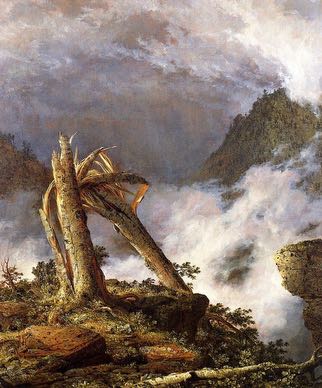


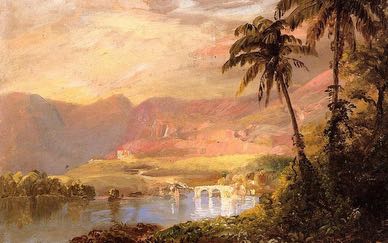
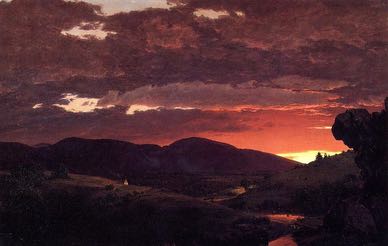
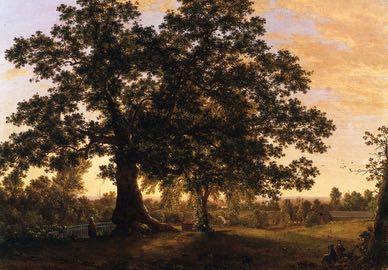


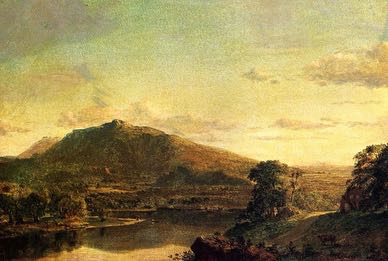
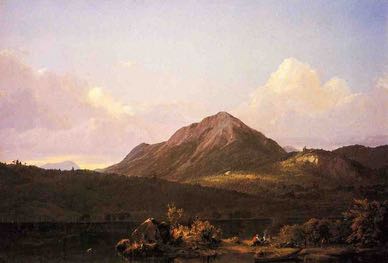

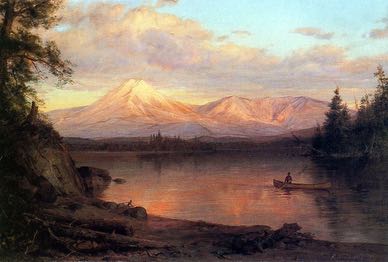
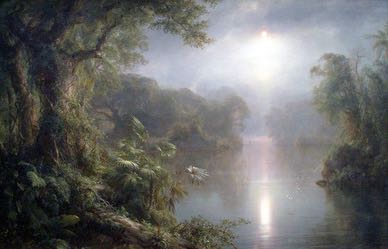


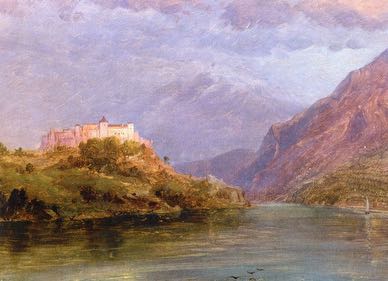
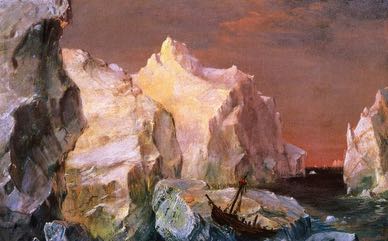
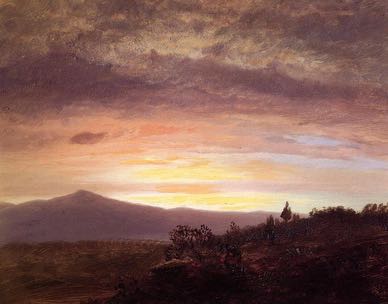
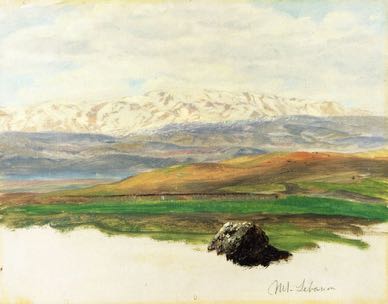

Can’t Find the Painting You Want?
Looking for a specific painting that isn’t in our catalog? Just let us know. We can recreate almost any artwork in the size and style you’re looking for.
Request a PaintingHand-Painted Frederic Edwin Church Reproductions
Bring Church’s art into your home with an oil-on-canvas reproduction hand-painted by a professional artist. Our collection features hundreds of paintings from across his career, including The Heart of the Andes, Twilight in the Wilderness, and Aurora Borealis. Discover tropical valleys, waterfalls, volcanoes, icebergs, glowing sunsets, Mediterranean ruins, and other subjects closely associated with Church. Every reproduction is a real oil painting, offering depth and texture that a print or digital transfer cannot provide. From celebrated panoramic landscapes to intimate studies, find a Church painting that suits your space.
The Making of a Frederic Edwin Church Oil Painting Replica
Creating a Frederic Edwin Church oil painting replica requires patience, precision, and an understanding of the original artwork. Our studio includes artists who specialize in landscape painting and understand the distinctive qualities of Church’s work. The artist studies the source image, then recreates its panoramic depth, precise natural details, luminous atmosphere, and Church’s carefully controlled transitions of light and color using traditional oil-painting methods. After completion, the painting is inspected by our quality-control team and photographed for your approval. The result is a carefully executed oil painting that reflects the visual character of the original.
Custom Sizes and Frames for Your Church Painting
Your Church painting can be ordered in practically any size, from popular standard dimensions to custom canvas sizes selected directly on the product page. This flexibility lets you choose a painting that fits your wall and complements your room perfectly. After selecting the size, you can choose from high-quality frames in classic or modern designs, with professional canvas stretching also available. Our framing options complement the expansive views and luminous colors of Church’s landscapes. With sizing, stretching, and framing arranged in one order, your artwork can arrive ready for display without a separate visit to a frame shop.
Order a Frederic Edwin Church Reproduction with Confidence
Buying hand-painted art online should feel clear and comfortable. After your Frederic Edwin Church reproduction is completed, we send high-resolution photographs for your review before shipping. You can inspect the composition, colors, natural details, and overall finish, then request adjustments if needed. The painting is dispatched only after you approve it, so you know what to expect when it arrives. Your order also includes free express worldwide shipping and is covered by our 90-day return policy. Together, these assurances help you purchase a Church oil painting with greater confidence and peace of mind.
The Life and Art of Frederic Edwin Church
Frederic Edwin Church was an American landscape painter and a leading figure of the Hudson River School. Born in Hartford in 1826, he studied with Thomas Cole before building an international reputation through panoramic views of the Andes, Niagara Falls, Arctic ice, tropical forests, and the eastern Mediterranean. Church combined close observation with ideas drawn from science, religion, exploration, and national identity. His monumental paintings were presented as public spectacles and made him one of the most celebrated artists of his generation. Later, he extended his art into Olana, the house and designed landscape overlooking the Hudson River where architecture, decoration, farming, and carefully framed views became parts of a single creative project.
Read More
How Did Church Become Thomas Cole’s Pupil?
Frederic Edwin Church was born in Hartford, Connecticut, on 4 May 1826. His father was a prosperous businessman whose interests included silverwork, insurance, real estate, and railroads. That financial security gave the young Church opportunities to draw, travel, and consider art as a profession.
Daniel Wadsworth, an important Hartford collector, helped arrange an introduction to Thomas Cole, the leading American landscape painter of the period. In 1844, at eighteen, Church moved to Catskill, New York, and became Cole’s pupil. The two worked together for roughly two years, sketching outdoors and developing paintings in the studio.
Cole taught Church to look for structure and meaning within a landscape rather than simply copy a view. Trees could frame distance, rivers could guide the eye, and shifts in weather or season could carry emotional weight. Church absorbed those lessons but soon moved away from Cole’s elaborate moral allegories toward landscapes built from close observation of particular places.
What Set His Early Landscapes Apart?
Church moved to New York City in 1847 and quickly established an independent career. The following year, at twenty-two, he became the youngest artist elected as a full member of the National Academy of Design. Exhibitions and sales brought patrons while he was still developing the subjects that would make him famous.
His early journeys took him through the Catskills, Vermont, Connecticut, and Maine. He carried pencils, paper, and small prepared boards into the landscape, recording rock formations, tree trunks, clouds, reflected light, and changes in weather. These field studies were precise but rarely intended as final statements.
Back in the studio, Church combined observations made at different times and locations into coherent compositions. A convincing foreground might lead across water toward distant mountains beneath a sky reconstructed from separate studies. This method linked him to the Hudson River School, yet the unusually exact natural details and broad geographic ambition already distinguished him from many contemporaries.
Why Did South America Expand His Ambition?
Church’s imagination was strongly shaped by the writings of the Prussian naturalist Alexander von Humboldt. Humboldt described nature as an interconnected system and encouraged artists to study the equatorial regions where climate, geology, and plant life appeared in extraordinary variety. Church decided to see that world for himself.
In 1853, he traveled through present-day Colombia and Ecuador with the businessman Cyrus Field. A second journey in 1857, made with the painter Louis Rémy Mignot, concentrated on Ecuador. Church filled sketchbooks and small oil studies with mountain passes, tropical plants, waterfalls, villages, and the volcanic peaks of Cotopaxi and Chimborazo.
His large studio paintings did not reproduce a single viewpoint. They assembled accurately observed elements into an imagined totality, allowing viewers to travel from humid vegetation in the foreground toward snow-covered peaks miles away. Works such as The Andes of Ecuador joined scientific curiosity, spiritual wonder, and the pleasure of visual discovery.
How Did The Heart of the Andes Become a Public Spectacle?
The Heart of the Andes, completed in 1859, brought Church’s South American work to its grandest scale. Nearly ten feet wide, the painting leads from tropical plants and a quiet riverside shrine through waterfalls and forests to a distant snow-covered mountain.
Church and his agents presented the canvas on its own rather than placing it among many works in a conventional exhibition. A large architectural frame made the picture resemble a window, controlled lighting heightened the illusion, and visitors used opera glasses to study details across the immense surface. Twelve thousand people attended its first three weeks in New York.
The exhibition then traveled to other American cities and Britain, while prints spread the image still further. Admission fees and publicity turned looking at a painting into a popular event. Church demonstrated that a landscape could compete with panoramas, theater, and other forms of mass entertainment without giving up the concentration or technical refinement expected of fine art.
What Did Niagara and the Arctic Allow Him to Explore?
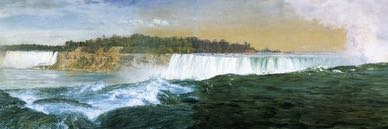
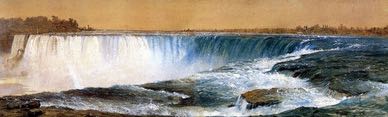
Church sought places where natural forces could be felt at an almost bodily scale. For Niagara Falls, he moved the viewpoint close to the rushing edge, minimized picturesque foreground scenery, and let the curve of water carry the eye toward mist and open distance. The 1857 composition became an international success.
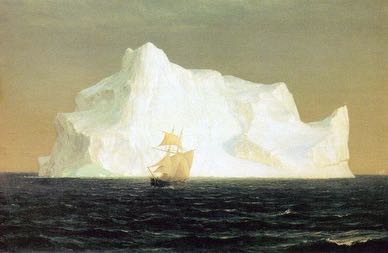
In 1859, Church traveled by schooner to Labrador and Newfoundland to study sea ice. He sketched from the deck, observing how icebergs changed color with light, weather, and surrounding water. The Icebergs, exhibited in 1861, transformed these studies into a cold, unstable world of towering forms and shifting passages.
Neither painting is a neutral record. Niagara could signify American abundance and energy, while the Arctic suggested danger, exploration, and the limits of human control. Church’s precision makes each place believable, but scale and composition turn physical observation into an experience of the sublime.
Where Did Science, Faith, and Politics Meet?
Church followed contemporary writing about botany, geology, meteorology, optics, and polar exploration. His landscapes carefully distinguish kinds of clouds, rock, vegetation, and atmospheric light. That accuracy did not conflict with religious belief. Like many nineteenth-century viewers, he could understand natural law as evidence of an ordered creation.
Political meaning also entered his skies and natural phenomena. Our Banner in the Sky, painted after the attack on Fort Sumter in 1861, turns a sunset into the colors and stars of the United States flag. The image openly supports the Union at the beginning of the Civil War.
Aurora Borealis, 1865, combines information supplied by Arctic explorer Isaac Israel Hayes with an ominous celestial display above a trapped ship. Contemporary audiences could connect the aurora with the war’s moral crisis, while its bands of light also recalled new scientific interest in electricity and global communication.
How Did Travel Continue to Change His Subjects?
Church did not stop traveling after his South American and Arctic successes. In 1865, he and his wife, Isabel, went to Jamaica, partly in search of a climate that might improve her health. There he made vivid studies of palms, tangled vegetation, mountain ridges, storms, and sunsets, often painting quickly on paper.
From 1867 to 1869, the family traveled through Europe and the eastern Mediterranean. Church worked in Rome, Greece, Lebanon, Syria, Palestine, and Jordan, visiting ancient buildings and dramatic geological sites. Petra, Jerusalem, Damascus, and the Parthenon supplied subjects that joined landscape with history and sacred association.
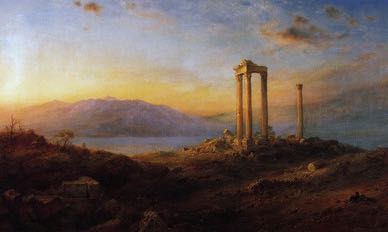
The finished The Parthenon places the ruined temple against luminous mountains and an immense sky. Rather than treat architecture as an isolated archaeological object, Church made it part of a continuing natural world. Across these journeys, he gathered detailed studies that could be reorganized years later into paintings shaped as much by memory as direct sight.
How Did Olana Extend His Art Beyond the Canvas?
In 1860, Church bought farmland on a hill above the Hudson River near Hudson, New York, and married Isabel Carnes. The couple called the property the Farm before adopting the name Olana. Church planted thousands of trees, developed orchards and fields, created a lake, and laid out roads that revealed carefully timed views.
After their journey through the Middle East, Church worked with the architect Calvert Vaux on a new house completed in the 1870s. Its towers, colored brick, stenciled ornament, carved details, and framed windows drew freely from Persian and other architectural sources the family had encountered abroad. Church continually revised both building and grounds.
Rheumatoid arthritis increasingly limited his ability to execute large canvases, but it did not end his creative work. Olana became a landscape composition experienced through movement: a road bends, trees open, and the Hudson or Catskills suddenly appear. Painting, architecture, collecting, farming, and environmental design were brought together within one sustained project.
Which Paintings Define Church’s Far-Reaching Career?
Church repeatedly found new ways to unite observed detail with great scale, changing weather, scientific knowledge, and cultural meaning. These paintings trace the reach of that ambition:
- The Andes of Ecuador, 1855: Tropical growth, cultivated land, and distant peaks condense the discoveries of Church’s first South American journey.
- Niagara Falls, 1857: A low, immediate viewpoint gives the sweeping water unusual force while mist and rainbow open the scene toward distance.
- The Heart of the Andes, 1859: Hundreds of closely observed details create an imagined journey through multiple climates toward the Ecuadorian mountains.
- Twilight in the Wilderness, 1860: A brilliant red sky above the Maine wilderness carries both natural grandeur and the anxiety of a nation nearing civil war.
- The Icebergs, 1861: Enormous masses of ice form a shifting Arctic architecture marked by beauty, danger, and traces of human exploration.
- Cotopaxi, 1862: An erupting volcano sends smoke across a blazing sun, making geological change the central drama of the landscape.
- Aurora Borealis, 1865: A ship locked in polar ice lies beneath bands of uncanny light charged with scientific and Civil War associations.
- The Parthenon, 1871: Ancient architecture, mountain air, and open sky meet in a late meditation on history, survival, and place.
What Remains Important About Church’s Vision?
Church died in New York City on 7 April 1900. By then, the panoramic landscapes that had once drawn crowds were losing favor as American art turned toward urban subjects, intimate tonal painting, and European modernism. His reputation declined, and Olana came close to being broken up during the twentieth century.
Preservation of the house, its contents, and the designed landscape helped change that history. Church can now be understood not only as a maker of spectacular canvases but also as a close observer, traveler, collector, architectural collaborator, and landscape designer. His role in supporting the creation of a public reservation at Niagara further connects his art with the emerging conservation movement.
His paintings also invite necessary questions about nineteenth-century exploration and the cultural viewpoints through which distant places were presented to American audiences. Their ambition remains undeniable. Church joined field observation to imaginative construction and made geology, climate, faith, politics, and visual pleasure share the same painted space. At Olana, that way of seeing still extends beyond a frame into the land itself.
Copyright © 2026 BrushWiz. All Rights Reserved.
About Our Frederic Edwin Church Paintings
Are your Frederic Edwin Church reproductions painted by hand?
Yes. Every reproduction is individually painted by hand in oil on canvas by a professional artist. We do not use prints, digital transfers, or mechanical reproduction methods.
How closely do your Church copies resemble the original?
Our artists work to capture the composition, colors, texture, and visual character of the original Church painting as closely as possible. Because every reproduction is painted by hand, small variations are natural and make each canvas unique.
How long does a Church reproduction take to complete?
Most Church reproductions require approximately two to three weeks to paint, dry, and inspect. Production time may vary depending on the artwork and canvas size, so check the estimate displayed on the product page.
Can I request a Frederic Edwin Church painting that is not listed?
Yes. If you cannot find the Frederic Edwin Church artwork you want in our catalog, send us the painting’s title or an image. Our team will review your request and confirm the available sizes, estimated production time, and price.
Will I receive approval photos before shipping?
Yes. We send high-resolution photographs of the completed painting for your approval. You can request adjustments if needed, and the painting will not be dispatched until the review process is complete.
Are custom canvas sizes available for Church paintings?
Yes. We offer custom dimensions in addition to the standard sizes shown on the product page. Select the dimensions you need directly from the available size options.
May I order my Church painting with a frame?
Yes. High-quality frames in classic and modern designs are available for many paintings. You can view compatible framing options and add your preferred design from the product page. Professional canvas stretching is also available.
What determines the price of a Frederic Edwin Church reproduction?
The price depends on the selected artwork, canvas dimensions, and framing option. Choose your preferred configuration on the product page to see the current price before ordering.
Is free express worldwide shipping included?
Yes. Church reproductions qualify for free express worldwide shipping. After dispatch, delivery usually takes five to eight business days, although timing may vary by country and destination.
Which return policy covers Church reproductions?
Orders are covered by our 90-day return policy. Review the current return-policy page before ordering for complete information about eligibility, time limits, and the return process.
Why BrushWiz?
100% Hand Painted
Every piece is entirely handmade
Museum Quality
Faithfully recreated by expert artists
Custom Framing
Choose from a wide range of frames
Free Shipping
Enjoy free shipping on all orders
Cash Back Rewards
Earn cash back with every purchase