
❄️ Winter Sale. Offer Ends 11/17/2026. View Details
❄️ Winter Sale. Ends 11/17/2026. View Details
❄️ Winter Sale. View Details
Artists
Subjects
Movements
Collections
Decor
Portraits
Commissions
Framing
Reviews
Gift Cards
On Sale
Frederic Remington Oil Painting Reproductions
Shop museum-quality reproductions of Frederic Remington’s most famous paintings, each hand-painted in oil on canvas by a professional artist.
Shop Art

Showing 1-40 of 72 results
Sort By
Most Popular
- Most Popular
- New Arrivals
- Best Sellers
- Alphabetical A-Z
- Alphabetical Z-A

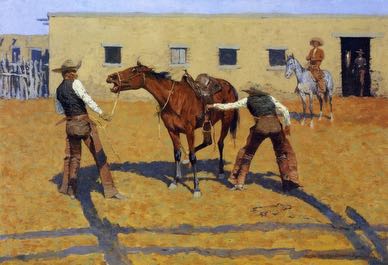
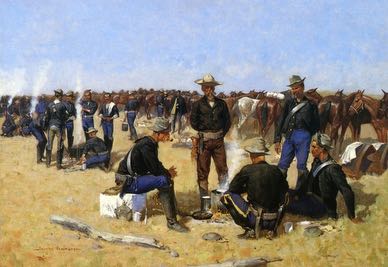
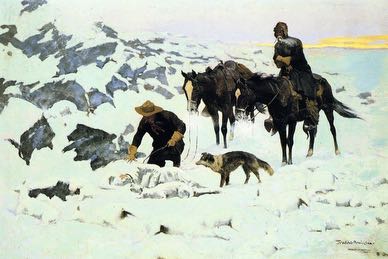
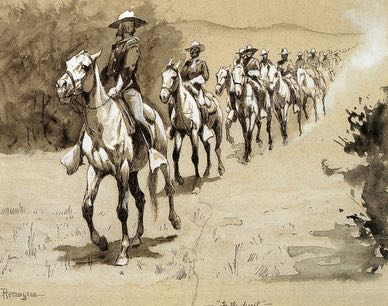

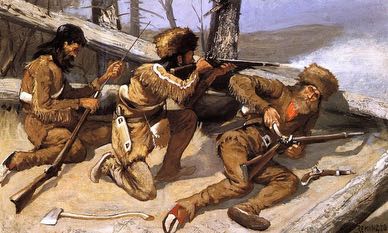
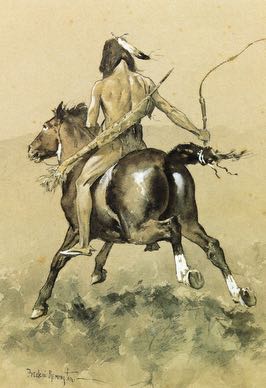
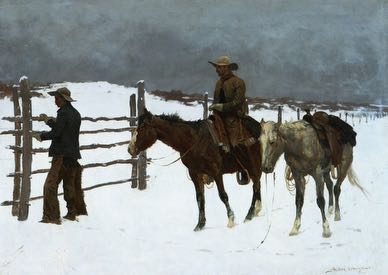
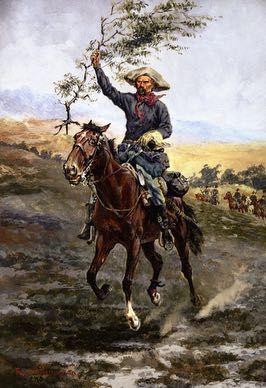
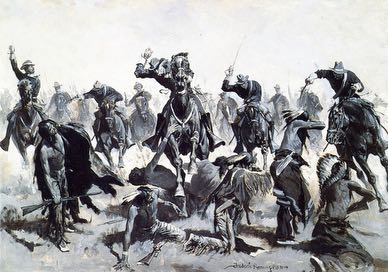
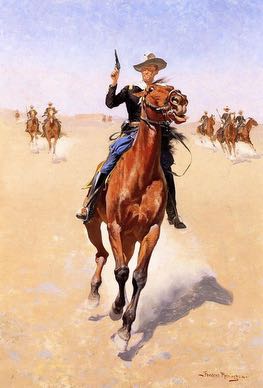
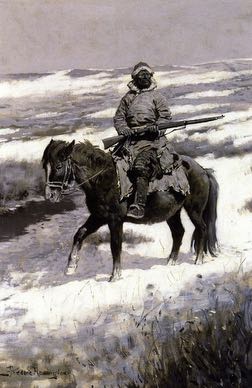
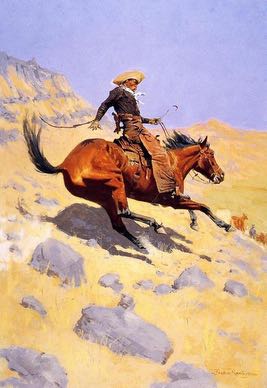
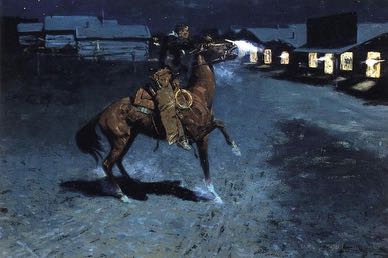
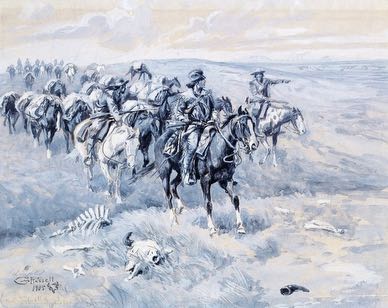

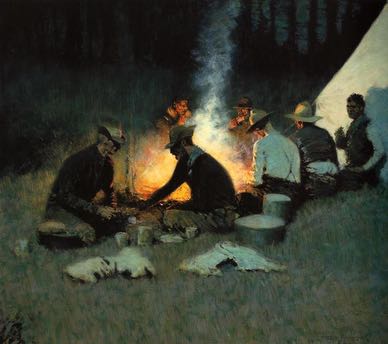
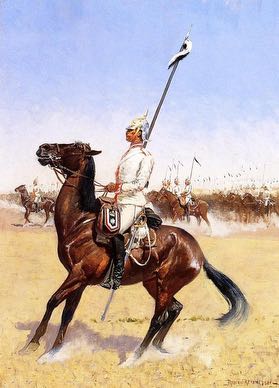

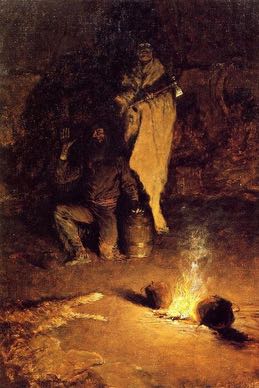
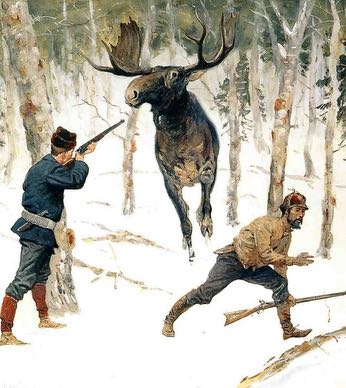
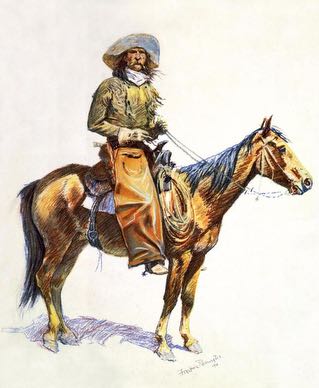
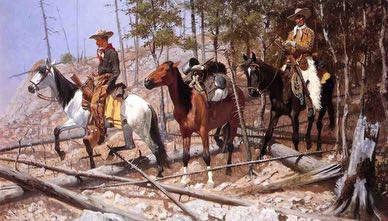
Can’t Find the Painting You Want?
Send us a reference image. We can recreate almost any artwork in the size and style you’re looking for.
Get a Free QuoteHand-Painted Frederic Remington Reproductions
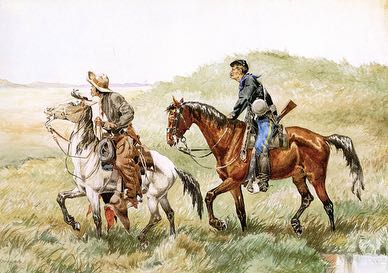
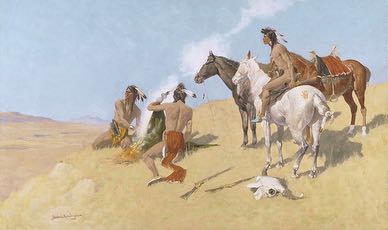
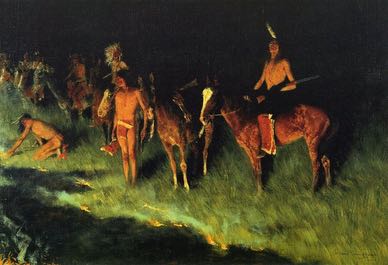
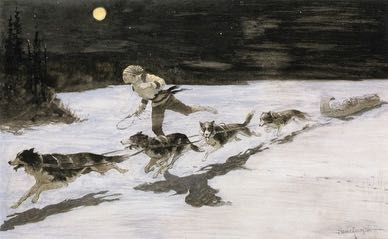
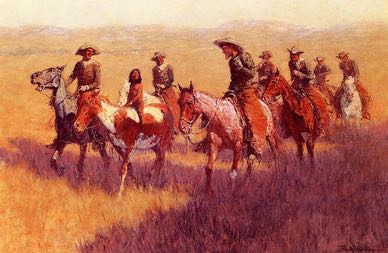
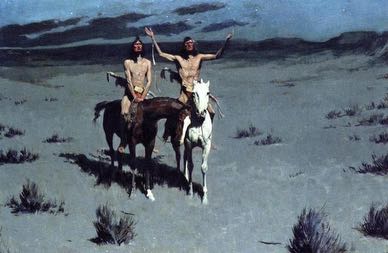
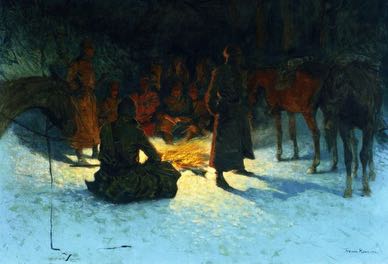
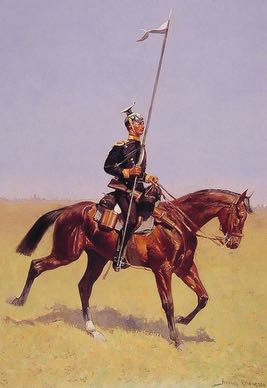
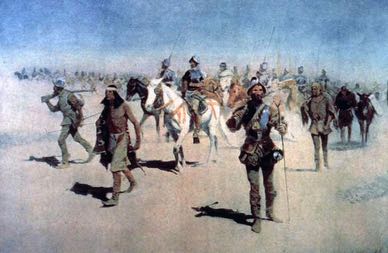
Bring Remington’s art into your home with an oil-on-canvas reproduction hand-painted by a professional artist. Our collection features dozens of paintings from across his career, including The Smoke Signal, A Dash for the Timber, and The Scout: Friends or Foes?. Discover mounted cowboys, cavalry patrols, Native American figures, frontier encounters, moonlit camps, racing horses, and other subjects closely associated with Remington. Every reproduction is a real oil painting, offering depth and texture that a print or digital transfer cannot provide. From iconic masterpieces to lesser-known works, find a Remington painting that suits your space.
The Making of a Frederic Remington Oil Painting Replica
Creating a Frederic Remington oil painting replica requires patience, precision, and an understanding of the original artwork. Our studio includes artists who specialize in American Realist painting and understand the distinctive qualities of Remington’s work. Before painting begins, the artist studies the source image, paying close attention to its composition, equestrian anatomy, rapid movement, frontier details, changing light, and Remington’s energetic handling of paint. These elements are recreated by hand in oil on canvas using an approach suited to the original. Once complete, the painting is inspected by our quality-control team and photographed for your approval.
Custom Sizes and Frames for Your Remington Painting
Your Remington painting can be ordered in practically any size, from popular standard dimensions to a custom canvas size selected directly on the product page. This flexibility lets you choose a painting that fits your wall and complements your room perfectly. After selecting the size, you can choose from high-quality frames in classic or modern designs, with professional canvas stretching also available. Our framing options complement the earthy colors and dynamic action of Remington’s paintings. With sizing, stretching, and framing arranged in one order, your artwork can arrive ready for display without a separate visit to a frame shop.
Order a Frederic Remington Reproduction with Confidence
Buying hand-painted art online should feel clear and comfortable. After your Frederic Remington reproduction is completed, we send high-resolution photographs for your review before shipping. You can inspect the composition, colors, and overall finish, then request adjustments if needed. The painting is dispatched only after you approve it, so you know what to expect when it arrives. Your order also includes free express worldwide shipping and is covered by our 90-day return policy. Together, these assurances help you purchase a Remington oil painting with greater confidence and peace of mind.
The Life and Art of Frederic Remington
Frederic Remington was an American illustrator, painter, sculptor, writer, and journalist whose work became central to the popular mythology of the American West. Born in New York in 1861, he traveled repeatedly through western territories but kept his homes and studios in the East. Cowboys, cavalry soldiers, Native American figures, scouts, horses, frontier conflict, and landscapes charged with danger or suspense filled his art. Remington first became famous through widely reproduced magazine illustrations, then pushed toward ambitious oils, atmospheric night scenes, and technically daring bronze sculpture. Firsthand observation gave his work persuasive detail, while commercial storytelling and nostalgia shaped images that continue to influence—and complicate—how the West is remembered.
Read More
Who Was Frederic Remington?
Frederic Sackrider Remington was born on 4 October 1861 in Canton, New York, and spent most of his childhood in the northern part of the state. His father, Seth Pierre Remington, had been a Union cavalry officer during the Civil War. Stories of horses, soldiers, outdoor life, and physical endurance surrounded Frederic early and later became basic ingredients of his art.
After military school, Remington enrolled at Yale in 1878. He studied drawing with John Henry Niemeyer at the School of Fine Arts but devoted much of his attention to football. Following his father’s death, he left after three semesters. A short period at the Art Students League in 1886 rounded out the limited formal education behind a largely self-directed career.
Remington became almost inseparable from the American West in the public imagination, yet he was essentially an eastern artist. He lived and worked in Brooklyn, New Rochelle, and finally Ridgefield, Connecticut. Western journeys supplied sketches and memories, but the finished illustrations, sculptures, and paintings took shape in carefully arranged studios for publishers, exhibition visitors, and collectors.
What First Drew Remington West?
Remington traveled to Montana Territory for the first time in 1881, when he was twenty. Ranches, military posts, open country, and communities undergoing rapid political and economic change offered subjects unavailable in an eastern art school. The trip also encouraged his belief that firsthand experience could separate his pictures from frontier scenes imagined entirely at a distance.
In 1883, he invested in a sheep ranch near Peabody, Kansas. The ranch failed, as did later business ventures in Kansas City, but these years familiarized him with cattle, horses, transport, towns, frontier labor, and daily ranch work. He married Eva Caten in 1884, and the couple eventually returned east while Remington concentrated on making art his profession.
As an illustrator and correspondent, he continued traveling through the Plains, Southwest, Mexico, and other regions. He visited reservations and army posts, watched cavalry exercises, interviewed participants, drew equipment, and collected objects. These experiences fed his pictures, though publishers’ needs and eastern audiences’ expectations shaped the final stories too.
How Did Magazine Illustration Make Remington Famous?
Remington’s first published western sketch appeared in Harper’s Weekly in 1882, after a staff artist redrew it for printing. By the late 1880s, his images appeared regularly in Harper’s Weekly, Century Magazine, Collier’s, and other popular publications. Reproduction in black and white demanded crisp silhouettes, readable action, convincing detail, and strong contrasts of tone.
His drawings accompanied journalism, military reports, historical writing, fiction, and stories of his own. He also illustrated books by Theodore Roosevelt, Owen Wister, and other writers. For countless eastern readers, Remington supplied a persuasive visual vocabulary for cowboys, frontier travel, cavalry campaigns, hunting, and encounters between settlers and Native communities.
He learned to make an entire story legible in one glance. A rider looking back, a horse startled by danger, drifting dust, a tense pause, or a threat outside the frame could carry the narrative. That instinct remained with Remington as he moved into sculpture and exhibition painting and sought recognition beyond commercial illustration.
Why Were Horses Essential to Remington’s Art?
Horses run through Remington’s illustrations, paintings, and sculptures as companions, working animals, military equipment, and sources of movement. He watched how riders sat in the saddle, how clothing and tack shifted at speed, and how a horse strained, turned, stopped, ran, bucked, or fell.
In A Dash for the Timber, horses and riders race toward the viewer as dust, gunfire, and overlapping bodies intensify the chase. Elsewhere, the action slows to mounted scouts searching a horizon or cowboys riding back from the night herd. Even in stillness, the horse remains central to the story.
Cropping, diagonals, repeated legs, flying reins, and compressed spacing let Remington carry movement beyond the edge of the picture. Photography helped him examine positions too quick for the naked eye to hold, but he adjusted what the camera showed to make an action clearer and stronger. His best equestrian scenes unite close anatomical knowledge with purposeful exaggeration.
What Changed in Remington’s Images of War?
Military subjects connected Remington’s childhood fascination with cavalry to his later work as a correspondent and illustrator. He accompanied troops on western assignments and pictured patrols, scouting, negotiation, pursuit, combat, camp routine, and exhaustion. His military paintings pay close attention to bodily strain and practical equipment even when they build suspense or heroic action.
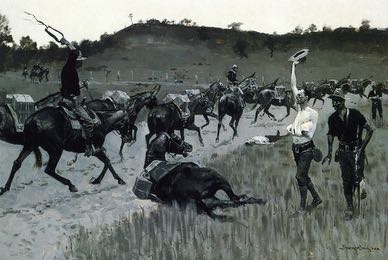
During the Spanish-American War of 1898, Remington went to Cuba for William Randolph Hearst’s New York Journal. Actual warfare—with its confusion, sickness, and death—disturbed him. In The Scream of Shrapnel at San Juan Hill, the viewer stands close to soldiers reacting bodily to exploding fire rather than watching a grand battle from a safe distance.
His war pictures still belong to the nationalism and sensational media culture of the period, and some helped dramatize military expansion. Later paintings, however, increasingly replace easy victory with darkness, vulnerability, and doubt. Horses hesitate, men listen for unseen danger, and the open landscape becomes a source of psychological pressure.
How Should Remington’s Images of Native Americans Be Read?
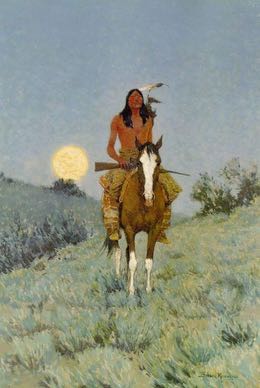
Remington depicted Native individuals, families, warriors, scouts, hunters, trappers, and official delegations. Travels in the West gave him opportunities to observe regional settings, clothing, gestures, and equipment at close range. In works such as The Smoke Signal, landscape, watchful figures, and distant communication create a compelling narrative.
Yet these pictures were made mainly for non-Native viewers during an era of reservation confinement, military conflict, forced removal, and aggressive cultural assimilation. Remington often framed Native life through danger, disappearance, conflict, or the idea of a vanishing frontier. Living communities could become symbols within a national story centered on expansion.
His work therefore requires visual attention and historical context at the same time. It preserves information about horses, dress, weapons, and attitudes of the period, but it cannot serve as a complete or neutral account of Native experience. The images tell us as much about late nineteenth-century power and expectation as they do about the people shown.
When Did Remington Find His Voice as a Painter?
Remington wanted to be taken seriously as a painter, not confined to the category of magazine illustrator. He exhibited at the National Academy of Design and became an associate member in 1891. His early oils retain tight detail, bright daylight, and clearly staged stories, reflecting both commercial illustration and the European military art he admired.
After 1900, the paint grew broader and the atmosphere more unified. Remington responded to contemporary American painting and began simplifying forms, loosening his touch, and treating light and color as subjects in their own right. Painters such as Julian Alden Weir encouraged this shift without displacing the frontier narratives at the center of his career.
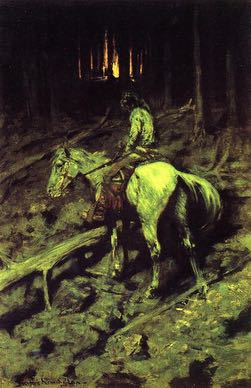
The nocturnes are the most distinctive result. In A Reconnaissance, figures turn across moonlit snow toward an enemy no viewer can see. Twilight, darkness, firelight, and moonlight let Remington reduce explanatory detail and create mood with blue, green, black, brown, and isolated flashes of illumination.
What Did Remington Bring to Sculpture?
Remington took up sculpture in the mid-1890s after learning the basics of modeling clay. His first major work, The Broncho Buster, shows a cowboy struggling to master a bucking horse. Its success was immediate: all the instability, equestrian knowledge, and action of his pictures now occupied a form viewers could circle.
He ultimately devised twenty-two subjects for bronze. Horses, trappers, cavalrymen, cowboys, and Native figures recur in daringly balanced arrangements. The Mountain Man and Coming Through the Rye explore downhill movement, speed, crowded action, and the physical bond between animal and rider.
Remington cared closely about surface and casting. He shifted from sand casting to the lost-wax method, which allowed more control over complicated forms and fine details. Bronze also broadened his market because authorized casts could reach collectors unable to buy a unique painting. Although sculpture occupied only the later years of his short career, it remains central to his reputation.
Which Paintings Reveal the Range of Remington’s Career?
These works move through cowboys, cavalry, Native subjects, frontier violence, historical change, and the atmospheric painting of Remington’s final years:
- A Dash for the Timber: Horses, riders, dust, and weapons rush toward the viewer in a headlong pursuit.
- The Smoke Signal: Watchful figures, distance, and communication give a carefully staged western landscape its narrative tension.
- The Scout: Friends or Foes?: A mounted observer searches the horizon, leaving uncertainty itself at the center of the story.
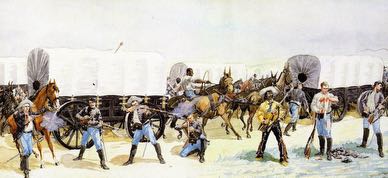
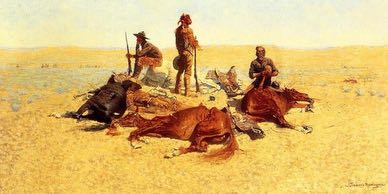
- Fight for the Water Hole: Scarce water, exposed ground, and defensive positions organize a dramatic frontier conflict.
- The Fall of the Cowboy: Settlement and modern transportation give this image of a changing West its reflective mood.
- A Reconnaissance: Darkness and silence turn a moonlit cavalry scene into an encounter with unresolved danger.
- The Scream of Shrapnel at San Juan Hill: Soldiers react at close range to the confusion and violence of modern battle.
- Against the Sunset: Riders become silhouettes against evening light, revealing the atmospheric direction of Remington’s late art.
Why Does Frederic Remington Still Matter?
Few artists moved as readily among illustration, painting, sculpture, fiction, journalism, and commercial publishing. Remington reached millions through books and magazines before many of his paintings entered museums. Cowboys, scouts, mounted soldiers, and open frontier landscapes became part of the United States’ shared visual language through his work.
His influence runs through later western art, advertising, cinema, and popular entertainment, and his pictures invite comparison with those of Charles Marion Russell. Yet Remington did more than record a historical world. He built a selective myth in which masculine action, horses, danger, empty land, and nostalgia often obscure women’s lives, industrial growth, settlement, and Native perspectives.
Remington moved to Ridgefield, Connecticut, in 1909 and died that December at forty-eight after complications from an appendectomy. The nocturnes suggest that his painting was changing quickly when his life ended. He remains a defining interpreter of the American West, valued for his technical achievement and examined for the difficult historical questions his images continue to pose.
Copyright © 2026 BrushWiz. All Rights Reserved.
About Our Frederic Remington Paintings
Are your Frederic Remington reproductions painted by hand?
Yes. Every reproduction is individually painted by hand in oil on canvas by a professional artist. We do not use prints, digital transfers, or mechanical reproduction methods.
How closely do your Remington copies resemble the original?
Our artists work to capture the composition, colors, texture, and visual character of the original Remington painting as closely as possible. Because every reproduction is painted by hand, small variations are natural and make each canvas unique.
How long does it take to complete a painting?
Most Remington reproductions require approximately two to three weeks to paint, dry, and inspect. Production time may vary depending on the artwork and canvas size, so check the estimate displayed on the product page.
Can I request a Remington painting that is not listed?
Yes. If you cannot find the Frederic Remington artwork you want in our catalog, send us the painting’s title or an image. Our team will review your request and confirm the available sizes, estimated production time, and price.
Will I receive photos of my painting before it is shipped?
Yes. We send high-resolution photographs of the completed painting for your approval. You can request adjustments if needed, and the painting will not be dispatched until the review process is complete.
Can I order a custom canvas size?
Yes. We offer custom dimensions in addition to the standard sizes shown on the product page. Select the dimensions you need directly from the available size options.
Can I order my Remington painting with a frame?
Yes. High-quality frames in classic and modern designs are available for many paintings. You can view compatible framing options and add your preferred design from the product page. Professional canvas stretching is also available.
How much does a Frederic Remington reproduction cost?
The price depends on the selected artwork, canvas dimensions, and framing option. Choose your preferred configuration on the product page to see the current price before ordering.
Do you offer free worldwide shipping?
Yes. Remington reproductions qualify for free express worldwide shipping. After dispatch, delivery usually takes five to eight business days, although timing may vary by country and destination.
What is the return policy for Remington reproductions?
Orders are covered by our 90-day return policy. Review the current return-policy page before ordering for complete information about eligibility, time limits, and the return process.
Why BrushWiz?
100% Hand Painted
Every piece is entirely handmade
Museum Quality
Faithfully recreated by expert artists
Custom Framing
Choose from a wide range of frames
Free Shipping
Enjoy free shipping on all orders
Cash Back Rewards
Earn cash back with every purchase