

❄️ Winter Sale. Offer Ends 11/21/2026. View Details
❄️ Winter Sale. Ends 11/21/2026. View Details
❄️ Winter Sale. View Details
Artists
Subjects
Movements
Collections
Decor
Portraits
Commissions
Framing
Reviews
Gift Cards
On Sale
George Bellows Oil Painting Reproductions
Shop museum-quality reproductions of George Bellows’s most famous paintings, each hand-painted in oil on canvas by a professional artist.
Shop Art
Showing 1-40 of 214 results
Sort By
Most Popular
- Most Popular
- New Arrivals
- Best Sellers
- Alphabetical A-Z
- Alphabetical Z-A
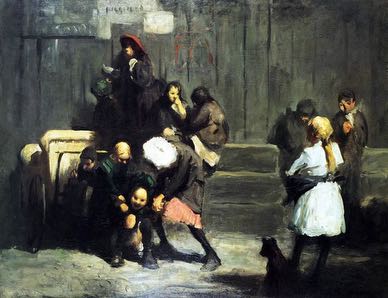

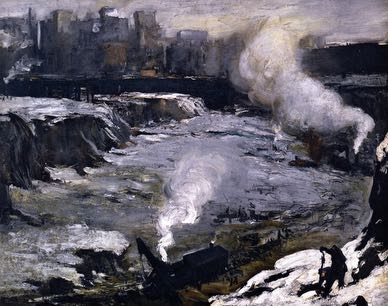
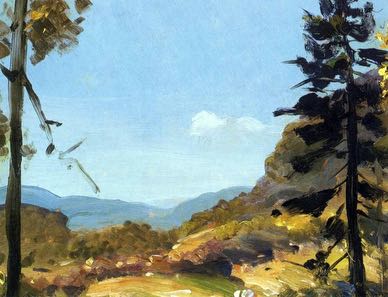
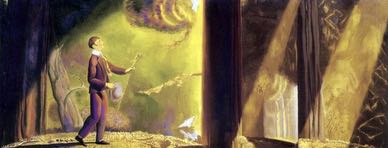
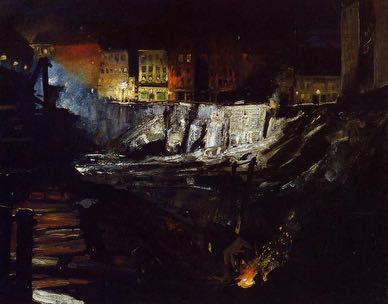

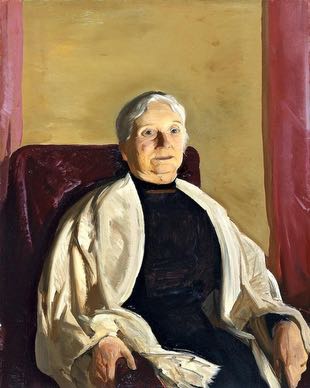
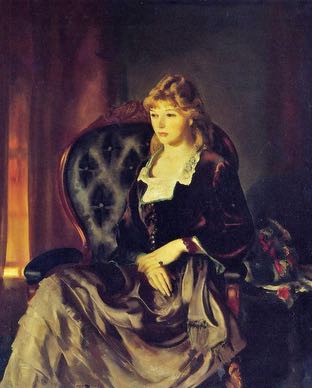

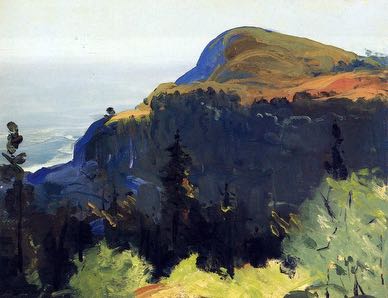
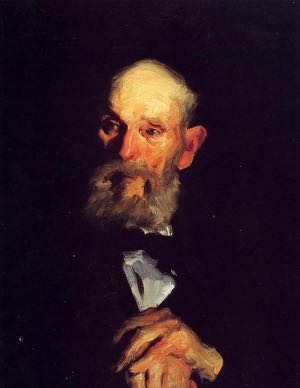
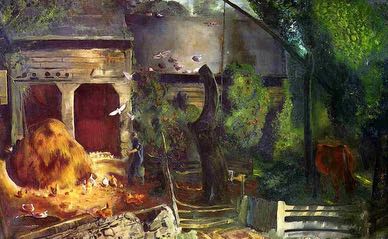
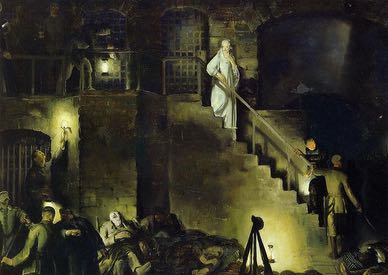
Can’t Find the Painting You Want?
Send us a reference image. We can recreate almost any artwork in the size and style you’re looking for.
Get a Free QuoteHand-Painted George Bellows Reproductions
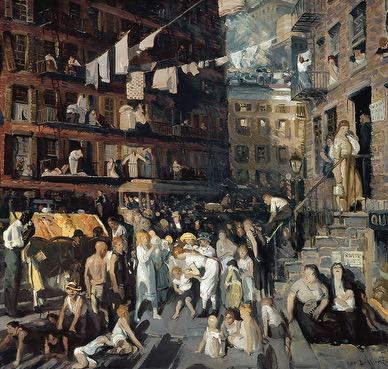
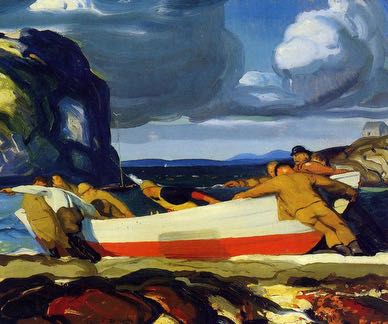
Bring Bellows’s art into your home with an oil-on-canvas reproduction hand-painted by a professional artist. Our collection features hundreds of paintings from across his career, including Stag at Sharkey’s, Cliff Dwellers, and Men of the Docks. Discover energetic boxing matches, crowded city streets, construction sites, rugged coastlines, and other subjects closely associated with Bellows. Every reproduction is a real oil painting, offering depth and texture that a print or digital transfer cannot provide. From iconic masterpieces to lesser-known works, find a Bellows painting that suits your space.
The Making of a George Bellows Oil Painting Replica
Creating a George Bellows oil painting replica requires patience, precision, and an understanding of the original artwork. Our studio includes artists who specialize in American Realism and understand the distinctive qualities of Bellows’s work. The artist begins by studying the source image, then recreates its forceful composition, bold contrasts, energetic figures, and Bellows’s vigorous brushwork on canvas using traditional oil-painting methods. After completion, the painting is inspected by our quality-control team and photographed for your approval. The result is a carefully executed oil painting that reflects the visual character of the original.
Custom Sizes and Frames for Your Bellows Painting
Your Bellows painting can be ordered in practically any size, from popular standard dimensions to custom canvas sizes selected directly on the product page. This flexibility lets you choose a painting that fits your wall and complements your room perfectly. After selecting the size, you can choose from high-quality frames in classic or modern designs, with professional canvas stretching also available. Our framing options complement the strong colors and energetic character of Bellows’s paintings. With sizing, stretching, and framing arranged in one order, your artwork can arrive ready for display without a separate visit to a frame shop.
Order a George Bellows Reproduction with Confidence
Buying hand-painted art online should feel clear and comfortable. After your George Bellows reproduction is completed, we send high-resolution photographs for your review before shipping. You can inspect the composition, colors, and overall finish, then request adjustments if needed. The painting is dispatched only after you approve it, so you know what to expect when it arrives. Your order also includes free express worldwide shipping and is covered by our 90-day return policy. Together, these assurances help you purchase a Bellows oil painting with greater confidence and peace of mind.
The Life and Art of George Bellows
George Bellows was an American painter and printmaker associated with American Realism and the Ashcan School. Born in 1882, he first made his name with muscular paintings of New York streets, boxing clubs, construction sites, working people, and crowded public spaces. Yet the city was only one part of his range. Bellows also painted the rocky Maine coast, rural landscapes, sporting events, and perceptive portraits of family members and other sitters. Broad, confident brushwork gave his scenes a strong physical presence, while his experiments with color and composition brought American realism into conversation with modern art. His life ended at forty-two, but the paintings, drawings, and lithographs he left behind reveal a career of remarkable energy and variety.
Read More
How Did George Bellows Find His Way to Art?
George Wesley Bellows was born in Columbus, Ohio, on 12 August 1882. He entered Ohio State University in 1901, played both baseball and basketball, and supplied drawings to student publications. Athletics occupied an important place in his early years, but drawing steadily became the stronger ambition. In 1904, before earning his degree, he left Columbus to study art professionally in New York City.
At the New York School of Art, Bellows studied with Robert Henri. Henri urged his students to leave conventional academic subjects behind and look closely at the life unfolding around them. Bellows responded quickly to that advice. New York’s streets, crowds, laborers, and working-class neighborhoods soon supplied him with the material on which his early reputation was built.
What Kind of New York Did Bellows Paint?
Bellows arrived in a city that seemed to remake itself from one block to the next. Tenements bordered vast construction pits, packed streets led toward docks and rivers, and public parks drew people from every level of society. He had little interest in smoothing this world into a polished view. Instead, he painted its congestion, punishing winters, physical energy, and ceaseless change.
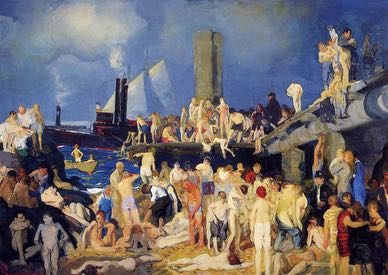
Forty-two Kids catches a group of boys bathing beside Manhattan’s East River, while Snow Dumpers makes hard winter labor feel almost explosive. In New York, streets, pedestrians, traffic, and elevated structures converge in a deliberately compressed rush. Pictures like these secured Bellows’s standing among the leading American realists of his generation.
Why Do Bellows’s Boxing Scenes Still Feel So Immediate?
Given Bellows’s own athletic background, boxing was a subject he understood from the inside. Public prizefighting faced legal restrictions in early twentieth-century New York, though private athletic clubs could stage bouts between members. Bellows attended these smoky, crowded matches and found in them more than sport: they offered a theater of bodily struggle, mass attention, and urban entertainment.
He crowded figures around the ring, drove bodies together with sweeping curves, and used hard contrasts to catch the glare and murk of the clubs. Stag at Sharkey’s thrusts two fighters into a dark wall of spectators, while Both Members of This Club makes the collision even more severe. These defining works appear alongside related scenes in our Bellows boxing collection.
Where Did Bellows Look after the City?
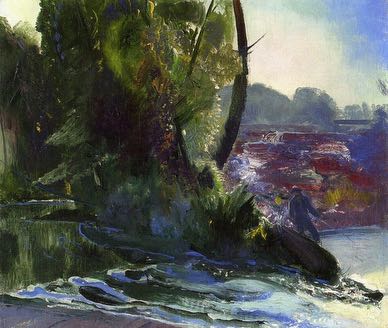
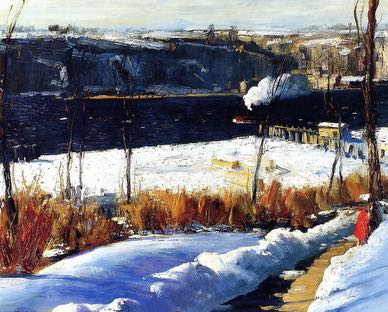
Once his urban paintings had established his name, Bellows gave more attention to landscapes and the sea. Trips along the Hudson River and to coastal Maine brought him face to face with waves, rock, open water, and fast-changing weather. As his subjects widened, the darkness of many early New York scenes often yielded to stronger color and a more expansive treatment of light.
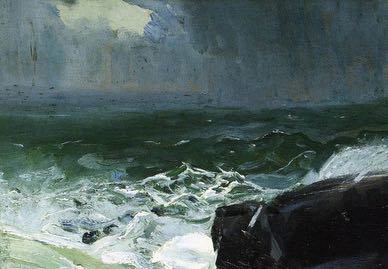
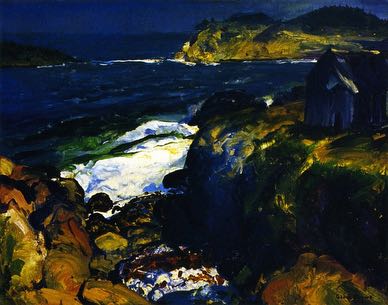
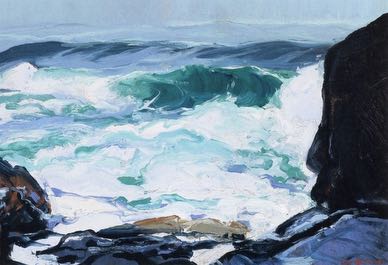
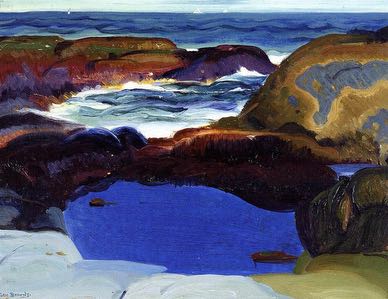
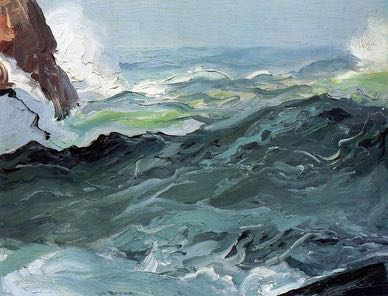
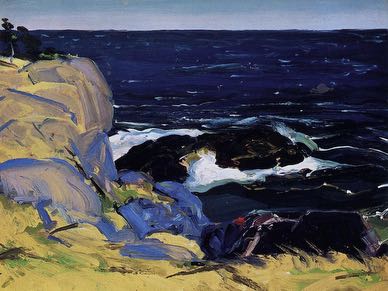
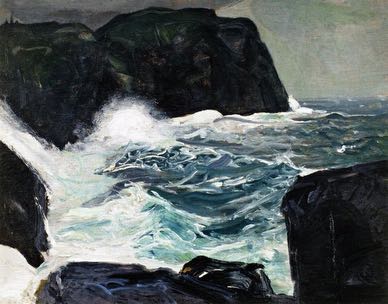
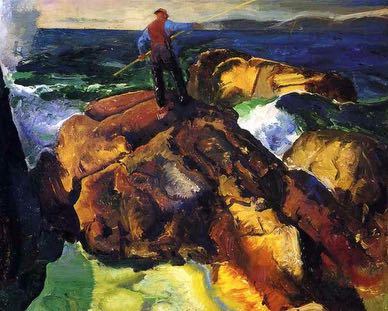
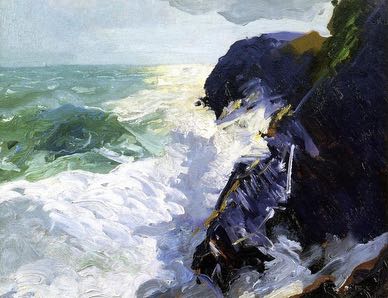
In 1913, Bellows worked on Monhegan and Matinicus Islands and produced a substantial group of Maine coast views. The marine paintings of Winslow Homer offered an important American example, but Bellows met the ocean with his own blunt energy. In Churn and Break, surf pounds against rock in a space so compressed that the viewer can almost feel the impact. Such paintings proved that his power extended well beyond city life.
Who Sat for Bellows’s Portraits?
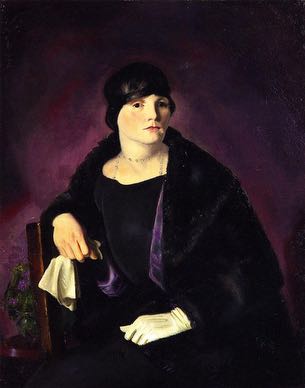
Bellows returned to portraiture throughout his career, painting public figures, friends, neighbors, laborers, and members of his family. He never imposed one formula on every sitter. Some portraits are composed with quiet formality; others depend on freely handled paint and assertive color to bring out an individual presence.
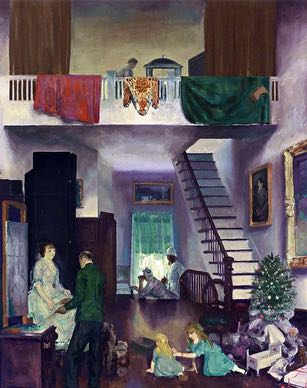
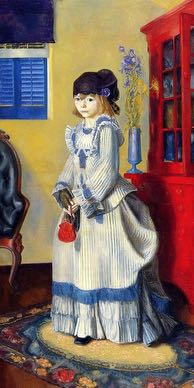
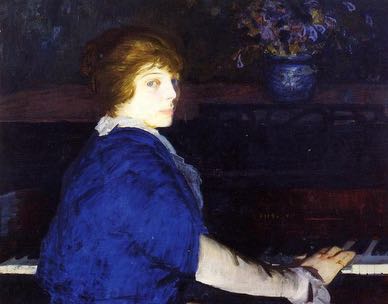
In 1910, Bellows married Emma Story, whom he had met as an art student, and she became one of his most frequent models. Their daughters, Anne and Jean, appeared in formal likenesses as well as relaxed domestic scenes. Emma at the Piano brings music, painting, and family life into a single intimate image. During his later years in Woodstock, New York, relatives, neighbors, and other local residents also took their places before his easel.
What Drew Bellows to Lithography?
Bellows installed a lithographic press in his New York studio in 1916 and soon became a leading participant in the American revival of the medium. Printmaking allowed him to return to ideas first worked out in drawings or paintings, then alter their scale, lighting, and emotional pressure. Boxing bouts, city crowds, portraits, social criticism, and current events all found their way into his lithographs.
Because a print could be issued in an edition, lithography also carried Bellows’s images to a broader public. Still, he did not approach the medium as a way to make mechanical copies of paintings. He reconsidered the placement of figures, the balance of dark and light, and telling details so that each composition worked on its own in black and white.
Which Works Show the Full Range of Bellows’s Art?
Bellows moved easily among city subjects, sport, portraiture, landscape, and the sea. These paintings show both the breadth of his interests and the striking changes in his visual language:
- Stag at Sharkey’s: Under the harsh ring lights, two fighters strain against each other while a packed crowd surges around them.
- Both Members of This Club: Bellows pushes the violence and momentum of a boxing match through sweeping movement and fierce contrasts.
- Forty-two Kids: Boys crowd the East River shore and plunge into the water in this early glimpse of working-class New York.
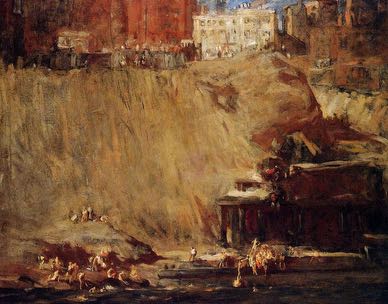
- Cliff Dwellers: The heat, noise, and density of Lower East Side tenement life fill a street with restless human activity.
- Men of the Docks: Laborers and horses wait on the Brooklyn waterfront under the pale chill of a winter sky.
- New York: Buildings, traffic, pedestrians, and elevated tracks compete for space in a deliberately hectic image of the modern city.
- Churn and Break: Water crashes into the rocky Maine shore with the concentrated force that Bellows once brought to the boxing ring.
- Emma at the Piano: This affectionate portrait joins the quiet routines of domestic life with the Bellows family’s shared devotion to music and art.
Where Does George Bellows Fit in American Art?
Recognition came to Bellows early. The National Academy of Design elected him an associate in 1909 and a full academician in 1913. Yet he also pressed for greater freedom from established institutions, helped organize the Exhibition of Independent Artists in 1910, and took part in the landmark Armory Show three years later. He thus worked from an unusual position, accepted by the art establishment while remaining engaged with the rise of American modernism.
Bellows died in New York on 8 January 1925 from complications following appendicitis. He was only forty-two. The Metropolitan Museum of Art mounted a memorial retrospective later that year. His lasting importance lies partly in how directly he faced modern American experience, but also in how much he could do with it: prizefighters, crowded streets, family portraits, and the Maine coast all received the same searching attention. His union of realism, vigorous paint, and adventurous composition gave him a distinct place in twentieth-century American art.
Copyright © 2026 BrushWiz. All Rights Reserved.
About Our George Bellows Paintings
Are your George Bellows reproductions painted by hand?
Yes. Every reproduction is individually painted by hand in oil on canvas by a professional artist. We do not use prints, digital transfers, or mechanical reproduction methods.
How closely do your Bellows copies resemble the original?
Our artists work to capture the composition, colors, texture, and visual character of the original Bellows painting as closely as possible. Because every reproduction is painted by hand, small variations are natural and make each canvas unique.
How long does it take to complete a painting?
Most Bellows reproductions require approximately two to three weeks to paint, dry, and inspect. Production time may vary depending on the artwork and canvas size, so check the estimate displayed on the product page.
Can I request a Bellows painting that is not listed?
Yes. If you cannot find the George Bellows artwork you want in our catalog, send us the painting’s title or an image. Our team will review your request and confirm the available sizes, estimated production time, and price.
Will I receive photos of my painting before it is shipped?
Yes. We send high-resolution photographs of the completed painting for your approval. You can request adjustments if needed, and the painting will not be dispatched until the review process is complete.
Are custom canvas sizes available?
Yes. We offer custom dimensions in addition to the standard sizes shown on the product page. Select the dimensions you need directly from the available size options.
Can I order my Bellows painting with a frame?
Yes. High-quality frames in classic and modern designs are available for many paintings. You can view compatible framing options and add your preferred design from the product page. Professional canvas stretching is also available.
How much does a George Bellows reproduction cost?
The price depends on the selected artwork, canvas dimensions, and framing option. Choose your preferred configuration on the product page to see the current price before ordering.
Do you offer free worldwide shipping?
Yes. Bellows reproductions qualify for free express worldwide shipping. After dispatch, delivery usually takes five to eight business days, although timing may vary by country and destination.
What is the return policy for Bellows reproductions?
Orders are covered by our 90-day return policy. Review the current return-policy page before ordering for complete information about eligibility, time limits, and the return process.
Why BrushWiz?
100% Hand Painted
Every piece is entirely handmade
Museum Quality
Faithfully recreated by expert artists
Custom Framing
Choose from a wide range of frames
Free Shipping
Enjoy free shipping on all orders
Cash Back Rewards
Earn cash back with every purchase