
❄️ Winter Sale. Offer Ends 12/01/2026. View Details
❄️ Winter Sale. Ends 12/01/2026. View Details
❄️ Winter Sale. View Details
Artists
Subjects
Movements
Collections
Decor
Portraits
Commissions
Framing
Reviews
Gift Cards
On Sale
Winslow Homer Oil Painting Reproductions
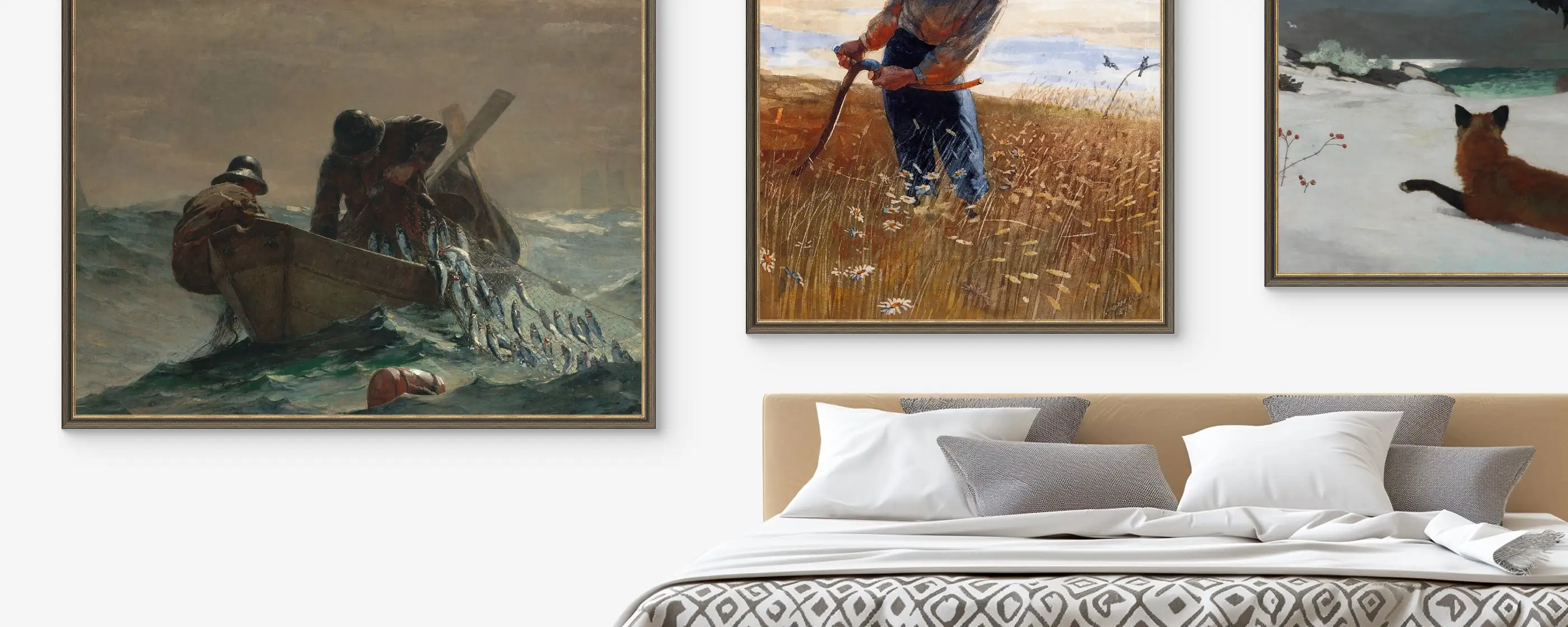
Shop museum-quality reproductions of Winslow Homer’s most famous paintings, each hand-painted in oil on canvas by a professional artist.
Shop Art
Showing 1-40 of 503 results
Sort By
Most Popular
- Most Popular
- New Arrivals
- Best Sellers
- Alphabetical A-Z
- Alphabetical Z-A
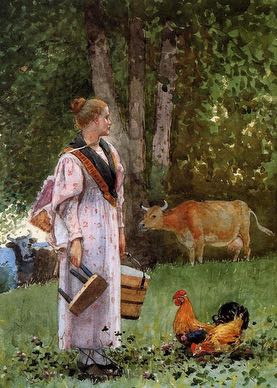
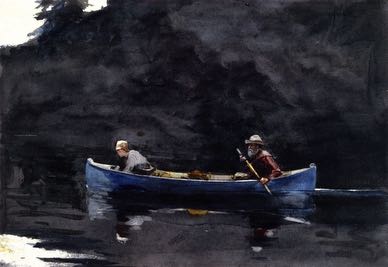


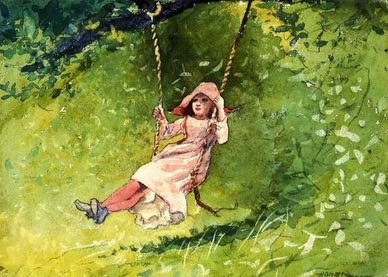
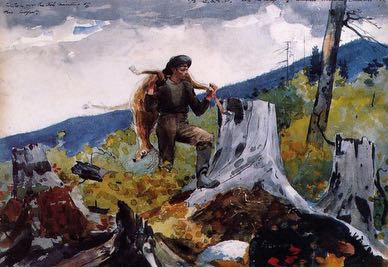

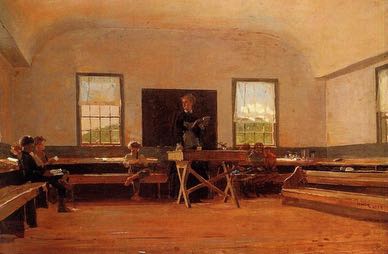
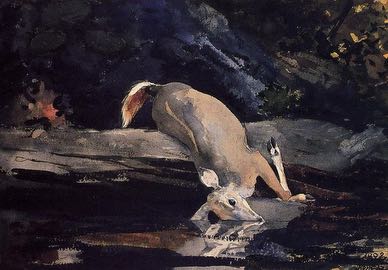
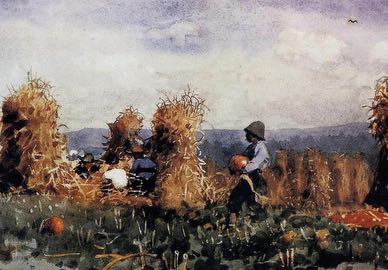
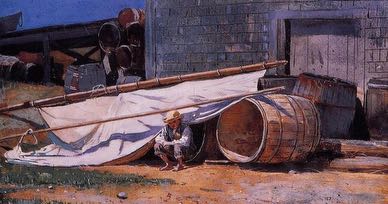
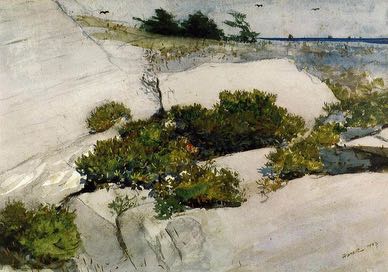
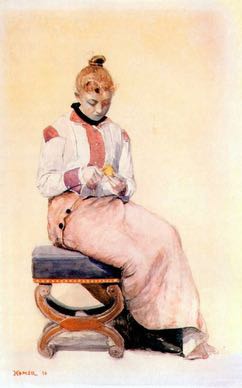

Can’t Find the Painting You Want?
Send us a reference image. We can recreate almost any artwork in the size and style you’re looking for.
Get a Free QuoteHand-Painted Winslow Homer Reproductions
Bring Homer’s art into your home with an oil-on-canvas reproduction hand-painted by a professional artist. Our collection features hundreds of paintings from across his career, including Breezing Up, The Gulf Stream, and Snap the Whip. Discover Civil War scenes, children at play, fishermen at work, storms along the Maine coast, and other subjects closely associated with Homer. Every reproduction is a real oil painting, offering depth and texture that a print or digital transfer cannot provide. From iconic masterpieces to lesser-known works, find a Homer painting that suits your space.
The Making of a Winslow Homer Oil Painting Replica
Creating a Winslow Homer oil painting replica requires patience, precision, and an understanding of the original artwork. Our studio includes artists who specialize in Realism and understand the distinctive qualities of Homer’s work. The artist studies the source image, then recreates its direct composition, natural colors, strongly defined figures, and Homer’s treatment of light, water, and weather using traditional oil-painting methods. After completion, the painting is inspected by our quality-control team and photographed for your approval. The result is a carefully executed oil painting that reflects the visual character of the original.
Custom Sizes and Frames for Your Homer Painting
Your Homer painting can be ordered in practically any size, from popular standard dimensions to custom canvas sizes selected directly on the product page. This flexibility lets you choose a painting that fits your wall and complements your room perfectly. After selecting the size, you can choose from high-quality frames in classic or modern designs, with professional canvas stretching also available. Our framing options complement the natural colors and strong compositions of Homer’s paintings. With sizing, stretching, and framing arranged in one order, your artwork can arrive ready for display without a separate visit to a frame shop.
Order a Winslow Homer Reproduction with Confidence
Buying hand-painted art online should feel clear and comfortable. After your Winslow Homer reproduction is completed, we send high-resolution photographs for your review before shipping. You can inspect the composition, colors, details, texture, and overall finish, then request adjustments if needed. The painting is dispatched only after you approve it, so you know what to expect when it arrives. Your order also includes free express worldwide shipping and is covered by our 90-day return policy. Together, these assurances help you purchase a Homer oil painting with greater confidence and peace of mind.
The Life and Art of Winslow Homer
Winslow Homer was an American painter and illustrator who recorded a changing United States during the second half of the nineteenth century. Born in 1836, he began in commercial illustration before establishing an independent career in oil and watercolor. The Civil War, rural work, childhood, fishing communities, tropical landscapes, and the sea all became important subjects. Associated with Realism, Homer relied on clear compositions, close observation, and restrained storytelling to explore resilience and the uncertain relationship between people and nature. His powerful late paintings of the Maine coast secured his place among the most important American artists of his generation.
Read More
Who Was Winslow Homer?
Winslow Homer was born in Boston, Massachusetts, in 1836 and grew up in nearby Cambridge. His formal artistic education was limited, but drawing was part of his life from an early age. The ability to notice clothing, gesture, activity, and the way a figure moves later served him in both illustration and painting.
Homer’s career unfolded during decades of profound change in the United States. He lived through the Civil War and Reconstruction, the expansion of cities and illustrated publishing, and the growing culture of leisure travel. His art changed with his experiences, moving from wartime scenes and rural subjects to fishing communities, tropical watercolors, and monumental encounters with the sea.
Where Did Homer Begin His Artistic Career?
As a young man, Homer apprenticed with the Boston lithographer J. H. Bufford. Commercial image production taught him to make action immediately readable and communicate with simplified shapes. Once the apprenticeship ended, he worked independently as an illustrator, providing drawings to publishers and popular periodicals.
Homer moved to New York in 1859 and attended the National Academy of Design briefly. He also studied for a short time with Frédéric Rondel, but professional work and direct observation supplied much of his education. His illustrations for publications including Harper’s Weekly reached a national audience before his paintings were widely known.
How Did the Civil War Shape Homer’s Art?
During the American Civil War, Homer visited Union camps and battlefronts as an artist-correspondent for Harper’s Weekly. Heroic combat was only one aspect of what he saw. Soldiers cooked, waited for orders, stood guard, rested, and endured long stretches of uncertainty, giving him material for illustrations and early oil paintings.
Prisoners from the Front brings a Union officer face to face with captured Confederate soldiers without reducing either side to a single type. In The Veteran in a New Field, a former soldier cuts wheat after returning to civilian life. The abundant crop suggests renewal, while his discarded uniform and scythe keep memories of death close at hand.
Reconstruction did not end Homer’s engagement with the war’s consequences. Paintings of Black Americans addressed work, freedom, community, and a nation whose transformation remained incomplete. His contribution therefore reaches well beyond direct reporting from military camps.
What Did Homer Paint After the War?
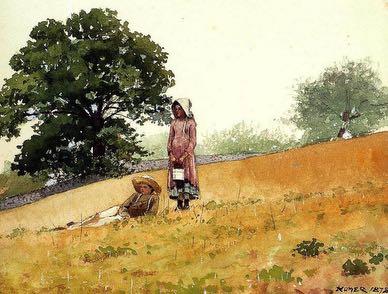
Homer traveled to France in 1866 and stayed for about ten months. He encountered contemporary European painting but retained an independent style grounded in observed American life and clear design. Back home, farms, schoolchildren, young women, rural laborers, games, and seaside recreation became his subjects.
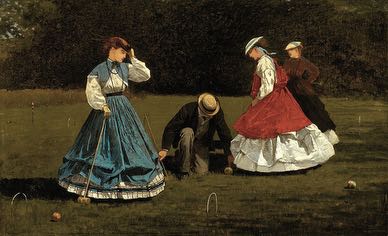
In Snap the Whip, an ordinary childhood game becomes a carefully balanced chain of movement. Other paintings turn to croquet, sailing, farm work, and quiet leisure. These themes belong to the everyday-life tradition of nineteenth-century painting, but Homer’s pared-back detail gives them a particularly modern clarity.
During the 1870s, watercolor became increasingly important to him. Gloucester and other coastal locations offered boats, beaches, children, fishermen, and rapidly changing weather. Sales of these watercolors eventually gave Homer enough independence to leave commercial illustration and concentrate on painting.
Why Did Homer’s Stay in England Change His Work?
In 1881, Homer settled for a time in Cullercoats, an English fishing village on the North Sea near Tynemouth. He remained until late 1882, and the experience marked a turning point. His people gained a more solid, monumental presence, the palette became restrained, and labor, waiting, danger, and the sea’s uncertainty moved to the center of his work.
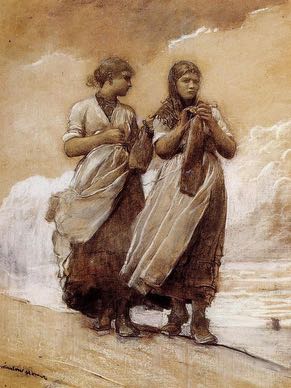
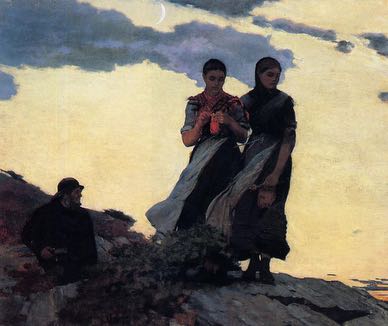
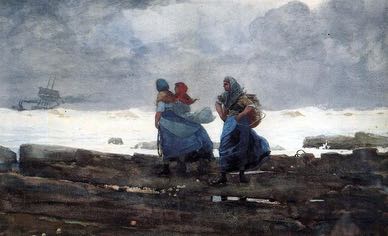
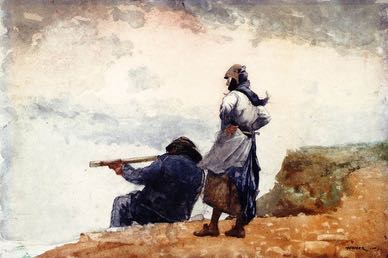
The village women particularly held his attention. Homer showed them carrying baskets, repairing nets, gathering along the shore, and looking out for returning boats. They appear capable and self-possessed rather than picturesque. In Perils of the Sea, weather and the threat of disaster beyond the harbor shape the entire community.
Homer carried this new gravity back to the United States. The pleasures of coastal life did not disappear entirely, but mature marine scenes increasingly concerned courage, rescue, endurance, and isolation. Cullercoats helped bring those themes into focus.
When Did Prouts Neck Become the Center of Homer’s Work?
Homer settled at Prouts Neck on the Maine coast in 1883, joining a summer community established by his family. From a studio near the rocky shore, he watched tides, fog, storms, waves, and open water at close range. Apart from seasonal journeys and fishing trips, this remained the center of his working life.
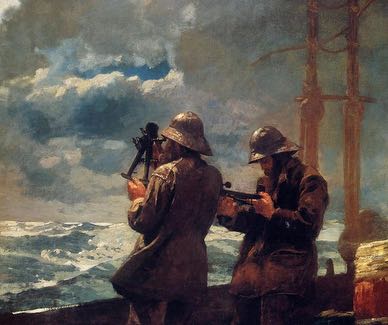
People still confront the sea in some of the Prouts Neck paintings. The Life Line suspends a rescue in a breeches buoy above violent surf. In The Fog Warning, a fisherman measures the distance to his ship as a bank of fog approaches. Skill and experience matter, but neither makes a person invulnerable.
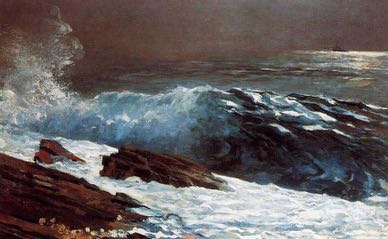
Later, Homer sometimes removed people altogether and let the sea become the event. Northeaster concentrates on water crashing against dark rock. Close observation, vigorous brushwork, and simplified structure give these late seascapes their monumental force.
Which Places Shaped Homer’s Later Watercolors?
Prouts Neck remained home, but Homer traveled regularly to Quebec, the Adirondacks, Florida, Cuba, the Bahamas, and Bermuda. Fishing and hunting trips introduced guides, anglers, camps, rivers, forests, and lakes. These settings gave him new ways to study solitude, concentration, physical skill, and the changing natural world.
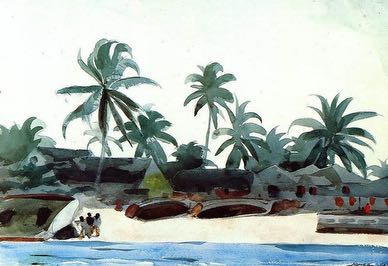
Tropical travel produced some of his most luminous watercolors. Transparent water, coral shores, palms, pale buildings, and clear sunlight encouraged colors far brighter than those of the Maine coast. Homer also portrayed Black Caribbean residents at work and in daily life, placing them within landscapes marked by tourism, trade, colonial history, and the sea.
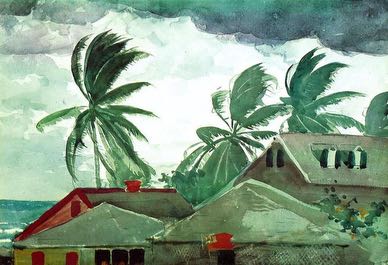
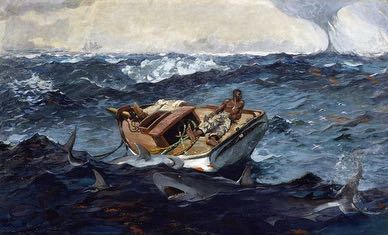
After the Hurricane, Bahamas shows a man stretched beside a damaged boat in the wake of a storm. In The Gulf Stream, another man remains aboard a disabled vessel amid rough water and approaching threats. Homer’s long concern with survival enters the wider history of the Atlantic world.
Which Paintings Is Winslow Homer Best Known For?
Homer’s best-known works trace a path from the Civil War and rural America to coastal rescues, wildlife, and the open sea:
- The Veteran in a New Field, 1865: A former soldier harvests wheat in a scene holding national recovery and memories of death in tension.
- Prisoners from the Front, 1866: A Union officer encounters captured Confederate soldiers in one of Homer’s defining Civil War paintings.
- Snap the Whip, 1872: Schoolboys running through a field turn a childhood game into a study of balance and movement.
- Breezing Up, 1873–1876: A small sailboat crossing choppy water became an enduring image of American coastal life.
- The Life Line, 1884: A rescue device carries two figures above violent surf in a taut scene of danger and survival.
- The Fog Warning, 1885: A fisherman looks toward his distant ship as worsening weather closes over the sea.
- Fox Hunt, 1893: Crows descend on a fox struggling through deep snow, reversing the expected roles of predator and prey.
- Northeaster, 1895, reworked by 1901: Waves strike Maine rocks in a composition devoted almost entirely to natural force.
- The Gulf Stream, 1899, reworked by 1906: Sharks, heavy seas, and an approaching storm surround a lone man in a damaged boat.
Across these works, direct observation can open into symbolism without becoming an explicit story. Homer’s people rarely tell us what they feel. Posture, weather, distance, and the surrounding landscape do that work more quietly.
Why Does Winslow Homer Matter to American Art?
Homer developed a direct and independent way of painting American life. Soldiers, farmers, schoolchildren, sailors, fishing communities, and outdoor workers all became serious subjects, as did the landscapes of the Atlantic world. Physical action and carefully observed surroundings carry the meaning without elaborate explanation.
He was equally assured in drawing, illustration, oil, and watercolor. Homer helped establish watercolor as a medium for ambitious finished work, while the late marine paintings joined rich surfaces to increasingly simple compositions. Their waves, open spaces, and reduced narratives have encouraged later viewers to see connections with modern art.
Homer died at Prouts Neck in 1910. Major museums throughout the United States now hold his work, which remains central to American art history. Its importance reaches beyond technical command. Whether painting war, leisure, rescue, labor, travel, or nature, Homer created clear and immediate images that never close off uncertainty.
Copyright © 2026 BrushWiz. All Rights Reserved.
About Our Winslow Homer Paintings
Are your Winslow Homer reproductions painted by hand?
Yes. Every reproduction is individually painted by hand in oil on canvas by a professional artist. We do not use prints, digital transfers, or mechanical reproduction methods.
How closely do your Homer copies resemble the original?
Our artists work to capture the composition, colors, texture, and visual character of the original Homer painting as closely as possible. Because every reproduction is painted by hand, small variations are natural and make each canvas unique.
How long does it take to complete a painting?
Most Homer reproductions require approximately two to three weeks to paint, dry, and inspect. Production time may vary depending on the artwork and canvas size, so check the estimate displayed on the product page.
Can I request a Homer painting that is not listed?
Yes. If you cannot find the Winslow Homer artwork you want in our catalog, send us the painting’s title or an image. Our team will review your request and confirm the available sizes, estimated production time, and price.
Will I receive photos of my painting before it is shipped?
Yes. We send high-resolution photographs of the completed painting for your approval. You can request adjustments if needed, and the painting will not be dispatched until the review process is complete.
Can I order a custom canvas size?
Yes. We offer custom dimensions in addition to the standard sizes shown on the product page. Select the dimensions you need directly from the available size options.
Can I order my Homer painting with a frame?
Yes. High-quality frames in classic and modern designs are available for many paintings. You can view compatible framing options and add your preferred design from the product page. Professional canvas stretching is also available.
How much does a Winslow Homer reproduction cost?
The price depends on the selected artwork, canvas dimensions, and framing option. Choose your preferred configuration on the product page to see the current price before ordering.
Do you offer free worldwide shipping?
Yes. Homer reproductions qualify for free express worldwide shipping. After dispatch, delivery usually takes five to eight business days, although timing may vary by country and destination.
What is the return policy for Homer reproductions?
Orders are covered by our 90-day return policy. Review the current return-policy page before ordering for complete information about eligibility, time limits, and the return process.
Why BrushWiz?
100% Hand Painted
Every piece is entirely handmade
Museum Quality
Faithfully recreated by expert artists
Custom Framing
Choose from a wide range of frames
Free Shipping
Enjoy free shipping on all orders
Cash Back Rewards
Earn cash back with every purchase