
❄️ Winter Sale. Offer Ends 11/21/2026. View Details
❄️ Winter Sale. Ends 11/21/2026. View Details
❄️ Winter Sale. View Details
Artists
Subjects
Movements
Collections
Decor
Portraits
Commissions
Framing
Reviews
Gift Cards
On Sale
Jean-Léon Gérôme Oil Painting Reproductions
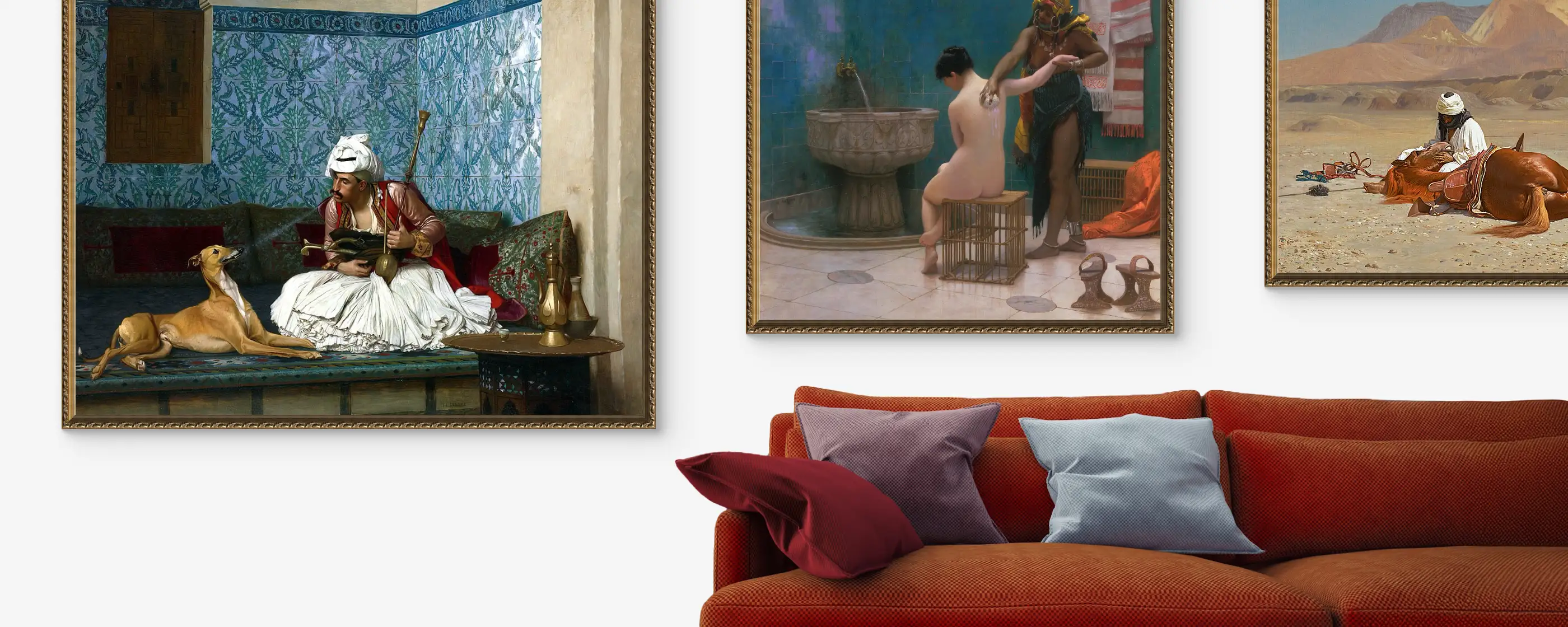
Shop museum-quality reproductions of Jean-Léon Gérôme’s most famous paintings, each hand-painted in oil on canvas by a professional artist.
Shop Art
Showing 1-40 of 233 results
Sort By
Most Popular
- Most Popular
- New Arrivals
- Best Sellers
- Alphabetical A-Z
- Alphabetical Z-A

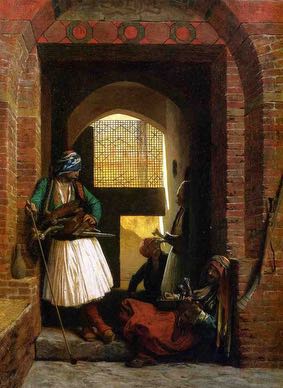
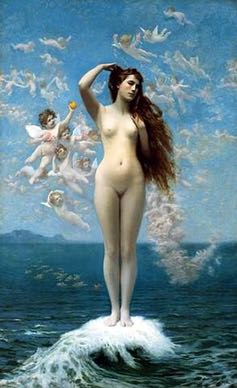

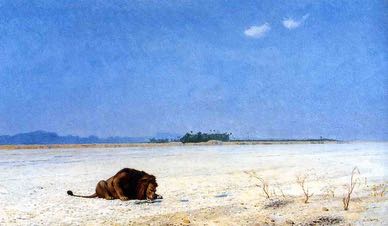

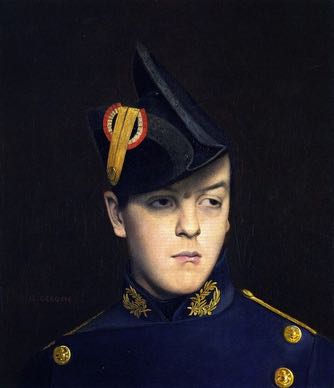
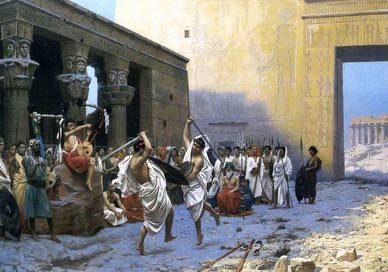
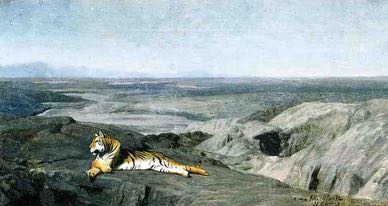

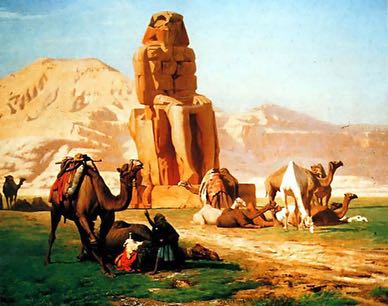
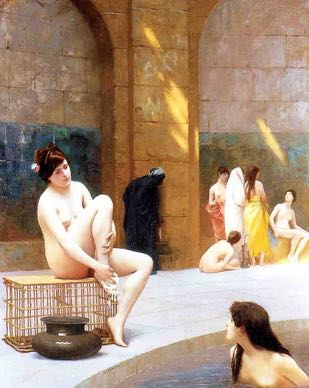

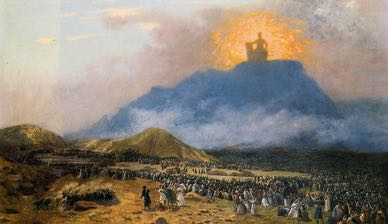
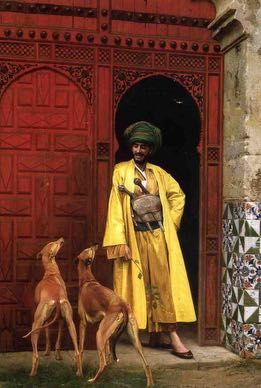
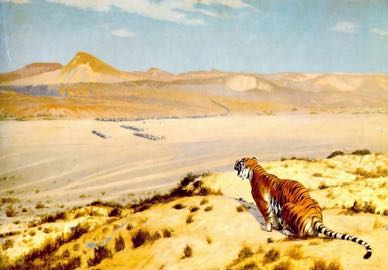
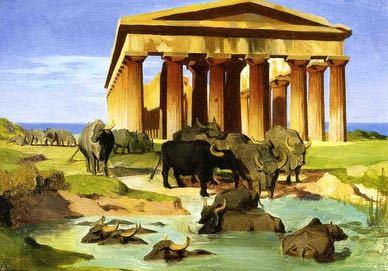

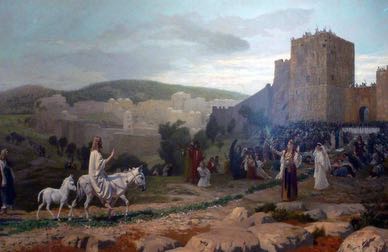
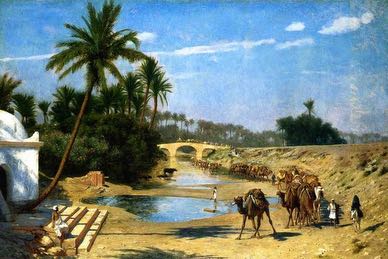
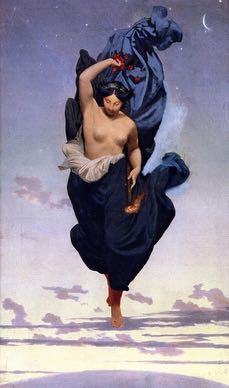
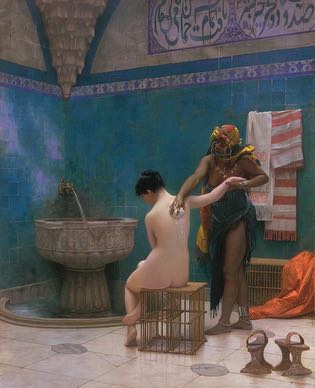
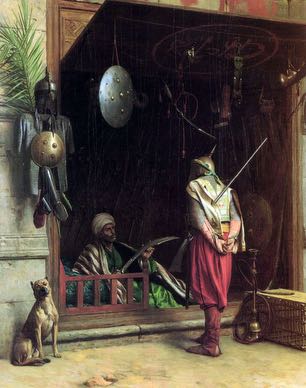
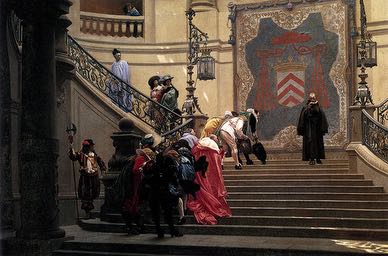

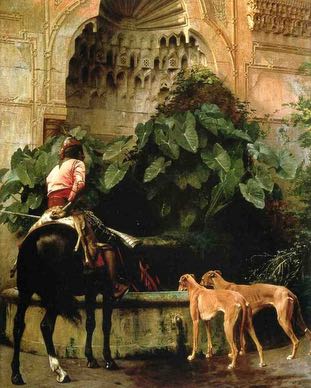
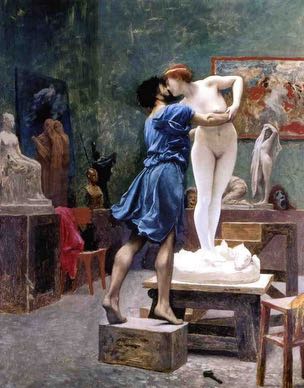
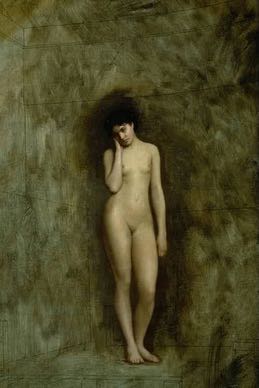
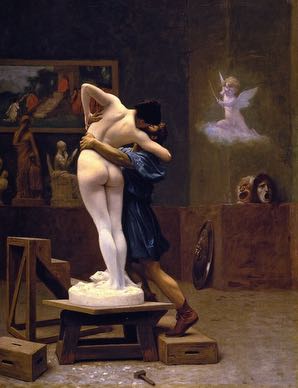
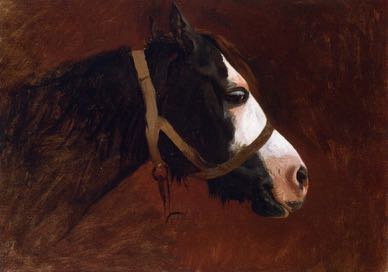
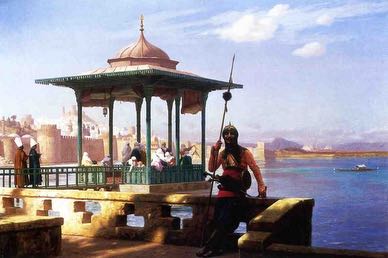
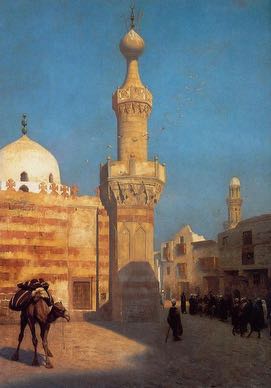
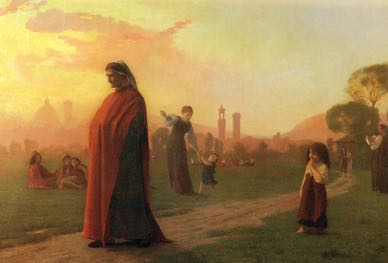
Can’t Find the Painting You Want?
Send us a reference image. We can recreate almost any artwork in the size and style you’re looking for.
Get a Free QuoteHand-Painted Jean-Léon Gérôme Reproductions
Bring Gérôme’s art into your home with an oil-on-canvas reproduction hand-painted by a professional artist. Our collection features hundreds of paintings from across his career, including Pollice Verso, The Snake Charmer, and Pygmalion and Galatea. Discover scenes of classical antiquity, gladiatorial spectacles, historical narratives, Middle Eastern settings, and other subjects closely associated with Gérôme. Every reproduction is a real oil painting, offering depth and texture that a print or digital transfer cannot provide. From iconic masterpieces to lesser-known works, find a Gérôme painting that suits your space.
The Making of a Jean-Léon Gérôme Oil Painting Replica
Creating a Jean-Léon Gérôme oil painting replica requires patience, precision, and an understanding of the original artwork. Our studio includes artists experienced in Academic painting and Orientalism who understand the distinctive qualities of Gérôme’s work. Before painting begins, the artist studies the source image, paying close attention to its precise drawing, controlled modeling, architectural detail, color, texture, and carefully staged composition. These elements are recreated by hand in oil on canvas using an approach suited to the original. Once complete, the reproduction is inspected by our quality-control team and photographed for your approval.
Custom Sizes and Frames for Your Gérôme Painting
Your Gérôme painting can be ordered in practically any size, from popular standard dimensions to a custom canvas size selected directly on the product page. This flexibility lets you choose a painting that fits your wall and complements your room perfectly. After selecting the size, you can choose from high-quality frames in classic or modern designs, with professional canvas stretching also available. Our framing options complement Gérôme’s refined historical scenes, architectural settings, and carefully rendered figures. With sizing, stretching, and framing arranged in one order, your artwork can arrive ready for display.
Order a Gérôme Reproduction with Confidence
Buying hand-painted art online should feel clear and comfortable. After your Jean-Léon Gérôme reproduction is completed, we send high-resolution photographs for your review before shipping. You can inspect the composition, colors, and overall finish, then request adjustments if needed. The painting is dispatched only after you approve it, so you know what to expect when it arrives. Your order also includes free express worldwide shipping and is covered by our 90-day return policy. Together, these assurances help you purchase a Gérôme oil painting with greater confidence and peace of mind.
The Life and Art of Jean-Léon Gérôme
Jean-Léon Gérôme was a French Academic painter, sculptor, and teacher whose meticulously finished pictures brought classical antiquity, European history, and the Middle East vividly before nineteenth-century audiences. Born in 1824, he studied with Paul Delaroche and found success at the Paris Salon while still in his twenties. Precise drawing, carefully staged action, convincing architecture, and controlled color gave his scenes an almost tangible presence. Reproductions carried Gérôme’s images around the world, while his teaching shaped generations of artists. Once dismissed mainly as an opponent of modernism, he is now receiving a more thoughtful and wide-ranging assessment.
Read More
Who Was Jean-Léon Gérôme?
Jean-Léon Gérôme was born on 11 May 1824 in Vesoul, eastern France. The son of a goldsmith, he showed an early gift for drawing and moved to Paris in 1840. There he joined the studio of Paul Delaroche, then one of France’s leading history painters.
Gérôme became one of the most prominent French artists of the nineteenth century. He painted, sculpted, made prints, and taught, moving easily among scenes of Greece and Rome, French history, religious narratives, portraits, and subjects inspired by journeys through North Africa and the eastern Mediterranean.
Where Did Gérôme’s Career Take Shape?
In Delaroche’s studio, Gérôme learned the value of clear storytelling, exact drawing, and theatrical staging. He traveled with his teacher to Italy in the 1840s, studying ancient monuments, Renaissance art, and the Mediterranean landscape. Back in Paris, he continued his training and made an unsuccessful attempt to win the prestigious Prix de Rome.
His breakthrough arrived at the Salon of 1847 with Young Greeks at a Cock Fight. Rather than treating antiquity as a setting for heroic grandeur, the painting brought it down to an intimate, human scale. It won Gérôme a medal and introduced him to critics, collectors, and the French art establishment.
What Defined Gérôme’s Neo-Grec Paintings?
Gérôme became associated with a circle of young painters known as the Neo-Grecs. Instead of concentrating only on gods and heroes, they imagined courtship, entertainment, domestic routines, and other moments from daily life in the ancient world. Their polished pictures combined archaeological references with graceful figures, decorative color, and stories that viewers could readily follow.
This approach allowed Gérôme to populate antiquity with recognizable human beings. His early images of Greek youths, Roman interiors, and classical customs introduced subjects he would revisit throughout his career, later giving them richer settings and a more dramatic sense of narrative.
How Did Travel Enter Gérôme’s Orientalist Art?
Gérôme made his first journey to Egypt in the 1850s and later traveled through Egypt, Turkey, and other areas of North Africa and the eastern Mediterranean. He sketched, collected objects, studied buildings, and observed clothing, ceremonies, markets, landscapes, and religious customs that would eventually find their way into paintings made back in his studio.
Travel became an important foundation for his work in Orientalism. He painted mosques, bazaars, courtyards, soldiers, merchants, desert travelers, and richly decorated rooms with crisp surfaces and carefully measured space. Some prayer scenes drew on buildings and customs he had observed, while other pictures freely combined firsthand studies, studio models, collected props, and invention.
These paintings still command admiration for their technique, but they also invite close scrutiny. Gérôme worked during an age of European colonial expansion, when Western artists often shaped North Africa and the Middle East to fit their audience’s expectations. His images reveal much about nineteenth-century visual culture, though they cannot always be read as impartial records of the places they depict.
By What Means Did Gérôme Re-create the Ancient World?
For Gérôme, historical painting was an exercise in visual reconstruction. He researched architecture, clothing, archaeological discoveries, weapons, furnishings, and written accounts, then arranged each scene with a stage director’s eye. Often he chose the tense moment just before or just after the main event, letting details around the figures build the drama.
His Roman arena pictures proved especially influential. In Pollice Verso, a victorious gladiator waits for the crowd’s verdict; Last Prayers of the Christian Martyrs imagines the charged silence before an execution. Their polished surfaces and persuasive settings shaped popular visions of antiquity, even where later scholarship challenged individual details.
Julius Caesar, Napoleon Bonaparte, Louis XIV, and other historical figures also appeared in Gérôme’s work. Formal ceremony interested him less than one might expect. He often made history immediate through suspense, a private exchange, the aftermath of violence, or the reaction of a witness.
Why Did Gérôme’s Images Reach Such a Wide Audience?
Gérôme had close ties to the dealer and publisher Adolphe Goupil, whose daughter Marie he married in 1863. Goupil’s international firm sold paintings and reproductions through a far-reaching network of galleries and agents.
Engravings and photographs turned pictures briefly displayed at the Paris Salon into images seen throughout Europe and the United States. This circulation made Gérôme internationally famous and carried scenes such as his gladiator paintings into popular visual culture. Their influence eventually reached the theater, illustrated books, and early cinema.
When Did Sculpture Become Central to Gérôme’s Work?
Gérôme had long cared about three-dimensional form, but he did not begin exhibiting sculpture until the later part of his career. His first major sculptural work, shown in 1878, translated the central gladiatorial group from Pollice Verso into three dimensions and opened a long conversation between his paintings and sculpture.
That exchange is especially vivid in Pygmalion and Galatea. Gérôme made painted and sculpted versions of the ancient tale in which an artist’s creation comes alive. In the paintings, Galatea passes from pale stone into warm flesh, giving him a perfect subject through which to explore illusion, creativity, and the boundary between painted and sculpted form.
In the 1890s, Gérôme also became a forceful advocate for polychrome sculpture. By adding color to marble and other surfaces, he challenged the familiar modern notion that ancient sculpture had always been uniformly white and tested how color could lend a carved figure the appearance of life.
What Did Gérôme Pass On to His Students?
Appointed a professor at the École des Beaux-Arts in Paris in 1863, Gérôme remained an influential teacher for decades. His demanding program led students through drawing, anatomy, work from classical casts, observation of the live model, and careful preparation before they began to paint.
His studio attracted aspiring artists from France, the United States, the Ottoman Empire, and many other countries. They went on to pursue very different careers, but Gérôme’s insistence on sound technique and clear pictorial construction helped carry French academic training around the world.
Gérôme staunchly defended institutional Academic art and opposed several new developments, including Impressionism. As histories of modern art came to celebrate the movements he resisted, that position damaged his reputation. Even so, the reach and longevity of his teaching remain essential to understanding his influence.
Which Works Reveal the Range of Gérôme’s Art?
Gérôme moved among classical myth, Roman spectacle, European history, Orientalist subjects, religious practice, and moments of psychological tension. These paintings show the breadth of both his interests and his storytelling:
- Young Greeks at a Cock Fight: The Salon success that established Gérôme’s early reputation by presenting antiquity on an intimate scale.
- Pollice Verso: A charged gladiatorial scene that left a deep mark on later popular images of ancient Rome.
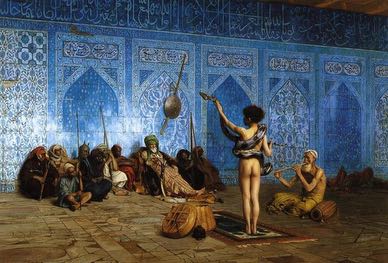
- The Snake Charmer: One of his best-known Orientalist pictures, bringing architecture, performance, observation, and invention into a single scene.
- Pygmalion and Galatea: An exploration of artistic creation that connects Gérôme’s interests in painting and sculpture.
- The Death of Caesar: A history painting that finds its drama in the eerie silence after the assassination.
- Last Prayers of the Christian Martyrs: A large narrative scene suspended in the final moments before an arena execution.
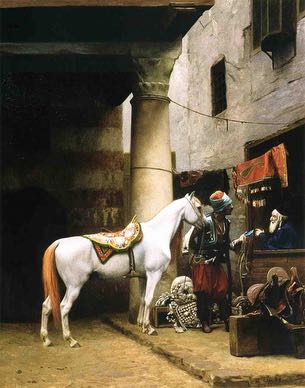
- The Carpet Merchant: An elaborate market scene built from architecture, textiles, gestures, and precisely rendered ornament.
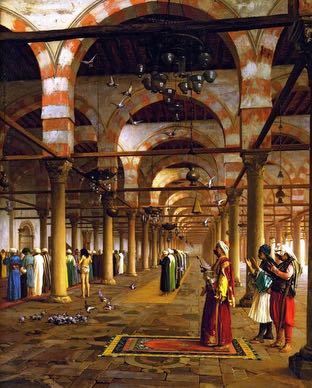
- Prayer in the Mosque: A carefully ordered religious subject informed by Gérôme’s travels and close study of Islamic architecture.
- Bonaparte Before the Sphinx: A restrained confrontation between Napoleon, the Egyptian landscape, and an enduring monument of antiquity.
- Duel After the Masked Ball: A wintry aftermath in which theatrical clarity sharpens the tragedy of a fatal duel.
How Has Opinion of Gérôme Shifted Over Time?
Gérôme ranked among the most successful French artists of his lifetime, but his standing declined as Academic art lost favor and Impressionism moved to the center of modern art history. Critics came to see his technical precision, smooth surfaces, and hostility to modernist experimentation as signs of an obsolete system.
Recent scholarship has drawn a fuller picture. Gérôme is now studied as a gifted maker of memorable images, an influential teacher, an adventurous sculptor, and an artist keenly aware of the new international market for reproduced pictures. His compositions also reveal how nineteenth-century audiences imagined history, antiquity, and cultures beyond Europe.
This reassessment does not make the difficult questions surrounding his Orientalist paintings disappear. It makes room to examine their extraordinary workmanship alongside the assumptions embedded within them. Gérôme still matters because technical command and theatrical storytelling gave his images the power to shape popular ideas long after his death in Paris in 1904.
Copyright © 2026 BrushWiz. All Rights Reserved.
About Our Jean-Léon Gérôme Paintings
Are your Jean-Léon Gérôme reproductions painted by hand?
Yes. Every reproduction is individually painted by hand in oil on canvas by a professional artist. We do not use prints, digital transfers, or mechanical reproduction methods.
How closely do your Gérôme copies resemble the original?
Our artists work to capture the composition, colors, texture, and visual character of the original Gérôme painting as closely as possible. Because every reproduction is painted by hand, small variations are natural and make each canvas unique.
What is the usual production time for a Gérôme painting?
Most Gérôme reproductions require approximately two to three weeks to paint, dry, and inspect. Production time may vary depending on the artwork and canvas size, so check the estimate displayed on the product page.
Can I request a Gérôme painting that is not listed?
Yes. If you cannot find the Jean-Léon Gérôme artwork you want in our catalog, send us the painting’s title or an image. Our team will review your request and confirm the available sizes, estimated production time, and price.
Will I receive photos before my painting is shipped?
Yes. We send high-resolution photographs of the completed painting for your approval. You can request adjustments if needed, and the painting will not be dispatched until the review process is complete.
Do you offer custom canvas sizes?
Yes. We offer custom dimensions in addition to the standard sizes shown on the product page. Select the dimensions you need directly from the available size options.
May I order my Gérôme painting with a frame?
Yes. High-quality frames in classic and modern designs are available for many paintings. You can view compatible framing options and add your preferred design from the product page. Professional canvas stretching is also available.
How much does a Jean-Léon Gérôme reproduction cost?
The price depends on the selected artwork, canvas dimensions, and framing option. Choose your preferred configuration on the product page to see the current price before ordering.
Do you offer free worldwide shipping?
Yes. Gérôme reproductions qualify for free express worldwide shipping. After dispatch, delivery usually takes five to eight business days, although timing may vary by country and destination.
What is the return policy for Gérôme reproductions?
Orders are covered by our 90-day return policy. Review the current return-policy page before ordering for complete information about eligibility, time limits, and the return process.
Why BrushWiz?
100% Hand Painted
Every piece is entirely handmade
Museum Quality
Faithfully recreated by expert artists
Custom Framing
Choose from a wide range of frames
Free Shipping
Enjoy free shipping on all orders
Cash Back Rewards
Earn cash back with every purchase