
🔥 Limited-Time Sale. Offer Ends 11/10/2026. View Details
🔥 Limited-Time Sale. Ends 11/10/2026. View Details
🔥 Limited-Time Sale. View Details
Artists
Subjects
Movements
Collections
Decor
Portraits
Commissions
Framing
Reviews
Gift Cards
On Sale
William Merritt Chase Oil Painting Reproductions
Shop museum-quality reproductions of William Merritt Chase’s most famous paintings, each hand-painted in oil on canvas by a professional artist.
Shop Art
Showing 1-40 of 591 results
Sort By
Most Popular
- Most Popular
- New Arrivals
- Best Sellers
- Alphabetical A-Z
- Alphabetical Z-A


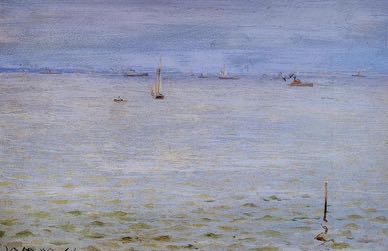
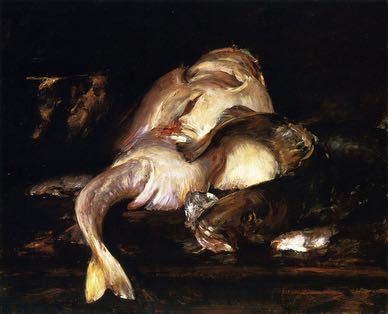
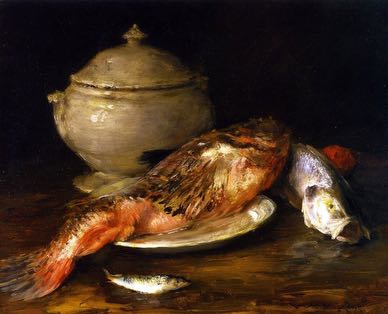

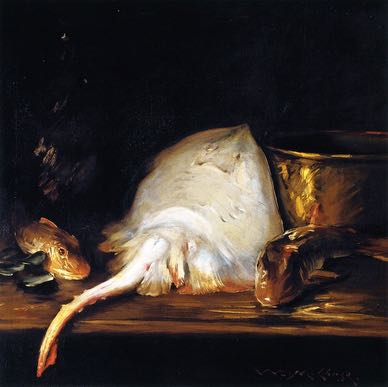
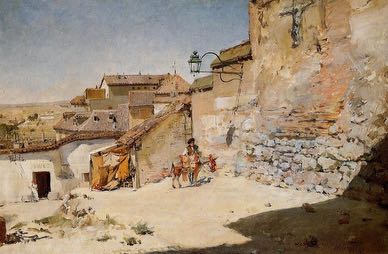
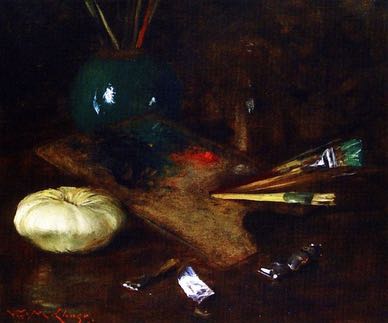

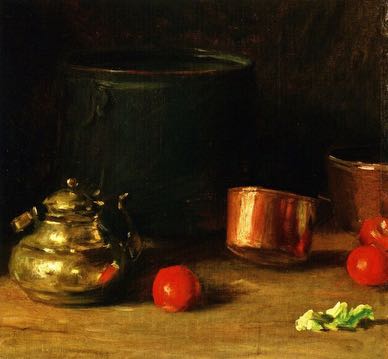


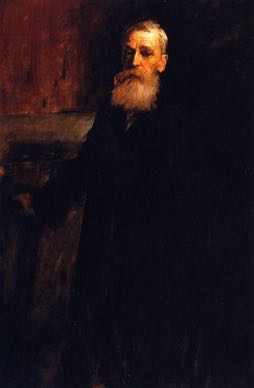
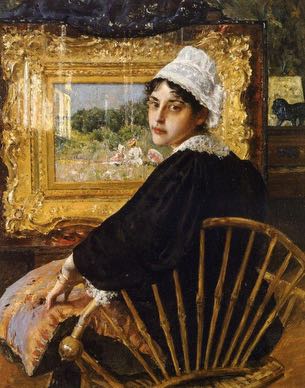
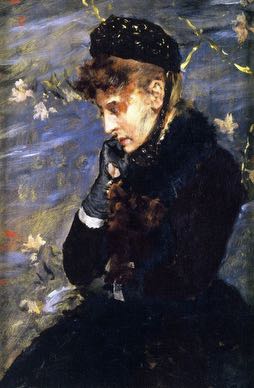


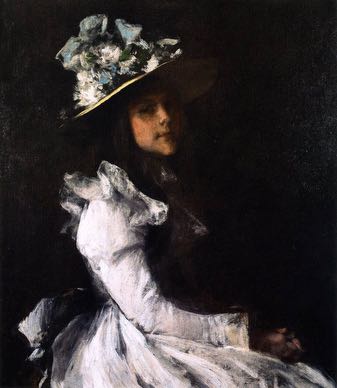
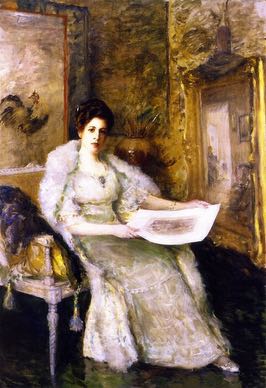
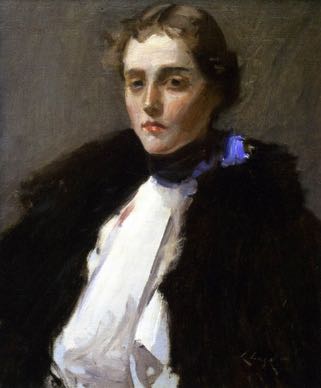
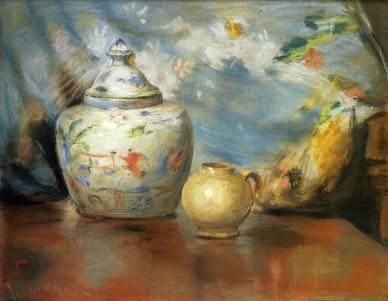
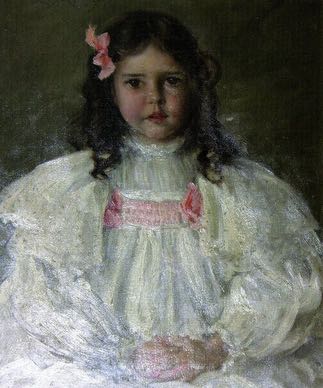

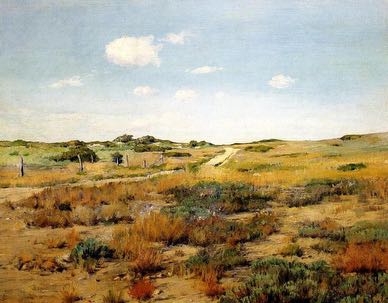
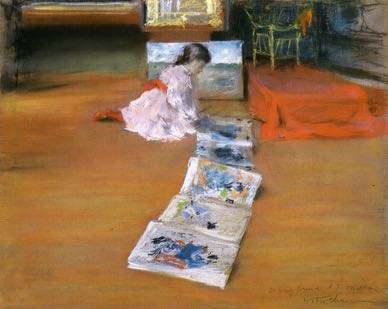
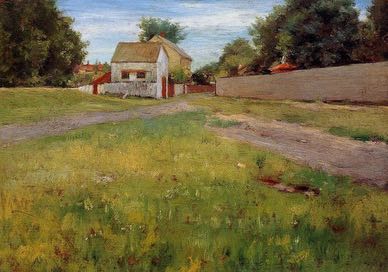
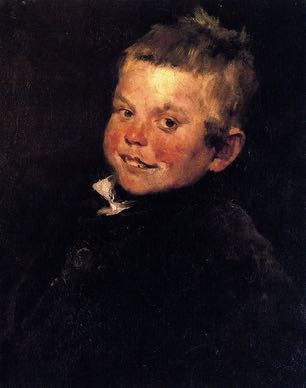
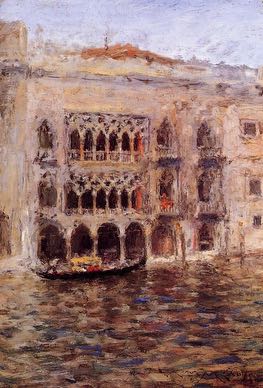
Can’t Find the Painting You Want?
Looking for a specific painting that isn’t in our catalog? Just let us know. We can recreate almost any artwork in the size and style you’re looking for.
Request a PaintingHand-Painted William Merritt Chase Reproductions
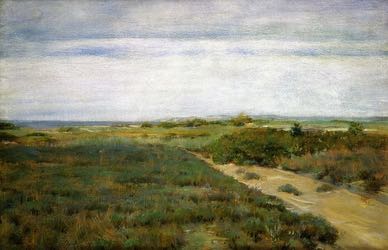
Bring Chase’s art into your home with an oil-on-canvas reproduction hand-painted by a professional artist. Our collection features hundreds of paintings from across his career, including Carmencita, A Friendly Call, and A Sunny Day at Shinnecock Bay. Discover commanding portraits, richly furnished studio interiors, brilliant fish still lifes, sunlit parks, Long Island landscapes, and other subjects associated with Chase. Every reproduction is a real oil painting, offering depth and texture that a print or digital transfer cannot provide. From celebrated works to less familiar studies, find a Chase painting that suits your space.
The Making of a William Merritt Chase Oil Painting Replica
Creating a William Merritt Chase oil painting replica requires patience, precision, and an understanding of the original artwork. Our studio includes artists who specialize in Impressionist painting and understand the distinctive qualities of Chase’s work. The artist begins by studying the source image, then recreates its color relationships, confident brushwork, carefully placed highlights, and Chase’s command of texture and atmosphere using traditional oil-painting methods. After completion, the painting is inspected by our quality-control team and photographed for your approval. The result is a carefully executed oil painting that reflects the visual character of the original.
Custom Sizes and Frames for Your Chase Painting
Your Chase painting can be ordered in practically any size, from popular standard dimensions to custom canvas sizes selected directly on the product page. This flexibility lets you choose a painting that fits your wall and complements your room perfectly. After selecting the size, you can choose from high-quality frames in classic or modern designs, with professional canvas stretching also available. Our framing options complement the refined colors and confident brushwork of Chase’s paintings. With sizing, stretching, and framing arranged in one order, your artwork can arrive ready for display without a separate visit to a frame shop.
Order a William Merritt Chase Reproduction with Confidence
Buying hand-painted art online should feel clear and comfortable. After your William Merritt Chase reproduction is completed, we send high-resolution photographs for your review before shipping. You can inspect the composition, colors, details, and overall finish, then request adjustments if needed. The painting is dispatched only after you approve it, so you know what to expect when it arrives. Your order also includes free express worldwide shipping and is covered by our 90-day return policy. Together, these assurances help you purchase a Chase oil painting with greater confidence and peace of mind.
The Life and Art of William Merritt Chase
William Merritt Chase was an American painter, teacher, and cultural leader celebrated for portraits, still lifes, studio interiors, and Impressionist landscapes. Born in Indiana in 1849, he studied in New York before six formative years at Munich’s Royal Academy. Chase returned to New York in 1878 and turned his elaborate Tenth Street Studio into a gathering place for artists, students, patrons, and collectors. His work moved confidently between dark Munich tonalities and brighter outdoor color, while his subjects ranged from fashionable sitters and family life to city parks, Shinnecock dunes, and freshly caught fish. Through decades of teaching in New York, Philadelphia, and at Shinnecock, Chase shaped generations of American artists. He remained influential until his death in 1916.
Read More
How Did William Merritt Chase Find His Way from Indiana to Art?
William Merritt Chase was born in Williamsburg, now Nineveh, Indiana, on 1 November 1849. His father expected him to enter the family shoe business, but the young man’s ability and determination led to early study with local artist Barton S. Hays in Indianapolis.
At twenty, Chase moved to New York and attended the National Academy of Design. Financial trouble soon forced his family to relocate to St. Louis, where he painted portraits and still lifes while looking for a way to continue his education.
Several St. Louis businessmen recognized his promise and agreed to finance European study in exchange for paintings. Their support gave Chase an opportunity few young American artists could afford. In 1872, he sailed for Munich, beginning the most decisive period of his formal training.
What Did the Munich Academy Teach Chase About Paint?
Chase entered Munich’s Royal Academy, where instruction emphasized disciplined drawing, old-master study, and the physical substance of oil paint. Teachers including Alexander Wagner and Karl von Piloty encouraged compositions built from deep brown and black tonalities, then animated by sharp highlights.
He admired Wilhelm Leibl’s direct observation and the bravura brushwork practiced by an international group of students. Chase became close to Frank Duveneck, another American whose forceful handling made a strong impression on contemporaries. Together they belonged to a lively expatriate circle.
Chase’s skill brought medals, recognition, and an invitation to join the academy’s faculty, which he declined. A stay in Venice with Duveneck and John Henry Twachtman added new subjects and freer color before Chase returned to the United States in 1878.
Why Did the Tenth Street Studio Become Part of His Public Image?
Back in New York, Chase rented a large room in the Tenth Street Studio Building, a celebrated address designed for artists. He transformed it into a carefully staged environment filled with paintings, textiles, metalwork, Japanese objects, musical instruments, old furniture, and unexpected curiosities.
The studio functioned at once as workplace, classroom, showroom, gathering place, and self-portrait. Visitors encountered Chase as a cosmopolitan artist surrounded by evidence of travel, taste, and connoisseurship. His polished dress and confident manner strengthened that cultivated identity.
Paintings such as The Tenth Street Studio preserve the room’s shadowed richness without turning every object into an inventory. Figures, screens, frames, rugs, and reflections are joined by selective light. The studio helped make artistic life itself one of his subjects.
What Makes Chase’s Portraits Feel Both Formal and Immediate?
Portraiture provided income, prestige, and a lifelong test of observation. Chase could arrange a sitter against a dark field in the Munich manner or surround the figure with fabric, furniture, Japanese design, and shifting light. The setting supported character rather than merely announcing wealth.
Portrait of Miss Dora Wheeler places the textile designer before a large embroidered backdrop, allowing dress, pattern, and personality to compete on equal terms. Carmencita turns a Spanish dancer’s poised stance and brilliant costume into a display of movement held in reserve.
Chase also painted fellow artists, students, patrons, his wife Alice Gerson Chase, and their children. Family portraits allowed greater informality, but they were no less carefully composed. A hat, book, glove, or glance could reveal the sitter while giving the painter an excuse to explore color and texture.
How Could a Fish Become a Display of Virtuosity?
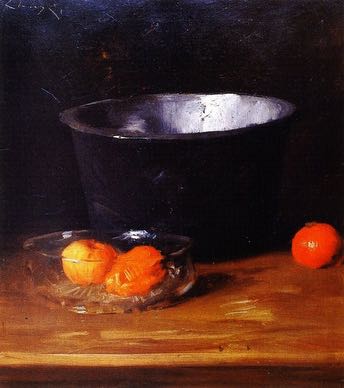
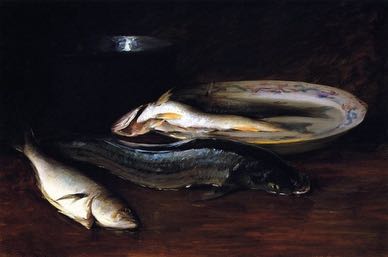
Still life remained central throughout Chase’s career. Copper vessels, fruit, vegetables, crockery, flowers, and studio objects offered contrasts between dull and reflective surfaces. Fish became his most distinctive specialty, often arranged against a dark ground with only a few accompanying objects.
He painted them rapidly, sometimes completing a canvas within several hours while the catch remained fresh. Broad strokes establish wet skin, silver scales, glassy eyes, and heavy bodies without laborious detail. Sudden whites and reds bring the image forward from surrounding shadow.
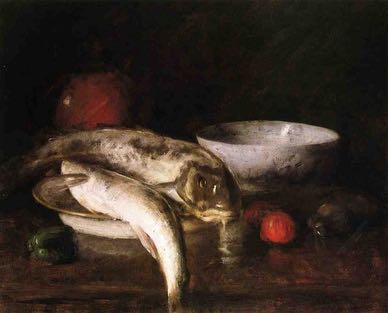
An English Cod joins the large fish with smaller specimens, a patterned plate, and a brass vessel. The humble subject becomes a demonstration of touch: ceramic, metal, flesh, and darkness each require a different response from the brush.
When Did Outdoor Light Begin to Transform His Landscapes?
During the 1880s, Chase began loosening the dark approach he had mastered in Munich. The Belgian painter Alfred Stevens encouraged him to lighten his palette, while French Impressionism and experiments with pastel showed how broken color could register open air.
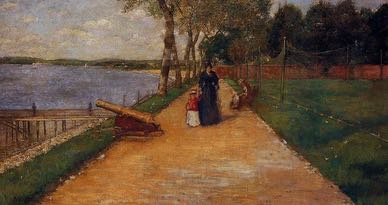
Chase found modern landscape close to home. Prospect Park, Central Park, Brooklyn shorelines, and working harbors offered lawns, paths, water, bridges, women walking, children playing, and distant buildings. He did not need a wilderness subject to make outdoor painting feel new.
These urban landscapes treat public green space as part of contemporary life. Figures are small but purposeful, and loosely stated foliage allows sunlight to move across the surface. The method differed from his somber portraits without replacing them; Chase maintained several visual languages at once.
Why Was Shinnecock Important to American Impressionism?
Chase founded the Shinnecock Hills Summer School of Art on Long Island in 1891 and taught there until 1902. Students worked outdoors in a landscape of sandy roads, low dunes, scrub, ponds, open fields, and distant water. The setting encouraged direct attention to changing light.
A house and studio designed for Chase by Stanford White gave his large family a summer base. Alice and the children often enter the landscapes as walkers, flower gatherers, or small figures resting in the grass. Domestic life and teaching became part of the place.
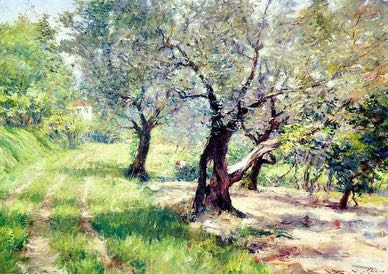
Works such as A Sunny Day at Shinnecock Bay make modest terrain visually expansive. High horizons, pale paths, wind-shaped vegetation, and broad skies replace grand scenery. Shinnecock helped establish outdoor summer instruction as an important part of American art education.
In What Ways Did Chase Change the Experience of Art School?
Chase taught for nearly four decades at institutions including the Art Students League, the Brooklyn Art Association, the Pennsylvania Academy of the Fine Arts, and the school he founded in New York in 1896. That institution later became the New York School of Art and eventually Parsons School of Design.
He demonstrated constantly. Students watched him mix paint, establish a figure, select a decisive accent, or complete a fish still life at remarkable speed. Chase valued technical command and direct observation, but he encouraged pupils to develop individual judgment rather than imitate one approved finish.
His students included Edward Hopper, Georgia O’Keeffe, Rockwell Kent, Charles Sheeler, Marsden Hartley, and many others who pursued sharply different forms of modern art. They did not inherit a single Chase style. His deeper influence lay in professional standards, visual confidence, and the conviction that teaching and artistic ambition could reinforce one another.
Which Paintings Reveal the Range of Chase’s Achievement?
Chase shifted easily among portraiture, studio imagery, domestic life, still life, and outdoor painting. These works show how his confident handling adapted to different subjects without losing its sense of performance:
- The Tenth Street Studio: Collected objects, shadow, and selective light turn the artist’s workplace into a public identity.
- Portrait of Miss Dora Wheeler, 1883: A poised sitter holds her own against an elaborate field of decorative pattern.
- Hide and Seek, 1888: A dark interior and fleeting child’s movement mark the transition toward a lighter, more immediate art.
- Carmencita, 1890: Brilliant costume and assured posture capture the celebrated dancer’s theatrical presence.
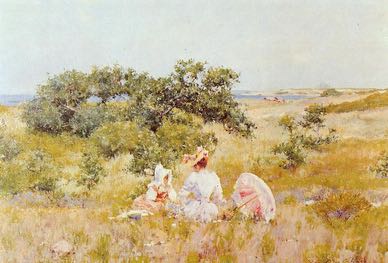
- Idle Hours, circa 1894: Figures resting among Shinnecock dunes make leisure part of the open landscape.
- A Friendly Call, 1895: Two women, pale dresses, and a shadowed interior create an understated social drama.
- A Sunny Day at Shinnecock Bay: Low vegetation, open sky, and distant water reveal his response to Long Island light.
- An English Cod, 1904: Fish, patterned ceramic, and brass become a concentrated demonstration of surface and touch.
What Place Does Chase Hold in the Story of American Art?
Chase served as president of the Society of American Artists, supported new exhibition opportunities, and joined the Ten American Painters in 1902 after Twachtman’s death. He could challenge established institutions while also seeking professional honors within them, a balance typical of his complex public role.
He died in New York on 25 October 1916 after a long illness. By then the radical art introduced at the 1913 Armory Show had shifted attention away from the kind of skill and cosmopolitan modernity Chase represented. His reputation declined for several decades.
Later reassessment restored the breadth of his achievement. Chase helped make Impressionist landscape American, elevated still life through sheer command of paint, and expanded the possibilities of portraiture and studio imagery. Most importantly, his students carried lessons in observation and independence into artistic worlds he could not have predicted.
Copyright © 2026 BrushWiz. All Rights Reserved.
About Our William Merritt Chase Paintings
Are your William Merritt Chase reproductions painted by hand?
Yes. Every reproduction is individually painted by hand in oil on canvas by a professional artist. We do not use prints, digital transfers, or mechanical reproduction methods.
How closely do your Chase copies resemble the original?
Our artists work to capture the composition, colors, brushwork, details, and visual character of the original Chase painting as closely as possible. Because every reproduction is painted by hand, small variations are natural and make each canvas unique.
How long does a Chase reproduction take to complete?
Most Chase reproductions require approximately two to three weeks to paint, dry, and inspect. Production time may vary depending on the artwork and canvas size, so check the estimate displayed on the product page.
Can I request a Chase painting that is not listed?
Yes. If you cannot find the William Merritt Chase artwork you want in our catalog, send us the painting’s title or an image. Our team will review your request and confirm the available sizes, estimated production time, and price.
Will I receive approval photos before shipping?
Yes. We send high-resolution photographs of the completed painting for your approval. You can request adjustments if needed, and the painting will not be dispatched until the review process is complete.
Are custom canvas sizes available for Chase paintings?
Yes. We offer custom dimensions in addition to the standard sizes shown on the product page. Select the dimensions you need directly from the available size options.
May I order my Chase painting with a frame?
Yes. High-quality frames in classic and modern designs are available for many paintings. You can view compatible framing options and add your preferred design from the product page. Professional canvas stretching is also available.
What determines the price of a Chase reproduction?
The price depends on the selected artwork, canvas dimensions, and framing option. Choose your preferred configuration on the product page to see the current price before ordering.
Is free express worldwide shipping included?
Yes. William Merritt Chase reproductions qualify for free express worldwide shipping. After dispatch, delivery usually takes five to eight business days, although timing may vary by country and destination.
Which return policy covers William Merritt Chase reproductions?
Orders are covered by our 90-day return policy. Review the current return-policy page before ordering for complete information about eligibility, time limits, and the return process.
Why BrushWiz?
100% Hand Painted
Every piece is entirely handmade
Museum Quality
Faithfully recreated by expert artists
Custom Framing
Choose from a wide range of frames
Free Shipping
Enjoy free shipping on all orders
Cash Back Rewards
Earn cash back with every purchase