
❄️ Winter Sale. Offer Ends 11/24/2026. View Details
❄️ Winter Sale. Ends 11/24/2026. View Details
❄️ Winter Sale. View Details
Artists
Subjects
Movements
Collections
Decor
Portraits
Commissions
Framing
Reviews
Gift Cards
On Sale
Andrea Mantegna Oil Painting Reproductions
Shop museum-quality reproductions of Andrea Mantegna’s most famous paintings, each hand-painted in oil on canvas by a professional artist.
Shop Art
Showing 1-40 of 72 results
Sort By
Most Popular
- Most Popular
- New Arrivals
- Best Sellers
- Alphabetical A-Z
- Alphabetical Z-A
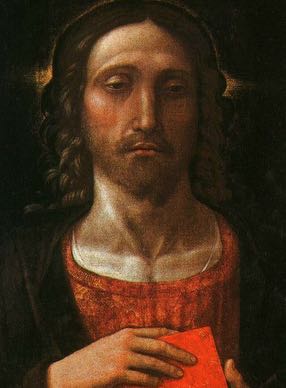
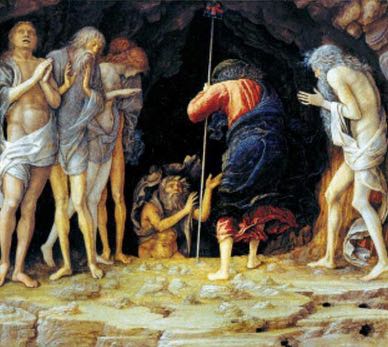

From: $764.00$382.00

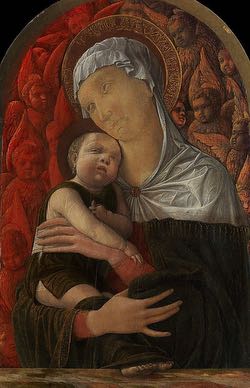


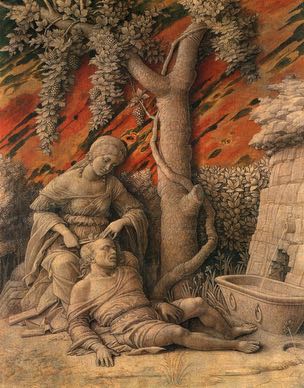
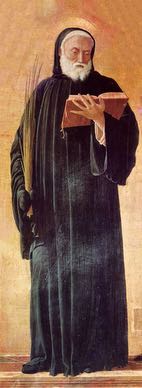
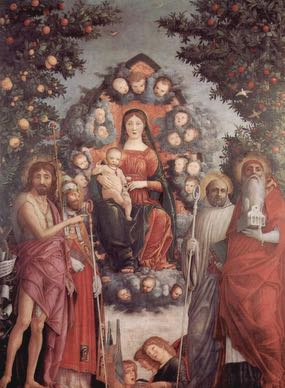



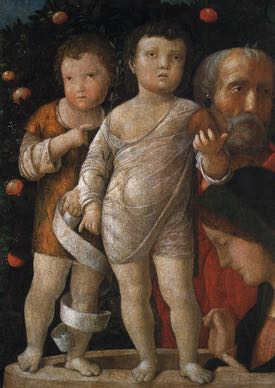

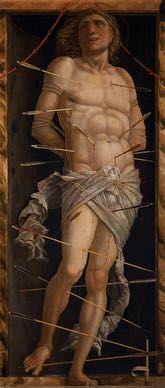

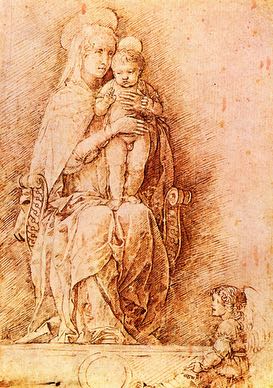
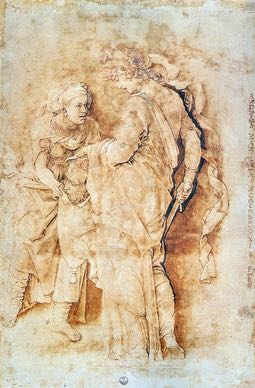



Can’t Find the Painting You Want?
Send us a reference image. We can recreate almost any artwork in the size and style you’re looking for.
Get a Free QuoteHand-Painted Andrea Mantegna Reproductions
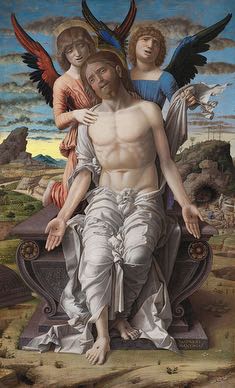
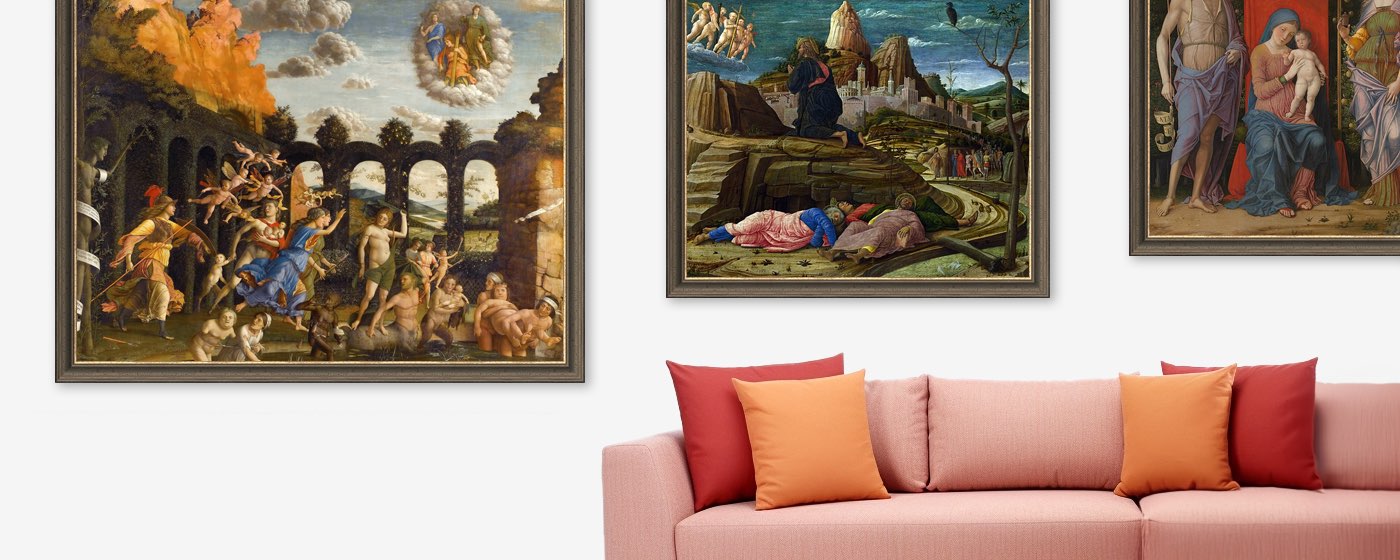
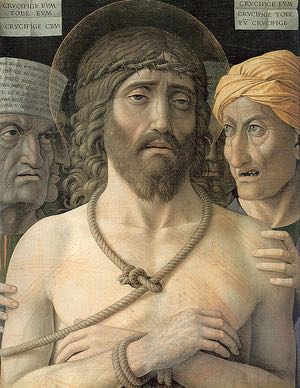
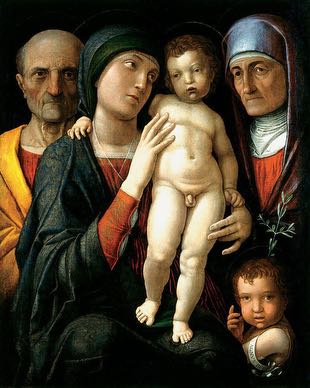
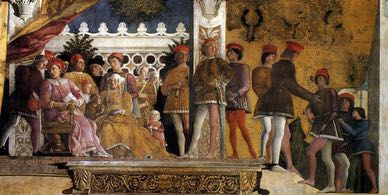
Bring Mantegna’s art into your home with an oil-on-canvas reproduction hand-painted by a professional artist. Our collection features dozens of paintings from across his career, including The Lamentation over the Dead Christ, The Court of Mantua, and The Triumphs of Caesar: Julius Caesar. Discover biblical narratives, classical processions, court portraits, mythological scenes, and other subjects associated with Mantegna. Every reproduction is a real oil painting, offering depth and texture that a print or digital transfer cannot provide. From iconic masterpieces to less familiar works, find a Mantegna painting that suits your space.
The Making of an Andrea Mantegna Oil Painting Replica
Creating an Andrea Mantegna oil painting replica requires patience, precision, and an understanding of the original artwork. Our studio includes artists who specialize in Italian Renaissance painting and understand the distinctive qualities of Mantegna’s work. The artist begins by studying the source image, then recreates its sculptural figures, exact perspective, architectural details, and Mantegna’s tension between hard contours and intense emotion on canvas using traditional oil-painting methods. After completion, the painting is inspected by our quality-control team and photographed for your approval. The result is a carefully executed oil painting that reflects the visual character of the original.
Custom Sizes and Frames for Your Mantegna Painting
Your Mantegna painting can be ordered in practically any size, from popular standard dimensions to custom canvas sizes selected directly on the product page. This flexibility lets you choose a painting that fits your wall and complements your room perfectly. After selecting the size, you can choose from high-quality frames in classic or modern designs, with professional canvas stretching also available. Our framing options complement the sculptural forms and architectural settings of Mantegna’s paintings. With sizing, stretching, and framing arranged in one order, your artwork can arrive ready for display without a separate visit to a frame shop.
Order an Andrea Mantegna Reproduction with Confidence
Buying hand-painted art online should feel clear and comfortable. After your Andrea Mantegna reproduction is completed, we send high-resolution photographs for your review before shipping. You can inspect the composition, figures, colors, and overall finish, then request adjustments if needed. The painting is dispatched only after you approve it, so you know what to expect when it arrives. Your order also includes free express worldwide shipping and is covered by our 90-day return policy. Together, these assurances help you purchase a Mantegna oil painting with greater confidence and peace of mind.
The Life and Art of Andrea Mantegna
Andrea Mantegna was an Italian Renaissance painter, draftsman, and print designer whose art joined rigorous perspective with a passionate study of antiquity. Born near Padua around 1431, he emerged from Francesco Squarcione’s workshop and married into the Bellini family before entering the service of the Gonzaga rulers of Mantua. Mantegna treated figures as if carved in stone, built imaginary worlds from Roman architecture, and used daring viewpoints to pull viewers into sacred and historical scenes. The Camera degli Sposi transformed an ordinary room through illusion, while The Triumphs of Caesar reconstructed an ancient procession on a monumental scale. His sharp contours, compressed emotion, and inventive foreshortening influenced artists throughout Italy and northern Europe.
Read More
How Did a Carpenter’s Son Become Padua’s Boldest Young Painter?
Andrea Mantegna was born around 1431 at Isola di Carturo, now called Isola Mantegna, near Padua. His father, Biagio, was a carpenter. At about eleven, Andrea entered the workshop of Francesco Squarcione, a painter and energetic teacher who assembled drawings, casts, and fragments of ancient sculpture for his pupils to study.
Squarcione adopted Mantegna, but their relationship deteriorated as the young artist’s value became clear. By seventeen, Mantegna was receiving important work and sought legal independence, arguing that his teacher had profited unfairly from his labor. The dispute reveals both his precocious talent and an unusually strong determination to control his own career.
His first major surviving project began in 1448 in the Ovetari Chapel of Padua’s Eremitani church. The frescoes placed forceful figures within complex architecture viewed from below. Most were destroyed by bombing in 1944, but photographs and fragments preserve evidence of the startling spatial ambition that made Mantegna famous before he was twenty.
What Did Ancient Rome Mean to Mantegna?
Mantegna did more than borrow classical columns, armor, inscriptions, and decorative motifs. He studied antiquity as a complete visual language capable of giving sacred history physical authority. Broken marble, carved reliefs, triumphal arches, and ruined monuments fill his paintings, even when the subject belongs to the Bible rather than Roman history.
Padua offered an especially learned environment. Humanists collected inscriptions and tried to reconstruct the ancient past through texts and objects. Mantegna shared their curiosity, built a personal collection of antiquities, and treated archaeological detail as a field for imaginative invention. His painted buildings rarely reproduce one monument exactly; they combine observed fragments into persuasive new worlds.
He often made flesh, drapery, and even landscape resemble sculpture. Sharp contours and pale, mineral colors give figures the density of carved stone, while fictive bronze and marble demonstrate how painting could rival other arts. Antiquity was therefore both a source of knowledge and a challenge to his technical ingenuity.
Why Did Marriage Link His Art to the Bellini Workshop?
In 1453, Mantegna married Nicolosia Bellini, daughter of the Venetian painter Jacopo Bellini. The marriage connected him with one of Venice’s leading artistic families and made Giovanni and Gentile Bellini his brothers-in-law. It also brought two highly inventive but different pictorial traditions into close conversation.
Mantegna and Giovanni Bellini studied one another’s compositions. Their versions of The Presentation at the Temple and The Agony in the Garden share arrangements but differ in feeling. Mantegna emphasizes stony structure, incisive drawing, and archaeological detail; Bellini gradually opens similar designs to softer light, air, and landscape.
The exchange worked in both directions. Mantegna gained from Venetian color and Bellini’s growing emotional tenderness, while the Bellini workshop absorbed his command of perspective and sculptural form. Even after Mantegna moved to Mantua, traces of this family dialogue continued to shape both artists.
In What Ways Did the San Zeno Altarpiece Change Sacred Space?
Painted for San Zeno in Verona between 1457 and 1460, Mantegna’s great altarpiece presents the Virgin and Child enthroned among saints beneath a classical portico. Instead of treating each panel as a separate compartment, he carried architecture and perspective across the entire structure, making the frame appear to continue the painted building.
The central San Zeno Polyptych surrounds the sacred gathering with garlands, carved ornament, and putti. The figures have the solemn weight of statues, yet small gestures and exchanged glances create a living assembly. Light helps join the panels into one believable ceremonial space.
Three scenes from Christ’s Passion formed the predella below. They were removed during the Napoleonic era and never returned with the main altarpiece, leaving the original program divided among collections. Even in that altered state, the work became a landmark in northern Italian painting and announced how completely Mantegna could merge painted illusion with an actual architectural setting.
Where Does Perspective Become Part of the Story?
Mantegna treated perspective as more than a mathematical system for arranging space. Viewpoint determines the viewer’s relationship to an event. Figures seen from below tower with authority; roads and tiled floors pull the eye into distant action; bodies projected toward the foreground seem to enter the viewer’s physical world.
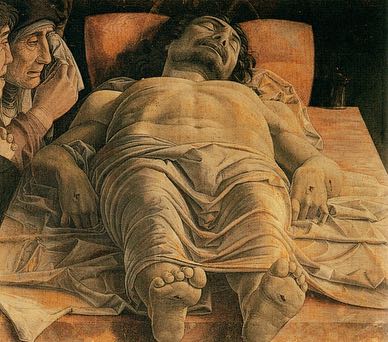
The Lamentation over the Dead Christ is the most famous example. Christ lies on a stone slab with his wounded feet close to the picture’s lower edge. Mantegna adjusts strict optical proportion so the feet do not hide the torso and head, making foreshortening serve recognition and emotional force rather than display alone.
The mourners are compressed at the side, leaving the body to dominate the image. Incised-looking lines, dull tempera, and the bare setting resist comforting beauty. The viewpoint places the observer uncomfortably near the dead Christ, turning an experiment in spatial illusion into an intimate confrontation with physical suffering.
How Did Court Life Transform His Work in Mantua?
Ludovico III Gonzaga invited Mantegna to Mantua, and in 1460 the painter entered a court service that continued under three generations of the family. The position brought a salary, lodging, prestige, and varied assignments, but it also meant long negotiations, delayed payments, travel, decorative duties, and constant responsiveness to dynastic needs.
The Camera Picta, better known as the Camera degli Sposi, became his first great Mantuan achievement. Painted between 1465 and 1474 in the Castello di San Giorgio, it shows members of the Gonzaga family and court within an illusionistic architectural framework. Painted curtains appear to open, real and fictive space overlap, and the room becomes a stage for political identity.
On the ceiling, a circular opening seems to reveal sky above the room. Putti, women, a peacock, and a plant pot lean around the balustrade and look down at visitors. This playful view from below is technically daring, but the room’s deeper purpose is serious: it makes Gonzaga rule appear intimate, cultured, and securely embedded within an ordered world.
What Makes The Triumphs of Caesar So Monumental?
Mantegna worked on The Triumphs of Caesar from the mid-1480s into the 1490s. Nine enormous canvases form a continuous Roman victory procession filled with trumpeters, standards, trophies, armor, captives, musicians, elephants, and Julius Caesar. Each scene advances laterally, as if an ancient relief had expanded into life-size color and movement.
The series gathered decades of antiquarian study into one sustained invention. Mantegna drew on coins, sculptures, inscriptions, literary accounts, and his own collection, but the procession is not a literal reconstruction of one historical triumph. It is a Renaissance vision of Roman power made for the prestige of the Gonzaga court.
Details such as the Elephants, Vase Bearers, and Captives alternate splendor with reminders of conquest. Acquired by Charles I in the seventeenth century and now at Hampton Court Palace, the cycle remains Mantegna’s most ambitious surviving secular project.
Can a Court Painter Also Control How His Art Travels?
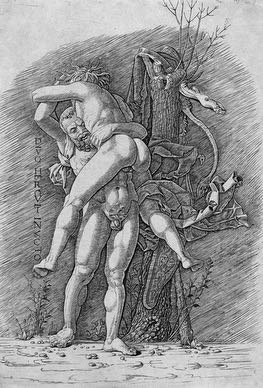
Mantegna understood that images could circulate beyond the rooms and churches for which they were created. Engravings connected with his workshop carried his muscular figures, dense hatching, ancient subjects, and dramatic compositions across Europe. Whether he cut every plate himself remains debated, but his close control of their designs is unmistakable.
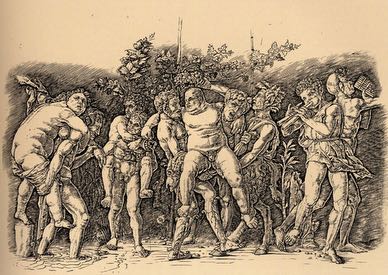
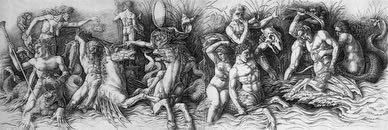
The Battle of the Sea Gods turns a classical marine struggle into a long frieze of twisting nude bodies. Parallel engraved lines follow the volume of limbs and create tonal shifts without color. The print demonstrated how an image could suggest bronze relief, sculpture, and living movement at once.
Artists copied these prints into drawings, paintings, sculpture, and decorative objects. Albrecht Dürer studied Mantegna’s engravings before his first Italian journey, while artists who never visited Mantua could absorb his inventions through impressions passed between workshops and collectors. Print circulation made his influence far wider than court service alone could have achieved.
Which Paintings Best Reveal Mantegna’s Visual Intelligence?
Mantegna’s work ranges from intimate devotion to court decoration and reconstructed Roman spectacle. These paintings show how consistently he joined close observation with severe design and imaginative space:
- The Agony in the Garden, circa 1455–1456: Christ prays within a fantastic rocky landscape where Roman architecture reshapes biblical Jerusalem.
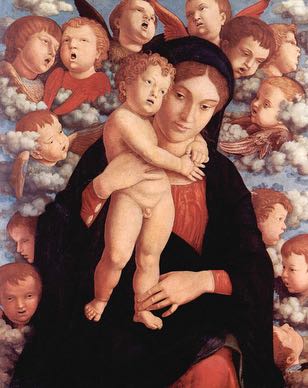
- San Zeno Polyptych: Central Panel, 1457–1460: Painted architecture and the physical frame unite the Virgin and saints within one commanding sacred space.
- The Court of Mantua, 1465–1474: The Gonzaga family appears in a room transformed by portraiture, political theater, and illusionistic perspective.
- The Lamentation over the Dead Christ, circa 1483: Extreme foreshortening brings the viewer close to Christ’s wounded body and the mourners’ grief.
- The Triumphs of Caesar: The Corselet Bearers, mid-1480s–1490s: Burdened figures make captured armor feel physically heavy within the advancing procession.
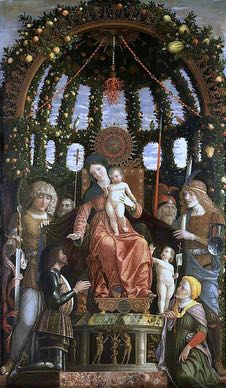
- Madonna of Victory, 1496: A richly ornamented sacred gathering converts Gonzaga military commemoration into an image of heavenly protection.
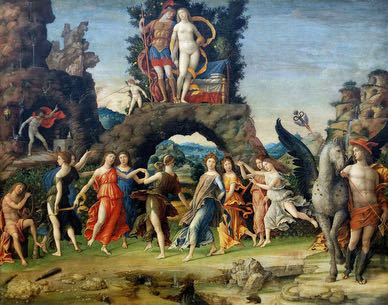
- Mars and Venus: Parnassus, 1497: Mythology becomes an intricate courtly allegory created for Isabella d’Este’s celebrated studiolo.
- Minerva Expelling the Vices from the Garden of Virtue, 1502: Hybrid creatures, fleeing vices, and learned symbolism reveal the imaginative energy of his late art.
Why Has Mantegna’s Influence Lasted for Five Centuries?
Mantegna spent nearly all of his mature career in Mantua, apart from two years in Rome painting a Vatican chapel for Pope Innocent VIII. That lost project extended his prestige, while honors including a knighthood confirmed the exceptional status he had achieved from modest beginnings.
His final years brought major commissions for Isabella d’Este alongside financial pressure connected partly with his household and collecting. Mantegna died in Mantua on 13 September 1506. He was buried in a chapel he had secured in the church of Sant’Andrea, where his memorial asserted the intellectual and social dignity he believed painting deserved.
Giovanni Bellini, Dürer, Correggio, and many later artists found different lessons in his work. Some studied the archaeology, others the prints, foreshortening, spatial illusion, or emotional severity. Mantegna’s lasting achievement was to make historical knowledge intensely visual: stone seems to breathe, painted ceilings open, and ancient worlds press with startling force into the viewer’s present.
Copyright © 2026 BrushWiz. All Rights Reserved.
About Our Andrea Mantegna Paintings
Are your Andrea Mantegna reproductions painted by hand?
Yes. Every reproduction is individually painted by hand in oil on canvas by a professional artist. We do not use prints, digital transfers, or mechanical reproduction methods.
How closely do your Mantegna copies resemble the original?
Our artists work to capture the composition, colors, texture, and visual character of the original Mantegna painting as closely as possible. Because every reproduction is painted by hand, small variations are natural and make each canvas unique.
How long does a Mantegna reproduction take to complete?
Most Mantegna reproductions require approximately two to three weeks to paint, dry, and inspect. Production time may vary depending on the artwork and canvas size, so check the estimate displayed on the product page.
Can I request an Andrea Mantegna painting that is not listed?
Yes. If you cannot find the Andrea Mantegna artwork you want in our catalog, send us the painting’s title or an image. Our team will review your request and confirm the available sizes, estimated production time, and price.
Will I receive approval photos before shipping?
Yes. We send high-resolution photographs of the completed painting for your approval. You can request adjustments if needed, and the painting will not be dispatched until the review process is complete.
Are custom canvas sizes available for Mantegna paintings?
Yes. We offer custom dimensions in addition to the standard sizes shown on the product page. Select the dimensions you need directly from the available size options.
May I order my Mantegna painting with a frame?
Yes. High-quality frames in classic and modern designs are available for many paintings. You can view compatible framing options and add your preferred design from the product page. Professional canvas stretching is also available.
What determines the price of an Andrea Mantegna reproduction?
The price depends on the selected artwork, canvas dimensions, and framing option. Choose your preferred configuration on the product page to see the current price before ordering.
Is free express worldwide shipping included?
Yes. Mantegna reproductions qualify for free express worldwide shipping. After dispatch, delivery usually takes five to eight business days, although timing may vary by country and destination.
Which return policy covers Mantegna reproductions?
Orders are covered by our 90-day return policy. Review the current return-policy page before ordering for complete information about eligibility, time limits, and the return process.
Why BrushWiz?
100% Hand Painted
Every piece is entirely handmade
Museum Quality
Faithfully recreated by expert artists
Custom Framing
Choose from a wide range of frames
Free Shipping
Enjoy free shipping on all orders
Cash Back Rewards
Earn cash back with every purchase