
❄️ Winter Sale. Offer Ends 11/26/2026. View Details
❄️ Winter Sale. Ends 11/26/2026. View Details
❄️ Winter Sale. View Details
Artists
Subjects
Movements
Collections
Decor
Portraits
Commissions
Framing
Reviews
Gift Cards
On Sale
Albrecht Dürer Oil Painting Reproductions
Shop museum-quality reproductions of Albrecht Dürer’s most famous paintings, each hand-painted in oil on canvas by a professional artist.
Shop Art
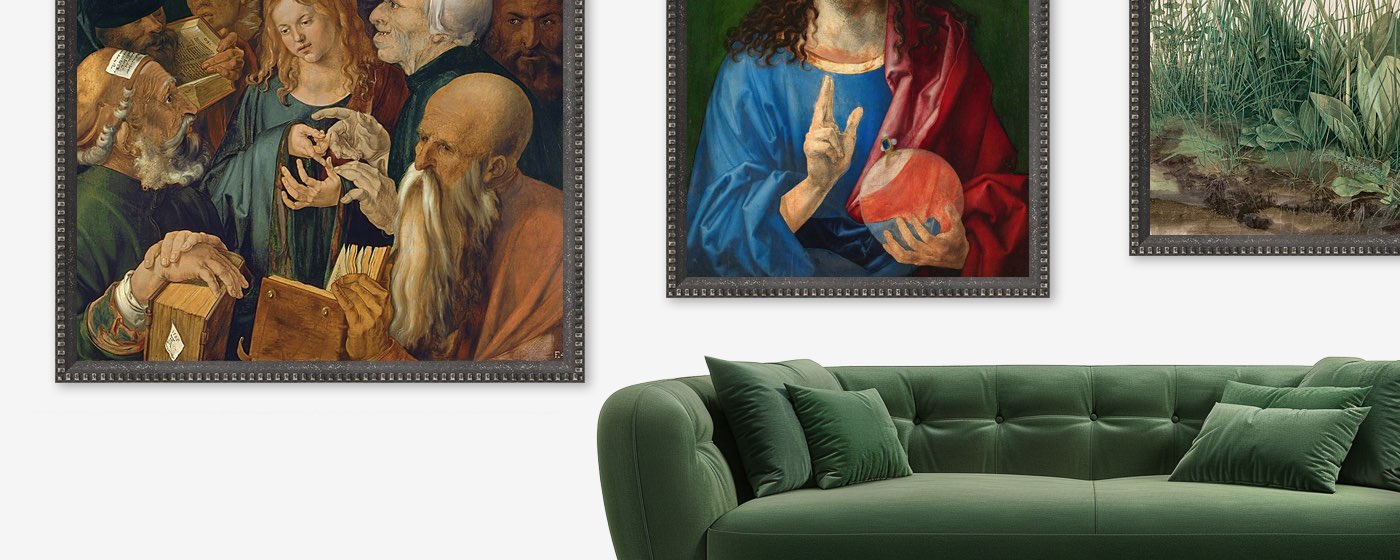
Showing 1-40 of 120 results
Sort By
Most Popular
- Most Popular
- New Arrivals
- Best Sellers
- Alphabetical A-Z
- Alphabetical Z-A
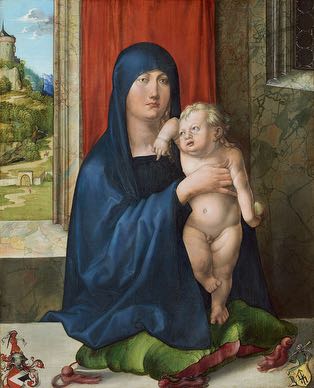
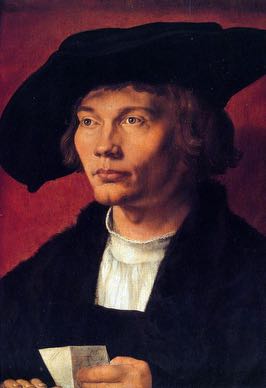
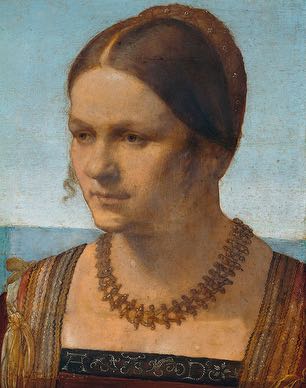
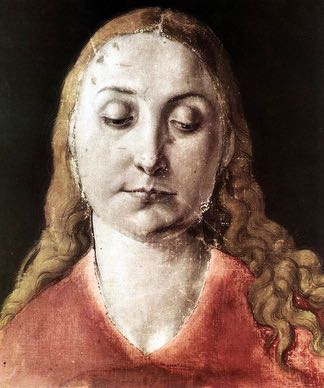



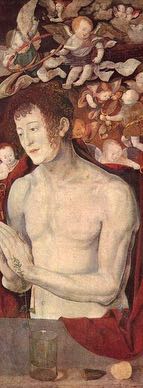
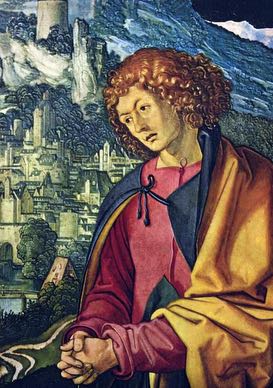
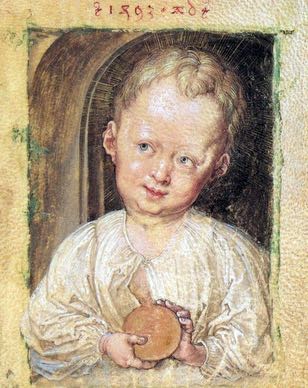
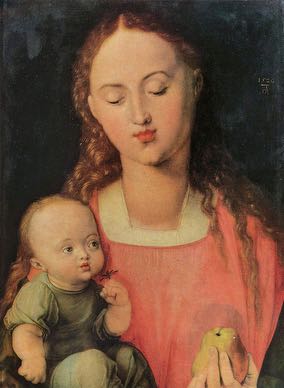
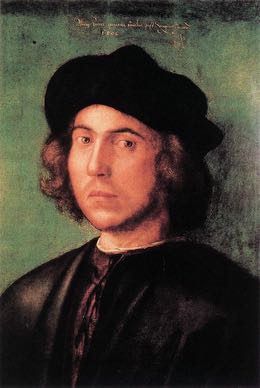
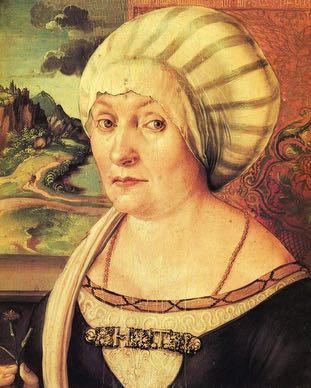
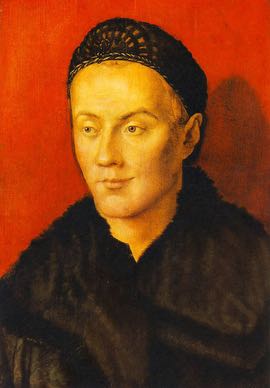
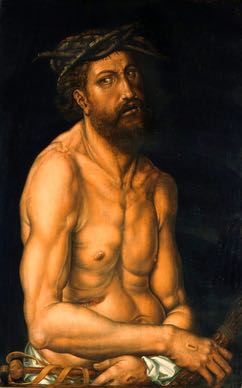
Can’t Find the Painting You Want?
Send us a reference image. We can recreate almost any artwork in the size and style you’re looking for.
Get a Free QuoteHand-Painted Albrecht Dürer Reproductions
Bring Dürer’s art into your home with an oil-on-canvas reproduction hand-painted by a professional artist. Our collection features more than one hundred paintings from across his career, including A Young Hare, Feast of the Rosary, and Adoration of the Magi. Discover devotional scenes, precise portraits, studies of animals and plants, landscapes, and other subjects closely associated with Dürer. Every reproduction is a real oil painting, offering depth and texture that a print or digital transfer cannot provide. From iconic masterpieces to lesser-known works, find a Dürer painting that suits your space.
The Making of an Albrecht Dürer Oil Painting Replica
Creating an Albrecht Dürer oil painting replica requires patience, precision, and an understanding of the original artwork. Our studio includes artists who specialize in Renaissance painting and understand the distinctive qualities of Dürer’s work. Before painting begins, the artist studies the source image, paying close attention to its composition, precise contours, modeled forms, color, surface detail, and tonal transitions. These elements are then recreated by hand in oil on canvas using an approach suited to the original. Once complete, the painting is inspected by our quality-control team and photographed for your approval.
Custom Sizes and Frames for Your Dürer Painting
Your Dürer painting can be ordered in practically any size, from popular standard dimensions to a custom canvas size selected directly on the product page. This flexibility lets you choose a painting that fits your wall and complements your room perfectly. After selecting the size, you can choose from high-quality frames in classic or modern designs, with professional canvas stretching also available. Our framing options complement the precise details and balanced compositions of Dürer’s paintings. With sizing, stretching, and framing arranged in one order, your artwork can arrive ready for display without a separate visit to a frame shop.
Order an Albrecht Dürer Reproduction with Confidence
Buying hand-painted art online should feel clear and comfortable. After your Albrecht Dürer reproduction is completed, we send high-resolution photographs for your review before shipping. You can inspect the composition, colors, details, and overall finish, then request adjustments if needed. The painting is dispatched only after you approve it, so you know what to expect when it arrives. Your order also includes free express worldwide shipping and is covered by our 90-day return policy. Together, these assurances help you purchase a Dürer oil painting with greater confidence and peace of mind.
The Life and Art of Albrecht Dürer
Albrecht Dürer was a German Renaissance artist who brought exact observation and intellectual ambition to painting, drawing, watercolor, engraving, and woodcut. Born in Nuremberg in 1471, he learned precision in his father’s goldsmith workshop before training as a painter and traveling through German-speaking Europe and Italy. Prints carried Dürer’s name far beyond his home city, while his portraits, self-images, devotional works, and studies of nature displayed remarkable control of line and detail. He also wrote influential books about measurement, proportion, and perspective. By joining Northern craftsmanship with ideas encountered during the Italian Renaissance, Dürer became one of early modern Europe’s most important artists.
Read More
Who Was Albrecht Dürer?
Albrecht Dürer was born in Nuremberg on 21 May 1471. His father, Albrecht Dürer the Elder, was a successful goldsmith who had come to the city from Hungary. In his father’s workshop, the young Dürer learned the discipline of precise tools, careful design, fine detail, and valuable materials.
Nuremberg was a busy center of trade, publishing, scholarship, and skilled craft. Books, prints, metalwork, images, and ideas circulated through the city. Dürer’s godfather, Anton Koberger, became one of Europe’s foremost publishers, giving him an early connection to the rapidly growing market for printed images.
Trade routes also brought imported objects and artistic ideas within reach. This environment helps explain the breadth of Dürer’s later work. He thought as a draftsman and painter, but also as a print designer, author, and independent professional who understood how an image could travel between cities and reach different audiences.
Where Did Dürer Receive His Early Artistic Training?
Dürer’s exceptional ability to draw persuaded his father to let him leave goldsmithing. In 1486, he entered Michael Wolgemut’s workshop, a large Nuremberg studio that produced paintings, altarpieces, and woodcut designs. There he learned how complicated images were planned and how a workshop organized art for publication and sale.
After completing his apprenticeship, Dürer spent the years from 1490 to 1494 traveling as a journeyman. Colmar, Basel, and Strasbourg introduced him to new workshops and traditions of printmaking. He hoped to meet the celebrated engraver Martin Schongauer, but reached Colmar after Schongauer had died and met members of his family instead.
Book illustration strengthened Dürer’s control of clear outlines and compact visual storytelling during these travels. Once back in Nuremberg, he opened his own workshop and began signing works prominently with his distinctive monogram. Repeated across paintings, drawings, and prints, the mark asserted his authorship and made his work recognizable.
Why Were Dürer’s Journeys to Italy So Important?
Dürer first traveled to northern Italy soon after marrying Agnes Frey in 1494, then returned to Venice in 1505. Italian art offered new approaches to perspective, ideal proportion, classical form, and spatial construction. He studied Andrea Mantegna and developed particular respect for Giovanni Bellini.
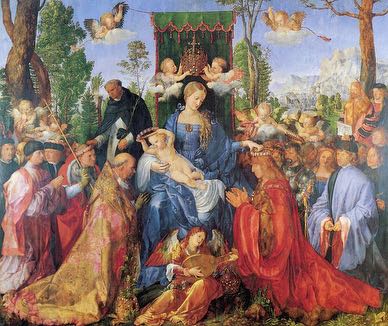
He absorbed these lessons without surrendering the descriptive precision and expressive line of Northern art. Feast of the Rosary, painted in Venice, shows the combination clearly. Its ambitious gathering of figures is enlivened by brilliant color and faces observed one by one.
Each Italian visit met Dürer at a different stage. On the first, he explored unfamiliar pictorial ideas through observation and copied designs. By the second, his prints had already made him an established artist. Venetian painting deepened his interest in color and oil technique, while discussions of ideal beauty encouraged his long investigation of human proportion.
How Did Dürer Transform Printmaking?
Dürer understood the reach of a printed image. One painting belonged to a particular owner or setting, but impressions from the same woodblock could travel widely. His Apocalypse series of 1498 established his reputation through woodcuts of extraordinary energy and detail, treating the medium as serious art rather than secondary illustration.
He achieved equally remarkable effects in engraving. Knight, Death and the Devil, Saint Jerome in His Study, and Melencolia I are often called the master engravings. Dense with possible meanings, they use networks of black lines to evoke illumination, texture, deep space, and states of thought.
Dürer took an active part in producing and distributing his prints instead of relying entirely on individual patrons. Dealers could carry multiple impressions into cities throughout Europe, giving him unusual influence over his income and reputation. Artists who never encountered one of his paintings could still study and adapt his inventions.
What Do Dürer’s Self-Portraits Tell Us About Him?
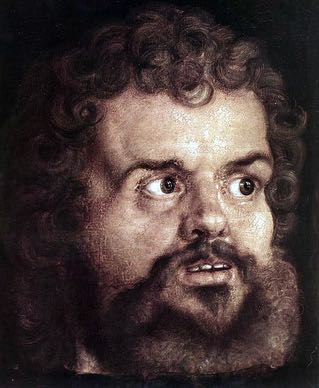
Dürer began examining his own appearance in adolescence and continued to portray himself at different ages. The drawings and paintings record physical change, but they do more than that. Clothing, hair, gaze, pose, and inscription present the artist as a conscious and educated creator.
This sustained attention helped raise the artist’s identity beyond that of an unnamed craftsman. It also belongs to Dürer’s broader interest in self-portraiture, individual likeness, expression, and the measurement of the human body.
The self-images do not all make the same claim. Youthful drawings test his powers of observation; later paintings project elegance, confidence, or solemnity. Inscriptions record his age and authorship with care. Seen together, they trace the way a Renaissance artist deliberately fashioned a public identity.
Which Natural Subjects Captured Dürer’s Attention?
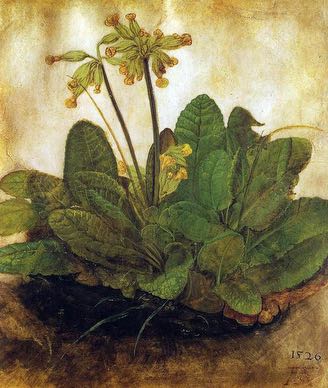
Plants, animals, weather, and terrain received the same close attention Dürer brought to a portrait. In A Young Hare, individual hairs, light, posture, and alertness create a convincing living presence. The Tuft of Grass finds a dense composition in vegetation that could easily have gone unnoticed.
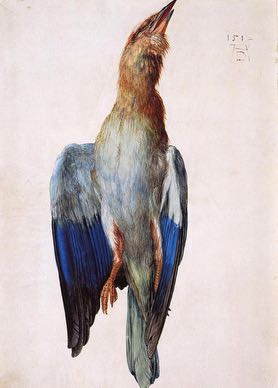
Wing of a European Roller reveals the same fascination with structure and shifting color. Works like these helped establish animals, plants, and landscapes as subjects worthy of concentrated study in their own right.
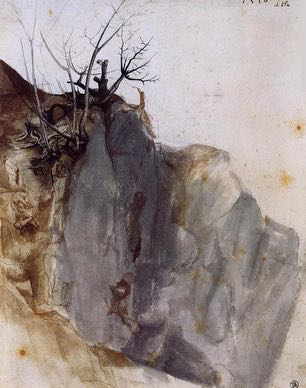
The watercolor landscapes are equally important. Made during travel, they record mills, castles, courtyards, mountains, and towns under particular conditions of light. These places are not merely settings awaiting a figure. Dürer studied their architecture and terrain directly, expanding what an independent landscape image could be.
Who Commissioned and Collected Dürer’s Work?
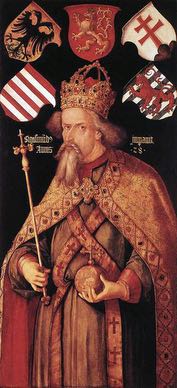
Dürer worked for merchants, civic leaders, religious patrons, and the imperial court. Emperor Maximilian I used printed projects to construct a grand public image, commissioning designs for works that included the monumental Triumphal Arch. Dürer’s Portrait of Emperor Maximilian I combines an observed likeness with formal costume and heraldic symbols.
Following Maximilian’s death, Dürer traveled through the Netherlands in 1520 and 1521 to secure the continuation of his imperial pension. A detailed journal records what he bought and sold, gifts he exchanged, and the patrons and artists he met. It offers a rare view of international fame as a practical working life.
Civic officials, merchants, and fellow artists welcomed him in Antwerp, Brussels, and other cities. He visited important collections, exchanged works, and examined objects arriving through expanding global trade. His notes reveal the economics behind artistic reputation, from travel expenses and print prices to the importance of personal connections.
How Did Religion Shape Dürer’s Art?
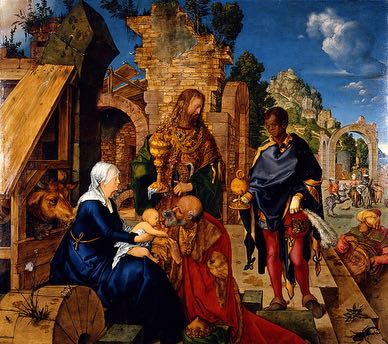
Christian stories occupy a large part of Dürer’s work, from small images of the Virgin and Child to Passion print cycles and elaborate altarpieces. In Adoration of the Magi, architecture, fabric, distant landscape, and individualized faces come together in a richly ordered devotional scene.
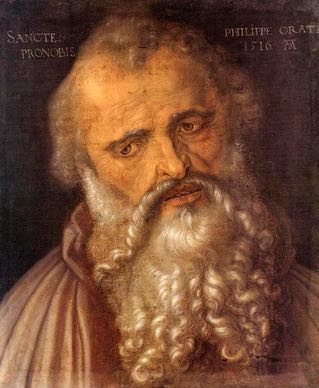
Dürer followed the debates of the Reformation and expressed admiration for Martin Luther. Late in his career, he gave the city of Nuremberg Four Apostles. Its monumental figures and biblical texts reflect his concern with faith, civic duty, and the authority of scripture.
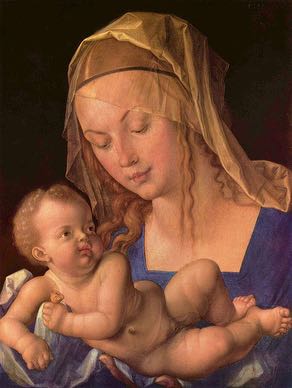
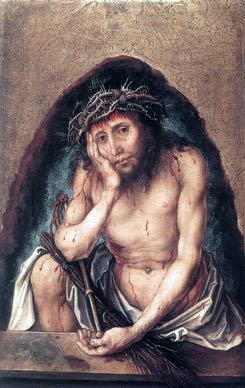
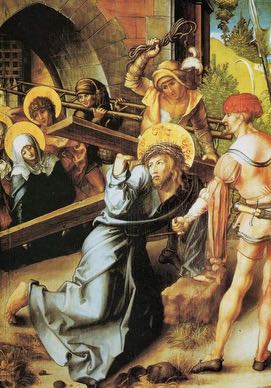
Religious imagery also allowed him to explore grief, tenderness, endurance, and revelation at different scales. A small print addressed private contemplation, while an altarpiece belonged to a public setting. Each return to the Virgin, the Passion, saints, or apostles gave Dürer another chance to rethink an established theme through composition and the studied human figure.
Which Works Best Show the Range of Dürer’s Art?
These works move from nature study and portraiture to religious narrative, landscape, and Dürer’s investigation of the ideal human figure:
- A Young Hare: Precise observation of fur, posture, and light gives this animal study a vivid sense of life.
- Feast of the Rosary: Portraits, ceremony, brilliant color, and an ambitious gathering of figures fill this large Venetian composition.
- Adoration of the Magi: Northern detail meets Renaissance space and monumentality in an elaborate devotional scene.
- Adam: One half of Dürer’s celebrated first human pair reflects his sustained study of ideal proportion.
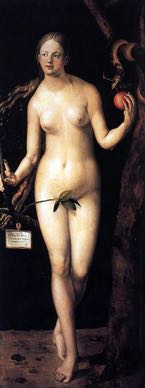
- Eve: The companion figure joins carefully modeled anatomy and natural details to Dürer’s theoretical interests.
- Portrait of Emperor Maximilian I: Individual likeness and symbols of power share the formal image of a ruler.
- The Four Apostles, Saint John and Saint Peter: Monumental figures embody the religious concerns of Dürer’s final years.
- Wing of a European Roller: Feathers become a brilliant study of natural structure and changing shades of blue.
Why Does Albrecht Dürer Remain So Influential?
Dürer joined the making of art to years of systematic inquiry. His books on measurement, proportion, and fortification offered artists and designers structured ways to think about form and space. Close observation drove his paintings and drawings, while prints carried his ideas throughout Europe and made his name internationally recognizable.
The published writings grew from practical study rather than theory alone. His instructions in geometry addressed artists and craftspeople. When investigating human proportion, he compared many kinds of bodies instead of insisting that beauty had one universal form. Later readers revised his conclusions, but his attempt to unite mathematics, observation, and artistic judgment became an important model.
Later German artists, including Lucas Cranach the Elder and Hans Holbein the Younger, worked in a world changed by his example. Generations of printmakers, portraitists, naturalists, and students of proportion also drew from it. When Dürer died in Nuremberg in 1528, he left behind a body of work that had greatly expanded the possibilities of Northern Renaissance art.
Copyright © 2026 BrushWiz. All Rights Reserved.
About Our Albrecht Dürer Paintings
Are your Albrecht Dürer reproductions painted by hand?
Yes. Every reproduction is individually painted by hand in oil on canvas by a professional artist. We do not use prints, digital transfers, or mechanical reproduction methods.
How closely do your Dürer copies resemble the original?
Our artists work to capture the composition, colors, texture, and visual character of the original Dürer work as closely as possible. Because every reproduction is painted by hand, small variations are natural and make each canvas unique.
How long does it take to complete a painting?
Most Dürer reproductions require approximately two to three weeks to paint, dry, and inspect. Production time may vary depending on the artwork and canvas size, so check the estimate displayed on the product page.
Can I request a Dürer painting that is not listed?
Yes. If you cannot find the Albrecht Dürer work you want in our catalog, send us its title or an image. Our team will review your request and confirm the available sizes, estimated production time, and price.
Will I receive photos of my painting before it is shipped?
Yes. We send high-resolution photographs of the completed painting for your approval. You can request adjustments if needed, and the painting will not be dispatched until the review process is complete.
Can I order a custom canvas size?
Yes. We offer custom dimensions in addition to the standard sizes shown on the product page. Select the dimensions you need directly from the available size options.
Can I order my Dürer painting with a frame?
Yes. High-quality frames in classic and modern designs are available for many paintings. You can view compatible framing options and add your preferred design from the product page. Professional canvas stretching is also available.
How much does an Albrecht Dürer reproduction cost?
The price depends on the selected artwork, canvas dimensions, and framing option. Choose your preferred configuration on the product page to see the current price before ordering.
Do you offer free worldwide shipping?
Yes. Dürer reproductions qualify for free express worldwide shipping. After dispatch, delivery usually takes five to eight business days, although timing may vary by country and destination.
What is the return policy for Dürer reproductions?
Orders are covered by our 90-day return policy. Review the current return-policy page before ordering for complete information about eligibility, time limits, and the return process.
Why BrushWiz?
100% Hand Painted
Every piece is entirely handmade
Museum Quality
Faithfully recreated by expert artists
Custom Framing
Choose from a wide range of frames
Free Shipping
Enjoy free shipping on all orders
Cash Back Rewards
Earn cash back with every purchase