
❄️ Winter Sale. Offer Ends 11/27/2026. View Details
❄️ Winter Sale. Ends 11/27/2026. View Details
❄️ Winter Sale. View Details
Artists
Subjects
Movements
Collections
Decor
Portraits
Commissions
Framing
Reviews
Gift Cards
On Sale
Antoine Watteau Oil Painting Reproductions
Shop museum-quality reproductions of Antoine Watteau’s most famous paintings, each hand-painted in oil on canvas by a professional artist.
Shop Art
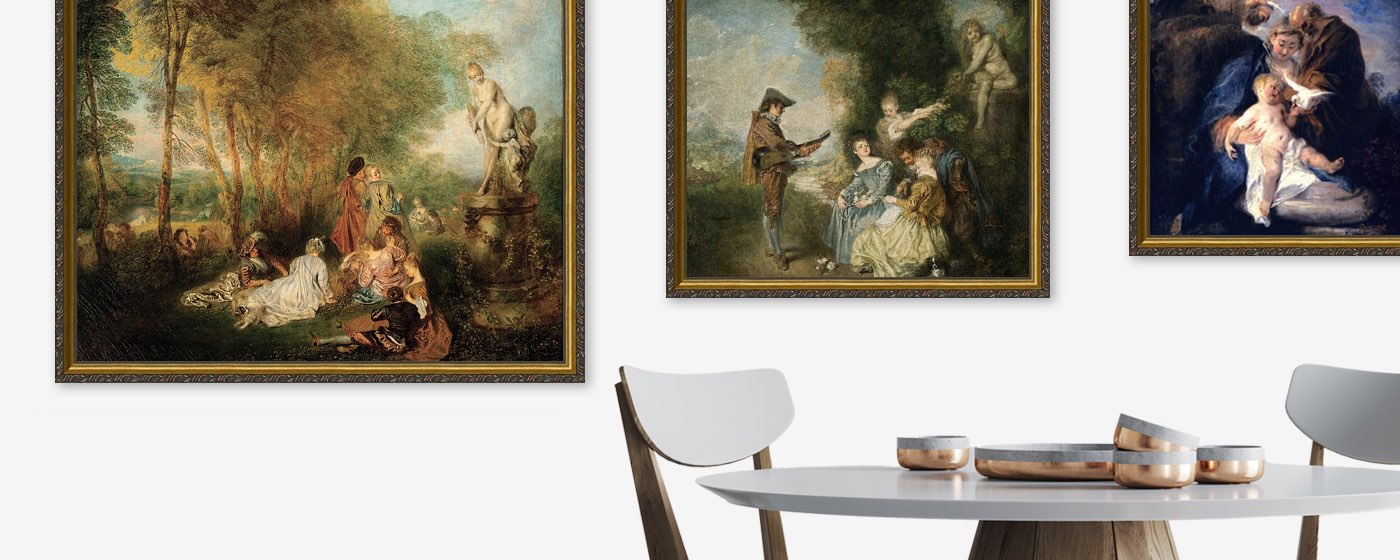
Showing 1-40 of 73 results
Sort By
Most Popular
- Most Popular
- New Arrivals
- Best Sellers
- Alphabetical A-Z
- Alphabetical Z-A
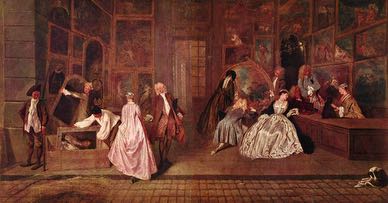
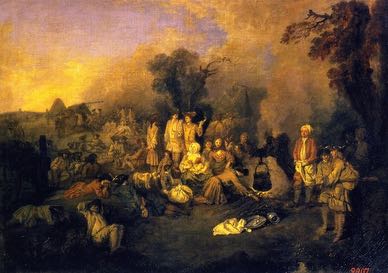
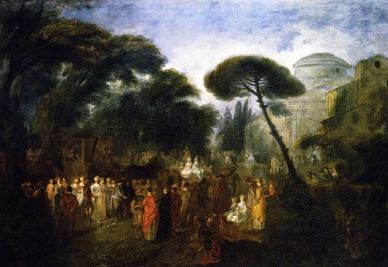
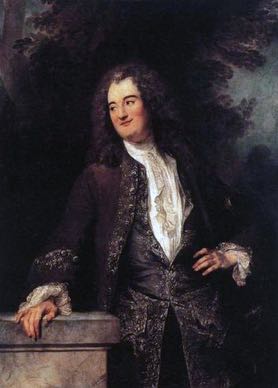
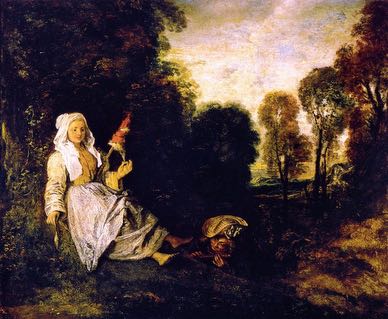
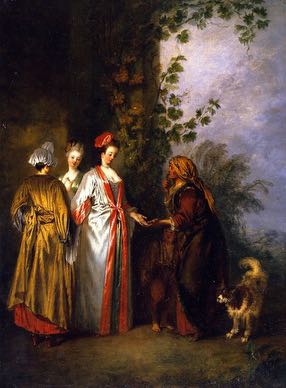
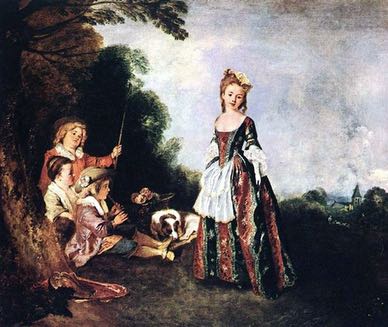
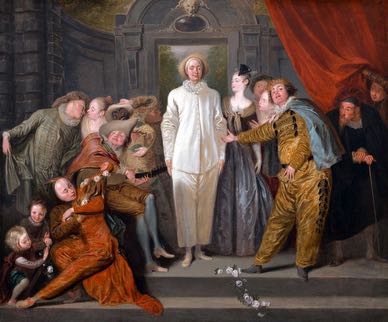
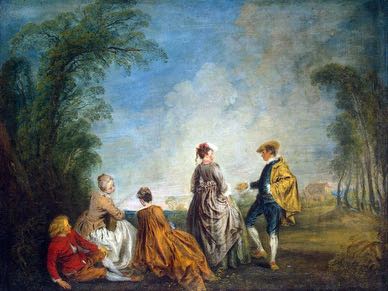
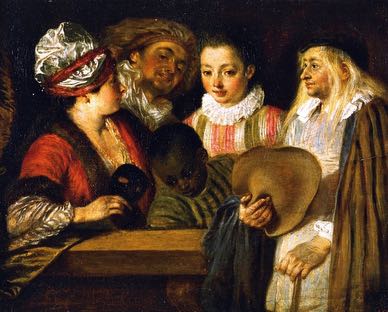




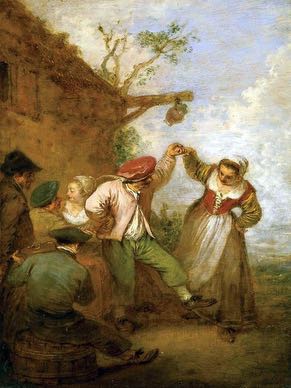

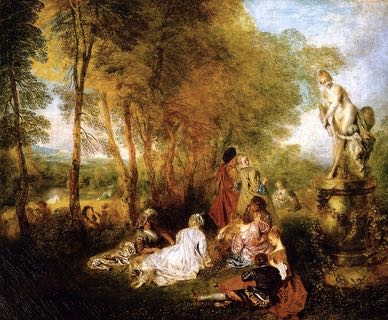
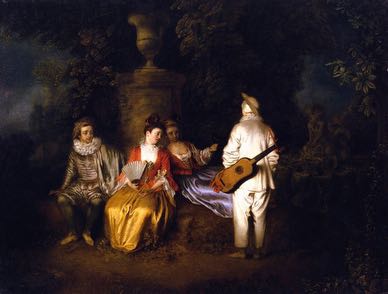
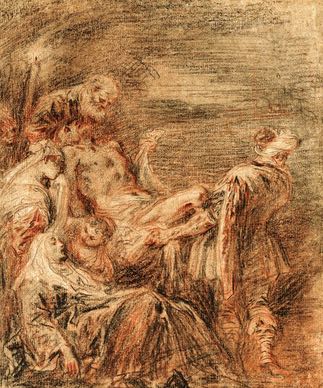
Can’t Find the Painting You Want?
Send us a reference image. We can recreate almost any artwork in the size and style you’re looking for.
Get a Free QuoteHand-Painted Antoine Watteau Reproductions
Bring Watteau’s art into your home with an oil-on-canvas reproduction hand-painted by a professional artist. Our collection features dozens of paintings from across his career, including Pilgrimage to Cythera, Pierrot, and Gersaint’s Shop Sign. Discover elegant woodland garden gatherings, costumed musicians, enigmatic theatrical characters, soldiers at rest, and other subjects closely associated with Watteau. Every reproduction is a real oil painting, offering depth and texture that a print or digital transfer cannot provide. From iconic masterpieces to lesser-known works, find a Watteau painting that suits your space.
The Making of an Antoine Watteau Oil Painting Replica
Creating an Antoine Watteau oil painting replica requires a careful, sensitive balance of detail and atmosphere. Our studio includes artists who specialize in Rococo painting and understand the distinctive qualities of Watteau’s work. The artist studies the source image, then recreates its warm, delicate color, graceful figures, richly wooded setting, and Watteau’s soft, flickering brushwork using traditional oil-painting methods. After completion, the painting is inspected by our quality-control team and carefully photographed for your approval. The finished canvas preserves the elegance, theatricality, and elusive emotional mood of the original artwork.
Custom Sizes and Frames for Your Watteau Painting
Your Watteau painting can be ordered in practically any size, from popular standard dimensions to a custom canvas size selected directly on the product page. This flexibility helps you fit an intimate theatrical figure or a wide garden gathering to the proportions of your wall. After choosing the size, you can select from high-quality frames in classic or modern designs, with professional canvas stretching also available. A finely detailed frame can complement Watteau’s elegant figures and softly colored landscapes. With sizing, stretching, and framing arranged in one order, your artwork can arrive ready for display.
Order an Antoine Watteau Reproduction with Confidence
Buying hand-painted art online should feel clear and comfortable. After your Antoine Watteau reproduction is completed, we send high-resolution photographs for your review before shipping. You can inspect the figures, color transitions, landscape details, and overall finish, then request adjustments if needed. The painting is dispatched only after you approve it, so you know what to expect when it arrives. Your order also includes free express worldwide shipping and is covered by our 90-day return policy. These assurances make it easier to purchase a Watteau oil painting with confidence and peace of mind.
The Life and Art of Antoine Watteau
Antoine Watteau was a French painter and draftsman whose dreamlike garden gatherings, actors, musicians, and lovers helped open the way to Rococo art. Born in Valenciennes in 1684, he rose from modest provincial beginnings to become one of the most original artists in early eighteenth-century Paris. The Royal Academy created the category of fête galante to accommodate his scenes of elegant figures at leisure in imagined landscapes. Yet their beauty is rarely carefree: glances miss one another, music fades, and departures seem close at hand. Watteau also drew with exceptional fluency and painted soldiers, working people, and theatrical outsiders. His career lasted less than two decades, but it changed French painting and influenced generations of artists.
Read More
Who Was Antoine Watteau?
Jean-Antoine Watteau was baptized in Valenciennes on 10 October 1684. The city had passed from the Spanish Netherlands to France only a few years earlier, and its culture retained strong Flemish connections. His father, Jean-Philippe Watteau, was a roofer and master tiler. Nothing in the family’s circumstances pointed naturally toward a career in the Paris art world.
Details of Watteau’s first instruction remain uncertain. He probably trained with a local painter before leaving for Paris around 1702. There, without money or established contacts, he found employment producing inexpensive copies of devotional images. The work was repetitive, but it sharpened his speed and gave him an entry into the trade of painting.
Within a few years, Watteau moved from workshop production to the circles that shaped fashionable French art. Ill health followed him throughout that rise. He died at thirty-six, leaving a career so compressed that nearly every surviving phase feels like an experiment still in motion.
Where Did Watteau Find His Theatrical World?
Around 1705, Watteau entered the workshop of Claude Gillot, a painter known for lively scenes based on Italian comedy. Gillot introduced him to the stock characters, improvised action, and visual wit of the commedia dell’arte. Harlequin, Mezzetin, Pierrot, musicians, and actors would remain part of Watteau’s imagination long after the apprenticeship ended.
He next worked with Claude Audran III, an ornamental designer and keeper of the Luxembourg Palace. Audran’s airy arabesques showed how figures, foliage, sculpture, and decorative rhythm could share a surface. At the palace, Watteau also had access to Peter Paul Rubens’s cycle devoted to Marie de’ Medici. The color and movement of Rubens offered an alternative to the stricter academic tradition.
Theatre and decoration came together in Watteau’s mature art. His figures often look like actors who have wandered beyond the stage into a park, but the performance has no clear beginning or end. A gesture, turned shoulder, or unanswered glance carries more meaning than a conventional plot.
Why Did Watteau Paint Soldiers as Well as Lovers?
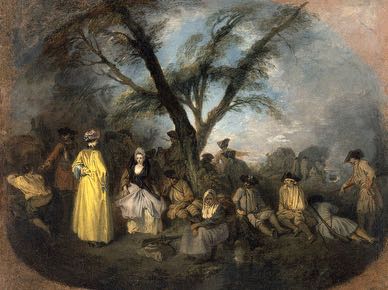
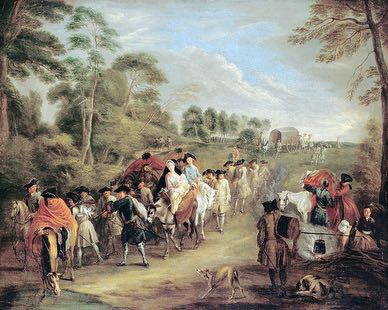
Before garden parties made him famous, Watteau painted soldiers moving through the landscapes around Valenciennes. The War of the Spanish Succession brought military activity close to the region, giving him opportunities to observe troops on the march, at camp, and during pauses between events.
Paintings such as The Bivouac avoid the triumphant language of battle art. Soldiers cook, wait, talk, tend horses, or carry the burdens of travel. Watteau was more interested in fatigue and ordinary behavior than in commanders and victory.
These early scenes already contain qualities that reappear in the fêtes galantes. Small groups occupy a landscape without forming a single dramatic center, and the viewer arrives in the middle of an event whose full story remains unknown. The costumes change, but the mood of temporary gathering remains.
How Did the Fête Galante Become a New Kind of Painting?
In 1709, Watteau won second place in the Royal Academy’s competition for the Prix de Rome but did not receive the journey to Italy he wanted. His fortunes shifted after the older painter Charles de La Fosse supported him. The Academy agreed to receive Watteau in 1712, although he did not deliver the required reception picture until 1717.
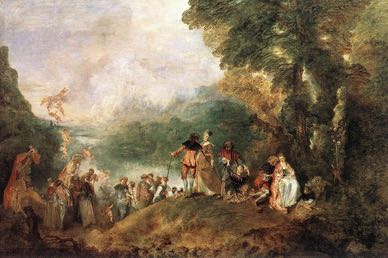
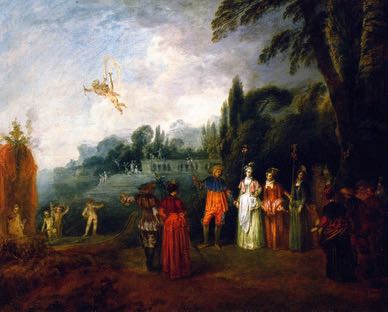
That painting, Pilgrimage to Cythera, did not fit comfortably within the Academy’s existing hierarchy. Fashionably dressed couples gather on an island associated with Venus, yet it is unclear whether they have just arrived or are preparing to leave. Desire, hesitation, and parting unfold without resolving into a single story.
The Academy described Watteau as a painter of fêtes galantes, or elegant entertainments, effectively naming a new category around his achievement. The term suggests aristocratic leisure, but his scenes are more invented than documentary. Actors, patrons, servants, musicians, and imagined lovers meet in landscapes assembled from memory, drawings, and older art.
What Makes Watteau’s Garden Parties Feel So Uncertain?
Watteau filled his garden scenes with silk, music, flirtation, sculpture, and soft light. At first glance they can seem to offer a perfect world of leisure. Closer looking unsettles that impression. Figures turn away, couples fail to connect, and paths disappear into shadow. Pleasure is present, but it never feels permanent.
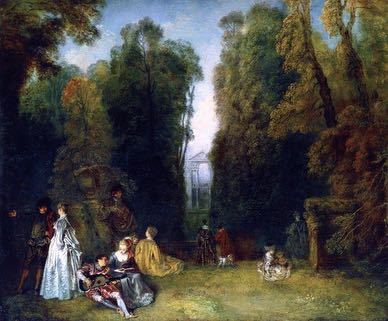
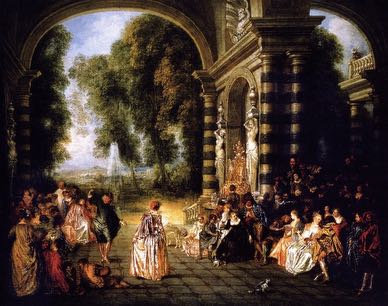
Paintings such as The Pleasures of the Ball use dance and conversation to hold scattered groups together. Watteau does not identify a principal event. Instead, movement passes across the gathering through poses, glances, music, and the changing accents of color.
This emotional openness is one reason the pictures remain difficult to summarize. They are not simple celebrations of privilege, nor are they disguised moral lessons. Their subject is often the fragility of sociability itself: the brief moment when people, landscape, costume, and performance appear to form a harmonious world.
Which Roles Did Theatre Play in Watteau’s Art?
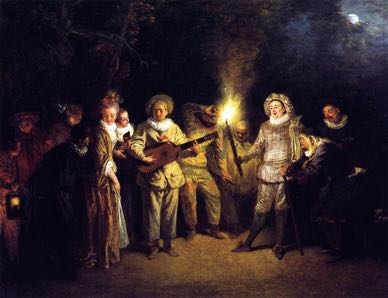
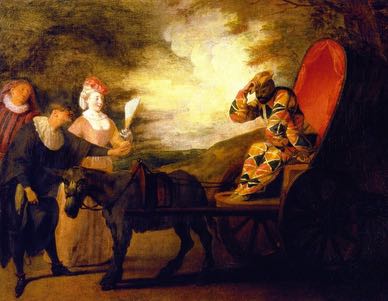
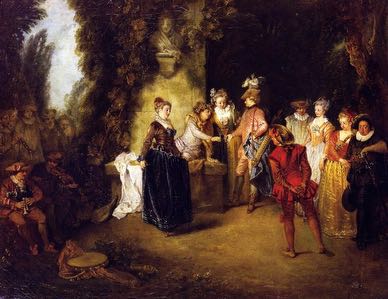
Italian comedy gave Watteau a cast of recognizable types without forcing him into a fixed narrative. Harlequin could be clever and disruptive, Mezzetin an unsuccessful lover, and Pierrot both comic and painfully exposed. Costumes establish a role, but the person inside it often remains emotionally elusive.
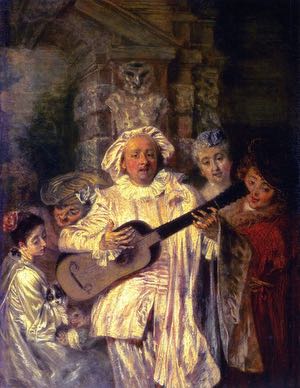
In Mezzetin, the striped musician sings and plays a guitar while looking toward someone outside the frame. His performance is animated, yet the absent listener turns it into a picture of longing. Music suggests communication while making the silence around him more noticeable.
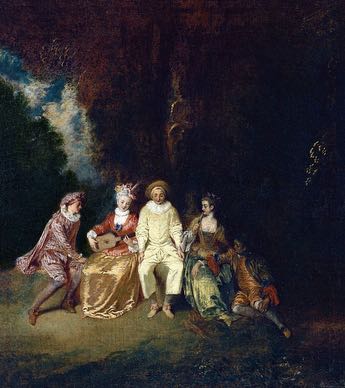
Pierrot is stranger still. The pale actor stands almost life-size and faces the viewer while smaller companions cluster below. His white costume makes him brilliantly visible, but his expression and rigid isolation deny the easy comedy expected from the character.
How Did Watteau Draw with Three Colors of Chalk?
Drawing was not secondary to Watteau’s painting. He filled sheets with individual heads, hands, seated bodies, costumes, and turns of posture observed from life. Rather than design every composition in advance, he built a store of figures that could later be selected, reversed, or recombined in painted scenes.
Early drawings often rely on red chalk. Black gradually joined it, and by about 1715 Watteau was working with red, black, and white in the trois crayons technique. On warm-toned paper, the three colors could suggest flesh, shadow, fabric, and reflected light with remarkable economy.
The method existed before him, but Watteau made it unmistakably his own. A few strokes can catch the weight of a leaning body or the impatient angle of a head. That attentiveness gives even his most artificial costumes a physical credibility: beneath the role, someone is actually standing, sitting, or waiting.
Who Helped Watteau Build His Paris Career?
Watteau depended on a close network of collectors, dealers, artists, and friends. The financier Pierre Crozat gave him access to an exceptional collection of drawings and paintings, including works by Venetian masters and Rubens. These encounters deepened the warm color and fluid handling already encouraged by La Fosse.
Jean de Jullienne became one of Watteau’s most devoted supporters. After the artist’s death, he sponsored an ambitious series of prints after Watteau’s paintings and drawings. Known collectively as the Recueil Jullienne, the project spread his compositions across Europe and preserved the appearance of works that later disappeared or changed hands.
One of Watteau’s last major paintings was Gersaint’s Shop Sign, made for the dealer Edme-François Gersaint. Customers examine pictures and luxury goods while a portrait of Louis XIV is packed into a case. Painted for a shopfront, the scene becomes a witty meditation on fashion, collecting, commerce, and the passing of an era.
Which Paintings Define Watteau’s Brief Career?
Watteau worked across military observation, theatre, fêtes galantes, portrait-like figures, and scenes of art and commerce. These paintings show the unusual range he achieved before his death at thirty-six:
- Soldiers on the March: Troops and camp followers move through a landscape without the ceremony or heroics of official battle painting.
- The Bivouac: Resting soldiers turn wartime experience into a study of waiting, fatigue, and temporary community.
- Pilgrimage to Cythera, 1717: Amorous couples gather and depart in the Academy reception piece that helped establish the fête galante.
- Embarkation for Cythera: A later version expands the movement, color, and dreamlike uncertainty of the journey to Venus’s island.
- The Pleasures of the Ball: Dancers, musicians, and onlookers form a graceful outdoor society held together by rhythm rather than plot.
- The Love Lesson: Music and courtship mingle in a wooded setting where gestures suggest more than they explain.
- Mezzetin, about 1718–1720: A comic actor’s serenade becomes an image of desire directed toward an unseen listener.
- Pierrot, about 1718–1719: The white-clad performer confronts the viewer with a stillness that feels vulnerable rather than comic.
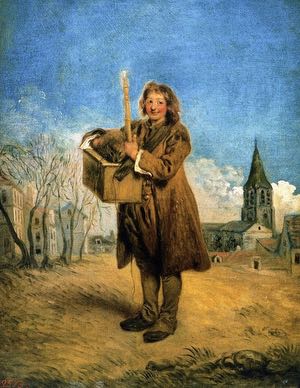
- Savoyard with Marmot: A traveling entertainer from outside elite society receives the same close attention Watteau gave fashionable sitters.
- Gersaint’s Shop Sign, 1720: An art dealer’s shop becomes a lively final statement about taste, display, buying, and historical change.
Why Did Watteau’s Influence Outlive the Rococo?
Watteau traveled to London around 1719, apparently hoping the physician and collector Richard Mead could help treat his tuberculosis. The damp climate offered no cure. After returning to France, his health deteriorated, and he died at Nogent-sur-Marne on 18 July 1721.
His followers quickly adapted the fête galante into a more settled language of Rococo pleasure. Francois Boucher and Jean-Honore Fragonard inherited his light palette, erotic play, and garden settings, though neither repeated the peculiar melancholy of his art. Jullienne’s prints helped carry those ideas far beyond France.
Changing taste later made Watteau seem inseparable from the aristocratic world swept away by the French Revolution. His reputation revived strongly in the nineteenth century, when writers and artists responded to the uncertainty beneath his elegance. Watteau remains central to eighteenth-century painting because he made beauty feel temporary, social performance feel private, and a painted gathering linger like music after it has stopped.
Copyright © 2026 BrushWiz. All Rights Reserved.
About Our Antoine Watteau Paintings
Are your Antoine Watteau reproductions painted by hand?
Yes. Every reproduction is individually painted by hand in oil on canvas by a professional artist. We do not use prints, digital transfers, or mechanical reproduction methods.
How closely do your Watteau copies resemble the original?
Our artists work to capture the composition, colors, texture, and visual character of the original Watteau painting as closely as possible. Because every reproduction is painted by hand, small variations are natural and make each canvas unique.
How long does it take to complete a Watteau painting?
Most Watteau reproductions require approximately two to three weeks to paint, dry, and inspect. Production time may vary depending on the artwork and canvas size, so check the estimate displayed on the product page.
Can I request a Watteau painting that is not listed?
Yes. If you cannot find the Antoine Watteau artwork you want in our catalog, send us the painting’s title or an image. Our team will review your request and confirm the available sizes, estimated production time, and price.
Will I receive photographs before my painting is shipped?
Yes. We send high-resolution photographs of the completed painting for your approval. You can request adjustments if needed, and the painting will not be dispatched until the review process is complete.
Are custom canvas dimensions available?
Yes. We offer custom dimensions in addition to the standard sizes shown on the product page. Select the dimensions you need directly from the available size options.
May I order my Watteau painting with a frame?
Yes. High-quality frames in classic and modern designs are available for many paintings. You can view compatible framing options and add your preferred design from the product page. Professional canvas stretching is also available.
What determines the price of an Antoine Watteau reproduction?
The price depends on the selected artwork, canvas dimensions, and framing option. Choose your preferred configuration on the product page to see the current price before ordering.
Do Watteau reproductions qualify for free worldwide shipping?
Yes. Watteau reproductions qualify for free express worldwide shipping. After dispatch, delivery usually takes five to eight business days, although timing may vary by country and destination.
Which return policy covers Watteau reproductions?
Orders are covered by our 90-day return policy. Review the current return-policy page before ordering for complete information about eligibility, time limits, and the return process.
Why BrushWiz?
100% Hand Painted
Every piece is entirely handmade
Museum Quality
Faithfully recreated by expert artists
Custom Framing
Choose from a wide range of frames
Free Shipping
Enjoy free shipping on all orders
Cash Back Rewards
Earn cash back with every purchase