
❄️ Winter Sale. Offer Ends 11/25/2026. View Details
❄️ Winter Sale. Ends 11/25/2026. View Details
❄️ Winter Sale. View Details
Artists
Subjects
Movements
Collections
Decor
Portraits
Commissions
Framing
Reviews
Gift Cards
On Sale
Peter Paul Rubens Oil Painting Reproductions
Shop museum-quality reproductions of Peter Paul Rubens’s most famous paintings, each hand-painted in oil on canvas by a professional artist.
Shop Art
Showing 1-40 of 414 results
Sort By
Most Popular
- Most Popular
- New Arrivals
- Best Sellers
- Alphabetical A-Z
- Alphabetical Z-A


From: $2,420.00$1,210.00
From: $1,006.00$503.00

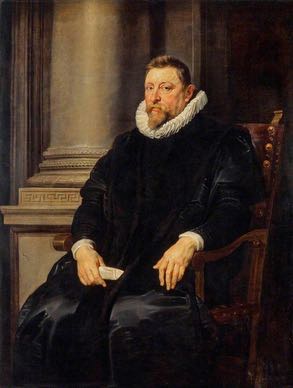
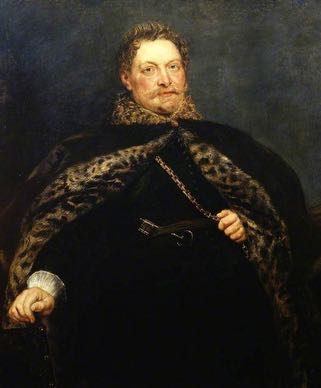
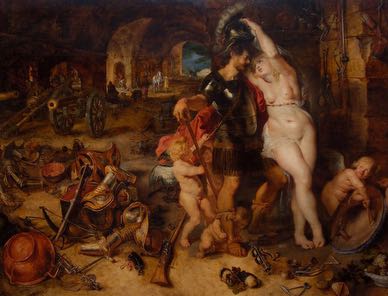
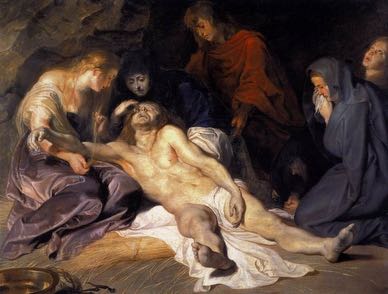
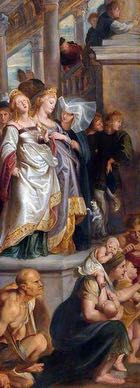

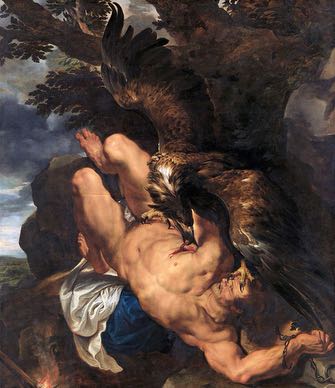
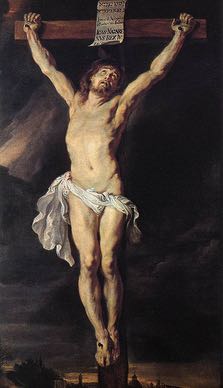
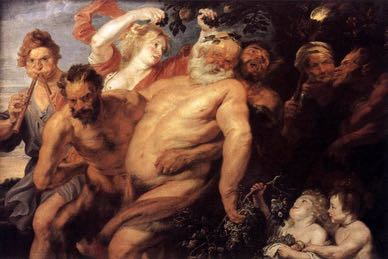




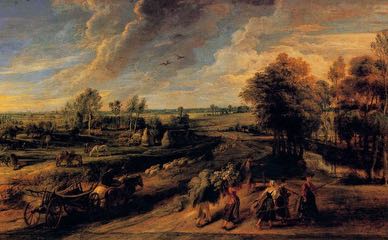
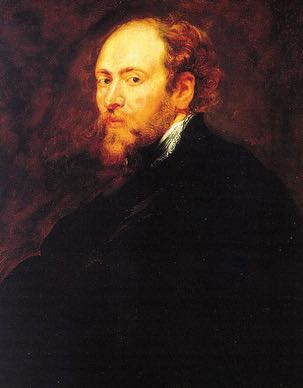

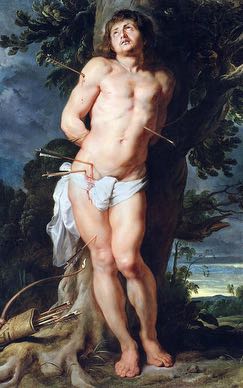
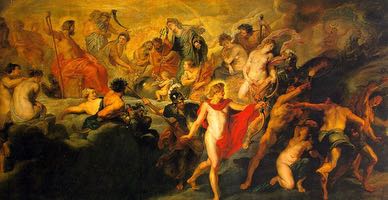
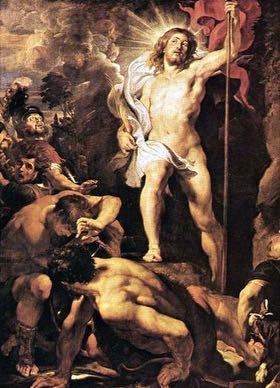
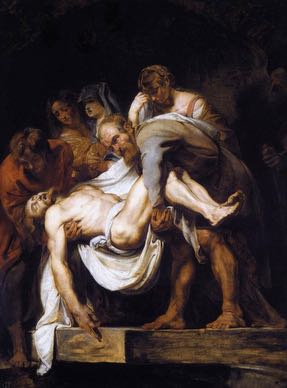
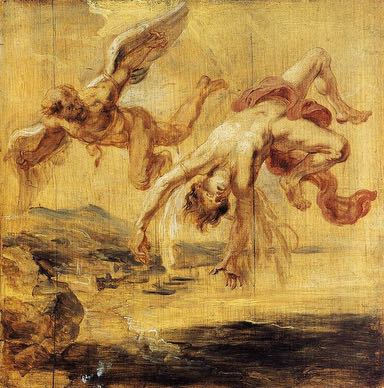

Can’t Find the Painting You Want?
Send us a reference image. We can recreate almost any artwork in the size and style you’re looking for.
Get a Free QuoteHand-Painted Peter Paul Rubens Reproductions
Bring Rubens’s art into your home with an oil-on-canvas reproduction hand-painted by a professional artist. Our collection features hundreds of paintings from across his career, including The Elevation of the Cross, Samson and Delilah, and The Three Graces. Discover dramatic altarpieces, mythological scenes, royal portraits, energetic hunts, expansive landscapes, and other subjects closely associated with Rubens. Every reproduction is a real oil painting, offering depth and texture that a print or digital transfer cannot provide. From iconic masterpieces to lesser-known works, find a Rubens painting that suits your space.
The Making of a Peter Paul Rubens Oil Painting Replica
Creating a Peter Paul Rubens oil painting replica requires patience, precision, and an understanding of the original artwork. Our studio includes artists who specialize in Baroque painting and understand the distinctive qualities of Rubens’s work. Before painting begins, the artist studies the source image, paying close attention to its dynamic composition, powerful figures, warm color, dramatic light, expressive movement, and energetic brushwork. These elements are recreated by hand in oil on canvas using an approach suited to the original. Once complete, the reproduction is inspected by our quality-control team and photographed for your approval.
Custom Sizes and Frames for Your Rubens Painting
Your Rubens painting can be ordered in practically any size, from popular standard dimensions to custom canvas sizes selected directly on the product page. This flexibility lets you choose a painting that fits your wall and complements your room perfectly. After selecting the size, you can choose from high-quality frames in classic or modern designs, with professional canvas stretching also available. Our framing options complement the dramatic figures and rich visual character of Rubens’s paintings. With sizing, stretching, and framing arranged in one order, your artwork can arrive ready for display without a separate visit to a frame shop.
Order a Peter Paul Rubens Reproduction with Confidence
Buying hand-painted art online should feel clear and comfortable. After your Peter Paul Rubens reproduction is completed, we send high-resolution photographs for your review before shipping. You can inspect the composition, colors, figures, details, and overall finish, then request adjustments if needed. The painting is dispatched only after you approve it, so you know what to expect when it arrives. Your order also includes free express worldwide shipping and is covered by our 90-day return policy. Together, these assurances help you purchase a Rubens oil painting with greater confidence and peace of mind.
The Life and Art of Peter Paul Rubens
Peter Paul Rubens was a Flemish Baroque painter, designer, scholar, collector, and diplomat whose work reached across seventeenth-century Europe. Born in Siegen in 1577 and raised in Antwerp, he joined northern traditions to the classical sculpture and Renaissance painting he studied in Italy. Rubens brought movement, warm color, and an extraordinary sense of physical life to monumental altarpieces, mythological scenes, portraits, allegories, hunts, and landscapes. His busy Antwerp workshop supplied churches and courts throughout Europe, while diplomacy took him to Spain and England. Few artists came to embody the richness, energy, and international ambition of Baroque painting so completely.
Read More
Who Was Peter Paul Rubens?
Peter Paul Rubens was born on 28 June 1577 in Siegen, now in Germany. His parents had fled Antwerp during the religious and political upheaval in the Netherlands. After his father died, Rubens’s mother took the family back to Antwerp, where he received a thorough humanist education in Latin, rhetoric, classical literature, and history.
That education was never separate from his art. Rubens spoke several languages, collected books and antiquities, and drew freely on Christian theology, ancient literature, politics, and courtly culture when devising complex paintings. His contemporaries saw him not merely as a gifted craftsman, but as a learned artist equally at ease with scholars, diplomats, and rulers.
Rubens became the leading Flemish painter of the seventeenth century. His work connected Antwerp to Italy, Spain, France, and England, giving his career an international reach remarkable even among the most successful artists of his day.
Where Did Rubens Learn to Paint?
As a teenager, Rubens briefly worked as a page in a countess’s household, where he learned the manners and customs of courtly life. He soon turned to painting, training in succession with Tobias Verhaecht, Adam van Noort, and Otto van Veen. Van Veen, a scholarly painter versed in classical subjects and Italian art, proved the most important of the three.
In 1598, Rubens entered Antwerp’s Guild of Saint Luke as an independent master. The city offered a rich artistic tradition, prosperous merchants, an active print trade, and churches in need of decoration. Engravings also gave him access to Italian compositions he had not yet been able to study in person.
His training joined the northern love of landscape, surface, and descriptive detail with a growing attraction to the balanced figures and ambitious stories of the Renaissance. Before long, Rubens understood that seeing Italy firsthand would be essential.
What Did Eight Years in Italy Give Rubens?
Rubens arrived in Italy in 1600 and remained for eight years. He entered the service of Vincenzo Gonzaga, Duke of Mantua, and traveled through Venice, Rome, Genoa, and other artistic centers. A diplomatic mission to Spain in 1603 introduced him to the courtly world he would later navigate with unusual assurance.
He studied ancient sculpture alongside the work of Leonardo da Vinci, Michelangelo, Raphael, Correggio, Tintoretto, and Titian. Titian’s color and handling of flesh left an especially deep impression. In Rome, the concentrated light and physical immediacy of Caravaggio offered another kind of dramatic art.
Rubens absorbed these sources without becoming an imitator. He copied particular poses, figures, and arrangements, then reworked them through drawing and experiment. Italy gave him the anatomical assurance, scale, color, and narrative command that would distinguish his mature paintings in the north.
How Did Rubens Revitalize Religious Painting in Antwerp?
Rubens returned to Antwerp in 1608 after hearing that his mother was gravely ill. The next year, Archduke Albert and Archduchess Isabella named him court painter while permitting him to keep his studio in the city. He also married Isabella Brant and began constructing a grand home and workshop with Italian-inspired architectural features.
The Twelve Years’ Truce brought a measure of stability, and Catholic churches commissioned major artworks for renewed interiors. Rubens answered with large Christian paintings that made sacred stories immediate through muscular bodies, strong emotion, dramatic light, and sweeping diagonal movement.
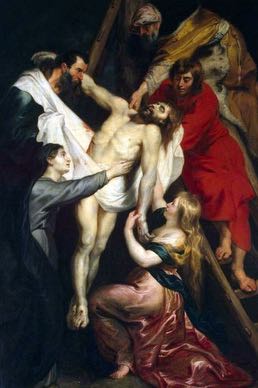
The Elevation of the Cross turns Christ’s rising body into a great coordinated effort of straining figures. Descent from the Cross moves more slowly, carrying the pale body downward through white cloth, mourning figures, and a focused beam of light. These altarpieces secured Rubens’s position as Antwerp’s leading painter.
By What System Did Rubens Run His Workshop?
Commissions soon arrived faster than any one painter could complete them. Rubens built a large workshop where assistants and specialist collaborators worked from his drawings and oil sketches. He conceived the composition, studied the key figures, supervised the execution, and revised or finished passages according to the commission and his intended level of involvement.
Small oil sketches were vital to this system. Painted quickly but clearly, they allowed patrons to approve a design and gave the workshop a guide for altarpieces, large canvases, ceilings, tapestries, prints, and decorative cycles. Drawings kept useful solutions for poses, expressions, anatomy, and drapery ready for future projects.
Rubens also worked with artists whose specialties complemented his own. Jan Brueghel the Elder supplied flowers, animals, and landscapes for joint pictures, while Anthony van Dyck emerged as his most distinguished younger associate before beginning an international career of his own.
Where Did Rubens Find Such Energy in Bodies and Hunts?
Classical mythology gave Rubens room to explore desire, abundance, conflict, transformation, and the expressive power of the body. His figures seldom settle into stillness. Torsos turn, limbs reach, fabric streams, gestures answer one another, and diagonals cross as if the action continues outside the frame.
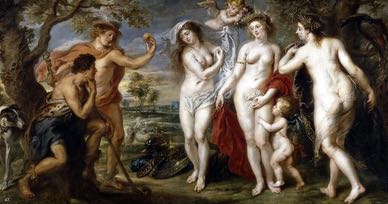
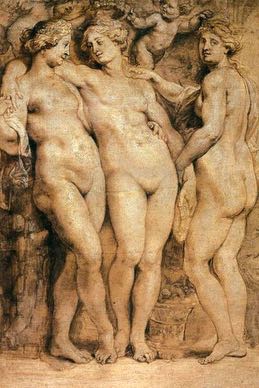
Paintings such as The Three Graces, Venus and Adonis, and The Judgment of Paris bring ancient stories to life through warm flesh and saturated color. Rather than impose one ideal body on every subject, Rubens varied age, physique, gender, and character to suit the story.
He carried the same momentum into scenes of wild animals. In Hippopotamus and Crocodile Hunt and The Lion Hunt, weapons, horses, hunters, predators, and prey collide in a violent circular surge. Anatomical knowledge and imagination meet the courtly fascination with exotic creatures and hunting.
Which Commissions Turned Rubens into a Diplomat?
Rubens served rulers with both pictures and political judgment. During the 1620s, Marie de’ Medici asked him to paint a cycle of monumental canvases for the Luxembourg Palace in Paris. He transformed episodes from the queen’s life into elaborate allegories crowded with historical figures, gods, personifications, and emblems of royal power.
His education, command of languages, political tact, and access to courts made him valuable in delicate negotiations. In 1628 he traveled to Madrid and the following year to London, helping efforts toward peace between Spain and England. He continued to paint on these missions, studied Titian in the Spanish royal collection, and cultivated leading patrons and political figures.
Both Philip IV of Spain and Charles I of England honored him; Charles knighted Rubens, and Philip granted him noble status. His painted ceilings for the Banqueting House at Whitehall became one of his greatest royal projects, celebrating the reign of James I through monumental allegory.
What Changed in Rubens’s Later, More Private Art?
Rubens’s first wife, Isabella Brant, died in 1626. Four years later he married Hélène Fourment, whose youth and presence inspired many portraits and mythological figures. Affectionate images of Hélène, their children, gardens, and family leisure brought a more intimate tone to his later work.
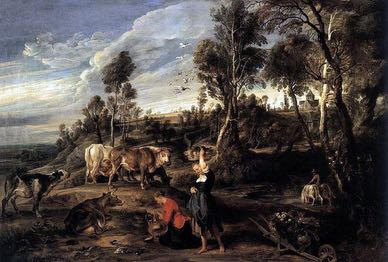
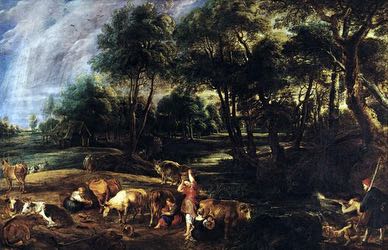
In 1635, Rubens bought Het Steen, a country estate outside Antwerp. There he increasingly painted landscapes for his own pleasure instead of for patrons. Fields, villages, trees, carts, farmers, weather, and changing light allowed him to join close observation of Flanders with the broad compositional sweep developed over a lifetime.
These late landscapes are calmer than the altarpieces and hunts, but movement remains—in bending roads, passing clouds, vegetation, and streams of light. Gout troubled Rubens during his final years, and he died in Antwerp on 30 May 1640.
Which Paintings Reveal the Full Range of Rubens’s Art?
Rubens’s best-known works move freely among religious drama, classical mythology, political allegory, portraiture, and the violence of the hunt:
- The Elevation of the Cross: Straining bodies and a forceful diagonal unite the raising of Christ in a single physical and spiritual effort.
- Descent from the Cross: A measured downward rhythm, white shroud, pale body, and concentrated light create solemn emotional power.
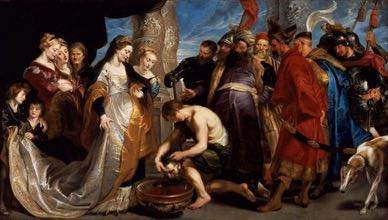
- Samson and Delilah: Rich fabrics, warm light, muscular form, and carefully directed gestures bring the biblical betrayal into intimate focus.
- Prometheus Bound: An attacking eagle and the Titan’s twisting body concentrate punishment and resistance into one brutal encounter.
- Daniel in the Lions’ Den: Daniel’s prayerful stillness stands against the alert bodies and distinct expressions of the lions around him.
- Hippopotamus and Crocodile Hunt: People and animals collide in a dense circular composition charged with immediate danger.
- The Three Graces: Three linked bodies suggest beauty, generosity, and sensual abundance within a warm, glowing landscape.
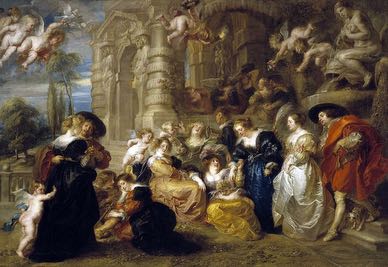
- The Garden of Love: Fashionable couples, playful cupids, fountains, and sculpture turn courtship into an elaborate celebration.
- Peace and War: Mythological figures embody the safety, fertility, and prosperity that flourish when peace defeats violence.
- The Consequences of War: Venus struggles to hold back Mars as he rushes toward destruction in an urgent allegory of European conflict.
Why Does Rubens’s Influence Reach So Far?
Rubens united classical learning, Italian Renaissance models, Baroque drama, northern observation, and extraordinary fluency in oil paint. Movement, gesture, color, and physically convincing figures allowed him to make complicated religious, mythological, and political ideas immediately legible.
His workshop showed how drawings, oil sketches, assistants, specialist painters, printmakers, and patrons across Europe could be coordinated without losing a recognizable artistic identity. Engravings spread his designs even farther, allowing artists who never traveled to Antwerp to study his figures and compositions.
Van Dyck carried Rubens’s lessons into international portraiture, while Watteau, Boucher, Fragonard, Reynolds, Géricault, and Delacroix each responded to different sides of his art. His legacy belongs to no single movement. Rubens remains a compelling example of intellectual reach, technical freedom, emotional intensity, and large-scale organization working together in paint.
Copyright © 2026 BrushWiz. All Rights Reserved.
About Our Peter Paul Rubens Paintings
Are your Peter Paul Rubens reproductions painted by hand?
Yes. Every reproduction is individually painted by hand in oil on canvas by a professional artist. We do not use prints, digital transfers, or mechanical reproduction methods.
How closely do your Rubens copies resemble the original?
Our artists work to capture the composition, colors, texture, and visual character of the original Rubens painting as closely as possible. Because every reproduction is painted by hand, small variations are natural and make each canvas unique.
How long does it take to complete a painting?
Most Peter Paul Rubens reproductions require approximately two to three weeks to paint, dry, and inspect. Production time may vary depending on the artwork and canvas size, so check the estimate displayed on the product page.
Can I request a Rubens painting that is not listed?
Yes. If you cannot find the Peter Paul Rubens artwork you want in our catalog, send us the painting’s title or an image. Our team will review your request and confirm the available sizes, estimated production time, and price.
Will I receive photos of my painting before it is shipped?
Yes. We send high-resolution photographs of the completed painting for your approval. You can request adjustments if needed, and the painting will not be dispatched until the review process is complete.
Can I order a custom canvas size?
Yes. We offer custom dimensions in addition to the standard sizes shown on the product page. Select the dimensions you need directly from the available size options.
Can I order my Rubens painting with a frame?
Yes. High-quality frames in classic and modern designs are available for many paintings. You can view compatible framing options and add your preferred design from the product page. Professional canvas stretching is also available.
How much does a Peter Paul Rubens reproduction cost?
The price depends on the selected artwork, canvas dimensions, and framing option. Choose your preferred configuration on the product page to see the current price before ordering.
Do you offer free worldwide shipping?
Yes. Peter Paul Rubens reproductions qualify for free express worldwide shipping. After dispatch, delivery usually takes five to eight business days, although timing may vary by country and destination.
What is the return policy for Rubens reproductions?
Orders are covered by our 90-day return policy. Review the current return-policy page before ordering for complete information about eligibility, time limits, and the return process.
Why BrushWiz?
100% Hand Painted
Every piece is entirely handmade
Museum Quality
Faithfully recreated by expert artists
Custom Framing
Choose from a wide range of frames
Free Shipping
Enjoy free shipping on all orders
Cash Back Rewards
Earn cash back with every purchase