

🔥 Limited-Time Sale. Offer Ends 11/10/2026. View Details
🔥 Limited-Time Sale. Ends 11/10/2026. View Details
🔥 Limited-Time Sale. View Details
Artists
Subjects
Movements
Collections
Decor
Portraits
Commissions
Framing
Reviews
Gift Cards
On Sale
Arnold Bocklin Oil Painting Reproductions
Shop museum-quality reproductions of Arnold Bocklin’s most famous paintings, each hand-painted in oil on canvas by a professional artist.
Shop Art
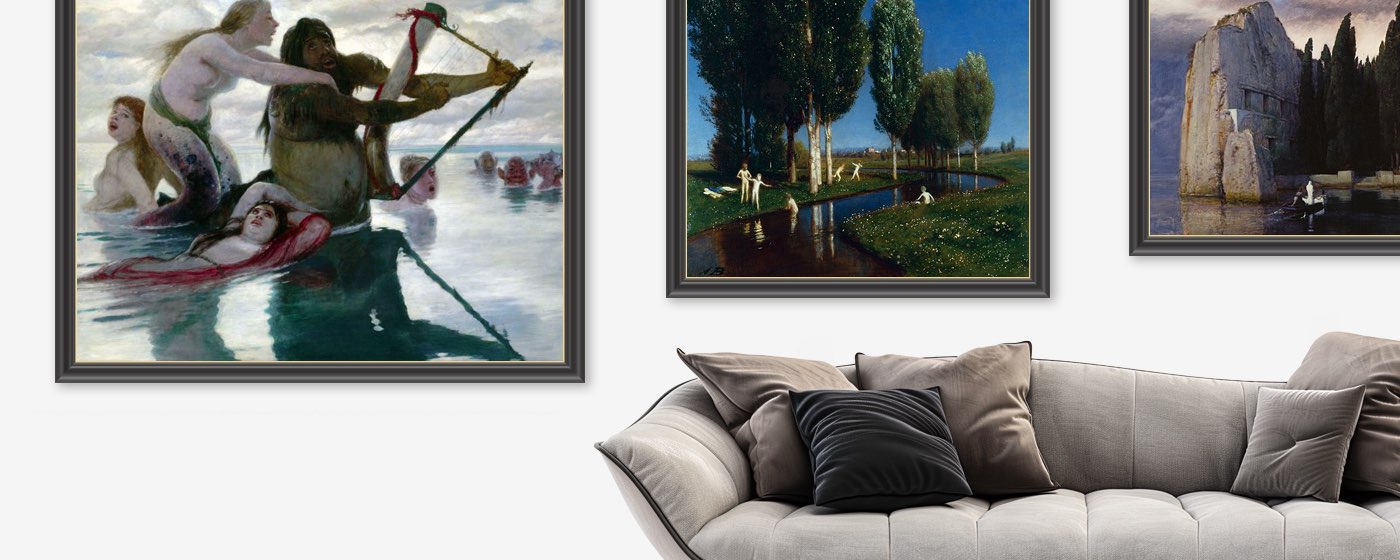
Showing 1-40 of 127 results
Sort By
Most Popular
- Most Popular
- New Arrivals
- Best Sellers
- Alphabetical A-Z
- Alphabetical Z-A

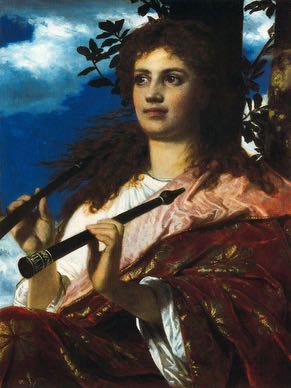
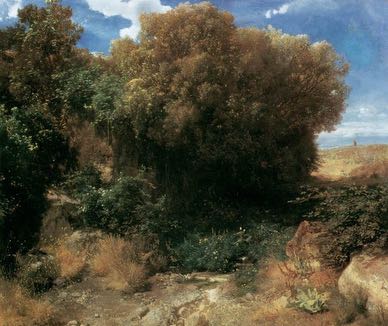
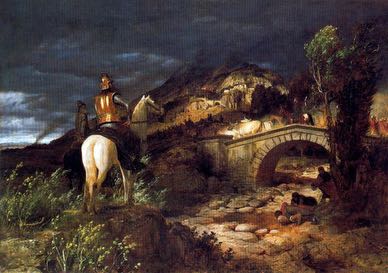
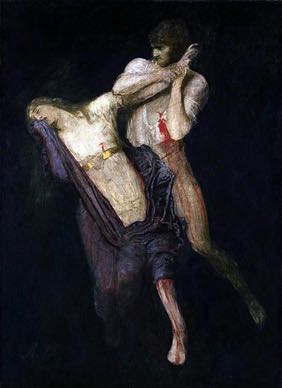
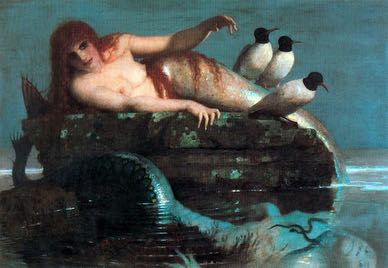
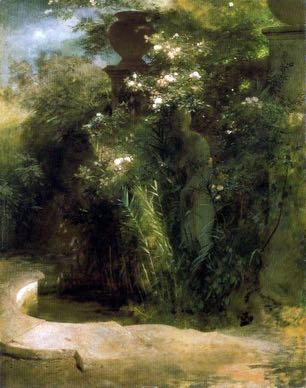
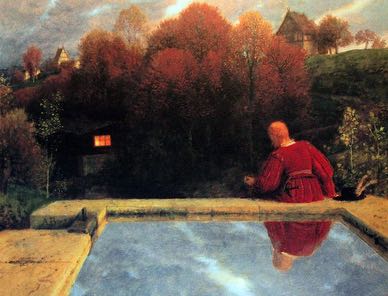
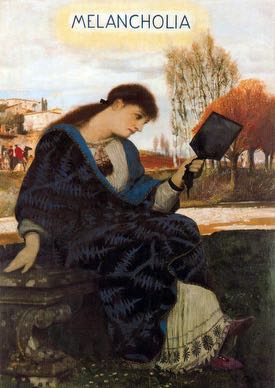
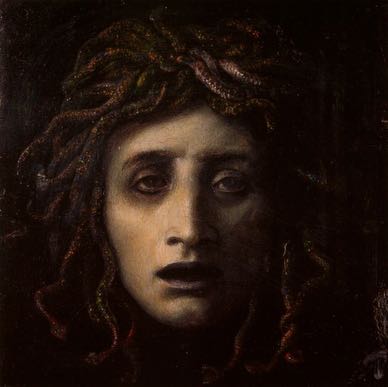
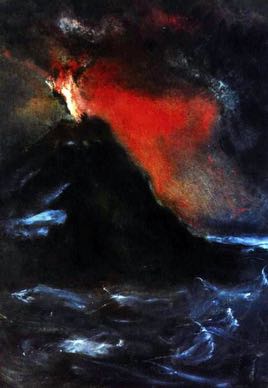
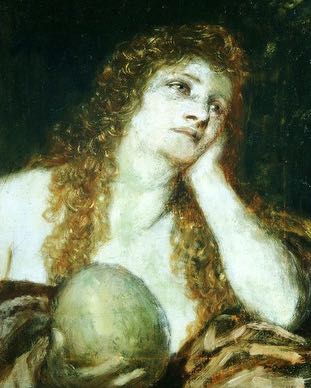
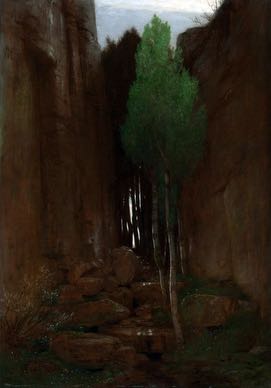

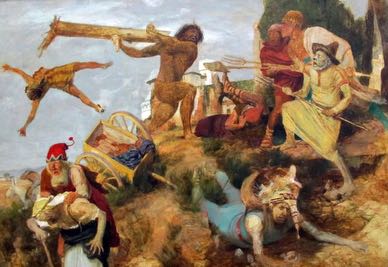
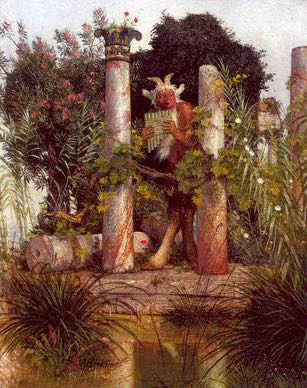
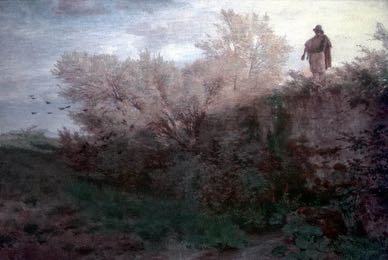
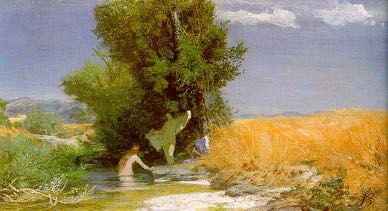
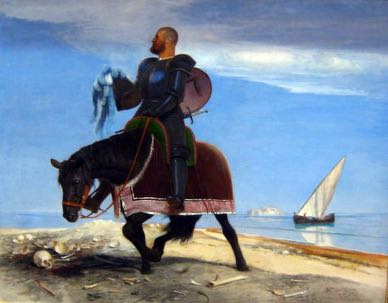
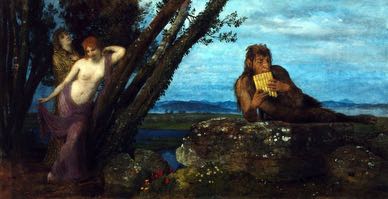
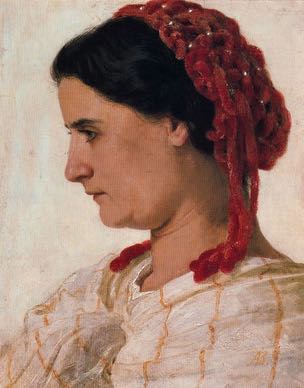
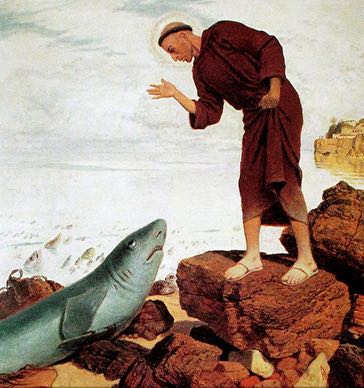
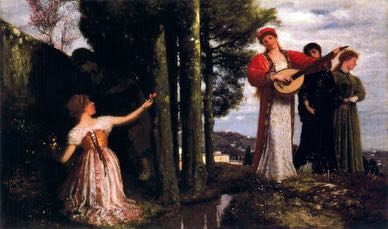
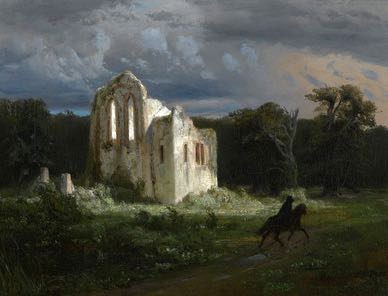
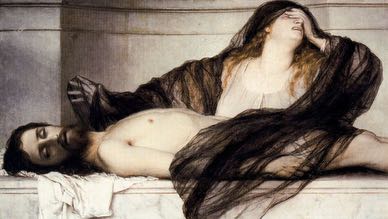
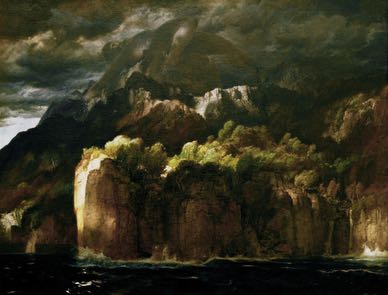
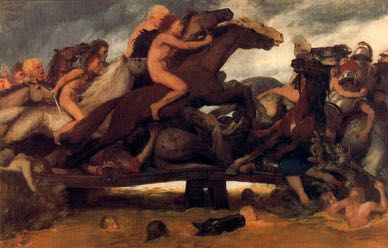
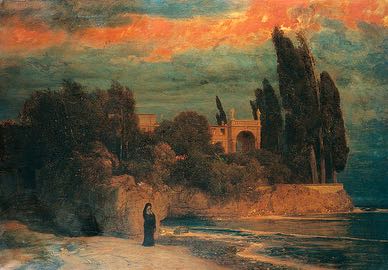
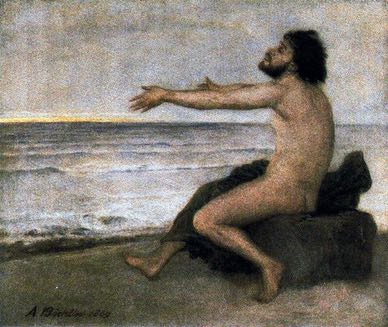
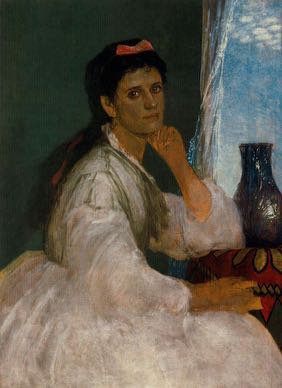

Can’t Find the Painting You Want?
Looking for a specific painting that isn’t in our catalog? Just let us know. We can recreate almost any artwork in the size and style you’re looking for.
Request a PaintingHand-Painted Arnold Bocklin Reproductions
Bring Bocklin’s art into your home with an oil-on-canvas reproduction hand-painted by a professional artist. Our collection features more than one hundred paintings from across his career, including The Isle of the Dead, Self-Portrait with Death as a Fiddler, and Villa by the Sea. Discover cypress islands, mythological creatures, turbulent seas, melancholy ruins, classical visions, and other subjects closely associated with Bocklin. Every reproduction is a real oil painting, offering depth and texture that a print or digital transfer cannot provide. From iconic masterpieces to lesser-known works, find a Bocklin painting that suits your space.
The Making of an Arnold Bocklin Oil Painting Replica
Creating an Arnold Bocklin oil painting replica requires patience, precision, and an understanding of the original artwork. Our studio includes artists who specialize in Symbolist painting and understand the distinctive qualities of Bocklin’s work. The artist begins by studying the source image, then recreates its dramatic landscape, saturated colors, sculptural figures, and Bocklin’s balance between observed nature and imagined myth on canvas using traditional oil-painting methods. After completion, the painting is inspected by our quality-control team and photographed for your approval. The result is a carefully executed oil painting that reflects the visual character of the original.
Custom Sizes and Frames for Your Bocklin Painting
Your Bocklin painting can be ordered in practically any size, from popular standard dimensions to custom canvas sizes selected directly on the product page. This flexibility lets you choose a painting that fits your wall and complements your room perfectly. After selecting the size, you can choose from high-quality frames in classic or modern designs, with professional canvas stretching also available. Our framing options complement the saturated colors and dreamlike character of Bocklin’s paintings. With sizing, stretching, and framing arranged in one order, your artwork can arrive ready for display without a separate visit to a frame shop.
Order an Arnold Bocklin Reproduction with Confidence
Buying hand-painted art online should feel clear and comfortable. After your Arnold Bocklin reproduction is completed, we send high-resolution photographs for your review before shipping. You can inspect the composition, colors, figures, and overall finish, then request adjustments if needed. The painting is dispatched only after you approve it, so you know what to expect when it arrives. Your order also includes free express worldwide shipping and is covered by our 90-day return policy. Together, these assurances help you purchase a Bocklin oil painting with greater confidence and peace of mind.
The Life and Art of Arnold Bocklin
Arnold Bocklin, originally spelled Arnold Böcklin, was a Swiss painter whose imagined landscapes and mythological figures became landmarks of nineteenth-century Symbolism. Born in Basel in 1827, he trained as a landscape painter but spent much of his life in Italy, where ancient art, Mediterranean light, cypress trees, villas, and rocky coasts entered his visual world. He populated these settings with nymphs, centaurs, sea creatures, gods, mourners, and personifications of death. His pictures can be solemn, comic, sensual, or deliberately unsettling, and they rarely insist on one fixed interpretation. The Isle of the Dead became his most famous invention, influencing painters, composers, filmmakers, and generations of viewers drawn to its unresolved mystery.
Read More
Who Was Arnold Bocklin?
Arnold Böcklin, whose surname BrushWiz presents as Bocklin, was born in Basel, Switzerland, on 19 October 1827. His father worked in the silk trade, and the family expected a practical career. Instead, the young artist left Basel to study landscape painting in Düsseldorf, beginning a life marked by travel, ambitious experiments, and repeated changes of home.
Bocklin is usually described as a Symbolist, though the label was applied to a broad movement rather than a single shared style. He did not paint symbols as if they belonged to a fixed dictionary. A cypress, ruin, wave, or hybrid creature gathers meaning through its setting, color, and mood, leaving the viewer room to imagine what has happened.
His art occupies a curious place between old and new. Classical myths and Renaissance models gave him subjects, while close studies of trees, rocks, weather, animals, and the human body kept fantasy tied to observation. He could make antiquity feel immediate, comic, threatening, or unexpectedly strange.
Where Did Bocklin Learn to Paint Landscapes?
In 1845, Bocklin entered the Düsseldorf Academy, one of the leading centers for landscape painting in German-speaking Europe. He studied with Johann Wilhelm Schirmer, whose teaching emphasized careful observation, compositional structure, and the transformation of natural studies into finished landscapes. Excursions along the Rhine and journeys into Switzerland supplied him with mountains, forests, and changing skies.
He traveled to Belgium and the Netherlands, where older northern painting offered further lessons in atmosphere and detail. In Paris during 1848, he witnessed the upheaval of revolution and studied works in the Louvre. The experience broadened his artistic knowledge while reinforcing his desire to build pictures from memory and invention rather than record a place exactly.
These years gave Bocklin a solid landscape foundation, but conventional scenery did not satisfy him for long. Even his apparently natural views begin to feel staged. A grove can resemble a sanctuary, a cliff can carry the weight of a monument, and a distant building may suggest a story the painting never explains.
Why Did Italy Become His Second Home?
Bocklin first went to Rome in 1850 and found the landscape, ancient remains, and Renaissance art that would sustain him for the rest of his career. The dry light and dark cypresses of central Italy differed sharply from the northern scenery of his training. Ruins did not appear as isolated archaeological objects; they seemed embedded in living earth and vegetation.
In Rome he met Angela Pascucci, whom he married in 1853. Their family life was often difficult. Money could be scarce, illness repeatedly struck the household, and many of their children died young. The closeness of beauty and loss in Bocklin’s paintings is not a simple transcription of biography, but it belonged to a world he knew personally.
He continued moving between Italy and cities north of the Alps, including Basel, Munich, Weimar, and Zurich. Yet Italy remained more than a source of motifs. It gave him a mental landscape in which antiquity, memory, sunlight, and mortality could coexist without the boundaries of ordinary time.
How Did Bocklin Turn Landscape into Psychological Drama?
Bocklin often begins with a believable place, then removes the clues that would make it easy to identify or explain. In Villa by the Sea, a dark-clad woman stands near a grand house as cypresses bend above an almost motionless shore. No clear event tells viewers why she waits there.
The ambiguity is deliberate. Wind agitates the sky and trees, while the figure and sea remain strangely still. Architecture suggests former wealth, but isolation and weather hint at loss. Bocklin painted five versions of the motif, adjusting the balance of building, coast, color, and human presence without resolving its story.
His landscapes differ from the solitary spiritual views of Caspar David Friedrich, though both artists used nature to open inward questions. Bocklin’s places are more theatrical and bodily. They feel like stages on which an ancient memory might suddenly take visible form.
What Roles Do Gods and Monsters Play in His Art?
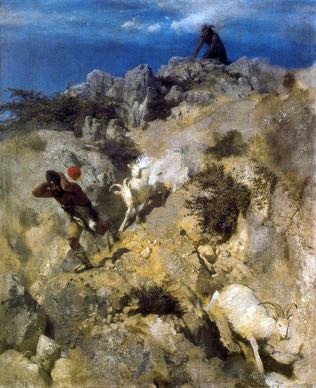
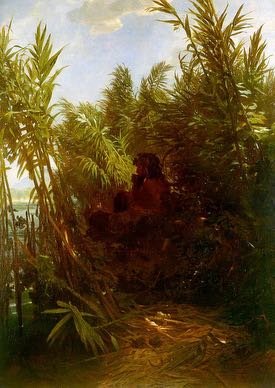
Classical mythology allowed Bocklin to animate every part of nature. Pan hides among reeds, centaurs struggle across rough ground, nymphs inhabit springs, and tritons rise from the sea. These beings are not polished quotations from ancient sculpture. They look as though wind, rock, vegetation, and animal life have produced bodies of their own.
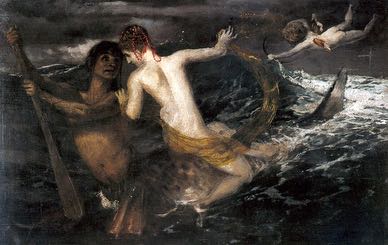
In Pan among the Reeds, the god belongs to the marshy setting rather than presiding over it from a distance. Triton and Nereid gives marine mythology a wet, muscular physicality. The fantastic becomes convincing because Bocklin paid close attention to how real bodies occupy their environments.
Myth also freed him from respectable academic solemnity. His gods can be clumsy, lustful, frightened, or amused. By treating them as creatures with instincts and weight, he brought ancient stories closer to modern anxieties about nature, desire, violence, and the uncertain boundary between human and animal.
Did Bocklin’s Mythological Paintings Have a Playful Side?
Not every Bocklin fantasy is haunted. Centaurs visit a village blacksmith, sea creatures wrestle in the surf, and classical beings behave with the unruly energy of animals or children. His humor can feel broad and physical, cutting through the polite seriousness usually expected of nineteenth-century mythological art.
In Playing in the Waves, a turbulent group of marine creatures turns the sea into a noisy social world. Centaur at the Village Blacksmith’s Shop builds its joke around practical anatomy: a creature who is partly horse has arrived to have a hoof tended.
This comic side matters because it prevents Bocklin from becoming only a painter of gloom. The same imagination produced solemn islands, erotic encounters, grotesque masks, and exuberant games. His art feels unpredictable because the ancient world can shift from sacred to ridiculous without losing its visual conviction.
What Makes the Self-Portrait with Death So Unsettling?
Bocklin painted Self-Portrait with Death as a Fiddler in Munich in 1872. He stands before a dark ground holding palette and brushes, the familiar tools of his profession. Behind his shoulder, a skeletal figure raises a violin and plays close to the artist’s ear.
The painter does not recoil. He pauses and listens, as though the sound has interrupted his work or supplied a new idea. Death’s violin has only one string, sharpening the suggestion that the music has a final, unavoidable note. The image draws on older memento mori and Dance of Death traditions familiar from Bocklin’s native Basel.
Yet the painting is more than a warning that life is short. Death appears almost like a collaborator, whispering the subject that art must confront. Bocklin presents himself as alert and self-possessed, neither defeated nor comforted. That uncertain relationship between mortality and creative inspiration gives the portrait its lasting tension.
Why Did The Isle of the Dead Become So Famous?
Bocklin began the first version of The Isle of the Dead in Florence in 1880. Marie Berna saw the unfinished picture in his studio and commissioned a second version as a memorial to her late husband. At her request, he added the shrouded figure and coffin carried toward the island in a small boat.
He ultimately painted five versions between 1880 and 1886. Four survive. The narrow entrance, sheer rock, dark cypresses, still water, and slow approach create a destination that feels recognizable without belonging to any real geography. Bocklin did not explain exactly who arrives or what waits inside.
Reproductions carried the image into homes across Europe, and its influence moved beyond painting. Sergei Rachmaninoff composed a symphonic poem after seeing it, while later writers, filmmakers, and artists found their own meanings in the scene. Its endurance comes from restraint: the boat approaches, but the painting never lets the journey end.
Which Paintings Best Introduce Bocklin’s Imagined World?
Bocklin returned to certain subjects in several versions, treating repetition as a chance to change mood, color, and emphasis. These works show the breadth of his landscapes, mythologies, portraits, and meditations on mortality:
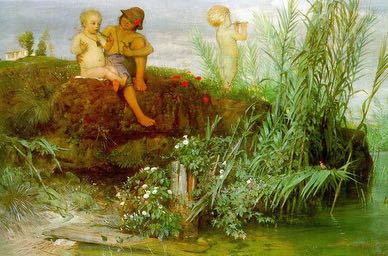
- Pan among the Reeds, 1850s: The woodland god emerges from close observation of a marshy landscape, making myth feel native to the place.
- Villa by the Sea: A solitary woman, bending cypresses, and a remote house form a scene of unresolved waiting and melancholy.
- The Sacred Grove: Worshippers approach a shadowed sanctuary where architecture and ancient trees share a solemn presence.
- Self-Portrait with Death as a Fiddler, 1872: The artist listens calmly while a skeleton plays a single-stringed violin beside him.
- Triton and Nereid: Hybrid sea beings turn classical mythology into an encounter of flesh, water, desire, and animal force.
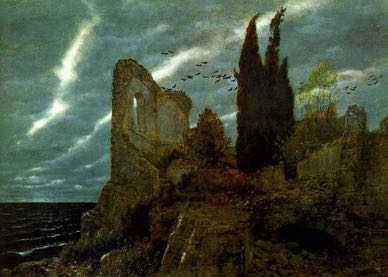
- The Isle of the Dead, 1880: A shrouded passenger and coffin cross still water toward cliffs, cypresses, and an unknown destination.
- Odysseus and Calypso, 1882: Separated figures and intense color turn Homer’s story into an image of longing that cannot be shared.
- Playing in the Waves: Boisterous marine creatures reveal the earthy humor and physical energy within Bocklin’s classical world.
- The Island of Life: Bathers, animals, plants, and bright water offer a lively counterpart to his famous island of death.
- The Plague, 1898: Death rides a winged creature through a narrow street in a late vision of disease and collective terror.
How Did Bocklin Influence Modern Art and Culture?
Bocklin spent his last years near Florence and died at San Domenico, outside Fiesole, on 16 January 1901. By then he was one of the most famous painters in German-speaking Europe. His pictures circulated widely through reproductions, reaching audiences who might never see an original canvas.
His standing declined when critics identified modern art chiefly with French Impressionism and formal experiment. Yet his invented spaces, hard-to-name emotions, and startling combinations of realism and fantasy appealed strongly to later Symbolists, Surrealists, and artists such as Edvard Munch. Composers including Rachmaninoff and Max Reger translated individual paintings into music.
Today, Bocklin occupies a distinctive place in nineteenth-century art. His importance rests not only on The Isle of the Dead but on the freedom with which he remade antiquity. In his hands, landscape remembers, water breeds monsters, death offers music, and a familiar shore becomes the edge of an unknowable world.
Copyright © 2026 BrushWiz. All Rights Reserved.
About Our Arnold Bocklin Paintings
Are your Arnold Bocklin reproductions painted by hand?
Yes. Every reproduction is individually painted by hand in oil on canvas by a professional artist. We do not use prints, digital transfers, or mechanical reproduction methods.
How closely will my Bocklin copy resemble the original?
Our artists work to capture the composition, colors, figures, atmosphere, and visual character of the original Bocklin painting as closely as possible. Because each reproduction is painted by hand, small variations are natural and make every canvas unique.
How long does an Arnold Bocklin painting take to complete?
Most Bocklin reproductions require approximately two to three weeks to paint, dry, and inspect. Production time may vary with the artwork and canvas size, so check the estimate displayed on the product page.
Can I request a Bocklin artwork that is not listed?
Yes. If you cannot find the Arnold Bocklin painting you want in our catalog, send us its title or an image. Our team will review the request and confirm the available sizes, estimated production time, and price.
Will I receive photographs before my painting is shipped?
Yes. We send high-resolution photographs of the completed painting for your approval. You may request adjustments if needed, and the artwork will not be dispatched until the review process is complete.
Are custom canvas dimensions available?
Yes. We offer custom dimensions in addition to the standard sizes displayed on the product page. Select the dimensions that best suit your space from the available size options.
May I order my Bocklin reproduction with a frame?
Yes. High-quality frames in traditional and contemporary designs are available for many paintings. You can view compatible options and add your preferred frame on the product page. Professional canvas stretching is also available.
What determines the price of an Arnold Bocklin reproduction?
The price depends on the selected artwork, canvas dimensions, and framing option. Choose your preferred configuration on the product page to see the current price before placing your order.
Do Bocklin paintings qualify for free worldwide shipping?
Yes. Bocklin reproductions qualify for free express worldwide shipping. After dispatch, delivery usually takes five to eight business days, although timing may vary by country and destination.
Which return policy covers Arnold Bocklin reproductions?
Orders are covered by our 90-day return policy. Review the current return-policy page before ordering for complete information about eligibility, time limits, and the return process.
Why BrushWiz?
100% Hand Painted
Every piece is entirely handmade
Museum Quality
Faithfully recreated by expert artists
Custom Framing
Choose from a wide range of frames
Free Shipping
Enjoy free shipping on all orders
Cash Back Rewards
Earn cash back with every purchase