
🔥 Limited-Time Sale. Offer Ends 11/11/2026. View Details
🔥 Limited-Time Sale. Ends 11/11/2026. View Details
🔥 Limited-Time Sale. View Details
Artists
Subjects
Movements
Collections
Decor
Portraits
Commissions
Framing
Reviews
Gift Cards
On Sale
Benjamin West Oil Painting Reproductions
Shop museum-quality reproductions of Benjamin West’s most famous paintings, each hand-painted in oil on canvas by a professional artist.
Shop Art
Showing 1-40 of 136 results
Sort By
Most Popular
- Most Popular
- New Arrivals
- Best Sellers
- Alphabetical A-Z
- Alphabetical Z-A
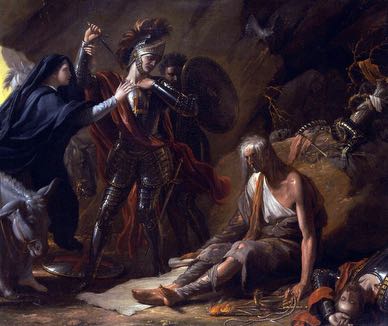
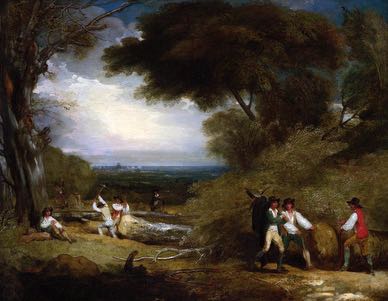

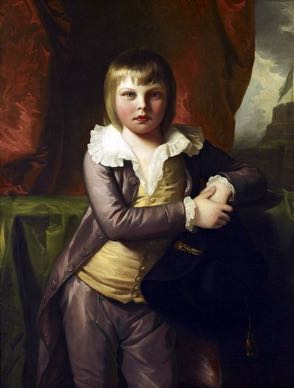
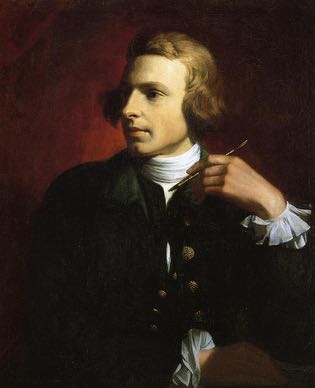
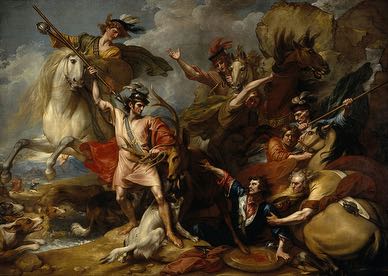


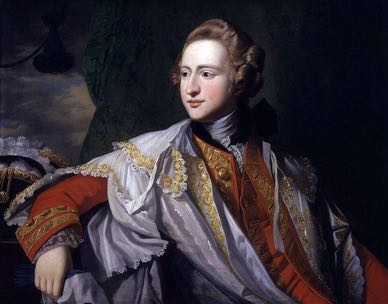


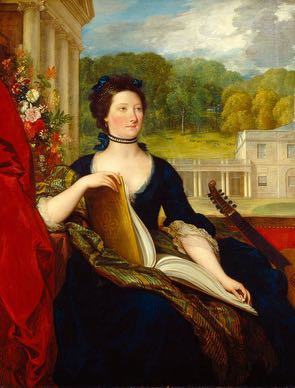
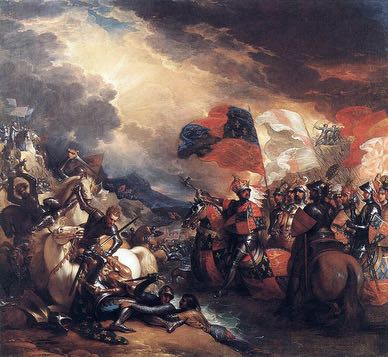

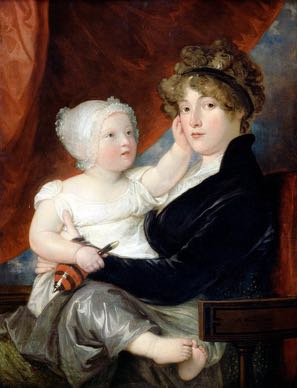
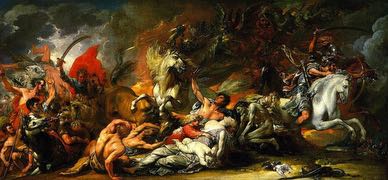


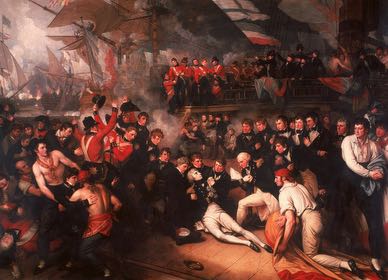

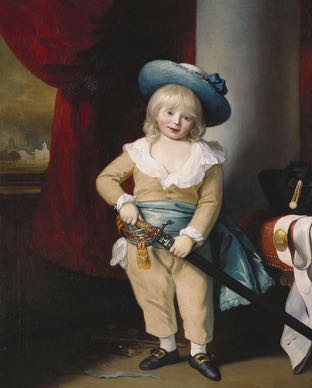
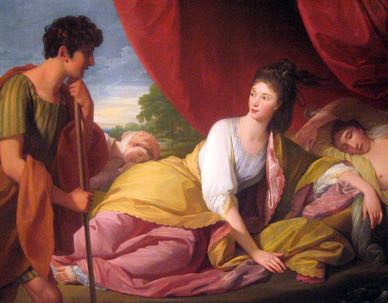
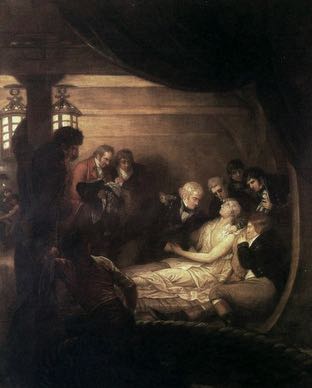
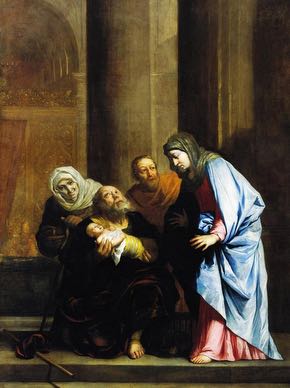
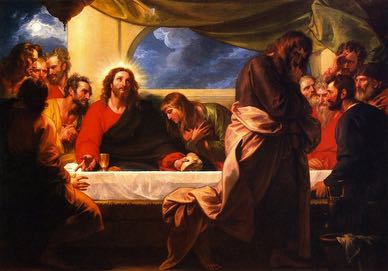

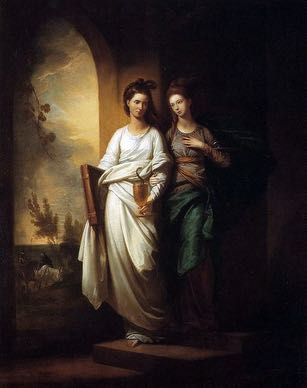
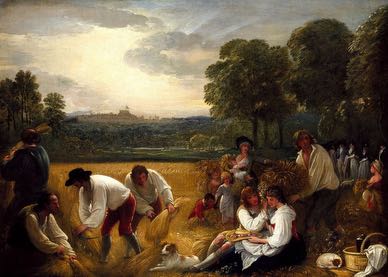
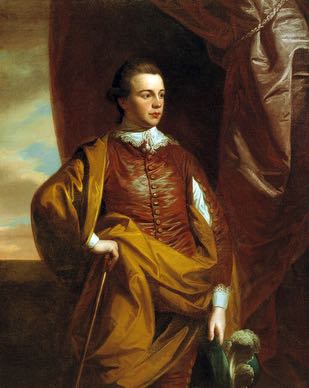
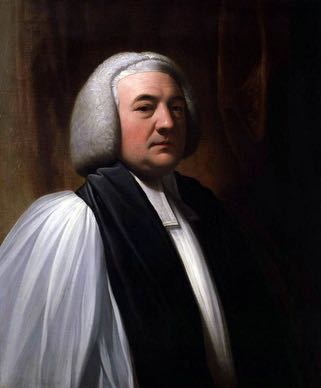
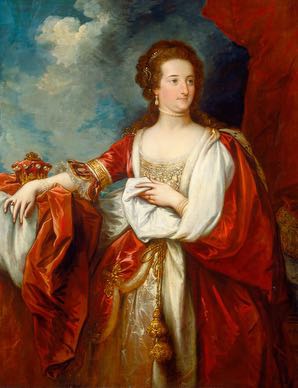
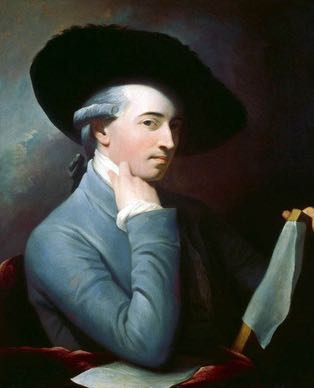

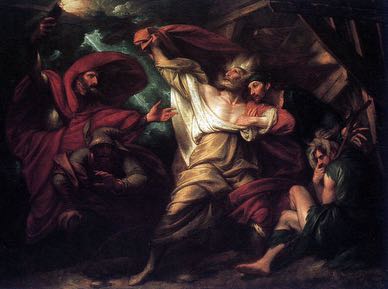

Can’t Find the Painting You Want?
Looking for a specific painting that isn’t in our catalog? Just let us know. We can recreate almost any artwork in the size and style you’re looking for.
Request a PaintingHand-Painted Benjamin West Reproductions
Bring West’s art into your home with an oil-on-canvas reproduction hand-painted by a professional artist. Our collection features more than one hundred paintings, including The Death of General Wolfe, The Treaty of Penn with the Indians, and Death on the Pale Horse. Discover modern battles, biblical narratives, classical histories, royal portraits, and other subjects associated with West. Every reproduction is a real oil painting, offering depth and texture that a print or digital transfer cannot provide. From iconic masterpieces to less familiar works, find a Benjamin West painting that suits your space.
The Making of a Benjamin West Oil Painting Replica
Creating a Benjamin West oil painting replica requires patience, precision, and an understanding of the original artwork. Our studio includes artists who specialize in Neoclassical history painting and understand the distinctive qualities of West’s work. The artist begins by studying the source image, then recreates its ordered figures, dramatic light, period details, and West’s balance of theatrical action and readable storytelling on canvas using traditional oil-painting methods. After completion, the painting is inspected by our quality-control team and photographed for your approval. The result is a carefully executed oil painting that reflects the visual character of the original.
Custom Sizes and Frames for Your Benjamin West Painting
Your Benjamin West painting can be ordered in practically any size, from popular standard dimensions to custom canvas sizes selected directly on the product page. This flexibility lets you choose a painting that fits your wall and complements your room perfectly. After selecting the size, you can choose from high-quality frames in classic or modern designs, with professional canvas stretching also available. Our framing options complement the dramatic compositions and rich historical settings of West’s paintings. With sizing, stretching, and framing arranged in one order, your artwork can arrive ready for display without a separate visit to a frame shop.
Order a Benjamin West Reproduction with Confidence
Buying hand-painted art online should feel clear and comfortable. After your Benjamin West reproduction is completed, we send high-resolution photographs for your review before shipping. You can inspect the composition, figures, colors, and overall finish, then request adjustments if needed. The painting is dispatched only after you approve it, so you know what to expect when it arrives. Your order also includes free express worldwide shipping and is covered by our 90-day return policy. Together, these assurances help you purchase a Benjamin West oil painting with greater confidence and peace of mind.
The Life and Art of Benjamin West
Benjamin West was an American-born painter who rose from colonial Pennsylvania to become history painter to George III and president of Britain’s Royal Academy. Born in 1738, he received little formal training before patrons helped him study in Italy and establish himself in London. Working within Neoclassicism, West painted mythology, scripture, British history, colonial encounters, and recent military events on a scale traditionally reserved for the ancient world. The Death of General Wolfe became famous for presenting modern soldiers in contemporary uniform, while his later religious works moved toward the visionary power of Romanticism. West also welcomed generations of American artists into his studio, making his influence central to the development of painting on both sides of the Atlantic.
Read More
How Did a Pennsylvania Quaker’s Son Become a History Painter?
Benjamin West was born on 10 October 1738 in Springfield, now Swarthmore, near Philadelphia. He grew up in a large Quaker family in a colony without academies, major public collections, or an established profession of history painting. His earliest knowledge came from prints, local portraits, practical experiment, and the encouragement of people who recognized an unusual determination to draw.
Stories told late in West’s life turned this childhood into legend. He claimed that Native Americans showed him how to make pigments and that he fashioned a brush from his cat’s fur. These anecdotes helped present him as a natural genius born beyond European culture, but they should be read as carefully shaped autobiography rather than simple documentary fact.
West first earned money painting portraits in Lancaster, Philadelphia, and New York. The educator William Smith encouraged his study of classical history, while wealthy Pennsylvania patrons supported his ambitions. Portraiture gave him professional experience, but he wanted to create large narrative paintings whose subjects could teach moral, religious, or civic lessons.
What Changed During West’s Three Years in Italy?
In 1760, West sailed for Italy with financial assistance from patrons. He was among the first artists born in Britain’s North American colonies to pursue sustained study there. Rome provided what Pennsylvania could not: ancient sculpture, Renaissance frescoes, galleries of Old Masters, formal life drawing, and conversation with an international community of artists and scholars.
He studied the ideal figures of Raphael, the color of Titian, and the developing Neoclassical ideas associated with Anton Raphael Mengs and Johann Joachim Winckelmann. Travel to Florence, Bologna, Parma, and Venice broadened that education. West also learned to present himself effectively among aristocratic patrons who regarded an American painter as a novelty.
Italy replaced the stiffness of his early portraits with clearer anatomy, more ambitious figure groups, and a new command of historical composition. Works such as Pylades and Orestes Brought as Victims Before Iphigenia show how he translated classical study into readable drama. By the time he left in 1763, he could compete within Europe’s most prestigious genre.
Why Did London Become His Permanent Home?
West reached London in 1763, expecting at first that it might be another stage on his return to America. The city instead offered patrons, exhibitions, publishers, theaters, private collections, and an expanding market for British history. His Italian training gave him an advantage in a culture eager to establish a national school of ambitious painting.
Early historical works attracted attention, and commissions soon made remaining in London practical. West married Elizabeth Shewell, a young woman from Philadelphia, in 1765 after friends helped her cross the Atlantic. Their household became both a family home and a place where visiting artists could seek instruction, introductions, or temporary support.
Unlike John Singleton Copley, who arrived in Britain after building a brilliant portrait career in Boston, West had left North America before the Revolution transformed colonial identity. He lived in London for the rest of his life, remaining personally attached to America while becoming deeply embedded in British artistic institutions.
How Did Royal Patronage Reshape West’s Career?
King George III began supporting West during the late 1760s and appointed him historical painter to the king in 1772. The relationship provided financial stability, social authority, and a succession of demanding projects. West painted portraits of the royal family as well as scenes from British history, scripture, and classical literature intended for royal residences.
One immense plan involved a cycle of religious paintings for a chapel at Windsor Castle. West developed subjects ranging from Genesis to Revelation, producing finished canvases, large designs, and many preparatory studies. The project occupied him for years but was halted in 1801, leaving the intended sequence incomplete.
Royal patronage did not simply turn West into a court decorator. George III encouraged a sustained experiment in whether modern Britain could support history painting on the scale of Renaissance and Baroque Europe. The partnership gave West opportunities few artists received, though dependence on one patron also made his position vulnerable when the king’s illness and political circumstances changed.
What Made The Death of General Wolfe a Turning Point?
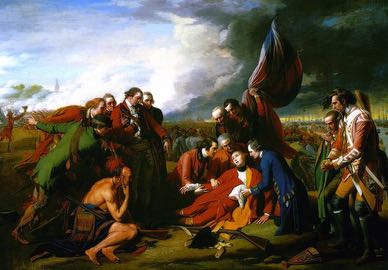
The Death of General Wolfe, painted in 1770 and exhibited the following year, represented the British commander dying after victory at Quebec in 1759. West organized the figures around Wolfe like mourners in a religious lamentation, giving a recent military event the emotional structure of elevated history painting.
The radical choice was clothing. Academic convention usually placed heroic figures in timeless classical dress, yet West showed officers and soldiers in contemporary uniforms. That decision made coats, weapons, and military equipment part of the painting’s claim to modern relevance. The scene was not an eyewitness record, however. Several figures were not present at Wolfe’s death, and the Indigenous man at the left functions within a European construction of North America.
The composition’s success overcame early objections. Prints carried the image far beyond the exhibition room, and George III commissioned another version. West demonstrated that events within living memory could receive the scale and seriousness of ancient history, opening an important path for later painters of modern war and public life.
Can Paintings of Colonial America Be Both History and Myth?
West repeatedly returned to North American subjects after settling in Britain. They gave him a distinctive place in the London art world, but they also converted contested colonial histories into carefully ordered public narratives. The results can be visually persuasive without being neutral records.
The Treaty of Penn with the Indians, commissioned by William Penn’s son and painted in 1771–1772, imagines a peaceful exchange between Quakers and Lenape people. No signed treaty corresponding exactly to the scene survives. The picture presents harmony, trade, and settlement while leaving the pressures of colonial expansion largely outside its frame.
Other works portray negotiations, conflict, and the return of captives. West used clothing, weapons, landscape, and gesture to distinguish groups and clarify action, yet Indigenous figures often carry symbolic roles created for European viewers. Reading these paintings today requires attention to their formal invention, their value as evidence of eighteenth-century attitudes, and the histories they simplify or exclude.
Where Did Religion and the Sublime Enter His Art?
Biblical painting ran throughout West’s career, from quiet encounters and family groups to vast visions of judgment, resurrection, and divine power. Royal commissions encouraged this scale, but the subjects also suited his belief that art should elevate the mind. He arranged gestures clearly enough to tell the story while using darkness, radiance, clouds, and supernatural movement to intensify its spiritual force.
In later works, calm Neoclassical order sometimes gives way to a more turbulent imagination. Death on the Pale Horse draws on the Book of Revelation. The mounted figure surges through a field of collapsing bodies, violent diagonals, and flashes of light. Terror, scale, and speed push the image toward the emerging language of Romanticism.
This shift was not a simple rejection of West’s earlier art. He continued to organize even his wildest scenes around a central narrative. What changed was the emotional range he expected history painting to contain. Ancient dignity, modern report, religious awe, and theatrical spectacle could all serve the same lifelong ambition to make a painted story command public attention.
Who Passed Through West’s Remarkable London Studio?
West helped establish the Royal Academy in 1768 and succeeded Joshua Reynolds as its president in 1792. Apart from a brief interruption in 1805–1806, he held the office until his death. His leadership placed him at the center of exhibitions, teaching, professional debate, and the institutional ambitions of British art.
His private studio had an equally important transatlantic role. Young American artists arrived in London with limited money and few connections. West offered advice, access to collections, introductions to patrons, and sometimes a place to work. Charles Willson Peale, John Trumbull, Washington Allston, Thomas Sully, Samuel F. B. Morse, and others benefited from his generosity.
Gilbert Stuart worked as West’s assistant before becoming one of the leading portraitists of his generation. Not every pupil adopted the master’s style, and some reacted against it. West’s larger achievement as a teacher was to make professional European training accessible and to treat American artists as participants in an international culture rather than provincial visitors.
Which Paintings Define West’s Transatlantic Career?
West’s long career moved between classical antiquity, British public history, colonial memory, intimate portraiture, and biblical vision. These paintings reveal the unusual breadth of his narrative ambition:
- Pylades and Orestes Brought as Victims Before Iphigenia, 1766: A tense classical encounter displays the ambitious figure drawing and emotional clarity West developed in Italy.
- Agrippina Landing at Brundisium with the Ashes of Germanicus, 1768: Public mourning and Roman dignity unfold through measured movement and a solemn architectural setting.
- The Death of General Wolfe, 1770: Contemporary uniforms and a recent battle enter the elevated visual language previously reserved for distant history.
- The Treaty of Penn with the Indians, 1771–1772: An idealized colonial meeting became an enduring, and increasingly debated, image of Pennsylvania’s founding.
- The Battle of La Hogue, 1778: Fire, smoke, sea, and crowded action turn naval history into controlled theatrical spectacle.
- The Death of Chatham, 1778: West stages a contemporary political crisis as a grand public drama inside the House of Lords.
- The Death of Nelson, 1806: The fallen admiral’s final moments revisit West’s influential formula for modern military heroism.
- Death on the Pale Horse, 1817: Apocalyptic movement and terror bring his late history painting close to Romantic spectacle.
Why Does Benjamin West Still Matter?
West died in London on 11 March 1820 and was buried in Saint Paul’s Cathedral. He had spent nearly sixty years in Britain, yet accounts of his American beginnings remained central to his public identity. That combination made him difficult to place within a single national story and essential to understanding how artistic careers crossed the eighteenth-century Atlantic.
Later critics often found his grand canvases too staged, but their theatrical clarity was part of their purpose. West had to make complicated histories readable to exhibition audiences, court patrons, churchgoers, and print buyers. His best paintings use grouping, costume, light, and gesture to turn a crowded event into a memorable public image.
His deepest legacy lies in two connected achievements. He expanded history painting to include modern events in contemporary dress, and he created a bridge through which American artists entered European professional life. The careers of Copley, Stuart, Trumbull, and many others developed differently because West had already made London both a destination and a school.
Copyright © 2026 BrushWiz. All Rights Reserved.
About Our Benjamin West Paintings
Are your Benjamin West reproductions painted by hand?
Yes. Every reproduction is individually painted by hand in oil on canvas by a professional artist. We do not use prints, digital transfers, or mechanical reproduction methods.
How closely do your West copies resemble the original?
Our artists work to capture the composition, colors, texture, and visual character of the original West painting as closely as possible. Because every reproduction is painted by hand, small variations are natural and make each canvas unique.
How long does a Benjamin West reproduction take to complete?
Most Benjamin West reproductions require approximately two to three weeks to paint, dry, and inspect. Production time may vary depending on the artwork and canvas size, so check the estimate displayed on the product page.
Can I request a Benjamin West painting that is not listed?
Yes. If you cannot find the Benjamin West artwork you want in our catalog, send us the painting’s title or an image. Our team will review your request and confirm the available sizes, estimated production time, and price.
Will I receive approval photos before shipping?
Yes. We send high-resolution photographs of the completed painting for your approval. You can request adjustments if needed, and the painting will not be dispatched until the review process is complete.
Are custom canvas sizes available for West paintings?
Yes. We offer custom dimensions in addition to the standard sizes shown on the product page. Select the dimensions you need directly from the available size options.
May I order my Benjamin West painting with a frame?
Yes. High-quality frames in classic and modern designs are available for many paintings. You can view compatible framing options and add your preferred design from the product page. Professional canvas stretching is also available.
What determines the price of a Benjamin West reproduction?
The price depends on the selected artwork, canvas dimensions, and framing option. Choose your preferred configuration on the product page to see the current price before ordering.
Is free express worldwide shipping included?
Yes. Benjamin West reproductions qualify for free express worldwide shipping. After dispatch, delivery usually takes five to eight business days, although timing may vary by country and destination.
Which return policy covers Benjamin West reproductions?
Orders are covered by our 90-day return policy. Review the current return-policy page before ordering for complete information about eligibility, time limits, and the return process.
Why BrushWiz?
100% Hand Painted
Every piece is entirely handmade
Museum Quality
Faithfully recreated by expert artists
Custom Framing
Choose from a wide range of frames
Free Shipping
Enjoy free shipping on all orders
Cash Back Rewards
Earn cash back with every purchase