
🔥 Limited-Time Sale. Offer Ends 11/11/2026. View Details
🔥 Limited-Time Sale. Ends 11/11/2026. View Details
🔥 Limited-Time Sale. View Details
Artists
Subjects
Movements
Collections
Decor
Portraits
Commissions
Framing
Reviews
Gift Cards
On Sale
Chaim Soutine Oil Painting Reproductions
Shop museum-quality reproductions of Chaim Soutine’s most famous paintings, each hand-painted in oil on canvas by a professional artist.
Shop Art
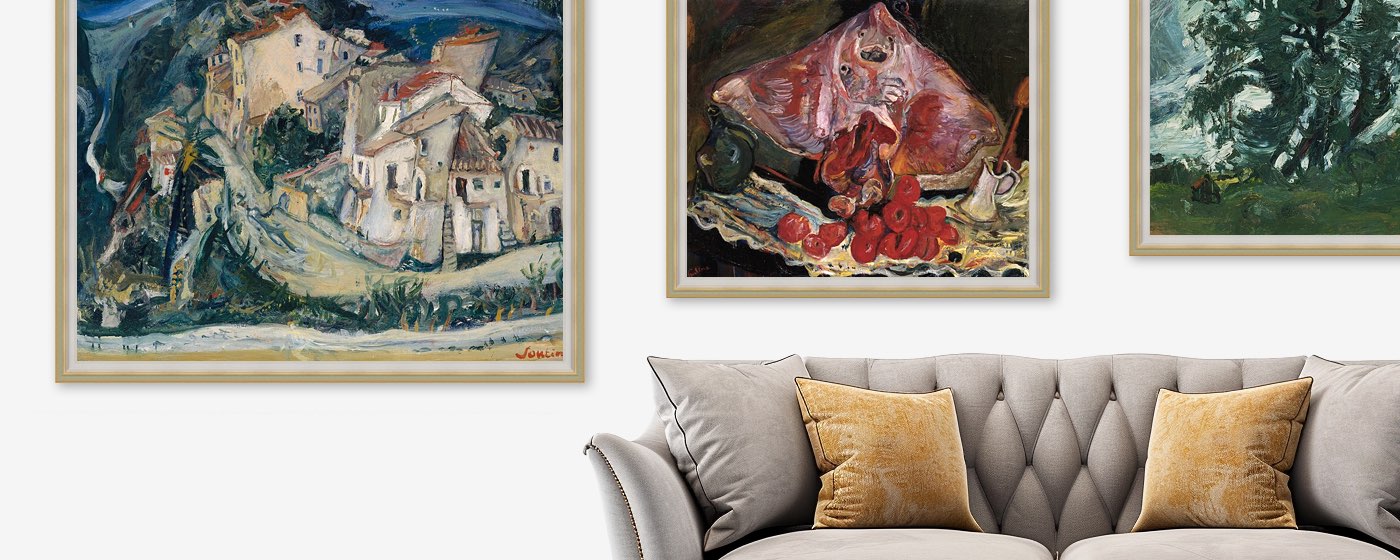
Showing 41-80 of 174 results
Sort By
Most Popular
- Most Popular
- New Arrivals
- Best Sellers
- Alphabetical A-Z
- Alphabetical Z-A
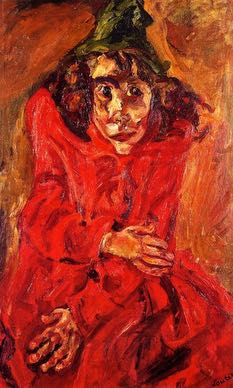
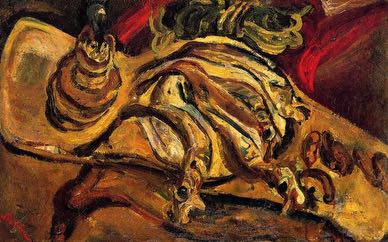
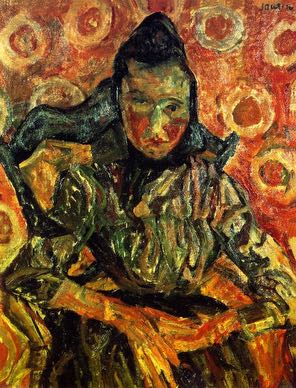
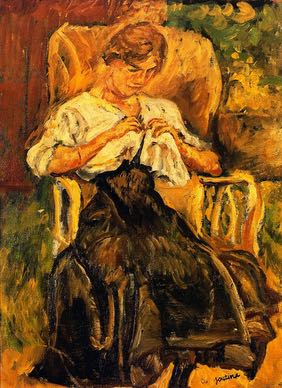

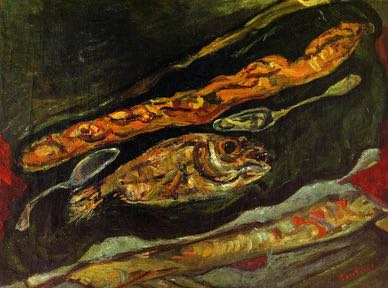
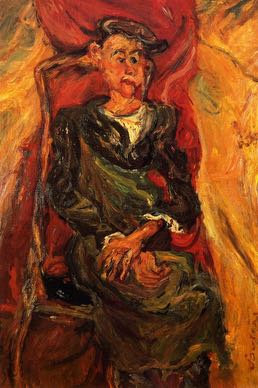
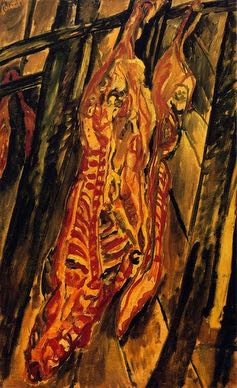
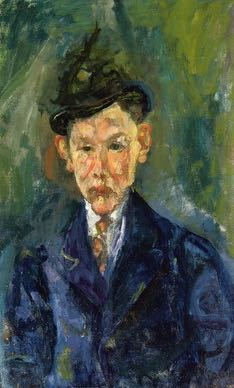
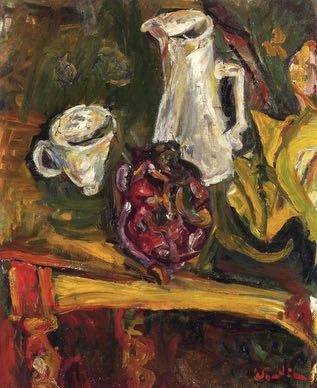
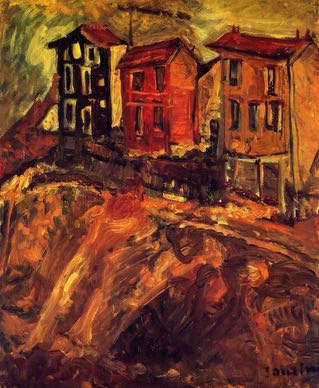
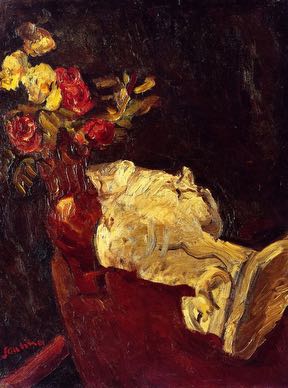
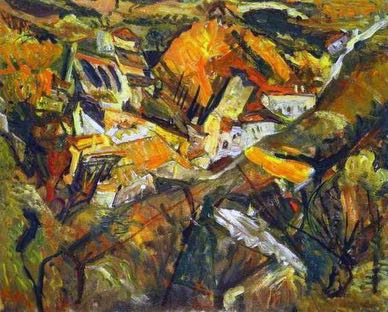
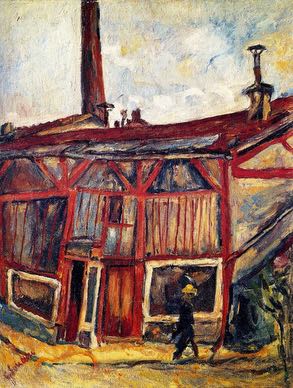
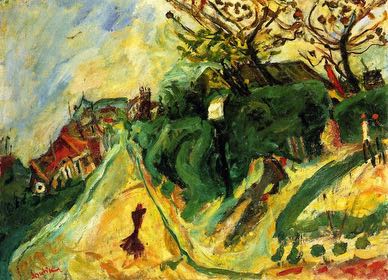
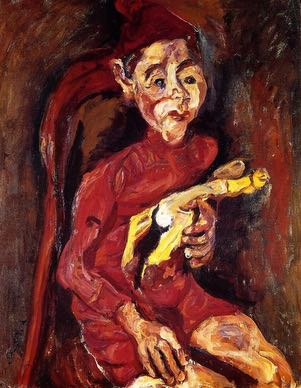
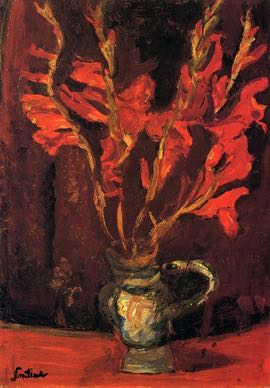
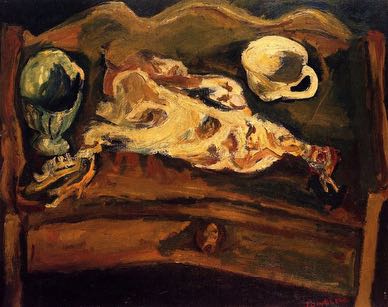
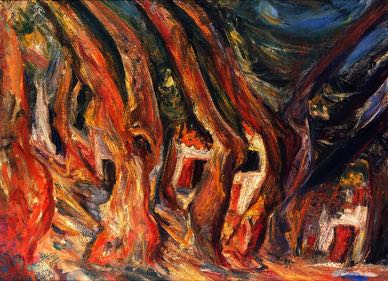
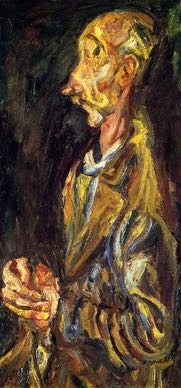
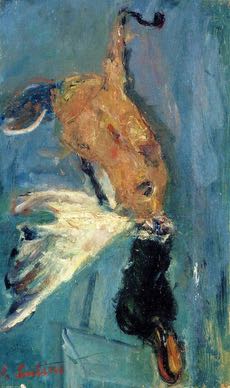
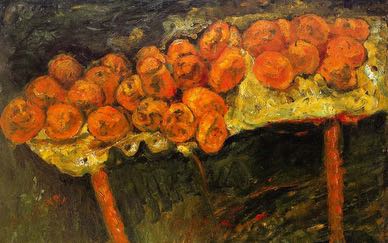
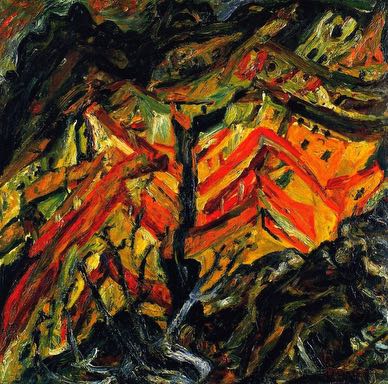
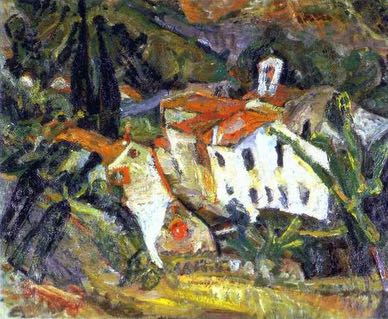
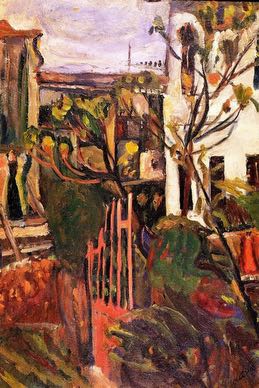
Can’t Find the Painting You Want?
Looking for a specific painting that isn’t in our catalog? Just let us know. We can recreate almost any artwork in the size and style you’re looking for.
Request a PaintingHand-Painted Chaim Soutine Reproductions
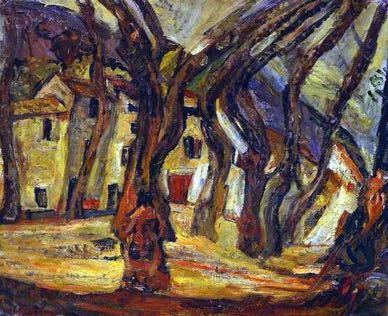
Bring Soutine’s art into your home with an oil-on-canvas reproduction hand-painted by a professional artist. Our collection features more than one hundred paintings from across his career, including Céret Landscape, The Pastry Cook, and The Beef. Discover twisting landscapes, penetrating portraits, vivid flower paintings, uncompromising still lifes, and other subjects associated with Soutine. Every reproduction is a real oil painting, offering depth and texture that a print or digital transfer cannot provide. From celebrated works to less familiar compositions, find a Soutine painting that suits your space.
The Making of a Chaim Soutine Oil Painting Replica
Creating a Chaim Soutine oil painting replica requires patience, precision, and an understanding of the original artwork. Our studio includes artists who specialize in expressive still-life painting and understand the distinctive qualities of Soutine’s work. The artist begins by studying the source image, then recreates its saturated colors, elastic contours, layered surfaces, and Soutine’s charged movement through paint on canvas using traditional oil-painting methods. After completion, the painting is inspected by our quality-control team and photographed for your approval. The result is a carefully executed oil painting that reflects the visual character of the original.
Custom Sizes and Frames for Your Soutine Painting
Your Soutine painting can be ordered in practically any size, from popular standard dimensions to custom canvas sizes selected directly on the product page. This flexibility lets you choose a painting that fits your wall and complements your room perfectly. After selecting the size, you can choose from high-quality frames in classic or modern designs, with professional canvas stretching also available. Our framing options complement the intense colors and expressive contours of Soutine’s paintings. With sizing, stretching, and framing arranged in one order, your artwork can arrive ready for display without a separate visit to a frame shop.
Order a Chaim Soutine Reproduction with Confidence
Buying hand-painted art online should feel clear and comfortable. After your Chaim Soutine reproduction is completed, we send high-resolution photographs for your review before shipping. You can inspect the composition, colors, details, and overall finish, then request adjustments if needed. The painting is dispatched only after you approve it, so you know what to expect when it arrives. Your order also includes free express worldwide shipping and is covered by our 90-day return policy. Together, these assurances help you purchase a Soutine oil painting with greater confidence and peace of mind.
The Life and Art of Chaim Soutine
Chaim Soutine was a Russian-born Jewish painter whose convulsive landscapes, vulnerable portraits, and visceral still lifes made him a singular figure in the School of Paris. Born in 1893 in Smilavichy, now in Belarus, he studied in Minsk and Vilnius before reaching Paris in 1913. Soutine resisted organized movements, but his distorted forms, saturated colors, and urgent brushwork brought him close to Expressionism. He learned from Rembrandt, Chardin, Courbet, and Cézanne without surrendering his own unruly vision. A major purchase by Albert Barnes ended years of poverty, while later patrons gave him space to work in rural France. Persecuted as a Jew during the German occupation, Soutine died in 1943 after illness forced a dangerous journey to Paris.
Read More
What Drove Soutine from Smilavichy Toward Paris?
Chaim Soutine was born on 13 January 1893 in Smilavichy, a town near Minsk within the Russian Empire and now part of Belarus. He grew up in a large, poor Jewish family. Making images offered a private ambition in a community where figurative art could meet religious and practical resistance.
As a teenager, Soutine left home to study drawing in Minsk. He then entered an art school in Vilnius, where he met Michel Kikoïne and Pinchus Krémègne. The three young artists shared the sense that serious modern painting required a move beyond the limited opportunities available to them.
Paris was the destination. Soutine arrived in 1913 with little money and no established audience. He briefly attended classes, but museums and the work of other artists soon mattered more than formal instruction. The move gave him access to both the European painting tradition and an international community trying to remake it.
How Did Montparnasse Become His Real Academy?
Soutine stayed for a time at La Ruche, the inexpensive artists’ residence whose studios housed émigré painters and sculptors. He later moved to the Cité Falguière. Life was precarious, but Montparnasse made conversation, models, galleries, and friendships available in a way no official academy could.
Jacques Lipchitz introduced him to Amedeo Modigliani, who became his closest artistic friend. Modigliani painted Soutine several times and introduced him to the dealer Léopold Zborowski. Their styles differed sharply, yet both treated portraiture as an encounter with a particular person rather than an exercise in social polish.
Soutine spent long hours in the Louvre. He returned especially to Rembrandt, Chardin, Courbet, and Corot, looking closely at how bodies, food, fabric, and weather could be built through paint. He was a modern artist who learned by arguing visually with the past.
Why Do the Céret Landscapes Seem to Tilt and Breathe?
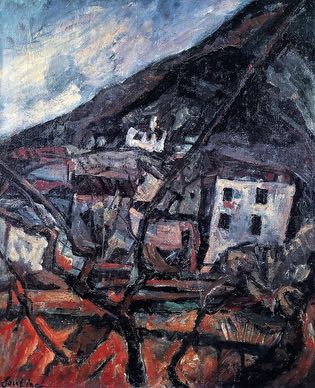
With support from Zborowski, Soutine worked in Céret in the French Pyrenees from 1919 to 1922. The steep streets, crowded houses, trees, and surrounding hills released something extreme in his painting. Stable perspective gave way to a landscape that appears to rise, bend, and press against itself.
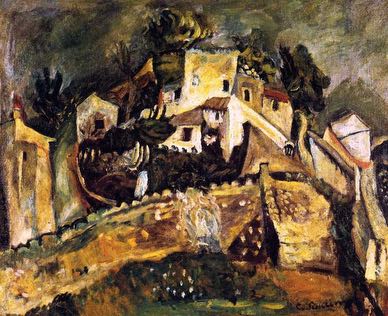
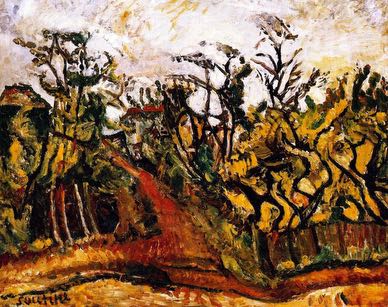
In Céret Landscape, roads and buildings do not sit quietly within space. Repeated curves pull them into one movement, while red, green, blue, and ocher push against one another. The paint makes the scene feel experienced physically rather than mapped from a fixed viewpoint.
These distortions were not careless drawing. Soutine often worked directly before a motif and transformed what he saw through prolonged concentration. A house remains a house and a road can still be followed, but every form carries the pressure of his looking.
Where Did Soutine Find Structure Inside Distortion?
Soutine is often described through turbulence, but his strongest paintings depend on firm organization. Curves recur across trees, roofs, bodies, and tabletops. Patches of white or red lead the eye, while dark intervals stop the surface from dissolving into continuous motion.
Paul Cézanne helped him understand how repeated strokes could give a picture coherence without conventional finish. El Greco offered elongated bodies and rising space, while Courbet demonstrated the weight that thick paint could give ordinary matter.
Soutine’s method remained intensely personal. He usually painted without preparatory drawings, revised directly on the canvas, and could destroy pictures that failed to satisfy him. The visible urgency of the final surface came from repeated decisions, not from a single uncontrolled outburst.
Who Sat for His Cooks, Bellboys, and Other Working Portraits?
During the 1920s, Soutine repeatedly painted pastry cooks, waiters, bellboys, chambermaids, choirboys, and other uniformed workers. Their white jackets, red waistcoats, blue aprons, and dark suits gave him strong fields of color, but the paintings never reduce the sitters to clothing alone.
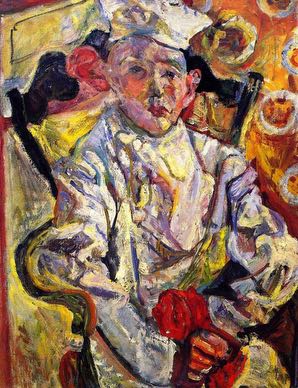
The Pastry Cook stands with hands at the hips and a face marked by unease, pride, and fatigue. Distorted ears or fingers intensify the sitter’s presence rather than turn it into caricature. A conventional pose becomes emotionally unstable.
Most of these models remain unidentified. They belonged to the labor force supporting modern hotels and restaurants, spaces of luxury seen from the service side. Soutine gave people who were usually overlooked the scale and concentrated attention of formal portraiture without pretending to explain their inner lives.
How Did a Pastry Cook Transform Soutine’s Fortunes?
Soutine struggled financially for years, sometimes lacking proper food, clothing, or painting materials. His position changed dramatically when the American physician and collector Albert C. Barnes visited Paris in 1922 and encountered one of his pastry-cook portraits through the dealer Paul Guillaume.
Barnes sought out the artist’s work and bought more than fifty paintings within a short period. The purchase raised prices, attracted attention from other collectors, and gave Soutine a degree of security he had never known. Recognition arrived suddenly rather than through a gradual sequence of exhibitions.
Financial success did not make him socially comfortable or methodically productive. He remained suspicious of publicity, worked in concentrated bursts, and sometimes reclaimed earlier paintings to destroy them. Yet patrons such as Madeleine and Marcellin Castaing later provided friendship, accommodation, and access to rural settings where he could paint.
What Makes the Carcass Paintings Feel So Uncomfortably Alive?
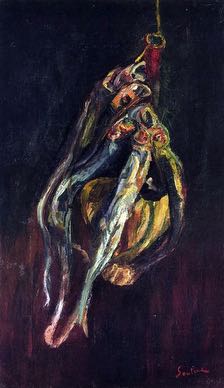
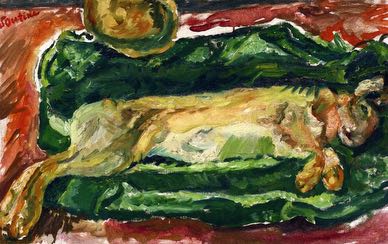
Dead fish, poultry, rabbits, and sides of beef recur throughout Soutine’s still lifes. The subjects connect him to European paintings he admired, especially Rembrandt’s Slaughtered Ox and Chardin’s The Ray. He did not copy their arrangements so much as test their physical force in modern paint.
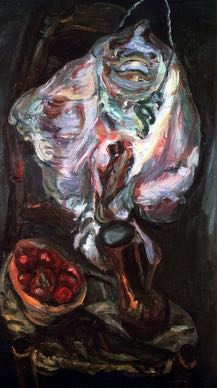
For the beef series of 1925, Soutine brought an animal carcass into his studio and worked from direct observation. Reds, blues, yellows, and whites turn flesh into a dense field of color. The body is unmistakably dead, yet the handling seems to twist and pulse.
The Beef confronts viewers with appetite, mortality, and the beauty of paint at the same time. The Ray spreads a fish across the table like an exposed body. Neither picture offers comfortable distance from what food once was.
In What Ways Did His Later Landscapes Grow More Measured?
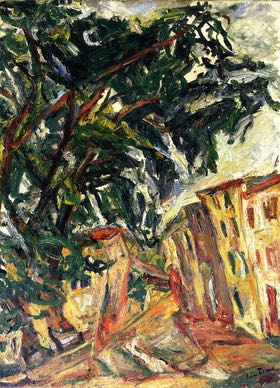
After the violent compression of Céret, Soutine’s landscapes gradually opened. At Cagnes, Vence, Chartres, and estates in central France, roads became easier to follow and buildings more firmly placed. Trees still bend and skies remain active, but the whole picture no longer seems close to collapse.
Chartres Cathedral of 1933 sets the great church within a living town rather than isolate it as a monument. The façade rises unevenly, shaped by a viewpoint that keeps stone, street, and surrounding structures in motion.
These later works are calmer, not calm. Soutine never adopted neutral description. A road swells as it approaches, branches knot together, and color turns a familiar village into an encounter. Maturity brought greater spacing and restraint without removing the tension that made the landscape his own.
Which Paintings Trace the Range of Soutine’s Vision?
Soutine worked within the traditional genres of portrait, landscape, and still life, but each became a test of how intensely paint could hold observed reality. These works follow that inquiry from early Paris through the countryside of his final decades:
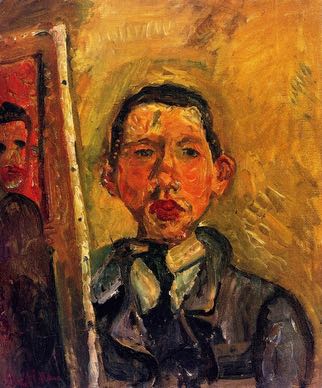
- Self-Portrait, circa 1918: The young painter examines himself through compressed space, formal dress, and an unguarded gaze.
- Céret Landscape, circa 1920–1921: Hills, trees, houses, and road are drawn into one surging movement.
- Farm Girl, 1922: A young rural sitter receives the scale and concentration of formal portraiture.
- The Pastry Cook, circa 1923: A white uniform and vivid face helped bring Soutine to Albert Barnes’s attention.
- The Ray, circa 1924: A familiar still-life subject becomes an exposed arrangement of flesh, color, and unstable space.
- The Beef, 1925: Layered reds and blues transform a hanging carcass into one of modern painting’s most visceral images.
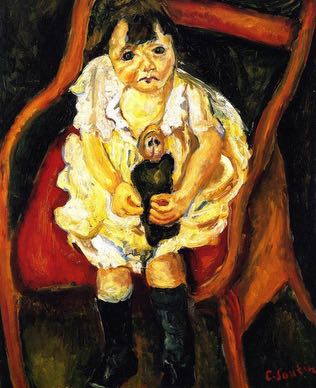
- Little Girl with Doll, circa 1926–1927: Folded hands and a treasured toy sharpen the child’s mixture of composure and vulnerability.
- Chartres Cathedral, 1933: Medieval architecture bends within a townscape that remains solid, unsettled, and unmistakably observed.
Why Does Soutine’s Life Resist the Myth of the Cursed Artist?
When Germany occupied France, Soutine was endangered as a Jewish foreigner. He left Paris, moved between hiding places, and continued working when circumstances allowed. Years of stomach illness worsened, and in August 1943 he was taken covertly to Paris for emergency surgery. He died there on 9 August.
Later accounts often turned poverty, illness, secrecy, and violent-looking paint into the legend of an instinctive, tormented outsider. That image overlooks his sustained study of museums, careful selection of motifs, relationships with dealers and patrons, and constant judgment about which paintings deserved to survive.
Soutine’s influence became especially visible after the Second World War. Artists including Willem de Kooning responded to the bodily energy and built-up surfaces of his work, while a major 1950 exhibition at the Museum of Modern Art renewed attention in the United States. His paintings matter not because suffering automatically produced expression, but because he converted looking, memory, and material decisions into forms that still feel alive.
Copyright © 2026 BrushWiz. All Rights Reserved.
About Our Chaim Soutine Paintings
Are your Chaim Soutine reproductions painted by hand?
Yes. Every reproduction is individually painted by hand in oil on canvas by a professional artist. We do not use prints, digital transfers, or mechanical reproduction methods.
How closely do your Soutine copies resemble the original?
Our artists work to capture the composition, colors, texture, and visual character of the original Soutine painting as closely as possible. Because every reproduction is painted by hand, small variations are natural and make each canvas unique.
How long does a Soutine reproduction take to complete?
Most Soutine reproductions require approximately two to three weeks to paint, dry, and inspect. Production time may vary depending on the artwork and canvas size, so check the estimate displayed on the product page.
Can I request a Soutine painting that is not listed?
Yes. If you cannot find the Chaim Soutine artwork you want in our catalog, send us the painting’s title or an image. Our team will review your request and confirm the available sizes, estimated production time, and price.
Will I receive approval photos before shipping?
Yes. We send high-resolution photographs of the completed painting for your approval. You can request adjustments if needed, and the painting will not be dispatched until the review process is complete.
Are custom canvas sizes available for Soutine paintings?
Yes. We offer custom dimensions in addition to the standard sizes shown on the product page. Select the dimensions you need directly from the available size options.
May I order my Soutine painting with a frame?
Yes. High-quality frames in classic and modern designs are available for many paintings. You can view compatible framing options and add your preferred design from the product page. Professional canvas stretching is also available.
What determines the price of a Soutine reproduction?
The price depends on the selected artwork, canvas dimensions, and framing option. Choose your preferred configuration on the product page to see the current price before ordering.
Is free express worldwide shipping included?
Yes. Soutine reproductions qualify for free express worldwide shipping. After dispatch, delivery usually takes five to eight business days, although timing may vary by country and destination.
Which return policy covers Soutine reproductions?
Orders are covered by our 90-day return policy. Review the current return-policy page before ordering for complete information about eligibility, time limits, and the return process.
Why BrushWiz?
100% Hand Painted
Every piece is entirely handmade
Museum Quality
Faithfully recreated by expert artists
Custom Framing
Choose from a wide range of frames
Free Shipping
Enjoy free shipping on all orders
Cash Back Rewards
Earn cash back with every purchase