

❄️ Winter Sale. Offer Ends 11/30/2026. View Details
❄️ Winter Sale. Ends 11/30/2026. View Details
❄️ Winter Sale. View Details
Artists
Subjects
Movements
Collections
Decor
Portraits
Commissions
Framing
Reviews
Gift Cards
On Sale
Hilma af Klint Oil Painting Reproductions
Shop museum-quality reproductions of Hilma af Klint’s most famous paintings, each hand-painted in oil on canvas by a professional artist.
Shop Art
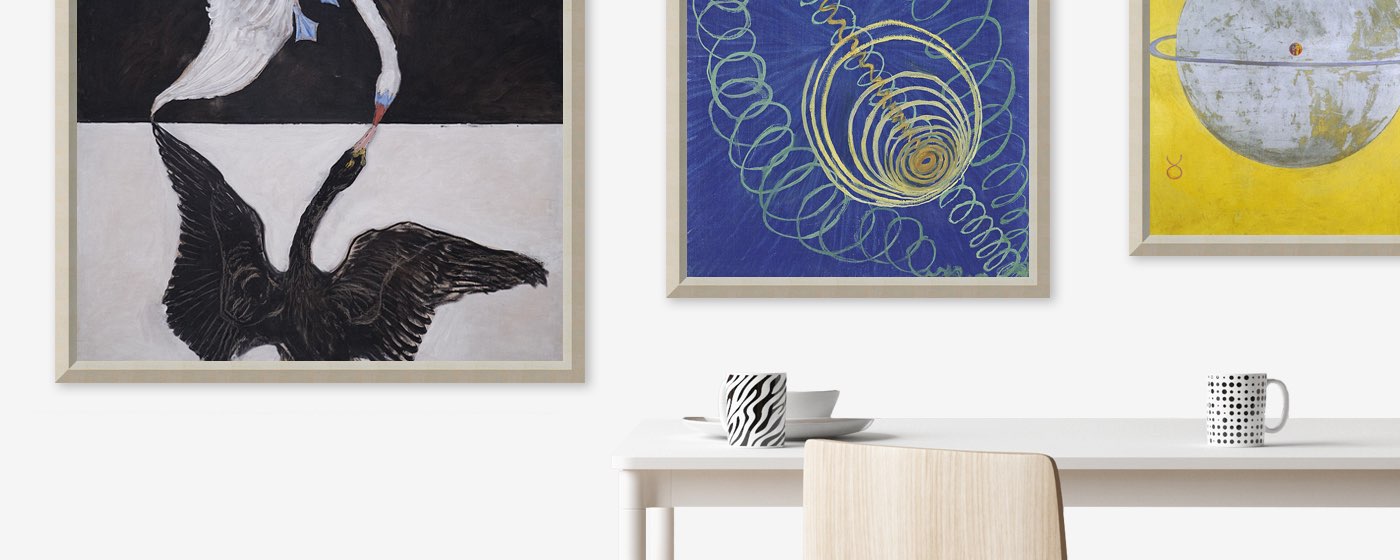
Showing 1-40 of 121 results
Sort By
Most Popular
- Most Popular
- New Arrivals
- Best Sellers
- Alphabetical A-Z
- Alphabetical Z-A


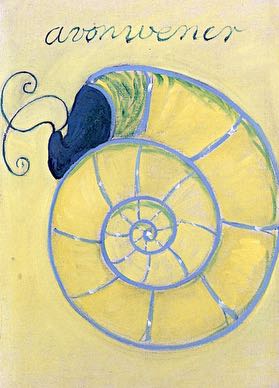


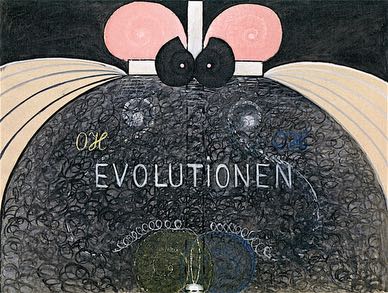

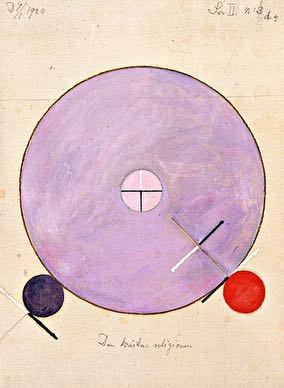





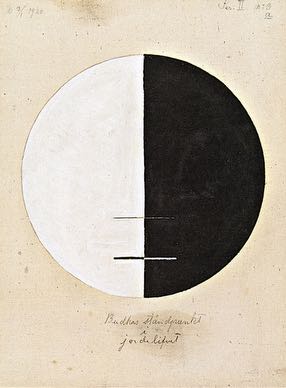
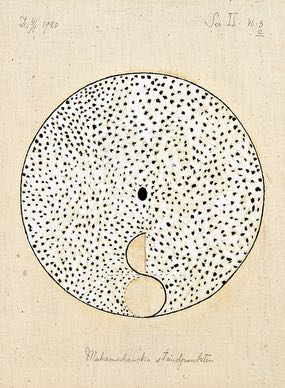
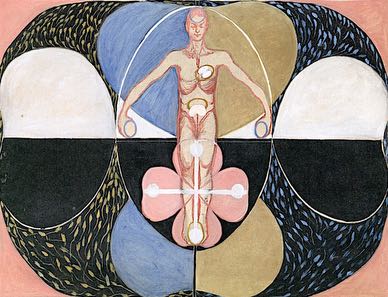


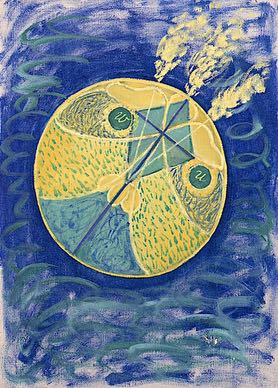



Can’t Find the Painting You Want?
Send us a reference image. We can recreate almost any artwork in the size and style you’re looking for.
Get a Free QuoteHand-Painted Hilma af Klint Reproductions
Bring af Klint’s art into your home with an oil-on-canvas reproduction hand-painted by a professional artist. Our collection features more than one hundred paintings from across her career, including The Ten Largest, Altarpiece No. 1, and The Swan, No. 1. Discover spirals, circles, geometric structures, botanical forms, symbolic color, spiritual diagrams, and other subjects closely associated with Klint. Every reproduction is a real oil painting, offering depth and texture that a print or digital transfer cannot provide. From iconic masterpieces to lesser-known works, find a Klint painting that suits your space.
The Making of a Hilma af Klint Oil Painting Replica
Creating a Hilma af Klint oil painting replica requires patience, precision, and an understanding of the original artwork. Our studio includes artists who specialize in Abstract painting and understand the distinctive qualities of af Klint’s work. Before painting begins, the artist studies the source image, paying close attention to its geometry, symbolic palette, flowing lines, botanical forms, lettering, and balance between symmetry and movement. These elements are recreated by hand in oil on canvas using an approach suited to the original. Once complete, the painting is inspected by our quality-control team and photographed for your approval.
Custom Sizes and Frames for Your af Klint Painting
Your af Klint painting can be ordered in practically any size, from popular standard dimensions to a custom canvas size selected directly on the product page. This flexibility lets you choose a painting that fits your wall and complements your room perfectly. After selecting the size, you can choose from high-quality frames in classic or modern designs, with professional canvas stretching also available. Our framing options complement the vivid colors and geometric forms of af Klint’s paintings. With sizing, stretching, and framing arranged in one order, your artwork can arrive ready for display without a separate visit to a frame shop.
Order a Hilma af Klint Reproduction with Confidence
Buying hand-painted art online should feel clear and comfortable. After your Hilma af Klint reproduction is completed, we send high-resolution photographs for your review before shipping. You can inspect the composition, colors, and overall finish, then request adjustments if needed. The painting is dispatched only after you approve it, so you know what to expect when it arrives. Your order also includes free express worldwide shipping and is covered by our 90-day return policy. Together, these assurances help you purchase an af Klint oil painting with greater confidence and peace of mind.
The Life and Art of Hilma af Klint
Hilma af Klint was a Swedish artist whose vast, symbolically layered paintings place her among the earliest pioneers of Abstract art. Born in 1862, she trained at Stockholm’s Royal Academy of Fine Arts and earned a living with portraits, landscapes, and botanical illustrations. Away from that public career, af Klint created a private world of nonfigurative painting shaped by spiritualism, Theosophy, modern science, and a search for hidden connections between matter and spirit. Spirals, circles, letters, diagrams, and vivid colors entered her work years before abstraction gained an international audience. Largely overlooked during her lifetime, these paintings were recognized decades after her death and helped rewrite the history of modern art.
Read More
Who Was Hilma af Klint?
Hilma af Klint was born on 26 October 1862 at Karlberg Palace in Solna, near Stockholm. Her father, Victor af Klint, was a naval officer and mathematician from a family with deep ties to maritime service. Summers on the island of Adelsö gave Hilma an early familiarity with water, plants, seasonal change, and the close study of nature.
A gifted young draftswoman, she attended Stockholm’s Technical School and Kerstin Cardon’s private art school before entering the Royal Academy of Fine Arts in 1882. Women enjoyed more equal access there than at many European academies. Af Klint studied landscape, portraiture, anatomy, and drawing from the live model, graduating with honors in 1887.
Her academic success brought access to a studio in central Stockholm. She exhibited naturalistic work and supported herself with botanical subjects, landscapes, and portraits. That visible professional career ran alongside the private spiritual experiments for which she is now famous, making clear that abstraction was a choice grounded in disciplined representational training.
Who Were the Five?
Af Klint’s spiritual interests developed at a time of intense public fascination with séances, psychology, electricity, radioactivity, and unseen forces in the material world. Her younger sister Hermina’s death in 1880 may have made questions of mortality more urgent, but af Klint’s beliefs also belonged to wider ideas circulating across Europe.
In 1896, she and four friends formed a spiritualist circle known as The Five, or De Fem. Anna Cassel, Cornelia Cederberg, Sigrid Hedman, and Mathilda Nilsson joined af Klint for regular sessions of prayer, readings, séances, automatic writing, and collaborative drawing, all recorded in detailed notebooks.
Their drawings contain looping lines, organic shapes, divided structures, and marks made without conventional advance planning. The group offered women a place to collaborate, study, and claim spiritual authority beyond established institutions. Although af Klint later pursued her great commission independently, The Five laid essential foundations for her methods and visual language.
How Did the Paintings for the Temple Take Shape?
Af Klint began The Paintings for the Temple in 1906. She believed the project had been assigned by spiritual guides and would portray realities inaccessible to ordinary vision. Whatever one makes of that conviction, the cycle itself reveals careful planning, technical assurance, and a remarkable ability to carry symbols through many interconnected series.
The opening group, Primordial Chaos, consists of small works filled with blue and yellow, spirals, biological shapes, letters, and geometric divisions. Recurring opposites allowed af Klint to explore origins, gender, attraction, polarity, matter, and spirit. Words and initials work beside shape and color, creating a visual system richer than purely decorative abstraction.
She moved quickly through several groups before pausing in 1908, partly because her mother’s blindness brought new caregiving responsibilities. Af Klint resumed work in 1912 and completed the cycle in 1915. The full Temple project comprised 193 paintings, from intimate panels to canvases of monumental scale.
Why Do The Ten Largest Matter So Much?
Made in 1907, The Ten Largest is a sequence of ten monumental paintings devoted to childhood, youth, adulthood, and old age. Sweeping curves, flowers, spirals, letters, and diagram-like forms move across grounds of lavender, pink, blue, orange, and yellow, surrounding the viewer with color.
Af Klint painted the works rapidly on paper later mounted to canvas. Their speed and apparent spontaneity sit inside a clearly ordered sequence. Geometric and organic shapes evoke reproduction, growth, aging, movement, and transformation without using conventional figures or a literal story to illustrate life’s stages.
The series is significant for more than its early date in the history of European abstraction. It proposes that nonfigurative painting need not abandon meaning. Af Klint used it to carry biological, philosophical, and spiritual ideas through an immersive series of connected images.
What Language Did af Klint Build from Color and Symbols?
Circles, crosses, triangles, spirals, flowers, shells, seeds, letters, and divided shapes recur throughout af Klint’s art. Their significance changes from one series to another, so no universal key unlocks every work. Blue and yellow often indicate opposing principles, pink may suggest their reconciliation, and black and white can establish a separate polarity.
Botanical imagery connects unseen development to the visible growth of nature. Cells, stems, petals, and seeds can suggest transformation, reproduction, and evolution. Her use of abstract floral forms grew from precise observation of plants as well as later attempts to link botanical and spiritual qualities.
Letters and invented abbreviations move through the paintings too, sometimes naming a concept and sometimes resisting clear interpretation. The diagrams do not behave like scientific charts leading to one conclusion. They set opposites in relation and suggest movement toward a greater unity, allowing structure, color, and uncertainty to remain active together.
How Did The Swan and The Dove Extend Her Ideas?
Af Klint began The Swan in 1914. Across twenty-four works, recognizable black and white birds gradually give way to geometric and nonfigurative designs. Mirrored forms, circles, sharp divisions, and contrasting colors turn a meeting of opposites into a sustained study of balance and union.
The Dove followed in 1915. Concentric shapes, color fields, crosses, and more turbulent imagery explore peace, conflict, spiritual development, and unity. Created during the First World War, the series arose at a moment when personal faith and international violence could hardly remain separate.
These groups show that af Klint did not cross from representation into abstraction once and leave recognizable imagery behind. She moved back and forth according to the needs of each series. A shell, body, bird, or flower could become a diagram of a much larger process, with transformation itself carrying meaning.
Where Did Theosophy and Anthroposophy Enter Her Work?
Af Klint joined the Theosophical Society in 1904 and read writers seeking common ground among comparative religion, spirituality, evolution, and modern science. She attended lectures by prominent Theosophists and later became deeply involved with Anthroposophy, the movement established by Rudolf Steiner.
She met Steiner in Stockholm and showed him paintings from the Temple project around 1910. Reports of his response do not fully agree, so her later choices cannot safely be reduced to a single moment of approval or rejection. Af Klint continued to study his thought and visited the Goetheanum in Dornach several times during the 1920s.
Her affiliations changed over the years and were always accompanied by extensive study of her own. More than 26,000 notebook pages preserve vocabulary, diagrams, plans, and interpretations. Even for viewers who do not share her beliefs, they reveal the scale and seriousness of the intellectual project behind the paintings.
Why Did the Abstract Paintings Remain Out of Sight?
Af Klint exhibited conventional art during her lifetime, while most of the nonfigurative work circulated only in limited Theosophical and spiritual settings. She conceived the Temple paintings as one complete cycle for a particular kind of architectural space, but the permanent building she imagined was never realized.
In 1932, af Klint placed instructions on selected notebooks and materials asking that they remain closed for at least twenty years after her death. This has often been simplified into a total ban on exhibiting her abstract art, though the real history is less tidy: some spiritual paintings had already appeared in restricted contexts.
After af Klint died in 1944, her nephew Erik af Klint inherited an enormous archive of paintings and notebooks. Museums initially showed little interest. Preservation efforts and later exhibitions gradually brought the work into art history, with The Spiritual in Art at the Los Angeles County Museum of Art in 1986 marking an especially important step.
Which Works Offer the Best Introduction to af Klint?
These paintings trace af Klint’s development through the Temple cycle, symbolic sequences, spiritual diagrams, and increasingly concentrated geometry:
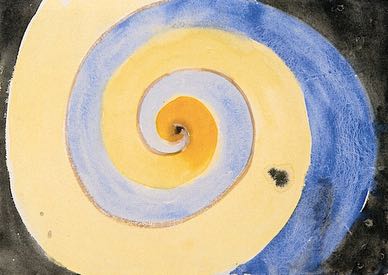
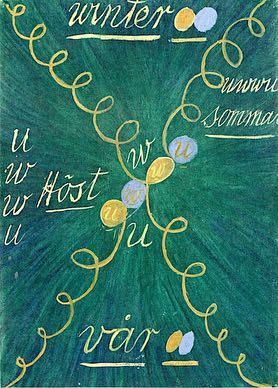
- Primordial Chaos, No. 1, Group I: An early Temple work introducing symbolic color, letters, flowing lines, and opposing principles.
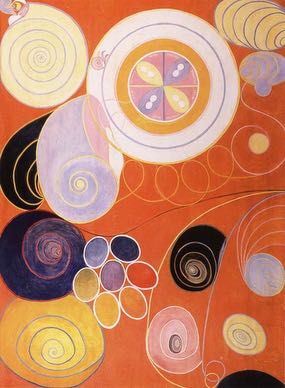
- The Ten Largest, No. 1, Childhood: Spirals, radiant color, and organic growth fill a monumental meditation on early life.
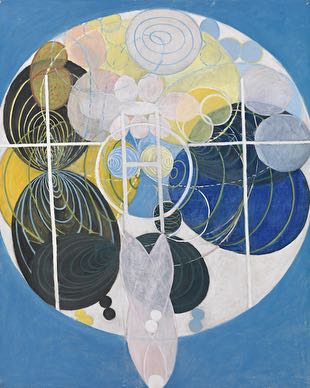
- The Ten Largest, No. 7, Adulthood: Lettering, geometry, botanical shapes, and bodily associations meet in a mature composition.
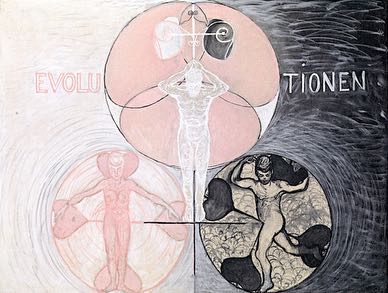
- Evolution, No. 13, Group VI: One part of an extended inquiry into opposition, development, and spiritual change.
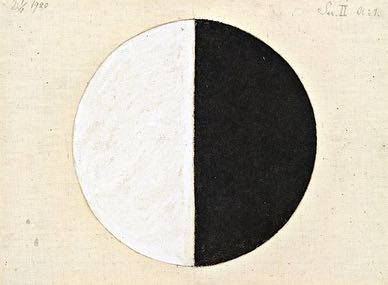
- The Swan, No. 1, Group IX-SUW: Two opposing birds open a sequence that moves step by step toward geometric abstraction.
- The Dove, No. 2, Group IX-UW: Circular motion and divided forms give visual shape to the search for unity.
- Altarpiece No. 1: A radiant triangular structure suggests spiritual ascent in one of the three works that culminate the Temple cycle.
- No. 62, Group X, Series Parsifal: Concentrated geometry and color carry af Klint’s later investigation of serial transformation.
How Has af Klint Changed the History of Modern Art?
Af Klint developed extensive nonfigurative cycles before abstraction gained public recognition through artists such as Wassily Kandinsky, Piet Mondrian, and Kazimir Malevich. Her work remained private and little known, so direct influence should not be assumed. Instead, these artists reveal several overlapping paths by which abstraction emerged.
Her rediscovery has changed the terms of modern art history. The story can no longer depend only on formal experiments, male avant-garde circles, and public manifestos detached from spiritual life. Af Klint brings women’s networks, science, mediumistic practice, serial thinking, religion, and imagined exhibition architecture into the development of abstraction.
Large retrospectives at Moderna Museet and the Guggenheim introduced her work to enormous audiences; the 2018 Guggenheim show became the museum’s best attended exhibition at that time. Af Klint is now recognized as a major abstract artist whose disciplined structures and visual imagination served an ambitious search for realities beyond ordinary sight.
Copyright © 2026 BrushWiz. All Rights Reserved.
About Our Hilma af Klint Paintings
Are your Hilma af Klint reproductions painted by hand?
Yes. Every reproduction is individually painted by hand in oil on canvas by a professional artist. We do not use prints, digital transfers, or mechanical reproduction methods.
How closely do your af Klint copies resemble the original?
Our artists work to capture the composition, colors, texture, and visual character of the original af Klint painting as closely as possible. Because every reproduction is painted by hand, small variations are natural and make each canvas unique.
How long does it take to complete a painting?
Most af Klint reproductions require approximately two to three weeks to paint, dry, and inspect. Production time may vary depending on the artwork and canvas size, so check the estimate displayed on the product page.
Can I request an af Klint painting that is not listed?
Yes. If you cannot find the Hilma af Klint artwork you want in our catalog, send us the painting’s title or an image. Our team will review your request and confirm the available sizes, estimated production time, and price.
Will I receive photos of my painting before it is shipped?
Yes. We send high-resolution photographs of the completed painting for your approval. You can request adjustments if needed, and the painting will not be dispatched until the review process is complete.
Can I order a custom canvas size?
Yes. We offer custom dimensions in addition to the standard sizes shown on the product page. Select the dimensions you need directly from the available size options.
Can I order my af Klint painting with a frame?
Yes. High-quality frames in classic and modern designs are available for many paintings. You can view compatible framing options and add your preferred design from the product page. Professional canvas stretching is also available.
How much does a Hilma af Klint reproduction cost?
The price depends on the selected artwork, canvas dimensions, and framing option. Choose your preferred configuration on the product page to see the current price before ordering.
Do you offer free worldwide shipping?
Yes. Af Klint reproductions qualify for free express worldwide shipping. After dispatch, delivery usually takes five to eight business days, although timing may vary by country and destination.
What is the return policy for af Klint reproductions?
Orders are covered by our 90-day return policy. Review the current return-policy page before ordering for complete information about eligibility, time limits, and the return process.
Why BrushWiz?
100% Hand Painted
Every piece is entirely handmade
Museum Quality
Faithfully recreated by expert artists
Custom Framing
Choose from a wide range of frames
Free Shipping
Enjoy free shipping on all orders
Cash Back Rewards
Earn cash back with every purchase