

❄️ Winter Sale. Offer Ends 11/29/2026. View Details
❄️ Winter Sale. Ends 11/29/2026. View Details
❄️ Winter Sale. View Details
Artists
Subjects
Movements
Collections
Decor
Portraits
Commissions
Framing
Reviews
Gift Cards
On Sale
Wassily Kandinsky Oil Painting Reproductions
Shop museum-quality reproductions of Wassily Kandinsky’s most famous paintings, each hand-painted in oil on canvas by a professional artist.
Shop Art
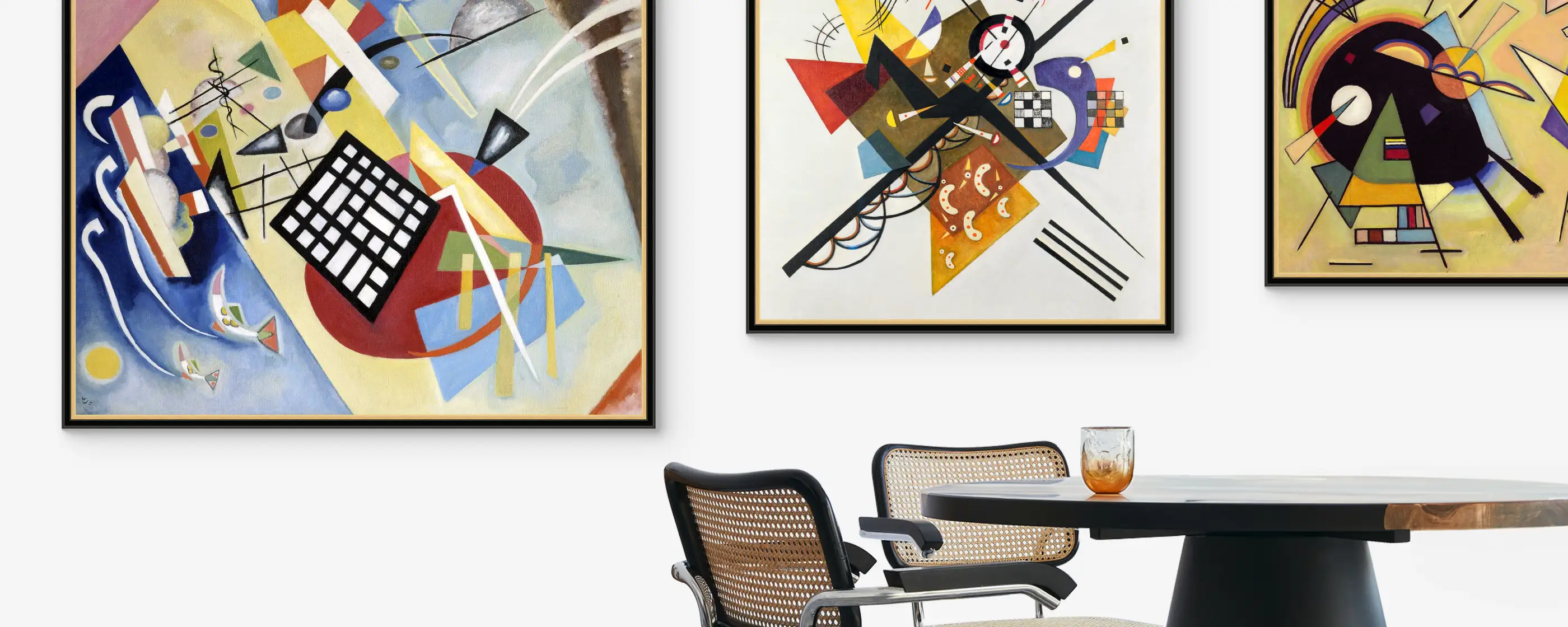
Showing 1-40 of 421 results
Sort By
Most Popular
- Most Popular
- New Arrivals
- Best Sellers
- Alphabetical A-Z
- Alphabetical Z-A
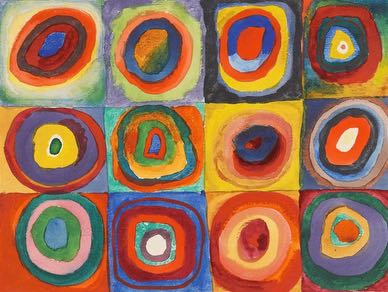
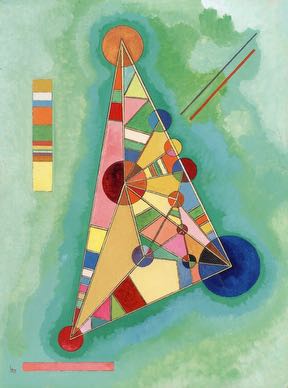
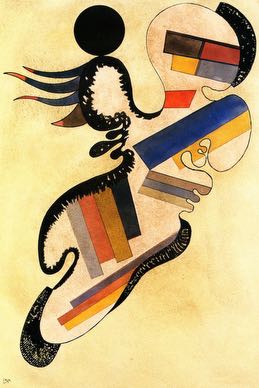
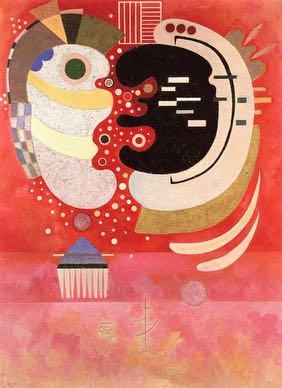
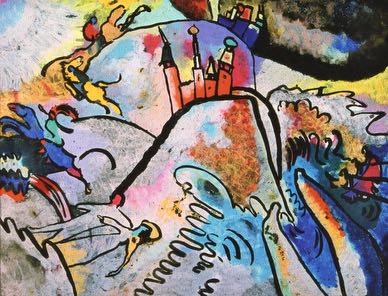
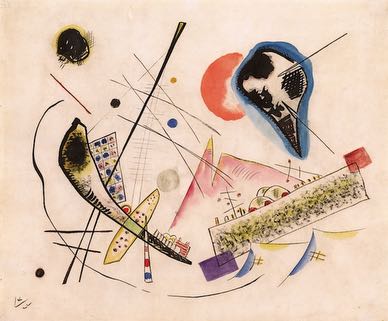
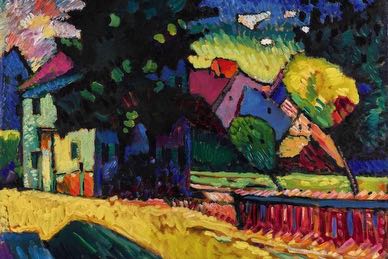
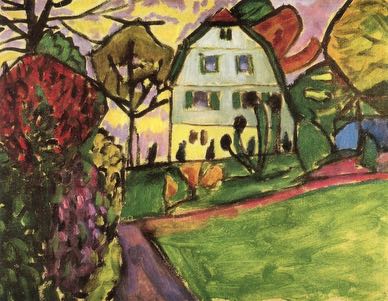

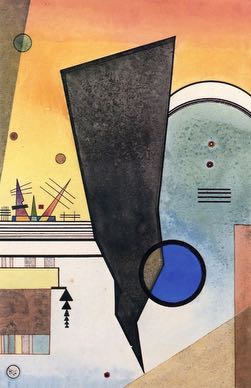

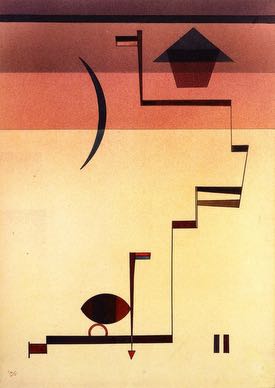

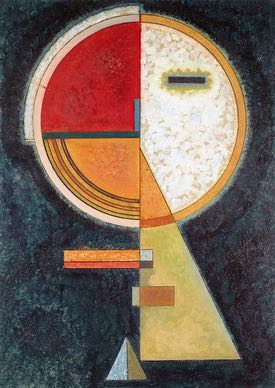
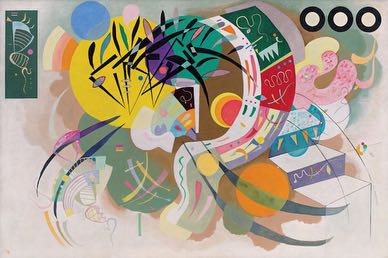
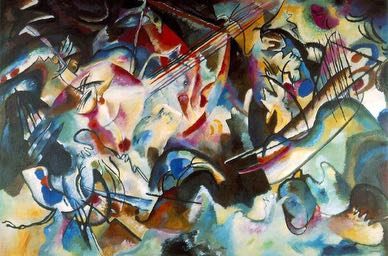
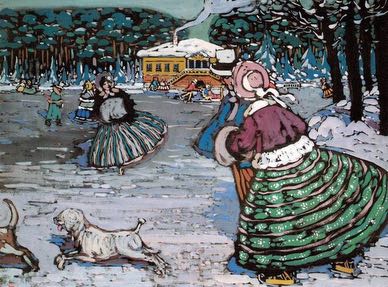
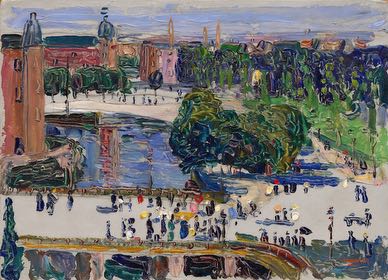
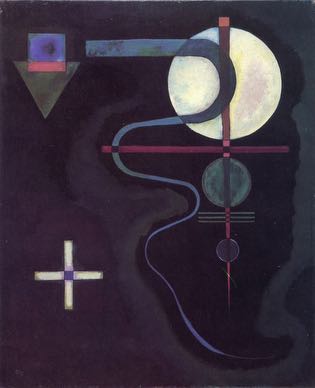
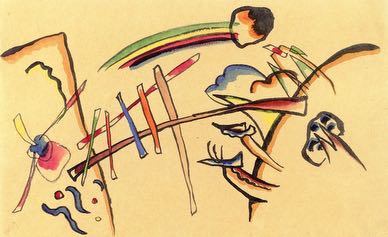
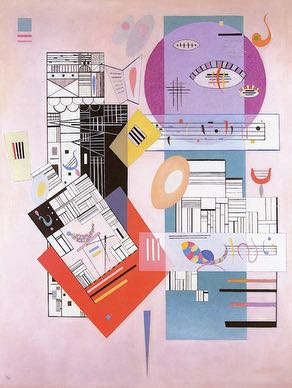

Can’t Find the Painting You Want?
Send us a reference image. We can recreate almost any artwork in the size and style you’re looking for.
Get a Free QuoteHand-Painted Wassily Kandinsky Reproductions
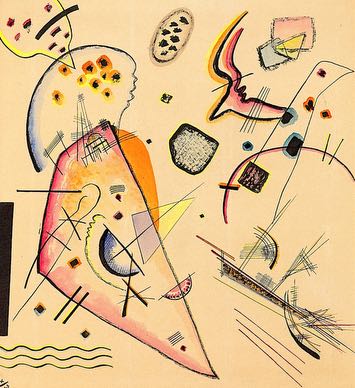
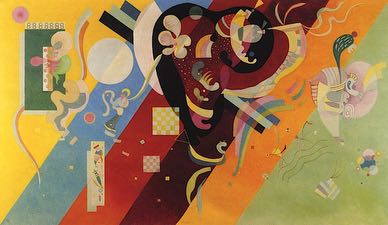
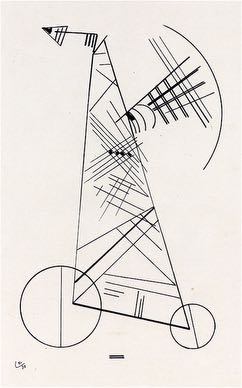
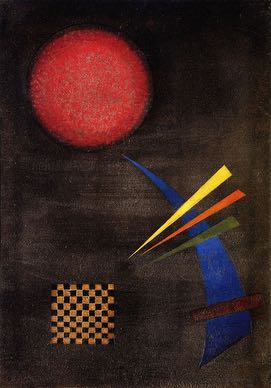
Bring Kandinsky’s art into your home with an oil-on-canvas reproduction hand-painted by a professional artist. Our collection features hundreds of paintings from across his career, including Composition VII, Composition VIII, and Yellow-Red-Blue. Discover colorful abstractions, expressive landscapes, intersecting lines, floating circles, and other subjects closely associated with Kandinsky. Every reproduction is a real oil painting, offering depth and texture that a print or digital transfer cannot provide. From iconic masterpieces to lesser-known works, find a Kandinsky painting that suits your space.
The Making of a Wassily Kandinsky Oil Painting Replica
Creating a Wassily Kandinsky oil painting replica requires patience, precision, and an understanding of the original artwork. Our studio includes artists who specialize in Abstract painting and understand the distinctive visual qualities of Kandinsky’s work. The artist studies the source image, then recreates its layered colors, intersecting lines, geometric shapes, and Kandinsky’s carefully balanced relationships between color and form using traditional oil-painting methods. After completion, the painting is inspected by our quality-control team and photographed for your approval. The result is a carefully executed oil painting that reflects the visual character of the original.
Custom Sizes and Frames for Your Kandinsky Painting
Your Kandinsky painting can be ordered in practically any size, from popular standard dimensions to custom canvas sizes selected directly on the product page. This flexibility lets you choose a painting that fits your wall and complements your room perfectly. After selecting the size, you can choose from high-quality frames in classic or modern designs, with professional canvas stretching also available. Our framing options complement the bold colors and geometric forms of Kandinsky’s paintings. With sizing, stretching, and framing arranged in one order, your artwork can arrive ready for display without a separate visit to a frame shop.
Order a Wassily Kandinsky Reproduction with Confidence
Buying hand-painted art online should feel clear and comfortable. After your Wassily Kandinsky reproduction is completed, we send high-resolution photographs for your review before shipping. You can inspect the colors, lines, shapes, and overall finish, then request adjustments if needed. The painting is dispatched only after you approve it, so you know what to expect when it arrives. Your order also includes free express worldwide shipping and is covered by our 90-day return policy. Together, these assurances help you purchase a Kandinsky oil painting with greater confidence and peace of mind.
The Life and Art of Wassily Kandinsky
Wassily Kandinsky was a Russian-born painter, teacher, and art theorist who became a leading pioneer of Abstract art. Born in Moscow in 1866, he left a promising academic career at thirty to study painting in Munich. His early landscapes and folkloric scenes gradually gave way to expressive arrangements of line, shape, and color, then to the more geometric forms of his later work. Kandinsky helped form the Blue Rider, taught at the Bauhaus, and wrote influential books about art. His exploration of color, music, spirituality, and composition left a lasting mark on modern painting, design, and art education.
Read More
Who Was Wassily Kandinsky?
Wassily Kandinsky was born in Moscow on 16 December 1866 and spent part of his childhood in Odessa. Music, drawing, and Russian folk culture were familiar from an early age, as were the rich colors of decorated homes and religious images. Memories of this world later surfaced in his paintings as riders, domed cities, landscapes, and striking combinations of color.
His career took him through Russia, Germany, and France, with political upheaval repeatedly changing where he could live and work. Born a subject of the Russian Empire, he became a German citizen in 1928 and a French citizen in 1939. Along the way, he brought Russian artistic traditions into contact with the experimental circles of Munich, the Bauhaus, and Paris.
Kandinsky is sometimes called the inventor of abstract painting, though that description compresses a much more complicated history. Other artists and cultures also developed nonrepresentational forms. His distinctive contribution was to pursue abstraction through painting, writing, teaching, and collective activity, making a sustained case that color and form could carry meaning without a recognizable subject.
Why Did Kandinsky Leave Law for Art?
Kandinsky studied law and economics at the University of Moscow, then stayed on as a teacher. A research journey to the Vologda region brought him into contact with local crafts and vividly decorated interiors. He later remembered the sensation of being surrounded by color, an experience that helped shape his understanding of what painting could do.
Two encounters with art are often linked to his change of career. In Moscow, one of Claude Monet’s Haystacks paintings struck him with the power of its color before he could clearly identify the subject. Hearing Richard Wagner’s Lohengrin also prompted him to consider how music, color, and emotion might correspond.
In 1896, he declined an academic appointment and moved to Munich to study art. At thirty, he was starting professional training later than most painters. The habits of his earlier career stayed with him: disciplined research, careful writing, and an interest in systems would all inform his teaching and theory.
Which Teachers and Artists Shaped Kandinsky’s Munich Years?
In Munich, Kandinsky attended Anton Ažbe’s private school before studying under Franz von Stuck at the Academy of Fine Arts. He worked in drawing, woodcut, tempera, and landscape painting. Woodcuts were particularly useful for exploring strong outlines and broad areas of color, since the medium demanded clear contrasts rather than subtle modeling.
In 1901, he helped found the Phalanx artists’ association and art school. Gabriele Münter joined his class the following year, and they became companions. Before settling again in Bavaria, they traveled through Europe and North Africa, recording towns, landscapes, and everyday life in paintings, drawings, and photographs.
Among the artists Kandinsky worked alongside was Alexej von Jawlensky. Post-Impressionism, Fauvism, folk art, Jugendstil, and the emerging work of Expressionism offered different ways to simplify nature. Increasingly, Kandinsky let color determine a painting’s effect instead of asking it to describe appearances faithfully.
What Changed in Kandinsky’s Painting at Murnau?
From 1908, Kandinsky and Münter spent long stretches in Murnau, south of Munich. Working with Jawlensky and Marianne von Werefkin, they painted the Bavarian town’s streets, churches, houses, and surrounding mountains. Münter bought a house there in 1909, which became a gathering place for their circle.
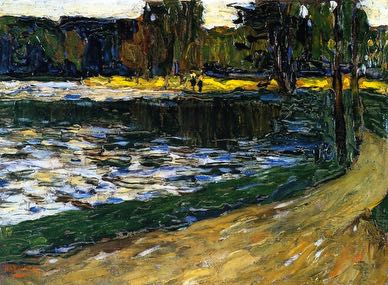
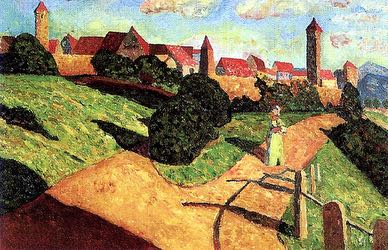
In paintings such as Murnau – Castle and Church and Blue Mountain, buildings and hills become forceful patches of color enclosed by dark lines. Depth contracts, and colors depart from those of the actual scene. What matters most is how the arrangement feels as a whole.
Murnau helped carry Kandinsky from observed landscape toward abstraction. Riders, towers, roads, and mountains were still recognizable, but they also became parts of a larger movement across the canvas. The change was gradual: familiar forms grew less tied to their original subjects and more responsive to the demands of color and line.
How Did Kandinsky Help Shape the Blue Rider?
Kandinsky became president of the New Artists’ Association of Munich in 1909, but divisions soon emerged between its experimental and more moderate members. In 1911, the exhibition jury rejected one of his increasingly abstract compositions. Kandinsky, Münter, and Franz Marc withdrew and quickly arranged an exhibition of their own.
Kandinsky and Marc also edited The Blue Rider Almanac, published in 1912. Modern European paintings appeared beside folk images, children’s drawings, non-European objects, theater, and ideas about music. By placing such different material together, they challenged the assumption that artistic value belonged to one school, period, or academic tradition.
The Blue Rider remained a loose network whose members shared an interest in art’s expressive and spiritual possibilities. They did not paint alike. Kandinsky set out his own position in On the Spiritual in Art, issued during this period, arguing that colors and forms could affect viewers directly and should answer to what he called inner necessity.
When Did Kandinsky’s Paintings Become Abstract?
Kandinsky worked toward abstraction through landscapes, prints, studies, and large paintings. His titles offered clues to how he approached them. Impressions kept a connection with external experience; Improvisations suggested a more spontaneous inner response; Compositions were ambitious works built through careful preparation.
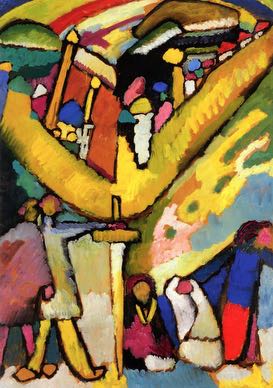
Music provided an important comparison because it could create structure and feeling without depicting visible things. A title such as Impression III – Concert makes that connection explicit. Kandinsky began treating a line’s direction, a contrast of colors, or the balance of forms as expressive events in themselves.
By 1913, riders, mountains, boats, floods, and apocalyptic imagery were often difficult to separate from the sweeping arrangements around them. Composition VI and Composition VII belong to this particularly intense period. Their apparent spontaneity rests on preliminary studies and considered choices about how the eye moves across the canvas.
What Did Kandinsky Do After Returning to Russia?
The outbreak of the First World War in 1914 forced Kandinsky to leave Germany as a Russian citizen. He returned to Moscow, where he lived through the revolution and the cultural reorganization that followed. In 1917, he married Nina Andreevskaya, his companion for the rest of his life.
Teaching, museum reform, and arts administration occupied much of his time. He helped develop cultural organizations and joined debates about art’s role in a revolutionary society. His belief in individual expression and spiritual experience, however, increasingly conflicted with the practical, utilitarian direction favored by some Constructivist colleagues.
Contact with the Russian avant-garde also contributed to a more geometric direction in his painting. Circles, grids, and sharply defined shapes began to take the place of some of the turbulent organic forms of his prewar work. In late 1921, Kandinsky left Russia for Germany after receiving an invitation that led to his next major teaching position.
How Did the Bauhaus Shape Kandinsky’s Work?
Walter Gropius invited Kandinsky to join the Bauhaus in 1922. He taught mural painting, elements of form, analytical drawing, and later a free-painting class. Kandinsky stayed with the school through its moves from Weimar to Dessau and Berlin, until Nazi political pressure forced its closure in 1933.
At the Bauhaus, he investigated points, lines, planes, colors, and geometric shapes in a systematic way. This research and teaching fed into Point and Line to Plane, published in 1926. His concern was how a visual element behaves: how its effect changes when it grows larger, shifts position, changes direction, or meets another form.
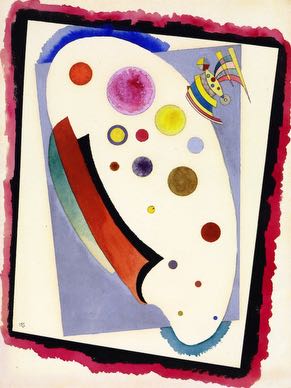
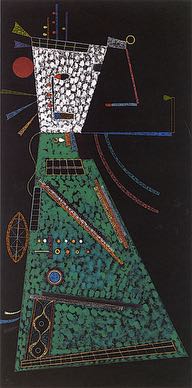
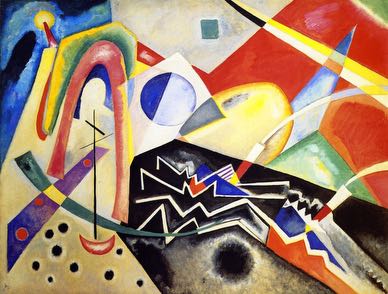
Geometry takes a leading role in Composition VIII, On White II, Yellow-Red-Blue, and Several Circles. These years also brought a close friendship with fellow Bauhaus master Paul Klee. As neighbors with a shared interest in artistic theory, they exchanged ideas while retaining quite different approaches to painting.
Did Kandinsky Leave Strict Geometry Behind in Paris?
After the Bauhaus closed, Kandinsky and Nina settled in Neuilly-sur-Seine near Paris, where he worked from 1933 until his death. His particular approach to abstraction initially found fewer supporters in the Paris art world. Still, he continued to paint and exhibit, and in 1939 he became a French citizen.
The strict geometry of the Bauhaus years softened in his late work. Shapes resembling cells, embryos, marine organisms, and microscopic life appeared alongside geometric structures. Pink, violet, turquoise, and gold entered his palette, while materials such as sand mixed with pigment gave some surfaces a new texture.
In Germany, the Nazi regime classified his work as “degenerate art” and removed many paintings from public collections. The Second World War brought isolation and shortages in France, but Kandinsky kept working. He died in Neuilly-sur-Seine on 13 December 1944, three days before his seventy-eighth birthday.
Which Paintings Is Wassily Kandinsky Best Known For?
These paintings follow Kandinsky from symbolic landscapes into sweeping abstraction and the geometric experiments of his Bauhaus years:
- The Blue Rider, 1903: A small mounted figure crosses the landscape, an early appearance of the rider motif that would recur in his work.
- Colorful Life, 1907: Russian-inspired figures, buildings, rituals, and everyday activities crowd this scene from before his decisive turn toward abstraction.
- Blue Mountain, 1908–1909: Riders and trees stand against an intensely colored mountain as the landscape begins to resolve into simpler forms.
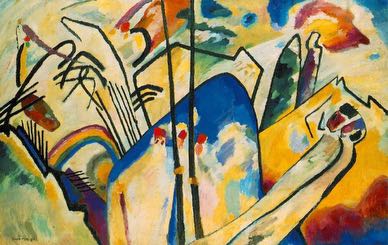
- Composition IV, 1911: Figures, lances, mountains, and a castle remain partly visible among broad areas of color and active lines.
- Composition VI, 1913: Themes of flood, destruction, and renewal develop into a large, turbulent arrangement.
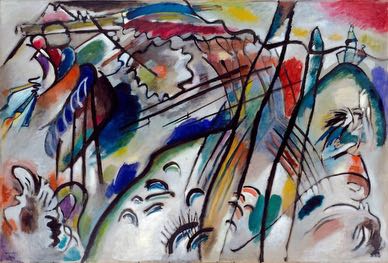
- Composition VII, 1913: Overlapping colors and sweeping lines bring his prewar abstraction to a monumental scale.
- Composition VIII, 1923: Circles, triangles, lines, and checkerboard forms define the more geometric language of the Bauhaus period.
- On White II, 1923: Strong black diagonals cut across an open white field, drawing colored geometric shapes into their movement.
- Yellow-Red-Blue, 1925: Contrasting areas of color, precise shapes, and freer lines hold one another in an energetic balance.
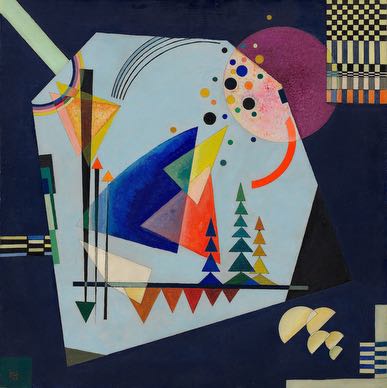
- Several Circles, 1926: Circles of different sizes and colors overlap and seem to float in a deep, dark space.
There is no single Kandinsky style running unchanged through these paintings. Recognizable images gradually recede, gesture gives way to geometry, and the balance between space and color keeps shifting. Each stage reflects a fresh set of questions about what a painting can express.
Why Is Kandinsky Important to Modern Art?
Kandinsky helped establish abstract painting as both a sustained practice and a subject of serious theory. His place in its history rests on much more than disputed claims about who came first. Few artists connected such an extensive body of painting with writing, exhibitions, teaching, and collaboration across national borders.
The Blue Rider widened the range of objects and traditions considered worthy of artistic attention. At the Bauhaus, Kandinsky gave artists and designers a vocabulary for discussing how visual elements work together. His books remained in circulation long after his death, shaping conversations about color, composition, spirituality, and the psychological effects of form.
His paintings also show how varied abstraction can be. Symbolic landscapes led to turbulent color, then to measured geometry and organic shapes. Throughout these changes, Kandinsky kept asking how a line, a shape, or a relationship between colors could move a viewer. That persistent inquiry is central to his influence on twentieth-century art.
Copyright © 2026 BrushWiz. All Rights Reserved.
About Our Wassily Kandinsky Paintings
Are your Wassily Kandinsky reproductions painted by hand?
Yes. Every reproduction is individually painted by hand in oil on canvas by a professional artist. We do not use prints, digital transfers, or mechanical reproduction methods.
How closely do your Kandinsky copies resemble the original?
Our artists work to capture the composition, colors, texture, and visual character of the original Kandinsky painting as closely as possible. Because every reproduction is painted by hand, small variations are natural and make each canvas unique.
How long does it take to complete a painting?
Most Kandinsky reproductions require approximately two to three weeks to paint, dry, and inspect. Production time may vary depending on the artwork and canvas size, so check the estimate displayed on the product page.
Can I request a Kandinsky painting that is not listed?
Yes. If you cannot find the Wassily Kandinsky artwork you want in our catalog, send us the painting’s title or an image. Our team will review your request and confirm the available sizes, estimated production time, and price.
Will I receive photos of my painting before it is shipped?
Yes. We send high-resolution photographs of the completed painting for your approval. You can request adjustments if needed, and the painting will not be dispatched until the review process is complete.
Can I order a custom canvas size?
Yes. We offer custom dimensions in addition to the standard sizes shown on the product page. Select the dimensions you need directly from the available size options.
Can I order my Kandinsky painting with a frame?
Yes. High-quality frames in classic and modern designs are available for many paintings. You can view compatible framing options and add your preferred design from the product page. Professional canvas stretching is also available.
How much does a Wassily Kandinsky reproduction cost?
The price depends on the selected artwork, canvas dimensions, and framing option. Choose your preferred configuration on the product page to see the current price before ordering.
Do you offer free worldwide shipping?
Yes. Kandinsky reproductions qualify for free express worldwide shipping. After dispatch, delivery usually takes five to eight business days, although timing may vary by country and destination.
What is the return policy for Kandinsky reproductions?
Orders are covered by our 90-day return policy. Review the current return-policy page before ordering for complete information about eligibility, time limits, and the return process.
Why BrushWiz?
100% Hand Painted
Every piece is entirely handmade
Museum Quality
Faithfully recreated by expert artists
Custom Framing
Choose from a wide range of frames
Free Shipping
Enjoy free shipping on all orders
Cash Back Rewards
Earn cash back with every purchase