

🔥 Limited-Time Sale. Offer Ends 11/13/2026. View Details
🔥 Limited-Time Sale. Ends 11/13/2026. View Details
🔥 Limited-Time Sale. View Details
Artists
Subjects
Movements
Collections
Decor
Portraits
Commissions
Framing
Reviews
Gift Cards
On Sale
Ivan Aivazovsky Oil Painting Reproductions
Shop museum-quality reproductions of Ivan Aivazovsky’s most famous paintings, each hand-painted in oil on canvas by a professional artist.
Shop Art
Showing 1-40 of 543 results
Sort By
Most Popular
- Most Popular
- New Arrivals
- Best Sellers
- Alphabetical A-Z
- Alphabetical Z-A

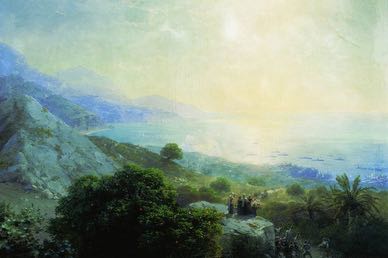

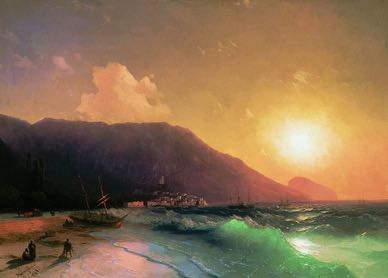
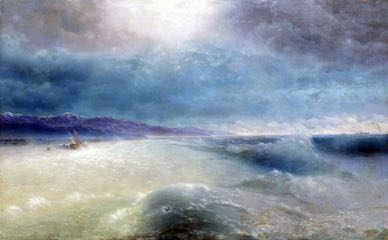
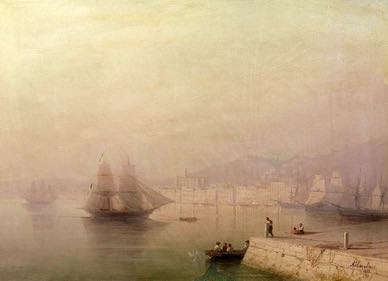
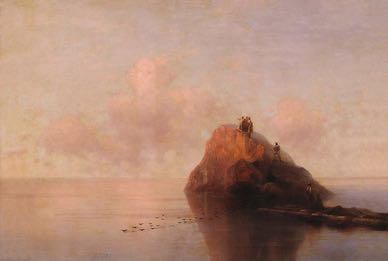
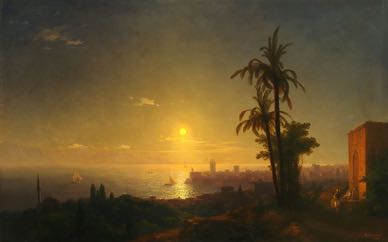
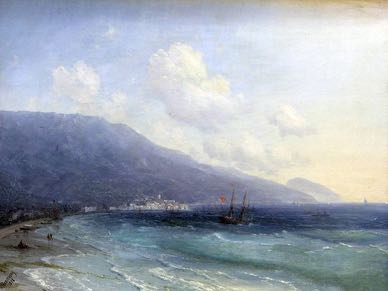

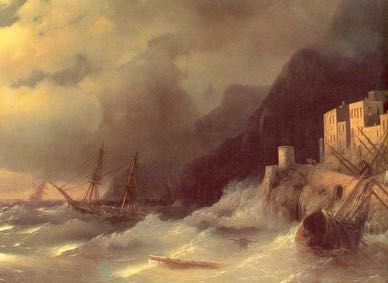
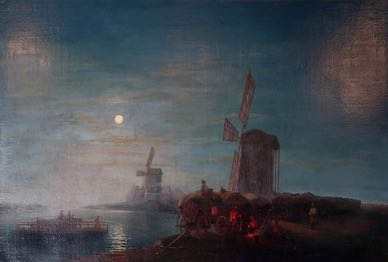

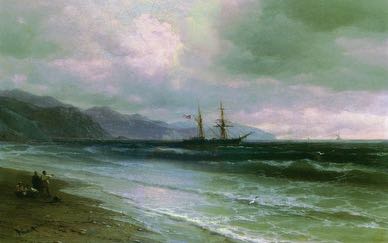
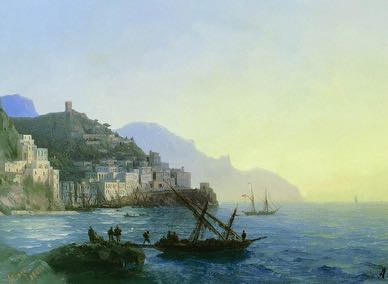
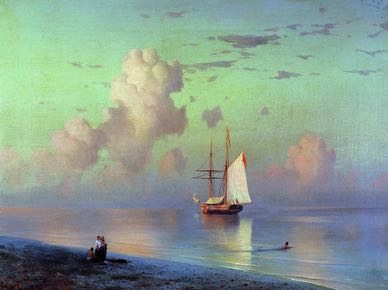

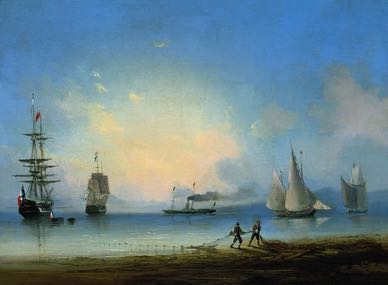
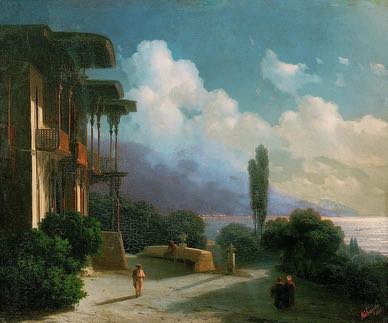

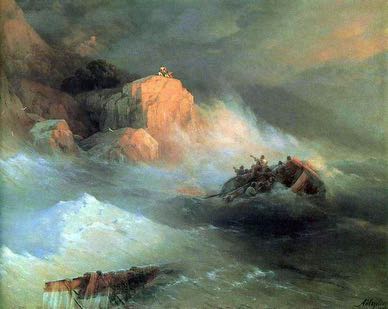
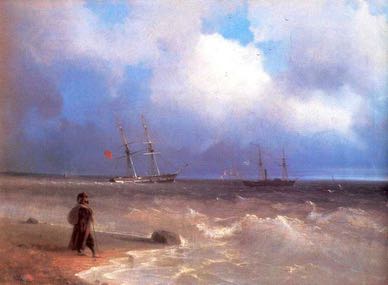
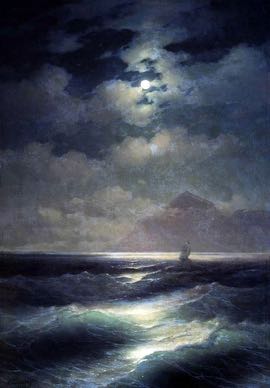
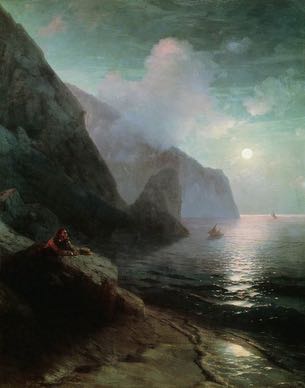
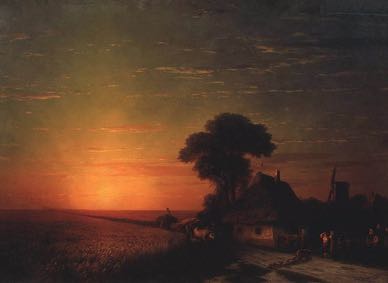
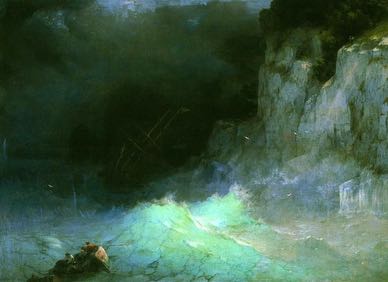

Can’t Find the Painting You Want?
Looking for a specific painting that isn’t in our catalog? Just let us know. We can recreate almost any artwork in the size and style you’re looking for.
Request a PaintingHand-Painted Ivan Aivazovsky Reproductions
Bring Aivazovsky’s art into your home with an oil-on-canvas reproduction hand-painted by a professional artist. Our collection features hundreds of paintings from across his career, including The Ninth Wave, Black Sea, and The Rainbow. Discover towering waves, violent storms, moonlit seas, shipwrecks, naval battles, luminous coastal views, and other subjects closely associated with Aivazovsky. Every reproduction is a real oil painting, offering depth and texture that a print or digital transfer cannot provide. From iconic masterpieces to lesser-known works, find a Aivazovsky painting that suits your space.
The Making of an Ivan Aivazovsky Oil Painting Replica
Creating an Ivan Aivazovsky oil painting replica requires patience, precision, and an understanding of the original artwork. Our studio includes artists experienced in Romantic marine painting who understand the distinctive qualities of Aivazovsky’s work. Before painting begins, the artist studies the source image, paying close attention to its luminous sky, transparent water, moving waves, atmospheric distance, ships, and dramatic treatment of light. These elements are recreated by hand in oil on canvas using an approach suited to the original. Once complete, the reproduction is inspected by our quality-control team and photographed for your approval.
Custom Sizes and Frames for Your Aivazovsky Painting
Your Aivazovsky painting can be ordered in practically any size, from popular standard dimensions to a custom canvas size selected directly on the product page. This flexibility lets you choose a painting that fits your wall and complements your room perfectly. After selecting the size, you can choose from high-quality frames in classic or modern designs, with professional canvas stretching also available. Our framing options complement Aivazovsky’s moonlit seas, glowing sunsets, and dramatic storms. With sizing, stretching, and framing arranged in one order, your artwork can arrive ready for display without a separate visit to a frame shop.
Order an Ivan Aivazovsky Reproduction with Confidence
Buying hand-painted art online should feel clear and comfortable. After your Ivan Aivazovsky reproduction is completed, we send high-resolution photographs for your review before shipping. You can inspect the composition, colors, and overall finish, then request adjustments if needed. The painting is dispatched only after you approve it, so you know what to expect when it arrives. Your order also includes free express worldwide shipping and is covered by our 90-day return policy. Together, these assurances help you purchase an Aivazovsky oil painting with greater confidence and peace of mind.
The Life and Art of Ivan Aivazovsky
Ivan Aivazovsky was an Armenian painter from Feodosia, Crimea, then part of the Russian Empire, who became one of the nineteenth century’s great marine artists. Associated with Romanticism, he painted moonlit coasts, calm harbors, storms, shipwrecks, naval battles, and the sea in constant motion. Aivazovsky trained at the Imperial Academy of Arts in St. Petersburg, won recognition while traveling through Europe, and served as an official painter of the Russian imperial navy. Feodosia remained his home despite an international career, and he established a studio, gallery, and civic projects there. His remarkable ability to paint light passing through water made his seascapes instantly recognizable.
Read More
Who Was Ivan Aivazovsky?
Ivan Konstantinovich Aivazovsky was born Hovhannes Aivazian on 29 July 1817 in Feodosia, a Crimean port on the Black Sea. His Armenian family remained an important part of his identity, even as his education, official positions, and professional success developed within the Russian Empire.
The sea surrounded Aivazovsky from childhood. Feodosia gave him ships, fishermen, open horizons, changing coastal light, and storms that could arrive suddenly. These early impressions remained a foundation for his art after his travels introduced him to the Mediterranean, Atlantic, Bosphorus, and other waters.
The different forms of his name reflect the languages and cultures of his life. International audiences knew him as Ivan Aivazovsky, while Armenian sources also call him Hovhannes Aivazian. Both names belong to the historical setting in which he lived and worked.
Where Did Aivazovsky Learn to Paint?
Aivazovsky’s ability attracted local support early, including help from the Feodosia official Alexander Kaznacheyev. With this assistance, he attended school in Simferopol before entering the Imperial Academy of Arts in St. Petersburg in 1833.
At the Academy, Aivazovsky studied landscape under Maxim Vorobyov and received training in battle painting. The two disciplines served him well. Landscape taught him to control space and atmosphere, while battle scenes demanded clarity among ships, smoke, movement, and large groups.
Before finishing his studies, he received permission to work along the Crimean coast. He graduated in 1839 with the Academy’s highest distinction. This early success confirmed seascape painting as the field in which he would build a long and remarkably productive career.
What Brought Aivazovsky International Recognition?
From 1840 to 1844, Aivazovsky traveled on an Academy pension and spent considerable time in Italy. Rome, Naples, Venice, Florence, and other cities introduced him to Mediterranean light. The paintings he made there drew the attention of collectors, critics, and fellow artists.
His travels eventually extended through France, England, the Netherlands, Spain, Portugal, the Ottoman Empire, the Caucasus, and other regions. Constantinople and the Bosphorus, Malta, Naples, Venice, and the Crimean shore became recurring subjects. In each place, architecture and coastal life met a different quality of sky and water.
Constantinople held a special place in his imagination. View of Constantinople and the Bosporus joins distant buildings and maritime traffic through the atmosphere of the broad waterway. Aivazovsky remembered and rearranged what he had seen rather than recording every destination with mechanical precision.
By the time he returned to St. Petersburg in 1844, his reputation was already international. Honors from the Imperial Academy followed, along with an appointment as painter to the Main Naval Staff. The position connected his art directly to the imperial fleet’s ships, ports, expeditions, and history.
How Did Aivazovsky Paint Water, Light, and Atmosphere?
Aivazovsky usually developed his large canvases in the studio from memory. Observation and travel gave him an intimate knowledge of the sea, but memory allowed him to select and rearrange waves, ships, clouds, and coastlines. The finished painting could concentrate the drama of many experiences into one scene.
Light often gives these compositions their structure. Moonlight lays a silver path across still water; dawn breaks through the remains of a storm; a glowing horizon separates transparent waves from a darkening sky. Changes in color and opacity suggest the water’s depth, weight, reflection, and spray.
For Aivazovsky, the sea was never one fixed surface. His waves gather, rise, curl, and dissolve. A quiet harbor and an approaching storm feel fundamentally different because clouds and distant illumination direct the emotion of the scene.
Why Did Aivazovsky Return So Often to Storms and Naval Battles?
A storm brought observation, imagination, and narrative together. Ships lean against rising waves, sailors cling to wreckage, and a break in the clouds may hold out the possibility of rescue. The sea is dangerous in these works, but the presence of light often keeps despair from becoming absolute.
The Ninth Wave is the most famous example. Shipwreck survivors face another enormous wave as warm dawn light spreads across the water and broken mast. Disaster remains central, yet the color and illumination also suggest endurance and hope. In The Rainbow, mist and broken sunlight surround another boat in danger.
As painter to the Main Naval Staff, Aivazovsky closely observed vessels, maneuvers, ports, and maritime expeditions. Rigging, sails, hulls, formations, and weather therefore retain a convincing physical basis, even when memory and imagination shaped the final canvas.
Historical events joined contemporary naval subjects in his work. Battle of Chesma turns combat into a night scene of fire, smoke, reflections, and crowded ships. Brig Mercury Attacked by Two Turkish Ships sets a small vessel against two larger opponents. Sea, wind, sky, and visibility determine the action as strongly as the ships do.
Where Does Aivazovsky’s Armenian Heritage Appear in His Art?
Aivazovsky maintained close ties to Armenian cultural and religious life while working within imperial institutions and an international market. He used Armenian forms of his name, supported Armenian organizations, and remained close to his brother Gabriel, an educator and clergyman.
Mount Ararat, biblical stories, historical scenes, and places connected with Armenian communities all appear among his subjects. In The Mountain Ararat, the distant peak is both an observed feature of the landscape and a deeply resonant cultural symbol.
These paintings complicate the familiar idea of Aivazovsky as solely a painter of waves and ships. Armenian heritage, Crimean life, Russian imperial institutions, and international travel all belonged to his identity. His career cannot be contained within only one of those settings.
What Made Feodosia the Center of Aivazovsky’s Life?
However widely he traveled, Aivazovsky repeatedly returned to Feodosia and made it his permanent home. He built a house and studio by the sea, founded an art school, and opened a gallery where visitors could see paintings before they left for exhibitions elsewhere.
His commitment to the city reached beyond art. Aivazovsky supported projects involving the water supply, port, transportation, schools, archaeology, and religious institutions. Money earned through his international success helped fund improvements in his hometown.
In 1880, he opened a permanent gallery in his house and later left it to Feodosia. The institution preserved the bond between the painter and the city. It also helped establish Feodosia as a center for the study and practice of marine art.
How Did Aivazovsky’s Seascapes Change Late in His Career?
Aivazovsky continued to travel, exhibit, and paint into his eighties. In some late works, anecdotal details recede and the sea itself takes command. Black Sea creates tension from a long horizon and waves advancing toward the viewer, with no crowded story required.
Large canvases such as Wave and Among the Waves concentrate even more strongly on the force of water. Horizon and sky remain, but transparency, foam, movement, and the apparent weight of the sea dominate the experience.
Aivazovsky died in Feodosia on 2 May 1900 while still actively working. He left more than six thousand paintings, as well as a gallery, school, civic projects, and a lasting influence on marine and landscape painters.
Which Paintings Is Ivan Aivazovsky Best Known For?
Aivazovsky treated the sea as a landscape, a path of travel, a setting for history, a source of danger, and a field of changing light. These works show the range of moods within his long career:
- The Ninth Wave: Survivors face an approaching wave while the warm light of dawn introduces hope after disaster.
- Black Sea: A distant horizon and rising waves convey the restless scale and power of the water in this restrained late seascape.
- The Rainbow: Mist, a damaged vessel, and sailors in danger surround a sudden passage of light and color.
- Storm: Agitated waves and dark clouds place endangered ships inside an intensely dramatic sea.
- Chaos: The Creation: Radiant light enters darkness and turbulent water in Aivazovsky’s vision of the world’s beginning.
- Battle of Chesma: Fire, smoke, ships, and broken reflections transform a naval battle into a nighttime spectacle.
- Brig Mercury Attacked by Two Turkish Ships: A small brig confronts two larger vessels in one of his best-known naval narratives.
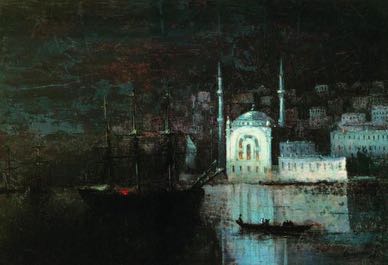
- Moonlit Night on the Bosphorus: A path of moonlight joins quiet water and vessels to the distant shore.
- View of Constantinople and the Bosporus: Architecture, maritime traffic, and atmospheric distance meet across a broad waterway.
- The Niagara Waterfall: The painter applies his understanding of moving water and mist to a famous North American landmark.
Why Does Aivazovsky’s Art Remain Influential?
Aivazovsky showed that marine painting could hold technical knowledge, historical narrative, emotional atmosphere, and imaginative transformation at once. His seas remain convincing as water while also suggesting danger, uncertainty, freedom, endurance, and nature on a scale beyond human control.
His example mattered to artists concerned with Crimea, the Black Sea, atmospheric light, and broad landscape. Alexey Bogolyubov, Konstantin Bogaevsky, and Arkhip Kuindzhi followed individual paths, but they worked within a culture in which Aivazovsky had made seascape and atmosphere internationally visible.
His strongest paintings remain compelling because their effects are direct without being simple. A precisely rendered ship appears fragile against the surrounding water. Calm seas hold enormous depth, while a glowing sky can coexist with disaster. That balance of observation and imagination keeps Aivazovsky central to nineteenth-century painting.
Copyright © 2026 BrushWiz. All Rights Reserved.
About Our Ivan Aivazovsky Paintings
Are your Ivan Aivazovsky reproductions painted by hand?
Yes. Every reproduction is individually painted by hand in oil on canvas by a professional artist. We do not use prints, digital transfers, or mechanical reproduction methods.
How closely do your Aivazovsky copies resemble the original?
Our artists work to capture the composition, colors, texture, and visual character of the original Aivazovsky painting as closely as possible. Because every reproduction is painted by hand, small variations are natural and make each canvas unique.
What is the usual production time for an Aivazovsky painting?
Most Aivazovsky reproductions require approximately two to three weeks to paint, dry, and inspect. Production time may vary depending on the artwork and canvas size, so check the estimate displayed on the product page.
Can I request an Aivazovsky painting that is not listed?
Yes. If you cannot find the Ivan Aivazovsky artwork you want in our catalog, send us the painting’s title or an image. Our team will review your request and confirm the available sizes, estimated production time, and price.
Will I receive photos before my painting is shipped?
Yes. We send high-resolution photographs of the completed painting for your approval. You can request adjustments if needed, and the painting will not be dispatched until the review process is complete.
Do you offer custom canvas sizes?
Yes. We offer custom dimensions in addition to the standard sizes shown on the product page. Select the dimensions you need directly from the available size options.
May I order my Aivazovsky painting with a frame?
Yes. High-quality frames in classic and modern designs are available for many paintings. You can view compatible framing options and add your preferred design from the product page. Professional canvas stretching is also available.
How much does an Ivan Aivazovsky reproduction cost?
The price depends on the selected artwork, canvas dimensions, and framing option. Choose your preferred configuration on the product page to see the current price before ordering.
Do you offer free worldwide shipping?
Yes. Aivazovsky reproductions qualify for free express worldwide shipping. After dispatch, delivery usually takes five to eight business days, although timing may vary by country and destination.
What is the return policy for Aivazovsky reproductions?
Orders are covered by our 90-day return policy. Review the current return-policy page before ordering for complete information about eligibility, time limits, and the return process.
Why BrushWiz?
100% Hand Painted
Every piece is entirely handmade
Museum Quality
Faithfully recreated by expert artists
Custom Framing
Choose from a wide range of frames
Free Shipping
Enjoy free shipping on all orders
Cash Back Rewards
Earn cash back with every purchase