
❄️ Winter Sale. Offer Ends 11/27/2026. View Details
❄️ Winter Sale. Ends 11/27/2026. View Details
❄️ Winter Sale. View Details
Artists
Subjects
Movements
Collections
Decor
Portraits
Commissions
Framing
Reviews
Gift Cards
On Sale
Martin Johnson Heade Oil Painting Reproductions
Shop museum-quality reproductions of Martin Johnson Heade’s most famous paintings, each hand-painted in oil on canvas by a professional artist.
Shop Art
Showing 1-40 of 305 results
Sort By
Most Popular
- Most Popular
- New Arrivals
- Best Sellers
- Alphabetical A-Z
- Alphabetical Z-A

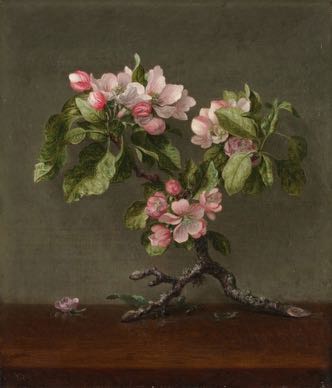


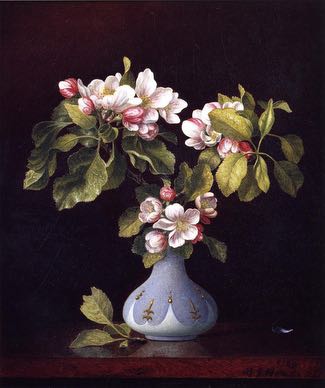
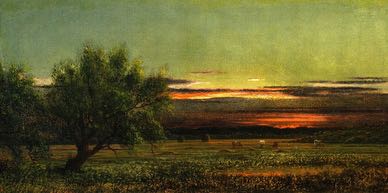
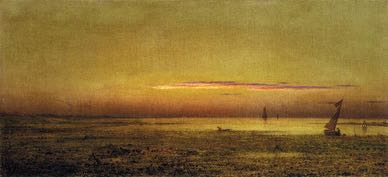

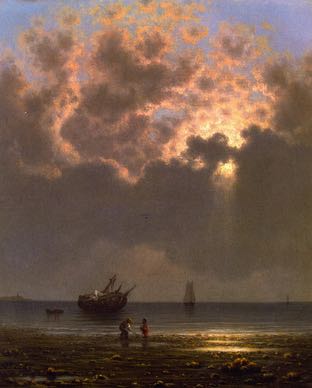
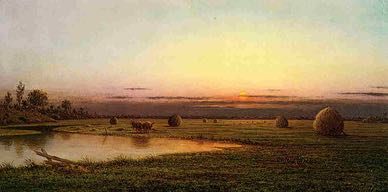


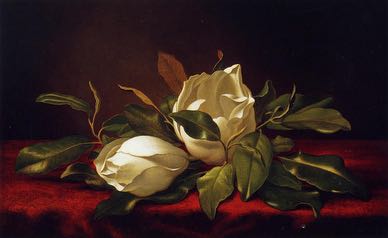
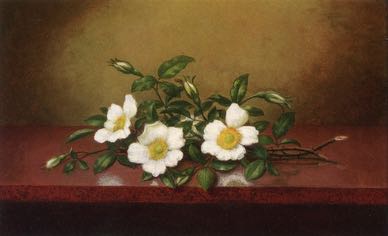




Can’t Find the Painting You Want?
Send us a reference image. We can recreate almost any artwork in the size and style you’re looking for.
Get a Free QuoteHand-Painted Martin Johnson Heade Reproductions
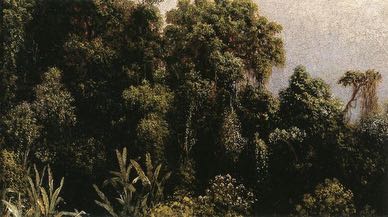
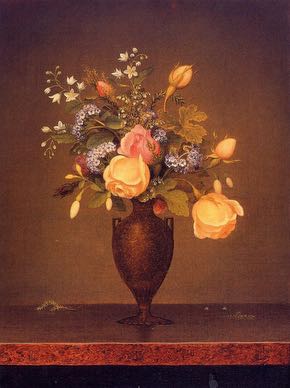
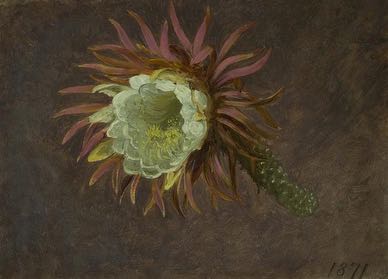
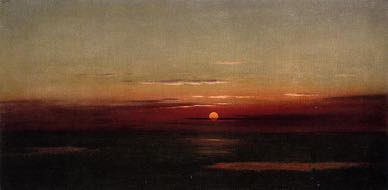
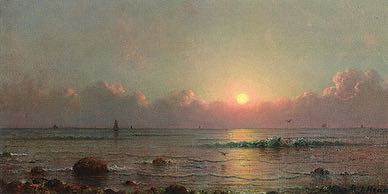
Bring Heade’s art into your home with an oil-on-canvas reproduction hand-painted by a professional artist. Our collection features hundreds of paintings from across his career, including Approaching Thunder Storm, Cattleya Orchid and Three Brazilian Hummingbirds, and Giant Magnolias on a Blue Velvet Cloth. Discover coastal marshes, approaching storms, tropical birds, flower still lifes, and other subjects associated with Heade. Every reproduction is a real oil painting, offering depth and texture that a print or digital transfer cannot provide. From celebrated works to less familiar compositions, find a Heade painting that suits your space.
The Making of a Martin Johnson Heade Oil Painting Replica
Creating a Martin Johnson Heade oil painting replica requires patience, precision, and an understanding of the original artwork. Our studio includes artists who specialize in American landscape painting and understand the distinctive qualities of Heade’s work. The artist begins by studying the source image, then recreates its expansive sky, luminous water, finely observed natural forms, and Heade’s balance of stillness and approaching weather on canvas using traditional oil-painting methods. After completion, the painting is inspected by our quality-control team and photographed for your approval. The result is a carefully executed oil painting that reflects the visual character of the original.
Custom Sizes and Frames for Your Heade Painting
Your Heade painting can be ordered in practically any size, from popular standard dimensions to custom canvas sizes selected directly on the product page. This flexibility lets you choose a painting that fits your wall and complements your room perfectly. After selecting the size, you can choose from high-quality frames in classic or modern designs, with professional canvas stretching also available. Our framing options complement the luminous colors and quiet horizons of Heade’s paintings. With sizing, stretching, and framing arranged in one order, your artwork can arrive ready for display without a separate visit to a frame shop.
Order a Martin Johnson Heade Reproduction with Confidence
Buying hand-painted art online should feel clear and comfortable. After your Martin Johnson Heade reproduction is completed, we send high-resolution photographs for your review before shipping. You can inspect the composition, colors, details, and overall finish, then request adjustments if needed. The painting is dispatched only after you approve it, so you know what to expect when it arrives. Your order also includes free express worldwide shipping and is covered by our 90-day return policy. Together, these assurances help you purchase a Heade oil painting with greater confidence and peace of mind.
The Life and Art of Martin Johnson Heade
Martin Johnson Heade was an American painter whose long, restless career moved from portraiture and marine views to salt marshes, tropical birds, and flower still lifes. Born in Pennsylvania in 1819, he traveled widely before settling in Florida late in life. Heade worked among artists associated with Luminism, yet his low horizons, unsettled weather, and repeated marsh subjects gave his landscapes a character of their own. Journeys to Brazil and elsewhere in the tropics inspired jewel-colored hummingbirds and orchids, while his Florida years produced sensuous magnolias laid against velvet. Modestly known during his lifetime and rediscovered decades after his death, Heade is now admired for joining close natural observation with mystery, stillness, and sudden atmospheric drama.
Read More
How Did a Pennsylvania Artist Build Such a Restless Career?
Martin Johnson Heade was born in Lumberville, Pennsylvania, on 11 August 1819 and grew up in rural Bucks County. Reliable details about his earliest training are scarce. He began painting while still young, and portraiture offered a practical route into professional life before landscape or still life became central to his work.
Heade traveled almost continually during his early career. He worked in several American cities, crossed the Atlantic more than once, and sought portrait commissions wherever an opportunity appeared. His first known public exhibition came at the Pennsylvania Academy of the Fine Arts in 1841, but recognition remained limited and his direction was not yet settled.
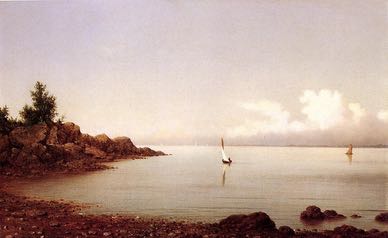
This mobility became more than a search for customers. Different coastlines, climates, plants, and weather systems supplied subjects for decades. Heade never followed the orderly development often assigned to an artist’s career. Portraits, seascapes, marshes, hummingbirds, orchids, and flowers overlapped, disappeared, and returned as his location and interests changed.
What Did Portrait Painting Teach Heade About Looking?
For roughly the first fifteen years of his professional life, Heade was known primarily as a portrait painter. Sitters such as Mary Rebecca Clark are presented with careful modeling, direct gazes, and few distracting accessories. These works are quieter than the grand society portraits fashionable at the time.
Portrait commissions demanded patience with small distinctions of light, surface, and character. That discipline remained useful when Heade changed subjects. The minute turn of a hummingbird’s head, the waxy thickness of a magnolia petal, and the reflection in a marsh channel all depend on sustained observation rather than broad spectacle.
Heade did not abandon figures at once. The Roman Newsboys, painted after European travel, shows his interest in narrative and everyday life extending beyond commissioned likenesses. Yet by the late 1850s, open water and coastal land had begun to offer him a more distinctive artistic identity.
Where Did the New York Art World Lead Him?
Heade settled in New York in 1859 and took a studio in the Tenth Street Studio Building, the purpose-built complex occupied by many prominent landscape painters. There he came into contact with artists whose careers were more established and whose large canvases had made American scenery a public attraction.
His friendship with Frederic Edwin Church was particularly important. Church’s South American paintings encouraged Heade’s own tropical ambitions, while the building’s professional community connected him with exhibitions, patrons, and debates about what an American landscape could be.
Yet Heade chose a different scale and mood from Church’s panoramic wonders. Rather than make mountains, waterfalls, or distant continents consistently monumental, he often worked on long, relatively small canvases. A low strip of land beneath a broad sky could hold more tension for him than a densely packed wilderness.
Why Did Salt Marshes Become His Defining Landscape?
Heade first visited Newburyport, Massachusetts, around 1859 and discovered a subject he would revisit for more than two decades. Salt marshes were working landscapes as well as natural habitats. Farmers cut salt hay, stacked it into rounded mounds, and moved through tidal channels in flat-bottomed boats.
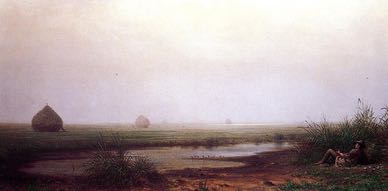
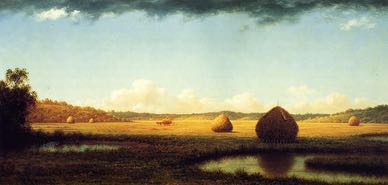
The marsh gave Heade a remarkably simple structure. Narrow waterways curve through horizontal fields, haystacks punctuate the middle distance, and the horizon leaves most of the canvas to the sky. Small changes in tide, season, or cloud cover could transform the emotional temperature without changing the basic arrangement.
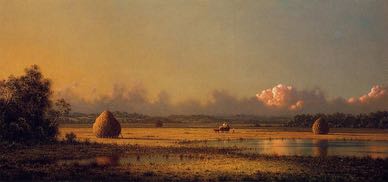
In Sunlight and Shadow: The Newbury Marshes, grazing cattle and a lone haystack sit beneath clouds touched with pink and violet. Newburyport Meadows lets dark rain clouds and breaking sunlight divide the same flat terrain into moving zones of weather.
How Does Weather Turn Stillness into Suspense?
Heade was fascinated by the moment before a storm arrives. Water may remain glassy and people continue their ordinary work, but a dark bank of cloud makes every calm detail feel provisional. The drama comes from waiting, not from the violent center of the event.
Approaching Thunder Storm reduces the land to a dark silhouette beneath an immense, charged sky. A pale band near the horizon sharpens the contrast, while the smooth water carries the cloud’s weight across the lower half of the scene.
In Thunder Storm on Narragansett Bay, distant lightning, rain, and darkening clouds press toward boats returning to shore. The human figures do not panic. Their measured actions make the weather feel larger, and the restraint keeps the painting from becoming simple theatrical disaster.
What Took Heade from Coastal Meadows to Brazil?
Hummingbirds had fascinated Heade since boyhood. In 1863, already in his forties, he sailed to Brazil to study the birds in their native habitats and prepare a lavish illustrated book he planned to call The Gems of Brazil. He remained around Rio de Janeiro for nearly seven months.
He observed living birds and examined specimens available in local markets, producing small vertical paintings of different species. He also painted tropical forests, bays, and sunsets. Emperor Pedro II admired the project, and Heade exhibited hummingbird pictures in Rio, but the proposed book failed to secure the support needed for publication.
Brazil was the first of three tropical journeys. He later traveled through Nicaragua and Colombia, Panama, and Jamaica, gathering further impressions of vegetation, atmosphere, and bird life. Paintings such as Rio de Janeiro Bay show that landscape remained as important to these travels as natural history.
Do the Hummingbird Paintings Record Nature or Reinvent It?
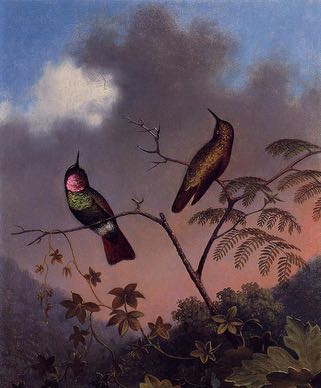
Heade wanted his birds to be recognizable, and his close attention to plumage, posture, nests, and plant forms reflects the culture of nineteenth-century natural science. He understood how iridescent feathers change in the light and made brilliant flashes of red, green, blue, and violet central to the pictures.
Accuracy did not prevent invention. He sometimes placed species within imagined settings or combined birds and plants that did not share the same exact habitat. Mist, dark foliage, distant mountains, and oversized blossoms turn observation into a compressed theater of tropical abundance.
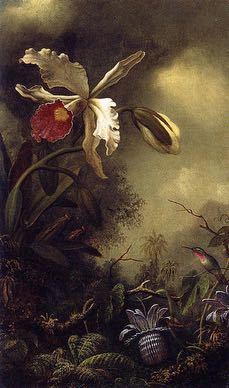
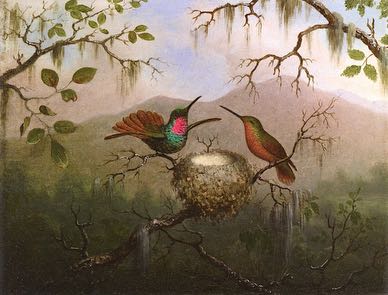
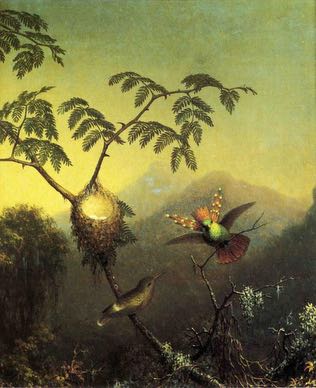
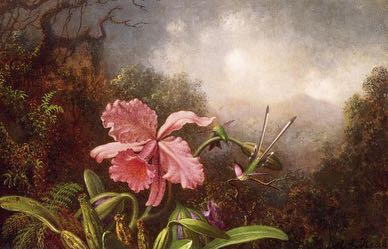
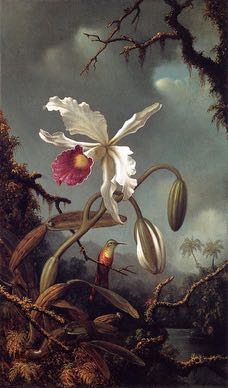
Cattleya Orchid and Three Brazilian Hummingbirds balances tiny bodies against a large orchid and damp forest depth. In Hummingbird and Passionflowers, the bird’s quick alertness contrasts with curling vines and blossoms that seem almost too elaborate to be real.
How Did Florida Give His Late Work a New Focus?
In 1883, at the age of sixty-four, Heade married Elizabeth Smith and settled in St. Augustine, Florida. The move ended years of restless relocation. It also placed him near new marshes, subtropical vegetation, and changing river light, which refreshed subjects he had explored in the Northeast.
Railroad and hotel developer Henry Morrison Flagler became his most important patron. Flagler bought paintings regularly and provided Heade with studio space connected to the Hotel Ponce de Leon. This support brought a degree of stability that the artist had rarely enjoyed earlier.
Heade continued painting Florida waterways, sunsets, and hummingbird compositions, but magnolias became the signature of his final years. In Giant Magnolias on a Blue Velvet Cloth, creamy petals and glossy leaves spread across dark fabric. The close view feels both botanically attentive and luxuriously strange.
Which Paintings Show the Full Reach of Heade’s Art?
Heade’s career cannot be summarized by one landscape type or a single phase. These paintings trace his movement between portraiture, weather, travel, natural history, and the concentrated still lifes of his Florida years:
- Mary Rebecca Clark, 1857: A composed early likeness recalls the portrait practice that first supported Heade’s career.
- Approaching Thunder Storm, 1859: A dark horizon and suspended water turn gathering weather into psychological tension.
- Thunder Storm on Narragansett Bay, 1868: Returning boats remain calm while lightning and rain advance across the bay.
- Sunlight and Shadow: The Newbury Marshes, circa 1871–1875: Tidal water, hay, cattle, and clouds make ordinary labor inseparable from atmosphere.
- Cattleya Orchid and Three Brazilian Hummingbirds, 1871: Precise natural detail unfolds within a humid and partly imagined tropical world.
- Hummingbird and Passionflowers, circa 1875–1885: A tiny bird hovers near elaborate blossoms, joining scientific attention with visual fantasy.
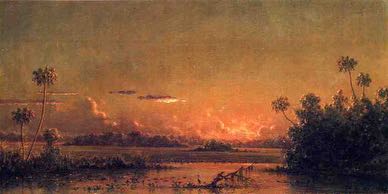
- The Great Florida Sunset, circa 1887: Bands of glowing color spread over marsh and water in the artist’s adopted home.
- Giant Magnolias on a Blue Velvet Cloth, circa 1890: White flowers emerge from deep blue fabric with unusual weight, intimacy, and sensual presence.
Why Did Recognition Arrive Long After Heade’s Death?
Heade continued working in St. Augustine until shortly before his death on 4 September 1904. He had exhibited and found buyers, especially through Flagler, but he never achieved the national celebrity enjoyed by Church or other leading landscape painters of his generation.
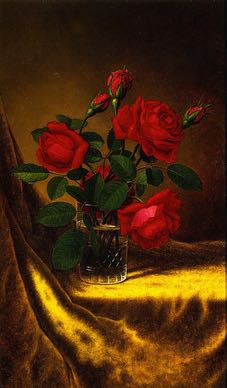
His range may have made him difficult to classify. The same artist produced modest portraits, elongated salt marshes, stormy seascapes, brilliant tropical fantasies, and flowers laid against velvet. Later labels such as Hudson River School and Luminism describe important parts of his context, but neither fully contains the work.
A major revival began in the 1940s, when exhibitions and scholarship brought paintings such as Approaching Thunder Storm back into public view. Heade is now valued precisely for the qualities that once left him at the margins: repetition without monotony, scientific curiosity mixed with imagination, and an ability to make quiet surfaces feel charged. His marshes ask viewers to watch weather gathering, while his birds and flowers make close observation seem unexpectedly mysterious.
Copyright © 2026 BrushWiz. All Rights Reserved.
About Our Martin Johnson Heade Paintings
Are your Martin Johnson Heade reproductions painted by hand?
Yes. Every reproduction is individually painted by hand in oil on canvas by a professional artist. We do not use prints, digital transfers, or mechanical reproduction methods.
How closely do your Heade copies resemble the original?
Our artists work to capture the composition, colors, texture, and visual character of the original Heade painting as closely as possible. Because every reproduction is painted by hand, small variations are natural and make each canvas unique.
How long does a Heade reproduction take to complete?
Most Heade reproductions require approximately two to three weeks to paint, dry, and inspect. Production time may vary depending on the artwork and canvas size, so check the estimate displayed on the product page.
Can I request a Heade painting that is not listed?
Yes. If you cannot find the Martin Johnson Heade artwork you want in our catalog, send us the painting’s title or an image. Our team will review your request and confirm the available sizes, estimated production time, and price.
Will I receive approval photos before shipping?
Yes. We send high-resolution photographs of the completed painting for your approval. You can request adjustments if needed, and the painting will not be dispatched until the review process is complete.
Are custom canvas sizes available for Heade paintings?
Yes. We offer custom dimensions in addition to the standard sizes shown on the product page. Select the dimensions you need directly from the available size options.
May I order my Heade painting with a frame?
Yes. High-quality frames in classic and modern designs are available for many paintings. You can view compatible framing options and add your preferred design from the product page. Professional canvas stretching is also available.
What determines the price of a Heade reproduction?
The price depends on the selected artwork, canvas dimensions, and framing option. Choose your preferred configuration on the product page to see the current price before ordering.
Is free express worldwide shipping included?
Yes. Heade reproductions qualify for free express worldwide shipping. After dispatch, delivery usually takes five to eight business days, although timing may vary by country and destination.
Which return policy covers Heade reproductions?
Orders are covered by our 90-day return policy. Review the current return-policy page before ordering for complete information about eligibility, time limits, and the return process.
Why BrushWiz?
100% Hand Painted
Every piece is entirely handmade
Museum Quality
Faithfully recreated by expert artists
Custom Framing
Choose from a wide range of frames
Free Shipping
Enjoy free shipping on all orders
Cash Back Rewards
Earn cash back with every purchase