

🔥 Limited-Time Sale. Offer Ends 11/10/2026. View Details
🔥 Limited-Time Sale. Ends 11/10/2026. View Details
🔥 Limited-Time Sale. View Details
Artists
Subjects
Movements
Collections
Decor
Portraits
Commissions
Framing
Reviews
Gift Cards
On Sale
Pierre-Auguste Renoir Oil Painting Reproductions
Shop museum-quality reproductions of Pierre-Auguste Renoir’s most famous paintings, each hand-painted in oil on canvas by a professional artist.
Shop Art
Showing 1-40 of 1420 results
Sort By
Most Popular
- Most Popular
- New Arrivals
- Best Sellers
- Alphabetical A-Z
- Alphabetical Z-A
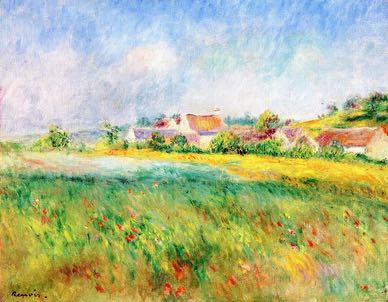
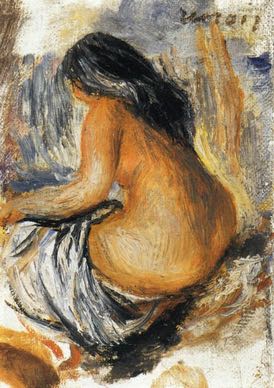
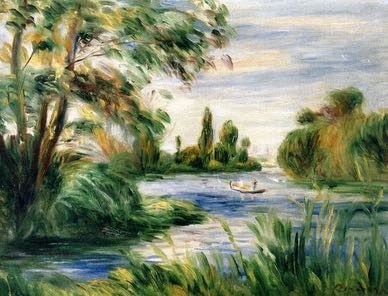
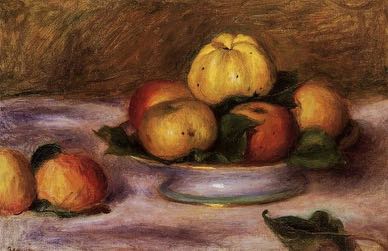
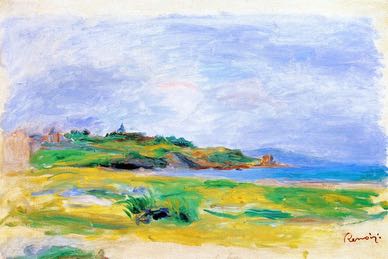
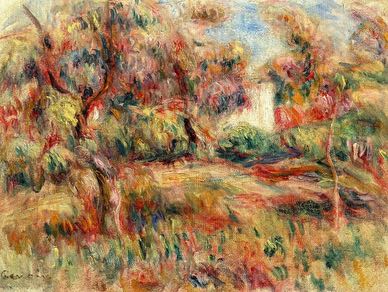
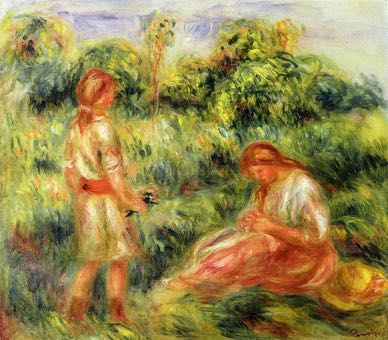

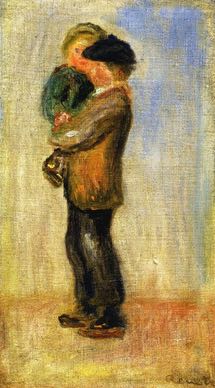
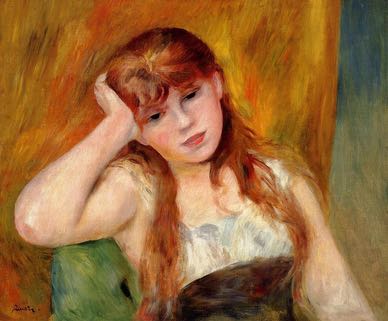
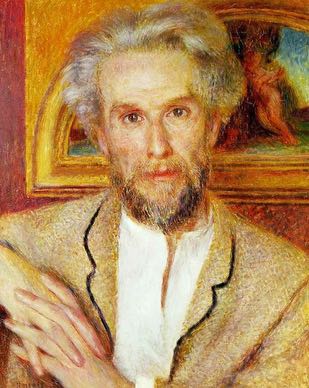
From: $620.00$310.00
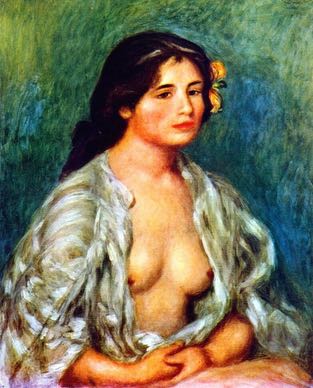

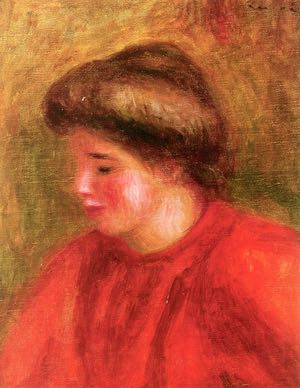
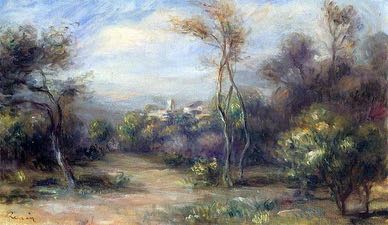
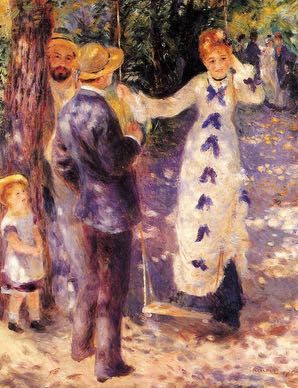


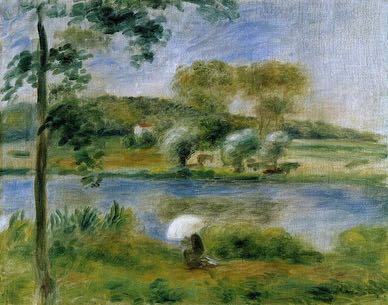
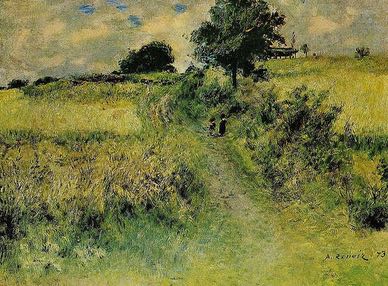
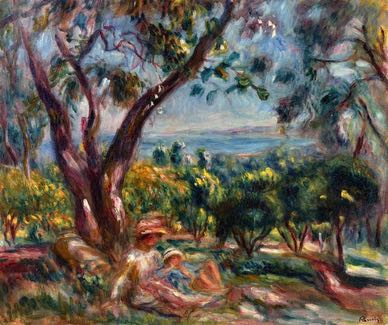
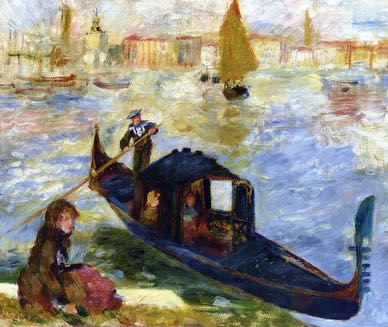
Can’t Find the Painting You Want?
Looking for a specific painting that isn’t in our catalog? Just let us know. We can recreate almost any artwork in the size and style you’re looking for.
Request a PaintingHand-Painted Pierre-Auguste Renoir Reproductions
Bring Renoir’s art into your home with an oil-on-canvas reproduction hand-painted by a professional artist. Our collection features more than one thousand paintings from across his career, including Dance at the Moulin de la Galette, Luncheon of the Boating Party, and Two Sisters. Discover lively Parisian gatherings, intimate portraits, sunlit gardens, floral compositions, bathers, and other subjects closely associated with Renoir. Every reproduction is a real oil painting, offering depth and texture that a print or digital transfer cannot provide. From iconic masterpieces to lesser-known works, find a Renoir painting that suits your space.
The Making of a Pierre-Auguste Renoir Oil Painting Replica
Creating a Pierre-Auguste Renoir oil painting replica requires patience, precision, and an understanding of the original artwork. Our studio includes artists who specialize in Impressionist painting and understand the distinctive qualities of Renoir’s work. The artist begins by studying the source image, then recreates its shifting light, luminous color, softly modeled figures, and Renoir’s fluid brushwork on canvas using traditional oil-painting methods. After completion, the painting is inspected by our quality-control team and photographed for your approval. The result is a carefully executed oil painting that reflects the visual character of the original.
Custom Sizes and Frames for Your Renoir Painting
Your Renoir painting can be ordered in practically any size, from popular standard dimensions to custom canvas sizes selected directly on the product page. This flexibility lets you choose a painting that fits your wall and complements your room perfectly. After selecting the size, you can choose from high-quality frames in classic or modern designs, with professional canvas stretching also available. Our framing options complement the luminous colors and graceful character of Renoir’s paintings. With sizing, stretching, and framing arranged in one order, your artwork can arrive ready for display without a separate visit to a frame shop.
Order a Pierre-Auguste Renoir Reproduction with Confidence
Buying hand-painted art online should feel clear and comfortable. After your Pierre-Auguste Renoir reproduction is completed, we send high-resolution photographs for your review before shipping. You can inspect the composition, colors, and overall finish, then request adjustments if needed. The painting is dispatched only after you approve it, so you know what to expect when it arrives. Your order also includes free express worldwide shipping and is covered by our 90-day return policy. Together, these assurances help you purchase a Renoir oil painting with greater confidence and peace of mind.
The Life and Art of Pierre-Auguste Renoir
Pierre-Auguste Renoir was a French painter and a leading figure in Impressionism. Born in 1841, he became celebrated for radiant scenes of modern sociability as well as portraits, gardens, landscapes, families, and the human figure. Broken color and fluid brushwork allowed Renoir to catch light as it moved across faces, clothing, foliage, and water, but he never remained tied to one approach. In the 1880s, a renewed interest in drawing, classical composition, and earlier European masters led his art in a different direction. His later paintings brought softer handling and warmer color to increasingly monumental figures, giving his long career an unusual breadth.
Read More
How Did Pierre-Auguste Renoir Become an Artist?
Pierre-Auguste Renoir was born on 25 February 1841 in Limoges, France. His family moved to Paris while he was young, and at about thirteen he found work painting porcelain. The job called for a steady hand and familiarized him with decorative color, floral designs, and carefully placed figures. When machines reduced demand for hand-painted porcelain, he took on other decorative work and continued improving his drawing.
Renoir gained permission to copy paintings in the Louvre, then began studying art more seriously. In 1862, he entered the École des Beaux-Arts and the private studio of Charles Gleyre. There he met Claude Monet, Alfred Sisley, and Frédéric Bazille. Their friendships helped form the close artistic circle from which Impressionism emerged.
What Part Did Renoir Play in the Birth of Impressionism?
Renoir and his friends pushed against the formal studio conventions of academic painting. They worked outdoors and followed changes in natural light at landscapes and leisure spots around Paris. At La Grenouillère, a busy bathing and boating resort on the Seine, Renoir painted beside Monet in 1869. Short, visible strokes and broken reflections gave their canvases the sparkle of light moving over water.
La Grenouillère shows how closely the pair worked while their individual interests were taking shape. Renoir became increasingly drawn to figures and social exchange, whereas Monet devoted himself more consistently to landscape and atmosphere. After repeated struggles with the official Salon, Renoir joined Monet, Sisley, Camille Pissarro, and other independent painters in the first Impressionist exhibition of 1874. He exhibited with the group again in 1876 and 1877.
Where Did Renoir Find Modern Parisian Life?
Theaters, cafés, gardens, restaurants, dance halls, and boating resorts supplied Renoir with many of his most memorable subjects. In these places, people from different social circles met to talk, dance, listen to music, and enjoy their leisure. Rather than record modern life with documentary formality, he watched for glances, gestures, passing light, and the visual connections between one figure and another.
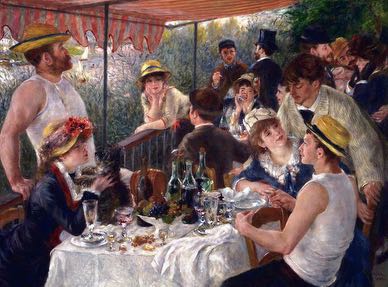
Dance at the Moulin de la Galette gathers a crowd under trees as dappled sunlight passes across the dancers, their clothes, and the ground. In Luncheon of the Boating Party, friends, patrons, and models share a restaurant balcony above the Seine. Both appear relaxed and spontaneous, yet their figures, colors, and pools of light are carefully balanced.
How Did Portraiture Help Sustain Renoir’s Career?
Portrait commissions provided much-needed income and brought Renoir to the attention of influential collectors. He painted everything from informal studies of friends and children to elaborate likenesses of wealthy Parisians. Clothing, furniture, and other signs of status remain visible, but relaxed poses, personal familiarity, and warm color soften the formality.
Through the publisher Georges Charpentier and his wife, Marguerite, Renoir entered an important circle of artists, writers, and collectors. His large portrait of Madame Charpentier and her children drew considerable notice at the Salon of 1879. The dealer Paul Durand-Ruel also became crucial, buying, showing, and promoting Renoir’s work abroad. Portraiture gave the artist greater financial stability without bringing his experiments in color and figure painting to an end.
Why Did Renoir Rethink His Style in the 1880s?
By the early 1880s, Renoir felt he had reached the limits of a wholly spontaneous Impressionist method. Journeys to Algeria and Italy brought him into direct contact with Mediterranean light, ancient Roman art, and Renaissance painting. Raphael’s firmly organized figures particularly impressed him and encouraged a search for greater drawing, volume, and structure.
This interval is often called Renoir’s linear or classical phase. Contours hardened, bodies grew more solid, and paintings required more preparatory drawing. The Great Bathers was the culmination of that extended experiment. Its outdoor color remains bright, but the carefully arranged figures reveal his attempt to reconcile modern painting with the discipline of earlier European art.
Eventually, Renoir loosened the harder outlines of this phase. In the late 1880s and 1890s, softness returned to his brushwork, joined now to a stronger interest in drawing and substantial form. That combination shaped the warm, rounded bodies of his mature and late pictures.
What Kept Renoir Returning to Flowers?
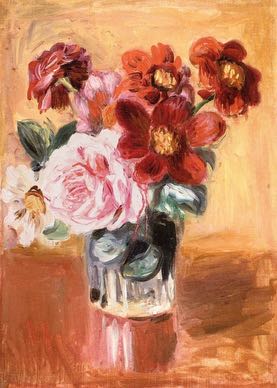
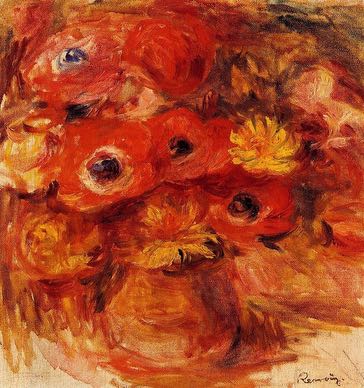
Flowers and still lifes remained a steady part of Renoir’s work. A bouquet let him explore color, texture, light, and volume without the obligations of a portrait commission or the planning demanded by a large figure painting. He could arrange the blossoms as he wished, try unexpected color relationships, and shift freely between delicate touches and broad strokes.
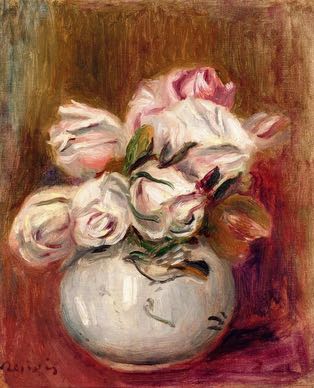
In Still Life with Roses, layered color suggests individual flowers without enclosing each one in a firm outline. Flowers also enter his portraits, gardens, and domestic scenes, enlivening their color and atmosphere. Renoir’s floral still lifes were therefore more than decorative diversions; they offered a testing ground for ideas that carried into landscapes and figure paintings.
How Did Life in Southern France Shape Renoir’s Final Years?
Renoir married Aline Charigot in 1890, and family life became increasingly visible in his art. Their three sons—Pierre, Jean, and Claude—appeared in portraits, as did caregivers and other members of the household. In Essoyes, Aline’s home village, Renoir found subjects in country scenery, domestic routines, and local models.
As arthritis increasingly restricted his movement, Renoir sought relief in the warmer climate of southern France. He bought Les Collettes, an estate at Cagnes-sur-Mer, in 1907. Its gardens, olive trees, nearby hills, and Mediterranean light became the setting for many late works. Even with limited mobility, he continued painting portraits, landscapes, bathers, and still lifes.
Renoir also turned to sculpture near the end of his life. Working with Richard Guino, who modeled pieces from the painter’s concepts and designs, he carried some of his rounded figures into three dimensions. The resulting paintings and sculptures reflect his lasting attraction to warm color, classical form, and an ideal harmony between the body and nature.
Which Paintings Trace Renoir’s Changing Career?
Renoir’s long career encompassed Impressionist landscapes, modern entertainment, commissioned portraits, family life, still lifes, and increasingly classical images of the figure. These works reveal several important stages and subjects:
- La Grenouillère: Broken reflections and visible strokes animate a riverside leisure scene from Renoir’s early Impressionist experiments.
- The Theater Box: An elegantly dressed couple at the theater turns fashion and spectatorship into a performance of modern Parisian life.
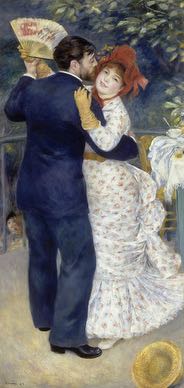
- Dance at the Moulin de la Galette: Dancers and seated friends gather under flickering sunlight in one of Impressionism’s defining social scenes.
- Luncheon of the Boating Party: Conversation unfolds on a riverside terrace within an intricate arrangement of people, food, fabric, and light.
- Dance at Bougival: A dancing couple dominates the foreground while loose strokes evoke the crowd around them.
- Two Sisters: Brilliant flowers, foliage, and color surround two figures seated beside the Seine.
- The Great Bathers: Carefully modeled bodies show Renoir working to unite Impressionist color with classical structure.
- Girls at the Piano: Warm harmony and soft brushwork give a quiet domestic subject the character of Renoir’s mature style.
Why Does Renoir Still Matter to Modern Art?
Renoir helped make Impressionism one of the defining developments in nineteenth-century art. His views of theaters, gardens, dances, restaurants, and riverside leisure expanded the possibilities of ambitious modern painting. Reflected light and broken color also gave him a fresh way to place people within the changing conditions of the outdoors.
Yet Renoir’s importance is not confined to his Impressionist years. His renewed engagement with drawing and classical art showed how a modern painter could return to tradition without merely copying it. Pablo Picasso and Henri Matisse were among the younger artists drawn to the warm color and monumental nudes of his late work.
Renoir died at Cagnes-sur-Mer on 3 December 1919, aged seventy-eight. Over more than sixty years, his work passed through several distinct phases instead of settling into one fixed style. He remains both a founder of Impressionism and an artist who never stopped reconsidering the balance among drawing, color, light, and the human figure.
Copyright © 2026 BrushWiz. All Rights Reserved.
About Our Pierre-Auguste Renoir Paintings
Are your Pierre-Auguste Renoir reproductions painted by hand?
Yes. Every reproduction is individually painted by hand in oil on canvas by a professional artist. We do not use prints, digital transfers, or mechanical reproduction methods.
How closely do your Renoir copies resemble the original?
Our artists work to capture the composition, colors, texture, and visual character of the original Renoir painting as closely as possible. Because every reproduction is painted by hand, small variations are natural and make each canvas unique.
How long does it take to complete a painting?
Most Renoir reproductions require approximately two to three weeks to paint, dry, and inspect. Production time may vary depending on the artwork and canvas size, so check the estimate displayed on the product page.
Can I request a Renoir painting that is not listed?
Yes. If you cannot find the Pierre-Auguste Renoir artwork you want in our catalog, send us the painting’s title or an image. Our team will review your request and confirm the available sizes, estimated production time, and price.
Will I receive photos of my painting before it is shipped?
Yes. We send high-resolution photographs of the completed painting for your approval. You can request adjustments if needed, and the painting will not be dispatched until the review process is complete.
Are custom canvas sizes available?
Yes. We offer custom dimensions in addition to the standard sizes shown on the product page. Select the dimensions you need directly from the available size options.
Can I order my Renoir painting with a frame?
Yes. High-quality frames in classic and modern designs are available for many paintings. You can view compatible framing options and add your preferred design from the product page. Professional canvas stretching is also available.
How much does a Pierre-Auguste Renoir reproduction cost?
The price depends on the selected artwork, canvas dimensions, and framing option. Choose your preferred configuration on the product page to see the current price before ordering.
Do you offer free worldwide shipping?
Yes. Renoir reproductions qualify for free express worldwide shipping. After dispatch, delivery usually takes five to eight business days, although timing may vary by country and destination.
What is the return policy for Renoir reproductions?
Orders are covered by our 90-day return policy. Review the current return-policy page before ordering for complete information about eligibility, time limits, and the return process.
Why BrushWiz?
100% Hand Painted
Every piece is entirely handmade
Museum Quality
Faithfully recreated by expert artists
Custom Framing
Choose from a wide range of frames
Free Shipping
Enjoy free shipping on all orders
Cash Back Rewards
Earn cash back with every purchase