
❄️ Winter Sale. Offer Ends 12/01/2026. View Details
❄️ Winter Sale. Ends 12/01/2026. View Details
❄️ Winter Sale. View Details
Artists
Subjects
Movements
Collections
Decor
Portraits
Commissions
Framing
Reviews
Gift Cards
On Sale
Alfred Sisley Oil Painting Reproductions
Shop museum-quality reproductions of Alfred Sisley’s most famous paintings, each hand-painted in oil on canvas by a professional artist.
Shop Art
Showing 1-40 of 442 results
Sort By
Most Popular
- Most Popular
- New Arrivals
- Best Sellers
- Alphabetical A-Z
- Alphabetical Z-A
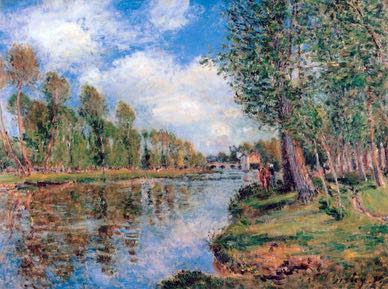
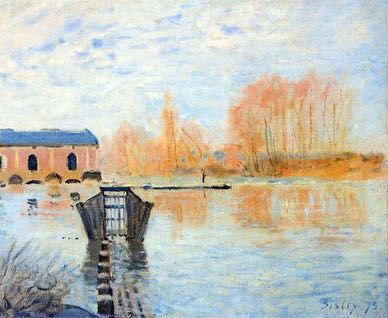
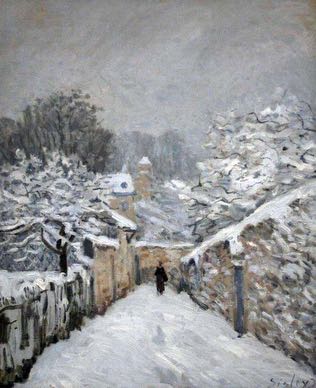
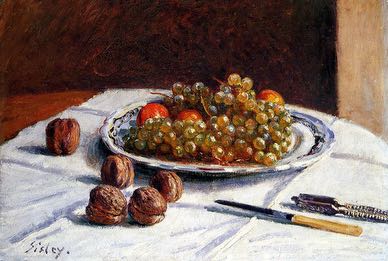
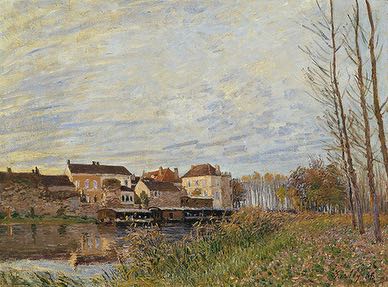
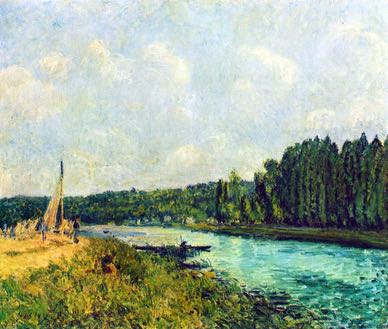
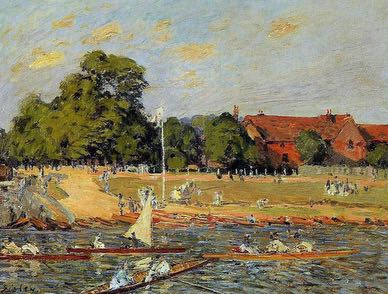
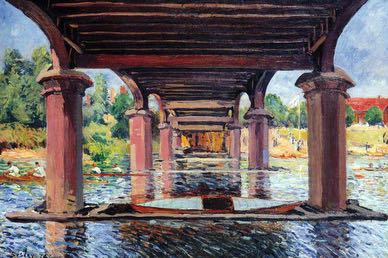

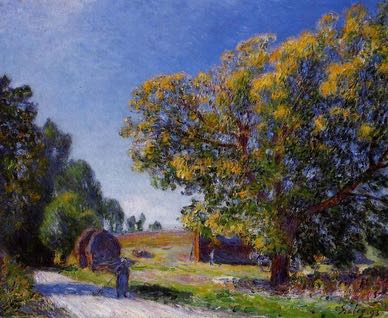
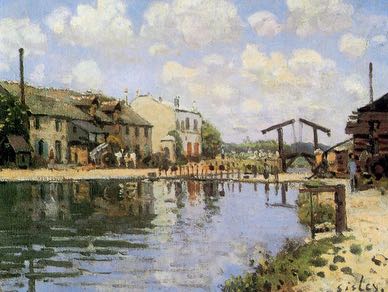
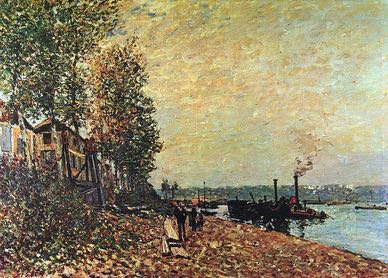
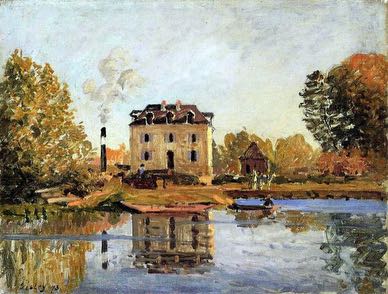
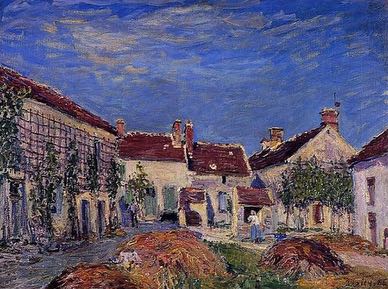

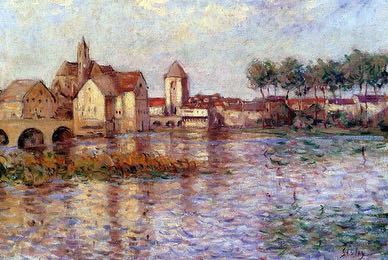

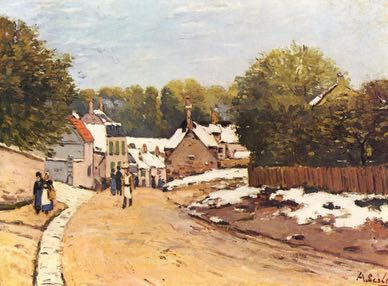


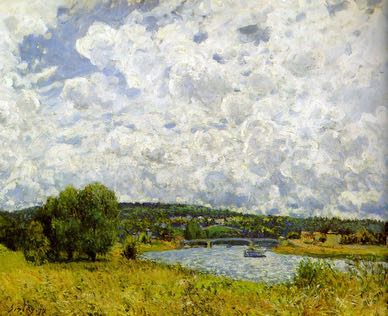
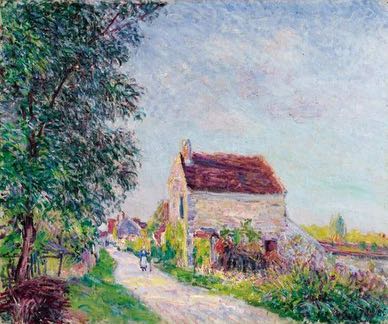

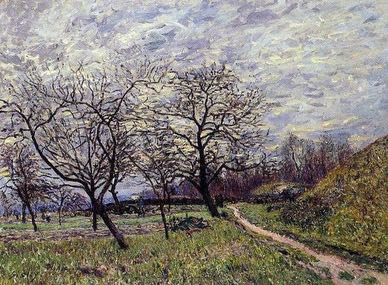
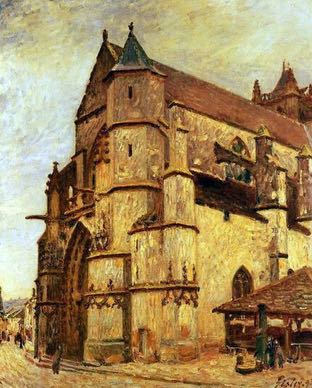
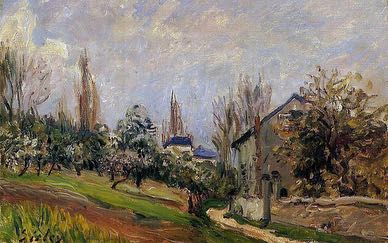
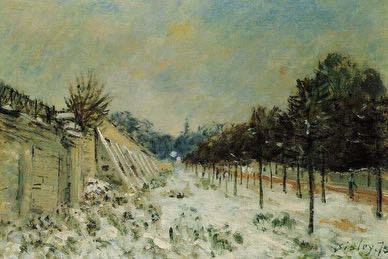

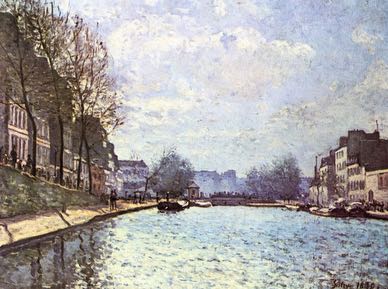
Can’t Find the Painting You Want?
Send us a reference image. We can recreate almost any artwork in the size and style you’re looking for.
Get a Free QuoteHand-Painted Alfred Sisley Reproductions
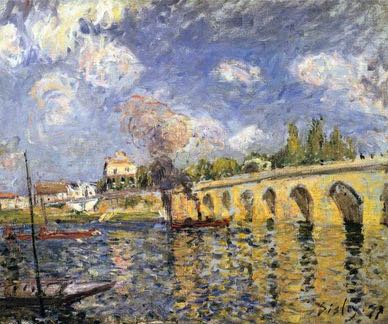
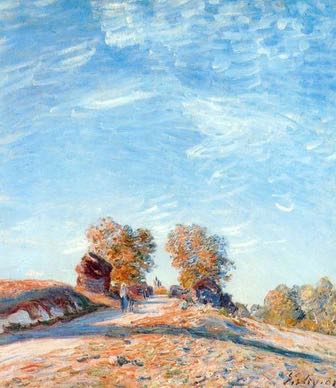
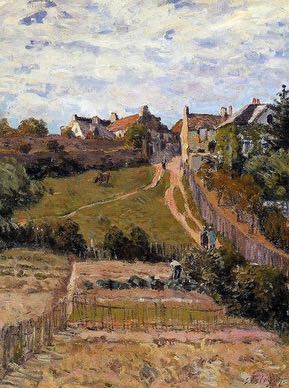
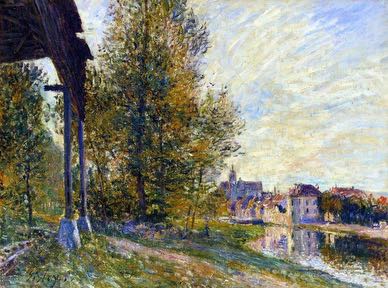
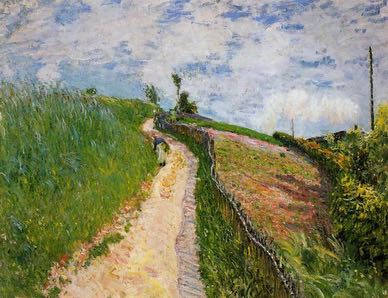
Bring Sisley’s art into your home with an oil-on-canvas reproduction hand-painted by a professional artist. Our collection features hundreds of paintings from across his career in France and southern Britain, including Bridge at Villeneuve-la-Garenne, Flood at Port-Marly, and First Snow in Louveciennes. Discover riverbanks, village roads, winter landscapes, waterside towns, and other subjects closely associated with Sisley. Every reproduction is a real oil painting, offering depth and texture that a print or digital transfer cannot provide. From iconic masterpieces to lesser-known works, find a Sisley painting that suits your space.
The Making of an Alfred Sisley Oil Painting Replica
Creating an Alfred Sisley oil painting replica requires patience, precision, and an understanding of the original artwork. Our studio includes artists who specialize in Impressionist painting and understand the distinctive qualities of Sisley’s work. The artist studies the source image, then recreates its open-air light, broken color, changing sky, and Sisley’s subtle balance of atmosphere and structure using traditional oil-painting methods. After completion, the painting is inspected by our quality-control team and photographed for your approval. The result is a carefully executed oil painting that reflects the visual character of the original.
Custom Sizes and Frames for Your Sisley Painting
Your Sisley painting can be ordered in practically any size, from popular standard dimensions to custom canvas sizes selected directly on the product page. This flexibility lets you choose a painting that fits your wall and complements your room perfectly. After selecting the size, you can choose from high-quality frames in classic or modern designs, with professional canvas stretching also available. Our framing options complement the luminous colors and open landscapes of Sisley’s paintings. With sizing, stretching, and framing arranged in one order, your artwork can arrive ready for display without a separate visit to a frame shop.
Order an Alfred Sisley Reproduction with Confidence
Buying hand-painted art online should feel clear and comfortable. After your Alfred Sisley reproduction is completed, we send high-resolution photographs for your review before shipping. You can inspect the composition, colors, brushwork, and overall finish, then request adjustments if needed. The painting is dispatched only after you approve it, so you know what to expect when it arrives. Your order also includes free express worldwide shipping and is covered by our 90-day return policy. Together, these assurances help you purchase a Sisley oil painting with greater confidence and peace of mind.
The Life and Art of Alfred Sisley
Alfred Sisley was a British Impressionist painter born in Paris in 1839. Unlike several members of his circle, he devoted nearly his entire career to landscape, finding his subjects along the Seine, at Louveciennes and Marly-le-Roi, and beside the Loing near Moret. Rivers, bridges, roads, snow, floods, and expansive skies gave him endless ways to study light and weather. Sisley painted outdoors with broken brushstrokes and fresh color, yet his compositions remained carefully structured and easy to read. He joined four of the eight Impressionist exhibitions and made two important painting trips to Britain. Recognition came slowly, but his quiet, sustained attention to the changing countryside secured his place among the movement’s central landscape painters.
Read More
Where Did Alfred Sisley Begin?
Alfred Sisley was born in Paris on 30 October 1839 to British parents. His father was a prosperous businessman, and the family expected Alfred to enter commerce. In 1857, he was sent to London to learn business, but the city also brought him into contact with British landscape painting.
The broad skies and changing weather in the work of John Constable and J. M. W. Turner left a lasting impression. When Sisley returned to Paris, he chose painting over the family business. He remained a British subject throughout his life, although France was his home and almost all his art was made there.
Which Artists Shaped His Early Development?
In 1862, Sisley entered the Paris studio of Charles Gleyre. There he met Claude Monet, Pierre-Auguste Renoir, and Frédéric Bazille. They worked together outside the studio, particularly around the Forest of Fontainebleau, where the landscape itself became their classroom.
Sisley looked closely at the work of Constable and Turner, but also at French painters such as Camille Corot and Gustave Courbet. From them he learned that an ordinary road, riverbank, or stand of trees could sustain an ambitious painting. His early pictures are darker and more solidly modeled than his mature work, though the preference for open country and low horizons was already clear.
How Did War Transform Sisley’s Life and Work?
The Franco-Prussian War of 1870 and 1871 changed Sisley’s circumstances abruptly. His father’s business failed, and the financial support that had allowed him to paint without depending on sales disappeared. With a partner and young family to support, he would struggle for money for the rest of his life.
After the war, Sisley settled at Louveciennes and painted the western suburbs of Paris with renewed concentration. Roads, orchards, river traffic, bridges, and new industry appear without fanfare. He also worked at Argenteuil, Bougival, Marly-le-Roi, and Port-Marly, following the Seine through places where rural life and modern development met.
The dealer Paul Durand-Ruel began buying his paintings in the early 1870s. That support mattered, but it never produced dependable security. Economic pressure kept Sisley moving toward less expensive towns even as the landscapes of those towns supplied some of his finest subjects.
What Made Sisley’s Impressionism Distinctive?
Sisley helped form the language of Impressionism rather than adopting it after the fact. He exhibited in the group’s first independent show in 1874 and ultimately participated in four of its eight exhibitions. Landscape remained his central concern even as other members of the circle explored portraits, cafés, theaters, and city crowds.
He worked directly before the motif, using separate touches of color to register daylight, reflections, wind, snow, and shifting cloud. The surface can look spontaneous, but the scene beneath it is firmly organized. A curving road pulls the eye into depth, a line of trees braces the horizon, or a bridge joins two banks across a wide band of water.
Sky was never mere background for Sisley. It often occupies half the canvas and determines the light, temperature, and movement of everything below. Clouds travel across the composition, their colors answered in water, roofs, or snow. This close coordination gives his paintings their openness without allowing them to dissolve into formless atmosphere.
Why Did Rivers, Roads, and Weather Hold His Attention?
Sisley repeatedly painted places that could change from hour to hour. Rivers reflected passing clouds and carried barges through the landscape. Roads created long perspectives, while winter stripped trees and buildings down to clear silhouettes. A familiar site became a new subject whenever the season, water level, or direction of light altered.
His landscapes rarely present untouched wilderness. Bridges, towpaths, railway lines, houses, factories, and boats quietly register the growth of modern suburbs around Paris. Small figures walk, work, row, or pause along the water, but they seldom interrupt the larger rhythm of land and sky.
The result is neither a nostalgic retreat nor a celebration of technology. Sisley accepted old villages and new infrastructure as parts of the same visible world. His restraint allows a scene to feel calm while still carrying signs of labor, travel, commerce, and environmental change.
What Did the Flood at Port-Marly Reveal?
In March 1876, the Seine rose over the streets of Port-Marly. Sisley responded with six paintings of the flood, turning an exceptional event into a close study of water, buildings, boats, and human adaptation. The wine merchant’s house that anchors several views remains solid while the flooded road shifts beneath it.
In Flood at Port-Marly, a broad sheet of water reflects pale walls and a clouded sky. Boats have replaced carts, yet the figures continue their ordinary movements. Sisley does not heighten the scene into melodrama. Its strangeness comes from seeing a familiar street temporarily behave like a river.
Broad, adjacent touches make the floodwater feel mobile, while sharper architectural edges keep the building in place. That contrast between movement and stability is central to the series and to Sisley’s art more generally.
When Did Britain Enter Sisley’s Landscapes?
Sisley made only two sustained painting trips outside France, both to Britain. In 1874 he worked along the Thames near Hampton Court and East Molesey. Rowers, regattas, bridges, inns, and a busy weir offered variations on the riverside subjects he already knew from the Seine.
Molesey Weir at Hampton Court, Morning places rushing water against firm banks and buildings, while his regatta scenes use sails and moving boats to animate the river. These paintings belong to the year of the first Impressionist exhibition and show the confidence of his mature method.
He returned in 1897, this time visiting Cardiff, Penarth, and the coast near Swansea. The cliffs and rough water at Langland Bay called for heavier rhythms and a more forceful sea than his quiet inland rivers. The Welsh paintings form a compact late group and reveal how readily Sisley could adjust his eye to unfamiliar terrain.
How Did Moret-sur-Loing Define His Late Career?
Sisley moved southeast of Paris in 1880, first living at Veneux-Nadon and then settling at Moret-sur-Loing in 1882. The medieval town stood near the Loing, its canal, and the meeting of the Loing and Seine at Saint-Mammès. Within walking distance he found bridges, mills, locks, poplar-lined roads, fields, and working riverbanks.
Instead of exhausting the area, repetition sharpened his attention. He painted Moret’s bridge in sun, storm, snow, and high water, then shifted position to include the mills or the church. Along the canal, bare poplar trunks could form a screen through which water and distant land remained visible.
During the 1890s, the church at Moret became another recurring motif. Sisley studied its stone façade at different hours and in changing weather, balancing the building’s weight against moving light. These were not mechanical series. Each canvas answered to a particular encounter with the place.
Which Paintings Best Represent Sisley’s Landscapes?
Sisley’s finest paintings are closely tied to particular locations, but they are never simple records. Roads, bridges, water, and sky become structures through which a moment of weather can be felt:
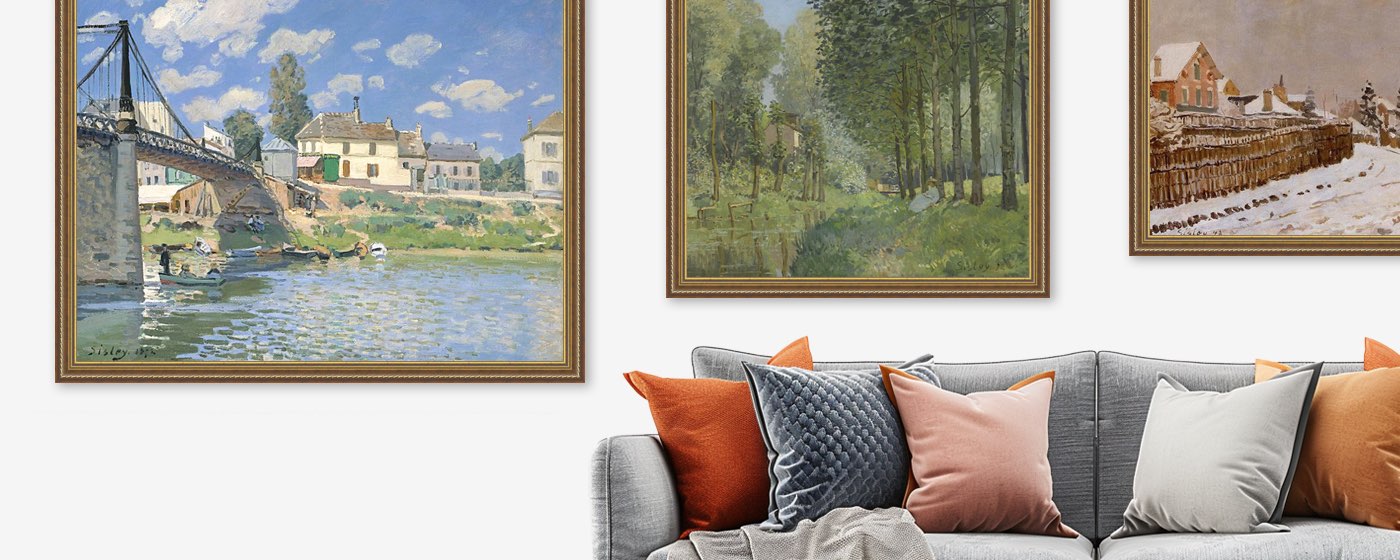
- Bridge at Villeneuve-la-Garenne, 1872: The modern suspension bridge rises across a sunlit river scene without overwhelming the boats, trees, and houses around it.
- The Aqueduct at Marly, 1874: Massive arches cross an ordinary road, joining historical structure with the daily life of a changing suburb.
- Regatta at Hampton Court, 1874: Sails, rowers, and spectators turn the Thames into a scene of modern leisure and movement.
- Flood at Port-Marly, 1876: Reflections and small boats transform a flooded street while a waterside building steadies the composition.
- Avenue of Chestnut Trees near La Celle-Saint-Cloud, 1878: A carefully arranged screen of trunks and foliage shows how structure underlies his broken brushwork.
- Small Meadows in Spring, about 1880–1881: A winding path, fresh greens, and reflected light make a modest riverside view feel spacious and bright.
- The Church at Moret in Morning Sun, 1890s: Sunlight breaks across the old façade, turning architecture into a study of color and changing atmosphere.
- Langland Bay, Storr’s Rock, Morning, 1897: Rock, tide, and coastal light give his late Welsh landscape an unusual sense of physical force.
Why Does Alfred Sisley Matter Today?
Sisley’s commitment to landscape was both his strength and, during his lifetime, a commercial disadvantage. He never achieved the financial security that eventually came to Monet or Renoir. His attempts to become a French citizen were unsuccessful, and he died at Moret-sur-Loing on 29 January 1899, only a few months after the death of his partner, Eugénie.
His career can look quiet beside the dramatic changes made by some contemporaries, yet consistency should not be mistaken for repetition. Sisley kept testing how a stable composition could hold unstable effects: cloud, wind, thaw, current, reflection, and snow. That sustained inquiry gave Impressionist landscape one of its clearest and most thoughtful voices.
Today his paintings are held by major museums across Europe and North America. They preserve more than attractive views of the French countryside. Through modest places observed with unusual patience, Sisley showed that weather and light could make the everyday landscape perpetually new.
Copyright © 2026 BrushWiz. All Rights Reserved.
About Our Alfred Sisley Paintings
Are your Alfred Sisley reproductions painted by hand?
Yes. Every reproduction is individually painted by hand in oil on canvas by a professional artist. We do not use prints, digital transfers, or mechanical reproduction methods.
How closely do your Sisley copies resemble the original?
Our artists work to capture the composition, colors, texture, and visual character of the original Sisley painting as closely as possible. Because every reproduction is painted by hand, small variations are natural and make each canvas unique.
How long does it take to complete a Sisley painting?
Most Sisley reproductions require approximately two to three weeks to paint, dry, and inspect. Production time may vary depending on the artwork and canvas size, so check the estimate displayed on the product page.
Can I request an Alfred Sisley painting that is not listed?
Yes. If you cannot find the Alfred Sisley artwork you want in our catalog, send us the painting’s title or an image. Our team will review your request and confirm the available sizes, estimated production time, and price.
Will I receive photos before my reproduction is shipped?
Yes. We send high-resolution photographs of the completed painting for your approval. You can request adjustments if needed, and the painting will not be dispatched until the review process is complete.
Are custom canvas sizes available for Sisley paintings?
Yes. We offer custom dimensions in addition to the standard sizes shown on the product page. Select the dimensions you need directly from the available size options.
May I order my Sisley painting with a frame?
Yes. High-quality frames in classic and modern designs are available for many paintings. You can view compatible framing options and add your preferred design from the product page. Professional canvas stretching is also available.
What determines the price of an Alfred Sisley reproduction?
The price depends on the selected artwork, canvas dimensions, and framing option. Choose your preferred configuration on the product page to see the current price before ordering.
Is express worldwide shipping free?
Yes. Sisley reproductions qualify for free express worldwide shipping. After dispatch, delivery usually takes five to eight business days, although timing may vary by country and destination.
Which return policy covers Sisley reproductions?
Orders are covered by our 90-day return policy. Review the current return-policy page before ordering for complete information about eligibility, time limits, and the return process.
Why BrushWiz?
100% Hand Painted
Every piece is entirely handmade
Museum Quality
Faithfully recreated by expert artists
Custom Framing
Choose from a wide range of frames
Free Shipping
Enjoy free shipping on all orders
Cash Back Rewards
Earn cash back with every purchase