
❄️ Winter Sale. Offer Ends 11/24/2026. View Details
❄️ Winter Sale. Ends 11/24/2026. View Details
❄️ Winter Sale. View Details
Artists
Subjects
Movements
Collections
Decor
Portraits
Commissions
Framing
Reviews
Gift Cards
On Sale
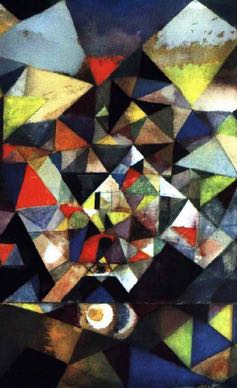
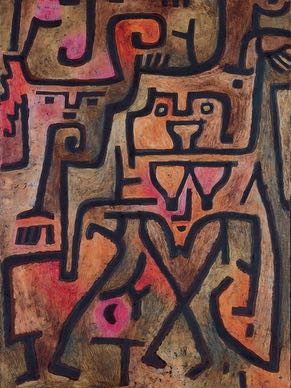
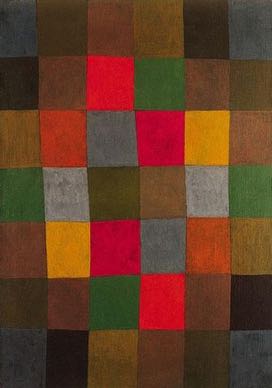
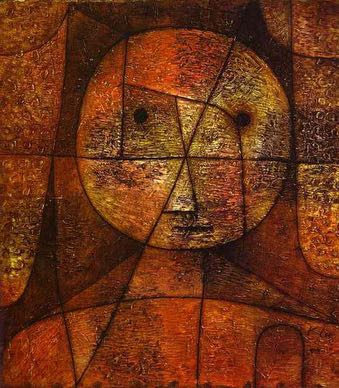
Paul Klee Oil Painting Reproductions
Shop museum-quality reproductions of Paul Klee’s most famous paintings, each hand-painted in oil on canvas by a professional artist.
Shop Art
Showing 1-40 of 208 results
Sort By
Most Popular
- Most Popular
- New Arrivals
- Best Sellers
- Alphabetical A-Z
- Alphabetical Z-A

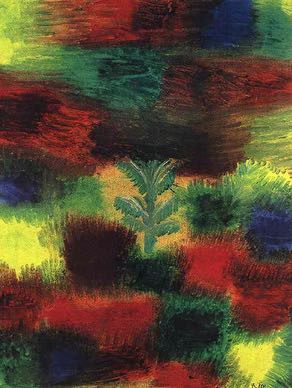
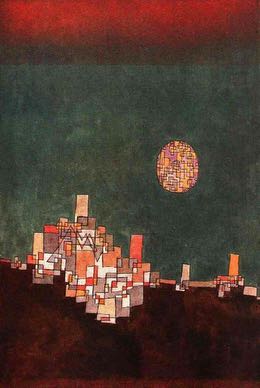

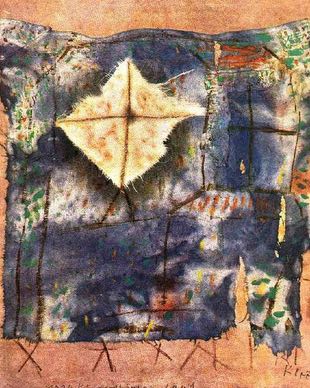
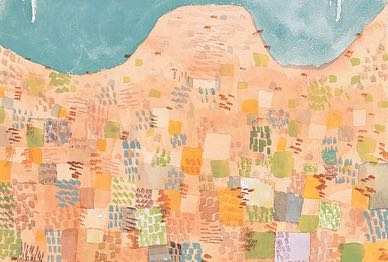
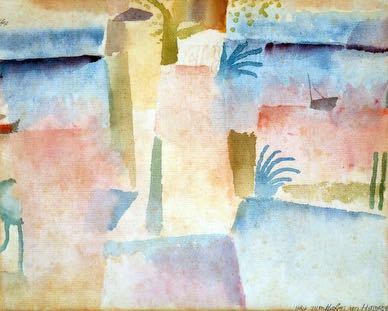
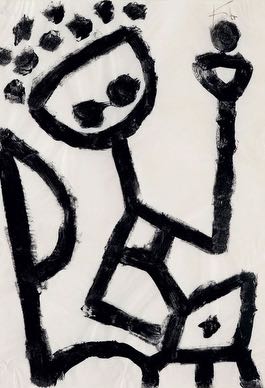
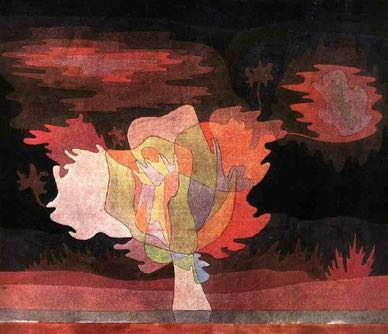
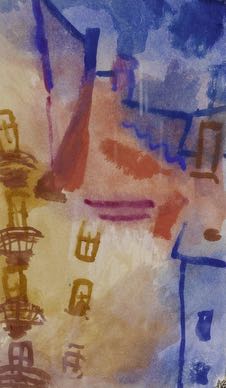
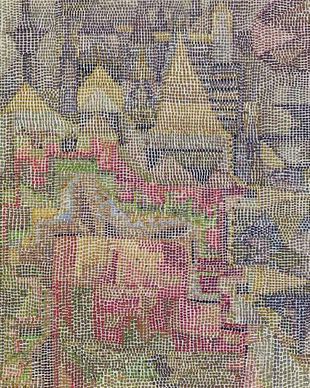

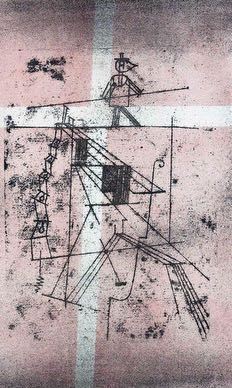
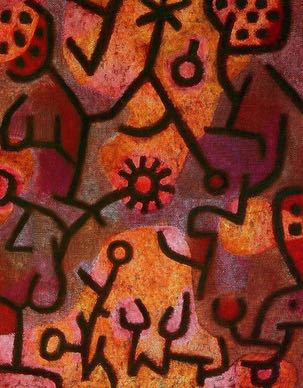
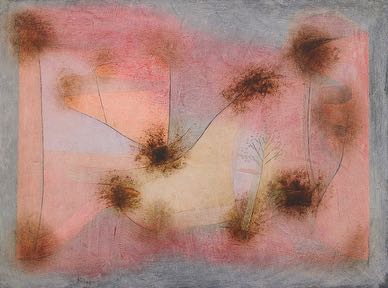
Can’t Find the Painting You Want?
Send us a reference image. We can recreate almost any artwork in the size and style you’re looking for.
Get a Free QuoteHand-Painted Paul Klee Reproductions
Bring Klee’s imaginative art into your home with an oil-on-canvas reproduction hand-painted by a professional artist. Our collection features hundreds of paintings from across his career, including Ad Parnassum, Twittering Machine, and The Goldfish. Discover dreamlike cities, radiant gardens, playful figures, birds, fish, and other subjects closely associated with Klee. Every reproduction is a real oil painting, offering depth and texture that a print or digital transfer cannot provide. From iconic masterpieces to lesser-known works, find a Klee painting that suits your space.
The Making of a Paul Klee Oil Painting Replica
Creating a Paul Klee oil painting replica requires patience, precision, and an understanding of the original artwork. Our studio includes artists who specialize in Abstract painting and understand the distinctive qualities of Klee’s work. The artist begins by studying the source image, then recreates its layered geometry, delicate lines, rhythmic symbols, transparent colors, and Klee’s carefully balanced tonal relationships using traditional oil-painting methods. After completion, the painting is inspected by our quality-control team and photographed for your approval. The result is a carefully executed oil painting that reflects the imagination and visual character of the original.
Custom Sizes and Frames for Your Klee Painting
Your Klee painting can be ordered in practically any size, from popular standard dimensions to a custom canvas size selected directly on the product page. This flexibility lets you choose a painting that fits your wall and complements your room perfectly. After selecting the size, you can choose from high-quality frames in classic or modern designs, with professional canvas stretching also available. Our framing options complement the subtle geometry and expressive colors of Klee’s paintings. With sizing, stretching, and framing arranged in one order, your artwork can arrive ready for display without a separate visit to a frame shop.
Order a Paul Klee Reproduction with Confidence
Buying hand-painted art online should feel clear and comfortable. After your Paul Klee reproduction is completed, we send high-resolution photographs for your review before shipping. You can inspect the composition, colors, and overall finish, then request adjustments if needed. The painting is dispatched only after you approve it, so you know what to expect when it arrives. Your order also includes free express worldwide shipping and is covered by our 90-day return policy. Together, these assurances help you purchase a Klee oil painting with greater confidence and peace of mind.
The Life and Art of Paul Klee
Paul Klee was a Swiss-born German artist, teacher, and theorist whose work brought drawing, color, music, nature, fantasy, and abstraction into an imaginative world of its own. Born near Bern in 1879 to a musical family, he trained in Munich and later became associated with the Blue Rider circle. A 1914 journey through Tunisia gave him new confidence in color, while more than ten years at the Bauhaus allowed him to develop his ideas about rhythm, movement, form, and pictorial construction. Klee created poetic gardens, cities, animals, masks, angels, and invented signs in an extraordinary range of materials. Driven from his Düsseldorf professorship by the Nazis, he returned to Bern in 1933 and produced a powerful late body of work before his death in 1940.
Read More
Who Was Paul Klee?
Paul Klee was born on 18 December 1879 in Münchenbuchsee, near Bern, Switzerland. His father, Hans Wilhelm Klee, was a German music teacher, and his Swiss mother, Ida Marie Frick, had trained as a singer. Under the nationality laws of the day, Klee inherited German citizenship from his father despite growing up in Switzerland. He applied to become Swiss late in life but died before the process was complete.
Klee became one of European modernism’s most inventive artists. His work shifts easily between abstraction and recognizable plants, buildings, animals, signs, and imagined creatures, often within geometric structures. He resisted attachment to one movement, though his career crossed paths with Expressionism, Cubism, the Blue Rider, the Bauhaus, and Surrealism. Melancholy, wit, humor, and attentive observation frequently share a single small image.
Why Was Music Fundamental to Klee’s Art?
Klee learned the violin as a child and played well enough to consider a professional musical career. Classical music remained part of his daily routine after he chose visual art, and he regularly performed chamber works. His 1906 marriage to the pianist Lily Stumpf made music central to their household as well as to the language Klee used when thinking about artistic structure.
Repetition, rhythm, pause, counterpoint, movement, and tonal variation became practical tools in his pictures. Marks can proceed like musical measures, colors return as phrases, and figures sometimes resemble actors or musicians on an invented stage. Klee did not merely illustrate music. He asked how an image might unfold through time in the viewer’s attention, with separate parts working like voices in a composition.
Musical thinking helped him order very complicated images without making them rigid. A grid might provide the underlying measure, while shifts of direction, shape, and color introduce variation and improvisation. In abstract works especially, rhythm could hold together elements that did not describe a conventional scene.
What Did Klee Discover During His Early Training?
Klee moved to Munich in 1898, studying drawing with Heinrich Knirr before entering the Academy of Fine Arts under Franz von Stuck. The training stressed anatomy and disciplined draftsmanship, but color initially gave him trouble. A journey through Italy in 1901 exposed him to classical architecture and Renaissance painting without immediately showing him a path of his own.
Over the next few years, Klee worked independently in caricature, etching, glass painting, and drawing. The grotesque bodies and satire of his early etched Inventions challenged respectable ideas of beauty. He observed nature, kept detailed diaries, and tried drawing on blackened glass. This patient apprenticeship gave him the economy and precision that remained visible even when color and abstraction later transformed the work.
After marrying Lily, Klee settled in Munich but remained largely outside its established art world. Their son Felix was born in 1907, and Klee often worked at home while Lily supported the family with performances and music lessons. He drew domestic moments, made puppets for Felix, and refined a personal vocabulary of altered figures, concise lines, close observation, and humor.
How Did the Blue Rider and Paris Expand Klee’s Art?
By 1911, Klee had met Wassily Kandinsky, Franz Marc, and August Macke. He took part in the second Blue Rider exhibition in 1912 and joined the circle’s broader exchange of music, theory, and experimental art. Though not one of its founders, Klee found in the group an openness that helped end the isolation of his early career.
A visit to Paris in 1912 gave him closer contact with Cubism and the paintings of Robert Delaunay. Delaunay’s interlocking fields of light and color made a particularly strong impression. Klee translated and published his essay on light, absorbing ideas that helped free color from literal description. Cubist structure, modern theories of perception, children’s art, and non-Western objects all entered a language that remained unmistakably Klee’s.
These encounters helped him join precise drawing to color and spatial construction. Cubism showed that a visible scene could be rebuilt as connected planes; Delaunay showed that color could generate movement and rhythm without depicting an object. Klee borrowed selectively, adding memories, fantasy, humor, and signs rather than taking on anyone else’s style wholesale.
Why Did Tunisia Become a Turning Point?
In April 1914, Klee traveled through Tunisia with August Macke and Louis Moilliet. They sketched in Tunis, St. Germain, Hammamet, and Kairouan, observing architecture, gardens, streets, and shifting Mediterranean light. The journey confirmed Klee’s confidence in color. With transparent watercolor and small geometric blocks, he could move an observed town or landscape toward abstraction without severing its connection to place.
Trip-related works such as Hammamet with Mosque turn domes, towers, plants, and sunlight into luminous structures. Tunisia did not create his mature style by itself, but it brought together earlier experiments with watercolor, Delaunay, and Cubism. Color now became capable of creating mood, space, and rhythm instead of merely describing a surface.
Klee revisited these discoveries long after he left North Africa. The patterned towns, intense light, architecture, and gardens became material for transformation rather than simple documentation. Memories of place reappeared as imagined cities, layered color, and grids, preserving direct experience inside increasingly abstract designs.
What Happened to Klee During the First World War?
War tore Klee’s artistic circle apart. August Macke died in 1914 and Franz Marc in 1916. Klee was drafted into the German army in March 1916, though he served with aviation units away from the front and continued to make art. The deaths of his friends and wartime instability darkened his imagery without extinguishing its humor and invention.
Exhibitions at Herwarth Walden’s Der Sturm gallery brought him growing attention, and collectors began to regard him as an important modern artist. Floating architecture, fragmented bodies, and invented symbols could suggest machinery, fate, theater, or war without literally illustrating current events. This recognition led toward Hans Goltz’s major Munich retrospective in 1920 and Klee’s appointment to the Bauhaus.
What Did Klee Bring to the Bauhaus?
Walter Gropius invited Klee to the Bauhaus in 1920. He began teaching in Weimar the following year and later moved with the school to Dessau. His courses addressed color, elementary form, design, and pictorial construction. Klee analyzed how motion generates form, how a point becomes a line, how colors affect one another, and how natural growth might serve as a model for artistic development.
His teaching was systematic without pretending that art could be reduced to a recipe. Thousands of pages of notes use plant forms, arrows, spinning shapes, diagrams, scales, and color relationships to explain dynamic processes. The 1925 Pedagogical Sketchbook made some of these ideas widely available. Klee also became close to Kandinsky, and in Dessau their families lived in adjoining halves of a masters’ house designed by Gropius.
The Bauhaus years were extraordinarily productive. Klee worked with watercolor, tempera, oil transfer, transfer drawing, plaster, sprayed pigment, textile-like supports, and layered surfaces. Twittering Machine sets fragile living forms against a mechanical rhythm, while The Goldfish makes an invented creature glow out of deep surrounding darkness.
By What Means Did Klee Build His Visual Language?
Klee often started with an operation rather than a predetermined subject: a wandering line, a repeated sign, a transferred drawing, a divided surface, or layers of translucent color. Gradually, birds, cities, gardens, faces, stars, fish, letters, arrows, and strange machines emerged. The result may initially look childlike, but its balance depends on exact control of tone, rhythm, spacing, and scale.
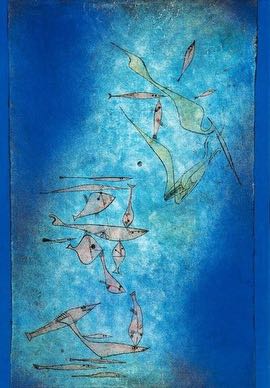
Nature gave him structures to think with, not forms to copy. He studied circulation, branching, germination, erosion, and growth, asking how the visible world develops from hidden forces. Observation and fantasy meet in his animals. Cat and Bird makes thought visible by placing a tiny bird on the cat’s forehead, while Fish Magic brings plants, clocks, aquatic creatures, and celestial signs together in a dreamlike field.
His materials were just as varied. Klee painted and drew on wood, paper, plaster, fabric, cardboard, and canvas, often combining oil, watercolor, chalk, ink, and tempera. Pasted borders, scraped paint, primed grounds, and transferred lines became visible parts of the image. A faithful study of his work therefore requires attention to the order and transparency of its layers, not color and drawing alone.
Why Did Klee Return to Switzerland?
Klee left the Bauhaus in 1931 to teach at the Düsseldorf Academy of Art. There he made Ad Parnassum, a monumental mosaic-like painting that appears simultaneously as mountain, architecture, and radiant atmosphere. His Düsseldorf career ended with the Nazi rise to power. Suspended and dismissed in 1933, Klee returned to Bern with Lily late that year.
The Nazis condemned his work as “degenerate,” removed over one hundred pieces from German museums, and displayed examples in the 1937 Degenerate Art exhibition. Back in Switzerland, Klee faced professional uncertainty and the strain of displacement. A severe illness, now generally identified as scleroderma, began in 1935, limiting his movement and sharply reducing his output the following year.
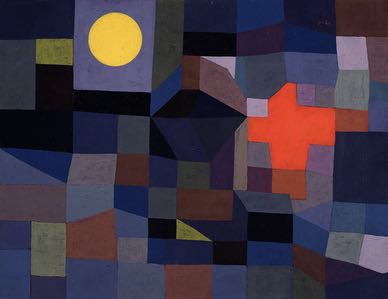
Then his productivity surged. The late works use larger formats, simplified symbols, and thick dark lines to explore endurance, angels, death, and transformation. Klee recorded more than twelve hundred works in 1939 alone. Death and Fire compresses a human face and the thought of death into a few stark, connected signs. Klee died on 29 June 1940 in Locarno-Muralto, Switzerland.
Which Works Reveal Klee’s Range and Influence?
Klee’s catalog moves among imagined creatures, luminous color structures, cities, gardens, theatrical figures, architecture, satire, and mortality. These paintings reveal the remarkable breadth of his methods:
- Ad Parnassum: Small units of color build a radiant structure that suggests a mountain, temple, mosaic, and musical composition at once.
- Twittering Machine: Birdlike figures balance along a mechanical line in a strange union of music, humor, unease, and fragility.
- The Goldfish: A brilliantly luminous fish commands a dark underwater world of smaller plants and creatures.
- Cat and Bird: A frontal cat and the bird on its forehead turn concentration or desire into a concise visual sign.
- Fish Magic: Flowers, fish, a clock, and other signs occupy a layered nocturnal world.
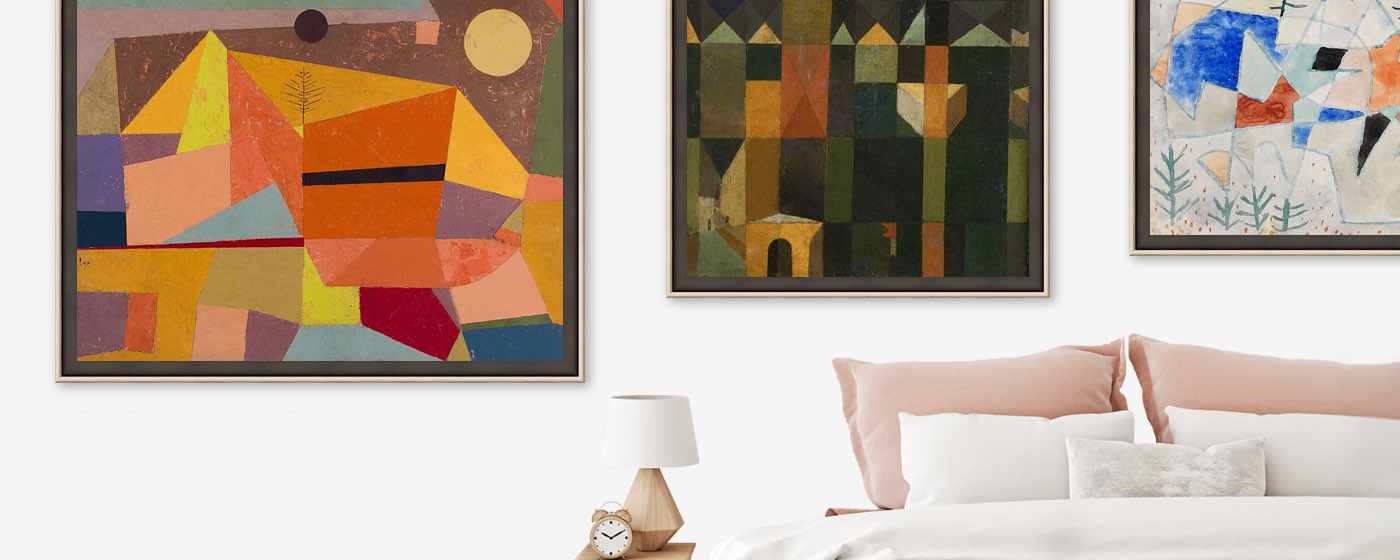
- Highway and Byways: Converging paths and horizontal bands translate cultivated land into rhythmic geometry.
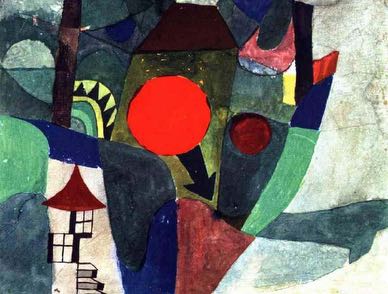
- Castle and Sun: Rectangles and triangles gather beneath a glowing circle to create an architectural fantasy from simple forms.
- Death and Fire: A reduced face and heavy signs confront mortality with the directness of Klee’s final period.
Klee’s influence extends far beyond any one movement. His Bauhaus teaching shaped generations of artists and designers, while his work offered abstraction, Surrealism, visual education, graphic art, and animation an example of rigorous construction joined to poetic freedom. In his hands, humor, fantasy, theory, and natural process could inhabit the same image.
Klee remains compelling because his art is immediately approachable and endlessly complex. Children respond to its creatures and invented worlds, while scholars and artists can spend years tracing the materials, signs, color systems, and theory beneath them. The Zentrum Paul Klee in Bern holds the largest collection of his work and continues research into an artist who made an expansive universe from modest dimensions and simple marks.
Copyright © 2026 BrushWiz. All Rights Reserved.
About Our Paul Klee Paintings
Are your Paul Klee reproductions painted by hand?
Yes. Every reproduction is individually painted by hand in oil on canvas by a professional artist. We do not use prints, digital transfers, or mechanical reproduction methods.
How closely do your Klee copies resemble the original?
Our artists work to capture the composition, colors, texture, and visual character of the original Klee painting as closely as possible. Because every reproduction is painted by hand, small variations are natural and make each canvas unique.
How long does it take to complete a painting?
Most Klee reproductions require approximately two to three weeks to paint, dry, and inspect. Production time may vary depending on the artwork and canvas size, so check the estimate displayed on the product page.
Can I request a Klee painting that is not listed?
Yes. If you cannot find the Paul Klee artwork you want in our catalog, send us the painting’s title or an image. Our team will review your request and confirm the available sizes, estimated production time, and price.
Will I receive photos of my painting before it is shipped?
Yes. We send high-resolution photographs of the completed painting for your approval. You can request adjustments if needed, and the painting will not be dispatched until the review process is complete.
Can I order a custom canvas size?
Yes. We offer custom dimensions in addition to the standard sizes shown on the product page. Select the dimensions you need directly from the available size options.
Can I order my Klee painting with a frame?
Yes. High-quality frames in classic and modern designs are available for many paintings. You can view compatible framing options and add your preferred design from the product page. Professional canvas stretching is also available.
How much does a Paul Klee reproduction cost?
The price depends on the selected artwork, canvas dimensions, and framing option. Choose your preferred configuration on the product page to see the current price before ordering.
Do you offer free worldwide shipping?
Yes. Klee reproductions qualify for free express worldwide shipping. After dispatch, delivery usually takes five to eight business days, although timing may vary by country and destination.
What is the return policy for Klee reproductions?
Orders are covered by our 90-day return policy. Review the current return-policy page before ordering for complete information about eligibility, time limits, and the return process.
Why BrushWiz?
100% Hand Painted
Every piece is entirely handmade
Museum Quality
Faithfully recreated by expert artists
Custom Framing
Choose from a wide range of frames
Free Shipping
Enjoy free shipping on all orders
Cash Back Rewards
Earn cash back with every purchase