
❄️ Winter Sale. Offer Ends 11/16/2026. View Details
❄️ Winter Sale. Ends 11/16/2026. View Details
❄️ Winter Sale. View Details
Artists
Subjects
Movements
Collections
Decor
Portraits
Commissions
Framing
Reviews
Gift Cards
On Sale
Edgar Degas Oil Painting Reproductions
Shop museum-quality reproductions of Edgar Degas’s most famous paintings, each hand-painted in oil on canvas by a professional artist.
Shop Art
Showing 1-40 of 469 results
Sort By
Most Popular
- Most Popular
- New Arrivals
- Best Sellers
- Alphabetical A-Z
- Alphabetical Z-A

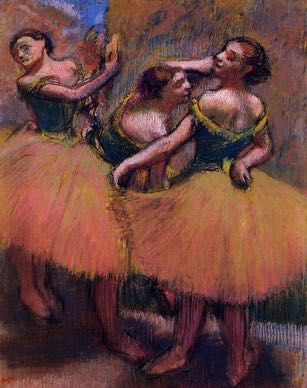
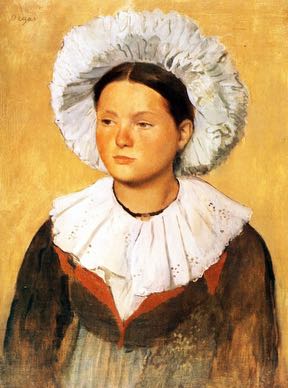
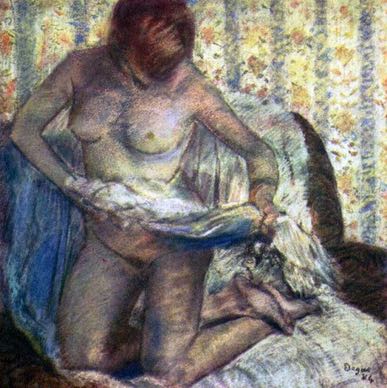
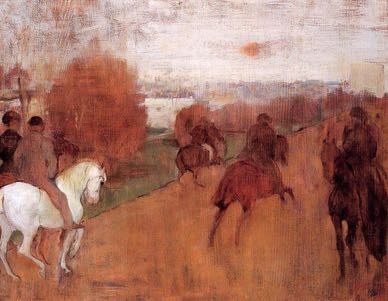



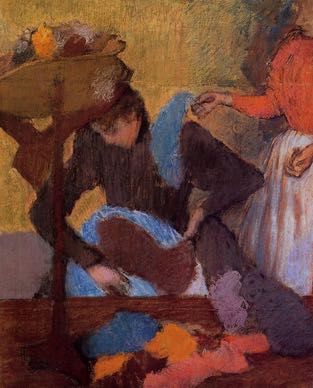

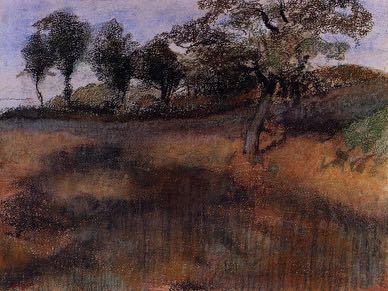
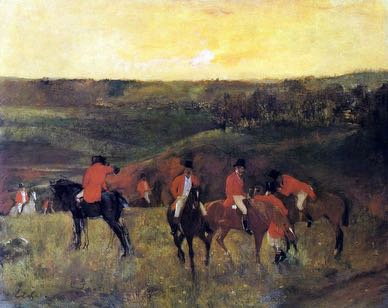
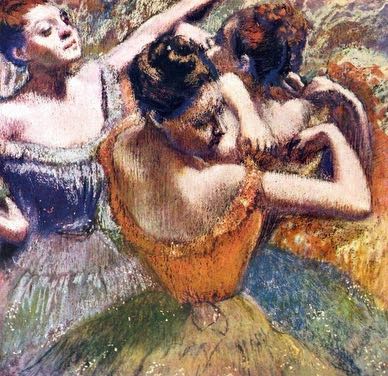




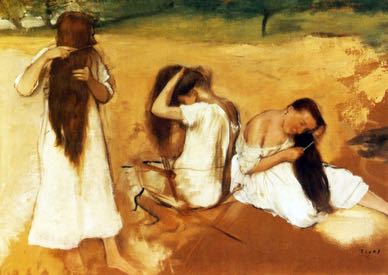
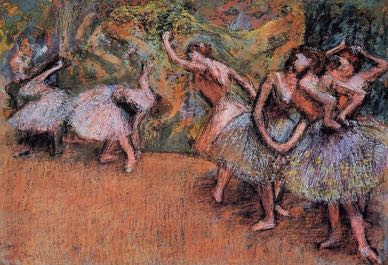

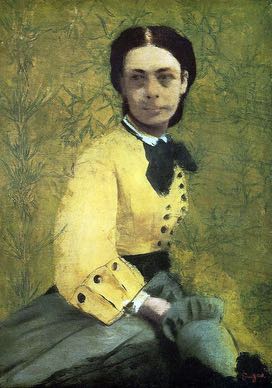
Can’t Find the Painting You Want?
Send us a reference image. We can recreate almost any artwork in the size and style you’re looking for.
Get a Free QuoteHand-Painted Edgar Degas Reproductions
Bring Degas’s art into your home with an oil-on-canvas reproduction hand-painted by a professional artist. Our collection features hundreds of paintings from across his career, including The Dance Class, Dancers at the Barre, and The Absinthe. Discover ballet rehearsals, racehorses, café scenes, women at work, intimate moments of bathing and grooming, and other subjects closely associated with Degas. Every reproduction is a real oil painting, offering depth and texture that a print or digital transfer cannot provide. From iconic masterpieces to lesser-known works, find a Degas painting that suits your space.
The Making of an Edgar Degas Oil Painting Replica
Creating an Edgar Degas oil painting replica requires patience, precision, and an understanding of the original artwork. Our studio includes artists experienced in Impressionist figure painting who understand the distinctive qualities of Degas’s work. Before painting begins, the artist studies the source image, paying close attention to its cropped composition, controlled color, artificial light, surface texture, and Degas’s precise treatment of gesture and movement. These elements are recreated by hand in oil on canvas using an approach suited to the original. Once complete, the reproduction is inspected by our quality-control team and photographed for your approval.
Custom Sizes and Frames for Your Degas Painting
Your Degas painting can be ordered in practically any size, from standard dimensions to custom canvas sizes selected on the product page. This flexibility lets you choose a painting that fits your wall and complements your room perfectly. After selecting the size, you can choose from high-quality frames in classic or modern designs, with canvas stretching available. Our framing options complement the colors and character of Degas’s dancers, portraits, and scenes of modern life. With sizing, stretching, and framing arranged in one order, your artwork can arrive ready for display without a visit to a frame shop.
Order an Edgar Degas Reproduction with Confidence
Buying hand-painted art online should feel clear and comfortable. After your Edgar Degas reproduction is completed, we send high-resolution photographs for your review before shipping. You can inspect the composition, colors, figures, and overall finish, then request adjustments if needed. The painting is dispatched only after you approve it, so you know what to expect when it arrives. Your order also includes free express worldwide shipping and is covered by our 90-day return policy. Together, these assurances help you purchase a Degas oil painting with greater confidence and peace of mind.
The Life and Art of Edgar Degas
Edgar Degas was a French artist associated with Impressionism and known for his dancers, racehorses, performers, workers, and sharply observed scenes of modern Paris. Born in 1834, he trained in the academic tradition and remained devoted to drawing throughout his career. Cropped figures, unexpected viewpoints, and broad areas of open space make his carefully planned compositions feel like passing glimpses. Degas participated in six of the eight Impressionist exhibitions, though he preferred to describe himself as a realist or independent. Across oil, pastel, printmaking, sculpture, and photography, he repeatedly returned to movement, balance, gesture, and the human figure, becoming one of the nineteenth century’s most inventive artists.
Read More
Who Was Edgar Degas?
Hilaire-Germain-Edgar Degas was born in Paris on 19 July 1834. He was the eldest child of Auguste de Gas, a banker, and Célestine Musson, whose family had ties to New Orleans. A comfortable upbringing gave him access to education, music, private collections, and the museums of Paris. Members of his own family often sat for his early portraits.
Degas spent most of his life in Paris, watching its social and cultural world change around him. Places where people worked, rehearsed, performed, or passed their leisure particularly interested him. The scenes may look quickly observed, but he usually built them through repeated drawing and extensive revision.
He exhibited with the Impressionists and helped organize their independent shows, yet his art followed its own course. Line, studio preparation, artificial light, and the human body remained central to him. These interests set Degas apart from colleagues who concentrated on outdoor landscapes and fleeting effects of weather.
Where Did Degas Learn His Discipline as a Draftsman?
Degas briefly studied law before committing himself to art. He copied paintings and drawings at the Louvre, worked under Louis Lamothe, a former student of Jean-Auguste-Dominique Ingres, and entered the École des Beaux-Arts in 1855. Ingres’s belief in drawing and firm structure remained with him throughout his career.
Between 1856 and 1859, Degas worked in Naples, Rome, and Florence. He copied Renaissance masters, filled notebooks with studies, and painted relatives from the Italian side of his family. Those years strengthened his command of anatomy, portraiture, and the arrangement of several figures within one composition.
After returning to Paris, he first pursued portraits and ambitious history paintings. Classical and biblical subjects allowed him to put his academic training to use. Before long, however, the life unfolding around him seemed to offer richer possibilities.
When Did Modern Paris Become Degas’s Main Subject?
During the early 1860s, Degas began to leave traditional history painting behind. His encounters with Édouard Manet and other artists interested in contemporary experience encouraged the change. Racecourses, theaters, cafés, shops, offices, and private rooms supplied new gestures and new kinds of social encounter.
He did not simply copy a scene witnessed on the street. Models might pose in his studio, figures observed at different times could meet in one composition, and individual gestures often went through many revisions. The finished image feels momentary because Degas planned it that way.
He was often drawn to pauses around an event rather than to its polished climax. A dancer stretches during rehearsal, a jockey waits for the race, an ironer bears down on her work, or two café patrons sit without speaking. Such moments allowed posture to reveal fatigue, attention, and emotional distance.
What Part Did Degas Play in the Impressionist Exhibitions?
Degas helped establish the independent exhibition society created by artists who no longer wanted to depend on the official Salon jury. He took part in six of the eight exhibitions held between 1874 and 1886. Behind the scenes, he also helped choose and invite contributors.
Independence mattered more to Degas than agreement on a common style. In 1877, he invited Mary Cassatt to exhibit with the group. Their long friendship included candid criticism, experiments in printmaking, and a shared interest in the human figure and unconventional composition.
Degas resisted the Impressionist label, preferring realist or independent. Unlike Claude Monet, he rarely placed outdoor landscape painting at the center of his work. Even so, his modern subjects, inventive color, and rejection of conventional exhibition structures made him essential to the group’s history.
Why Did Dancers Fascinate Degas?
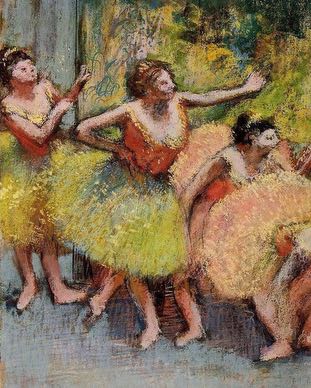
The Paris Opéra opened a world of rehearsals, examinations, performances, musicians, patrons, and backstage work. Ballet scenes offered Degas a remarkable combination of disciplined movement, physical exhaustion, costume, repetition, artificial light, and the theater’s social hierarchy.
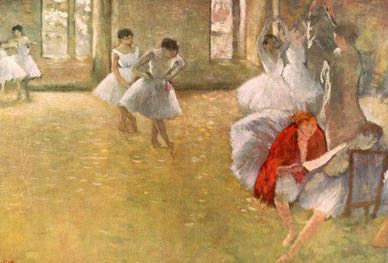
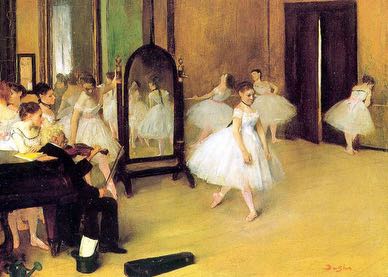
In The Dance Class, the lesson occupies only part of the room’s attention. Some dancers practice while others rest, watch, or adjust their clothes. Empty floorboards, mirrors, doorways, and figures cut by the edge of the picture lead the eye through the space.
These dancers are students and workers as well as graceful performers. Their bodies register the strain of training. By studying the same kinds of poses in drawings, oils, pastels, prints, and sculpture, Degas could keep testing balance and movement while rebuilding the scene around them.
How Did Degas Portray Racehorses and Working Life?
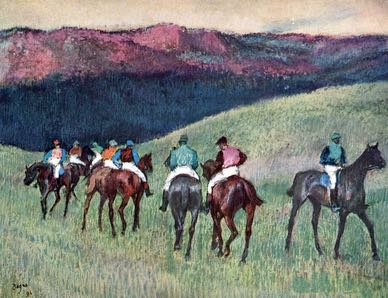
Horse racing was a thoroughly modern spectacle in nineteenth-century Paris, and Degas recognized its possibilities early in the 1860s. The finish interested him less than the tense moments beforehand. Horses shift their weight while jockeys, trainers, and spectators wait for the action to begin.
He also looked closely at work in offices, laundries, millinery shops, and entertainment venues. While visiting relatives in Louisiana in 1872 and 1873, Degas painted A Cotton Office in New Orleans. Merchants, papers, furniture, and samples of cotton fill its busy commercial interior.
Back in Paris, singers, musicians, laundresses, ironers, and milliners became recurring subjects. Their distinctive postures and working conditions receive close attention, without turning the people into idealized types. These scenes broaden Degas’s picture of modern life beyond the pleasures of the theater and racecourse.
Which Compositional Ideas Made Degas’s Work Look So Modern?
Degas placed figures at the edge of an image, cut them off abruptly, looked down from elevated positions, and left unexpected areas empty. Japanese prints showed him how an off-center arrangement could still feel balanced. Photography suggested other possibilities for framing, artificial illumination, and movement interrupted in mid-course.
Behind this apparent immediacy lay patient construction. Degas traced and transferred figures, reused poses, brought separate studies together, and shifted the relationships among forms. The same dancer or horse could appear in several works and perform a different compositional role in each.
He moved among oil, pastel, charcoal, monotype, printmaking, sculpture, and photography. Pastel became especially valuable because it combined drawing with intense color and could be rubbed, layered, hatched, and fixed. In later dancers and bathers, broader marks and stronger contrasts coexist with a carefully understood bodily structure.
Did Sculpture Change the Way Degas Studied Movement?
Degas modeled horses and human figures in wax and clay to investigate anatomy, balance, and motion. A three-dimensional figure could be turned and examined from several sides, revealing how weight travels through a body that bends, stands, or moves.
Little Dancer Aged Fourteen was the only sculpture he showed publicly during his lifetime. Exhibited with real fabric and hair at the 1881 Impressionist show, the wax figure challenged the accepted boundary between sculpture and everyday reality. Viewers responded to its uncompromising presence with sharply divided opinions.
After Degas died, about 150 wax and clay sculptures were discovered in his studio, and many were later preserved in bronze casts. He had treated most of them as private working objects. Today, they make the close relationship among his sculpture, drawing, pastel, and painting much easier to see.
Which Paintings Is Edgar Degas Best Known For?
Dancers, cafés, workers, racecourses, and women bathing recur throughout Degas’s career. These paintings show how widely his subjects and compositional methods could vary:
- The Dance Class: Dancers, mothers, and ballet master Jules Perrot occupy a rehearsal room filled with open space, small gestures, and pauses.
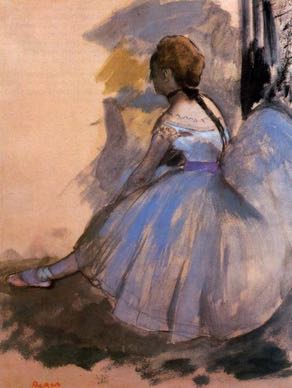
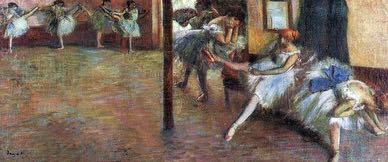
- Dancers at the Barre: Two dancers repeat an exercise in a spare study of stretching, discipline, and balance.
- The Rehearsal of the Ballet on Stage: Seen from an angle, the rehearsal appears as demanding physical work rather than a polished performance.
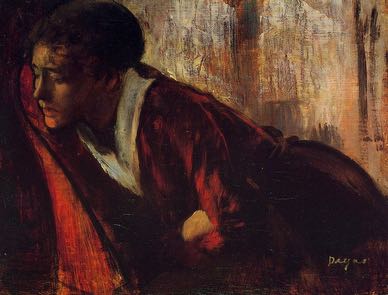
- The Absinthe: An intentionally off-center café interior leaves two people sitting together in uneasy isolation.
- A Cotton Office in New Orleans: Figures, papers, furniture, and cotton transform a workplace into a complex group composition.
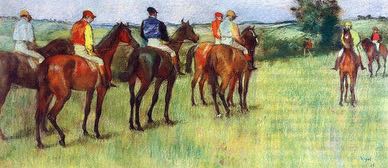
- Race Horses at Longchamp: Jockeys and horses gather before the race, holding the scene in a state of controlled anticipation.
- Place de la Concorde: Widely spaced figures cross an open Parisian setting shaped by abrupt cropping and disconnection.
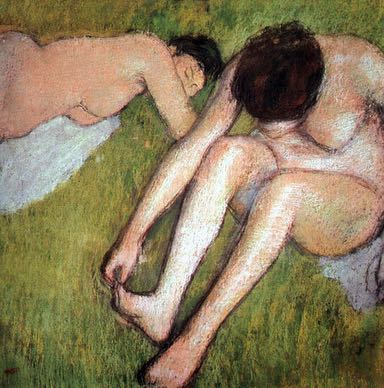
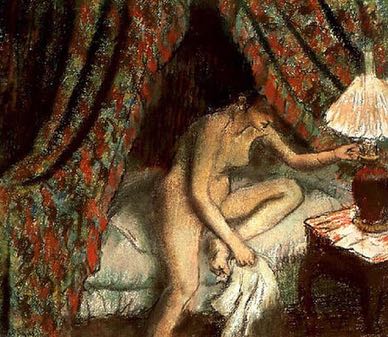
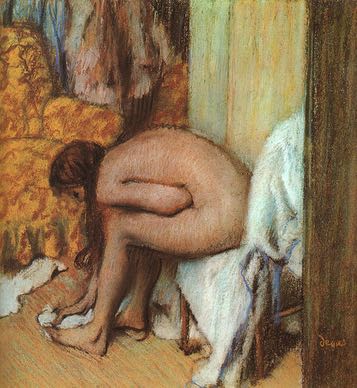
- The Tub: An elevated viewpoint turns a woman bending in a round basin into a study of bodily shape and private routine.
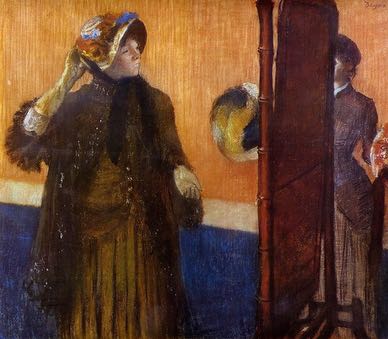
- The Millinery Shop: Hats, display forms, and a working figure meet within an intricately cropped interior.
Degas transformed familiar subjects by changing their viewpoint, medium, size, and arrangement. The works remain recognizably his without repeating one formula. What they share is a sustained attention to gesture, structure, and the experience of modern life.
Why Does Edgar Degas Remain So Influential?
Degas expanded modern figure painting by bringing academic draftsmanship into contact with contemporary subjects and unconventional compositions. A rehearsal, workplace, café, bath, or moment before a race could carry the ambition once reserved for history painting.
His experiments affected later uses of pastel, photography, printmaking, and sculpture, as well as the depiction of bodies in motion. Artists responded to his cropping, repeated poses, shifting viewpoints, and careful balance between observation and design. His friendship with Cassatt also helped connect the independent Paris artists with American collectors.
Degas’s eyesight deteriorated severely in his later years, gradually restricting his work until he stopped creating around 1912. He died in Paris on 27 September 1917. The paintings, pastels, prints, drawings, photographs, and sculptures he left behind reveal a career driven by persistent study rather than easy spontaneity, securing his place among the most inventive figures in nineteenth-century art.
Copyright © 2026 BrushWiz. All Rights Reserved.
About Our Edgar Degas Paintings
Are your Edgar Degas reproductions painted by hand?
Yes. Every reproduction is individually painted by hand in oil on canvas by a professional artist. We do not use prints, digital transfers, or mechanical reproduction methods.
How closely do your Degas copies resemble the original?
Our artists work to capture the composition, colors, texture, and visual character of the original Degas painting as closely as possible. Because every reproduction is painted by hand, small variations are natural and make each canvas unique.
How long does it take to complete a painting?
Most Degas reproductions require approximately two to three weeks to paint, dry, and inspect. Production time may vary depending on the artwork and canvas size, so check the estimate displayed on the product page.
Can I request a Degas painting that is not listed?
Yes. If you cannot find the Edgar Degas artwork you want in our catalog, send us the painting’s title or an image. Our team will review your request and confirm the available sizes, estimated production time, and price.
Will I receive photos of my painting before it is shipped?
Yes. We send high-resolution photographs of the completed painting for your approval. You can request adjustments if needed, and the painting will not be dispatched until the review process is complete.
Can I order a custom canvas size?
Yes. We offer custom dimensions in addition to the standard sizes shown on the product page. Select the dimensions you need directly from the available size options.
Can I order my Degas painting with a frame?
Yes. High-quality frames in classic and modern designs are available for many paintings. You can view compatible framing options and add your preferred design from the product page. Professional canvas stretching is also available.
How much does an Edgar Degas reproduction cost?
The price depends on the selected artwork, canvas dimensions, and framing option. Choose your preferred configuration on the product page to see the current price before ordering.
Do you offer free worldwide shipping?
Yes. Degas reproductions qualify for free express worldwide shipping. After dispatch, delivery usually takes five to eight business days, although timing may vary by country and destination.
What is the return policy for Degas reproductions?
Orders are covered by our 90-day return policy. Review the current return-policy page before ordering for complete information about eligibility, time limits, and the return process.
Why BrushWiz?
100% Hand Painted
Every piece is entirely handmade
Museum Quality
Faithfully recreated by expert artists
Custom Framing
Choose from a wide range of frames
Free Shipping
Enjoy free shipping on all orders
Cash Back Rewards
Earn cash back with every purchase