
❄️ Winter Sale. Offer Ends 11/24/2026. View Details
❄️ Winter Sale. Ends 11/24/2026. View Details
❄️ Winter Sale. View Details
Artists
Subjects
Movements
Collections
Decor
Portraits
Commissions
Framing
Reviews
Gift Cards
On Sale
Adriaen Brouwer Oil Painting Reproductions
Shop museum-quality reproductions of Adriaen Brouwer’s most famous paintings, each hand-painted in oil on canvas by a professional artist.
Shop Art
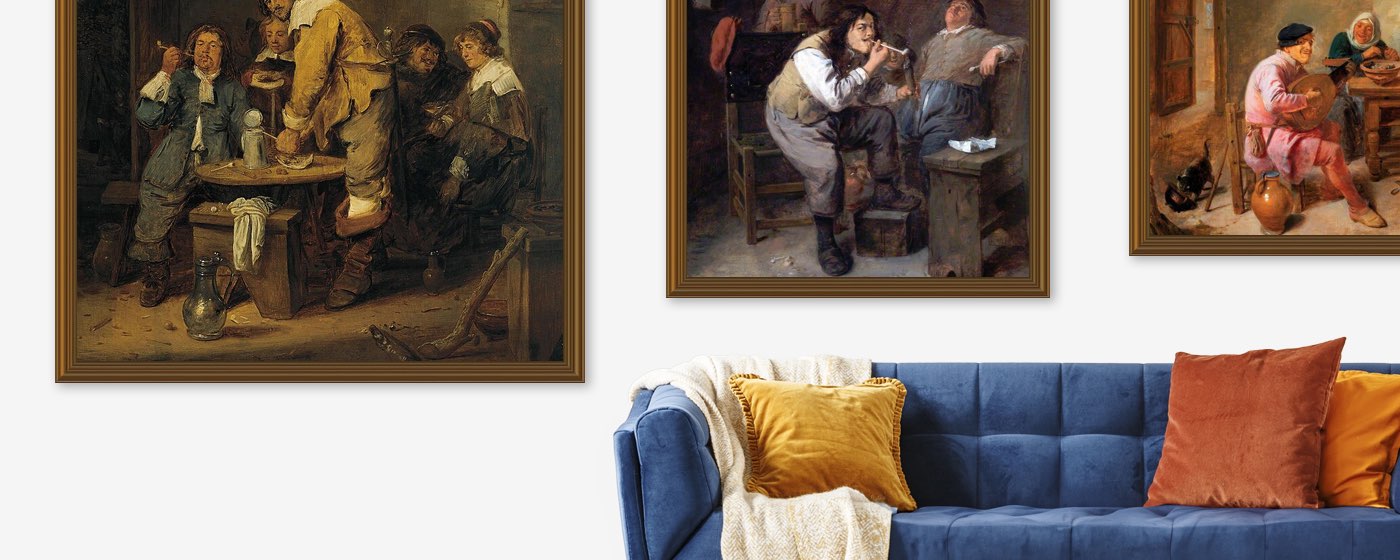
Showing 1-8 of 8 results
Sort By
Most Popular
- Most Popular
- New Arrivals
- Best Sellers
- Alphabetical A-Z
- Alphabetical Z-A
Can’t Find the Painting You Want?
Send us a reference image. We can recreate almost any artwork in the size and style you’re looking for.
Get a Free QuoteHand-Painted Adriaen Brouwer Reproductions
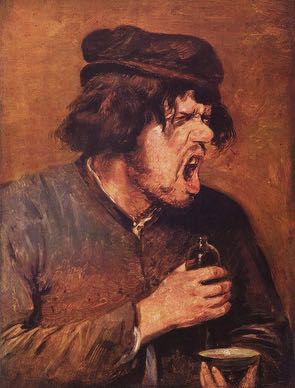
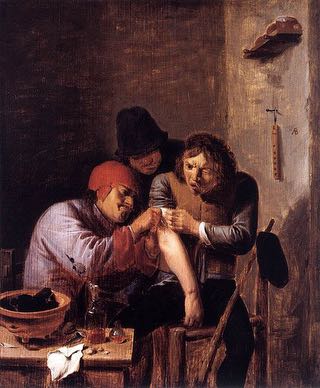
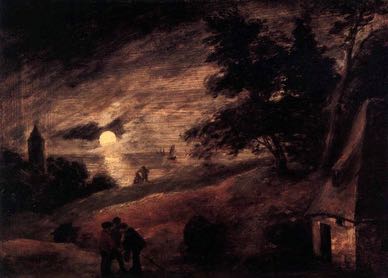
Bring Brouwer’s art into your home with an oil-on-canvas reproduction hand-painted by a professional artist. Our collection includes The Bitter Tonic, The Back Operation, and Dune Landscape by Moonlight. Discover tavern drinkers, grimacing faces, rough medical treatments, twilight landscapes, and other subjects closely associated with Brouwer. Every reproduction is a real oil painting, offering depth and texture that a print or digital transfer cannot provide. Whether you prefer a lively figure scene or a quiet landscape, find a Brouwer painting that brings his distinctive visual character to your space.
The Making of an Adriaen Brouwer Oil Painting Replica
Creating an Adriaen Brouwer oil painting replica requires patience, precision, and an understanding of the original artwork. Our studio includes artists who specialize in Baroque genre painting and understand the distinctive qualities of Brouwer’s work. The artist begins by studying the source image, then recreates its earthy colors, animated gestures, expressive faces, and Brouwer’s remarkably economical brushwork using traditional oil-painting methods. After completion, the painting is inspected by our quality-control team and photographed for your approval. The result is a carefully executed oil painting that reflects the visual character of the original.
Custom Sizes and Frames for Your Brouwer Painting
Your Brouwer painting can be ordered in practically any size, from popular standard dimensions to custom canvas sizes selected directly on the product page. This flexibility lets you choose a painting that fits your wall and complements your room perfectly. After selecting the size, you can choose from high-quality frames in classic or modern designs, with professional canvas stretching also available. Our framing options complement the earthy palette and lively brushwork of Brouwer’s paintings. With sizing, stretching, and framing arranged in one order, your artwork can arrive ready for display without a separate visit to a frame shop.
Order an Adriaen Brouwer Reproduction with Confidence
Buying hand-painted art online should feel clear and comfortable. After your Adriaen Brouwer reproduction is completed, we send high-resolution photographs for your review before shipping. You can inspect the composition, colors, details, and overall finish, then request adjustments if needed. The painting is dispatched only after you approve it, so you know what to expect when it arrives. Your order also includes free express worldwide shipping and is covered by our 90-day return policy. Together, these assurances help you purchase a Brouwer oil painting with greater confidence and peace of mind.
The Life and Art of Adriaen Brouwer
Adriaen Brouwer was a Flemish Baroque painter whose small tavern scenes, expressive heads, and rare landscapes transformed seventeenth-century genre painting. Born around 1604, probably in Oudenaarde, he worked in Gouda, Amsterdam, Haarlem, and Antwerp during a career that lasted little more than a decade. Brouwer observed drinkers, smokers, card players, musicians, quarrels, and painful medical treatments with unusual directness, yet his refined brushwork distinguishes the paintings from the rough behavior they portray. He also explored facial expression through tronies and brought a haunting atmosphere to late landscapes. Although much of his life remains uncertain, his art was admired and collected by Rubens and Rembrandt. His example strongly affected later Flemish and Dutch painters of everyday life.
Read More
What Can Be Established About Brouwer’s Origins?
Adriaen Brouwer was born around 1604, probably in Oudenaarde in the southern Netherlands. No baptismal record has settled the exact date, and much of his childhood remains unknown. Recent archival research indicates that his family moved north to Gouda after 1613, placing him between Flemish and Dutch cultures from an early age.
That mobility became a defining fact of his career. Brouwer later worked in Amsterdam and Haarlem before returning south to Antwerp. His art likewise crosses regional boundaries, connecting the peasant tradition associated with Pieter Bruegel the Elder with the more intimate genre painting of the seventeenth century.
Later writers filled gaps in the record with colorful stories about poverty, taverns, practical jokes, and disorderly behavior. Some may contain fragments of truth, but they cannot be treated as straightforward biography. Brouwer’s painted subjects encouraged authors to imagine that the artist’s own life must have resembled the unruly interiors he created.
How Did the Northern Netherlands Launch His Career?
Brouwer is documented in Amsterdam by 1625 or 1626, when he witnessed a legal declaration connected with art dealer and painter Barend van Someren. This record places him within a commercial art world where small paintings could circulate easily among dealers, collectors, and fellow artists.
By 1626, he had connections with Haarlem and joined a local chamber of rhetoric called De Wijngaertrancken. Such societies combined poetry, theater, performance, and sociability. Their culture may have sharpened his interest in gesture, comic behavior, recognizable character types, and groups that seem to perform for one another.
His reputation developed quickly. A 1627 publication referred to Brouwer as an artistic and famous young painter of Haarlem. He also entered the city’s Guild of Saint Luke. These traces contradict the later image of a gifted outcast working beyond professional structures. Brouwer was young and mobile, but his ability was already recognized.
Was Frans Hals Really Brouwer’s Teacher?
The eighteenth-century biographer Arnold Houbraken claimed that Brouwer studied with Frans Hals. No contemporary document confirms the apprenticeship, so it should remain a possibility rather than a fact. Both artists were active in Haarlem, making contact entirely plausible.
The paintings themselves explain why the story endured. Hals could give a face or gesture immediate life through rapid, selective strokes, and Brouwer achieved a related vitality on a much smaller scale. Neither artist needed to describe every fold or feature in order to make a figure feel present.
Brouwer’s art, however, follows its own direction. Hals built a major career around commissioned portraits, civic guards, and individual character studies. Brouwer concentrated on people with little social status and behavior that formal portraiture excluded. If he learned from Hals, he transformed the lesson into a sharper study of bodies under pressure.
Why Did Tavern Life Become His Central Subject?
Brouwer painted drinkers, smokers, gamblers, musicians, sleepers, and fighters in cramped rural inns. Earlier Netherlandish artists often spread peasant festivities across broad village settings. Brouwer moved closer, enlarged the figures, and enclosed them within dim rooms where every action affects the surrounding group.
These scenes were made for collectors who lived at a social distance from the people portrayed. Viewers could laugh at clumsy behavior, read it as a warning against excess, admire the painter’s skill, or do all three at once. The pictures do not supply a single moral response.
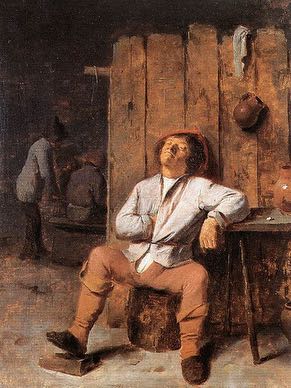
A Boor Asleep turns a moment of physical collapse into close observation. The subject’s lowered guard allows posture, weight, worn clothing, and surrounding darkness to carry the scene. Brouwer avoided sentimental idealization, but his attention can be more searching than the dismissive historical label “low-life” suggests.
Faces in Motion: How Did Brouwer Paint Emotion?
Few seventeenth-century painters studied facial movement with Brouwer’s concentration. Pain, laughter, anger, surprise, intoxication, and disgust pass across his figures in compressed form. A tightened mouth, raised eyebrow, or sharply turned head can organize an entire scene.
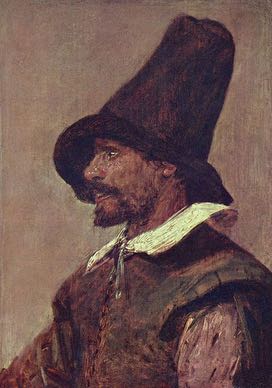
He also made tronies, studies of expressive or distinctive heads that were not commissioned portraits of named sitters. Head of a Man with a Pointed Hat treats the face, hat, light, and turn of the body as a compact exercise in character. Individuality matters even when identity is unknown.
His brushwork makes these expressions convincing. Thin layers, small accents, and swiftly placed highlights allow flesh and fabric to emerge without a polished finish. What looks spontaneous is carefully controlled. Brouwer understood exactly how little paint was needed to establish a glance or grimace, then left the surrounding surface open enough to keep it alive.
Beyond Drunkenness, What Do the Medical Scenes Reveal?
Seventeenth-century genre painting frequently turned bodily discomfort into public entertainment. Brouwer’s pictures of crude treatment belong to that tradition, but their concentration on reaction makes them unusually immediate. The viewer is brought close to the point where touch becomes pain.
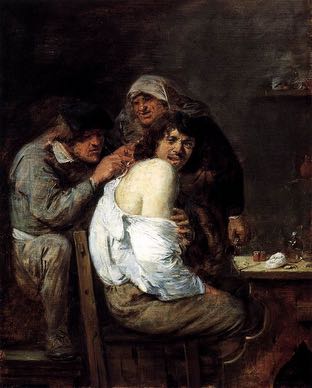
In The Back Operation, attention centers on the patient’s exposed body and strained response rather than on an elaborate medical setting. The Bitter Tonic finds drama in taste, as medicine produces an involuntary expression.
These paintings belong to a wider interest in the senses. Smoking, drinking, tasting, touching, music, foul interiors, and physical conflict ask the viewer to imagine sensations that paint cannot literally reproduce. Brouwer made the body the bridge between sight and the other senses, which helps explain why his small panels can feel so forceful.
What Changed After Brouwer Settled in Antwerp?
Brouwer returned to the southern Netherlands and became a master in Antwerp’s Guild of Saint Luke in 1631 or 1632. The city brought him into the orbit of major painters, collectors, and workshops. Anthony van Dyck included him among the distinguished artists portrayed for his Iconography.
In 1633, authorities imprisoned Brouwer in Antwerp’s citadel. The reason remains uncertain, and the familiar story that Peter Paul Rubens personally secured his release is not firmly documented. Afterward, Brouwer had close ties to the baker and painter Joos van Craesbeeck, whose work shows his influence.
His Antwerp paintings generally became subtler in color and atmosphere. Figures sit more naturally within shadowed rooms, and the handling can be both freer and more delicate. The Smokers, now in the Metropolitan Museum of Art, presents Brouwer among artist friends. It is at once a tavern scene, a study of taste and smoke, and an unruly group portrait.
At the Edge of Night, Why Do His Rare Landscapes Matter?
Near the end of his career, Brouwer painted a small group of landscapes that differ sharply from the crowded taverns. Dunes, low buildings, scattered figures, water, and distant light occupy wide spaces beneath heavy skies. Human activity remains present but no longer dominates.
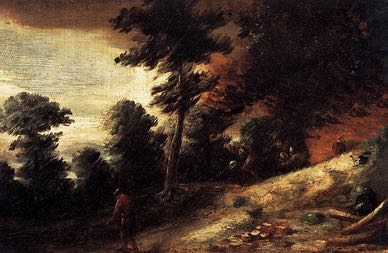
Dune Landscape by Moonlight builds atmosphere through deep shadow and a restrained band of illumination. Twilight Landscape similarly turns uncertain light into the subject itself. These are not merely backgrounds enlarged into independent pictures.
The landscapes bridge Flemish and Dutch developments just as Brouwer’s genre scenes do. Their tonal unity and emotional weight anticipated later painters who treated weather and fading light as expressive forces. They also reveal a quieter side of an artist too easily reduced to fights, drink, and comic distortion.
Which Paintings Show the Range of Brouwer’s Brief Career?
Brouwer worked on a small scale, but his surviving subjects range from solitary figures and studies of sensation to intimate group identity and atmospheric landscape:
- A Boor Asleep: A collapsed figure becomes a study of bodily weight, worn clothing, and unguarded stillness.
- Dune Landscape by Moonlight: A narrow light breaks through darkness across an unusually spacious and haunting landscape.
- Feeling: Facial reaction and physical contact turn one of the senses into immediate visual experience.
- Head of a Man with a Pointed Hat: Economical strokes give an unidentified sitter the force of an individual character.
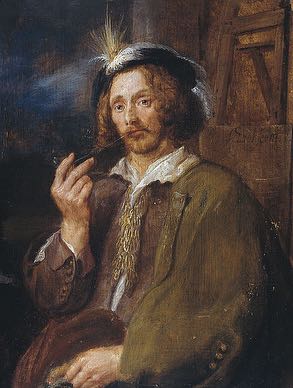
- Jan Davidszoon de Heem: A fellow artist emerges through Brouwer’s informal and direct approach to portrait-like study.
- The Back Operation: Rough treatment and a patient’s reaction compress bodily vulnerability into a small panel.
- The Bitter Tonic: The taste of medicine is made visible through an involuntary grimace and animated handling.
- Twilight Landscape: Fading light, open terrain, and tiny figures reveal the atmospheric ambition of his late work.
How Did Brouwer Become a Painter’s Painter?
Brouwer died in Antwerp at about thirty-two and was buried on 1 February 1638. The cause of death is not securely established. His career had lasted little more than a decade, and only a modest number of paintings are accepted as his work. Few are signed, almost none are dated, and later copies continue to complicate attribution.
His standing among fellow artists was extraordinary. Rubens owned seventeen Brouwer paintings when he died, while Rembrandt also collected his work. Their interest reflects more than enthusiasm for peasant subjects. They recognized his command of expression, atmosphere, translucent layering, and concise brushwork.
Brouwer influenced Adriaen van Ostade, David Teniers the Younger, Joos van Craesbeeck, and many other genre painters across the Low Countries. None simply repeated him. His deeper contribution was to show that ordinary behavior, uncomfortable sensation, and marginal social spaces could sustain painting of the highest technical intelligence.
Copyright © 2026 BrushWiz. All Rights Reserved.
About Our Adriaen Brouwer Paintings
Are your Adriaen Brouwer reproductions painted by hand?
Yes. Every reproduction is individually painted by hand in oil on canvas by a professional artist. We do not use prints, digital transfers, or mechanical reproduction methods.
How closely do your Brouwer copies resemble the original?
Our artists work to capture the composition, colors, brushwork, details, and visual character of the original Brouwer painting as closely as possible. Because every reproduction is painted by hand, small variations are natural and make each canvas unique.
How long does a Brouwer reproduction take to complete?
Most Brouwer reproductions require approximately two to three weeks to paint, dry, and inspect. Production time may vary depending on the artwork and canvas size, so check the estimate displayed on the product page.
Can I request a Brouwer painting that is not listed?
Yes. If you cannot find the Adriaen Brouwer artwork you want in our catalog, send us the painting’s title or an image. Our team will review your request and confirm the available sizes, estimated production time, and price.
Will I receive approval photos before shipping?
Yes. We send high-resolution photographs of the completed painting for your approval. You can request adjustments if needed, and the painting will not be dispatched until the review process is complete.
Are custom canvas sizes available for Brouwer paintings?
Yes. We offer custom dimensions in addition to the standard sizes shown on the product page. Select the dimensions you need directly from the available size options.
May I order my Brouwer painting with a frame?
Yes. High-quality frames in classic and modern designs are available for many paintings. You can view compatible framing options and add your preferred design from the product page. Professional canvas stretching is also available.
What determines the price of a Brouwer reproduction?
The price depends on the selected artwork, canvas dimensions, and framing option. Choose your preferred configuration on the product page to see the current price before ordering.
Is free express worldwide shipping included?
Yes. Adriaen Brouwer reproductions qualify for free express worldwide shipping. After dispatch, delivery usually takes five to eight business days, although timing may vary by country and destination.
Which return policy covers Adriaen Brouwer reproductions?
Orders are covered by our 90-day return policy. Review the current return-policy page before ordering for complete information about eligibility, time limits, and the return process.
Why BrushWiz?
100% Hand Painted
Every piece is entirely handmade
Museum Quality
Faithfully recreated by expert artists
Custom Framing
Choose from a wide range of frames
Free Shipping
Enjoy free shipping on all orders
Cash Back Rewards
Earn cash back with every purchase