

❄️ Winter Sale. Offer Ends 11/19/2026. View Details
❄️ Winter Sale. Ends 11/19/2026. View Details
❄️ Winter Sale. View Details
Artists
Subjects
Movements
Collections
Decor
Portraits
Commissions
Framing
Reviews
Gift Cards
On Sale
Frans Hals Oil Painting Reproductions
Shop museum-quality reproductions of Frans Hals’s most famous paintings, each hand-painted in oil on canvas by a professional artist.
Shop Art
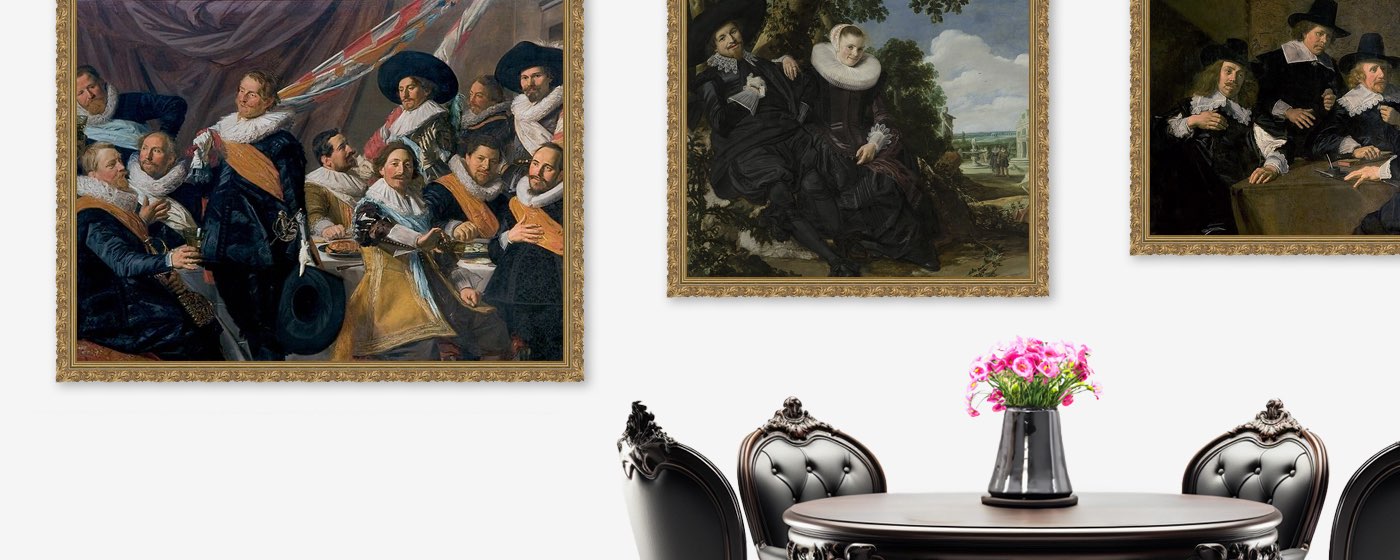
Showing 1-40 of 189 results
Sort By
Most Popular
- Most Popular
- New Arrivals
- Best Sellers
- Alphabetical A-Z
- Alphabetical Z-A
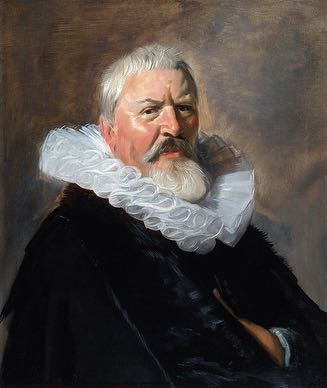
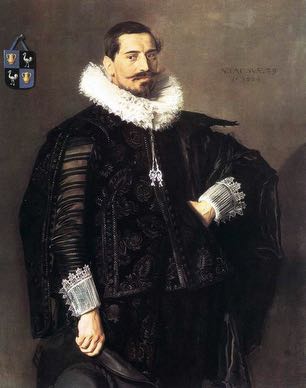
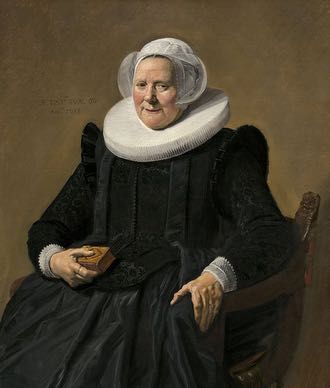

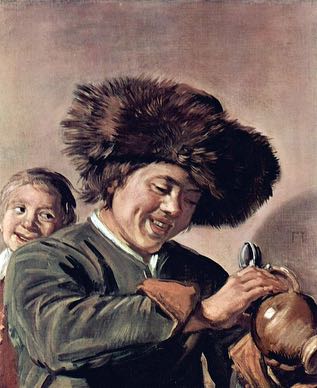
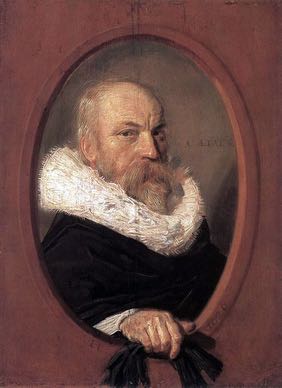
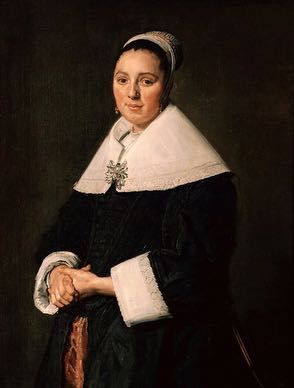
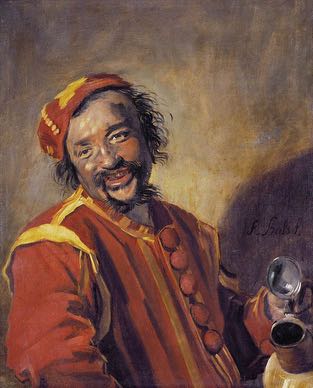
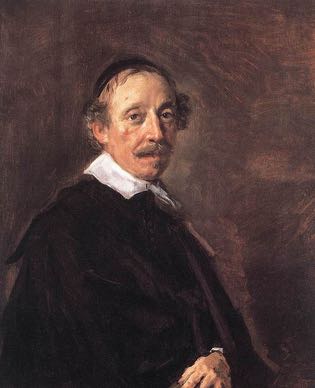


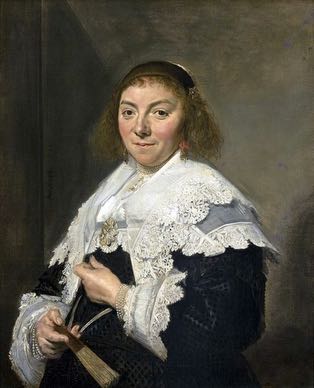


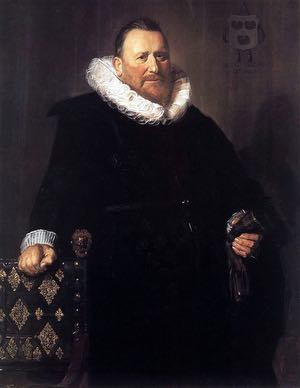

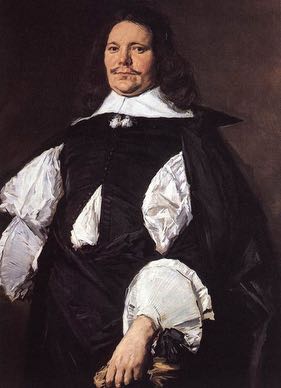
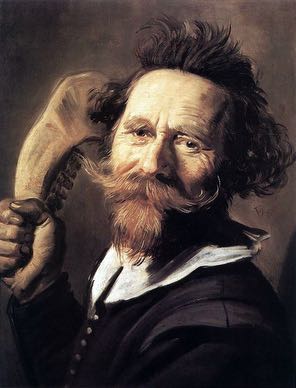
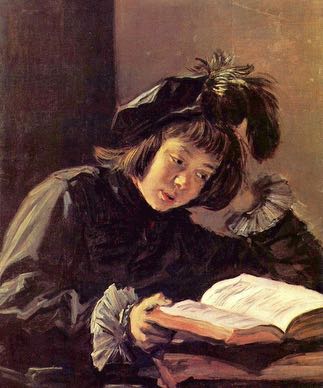


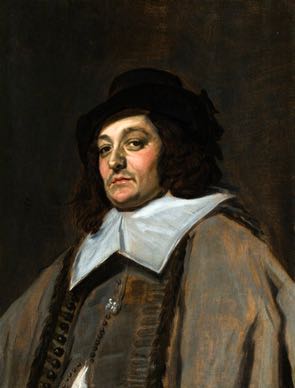
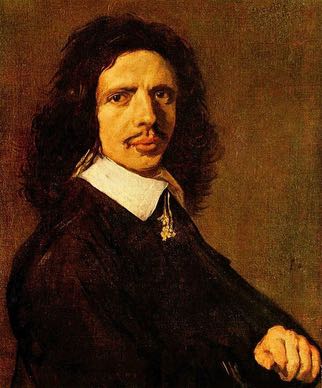
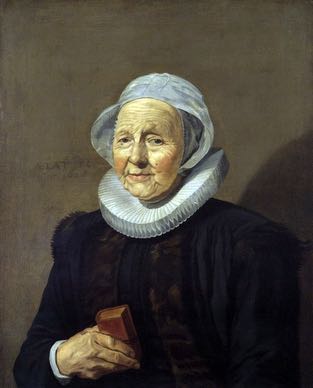

Can’t Find the Painting You Want?
Send us a reference image. We can recreate almost any artwork in the size and style you’re looking for.
Get a Free QuoteHand-Painted Frans Hals Reproductions
Bring Hals’s art into your home with an oil-on-canvas reproduction hand-painted by a professional artist. Our collection features more than one hundred paintings from across his career, including The Laughing Cavalier, The Merry Drinker, and A Banquet of the Officers of the St. George Militia Company. Discover animated portraits, civic-guard banquets, family groups, musicians, laughing children, and other subjects closely associated with Hals. Every reproduction is a real oil painting, offering depth and texture that a print or digital transfer cannot provide. From iconic masterpieces to lesser-known works, find a Hals painting that suits your space.
The Making of a Frans Hals Oil Painting Replica
Creating a Frans Hals oil painting replica calls for a confident hand and close attention to the sitter. Our studio includes artists who specialize in Baroque painting and understand the distinctive qualities of Hals’s portraits. The artist studies the source image, then recreates its alert expression, turning pose, varied black tones, crisp highlights, and Hals’s lively visible brushwork using traditional oil-painting methods. Once finished, the painting is inspected by our quality-control team and photographed for your approval. The result preserves the presence and energy that make the original feel immediate.
Custom Sizes and Frames for Your Hals Painting
Your Hals painting can be ordered in practically any size, from popular standard dimensions to a custom canvas size selected directly on the product page. This flexibility lets you choose a painting that fits your wall and complements your room perfectly. After selecting the size, you can choose from high-quality frames in classic or modern designs, with professional canvas stretching also available. A traditional frame can reinforce the authority of a formal portrait, while a simpler design suits Hals’s remarkably fresh brushwork. With sizing, stretching, and framing arranged in one order, your artwork can arrive ready for display.
Order a Frans Hals Reproduction with Confidence
Buying hand-painted art online should feel clear and comfortable. After your Frans Hals reproduction is completed, we send high-resolution photographs for your review before shipping. You can inspect the likeness, expression, brushwork, clothing, and overall finish, then request adjustments if needed. The painting is dispatched only after you approve it, so you know what to expect when it arrives. Your order also includes free express worldwide shipping and is covered by our 90-day return policy. Together, these assurances help you purchase a Hals oil painting with greater confidence and peace of mind.
The Life and Art of Frans Hals
Frans Hals was one of the great portrait painters of the seventeenth century. Born in Antwerp around 1582 or 1583 and raised in Haarlem, he built a long career around the human face. Merchants lean toward us, officers turn across crowded tables, children laugh, and musicians seem caught between one note and the next. Hals’s strokes look quick but are carefully judged, keeping sleeves, collars, hair, and expressions alive with movement. He painted Haarlem’s prosperous citizens alongside anonymous comic figures and people at society’s edges. His fame declined after his death in 1666, then rose dramatically in the nineteenth century when modern painters recognized the boldness of leaving the act of painting visible.
Read More
Who Was Frans Hals?
Frans Hals was born in Antwerp around 1582 or 1583. Amid the religious and political turmoil of the Dutch revolt against Spanish rule, his family moved north to Haarlem while he was still a boy. The city became his home, his market, and the center of nearly his entire career.
Unlike many celebrated Dutch painters of his time, Hals rarely turned to vast landscapes, biblical histories, or quiet domestic rooms. People were his subject. He painted married couples and families, individual sitters, militia officers, hospital governors, musicians, drinkers, children, and expressive character studies known as tronies.
The range is emotional as well as social. A prosperous merchant greets us with polished restraint; a child laughs and twists away; a singer opens his mouth in the middle of a song. Hals offered more than likeness. His sitters seem to have lived before they entered the frame and to be ready to resume that life as soon as we look away.
What Can Be Recovered of Hals’s Early Training?
Documents say little about Hals’s youth. A later Haarlem biographer identified the painter and writer Karel van Mander as his teacher, a plausible claim whose details cannot now be reconstructed. Hals entered the city’s Guild of Saint Luke in 1610, already in his late twenties, and his earliest securely dated portraits appeared soon afterward.
These early paintings are more tightly controlled than the broad late work for which he is famous. Firm edges, careful modeling, and exact attention to clothes reveal a solid foundation beneath his eventual freedom. Hals learned how much information a hand, face, sleeve, or ruff needed before allowing more of the working process to remain on view.
Why Did Haarlem Give Hals Everything He Needed?
Haarlem prospered through brewing, textile production, trade, civic organizations, and charitable institutions. Public officials and merchants commissioned portraits to record professional status and family position. Hals could develop an important practice without relocating to Amsterdam and usually expected his clients to visit his studio.
He also belonged to the St. George civic guard, one of the local militia companies whose officers paid for monumental group portraits. Hals knew this culture from within: its uniforms, ranks, banners, banquets, friendships, and the delicate task of giving every paying officer a satisfying place.
Less formal faces came from Haarlem’s streets. Fisher children, traveling entertainers, tavern drinkers, and people connected with charitable institutions all entered works associated with Hals. The city was not merely his backdrop. Its social divisions, civic pride, and appetite for portraiture determined much of what he painted.
How Did Hals Turn a Civic Portrait into an Event?
Earlier militia portraits often arranged officers in clear but rigid rows. Painted in 1616, Hals’s A Banquet of the Officers of the St. George Militia Company feels like an event already underway. Men gesture over the table, look toward one another, and glance out as if someone has just entered.
Beneath the animation lies firm discipline. Rank shapes the placement of each man, diagonals move the eye, and orange, white, and blue sashes repeat across the huge canvas. The demands of ceremony never smother conversation. Every officer retains an individual face and posture while remaining part of the company.
Hals painted Haarlem’s civic guards five times across several decades, shifting from banquets to standing assemblies instead of repeating his first success. The unfinished Meagre Company, an Amsterdam commission, also shows his independence. Rather than keep traveling for sittings, Hals left Pieter Codde to complete it.
How Did Hals Catch Laughter in Motion?
A smile changes from one instant to the next. Eyes narrow, cheeks lift, teeth appear, and the entire head joins the movement. Many portraitists avoided open mouths because a living expression could so easily freeze into a grimace. Hals embraced that instability, especially when painting drinkers, musicians, comic figures, and children for the open market.
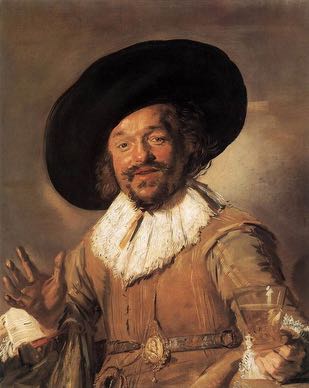
The Merry Drinker lifts a glass as his free hand prepares another gesture. Brief strokes become facial hair, lace, reflected light, and wine trembling in the vessel. The picture feels immediate because each mark serves the action, not because Hals neglected its structure.
Was Hals’s Brushwork as Spontaneous as It Looks?
Hals’s brush often appears astonishingly fast. One dark flick can become hair, while a cluster of white strokes resolves into a cuff. Seen from across the room, the marks snap together; up close, they remain individual decisions that were never polished away.
This effect encouraged the story that Hals completed a portrait in one spontaneous burst. Technical evidence is more interesting. He built forms, adjusted contours, layered particular areas, and changed his touch according to the task. A face generally receives closer modeling than a sleeve or background.
Speed, then, was a visual effect as well as a working habit. Hals knew where accuracy mattered and where a broken edge could make a person breathe. In The Laughing Cavalier, a turned body and elaborate embroidery look effortless but depend on exact control. The famous title came later; the sitter smiles, but he is neither laughing nor known to have been a cavalier.
Whom Did Hals Paint beyond Haarlem’s Elite?
Commissioned portraits provided much of Hals’s income, but they represent only part of his art. Genre figures and tronies offered expressive character types rather than formal records of known individuals. Fools, singers, fisher children, and drinkers could laugh or shout in ways forbidden by polite portrait convention.
Malle Babbe - Witch of Haarlem catches a woman turning suddenly, with a vessel in one hand and an owl close to her shoulder. The nickname may connect her to a woman recorded in a Haarlem institution, but no tidy diagnosis can contain the painting. Its rough handling and unstable expression are central to its power.
Gypsy Girl is also a later, traditional title rather than evidence of the sitter’s ethnicity. What the painting actually gives us is an anonymous young woman in informal dress returning our gaze with an open smile. Old assumptions can survive in familiar titles, and Hals’s unidentified figures deserve the same careful attention as his prosperous merchants.
What Changed in Hals’s Final Portraits?
Hals’s palette often narrowed with age as his handling became still more economical. Yet black clothing is never a single flat black. Gray strokes, brown underlayers, cool shadow, and abrupt highlights keep the fabric alive, allowing faces to emerge from restrained surroundings without decorative distraction.
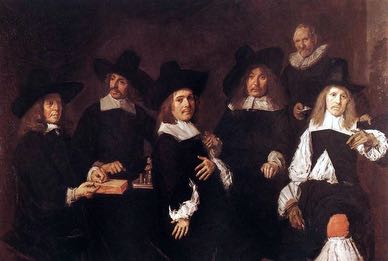
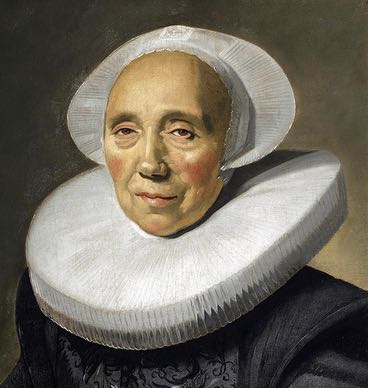
In 1664, already in his eighties, Hals painted the male and female governors of Haarlem’s Old Men’s Almshouse. These sitters do not perform the cheerful sociability of his early militia groups. Separated within sober rooms, they appear watchful, weary, guarded, or lost in thought. The strokes are broad, but the social observation remains precise.
Which Paintings Reveal the Range of Hals’s Portraiture?
Hals found remarkable variety without moving far beyond portraiture. A different glance, hand, costume, or group could transform the entire encounter:
- A Banquet of the Officers of the St. George Militia Company, 1616: Lively gestures across the table and distinct faces turn a formal group commission into a shared occasion.
- The Laughing Cavalier, 1624: A curled moustache, angled stance, and lavishly embroidered sleeve project confidence without a literal laugh.
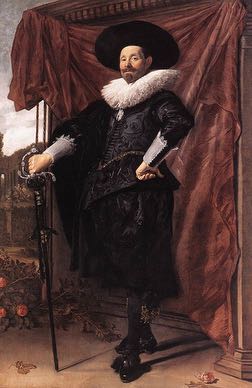
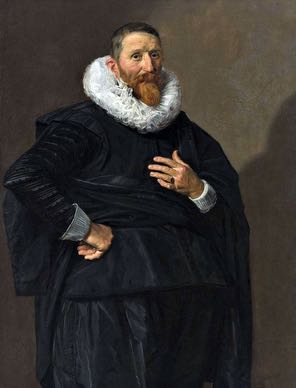
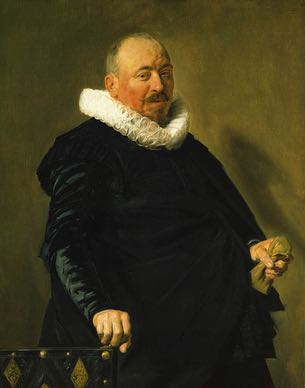
- Willem van Heythuysen, around 1625: A prosperous merchant leans across his chair with a directness somewhere between formal portrait and casual meeting.
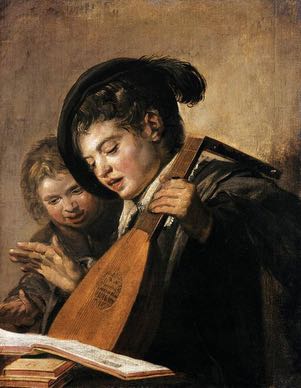
- Two Boys Singing, around 1625: Raised faces, open mouths, and a shared song allow expression alone to suggest sound.
- The Merry Drinker, around 1629: A flushed face, lifted glass, and interrupted gesture create a convincing moment of sociable animation.
- Gypsy Girl, around 1628–1630: An anonymous young woman’s frank smile gives immediacy to a painting whose traditional title should be approached cautiously.
- Regents of the Old Men’s Almshouse, 1664: Five sober governors occupy a spare room in a late display of painterly and psychological restraint.
- The Regentesses of the Old Men’s Home in Haarlem, 1664: Broad passages of white and black hold five distinct women together in an unsentimental, tense group.
Why Did Modern Painters Rediscover Hals?
Hals remained active for decades, but financial trouble followed him. Archives record debts to Haarlem tradespeople, and the city eventually provided him with public assistance and a yearly allowance. He died in 1666 and was buried in Haarlem’s Grote Kerk.
Changing taste during the eighteenth and early nineteenth centuries made his visible brushwork appear coarse and unfinished. Revival began when critics and collectors returned to Dutch art. Théophile Thoré-Bürger championed his work, and the spectacular sale of The Laughing Cavalier in 1865 helped turn a neglected painter into a celebrated one.
Modern painters found what earlier critics had overlooked. Édouard Manet, James McNeill Whistler, John Singer Sargent, and Vincent van Gogh studied the nerve and economy of Hals’s touch. His aims belonged firmly to Dutch portraiture, not Impressionism two centuries ahead of time. Even so, he proved that a finished likeness could remain visibly—and thrillingly—painted.
Copyright © 2026 BrushWiz. All Rights Reserved.
About Our Frans Hals Paintings
Are your Frans Hals reproductions painted by hand?
Yes. Every reproduction is individually painted by hand in oil on canvas by a professional artist. We do not use prints, digital transfers, or mechanical reproduction methods.
How closely do your Hals copies resemble the original?
Our artists work to capture the likeness, colors, texture, and lively brushwork of the original Hals painting as closely as possible. Because every reproduction is painted by hand, small variations are natural and make each canvas unique.
How long does it take to complete a painting?
Most Hals reproductions require approximately two to three weeks to paint, dry, and inspect. Production time may vary depending on the artwork and canvas size, so check the estimate displayed on the product page.
Can I request a Hals painting that is not listed?
Yes. If you cannot find the Frans Hals artwork you want in our catalog, send us the painting’s title or an image. Our team will review your request and confirm the available sizes, estimated production time, and price.
Will I receive photos of my painting before it is shipped?
Yes. We send high-resolution photographs of the completed painting for your approval. You can request adjustments if needed, and the painting will not be dispatched until the review process is complete.
Can I order a custom canvas size?
Yes. We offer custom dimensions in addition to the standard sizes shown on the product page. Select the dimensions you need directly from the available size options.
Can I order my Hals painting with a frame?
Yes. High-quality frames in classic and modern designs are available for many paintings. You can view compatible framing options and add your preferred design from the product page. Professional canvas stretching is also available.
How much does a Frans Hals reproduction cost?
The price depends on the selected artwork, canvas dimensions, and framing option. Choose your preferred configuration on the product page to see the current price before ordering.
Do you offer free worldwide shipping?
Yes. Hals reproductions qualify for free express worldwide shipping. After dispatch, delivery usually takes five to eight business days, although timing may vary by country and destination.
What is the return policy for Hals reproductions?
Orders are covered by our 90-day return policy. Review the current return-policy page before ordering for complete information about eligibility, time limits, and the return process.
Why BrushWiz?
100% Hand Painted
Every piece is entirely handmade
Museum Quality
Faithfully recreated by expert artists
Custom Framing
Choose from a wide range of frames
Free Shipping
Enjoy free shipping on all orders
Cash Back Rewards
Earn cash back with every purchase