
❄️ Winter Sale. Offer Ends 11/18/2026. View Details
❄️ Winter Sale. Ends 11/18/2026. View Details
❄️ Winter Sale. View Details
Artists
Subjects
Movements
Collections
Decor
Portraits
Commissions
Framing
Reviews
Gift Cards
On Sale
Bronzino Oil Painting Reproductions
Shop museum-quality reproductions of Bronzino’s most famous paintings, each hand-painted in oil on canvas by a professional artist.
Shop Art
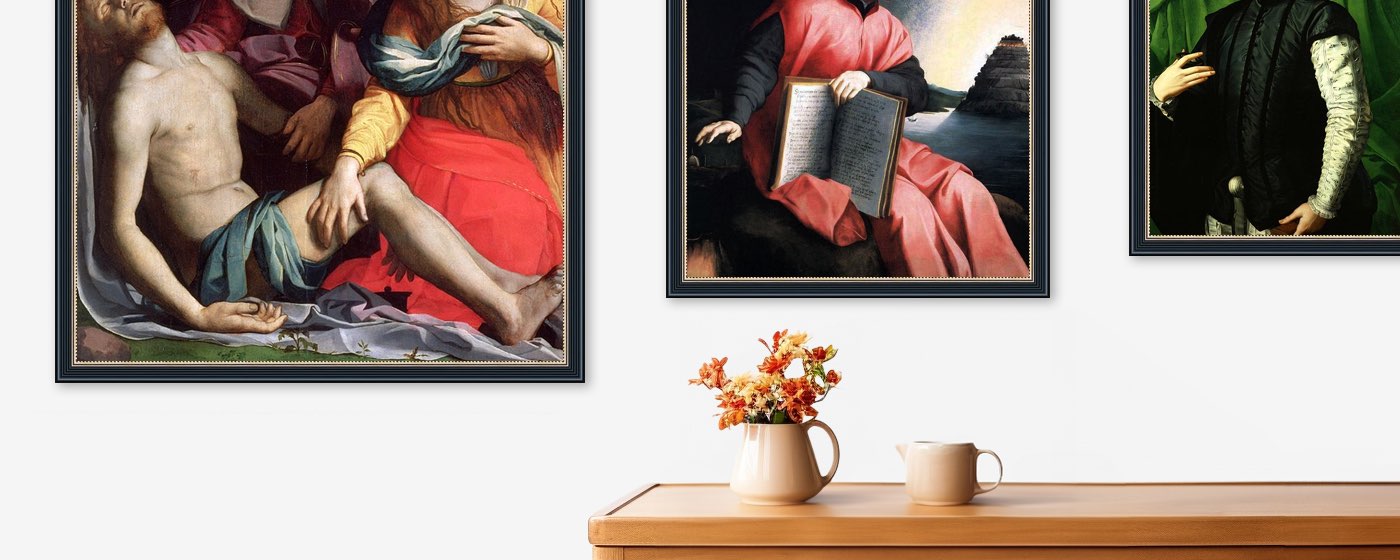
Showing 1-40 of 60 results
Sort By
Most Popular
- Most Popular
- New Arrivals
- Best Sellers
- Alphabetical A-Z
- Alphabetical Z-A



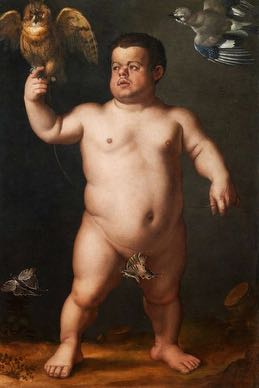
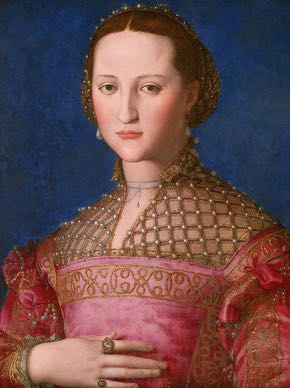


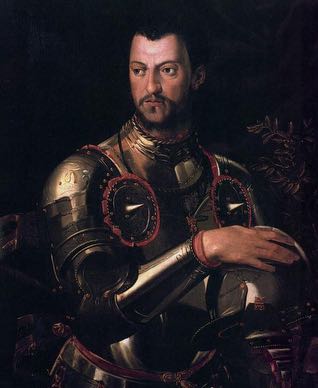
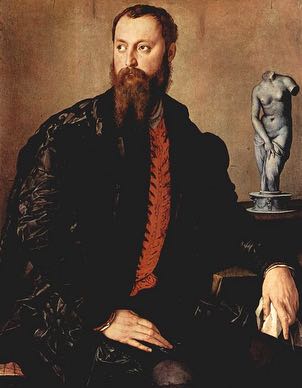



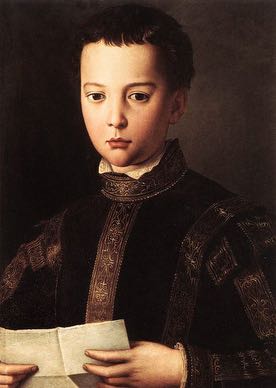
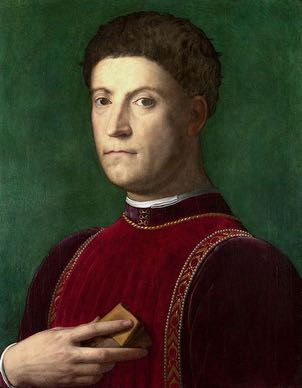
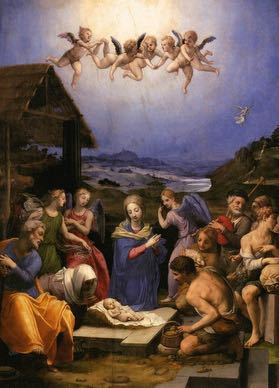
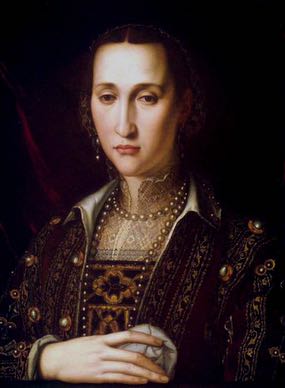


Can’t Find the Painting You Want?
Send us a reference image. We can recreate almost any artwork in the size and style you’re looking for.
Get a Free QuoteHand-Painted Bronzino Reproductions
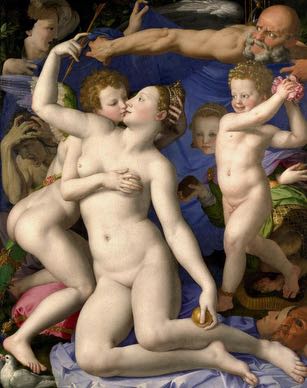
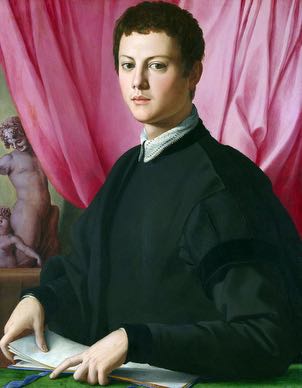
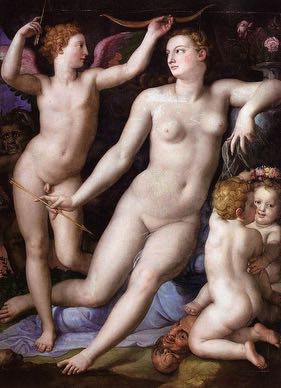
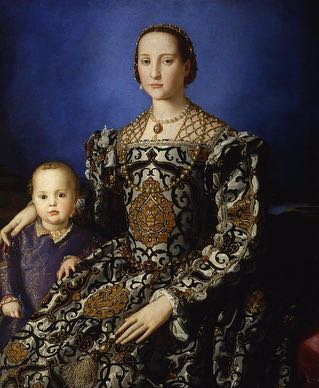
Bring Bronzino’s art into your home with an oil-on-canvas reproduction hand-painted by a professional artist. Our collection features dozens of paintings from across his career, including An Allegory with Venus and Cupid, Eleanor of Toledo with Her Son, and Portrait of a Young Man. Discover formal Medici portraits, coolly elegant figures, religious scenes, intellectually complex allegories, and other subjects closely associated with Bronzino. Every reproduction is a real oil painting, offering depth and texture that a print or digital transfer cannot provide. From iconic masterpieces to lesser-known works, find a Bronzino painting that suits your space.
The Making of a Bronzino Oil Painting Replica
Creating a Bronzino oil painting replica requires patience, precision, and an understanding of the original artwork. Our studio includes artists who specialize in Mannerist painting and understand the distinctive qualities of Bronzino’s work. Before painting begins, the artist studies the source image, paying close attention to its controlled composition, sculptural figures, cool colors, polished surfaces, elaborate fabrics, and Bronzino’s precise contours. These elements are recreated by hand in oil on canvas using an approach suited to the original. Once complete, the painting is inspected by our quality-control team and photographed for your approval.
Custom Sizes and Frames for Your Bronzino Painting
Your Bronzino painting can be ordered in practically any size, from popular standard dimensions to a custom canvas size selected directly on the product page. This flexibility lets you choose a painting that fits your wall and complements your room perfectly. After selecting the size, you can choose from high-quality frames in classic or modern designs, with professional canvas stretching also available. Our framing options complement the polished colors and formal compositions of Bronzino’s paintings. With sizing, stretching, and framing arranged in one order, your artwork can arrive ready for display without a separate visit to a frame shop.
Order a Bronzino Reproduction with Confidence
Buying hand-painted art online should feel clear and comfortable. After your Bronzino reproduction is completed, we send high-resolution photographs for your review before shipping. You can inspect the composition, colors, and overall finish, then request adjustments if needed. The painting is dispatched only after you approve it, so you know what to expect when it arrives. Your order also includes free express worldwide shipping and is covered by our 90-day return policy. Together, these assurances help you purchase a Bronzino oil painting with greater confidence and peace of mind.
The Life and Art of Bronzino
Bronzino, born Agnolo di Cosimo in 1503, was a Florentine painter, draftsman, poet, and one of the defining artists of Mannerism. A pupil and close collaborator of Pontormo, he developed a controlled style of crisp contours, cool colors, sculptural bodies, and polished surfaces. From about 1540, Bronzino served Cosimo I de’ Medici and Eleonora di Toledo as court painter, creating portraits that balance individual likeness with dynastic authority and sumptuous display. His work also encompassed chapel frescoes, religious paintings, tapestry designs, and sophisticated allegories. Technical precision and intellectual complexity give his art a formal elegance that made him an enduring master of European portraiture.
Read More
Who Was Bronzino?
Bronzino was born Agnolo di Cosimo di Mariano on 17 November 1503 in Monticelli, then on the outskirts of Florence. Bronzino was a nickname, though its exact origin is unknown. The son of a butcher, he entered the artistic profession early and grew into one of the Medici court’s most learned and technically accomplished painters.
His career coincided with Florence’s passage from republic to hereditary duchy under Cosimo I de’ Medici. Art helped define the new court, celebrate its ruling family, furnish its residences, and project political authority. Bronzino’s restraint, descriptive precision, and cool elegance suited those purposes exceptionally well.
Aristocratic portraiture made him famous, but his work also included allegory, mythology, religious painting, tapestry design, fresco, and drawing. Bronzino was a serious poet too, writing both polished and comic verse. That literary life fed the wit, symbols, and cultivated self-presentation running through his art.
How Did Pontormo Shape the Young Bronzino?
Bronzino entered the workshop of Pontormo as a young man, probably around 1515. Their unusually close association lasted nearly forty years. Through copying, figure studies, and shared workshop projects, Bronzino progressed from apprentice to trusted collaborator and artistic companion.
Pontormo introduced him to lengthened bodies, expressive poses, unexpected colors, and the deliberate artificiality that set Florentine Mannerism apart from the measured harmony of the earlier Renaissance. Some of their early drawings remain difficult to distinguish. Over time, however, Bronzino favored firmer outlines, smoother finishes, and more contained modeling.
Drawing stayed central to both men. Studies in red and, later, black chalk allowed Bronzino to work out anatomy, gesture, drapery, and the exact position of a figure before moving to paint or fresco. This careful preparation lies behind the clean silhouettes and ordered surfaces of his mature style.
When Did Bronzino Become the Medici Court Painter?
During the 1530s, Bronzino worked outside Florence and spent time with the Della Rovere court in Pesaro. The experience acquainted him with court patronage and strengthened his reputation as a portraitist. By the decade’s end, he was back in Florence as the young Duke Cosimo I de’ Medici reshaped the city.
Bronzino helped decorate the celebrations for Cosimo’s 1539 marriage to Eleonora di Toledo. Around 1540, he became their court’s leading painter. The role involved far more than individual portraits: he helped give the ruling family a coherent public identity through chapel frescoes, festival decorations, paintings, and designs for luxurious furnishings.
Cosimo’s patronage presented the Medici as permanent dynastic rulers rather than temporary political leaders. Bronzino’s costly colors, painstakingly rendered clothes, formal arrangements, and controlled expressions gave the new court an image of permanence and refinement that traveled through originals, workshop copies, and diplomatic gifts.
What Gives Bronzino’s Portraits Their Distinctive Presence?
A Bronzino sitter often stands or sits carefully posed before a plain, curtained, or architectural backdrop. Expressions remain composed and hands elegantly arranged, while velvet, silk, embroidery, jewels, armor, and books receive extraordinary attention. The finished surface can look as smooth as enamel or polished stone.
Cool formality does not erase every trace of character. Age, intellect, bearing, and social role emerge through facial structure, gaze, posture, and a few selected objects. Books and writing tools can signal literary learning, while armor, pearls, medals, and costly cloth establish profession, rank, political ambition, or family connection.
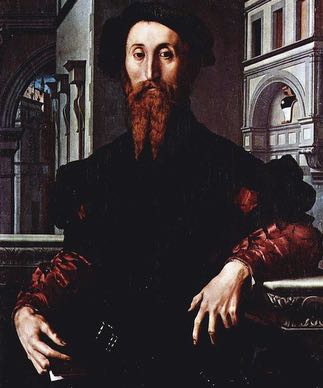
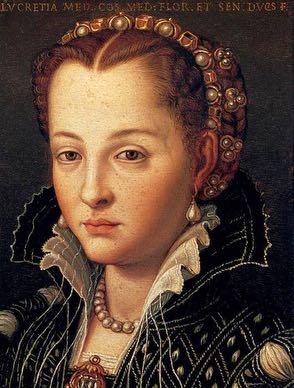
Portrait of a Young Man, Portrait of Ugolino Martelli, and Portrait of Lucrezia Panciatichi turn likeness into deliberately constructed identity. Their reserve invites a slower look at elegant proportions, restrained expressions, and the messages embedded in dress and setting.
Why Is Eleonora di Toledo’s Portrait So Memorable?
Bronzino portrayed Eleonora di Toledo many times, but the image of the duchess with her young son Giovanni became the defining portrait of the Medici court. Against a deep blue field, Eleonora wears pearls and an exceptionally rich brocade dress. Giovanni’s presence speaks directly to fertility, succession, and the dynasty’s future.
This display of luxury also represents a woman of authority. Eleonora governed during several of Cosimo’s absences and played an active part in consolidating the family’s position. Her upright bearing and calm face convey command, while costly lapis blue and Florentine textiles evoke both sacred associations and local prosperity.
In Eleanor of Toledo with Her Son, skin, fabric, pearls, and background each have their own texture, yet all belong to one seamless design. The portrait became a lasting model of dynastic representation and one of the most recognizable images in sixteenth-century art.
Beyond Portraits, What Did Bronzino Make for the Medici?
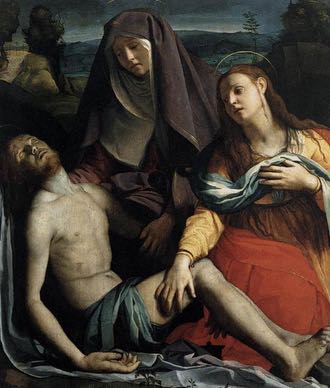
Eleonora commissioned Bronzino to paint her private chapel in the Palazzo Vecchio. Frescoes from the life of Moses surround an altarpiece depicting the Deposition of Christ. In this intimate space, used by the duchess, he had to bring brilliant color, intricate figure groups, religious meaning, and architecture into a unified whole.
Bronzino also designed an important tapestry cycle telling the story of Joseph for the Palazzo Vecchio. Precise preparatory drawings and clearly separated forms helped specialist weavers translate architecture, figures, drapery, and ornament into wool, silk, and costly metal threads, joining biblical narrative to Medici magnificence.
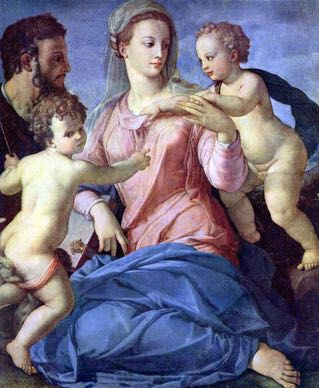
His independent religious paintings range from small Holy Families to large images of sacrifice and salvation. In Holy Family with Saint Anne and the Infant Saint John, elegant bodies, intricate poses, sculptural form, and cool color bring courtly Mannerist refinement to a devotional subject.
How Did Bronzino Turn Allegory into a Visual Puzzle?
Bronzino’s mythological paintings addressed cultured viewers who understood classical literature, court poetry, visual riddles, and the language of love. Polished bodies, elaborate embraces, masks, animals, objects, and personifications invite prolonged interpretation. Sensual beauty and intellectual difficulty are deliberately intertwined.
An Allegory with Venus and Cupid is the best-known example. Venus and Cupid occupy its center, surrounded by objects and figures linked with deception, pleasure, jealousy, folly, or time. Its exact meaning and original purpose remain debated, suggesting a painting intentionally designed to resist one universally accepted answer.
In other works, mythology transforms portraiture. Portrait of Andrea Doria as Neptune gives the Genoese admiral the identity and attributes of the sea god, joining a recognizable contemporary face to classical power. Such pictures move fluidly among idealized bodies, political symbols, literary allusion, and individual likeness.
Where Did Poetry and Drawing Meet in Bronzino’s Art?
Bronzino took an active role in Florence’s literary culture and belonged to the Accademia Fiorentina. He wrote formal Petrarchan poems as well as comic, deliberately earthy verse. This unexpected range unsettles the image of a painter defined by chilly restraint. Double meanings, wit, wordplay, and movement between elevated and ordinary language all belonged to his creative character.
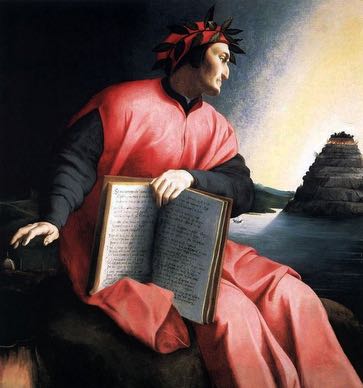
Literature also entered his portraits. Bronzino painted writers such as Dante and Laura Battiferri, and several sitters hold books with deliberate significance. Portrait of Laura Battiferri shows the poet in a severe profile with an open volume, making text, posture, and facial character into a concise statement of authorship and intellect.
Drawing formed an equally firm foundation. Chalk studies solved the problems of hands, heads, drapery, bodies, and multi-figure scenes before paint was applied. Their disciplined outlines expose the labor beneath his apparently effortless surfaces. As a teacher and founding participant in Florence’s Accademia del Disegno, Bronzino passed this commitment to preparation on to younger artists.
Which Paintings Reveal the Range of Bronzino’s Career?
These works trace Bronzino’s achievement across aristocratic portraiture, Medici court culture, religious art, and learned mythology:
- Eleanor of Toledo with Her Son: Maternal presence, political power, precious materials, and technical precision come together in a dynastic portrait.
- An Allegory with Venus and Cupid: Mythological bodies, masks, personifications, and symbols create a scene at once sensual and intellectually elusive.
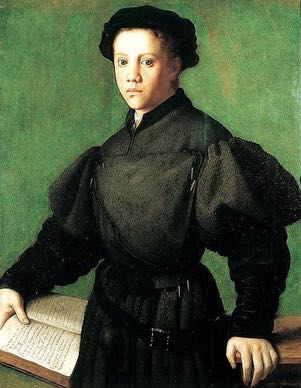
- Portrait of a Young Man: Book, costume, pose, and setting form a defining Mannerist image of cultivated self-possession.
- Portrait of Cosimo I de’ Medici as Orpheus: Ducal identity, an idealized nude body, and learned classical references meet in an inventive court portrait.
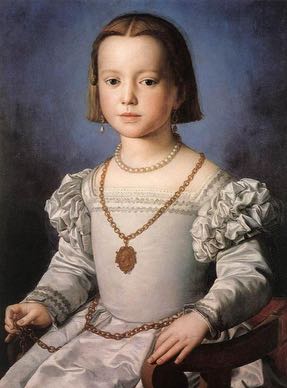
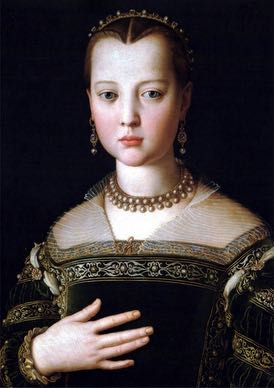
- Portrait of Bia de’ Medici: Courtly dress and polish remain balanced by the memorable presence of a young child.
- Portrait of Lucrezia Panciatichi: Restrained expression, jewelry, sumptuous cloth, and upright posture convey aristocratic dignity.
- Portrait of Andrea Doria as Neptune: A contemporary naval commander takes on the body and attributes of an ancient sea god.
- Holy Family with Saint Anne and the Infant Saint John: Intricate poses, elegant figures, and a cool palette transform a familiar devotional scene.
What Became of Bronzino’s Reputation?
Bronzino’s standing at court diminished after the mid-1550s as Cosimo increasingly turned to Giorgio Vasari. Pontormo died in 1557 and Eleonora di Toledo in 1562, taking away two of his closest personal and professional supporters. Bronzino nevertheless remained an authoritative Florentine artist and continued to receive important commissions.
His late work included involvement with Pontormo’s unfinished San Lorenzo frescoes and the monumental Martyrdom of Saint Lawrence. In 1563, he became a founding member and officeholder of the Accademia del Disegno. His teaching stressed observation, disciplined drawing, and technical control. Alessandro Allori, his most important pupil and adopted son, carried Bronzino’s language into the next generation.
Bronzino died in Florence on 23 November 1572. His reputation declined when critics dismissed Mannerism as artificial, but modern scholarship has recovered the political complexity, intelligence, and technical brilliance of his work. He is now recognized as a central Florentine Mannerist and one of the European Renaissance’s greatest portrait painters.
Copyright © 2026 BrushWiz. All Rights Reserved.
About Our Bronzino Paintings
Are your Bronzino reproductions painted by hand?
Yes. Every reproduction is individually painted by hand in oil on canvas by a professional artist. We do not use prints, digital transfers, or mechanical reproduction methods.
How closely do your Bronzino copies resemble the original?
Our artists work to capture the composition, colors, texture, and visual character of the original Bronzino painting as closely as possible. Because every reproduction is painted by hand, small variations are natural and make each canvas unique.
How long does it take to complete a painting?
Most Bronzino reproductions require approximately two to three weeks to paint, dry, and inspect. Production time may vary depending on the artwork and canvas size, so check the estimate displayed on the product page.
Can I request a Bronzino painting that is not listed?
Yes. If you cannot find the Bronzino artwork you want in our catalog, send us the painting’s title or an image. Our team will review your request and confirm the available sizes, estimated production time, and price.
Will I receive photos of my painting before it is shipped?
Yes. We send high-resolution photographs of the completed painting for your approval. You can request adjustments if needed, and the painting will not be dispatched until the review process is complete.
Can I order a custom canvas size?
Yes. We offer custom dimensions in addition to the standard sizes shown on the product page. Select the dimensions you need directly from the available size options.
Can I order my Bronzino painting with a frame?
Yes. High-quality frames in classic and modern designs are available for many paintings. You can view compatible framing options and add your preferred design from the product page. Professional canvas stretching is also available.
How much does a Bronzino reproduction cost?
The price depends on the selected artwork, canvas dimensions, and framing option. Choose your preferred configuration on the product page to see the current price before ordering.
Do you offer free worldwide shipping?
Yes. Bronzino reproductions qualify for free express worldwide shipping. After dispatch, delivery usually takes five to eight business days, although timing may vary by country and destination.
What is the return policy for Bronzino reproductions?
Orders are covered by our 90-day return policy. Review the current return-policy page before ordering for complete information about eligibility, time limits, and the return process.
Why BrushWiz?
100% Hand Painted
Every piece is entirely handmade
Museum Quality
Faithfully recreated by expert artists
Custom Framing
Choose from a wide range of frames
Free Shipping
Enjoy free shipping on all orders
Cash Back Rewards
Earn cash back with every purchase