

❄️ Winter Sale. Offer Ends 11/28/2026. View Details
❄️ Winter Sale. Ends 11/28/2026. View Details
❄️ Winter Sale. View Details
Artists
Subjects
Movements
Collections
Decor
Portraits
Commissions
Framing
Reviews
Gift Cards
On Sale
Henri Rousseau Oil Painting Reproductions
Shop museum-quality reproductions of Henri Rousseau’s most famous paintings, each hand-painted in oil on canvas by a professional artist.
Shop Art
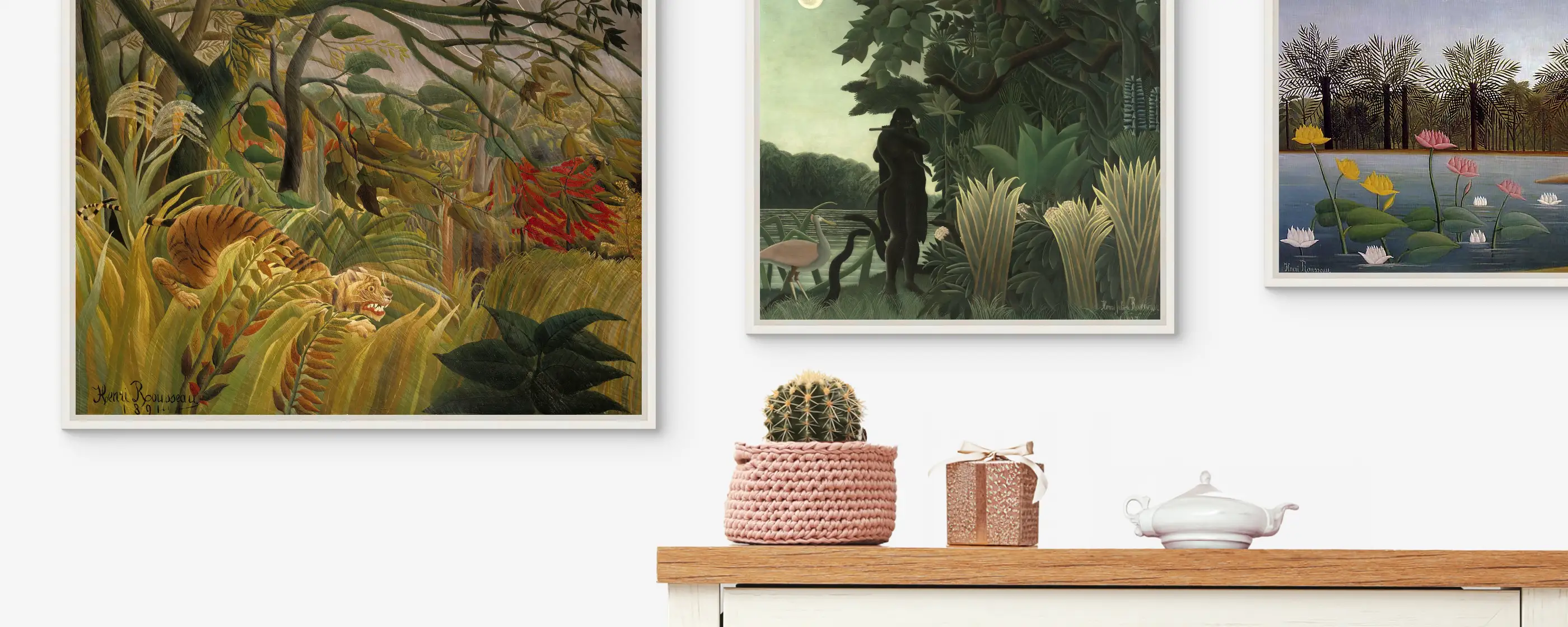
Showing 1-40 of 129 results
Sort By
Most Popular
- Most Popular
- New Arrivals
- Best Sellers
- Alphabetical A-Z
- Alphabetical Z-A
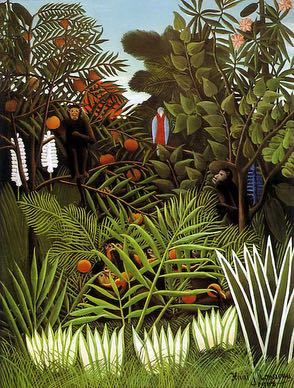

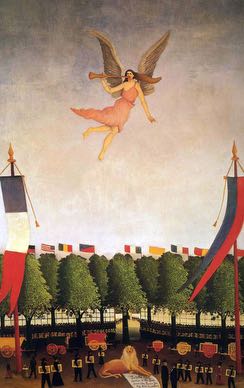
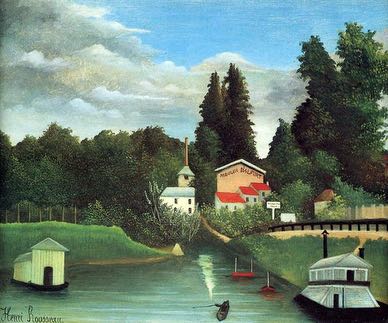
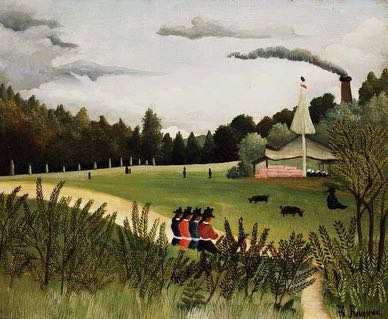
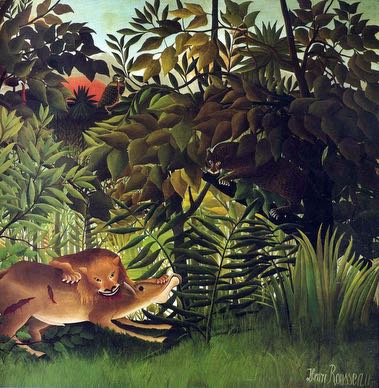
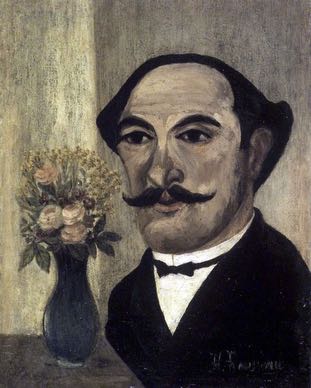


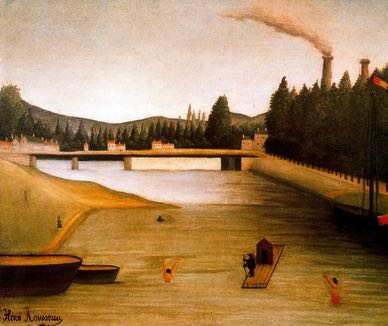
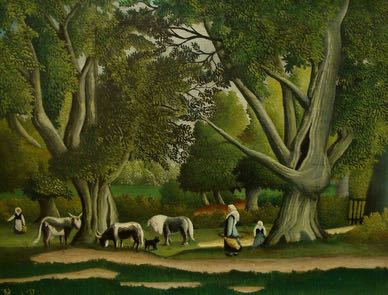
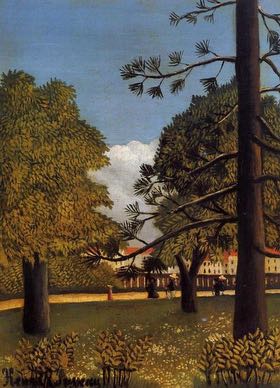

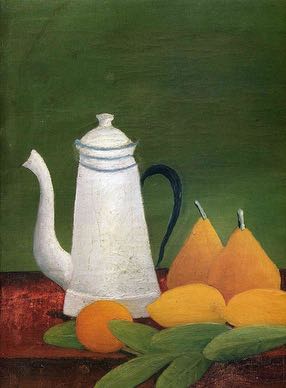
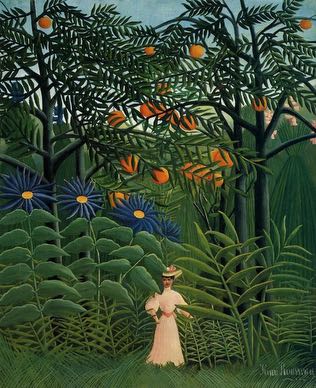

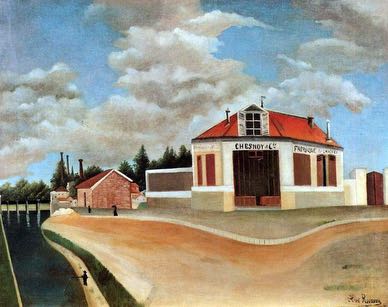
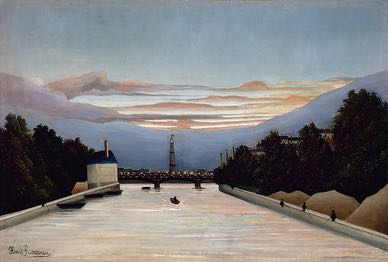
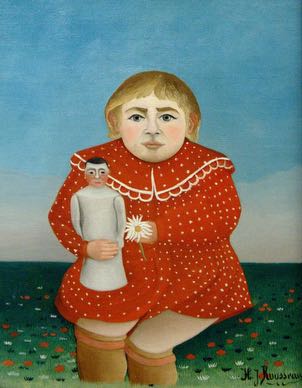



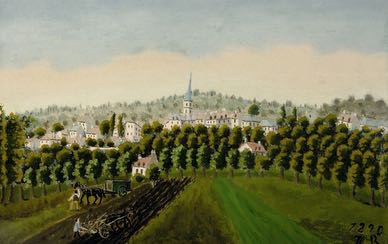
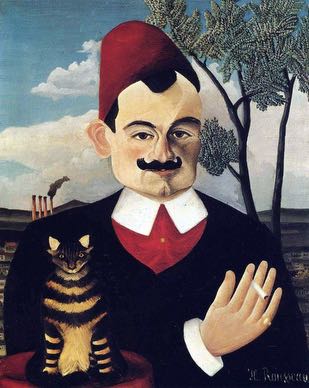
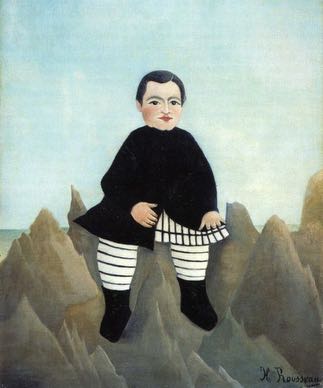


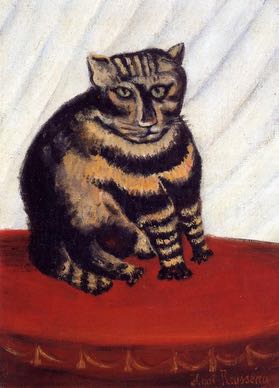



Can’t Find the Painting You Want?
Send us a reference image. We can recreate almost any artwork in the size and style you’re looking for.
Get a Free QuoteHand-Painted Henri Rousseau Reproductions
Bring Rousseau’s art into your home with an oil-on-canvas reproduction hand-painted by a professional artist. Our collection features more than one hundred paintings from across his career, including The Dream, The Sleeping Gypsy, and Tiger in a Tropical Storm. Discover dense jungles, prowling animals, moonlit figures, quiet Parisian landscapes, and other subjects closely associated with Rousseau. Every reproduction is a real oil painting, offering depth and texture that a print or digital transfer cannot provide. From iconic masterpieces to lesser-known works, find a Rousseau painting that suits your space.
The Making of a Henri Rousseau Oil Painting Replica
Creating a Henri Rousseau oil painting replica requires patience, precision, and an understanding of the original artwork. Our studio includes artists who specialize in Naive Art and understand the distinctive visual qualities of Rousseau’s work. The artist studies the source image, then recreates its layered foliage, flat areas of color, clear outlines, and Rousseau’s carefully arranged animals and figures using traditional oil-painting methods. After completion, the painting is inspected by our quality-control team and photographed for your approval. The result is a carefully executed oil painting that reflects the visual character of the original.
Custom Sizes and Frames for Your Rousseau Painting
Your Rousseau painting can be ordered in any size, from popular standard dimensions to custom canvas sizes selected directly on the product page. This flexibility lets you choose a painting that fits your wall and complements your room perfectly. After selecting the size, you can choose from high-quality frames in classic or modern designs, with professional canvas stretching also available. Our framing options complement the lush greens, tropical foliage, and unusual atmosphere of Rousseau’s paintings. With sizing, stretching, and framing arranged in one order, your artwork can arrive ready for display without a separate visit to a frame shop.
Order a Henri Rousseau Reproduction with Confidence
Buying hand-painted art online should feel clear and comfortable. After your Henri Rousseau reproduction is completed, we send high-resolution photographs for your review before shipping. You can inspect the colors, foliage, figures, animals, and overall finish, then request adjustments if needed. The painting is dispatched only after you approve it, so you know what to expect when it arrives. Your order also includes free express worldwide shipping and is covered by our 90-day return policy. Together, these assurances help you purchase a Rousseau oil painting with greater confidence and peace of mind.
The Life and Art of Henri Rousseau
Henri Rousseau was a self-taught French painter known for imagined jungles, carefully posed portraits, quiet city views, and ambitious allegories. Born in 1844, he spent many years collecting municipal tolls in Paris before retiring to devote more time to art. His nickname, “Le Douanier,” came from this job, although he was never a customs inspector. Rousseau exhibited regularly at independent salons, where his firm outlines, flattened shapes, unconventional perspective, and patterned surfaces drew ridicule as well as admiration. Now closely associated with Naive Art, his singular paintings influenced younger modern artists and later fascinated the Surrealists.
Read More
Who Was Henri Rousseau?
Henri Julien Félix Rousseau was born on 21 May 1844 in Laval, in western France. His father was a tinsmith, and financial trouble disrupted family life. At school, Rousseau showed ability in music and drawing, but he never received the formal education that normally prepared a painter for an academic career.
After working briefly for a lawyer, he served in the French army from 1863 until 1868. A later story claimed that Rousseau had joined a military expedition to Mexico and drew his jungle subjects from tropical memories. He never made such a journey. His army service took place in France, and the exotic landscapes of his paintings were assembled from sources he found in Paris.
Rousseau moved to Paris in 1868 and spent most of his adult life there. He married Clémence Boitard in 1869 and, after her death, Joséphine Noury in 1898. Limited income and family loss accompanied his unusual persistence in pursuing art alongside ordinary employment.
Why Was Rousseau Known as “Le Douanier”?
In 1871, Rousseau began working for the Paris octroi, the municipal service that charged duties on goods entering the city. The job gave rise to “Le Douanier,” a nickname generally translated as “the customs officer.” In reality, he collected tolls and never held the senior customs position the title suggests.
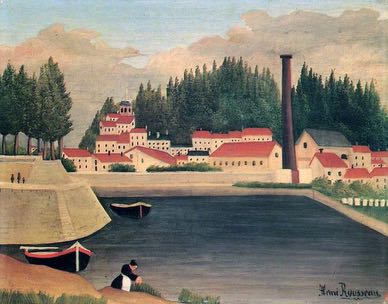
His work took him to the edges of Paris, where factories, riverbanks, roads, gardens, fortifications, and growing suburbs supplied material for early landscapes. Rousseau gave these modest places an unexpected stillness. Carefully ordered within the picture, familiar views can seem removed from everyday time.
He painted outside working hours and obtained permission to study and copy art in the Louvre. Rousseau retired from the toll service in 1893 at the age of forty-nine, hoping to devote himself more fully to painting. His small pension could not support him comfortably, so music lessons, occasional performances, and other modest work supplemented it.
How Did Rousseau Become an Artist Without Formal Training?
Rousseau educated himself through paintings, photographs, prints, popular illustrations, and close observation of the world around him. He admired established French artists and wanted official recognition, even though his anatomy, perspective, and modeling did not follow academic rules. That independence exposed him to ridicule, but it also allowed him to construct images in a way entirely his own.
Beginning in 1886, Rousseau showed at the Salon des Indépendants, which admitted artists without a jury or traditional prizes. Its open policy gave him regular access to a public that the official Salon probably would have denied him. Carnival Evening already contains the frontal figures, uncertain scale, compressed depth, and quiet mystery that recur in his mature art.
Many critics and visitors treated these qualities as proof that he could not paint properly. Rousseau continued sending ambitious canvases and regarded himself as a serious modern artist. A smaller but increasingly important group understood that his directness produced effects unavailable to polished academic technique.
What Did Rousseau Paint Besides Jungles?
Tropical scenes account for only part of Rousseau’s work. His subjects included landscapes around Paris, river views, bridges, factories, public festivities, family groups, still lifes, allegories, and formal portraits. Telegraph poles, smokestacks, airships, and other marks of modern life sometimes enter otherwise orderly and tranquil scenes.
His portraits place people firmly against simplified surroundings. A face, item of clothing, chair, flower, or symbolic object may receive nearly equal emphasis, lending the image both directness and ceremony. In Self-Portrait from the Île Saint-Louis, Rousseau confidently presents himself with palette in hand before the skyline of modern Paris.
He also worked on a grand public scale. In War, or The Ride of Discord, a wild female figure races above a landscape of devastation. Centennial of Independence transforms civic celebration into a patterned procession. Such paintings reveal an imagination far broader than the jungle subjects for which he became famous.
Where Did Rousseau Find His Jungle Imagery?
Rousseau never saw a tropical jungle firsthand. In Paris, he visited the Jardin des Plantes, its greenhouses, zoological displays, and nearby natural-history collections. Illustrated magazines, advertisements, postcards, photographs, books, and images from the city’s world’s fairs offered further material.
Plants belonging to different climates could grow together in one painted forest. Rousseau enlarged leaves far beyond their natural size and repeated them until they formed an almost solid screen. Zoo animals, taxidermy, sculpture, and published illustrations supplied creatures for environments that are imaginative constructions rather than scientific records.
These sources belonged to the colonial culture of nineteenth-century France, which presented distant lands and peoples to metropolitan audiences through exhibitions and popular media. Rousseau’s jungles are personal fantasies formed inside that wider culture. Their strange mixture of beauty, stillness, and danger reflects the way Paris imagined the tropical world.
Which Visual Choices Made Rousseau’s Style Distinctive?
Rousseau built many paintings from clearly enclosed shapes applied in successive layers. In a jungle, overlapping leaves, flowers, grasses, branches, people, and animals spread across the canvas like parts of a carefully arranged stage. Repetition and placement suggest depth even when conventional perspective is weak.
Figures often remain curiously still in the midst of danger or action. Firm contours and limited modeling flatten their forms, while scale may shift unexpectedly from one element to another. These qualities are associated with Naive Art, but Rousseau’s large canvases were anything but casual. Their intricate patterns demanded patience and planning.
Color holds these dense arrangements together. Many shades of green create foliage, while white, red, yellow, or deep blue directs the eye toward a flower, body, or patch of sky. Silhouettes and moonlight give the night scenes their dreamlike quiet. Apparent simplicity conceals a carefully managed balance of rhythm, detail, surprise, and stillness.
Why Was Tiger in a Tropical Storm a Turning Point?
Tiger in a Tropical Storm, also called Surprised!, appeared at the Salon des Indépendants in 1891. It was Rousseau’s first major jungle canvas. A tiger crouches amid bending plants as lightning, wind, and rain activate the entire surface. Whether it stalks prey or recoils from the storm remains uncertain.
The painting was mocked, though the artist and critic Félix Vallotton responded to it seriously. Rousseau did not immediately pursue the theme further. More than a decade of portraits, Parisian landscapes, allegories, and other subjects passed before he returned to tropical scenes in the early twentieth century.
The later jungles became denser and more varied. The Hungry Lion Throws Itself on the Antelope, The Repast of the Lion, and The Snake Charmer bring lush vegetation together with predation, music, suspense, and concealment. These paintings ultimately made the invented jungle the defining subject of his career.
Who in the Paris Avant-Garde Admired Rousseau?
By the first decade of the twentieth century, younger artists, poets, dealers, and collectors had begun to value Rousseau’s independence. Guillaume Apollinaire, Alfred Jarry, Wilhelm Uhde, and Robert Delaunay belonged to his expanding circle. Robert’s mother, Berthe Delaunay, commissioned The Snake Charmer in 1907.
Pablo Picasso found one of Rousseau’s portraits for sale in Paris and bought it. In 1908, Picasso and his friends held a banquet honoring the older painter at the Bateau-Lavoir studio building. Playful theatricality mingled with sincere admiration, confirming Rousseau’s unusual acceptance among members of the emerging avant-garde.
Rousseau held gatherings of artists, musicians, and writers in his own studio as well. Recognition remained uneven and money scarce, but his pictures were increasingly collected and discussed. Support from younger artists and dealers prepared the way for his rapidly growing reputation after death.
Which Paintings Is Henri Rousseau Best Known For?
Rousseau’s best-known works range from early landscapes and formal portraits to allegories and the elaborate jungles of his final decade:
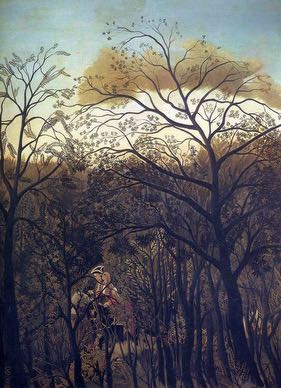
- Carnival Evening, 1886: Two costumed figures stand in a dark winter forest, creating an early example of Rousseau’s mysterious stillness.
- Tiger in a Tropical Storm (Surprised!), 1891: A crouching tiger disappears among plants animated by lightning, wind, and rain.
- War, or The Ride of Discord, 1894: A mounted figure passes over fallen bodies in this dark allegory of violence.
- The Sleeping Gypsy, 1897: A lion approaches a sleeping musician beneath the moon in one of Rousseau’s most enigmatic scenes.
- The Hungry Lion Throws Itself on the Antelope, 1905: Brilliantly patterned plants partly conceal a violent encounter between animals.
- The Snake Charmer, 1907: A silhouetted musician calls snakes from dense vegetation beside a dark river.
- The Football Players, 1908: Four similarly dressed players move below evenly spaced trees in a deliberately theatrical sporting scene.
- The Muse Inspiring the Poet, 1909: Guillaume Apollinaire and Marie Laurencin become monumental figures in a setting filled with flowers.
- The Equatorial Jungle, 1909: Animals watch from within a wall of oversized foliage and flowers.
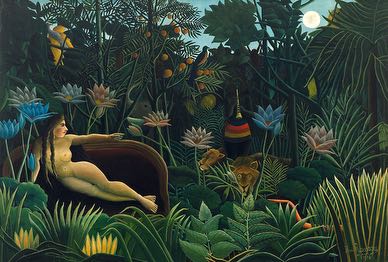
- The Dream, 1910: A reclining nude and her Parisian sofa appear in an immense jungle inhabited by animals, flowers, and a flute player.
These paintings show how well Rousseau’s visual language served very different subjects. Parisian views, portraits, allegories, and tropical fantasies share firm contours, frontal order, compressed depth, and a readiness to transform anything he observed or borrowed.
Why Does Henri Rousseau Matter to Modern Art?
Rousseau showed The Dream at the Salon des Indépendants in 1910. The monumental canvas gathers many of his central interests into one impossible scene: alert animals, dense plants, music, mystery, and a nude reclining on a Parisian sofa. Rousseau died in Paris on 2 September that year.
The Salon des Indépendants organized a retrospective in 1911, and Wilhelm Uhde published an early biography. Dealers, writers, artists, and collectors continued to promote the work. Modern painters responded to its unexpected spaces and direct forms, while the dreamlike logic of The Sleeping Gypsy, The Snake Charmer, and The Dream later fascinated the Surrealists.
Rousseau is now treated as a major modern artist rather than a merely entertaining outsider. His independence from academic technique produced a demanding and consistent language. At the same time, study of his tropical scenes reveals their debts to museums, popular illustrations, world’s fairs, and colonial ideas circulating through Paris.
His influence lies in the meeting of ambition and invention. Botanical displays, city outskirts, portraits, copied images, animals, and private fantasies all became unmistakably Rousseau’s once they entered his paintings. Their patterned clarity makes them immediately approachable, but their stillness never stops being strange.
Copyright © 2026 BrushWiz. All Rights Reserved.
About Our Henri Rousseau Paintings
Are your Henri Rousseau reproductions painted by hand?
Yes. Every reproduction is individually painted by hand in oil on canvas by a professional artist. We do not use prints, digital transfers, or mechanical reproduction methods.
How closely do your Rousseau copies resemble the original?
Our artists work to capture the composition, colors, texture, and visual character of the original Rousseau painting as closely as possible. Because every reproduction is painted by hand, small variations are natural and make each canvas unique.
How long does it take to complete a painting?
Most Rousseau reproductions require approximately two to three weeks to paint, dry, and inspect. Production time may vary depending on the artwork and canvas size, so check the estimate displayed on the product page.
Can I request a Rousseau painting that is not listed?
Yes. If you cannot find the Henri Rousseau artwork you want in our catalog, send us the painting’s title or an image. Our team will review your request and confirm the available sizes, estimated production time, and price.
Will I receive photos of my painting before it is shipped?
Yes. We send high-resolution photographs of the completed painting for your approval. You can request adjustments if needed, and the painting will not be dispatched until the review process is complete.
Can I order a custom canvas size?
Yes. We offer custom dimensions in addition to the standard sizes shown on the product page. Select the dimensions you need directly from the available size options.
Can I order my Rousseau painting with a frame?
Yes. High-quality frames in classic and modern designs are available for many paintings. You can view compatible framing options and add your preferred design from the product page. Professional canvas stretching is also available.
How much does a Henri Rousseau reproduction cost?
The price depends on the selected artwork, canvas dimensions, and framing option. Choose your preferred configuration on the product page to see the current price before ordering.
Do you offer free worldwide shipping?
Yes. Rousseau reproductions qualify for free express worldwide shipping. After dispatch, delivery usually takes five to eight business days, although timing may vary by country and destination.
What is the return policy for Rousseau reproductions?
Orders are covered by our 90-day return policy. Review the current return-policy page before ordering for complete information about eligibility, time limits, and the return process.
Why BrushWiz?
100% Hand Painted
Every piece is entirely handmade
Museum Quality
Faithfully recreated by expert artists
Custom Framing
Choose from a wide range of frames
Free Shipping
Enjoy free shipping on all orders
Cash Back Rewards
Earn cash back with every purchase