
❄️ Winter Sale. Offer Ends 11/24/2026. View Details
❄️ Winter Sale. Ends 11/24/2026. View Details
❄️ Winter Sale. View Details
Artists
Subjects
Movements
Collections
Decor
Portraits
Commissions
Framing
Reviews
Gift Cards
On Sale
Eugene Delacroix Oil Painting Reproductions
Shop museum-quality reproductions of Eugene Delacroix’s most famous paintings, each hand-painted in oil on canvas by a professional artist.
Shop Art

Showing 1-40 of 112 results
Sort By
Most Popular
- Most Popular
- New Arrivals
- Best Sellers
- Alphabetical A-Z
- Alphabetical Z-A

From: $808.00$404.00
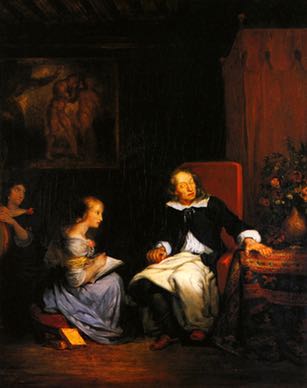
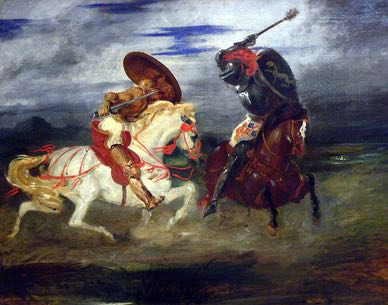
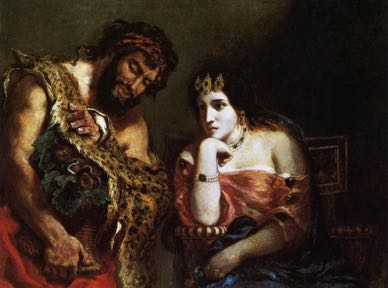

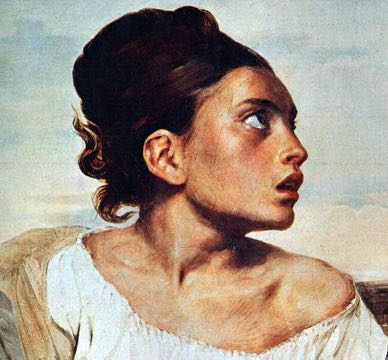
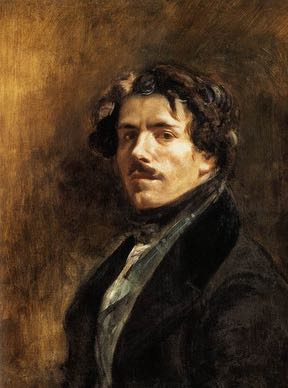

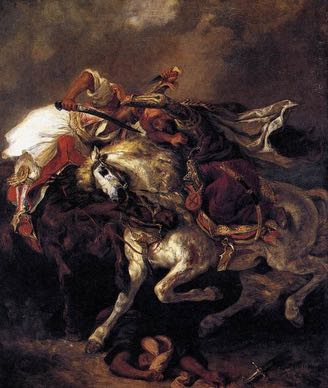



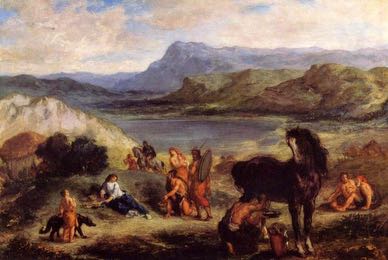
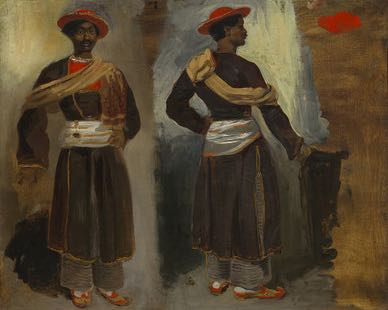
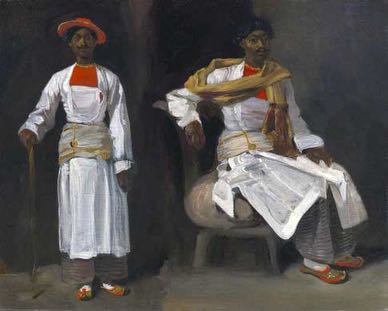
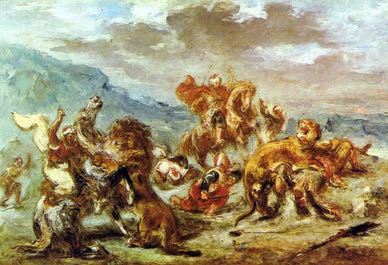
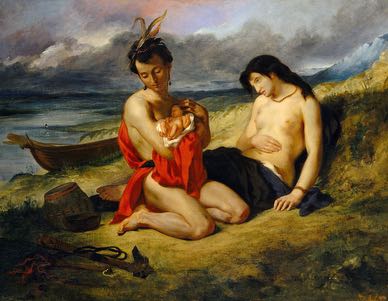
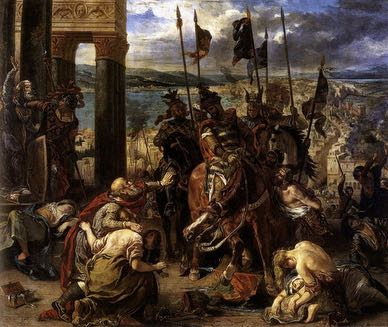
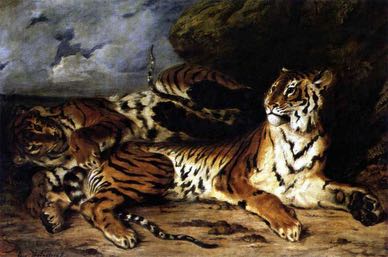
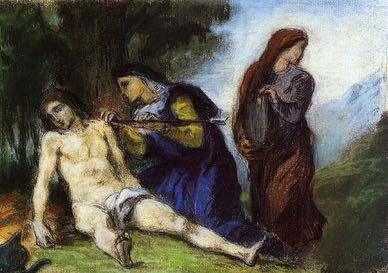
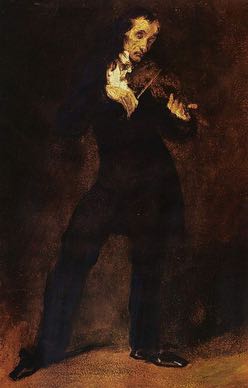
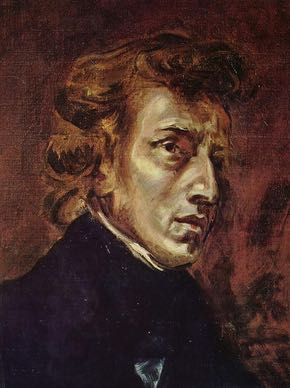
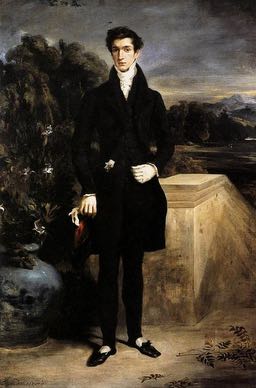
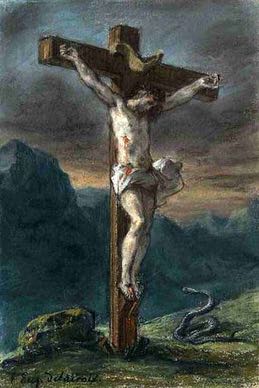

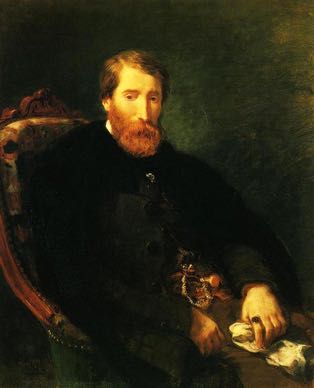

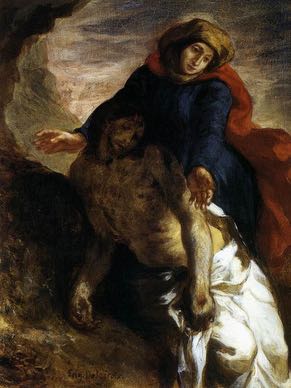

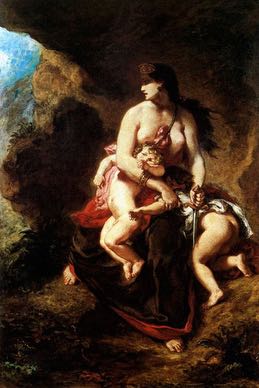
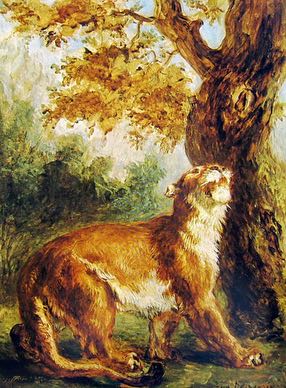

Can’t Find the Painting You Want?
Send us a reference image. We can recreate almost any artwork in the size and style you’re looking for.
Get a Free QuoteHand-Painted Eugene Delacroix Reproductions
Bring Delacroix’s art into your home with an oil-on-canvas reproduction hand-painted by a professional artist. Our collection features more than one hundred paintings from across his career, including Liberty Leading the People, Massacre of Chios, and Women of Algiers in Their Apartment. Discover revolutionary events, literary dramas, North African scenes, powerful animals, and other subjects closely associated with Delacroix. Every reproduction is a real oil painting, offering depth and texture that a print or digital transfer cannot provide. From iconic masterpieces to lesser-known works, find a Delacroix painting that suits your space.
The Making of a Eugene Delacroix Oil Painting Replica
Creating a Eugene Delacroix oil painting replica requires patience, precision, and an understanding of the original artwork. Our studio includes artists who specialize in Romantic painting and understand the distinctive qualities of Delacroix’s work. The artist begins by studying the source image, then recreates its vigorous movement, luminous color contrasts, theatrical arrangement, and Delacroix’s energetic brushwork on canvas using traditional oil-painting methods. After completion, the painting is inspected by our quality-control team and photographed for your approval. The result is a carefully executed oil painting that reflects the drama and visual character of the original.
Custom Sizes and Frames for Your Delacroix Painting
Your Delacroix painting can be ordered in practically any size, from popular standard dimensions to a custom canvas size selected directly on the product page. This flexibility lets you choose a painting that fits your wall and complements your room perfectly. After selecting the size, you can choose from high-quality frames in classic or modern designs, with professional canvas stretching also available. Our framing options complement the dramatic color and expressive movement of Delacroix’s paintings. With sizing, stretching, and framing arranged in one order, your artwork can arrive ready for display without a separate visit to a frame shop.
Order a Eugene Delacroix Reproduction with Confidence
Buying hand-painted art online should feel clear and comfortable. After your Eugene Delacroix reproduction is completed, we send high-resolution photographs for your review before shipping. You can inspect the composition, colors, and overall finish, then request adjustments if needed. The painting is dispatched only after you approve it, so you know what to expect when it arrives. Your order also includes free express worldwide shipping and is covered by our 90-day return policy. Together, these assurances help you purchase a Delacroix oil painting with greater confidence and peace of mind.
The Life and Art of Eugene Delacroix
Eugène Delacroix was the leading painter of nineteenth-century French Romanticism, transforming history painting through rich color, forceful brushwork, emotional intensity, and restless composition. Born in 1798, he drew subjects from revolutions and literary tragedies as well as religion, North African life, portraits, animals, flowers, and landscape. His early Salon pictures established him as a fiercely independent talent, while a journey to Morocco in 1832 supplied memories and motifs he revisited for decades. Later public commissions carried his work across Parisian churches, libraries, and palaces. Delacroix’s experiments with complementary color and expressive paint had a profound effect on the Impressionists, Post-Impressionists, and many artists who followed.
Read More
Who Was Eugène Delacroix?
Ferdinand-Victor-Eugène Delacroix was born on 26 April 1798 in Charenton-Saint-Maurice, near Paris. His father, Charles-François Delacroix, worked in government and diplomacy, while his mother, Victoire Oeben, belonged to a distinguished family of cabinetmakers. Both died before Eugène reached adulthood. At the Lycée Louis-le-Grand, he studied classical literature, history, and drawing—interests that stayed with him throughout his life.
Delacroix came of age in the aftermath of the French Revolution and Napoleon’s empire, amid political instability, a growing print culture, and fierce arguments over artistic freedom. He emerged as the central painter of French Romanticism, though no single formula contains his art. Poetry, contemporary events, music, religion, travel, animals, and the old masters all helped him explore human feeling and the expressive possibilities of paint.
Where Did Delacroix Find His Artistic Education?
In 1816, Delacroix enrolled at the École des Beaux-Arts and entered the studio of the Neoclassical painter Pierre-Narcisse Guérin. Guérin’s disciplined teaching grounded him in anatomy, drawing, and large-scale historical composition. There he also encountered Théodore Géricault, whose bold modern subjects and vigorous technique offered a way beyond academic restraint. Delacroix reportedly modeled for a figure in Géricault’s Raft of the Medusa and observed the work taking shape.
The Louvre provided another education. Delacroix copied Peter Paul Rubens, Titian, Veronese, and others who handled movement, color, and crowded action with unusual freedom. A visit to England in 1825 widened his interests. He studied John Constable, admired British landscapes and portraits, and attended Shakespeare’s plays. English theater and painting strengthened his belief that atmosphere and emotion could matter as much as flawless contour.
Literature mattered just as deeply. Dante, Shakespeare, Goethe, Lord Byron, and Sir Walter Scott gave Delacroix stories he could translate into movement and color. Rather than illustrate every incident, he chose moments of uncertainty, conflict, or emotional climax, bringing careful preparation and imaginative freedom together.
Why Did Delacroix’s Salon Debut Divide Critics?
Delacroix made his first Salon appearance in 1822 with The Barque of Dante. Drawn from Dante’s Inferno, it shows bodies struggling in turbulent water around a boat carrying Dante and Virgil. Muscular figures recall Michelangelo and Rubens, but the wet atmosphere, unstable motion, and urgent paint announce a new personality. The state purchased the canvas, immediately raising the young artist’s profile.
Massacre at Chios, exhibited in 1824, confronted the suffering of civilians during the Greek War of Independence. No triumphant hero commands the scene. Instead, wounded, exhausted, and captive people fill an exposed landscape. Critics divided over its color, bleakness, and unconventional arrangement. Admirers saw contemporary tragedy raised to the level of history; opponents saw a rejection of order and ideal beauty.
Shown in 1827, Death of Sardanapalus made the dispute even sharper. Inspired by Byron, it shows a ruler observing the destruction of his possessions and the killing of animals and people around him. Red fabric, diagonals, compressed space, and scattered bodies turn violence into spectacle. The painting came to epitomize the conflict between Delacroix’s painterly Romanticism and the linear classicism of Jean Auguste Dominique Ingres.
What Does Liberty Leading the People Actually Depict?
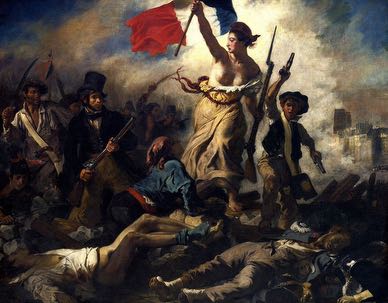
Liberty Leading the People commemorates the July Revolution of 1830, not the French Revolution of 1789. Three days of fighting erupted in Paris after King Charles X tried to restrict political representation and the press. Delacroix did not join the street battles, but he responded quickly to what he called a modern subject.
Observation and allegory meet in the finished canvas. Wearing a Phrygian cap and carrying the tricolor, Liberty strides across a barricade with armed followers drawn from several social groups. Fallen bodies expose the rebellion’s cost. A pyramidal arrangement gives the picture clarity, while smoke, broken color, and movement keep it immediate. The state purchased it after the Salon of 1831, and it became one of the world’s most familiar images of political freedom.
Its meaning remains deliberately unsettled. Liberty is both an ideal and a physically present participant, while the crowd combines heroic purpose with the disorder of street combat. Delacroix thereby gave a recent event the emotional force and scale traditionally reserved for biblical or ancient history.
How Did North Africa Change Delacroix’s Art?
Between January and July 1832, Delacroix accompanied the Comte de Mornay’s French diplomatic mission to Morocco. He visited Tangier and Meknes, traveled through Spain, and stopped in Algiers before returning home. The trip unfolded within French colonial expansion after the 1830 invasion of Algeria. In notebooks packed with watercolor, sketches, and written notes on color, he recorded horses, architecture, clothing, ceremonies, landscapes, and everyday encounters.
European ideas about antiquity and the so-called Orient shaped Delacroix’s understanding, but firsthand observation gave the later paintings a specificity missing from his earlier imagined scenes. For decades he revisited Moroccan ceremonies, Jewish life in Tangier, mounted exercises, and domestic interiors. Memory remained crucial: he did not mechanically transfer every note but reorganized his impressions to strengthen atmosphere, color, and dramatic unity.
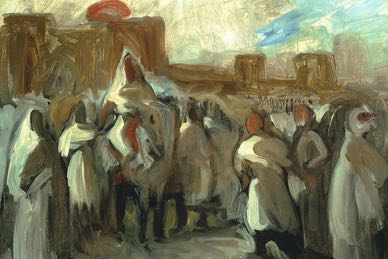
A Jewish Wedding in Morocco transforms a ceremony he witnessed into a carefully ordered crowd, while Women of Algiers in Their Apartment is a quieter study of stillness, cloth, and color. Later artists were especially drawn to the way warm and cool hues structure that interior without the aid of violent action.
What Drew Delacroix to Animals, Flowers, and Landscape?
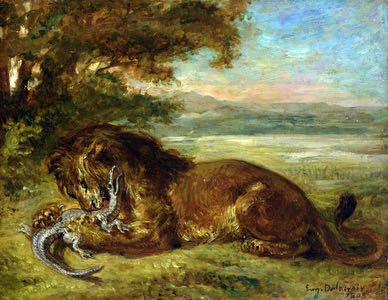
Wild animals allowed Delacroix to explore instinct, sudden motion, and physical tension. He studied lions and tigers at the Paris menagerie and examined animal anatomy with the sculptor Antoine-Louis Barye. In hunts and combats, horses surge or collapse while twisting predators meet human bodies. Romantic fascination with untamed nature is always grounded in repeated observation.
Delacroix returned often to lions, tigers, and horses. Lion Hunt in Morocco binds animal and human forms into one turbulent design. Quieter works isolate a predator at rest, on watch, or preparing to strike, allowing setting and posture to create suspense.
Nature offered more than violence. Delacroix also painted woodland edges, coastlines, open skies, and exuberant flower arrangements. Without a complicated story to carry, brushwork and color could become the subject themselves. Landscape and memory grew increasingly important in his later years, revealing a reflective side of an artist famous for public drama.
By What Means Did Delacroix Make Color Expressive?
Delacroix treated color as both structure and emotion. Rubens and Venetian painting showed him how interacting hues could build form without depending on outline alone. He observed how warm and cool notes strengthened one another, how a small touch could animate a shadow, and how reflections carried nearby colors across a surface. These ideas anticipated later Impressionist and Neo-Impressionist practice.
Preparation and freshness worked together in his method. Studies, drawings, oil sketches, and written notes helped solve complex designs, yet Delacroix wanted the final surface to remain alive. Visible touches and broken edges make fabric shimmer, flames flicker, and bodies move. Some contemporary critics called this unfinished; later painters valued precisely its energy and openness.
Memory was another creative instrument. As time passed, details from travel and observation could fall away, leaving what Delacroix considered their strongest poetic character. His journal records a lifelong meditation on literature, music, color, discipline, and the difficult balance between spontaneous execution and careful correction.
Where Can Delacroix’s Monumental Decorations Be Seen?
Beginning in the 1830s, major public commissions required Delacroix to work directly with architecture. He decorated the Palais Bourbon’s Salon du Roi and the Library of the Chamber of Deputies, followed by the Luxembourg Palace Library, the Louvre’s Galerie d’Apollon, and the Chapelle des Saints-Anges at Saint-Sulpice. Domes, ceilings, pendentives, and broad walls replaced the portable canvas.
Work on this scale demanded clear groups and images that could be read from far below. Delacroix built connected programs from Christian stories, history, philosophy, mythology, and poetry, adapting each to a civic or sacred setting. Assistants transferred and executed parts of the designs, while he controlled the composition, color, and final effect. Some projects lasted for years and strained his health.
Completed late in his life, the Saint-Sulpice decorations include Jacob Wrestling with the Angel and Heliodorus Driven from the Temple. Their landscapes, muscular bodies, and forceful movement gather together decades of study. Delacroix preserved the grand ambition of European history painting while making it unmistakably personal and painterly.
Which Paintings Reveal the Range of Delacroix’s Career?
Delacroix worked across literature, contemporary history, portraiture, religion, travel, animals, and landscape. These paintings trace the breadth and development of his art:
- The Barque of Dante, 1822: Delacroix’s Salon debut brings literary imagination, turbulent water, and forcefully modeled bodies together.
- Massacre of Chios, 1824: The suffering of civilians in the Greek War of Independence replaces the usual victorious hero.
- Death of Sardanapalus, 1827: Compressed action, diagonal movement, and intense color create one of Romanticism’s most controversial spectacles.
- Liberty Leading the People, 1830: Contemporary street combat and allegory meet in an enduring image of revolution.
- Women of Algiers in Their Apartment, 1834: A remembered North African room becomes a study of textiles, color, and stillness.
- Frédéric Chopin, 1838: Economical handling gives the unfinished portrait an immediate sense of the musician’s intelligence and intensity.
- The Abduction of Rebecca, 1846: Bodies, horses, flames, and smoke compress a scene from Walter Scott’s Ivanhoe into urgent action.
- Christ on the Sea of Galilee: Across several versions, Delacroix varied the light, gestures, and tension between mortal danger and spiritual calm.
- Ovid Among the Scythians: An exiled poet’s meeting with a distant community reflects Delacroix’s late interest in memory, landscape, and displacement.
Why Does Delacroix’s Influence Reach into Modern Art?
Criticism and official recognition followed Delacroix throughout his career. State commissions placed his work in important Parisian buildings, and a major display at the Exposition Universelle of 1855 confirmed his standing. After several failed attempts, he entered the Institut de France in 1857. He continued working through poor health and died in Paris on 13 August 1863.
His legacy reaches far beyond Romantic subjects. Later artists studied his complementary colors, expressive distortion, visible touch, and belief that a picture communicates through its painted surface as much as through its story. Pierre-Auguste Renoir, Paul Cézanne, and Vincent van Gogh each found something different in his example, while Matisse and Picasso continued reworking his colors and compositions.
The 1893 publication of Delacroix’s journal also expanded his standing as a thinker. Its reflections on imagination, memory, music, discipline, and color gave later generations access to the ideas beneath his practice. He is now understood both as French Romanticism’s leading painter and as a vital predecessor of modern art, joining the grand tradition of history painting to increasingly personal experiments with brushwork and color.
Copyright © 2026 BrushWiz. All Rights Reserved.
About Our Eugene Delacroix Paintings
Are your Eugene Delacroix reproductions painted by hand?
Yes. Every reproduction is individually painted by hand in oil on canvas by a professional artist. We do not use prints, digital transfers, or mechanical reproduction methods.
How closely do your Delacroix copies resemble the original?
Our artists work to capture the composition, colors, texture, and visual character of the original Delacroix painting as closely as possible. Because every reproduction is painted by hand, small variations are natural and make each canvas unique.
How long does it take to complete a painting?
Most Delacroix reproductions require approximately two to three weeks to paint, dry, and inspect. Production time may vary depending on the artwork and canvas size, so check the estimate displayed on the product page.
Can I request a Delacroix painting that is not listed?
Yes. If you cannot find the Eugene Delacroix artwork you want in our catalog, send us the painting’s title or an image. Our team will review your request and confirm the available sizes, estimated production time, and price.
Will I receive photos of my painting before it is shipped?
Yes. We send high-resolution photographs of the completed painting for your approval. You can request adjustments if needed, and the painting will not be dispatched until the review process is complete.
Can I order a custom canvas size?
Yes. We offer custom dimensions in addition to the standard sizes shown on the product page. Select the dimensions you need directly from the available size options.
Can I order my Delacroix painting with a frame?
Yes. High-quality frames in classic and modern designs are available for many paintings. You can view compatible framing options and add your preferred design from the product page. Professional canvas stretching is also available.
How much does a Eugene Delacroix reproduction cost?
The price depends on the selected artwork, canvas dimensions, and framing option. Choose your preferred configuration on the product page to see the current price before ordering.
Do you offer free worldwide shipping?
Yes. Delacroix reproductions qualify for free express worldwide shipping. After dispatch, delivery usually takes five to eight business days, although timing may vary by country and destination.
What is the return policy for Delacroix reproductions?
Orders are covered by our 90-day return policy. Review the current return-policy page before ordering for complete information about eligibility, time limits, and the return process.
Why BrushWiz?
100% Hand Painted
Every piece is entirely handmade
Museum Quality
Faithfully recreated by expert artists
Custom Framing
Choose from a wide range of frames
Free Shipping
Enjoy free shipping on all orders
Cash Back Rewards
Earn cash back with every purchase